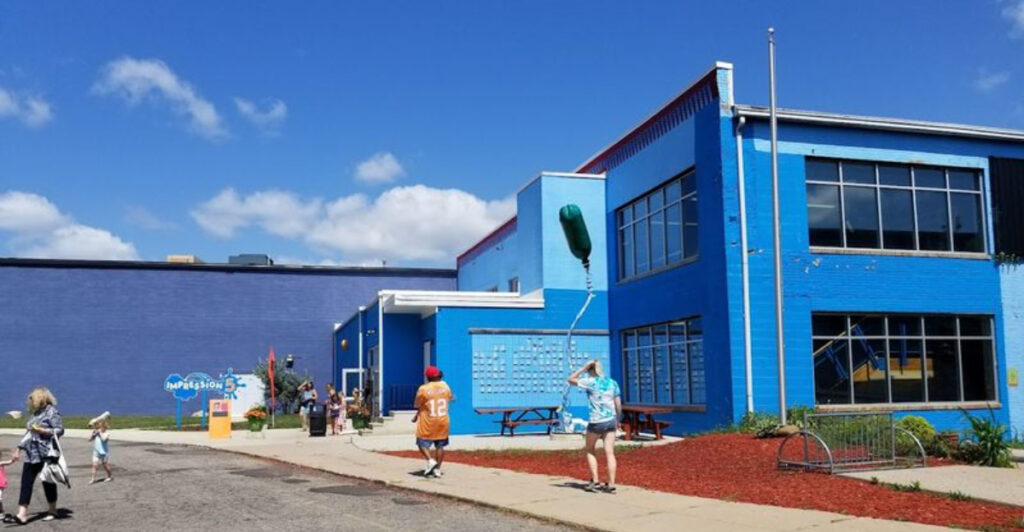
Learning gets a lot more exciting when kids can touch, build, splash, launch, and experiment their way through the day. Along the Grand River in downtown Lansing, Michigan, Impression 5 Science Center turns science into a hands-on adventure spread across multiple floors and more than 150 interactive activities.
Every corner seems to invite curiosity, whether families are exploring water exhibits, testing motion, solving challenges, or discovering something unexpected together. It is the kind of place where kids stay busy without realizing how much they are learning, and adults usually end up having just as much fun.
For a Michigan family outing that feels playful, active, and genuinely memorable, Impression 5 makes science impossible to ignore.
Water, Wind, and Wow: The Exhibit Floors That Grab You Immediately
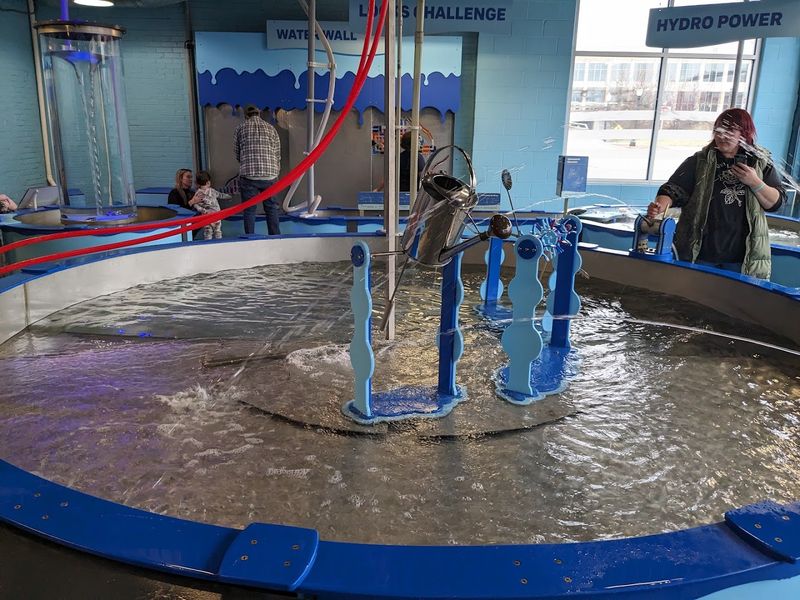
Walk through the entrance of Impression 5 Science Center and the energy hits you before you even reach the first exhibit. The ground floor buzzes with movement, sound, and curiosity — kids darting between stations, parents crouching down to get a closer look, and staff members ready to explain whatever just happened with the giant water flow table.
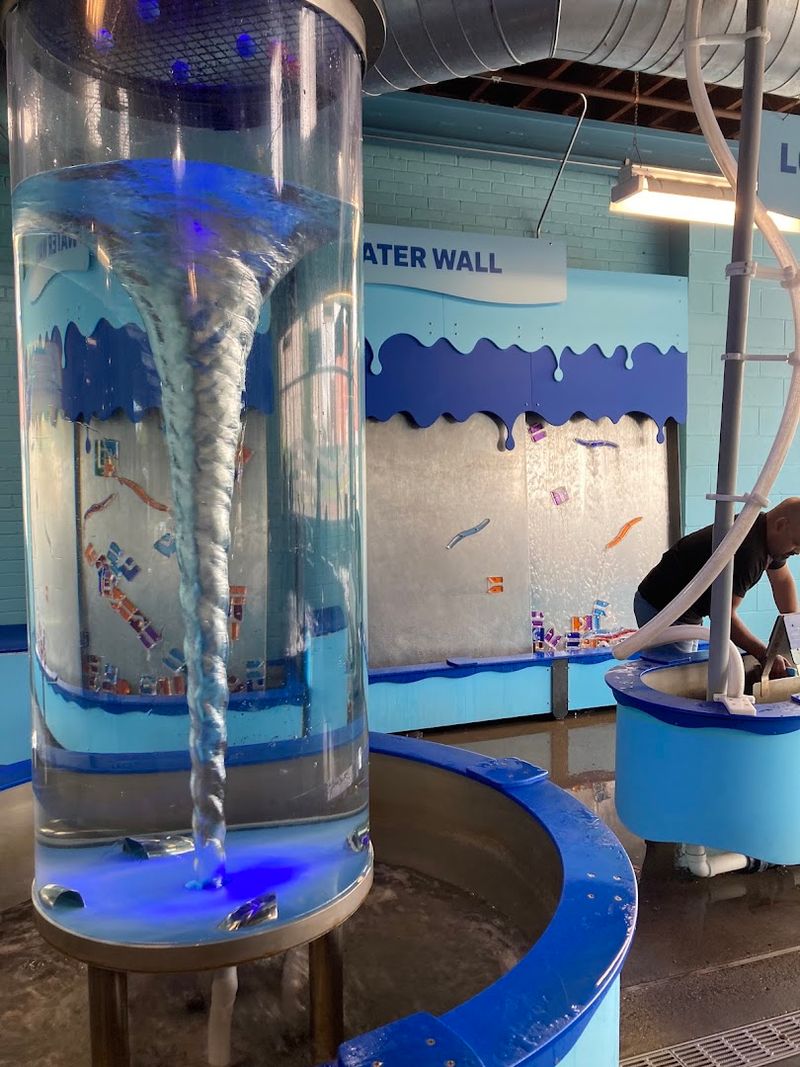
That water station is a centerpiece worth pausing at. Jets and channels let kids redirect the flow, build little dams, and watch how physics plays out in real time.
It is messy in the best possible way, and the center thoughtfully provides small dryers nearby so soaked sleeves do not derail the rest of the visit.
Beyond the water zone, the first floor opens into a series of interconnected activity areas that cover wind, motion, and basic engineering principles. Each station is built for participation, not observation.
You do not stand behind a roped-off display and read a placard — you grab a handle, adjust a dial, or launch something and see what happens next.
The layout encourages wandering. There is no strict path to follow, which means two families can spend the same two hours here and have completely different experiences.
One group might camp out at the bubble station for forty-five minutes. Another might bounce between the trebuchet explanation and the molecule-building blocks upstairs without a second glance at the water area.
That flexibility is one of the building’s quiet strengths. The space is large enough to absorb a crowd without feeling chaotic, and even on busy rainy-day visits, the floor plan keeps things from feeling cramped.
The science starts the moment you step inside, and it rarely lets up.
The Light and Bubble Zones That Stop Kids Cold
There is a room at Impression 5 where light does things you do not expect. Lasers split and bend, shadows stretch in impossible directions, and a giant Lite-Brite wall invites visitors to create glowing patterns using pegs the size of their fists.
Adults slow down here just as much as children do, which says a lot about how well these exhibits are designed.
The light exhibits cover a range of concepts without ever feeling like a textbook. Reflection, refraction, color mixing, and shadow play are all present, but the experience is built around discovery rather than instruction.
Kids figure out what is happening by doing it, not by reading about it on a sign. That hands-on approach is baked into everything at Impression 5, and the light room is where it feels most vivid.
Then there is the bubble station, which operates on a completely different kind of magic. Giant wands, geometric frames, and bubble tubes let visitors experiment with surface tension and shape.
A bubble the size of a basketball is impressive. A bubble that surrounds an entire arm is something else entirely, and the squeals that follow tend to echo across the floor.
Both zones attract repeat visitors throughout the day. Kids cycle back after exploring other exhibits, pulled in again by the glow or the soap film catching the light.
The bubble area in particular has a tactile satisfaction that does not get old quickly, even after multiple attempts at the same frame.
Together, these two zones represent what Impression 5 does best — take a scientific concept that could feel dry on paper and turn it into something you want to touch, repeat, and show someone else immediately. The science is real.
The fun is louder.
Paper Planes, Projectiles, and the Joy of Throwing Things for Science
Few things make a child’s eyes light up faster than being told they are allowed to throw something indoors. Impression 5 leans into that energy with a paper airplane station that is more sophisticated than it sounds.
Kids design and fold their planes, then feed them into a spinning wheel mechanism that launches them across the room. The distance each plane travels depends entirely on the design choices made before the throw.
That feedback loop is the point. Fold the wings differently, adjust the nose weight, try again.
Each attempt teaches something about aerodynamics without a single lecture. The station is compact but endlessly replayable, and it draws a consistent crowd throughout the day because the payoff — watching your creation actually fly — never gets boring.
Nearby, a baseball-themed throwing station lets kids experiment with force and trajectory. The setup measures speed and arc, giving young visitors a concrete way to see how effort and angle affect an outcome.
It is the kind of exhibit that sneaks physics into a moment that just feels like playing catch.
Upstairs, the trebuchet display takes projectile science into historical territory. The exhibit explains how medieval siege weapons used counterweights and lever arms to launch objects over long distances.
Models and interactive components let visitors adjust variables and see how small changes produce dramatically different results. It bridges engineering history with hands-on physics in a way that sticks.
Across all three of these stations, the common thread is cause and effect — the fundamental engine of scientific thinking. Impression 5 structures these experiences so that the experimentation feels natural, not forced.
Kids are not following instructions so much as chasing results, which is exactly how curiosity is supposed to work.
Michigan’s Hidden Science Gem Has an Upstairs Worth the Climb
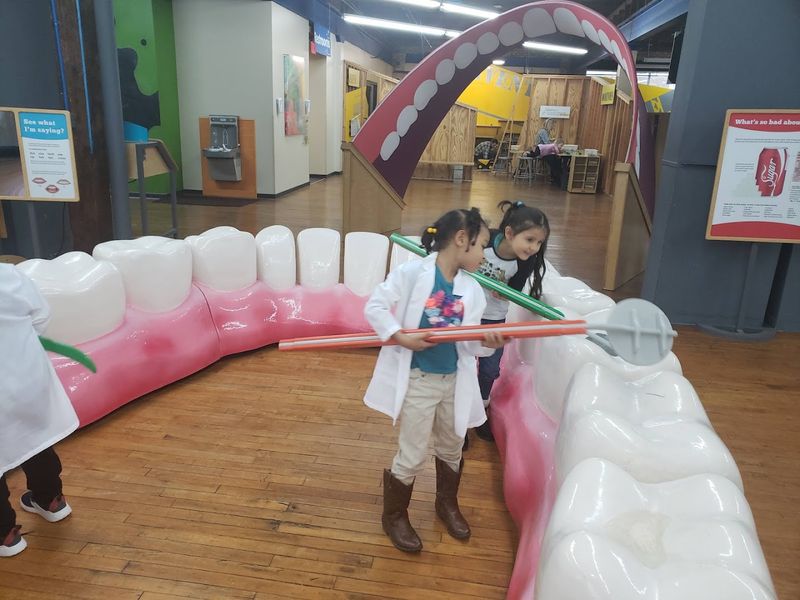
The second floor of Impression 5 is where the exhibit density really picks up. If the ground floor offers a warm welcome, the upstairs is where the museum shows its full range.
Molecule-building stations, sensory exploration zones, and engineering challenges are packed into a space that rewards slow, deliberate exploration rather than a quick lap around the room.
One of the standout features up here is the molecular model area. Large foam-and-connector pieces let visitors assemble the basic shapes of common molecules, giving a tactile dimension to chemistry concepts that usually live only on paper.
Holding a water molecule in your hands — even a foam version — creates a different kind of understanding than seeing it drawn on a whiteboard.
The sensory room on this floor serves a different but equally important purpose. Designed with calmer lighting and quieter acoustics, it gives children who need a lower-stimulation environment a genuine place to reset.
The center also offers scheduled sensory-friendly hours, making the museum more accessible to families with kids who process the world differently. That commitment to inclusion shapes the experience for everyone, not just those who need the accommodation.
Seating is available throughout the upper floor, which matters more than it might seem. Parents and grandparents can stay engaged without wearing out, and kids can take a quick break before diving back into the next station.
The elevator ensures the floor is accessible to anyone with mobility needs, and the staff keeps things running smoothly even when school groups fill the space.
Spending an hour upstairs after working through the ground floor makes for a complete visit. The two floors feel distinct enough that switching between them resets attention spans and opens up a whole second wave of exploration.
Built for Every Age in the Room, From Toddlers to Grandparents
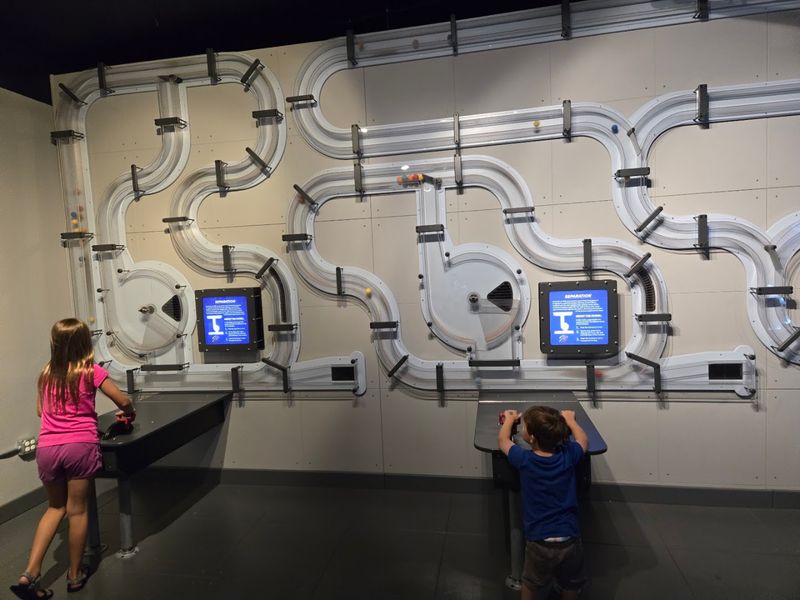
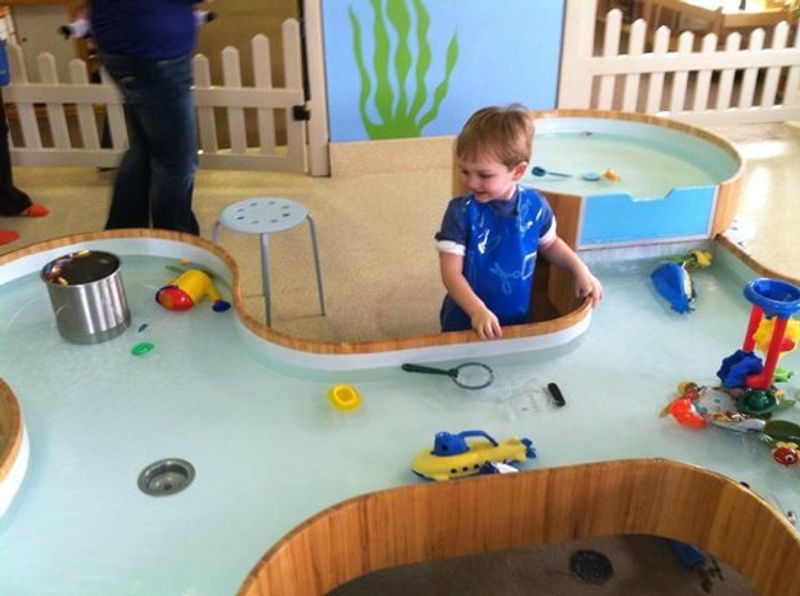
One of the more impressive design choices at Impression 5 is how deliberately it caters to different ages without making anyone feel like they wandered into the wrong section. The dedicated toddler and infant area gives the youngest visitors their own space — lower surfaces, softer materials, age-appropriate sensory play — so small children can explore without competing with older kids for the same equipment.
That separation matters for families with kids at different stages. A parent does not have to choose between keeping up with a curious eight-year-old and making sure a two-year-old does not wander into a station built for bigger hands.
Both children have somewhere designed specifically for them, and both can thrive in the same visit.
For older kids and teenagers, the engineering and physics stations offer enough complexity to hold genuine interest. The molecule-building blocks, the trebuchet display, and the light refraction exhibits are not dumbed down — they are approachable, but they reward deeper engagement.
A teenager who spends time with the projectile trajectory station can come away with a real intuition for physics concepts covered in school.
Adults tend to find their own rhythm here too. The giant Lite-Brite wall has a nostalgic pull that catches parents off guard.
The bubble station turns out to be just as satisfying at thirty-five as it was at seven. And the water flow table has a meditative quality once you stop trying to win and just start experimenting.
Families visiting with grandparents report that the museum’s layout — with accessible restrooms, elevator access, a loaner wheelchair available at the front, and plenty of seating — makes the experience genuinely comfortable for everyone. Impression 5 earns its multi-generational reputation the right way: by designing for it from the start.
Planning Your Visit: Timing, Tickets, and What to Pack
Impression 5 Science Center sits at 200 Museum Drive in downtown Lansing, right along the riverfront. Free parking is available nearby, though spots fill up fast on weekends and during school breaks.
Arriving early is the most reliable strategy — the lot tends to open up as the morning crowd rotates out, but peak hours between 11 a.m. and 2 p.m. on Saturdays can test your patience before you even get inside.
The center is open Tuesday through Friday from 9:30 a.m. to 4 p.m., Saturday from 9:30 a.m. to 5 p.m., and Sunday from 11:30 a.m. to 5 p.m. Monday is the one dark day each week, so plan accordingly.
The extra hour on Saturdays makes a meaningful difference if you want to cover both floors without rushing.
Tickets are reasonably priced, and there are several discount options worth knowing about. EBT cardholders pay just two dollars per person, making this one of the most accessible science museums in Michigan.
ASTC membership holders — including families with memberships to other science museums like Chicago’s Museum of Science and Industry — often get reciprocal admission benefits, so check your current memberships before buying tickets at the door.
There is no full restaurant on site, but a cafe area with vending machines provides snacks and drinks. Most families bring a packed lunch and eat in the designated family eating area.
This is especially worth planning ahead if you are visiting with young children or anyone who needs to eat on a schedule.
Budget at least two to three hours for a solid visit. Families who try to do everything in ninety minutes tend to leave feeling like they missed something, because they usually did.
Four hours is not unreasonable if the kids are deeply engaged.
Why This Science Center Earns Its Place on Any Michigan Family Road Trip
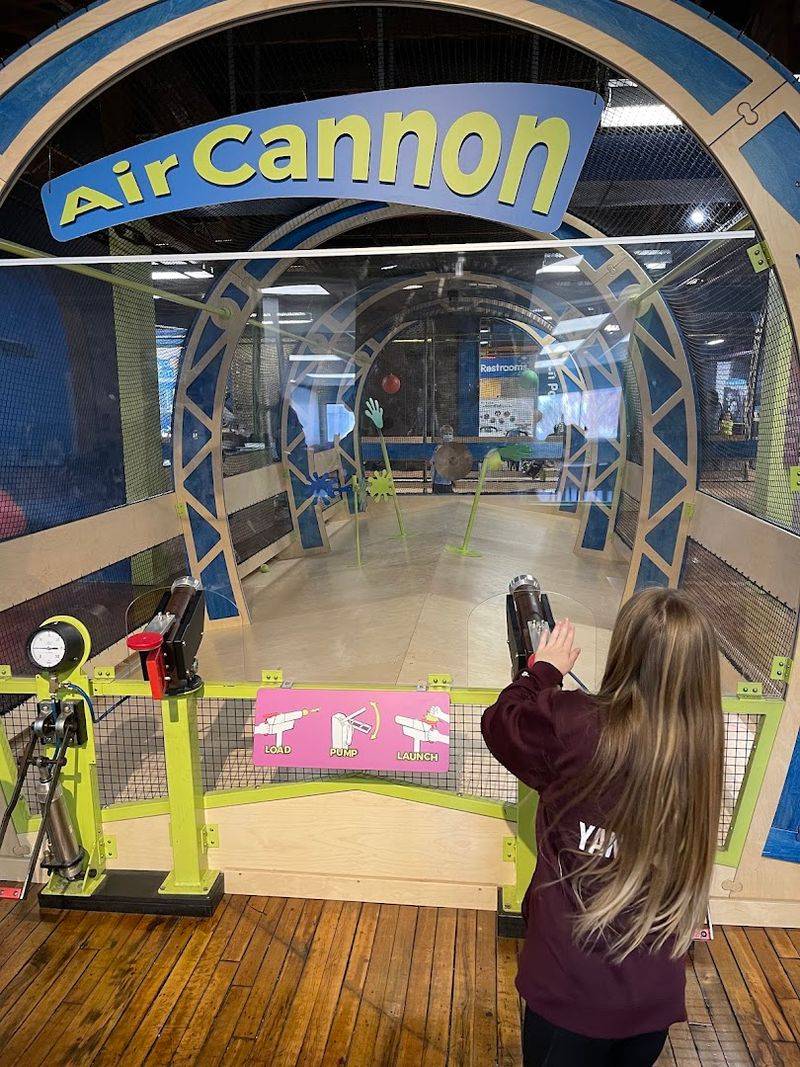
Stopping at Impression 5 during a Michigan road trip is the kind of detour that earns its own chapter in the trip recap. Families who pull off the highway expecting a quick hour end up staying three or four, recalibrating the rest of the day around one more turn at the water table or one more paper airplane launch.
That pull is not accidental — it is the result of a museum that has been refining its approach for decades.
The center holds a 4.7-star rating across nearly 2,700 reviews, which is a number that reflects consistent quality rather than a lucky streak of good days. Families from across the state return year after year, some holding ASTC memberships specifically so they can keep coming back without worrying about the cost.
The repeat-visit culture here is strong, and it signals something important: kids do not get bored quickly, because the exhibits reward multiple attempts and different approaches.
Rotating special exhibits add another layer of replayability. Past installations have included themed experiences that completely transformed sections of the floor, giving even regular visitors something new to discover.
Checking ahead for current programming before your trip is worth the few minutes it takes.
The outdoor exploration area extends the experience beyond the building’s walls when weather cooperates. Inside or out, the museum keeps its commitment to participatory science front and center.
Nothing here is meant to be looked at from a distance.
Impression 5 is not trying to be everything to everyone — it is trying to make science feel like something worth chasing. For most families who spend a morning or afternoon here, it succeeds completely. The building stays in conversation long after the drive home, which might be the best thing a science center can do.