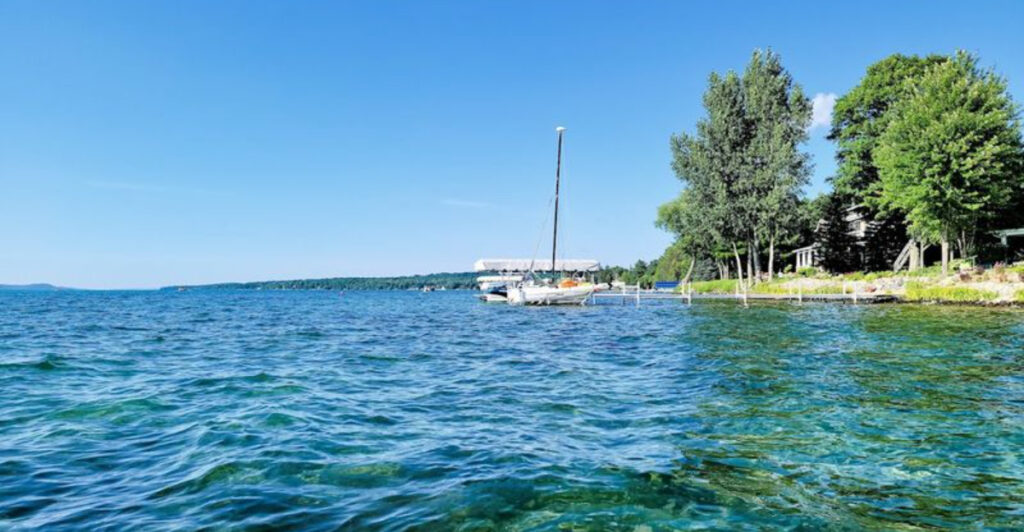
Northern Michigan has plenty of beautiful lakes, but Torch Lake feels like nature decided to show off. Tucked into the northwest corner of the Lower Peninsula, this long, glacier-carved stunner stretches nearly 19 miles and reaches depths of about 300 feet, giving it some of the clearest and most brilliantly colored water in the Midwest.
Known by names including Torch Lake, Waswaaganing, and Torch Light Lake, it seems to glow when sunlight hits the surface, shifting into shades of turquoise and blue that look almost unreal for an inland Michigan lake. If you have ever doubted that the Great Lakes State can deliver Caribbean-level water without leaving the Midwest, Torch Lake makes a very convincing argument.
How Ancient Glaciers Carved Out a Caribbean-Blue Miracle in Michigan
About 10,000 years ago, massive sheets of glacial ice retreated across what is now northern Michigan, and the landscape they left behind was anything but ordinary. Torch Lake occupies a long, narrow trough carved deep into the earth by that slow, grinding glacial movement.
The result is a lake basin so deep — reaching 300 feet in some spots — that the water column itself becomes part of what makes the color so extraordinary.
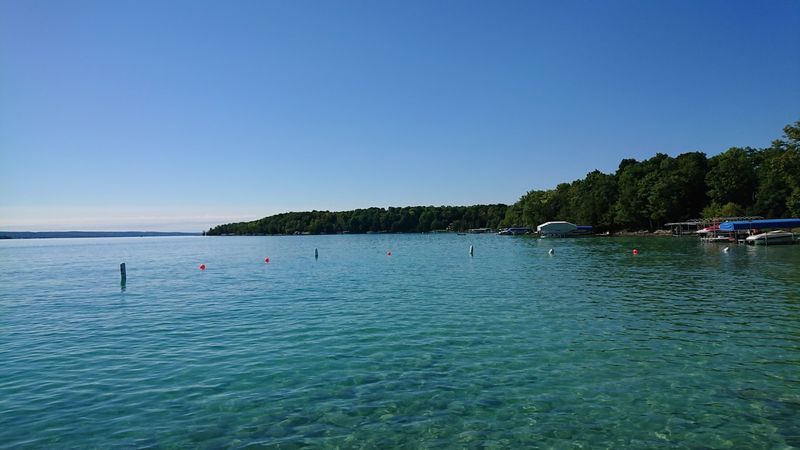
The turquoise and aquamarine shades visible from shore are not a filter or a trick of photography. They come from a combination of the lake’s exceptional depth, the white marl sediment lining the bottom, and the remarkable clarity of the water itself.
Light passes through the surface, bounces off that pale lakebed, and reflects back in shades that genuinely rival tropical destinations.
Torch Lake stretches nearly 19 miles from north to south, making it the longest inland lake in Michigan and the third longest in the entire United States. Its width stays relatively narrow, which concentrates the visual impact and makes the color appear even more saturated from elevated viewpoints along the shoreline.
The Ojibwe people who called this place home long before European settlers arrived named it Waswaaganing, which translates loosely to “torch light lake” — a reference to the way Native fishermen once used torches at night to attract fish in the shallow, crystal-clear shallows. That name stuck in different forms across generations, and today the lake carries all three names depending on who you ask.
Glacial lakes of this clarity and scale are rare even by Great Lakes standards. The geology underneath Torch Lake acts like a natural filtration system, keeping sediment suspended low and light transmission high year after year.
The Water Color That Stops People Mid-Sentence
Standing at the shoreline for the first time, most people go quiet. Not because there’s nothing to say, but because the color of the water doesn’t match any expectation they arrived with.
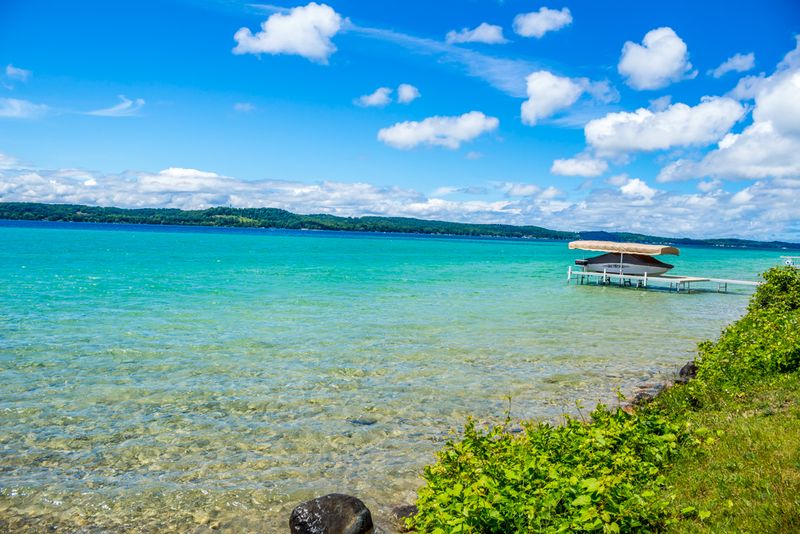
Torch Lake’s surface shifts between deep cobalt blue in the center channel and a glowing, almost neon turquoise closer to the shallows — and on a sunny day, the contrast between those two shades is genuinely disorienting in the best possible way.
The clarity is the part that catches people off guard. You can look over the edge of a boat in water that’s eight or ten feet deep and still see the bottom clearly enough to count individual rocks.
That level of transparency puts Torch Lake in a category shared by only a handful of freshwater lakes on the entire planet. No saltwater required, no coral reefs underneath — just geology, depth, and remarkably low levels of algae and particulate matter.
Water temperature plays an interesting role in the experience. Surface temperatures during peak summer hover around the low 70s Fahrenheit, which feels refreshing rather than punishing.
Deeper sections stay significantly colder, which is part of why the lake stratifies so clearly and maintains that layered color effect that photographs so dramatically from above.
The sandbar near the southern end of the lake draws the biggest crowds precisely because of how the water behaves there. It’s shallow enough to stand in comfortably, warm enough to linger for hours, and clear enough that you can watch your own feet on the sand below.
Pontoon boats cluster there on summer weekends, turning the sandbar into a floating social scene surrounded by water that looks like it was airlifted from the Bahamas.
Mornings offer the clearest views before afternoon wind picks up surface chop.
Paddling, Boating, and Every Other Way to Get on the Water
Renting a pontoon boat is the single most popular way to experience Torch Lake at full scale. Several local outfitters near the lake offer hourly and full-day rentals, and most visitors who go this route end up spending the better part of a day cruising the length of the lake — about 19 miles one way — stopping at the sandbar, exploring quieter coves, and generally refusing to go back to shore until the sun gets low.
A pontoon with enough horsepower matters more than it sounds. The lake is long, and if you want to reach the north end — where the water runs deepest and the color shifts into something almost otherworldly — a 75 to 115 horsepower engine makes the difference between a leisurely full-day trip and a rushed one.
Booking early in the morning is also worth the effort, since popular launch ramps fill up quickly on summer weekends and parking near the water becomes scarce by mid-morning.
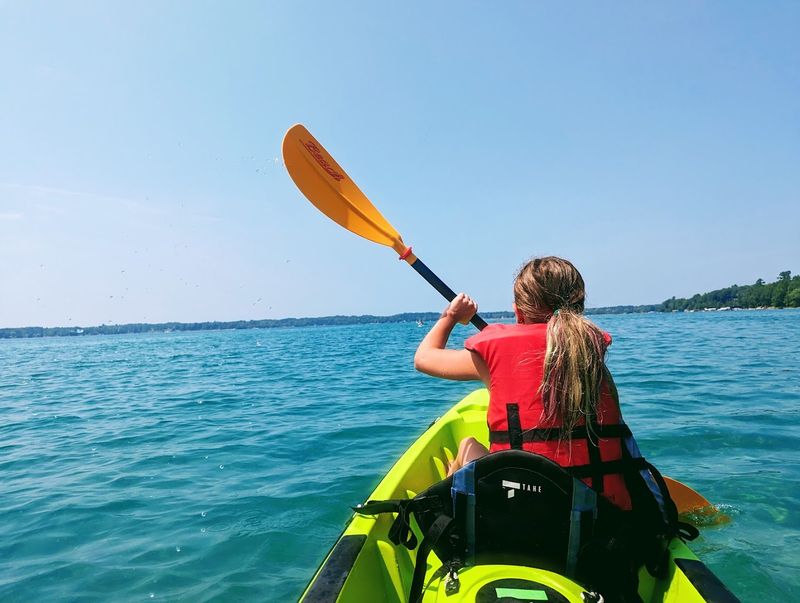
Kayaking offers a completely different perspective. Sitting low on the water with a paddle in hand, the clarity becomes even more apparent — you can watch the lakebed slide beneath you as the depth changes, moving from sandy shallows into darker, deeper blue.
Several public access points around the lake allow kayak launches without the complications of larger boat ramps.
Canoeing, paddleboarding, and swimming round out the options for anyone who prefers a slower pace or doesn’t need to cover the full length of the lake. The connected waterways — including the Grass River and Clam Lake — extend the possible routes considerably, giving experienced paddlers a full network to explore beyond Torch Lake itself.
Water shoes are strongly recommended near rocky shoreline sections.
The Sandbar Scene: Michigan’s Floating Summer Party
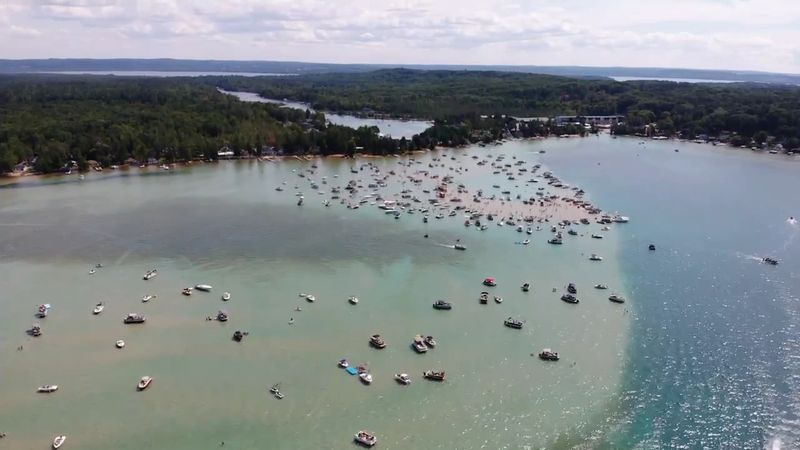
Every lake has its gathering spot, and Torch Lake’s is legendary. The sandbar — a shallow, naturally occurring ridge near the southern portion of the lake — transforms every summer weekend into something between a block party and a beach festival, all floating on water the color of a Caribbean postcard.
Boats anchor side by side, people wade between them, and the whole scene has the relaxed, unhurried energy of a place where nobody is in a particular hurry to leave.
Peak hours run roughly from late morning through late afternoon, typically between 11 a.m. and 5 p.m. on weekends. If crowds aren’t your thing, arriving earlier or staying later solves the problem entirely.
The sandbar after 7 p.m., once most boats have headed back to their docks, offers an almost meditative version of the same spot — calm water, fading golden light, and the kind of quiet that makes the whole lake feel like it belongs to you alone.
The water depth at the sandbar makes it accessible to nearly everyone. Children can stand comfortably, adults can float without effort, and the sandy bottom stays warm from sun exposure throughout the afternoon.
That combination of warmth, shallowness, and clarity makes it a natural anchor point for families, groups of friends, and anyone who just wants to spend a few hours doing absolutely nothing productive.
Small towns near the southern end of the lake, including Alden, offer shops, restaurants, and a handful of docks where boaters can tie up briefly and grab food or souvenirs. The local businesses lean into the lake’s reputation, and the atmosphere in those shoreline communities carries the easy, sun-bleached charm of a place built around water and summer.
Planning ahead for bathroom stops before heading out on the water saves considerable hassle.
Public Access, Private Shoreline, and How to Plan Your Visit to Torch Lake in Michigan
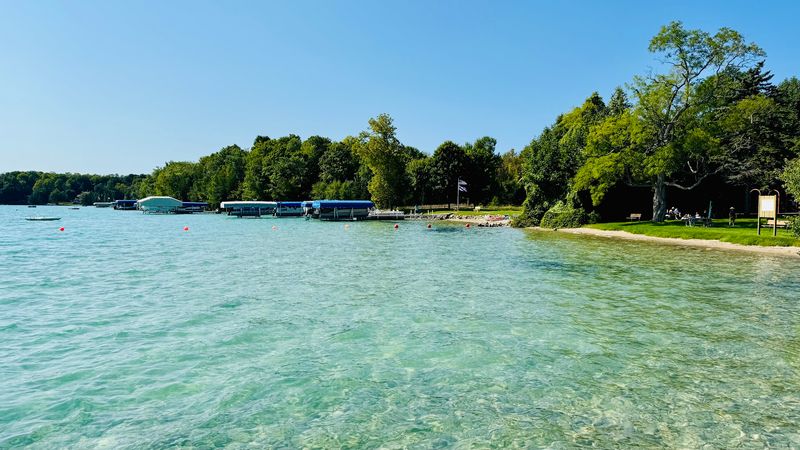
Torch Lake’s shoreline is almost entirely privately owned, which shapes the visitor experience in ways worth understanding before you make the drive. The lake sits in Antrim County, and while its beauty is unquestionable, public beach access is limited enough that arriving without a plan can lead to frustration.
A handful of public access points do exist around the lake, but they vary in quality, parking availability, and facilities.
Boaters have an easier time than non-boaters. With a rented or personal watercraft, the entire lake opens up — all 19 miles of it — and the lack of public beaches becomes largely irrelevant once you’re on the water.
Those arriving without a boat face a narrower set of options: a small public park near the shore, a few semi-secluded access roads, and the occasional launch area that allows swimming alongside boat traffic.
Arriving early is the single most consistent piece of advice from experienced visitors. Popular launch ramps fill their parking lots well before noon on summer weekends, and latecomers sometimes find themselves driving in circles looking for a legal spot to leave their vehicle and trailer.
Getting to the ramp by 9 or 10 a.m. puts you ahead of the rush and guarantees a smoother start to the day.
Accommodations in the immediate area range from lakefront vacation rentals — which command premium prices during summer months — to more affordable options in nearby towns like Bellaire, Elk Rapids, and Mancelona. Staying within 15 miles of the lake is entirely workable, especially if you’re renting a boat and don’t need to walk to the water.
Booking lodging well in advance is essential for July and August visits, when demand consistently outpaces availability throughout the entire region.
Fishing, Diving, and the Quieter Side of the Lake
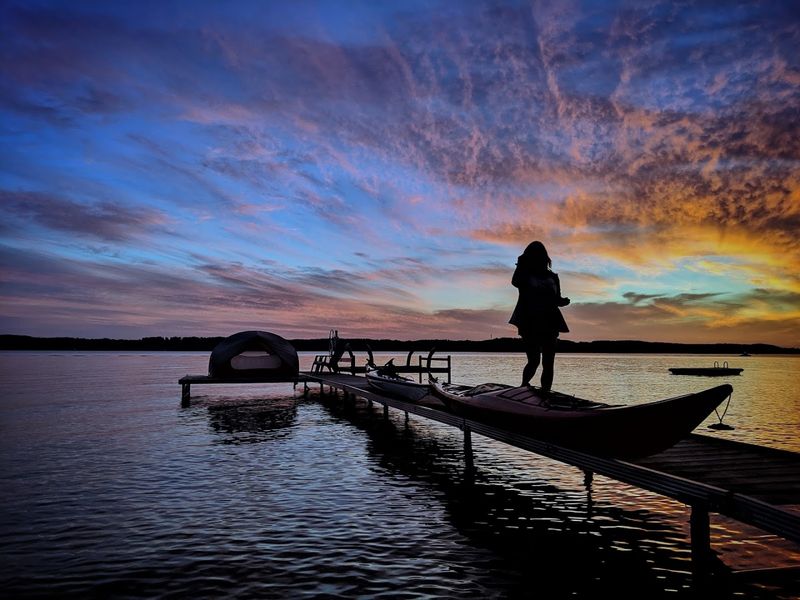
Not everyone who comes to Torch Lake comes for the sandbar crowds. The lake has a quieter, more solitary side that rewards people willing to seek it out.
Fishing draws a steady stream of anglers throughout the season, particularly near the connected waterways. The Grass River, which links Torch Lake to Clam Lake, runs through the Grass River Natural Area and offers a completely different environment — slower current, abundant wildlife, and far fewer powerboats sharing the water.
Clam Lake itself, just south of the Grass River connection, tends to attract serious anglers looking for calmer conditions and better shoreline access. Walleye, perch, and bass move through the connected lake system, and the clarity of the water — while slightly less dramatic than Torch Lake’s main basin — still gives the area a distinctive character compared to most Michigan fishing destinations.
Torch Lake’s depth makes it interesting for diving, though the cold temperatures below the thermocline require proper gear and experience. The underwater visibility in the shallower sections is exceptional, giving divers a clear view of the marl bottom and the rocky ledges that drop away toward the deeper center channel.
Snorkeling in the shallows near rocky access points offers a more approachable version of the same experience for those without full scuba equipment.
Sunsets along the western shoreline are worth building an entire evening around. The light hits the water at a low angle in the final hour before dark, and the turquoise surface shifts through amber and gold before settling into deep blue.
Staying on the lake past the main afternoon rush — whether by boat, kayak, or simply sitting at a shoreline access point — reveals a version of Torch Lake that the midday crowd rarely sees. Bring a jacket; evenings cool quickly even in July.
Why Torch Lake Earns Its Reputation as a Once-in-a-Lifetime Freshwater Experience
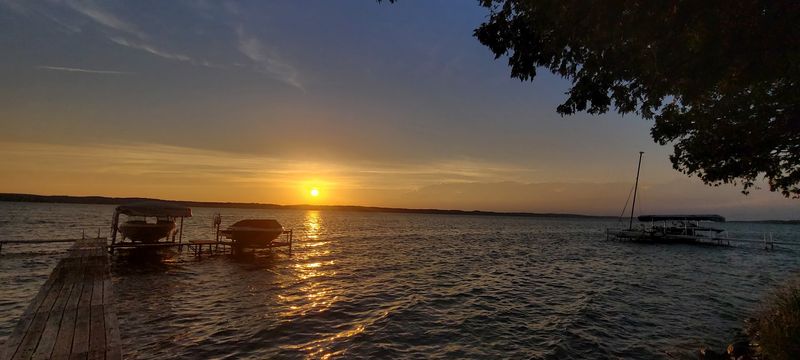
Some places build a reputation on marketing. Torch Lake built its reputation on the actual color of the water.
Photographs circulate constantly on social media — saturated, impossibly blue, looking more like a drone shot over Bora Bora than a lake in the middle of Michigan — and the consistent reaction from first-time visitors is that the real thing somehow exceeds those images rather than falling short of them.
The lake has been drawing people back for generations. Families who first visited in the 1950s and 60s still return every summer, and it’s not hard to understand why.
The combination of scale, clarity, color, and the surrounding northern Michigan landscape creates something that doesn’t fade in memory the way ordinary vacation spots tend to. The small towns nearby — with their local breweries, artisan shops, and unhurried pace — add texture to a trip that might otherwise be purely about the water.
Practical expectations matter, though. Torch Lake rewards visitors who arrive prepared: with a boat reservation, an early departure time, water shoes for rocky sections, and a realistic understanding of limited public shoreline access.
Those who show up expecting a traditional public beach experience may leave disappointed. Those who treat the lake as a boating and paddling destination get something genuinely rare.
The name Waswaaganing — torch light lake — carries a certain weight when you see the water glowing in afternoon sun. It’s a name that predates every dock, vacation rental, and pontoon rental company on the shoreline by centuries, and it still fits perfectly.
Michigan has no shortage of beautiful lakes, but Torch Lake occupies a category of its own — a glacial accident of depth, geology, and light that produces something most people only expect to find thousands of miles from home.