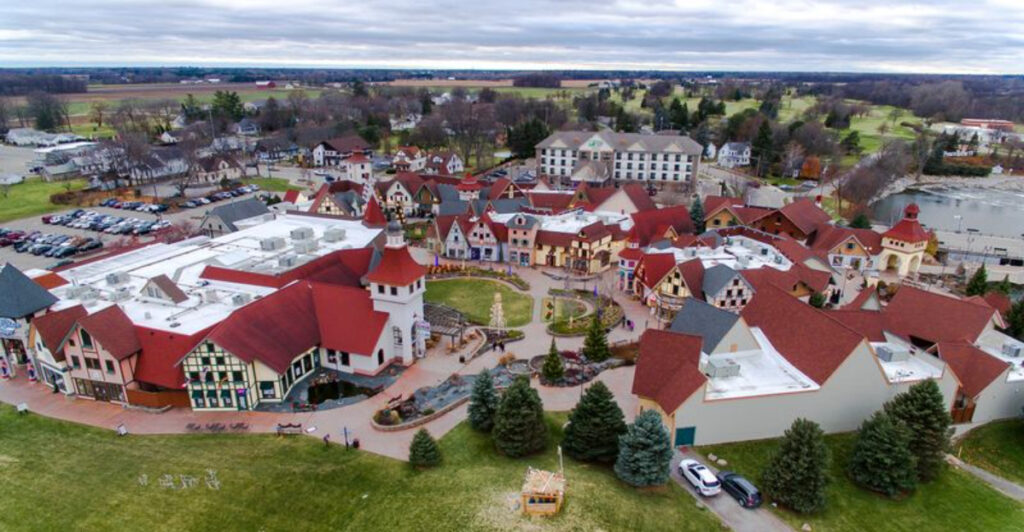
A town does not have to be big to feel like it has its own gravitational pull. In the middle of Michigan, along the banks of the Cass River, Frankenmuth turns Bavarian architecture, hand-painted signs, roasted chicken dinners, and year-round Christmas magic into something visitors remember long after they leave.
The steep-roofed buildings give Main Street its storybook look, while the food, shops, festivals, and old-world charm keep the energy lively in every season. Nearly three million people visit each year, and the appeal becomes clear fast: this is not just a cute small city with a theme.
It is one of Michigan’s most beloved destinations because it knows exactly how to make a simple day trip feel like a tradition.
Bavarian Architecture That Turns Heads Before You Even Park
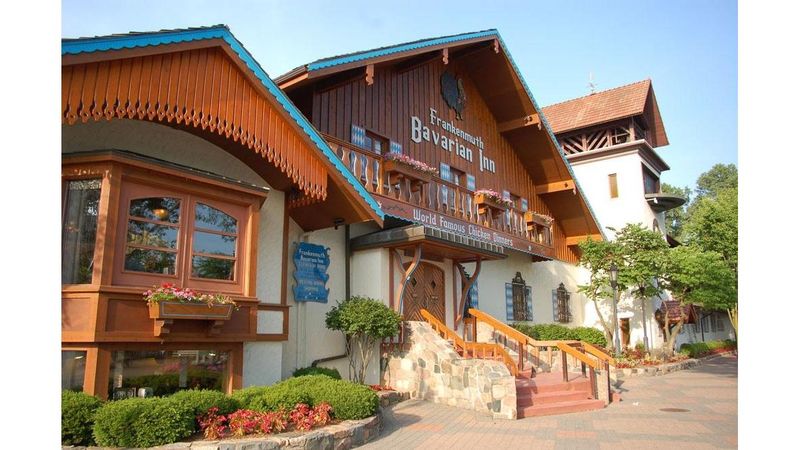
Pulling into Frankenmuth for the first time, the skyline does not look like anything else in Michigan. Steep gabled rooflines rise above the street.
Facades are painted in warm ochres and creamy whites, trimmed with dark wood beams in the half-timbered style that defines traditional Bavarian building design. Flower boxes overflow from window ledges, and hand-lettered signs hang from iron brackets above doorways.
The style is not accidental. Frankenmuth was founded in 1845 by a group of Lutheran missionaries from Franconia, a region in Bavaria, Germany.
They named their settlement after their hometown, combining “Franken” for Franconia and “Mut” for courage. For generations, the community kept its German traditions alive through language, church, and food.
In the 1950s and 1960s, the town made a deliberate choice to lean into that heritage visually, and the Bavarian look spread building by building across downtown.
Today, walking along Main Street feels like a carefully curated version of a European village, but without the transatlantic flight. The Bavarian Inn and Zehnder’s restaurant anchor opposite corners of the street, their buildings large enough to feel almost theatrical.
Smaller shops fill in between them, selling imported German gifts, hand-painted ornaments, and freshly made fudge.
Even the covered wooden bridge at the edge of town, called the Holz-Brücke, was built in the Bavarian style and stretches over the Cass River. It connects downtown to Bronner’s Christmas Wonderland on the south side.
The bridge itself has become a landmark, appearing on postcards and travel photos for decades. The architecture here is not just decorative.
It signals immediately that Frankenmuth operates by its own rules, and those rules involve slowing down, looking up, and paying attention to the details most towns stopped caring about long ago.
The Chicken Dinner That Built a Town’s Entire Identity
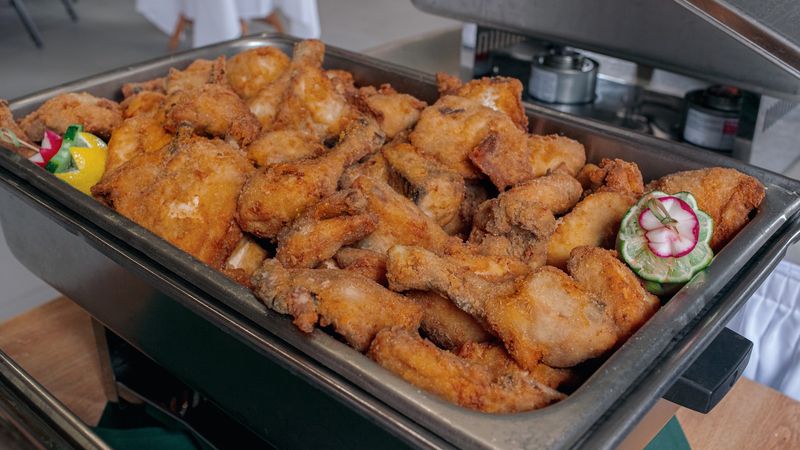
Long before Christmas decorations became Frankenmuth’s calling card, it was chicken that put the town on the map. Specifically, all-you-can-eat family-style chicken dinners served in portions generous enough to make even the hungriest table go quiet.
The tradition dates back to 1856, when a local hotel began feeding traveling lumberjacks with heaping platters of fried chicken, mashed potatoes, stuffing, and bread. The format stuck.
Today, two restaurants carry that legacy in a very big way. Zehnder’s of Frankenmuth and the Bavarian Inn Restaurant sit directly across Main Street from each other, and together they serve hundreds of thousands of chicken dinners every single year.
Both are family-owned, both have been operating for decades, and both offer the same core experience: platters of golden, crispy chicken arrive at the table alongside stuffing, buttered noodles, vegetables, cranberry relish, and freshly baked bread. Portions keep coming until everyone is full.
Zehnder’s opened in its current form in 1928 and has expanded into one of the largest single-restaurant operations in the United States by seating capacity. The Bavarian Inn, developed by the Zehnder family’s former partners, opened across the street in 1959.
The friendly rivalry between them became part of Frankenmuth’s story, and both restaurants now draw equal loyalty from returning visitors.
The chicken dinner experience is not fast food dressed up in a nice room. Servers bring platters to the table in a specific order, and the pace of the meal is deliberately unhurried.
Families spread out across wide booths, and the noise level rises with conversation rather than background music. It is the kind of meal designed to last two hours without anyone noticing.
The food itself is straightforward and satisfying, and that simplicity is exactly the point.
Bronner’s Christmas Wonderland: The Store That Never Closes for the Holidays
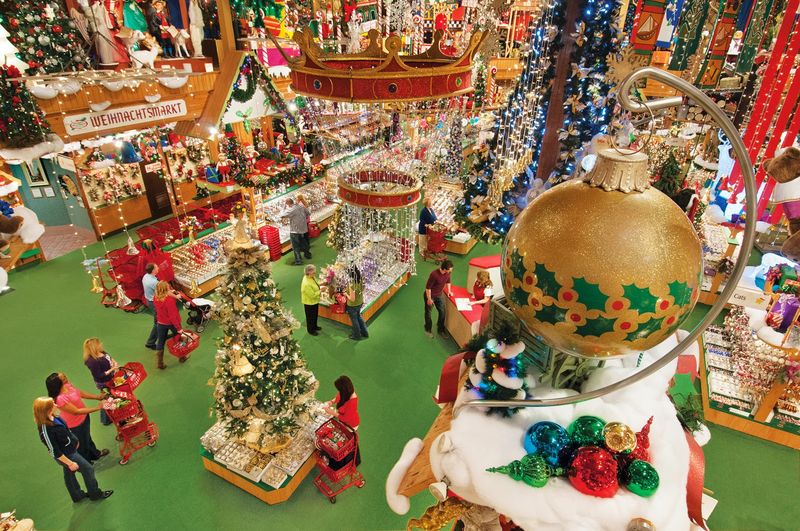
Covering more than five acres of retail floor space, Bronner’s CHRISTmas Wonderland in Frankenmuth is the largest Christmas store on earth. That is not a local boast or a tourist brochure exaggeration.
The store genuinely holds that record, and a single visit makes the claim feel completely believable. The building is enormous, the parking lot rivals a regional mall, and the interior is so densely decorated that first-time visitors often stop just inside the entrance to take it all in.
Wally Bronner opened his shop in 1945 and spent the next five decades expanding it into a destination that draws visitors from every U.S. state and dozens of countries. The store carries more than 50,000 ornament styles, trims from countries around the world, nativity scenes in over 250 languages, and personalized decorations that can be engraved or printed on-site.
There are sections dedicated to specific themes: sports, pets, professions, travel, and religious traditions all get their own aisles.
Outside, the property is lit with more than 100,000 lights during evening hours, and the display runs year-round. A life-size replica of the Oberndorf Chapel in Austria, where “Silent Night” was first performed, sits on the grounds.
It is open for quiet reflection regardless of the season.
Shopping at Bronner’s is not a quick errand. Most visitors spend between one and three hours inside, and it is common to see families spread across different sections of the store before regrouping near the checkout area.
The staff is trained to help locate specific items in a space that could easily feel overwhelming. For anyone who takes holiday decorating seriously, or who simply wants to experience something genuinely unlike any other retail space in Michigan, Bronner’s delivers on every level.
The Cass River, Heritage Park, and Getting Outside in Frankenmuth
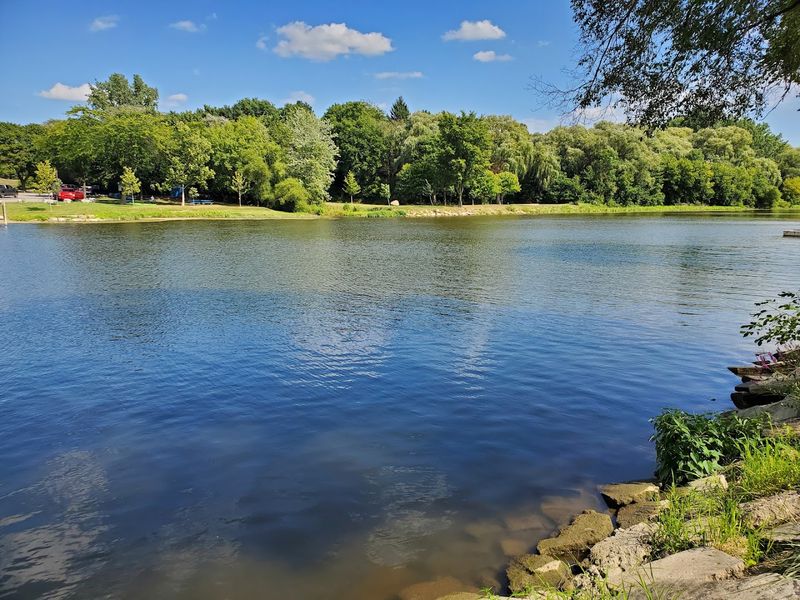
Not everything in Frankenmuth involves eating or shopping. The Cass River runs along the edge of town, and the green space built around it gives the city a quieter, more unhurried side that many visitors overlook entirely.
Heritage Park sits right along the riverbank, offering a riverside pathway, open lawn areas, and an event pavilion used for community gatherings throughout the year.
The park connects naturally to the Holz-Brücke, the covered wooden bridge that crosses the Cass River between downtown and the south side of town. Walking the bridge takes less than a minute, but the structure itself is worth pausing on.
The covered design keeps it shaded in summer and protected from rain, and the view from the middle of the bridge looking downstream shows the river bending through a corridor of mature trees. It is a genuinely peaceful spot that sits just steps from one of the busiest streets in town.
For visitors who want more physical activity, Frankenmuth Aerial Park operates in a wooded area nearby and offers ropes courses and zip lines built into the tree canopy. The courses are designed for different skill and age levels, making it accessible for families with kids as well as adults looking for more of a challenge.
Helmets and harnesses are provided, and staff members are stationed throughout the course.
The river itself is popular with kayakers and canoeists during warmer months. Several outfitters in the area rent equipment and offer shuttle service for multi-hour float trips along the Cass.
The current is gentle enough for beginners, and the tree-lined banks give the paddle a secluded feel even though the town is close by. Frankenmuth rewards visitors who take time to slow down and follow the river away from the main drag.
Michigan’s Military History Gets a Dedicated Home Here
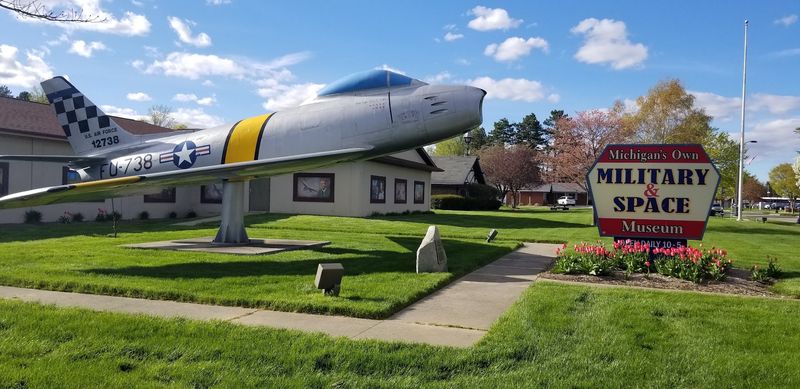
Sandwiched between souvenir shops and restaurants, Michigan’s Military and Space Heroes Museum is easy to walk past without realizing what is inside. That would be a mistake.
The museum is a serious and well-organized tribute to Michigan residents who served in the military or contributed to the U.S. space program, and its collection is more substantial than the modest exterior suggests.
The exhibits include flight gear worn by actual pilots, Medals of Honor awarded to Michigan servicemembers, military uniforms from multiple branches and eras, and equipment used in conflicts ranging from World War II through more recent deployments. The space program section covers Michigan’s contributions to NASA missions, featuring artifacts and photographs that connect the state to some of the most significant moments in American exploration history.
What separates this museum from a generic military display is the emphasis on individual stories. Each exhibit ties back to a specific person from Michigan, giving the artifacts a personal weight that broader military museums sometimes miss.
Photographs, letters, and biographical notes accompany the objects, and the cumulative effect of seeing so many lives represented in a single building is quietly powerful.
Admission is free, which makes the museum an easy addition to any Frankenmuth itinerary. Most visitors spend between 45 minutes and an hour and a half inside, depending on how closely they read the displays.
The museum is run largely by volunteers with deep personal connections to the military community, and that care shows in how the exhibits are maintained and presented.
For families traveling with children, the museum offers a concrete way to discuss history and service outside of a classroom setting. The combination of physical objects, photographs, and personal stories tends to hold attention in a way that text-heavy exhibits sometimes struggle to do.
It is one of Frankenmuth’s most underrated stops.
Planning Your Visit: When to Go and How to Make the Most of Frankenmuth
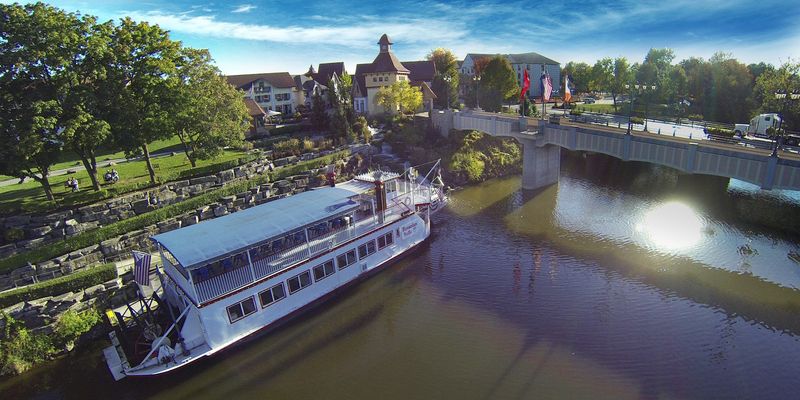
Frankenmuth runs on a year-round calendar, but the experience shifts noticeably depending on when you arrive. Summer brings the highest foot traffic, with families filling the sidewalks and the chicken dinner restaurants running full capacity most evenings.
The weather is warm enough for the Aerial Park, river paddling, and long walks through Heritage Park. Crowds are real, and parking near Main Street can require patience on weekends.
Fall is widely considered the best season for a quieter visit. The trees along the Cass River turn in late September and October, and the Bavarian architecture looks particularly sharp against the orange and gold foliage.
Crowds thin slightly after Labor Day, and the restaurants remain fully operational. The Frankenmuth Oktoberfest celebration draws visitors specifically for German food, live music, and beer garden events held over multiple weekends.
Winter transforms the town into something close to a live Christmas card. The streets are lit heavily from late November through early January, and Bronner’s hits its peak energy during this stretch.
The covered bridge and riverside path take on a different character in the snow, and the chicken dinners feel even more appropriate on a cold evening. Parking is easier on weekdays, and midweek visits in December offer a less crowded experience without sacrificing any of the atmosphere.
Spring is the shoulder season, with smaller crowds and occasional deals on lodging. Both the Bavarian Inn and Zehnder’s have hotel properties attached to their restaurants, which makes staying overnight convenient.
Several bed and breakfasts operate in the surrounding area as well. Most attractions are open year-round, and the Frankenmuth Historical Museum, which documents the town’s German founding and early settlement history, is worth a stop in any season to understand why this particular place developed the way it did.