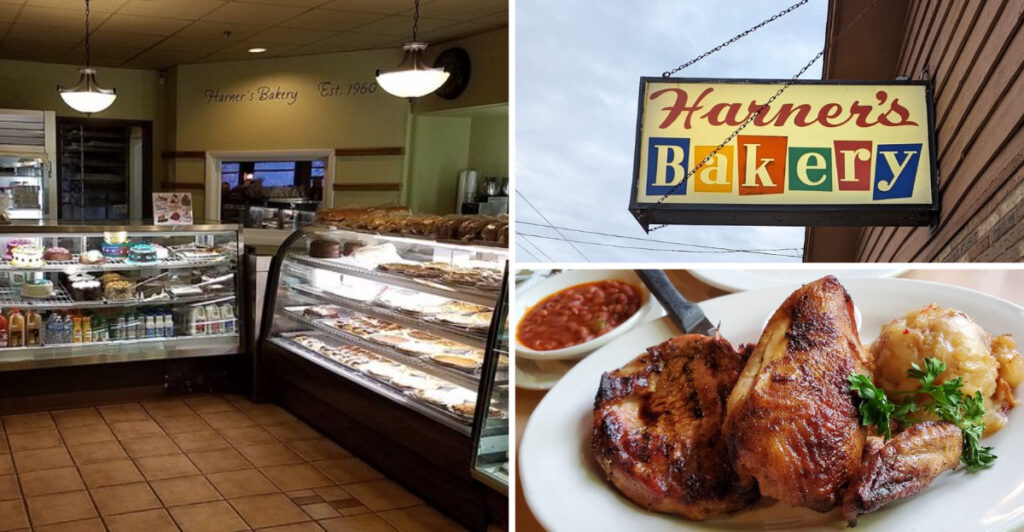
For more than 65 years, Harner’s Bakery & Restaurant has been one of Illinois’ most beloved destinations for homemade donuts, fresh breads, hearty breakfasts, and classic comfort food. Overlooking the Fox River in North Aurora, this family-owned favorite blends the warmth of a traditional neighborhood bakery with the generous portions and welcoming atmosphere of a longtime local restaurant.
Many visitors arrive planning to grab a pastry and end up staying for breakfast—or leave with boxes of baked goods for the drive home. If you’re looking for an authentic Illinois dining experience rooted in tradition, Harner’s is a place you’ll want to visit again and again.
Where the Bakery Hits You First
The smartest thing about Harner’s reveals itself before you even settle into a seat. You enter through the bakery, not as a side attraction, but as the opening scene, with cases lined in donuts, cookies, pastries, breads, and pie that instantly reset your plans.
A quick breakfast suddenly becomes a longer stop, because the room puts dessert, take-home treats, and dinner-table bread into the same conversation.
That layout changes the pace in a way chain restaurants never can. Instead of moving straight to a host stand and menu, your attention gets pulled toward glazed surfaces, frosted edges, stacked loaves, and the kind of baked goods that make practical decisions harder than they should be.
Even if you came focused on eggs or a hot lunch, the bakery frames the entire visit around abundance. Harner’s also benefits from contrast.
The display side carries the lively energy of a neighborhood bake shop, while the restaurant beyond it settles into a broader, slower dining rhythm with booths, tables, and room to spread out.
That first shift from sweet-case excitement to down-home dining gives the place an unusually layered identity, and it works because both halves support each other rather than compete.
There is also a visual honesty to it. Nothing about the setup suggests polished trendiness or carefully staged rustic theater.
It presents itself as a working bakery and a full-service restaurant under one roof, which is far more convincing than places that borrow farm-style decor without the substance to back it up.
By the time you reach the table, Harner’s has already made a strong argument: this is not a meal stop with a few pastries by the register. It is a bakery-led destination where the first decision is rarely what to order now, but what to carry out later.
Pancakes, Pot Pie, and the Comfort-Food Core
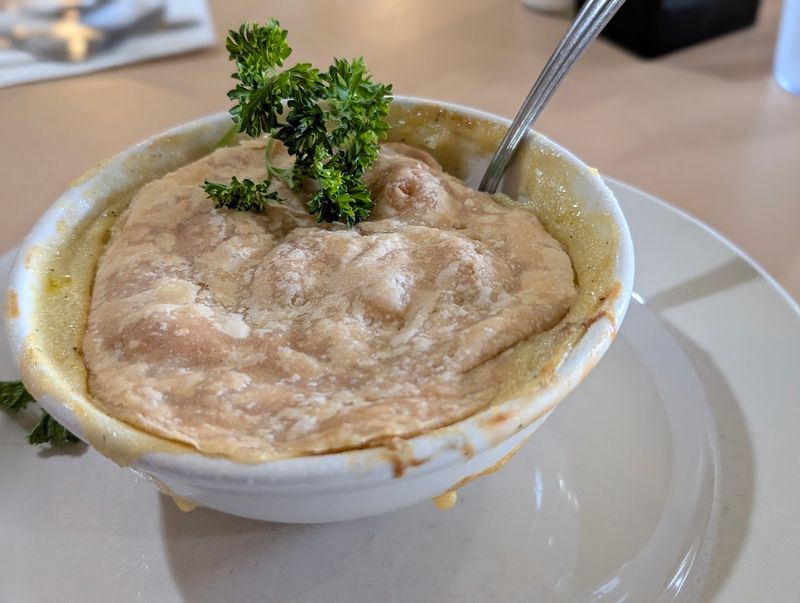
Once you get past the pastry distraction, the restaurant side makes its case with scale, range, and a very Midwestern sense of satisfaction.
Harner’s is built around American comfort food, and the menu appears to understand that appetite can shift fast between dawn coffee, a pancake stack, a fish fry, or a plate that belongs closer to supper than brunch.
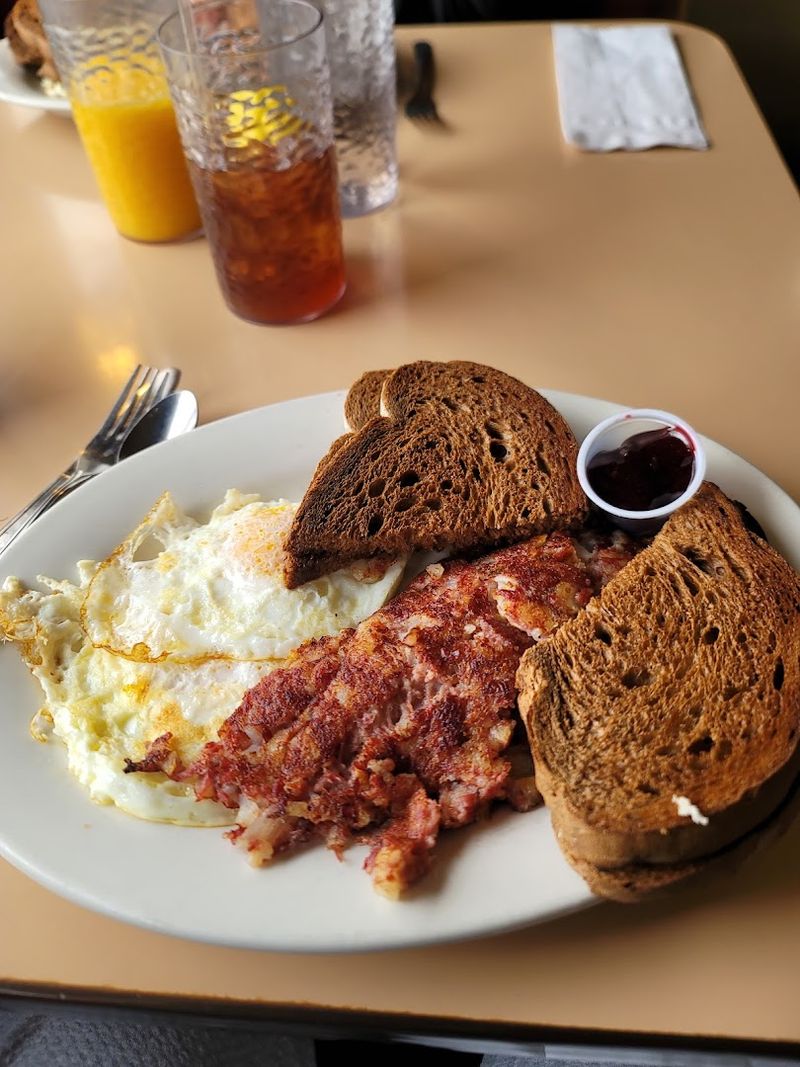
That wide reach matters here because the place does not depend on one signature dish to justify the trip. Breakfast is clearly a major draw, especially with the early opening hour and menu variety.
Large pancakes, thick French toast, egg plates, omelets, raisin toast, and more substantial morning options all fit the mood of a restaurant that treats breakfast as a full event rather than a quick necessity.
Portions are repeatedly described as generous, which lines up with the style of operation and the menu’s broad, old-school confidence.
Lunch and dinner carry the same hearty logic. Fish, fried chicken, meatloaf, pork cutlets, hot sandwiches, roast-style plates, and comfort classics give the place a useful flexibility, especially if your table includes both sweet-breakfast people and savory-dinner people.
A restaurant with this kind of longevity usually survives by feeding mixed groups well, and Harner’s appears designed for exactly that situation.
Just as important, the menu seems to avoid narrowing the experience into novelty. It leans into recognizable, filling food that suits regular visits, family meals, and repeat orders without demanding explanation.
That steadiness helps explain why the restaurant functions as more than a special occasion stop. If the bakery supplies the excitement, the kitchen supplies the anchor.
Harner’s earns attention not by chasing trends, but by offering the kind of breakfast and comfort-food lineup that makes a table slow down, order broadly, and start planning the return visit before the check arrives.
The Old-School Bonus: Soup, Salad, and Bread That Still Matter
One of the most distinctive parts of Harner’s is not flashy at all. It is the soup and salad bar, an old-school feature that instantly separates the restaurant from newer breakfast spots built around speed, minimal menus, and bare tabletops.
Here, a meal can stretch out a little, and that changes the rhythm of the whole visit. In practical terms, the bar broadens the experience beyond a single entree.
A bowl of tomato basil, minestrone, or another rotating homemade-style soup adds warmth before the main plate lands, while salad options give the table an extra layer of choice that works for lighter eaters and hearty appetites alike.
Even small supporting details, like bread served with meals, land differently now because so many restaurants have stripped those touches away.
Harner’s seems to understand the value of that older dining model. Bread, soup, salad, and a broad menu create a sense of generosity without requiring theatrical presentation.
Instead of pushing you through the meal, the setup invites a longer, more settled kind of dining, whether you are meeting family, pausing after a trail ride, or just refusing to turn breakfast into a rushed errand.
This matters especially because the bakery is attached. If you start with soup, add a salad, order a hot entree, then wander back out with pastries or a loaf of bread, Harner’s effectively turns one stop into several useful ones.
It is part restaurant, part provisions counter, and part comfort routine. The result is a rare kind of convenience that still feels personal.
Not convenience in the drive-thru sense, but in the older sense of a place that can handle breakfast, lunch, take-home sweets, and a table full of different cravings without losing its identity. That kind of breadth is harder to find than it should be.
A Fox River Table Changes the Entire Meal
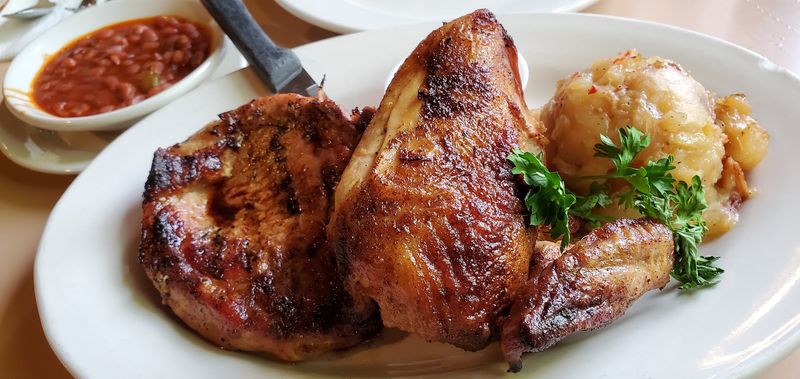
Location does a surprising amount of work at Harner’s. The restaurant sits along the Fox River, and that nearby water gives the place an extra dimension that would be impossible to fake in a standard roadside dining room.
A good meal is one thing. A good meal with river-facing windows and easy access to the bike trail is a different category altogether.
Inside, that setting seems to shape how the restaurant is experienced. Some tables look out toward the water, which softens the room and adds movement beyond the plates and coffee cups.
Even if you are focused on pancakes or pie, a river view introduces a pause into the meal, making the space useful not just for eating, but for lingering a little longer than expected.
The bike trail behind the property adds another layer of function. Harner’s is not isolated from the town around it; it is connected to motion, routines, and local recreation.
That means the place can naturally serve different kinds of stops in a single day, from early breakfast before errands to a bakery run after a trail ride or a sit-down lunch that breaks up an afternoon outdoors.
Visually, the setting also helps explain why Harner’s works as an all-ages destination. Riverfront booths, broader dining spaces, and a bakery entrance create enough activity to keep the visit interesting without making it noisy or frantic. You can read the room as casual, scenic, and practical all at once.
For an Illinois restaurant with deep roots, that combination is especially effective. Harner’s is not trading on scenery alone, and it is not hiding inside nostalgia either.
The river simply expands the experience, giving homemade food a stronger backdrop and giving North Aurora a dining room that interacts directly with its landscape instead of turning away from it.
Why Harner’s Still Reads Like Illinois, Not a Theme
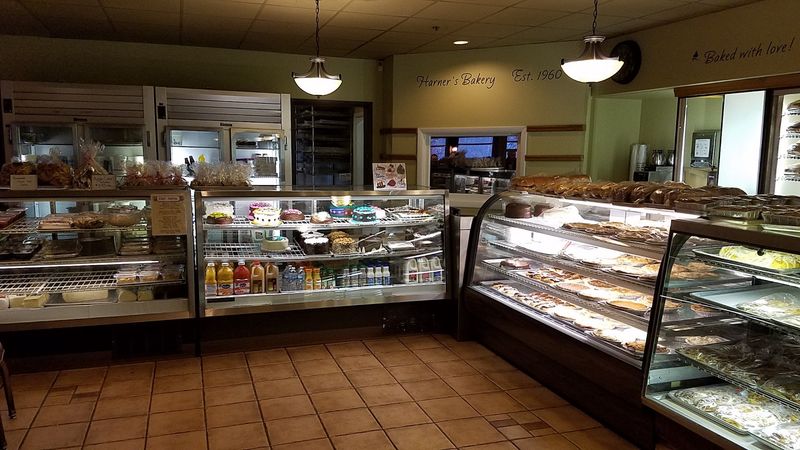
A lot of long-running restaurants lean hard on nostalgia and end up looking staged. Harner’s appears to avoid that trap by functioning first and commemorating itself second.
The place has history, but it comes through in use, layout, and continuity rather than in a forced performance of the past.
That distinction matters when you are writing about a business that has been operating for 65 years. A bakery and restaurant with that kind of staying power can easily become overly self-conscious, turning every wall into a museum and every meal into a speech about legacy.
At Harner’s, the stronger impression is that history lives in the routine: the bakery cases at the entrance, the early opening time, the broad menu, the family-restaurant scale, and the confidence to keep serving comfort food in a down-home setting.
Details from the space deepen that sense of continuity. Diners have noted media accolades in the hallway, a large stone fireplace in a back room, and a white silo outside lit at night, all of which suggest a property that has grown over time rather than being assembled around one design trend.
Those features provide character, but they also help explain how Harner’s became more than a simple eatery. There is a local usefulness to the place that feels distinctly Illinois.
It can be a breakfast stop, bakery pickup, family lunch room, after-trail destination, or dinner option without changing personality for each role. That adaptability is the kind of regional restaurant strength that chains try to mimic and rarely achieve.
Most important, Harner’s seems comfortable being substantial. It is not trimmed down into a concept. It is a bakery, restaurant, river stop, and community fixture all at once, and its long life makes more sense when viewed through that wider lens. The history is there, but it is carried by function, not costume.
Best Time to Go and How to Play It Smart
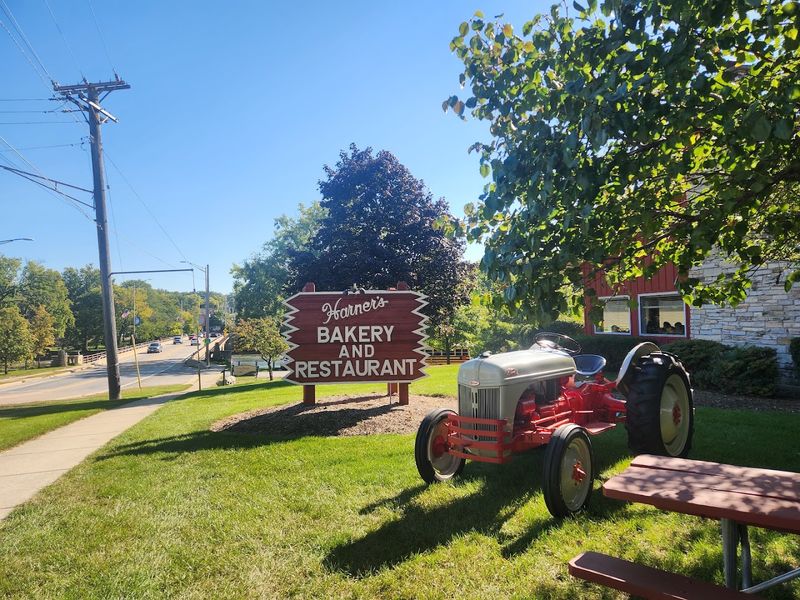
Harner’s is easiest to enjoy when you approach it like a local institution instead of a secret stop. The restaurant opens early at 5:30 AM on most operating days, stays closed on Tuesdays, and runs shorter hours on Sunday than on Friday or Saturday nights.
Those details immediately suggest two workable strategies: go early for breakfast energy and better timing, or come later with a clear plan and some patience.
Waiting can be part of the equation, especially at busier periods. That is not unusual for a place with broad appeal, generous portions, and a bakery attached, but it does mean your timing matters.
If your main goal is a relaxed meal rather than the peak buzz of the room, off-rush weekday mornings or an earlier lunch can be the smarter move.
Counter seating is also worth considering when available. In classic restaurants, counter spots often solve the wait issue while keeping you close to the action, and Harner’s seems to maintain some of that old-fashioned practicality.
If a river-view booth is the dream, arriving earlier improves the odds and makes the scenic setting part of the reward.
There is another smart move here: decide before sitting down whether you are taking bakery items home. Doing that mental math early keeps the meal from ending in rushed display-case indecision while other people line up behind you.
Donuts, cookies, breads, danishes, pies, and coffee cake can turn a simple breakfast stop into tomorrow’s breakfast too.
The place also works especially well as a combined outing. A trail ride, a casual drive, a family breakfast, or a comfort-food lunch all pair naturally with the location.
Harner’s rewards a little planning, not because it is complicated, but because there is enough under one roof to make a spontaneous visit grow larger than expected in the best possible way.
The Take-Home Box Is Part of the Experience
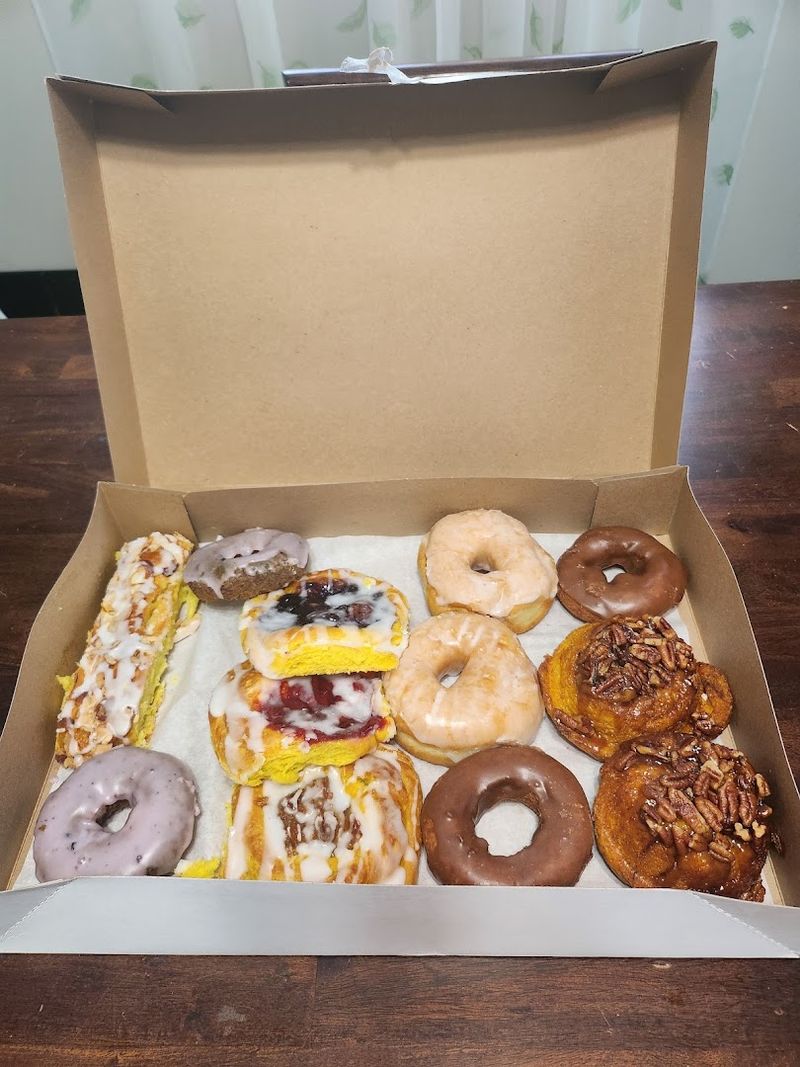
The final reason Harner’s stands out is simple: the visit does not really end at the table. A lot of restaurants offer dessert as an afterthought, maybe a slice of pie or a standard cake list.
Harner’s operates differently because the bakery is woven into the identity of the place, giving every meal a built-in second act.
That matters because take-home bakery culture changes how you value the stop. A breakfast plate can lead to a box of donuts for tomorrow, raisin bread for later, cookies for the car, or a pie that turns an ordinary evening at home into an extension of the outing.
The bakery is not merely a souvenir counter. It is a practical continuation of the restaurant’s homemade appeal. Specific items keep surfacing for a reason: donuts, raspberry danish, cherry squares, strawberry turnovers, cookies, coffee cake, breads, Boston cream pie. You do not need to order the same things to understand the pattern.
Harner’s seems strongest when it lets the baked side of the business amplify the meal rather than compete with it, giving you multiple ways to leave satisfied.
That extra usefulness also sharpens the restaurant’s identity in a crowded market. Plenty of breakfast places can make eggs.
Fewer can feed you, stock your kitchen with fresh baked goods, and give the whole outing a more generous shape without feeling gimmicky. The bakery provides texture, aroma, color, and impulse all at once.
In the end, Harner’s stands out because it offers a fuller version of what a local restaurant can be. River setting, comfort food, bakery cases, family scale, and long-running Illinois character all connect under one roof.
You arrive for a meal, but the smartest move is leaving room in the plan and room in the car for the white bakery box on the way out.