Tennessee hides some of the most enchanting hiking trails in the country, where every turn feels like stepping through a wardrobe into another world. Moss-draped forests, ancient stone arches, hidden waterfalls, and mysterious caves create landscapes that rival anything from your favorite fantasy novels.
Whether you’re chasing waterfalls that vanish underground or walking through natural doorways carved into cliffs, these trails prove that magic doesn’t just exist in books—it’s waiting right here in the hills and hollows of Tennessee.
1. Alum Cave Trail — Great Smoky Mountains National Park
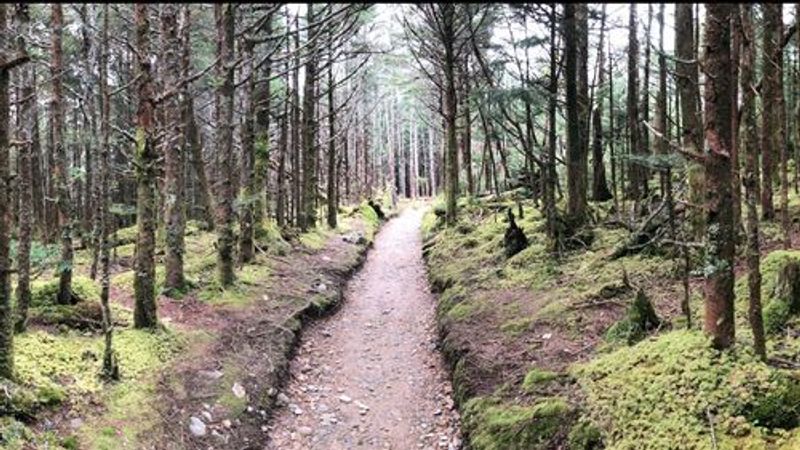
Walking through Alum Cave Trail feels like entering a portal to an ancient realm where giants once carved pathways through mountains. The 4.4-mile journey to the cave bluff takes you past rushing creeks that sing over smooth stones, through tunnels of rhododendron that block out the sky, and up to rock formations so massive they dwarf everything around them.
Arch Rock appears about halfway through, a natural stone tunnel that hikers must climb through using metal cables bolted into the rock face.
Old-growth hemlocks tower overhead like sentinels guarding forgotten secrets. Their thick trunks and twisted roots create a cathedral-like atmosphere that makes you want to whisper.
Sunlight filters through the canopy in golden shafts that look painted onto the forest floor, especially on foggy mornings when the whole trail transforms into something from a dream.
The actual Alum Cave isn’t technically a cave but a massive concave bluff that shelters hikers from rain and offers jaw-dropping views of the valley below. Icicles form along the overhang in winter, creating curtains of frozen water that catch the light like crystals.
The rock face stretches over 100 feet high and extends back deep enough to feel like you’re standing inside a stone giant’s mouth.
Exposed roots snake across the trail like the fingers of sleeping forest spirits. Every season paints this trail differently—spring brings wildflowers carpeting the forest floor, summer offers lush green canopies, fall explodes in fiery colors, and winter reveals the bare bones of the landscape in stark, beautiful detail.
This isn’t just a hike; it’s a journey through landscapes that seem designed by someone with an imagination bigger than reality.
2. Twin Arches Trail — Oneida
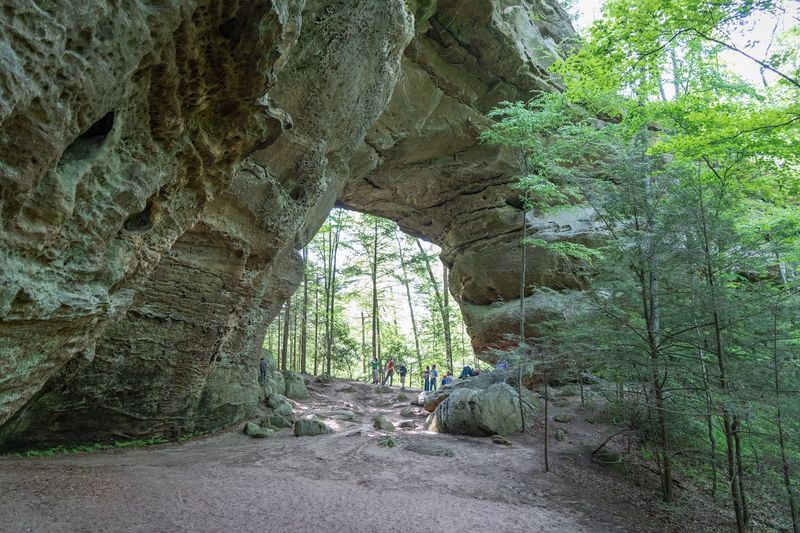
Standing beneath the Twin Arches feels like discovering the entrance to a kingdom that time forgot. These aren’t your average rock formations—they’re colossal sandstone bridges that span overhead with such grandeur you half expect a procession of elves to march through at any moment.
The North Arch stretches 93 feet across and rises 62 feet high, while the South Arch measures 135 feet long and towers 103 feet above the forest floor, making them among the largest natural arches in Tennessee.
The 4.6-mile loop trail winds through a landscape that seems plucked from a fantasy artist’s sketchbook. Thick forests give way suddenly to these monumental stone structures, and the contrast stops you in your tracks every single time.
Moss clings to the weathered sandstone in patches of emerald green, softening the ancient rock with touches of life that have grown there for decades.
Photographers go wild here because the arches frame the sky and surrounding forest in ways that look almost too perfect to be natural. Morning light filters through the openings, casting dramatic shadows that shift and change as the sun moves.
During autumn, the view through the arches explodes with color as maples and oaks surrounding the formations turn brilliant shades of orange, red, and gold.
Rock shelters tucked beneath the arches offer cool respite on hot days and dry refuge when rain sweeps through. Ferns sprout from cracks in the stone, and fallen leaves collect in natural bowls carved by centuries of water erosion.
The scale of these formations makes humans feel appropriately small, reminding us that nature has been sculpting masterpieces long before we arrived and will continue long after we’re gone.
3. Trillium Gap Trail — Gatlinburg
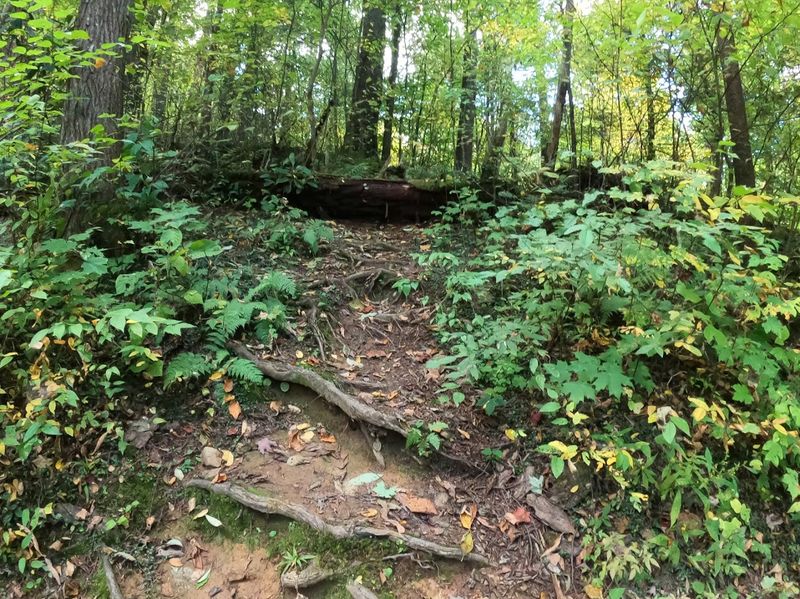
Few trails in Tennessee let you walk behind a waterfall, but Trillium Gap Trail delivers exactly that kind of storybook moment. The 2.6-mile trek to Grotto Falls takes you through a landscape so lush and green it feels like the forest itself is breathing.
Rhododendron thickets create natural tunnels that arch overhead, blocking out the sky and wrapping you in a cocoon of glossy leaves that rustle with every breeze.
Moss blankets everything here—boulders wear thick green coats, fallen logs sprout fuzzy emerald cushions, and even the trail edges glow with soft verdant growth. The air smells rich and earthy, heavy with the scent of decomposing leaves and damp stone.
Every step feels like you’re walking deeper into a realm where woodland creatures might speak and trees might uproot themselves to dance when humans aren’t watching.
Grotto Falls itself drops 25 feet in a graceful curtain of water that you can walk completely behind thanks to a natural alcove carved into the rock. The roar of falling water echoes off the stone walls, and mist coats everything within reach, leaving your face damp and refreshed.
This trail doubles as a supply route for the historic LeConte Lodge, so don’t be surprised if you encounter llamas carrying provisions up the mountain. These sure-footed pack animals add an unexpected and delightful element to the hike, their presence somehow making the whole experience feel even more fantastical.
Wildflowers bloom along the trail in spring, including the trillium that gives the gap its name, carpeting the forest floor in white, pink, and burgundy blooms that look hand-painted by forest fairies.
4. Virgin Falls Trail — Sparta
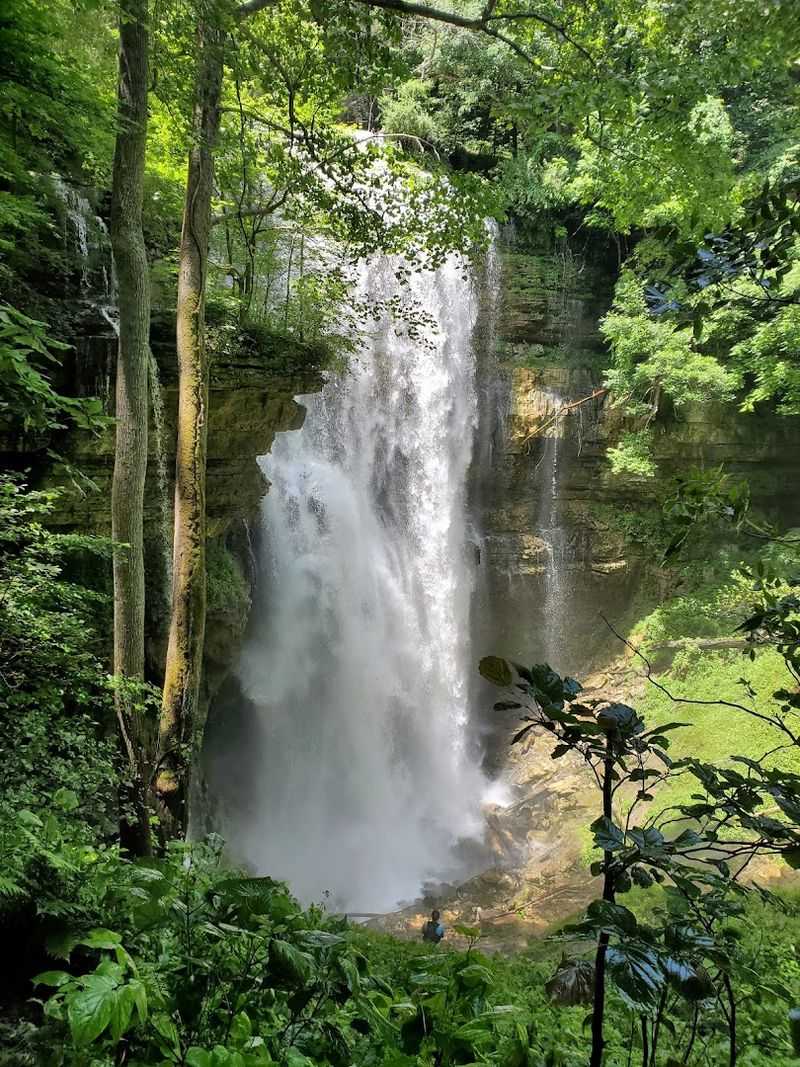
Virgin Falls doesn’t follow the rules that normal waterfalls obey, and that’s exactly what makes it feel like something out of a fantasy novel. This 110-foot cascade emerges from a cave opening halfway up a cliff, plunges dramatically into a pool below, then promptly vanishes back underground through a sinkhole—appearing from nowhere and disappearing to nowhere like a magic trick performed by the mountain itself.
The 8-mile round trip to reach this geological wonder takes you through rugged terrain that tests your legs but rewards your eyes.
The trail crosses several smaller waterfalls before reaching the main attraction, each one beautiful enough to be a destination on its own. Big Laurel Falls drops 40 feet in a graceful veil, and Sheep Cave creates a natural shelter behind rushing water where you can rest and feel the spray on your face.
Rock formations jut from the forest floor at odd angles, creating a landscape that looks like giants scattered building blocks across the mountainside.
When you finally reach Virgin Falls, the sight justifies every uphill step and every slippery rock crossing. Water pours from the dark cave mouth with thunderous force, crashing into the pool below and sending up clouds of mist that catch sunlight in brilliant displays.
The sinkhole that swallows the water sits just feet away, creating a circular journey for the stream that makes no logical sense but exists anyway, defying expectations.
Moss and ferns thrive in the constant moisture surrounding the falls, creating hanging gardens on every available surface. The amphitheater of rock walls focuses the sound of falling water, amplifying it into a roar that drowns out conversation.
This isn’t an easy hike, but nothing worth finding ever is, and Virgin Falls ranks among Tennessee’s most spectacular hidden treasures.
5. Hazard Cave Trail — Jamestown
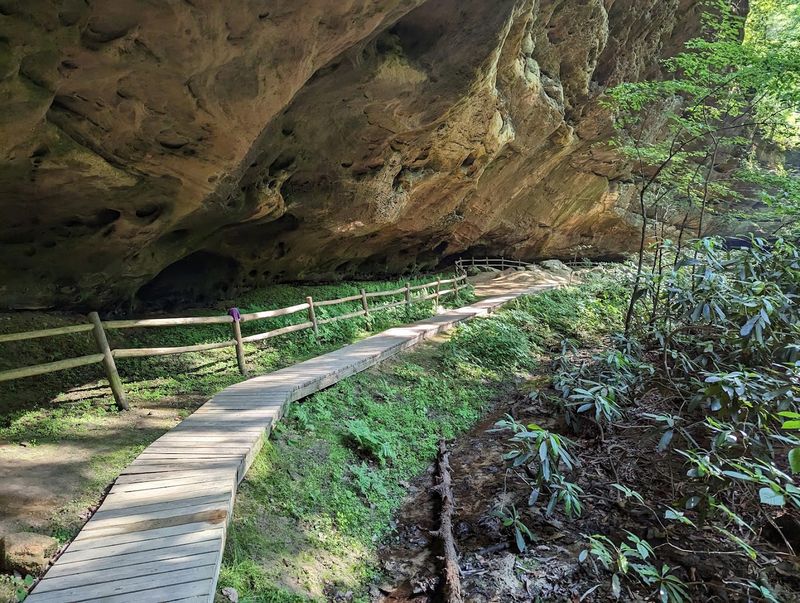
Magic doesn’t always announce itself with grand gestures—sometimes it whispers from beneath stone overhangs draped in dripping moss. Hazard Cave Trail covers just 1.5 miles round trip, but that short distance packs more enchantment per step than trails three times its length.
Sandstone cliffs tower above the path, their faces streaked with mineral deposits that paint abstract patterns in rust, black, and cream.
The rock shelters here run deep enough to qualify as shallow caves, their ceilings blackened by ancient campfires lit by people who sought refuge here centuries ago. Water seeps constantly through cracks in the stone, creating a perpetual drizzle that nourishes thick growths of moss, ferns, and delicate wildflowers that bloom even in the shadowy depths.
The sound of dripping water creates a natural percussion that echoes off the rock walls in a rhythm that feels almost musical.
Thick greenery crowds the trail, with rhododendron and mountain laurel forming dense thickets that block sightlines and create a sense of mystery around every bend. Exposed tree roots grip the cliff faces like gnarled fingers, and fallen leaves collect in natural bowls carved by centuries of erosion.
The atmosphere here feels heavy with age and secrets, as if the stones themselves remember everything they’ve witnessed.
During wet seasons, small waterfalls trickle down the cliff faces, adding movement and sound to the already atmospheric setting. Sunlight rarely penetrates the thick canopy and deep overhangs, leaving the cave areas in perpetual twilight that makes you want to speak in hushed tones.
This isn’t a trail you hike for exercise—you hike it to feel transported, to stand in places that seem to exist slightly outside normal time, to remember that Tennessee holds pockets of wilderness that still feel genuinely wild and untouched.
6. Porters Creek Trail — Great Smoky Mountains National Park
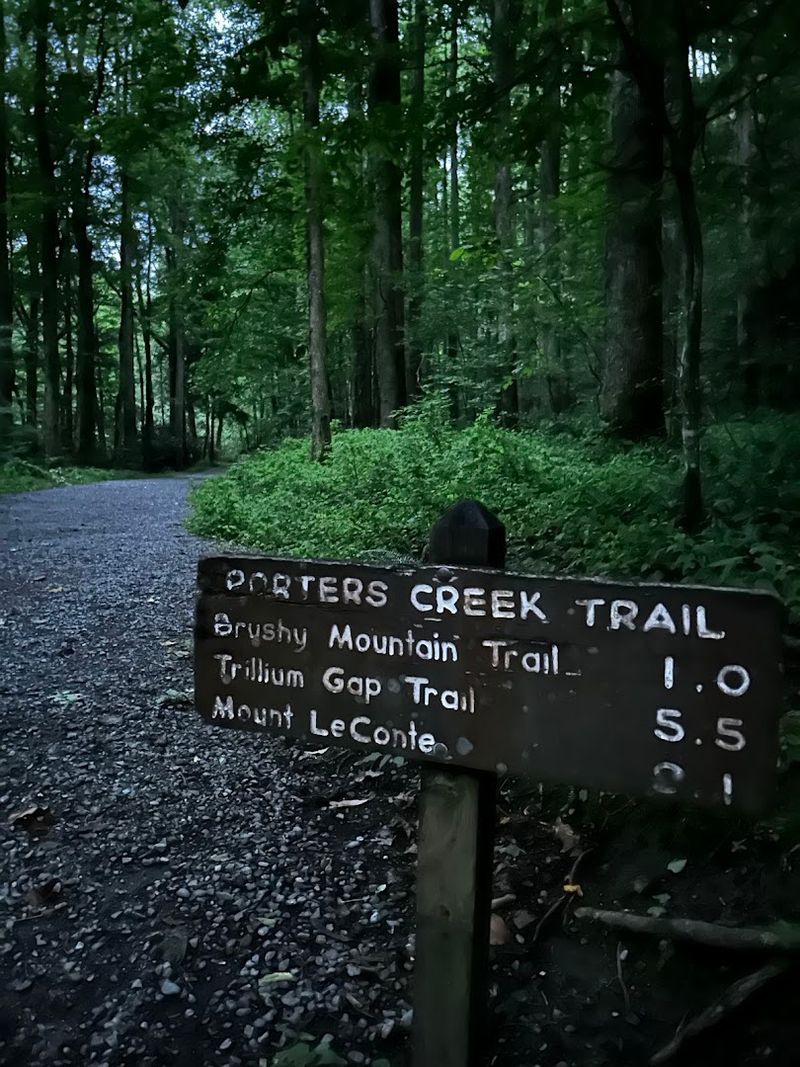
History and nature blend seamlessly along Porters Creek Trail, where every moss-covered stone wall and crumbling chimney tells stories of families who carved lives from these mountains generations ago. The 4-mile round trip to Fern Branch Falls passes through what feels like an enchanted forest reclaiming abandoned homesteads, turning human history into fairy tale ruins.
Stone walls line portions of the trail, their carefully stacked rocks now draped in thick moss and sprouting ferns from every crack and crevice.
Wooden bridges cross Porters Creek multiple times, each crossing offering views of water tumbling over smooth stones worn round by centuries of flow. The creek sings constantly, providing a soundtrack that changes pitch and volume depending on recent rainfall.
Old-growth trees tower overhead, their massive trunks proof that this forest has been regenerating for decades since the last residents departed.
Spring transforms this trail into something from a watercolor painting when wildflowers carpet the forest floor in waves of color. Trillium, violets, and wild geraniums bloom in such profusion that you have to watch your step to avoid crushing them.
The abundance of flowers creates a sweet perfume that mixes with the earthy scent of decomposing leaves and damp soil, a combination that smells exactly like life and growth.
Fern Branch Falls drops in a graceful cascade that spreads across a rock face like a bridal veil, surrounded by—predictably—masses of ferns that thrive in the constant spray. The falls aren’t tall or thunderous, but they possess a delicate beauty that feels more intimate than dramatic.
Remnants of old homesites dot the trail, including chimneys, walls, and foundations slowly being absorbed back into the forest, reminding us that nature always reclaims what we build, given enough time.
7. Stone Door Trail
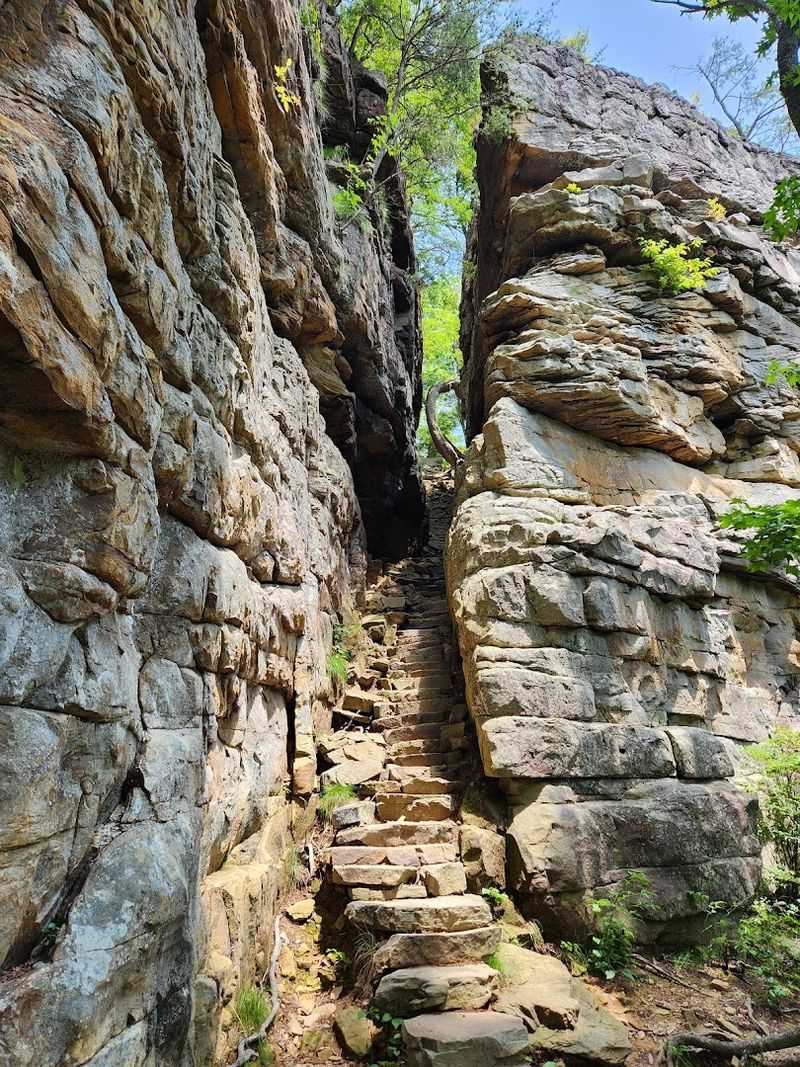
Approaching the Stone Door feels like finding the secret entrance to a hidden kingdom that only reveals itself to those persistent enough to seek it out. This dramatic crack in the sandstone cliff doesn’t announce itself until you’re nearly upon it—then suddenly the rock face splits open in a narrow vertical fissure just wide enough for humans to squeeze through single file.
The passage runs about ten feet long, with walls that rise overhead and block out the sky, creating a moment of darkness before you emerge on the other side to spectacular views.
The 1.5-mile trail to reach the Stone Door winds through typical Cumberland Plateau forest, pleasant but unremarkable, which makes the sudden appearance of the cliff edge and the dramatic doorway even more impactful. Rock formations jut from the plateau top at odd angles, creating a landscape that looks like the earth’s crust cracked and heaved during some ancient upheaval.
Lichens paint the stone in shades of gray, orange, and pale green, adding color to the weathered sandstone.
Once through the Stone Door, the trail follows the cliff edge along a natural rock balcony that offers sweeping views of the valley below. On clear days, the vista stretches for miles, with forested ridges rolling away in waves of blue and green.
The drop-off is sheer and dramatic, making this section not ideal for those uncomfortable with heights, but the views justify the adrenaline.
Ravens and hawks ride thermals rising from the valley, soaring at eye level as you stand on the cliff edge. The wind carries the scent of pine and the sound of distant water, creating a sensory experience that feels both exhilarating and peaceful.
This trail proves that sometimes the best magic comes in small packages—the Stone Door itself takes only seconds to pass through, but the experience of squeezing through that narrow crack in the rock lingers in memory for years.
8. Grundy Forest Day Loop — Tracy City
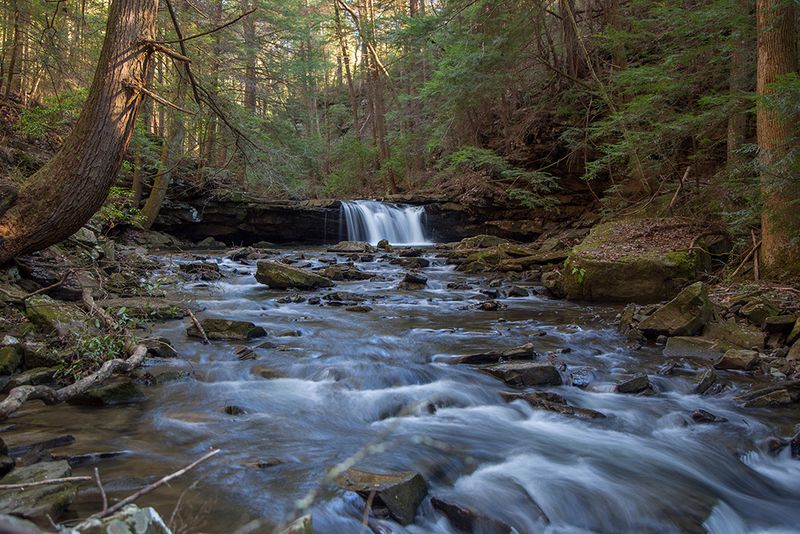
Grundy Forest Day Loop packs more visual drama into 2 miles than most trails manage in ten, with every turn revealing another scene that looks carefully composed by a film location scout. Ancient hemlocks and hardwoods create a canopy so thick that the forest floor exists in perpetual shade, cool and green even on the hottest summer days.
Cascades tumble over rock ledges every few hundred feet, some dropping in single plunges, others stair-stepping down in a series of smaller falls that create continuous music.
Mossy boulders the size of small cars clutter the landscape like toys abandoned by giant children. Some balance precariously on smaller stones, defying gravity in ways that make you wonder how they’ve stayed put through centuries of storms and freezing winters.
The rocks wear thick coats of moss so vibrant and soft-looking you want to run your hands across them, and many hikers do, unable to resist touching something that green.
Narrow gorges force the trail to squeeze between rock walls, creating passages where you can reach out and touch stone on both sides. These tight sections amplify every sound—footsteps echo, water roars louder, and your own breathing seems magnified.
Unusual rock formations jut from unexpected places, including balanced rocks, natural bridges, and overhangs that create sheltered spaces beneath them.
The loop crosses wooden bridges that span rushing water, each crossing offering different perspectives on the creek as it carves its way through the landscape. Ferns sprout from every crack and crevice, thriving in the moisture and shade.
This trail feels cinematic because it is—the variety of features compressed into such a short distance creates constant visual interest that keeps your head on a swivel, never wanting to miss the next beautiful thing around the bend.
9. Emory Gap Falls Trail — Wartburg
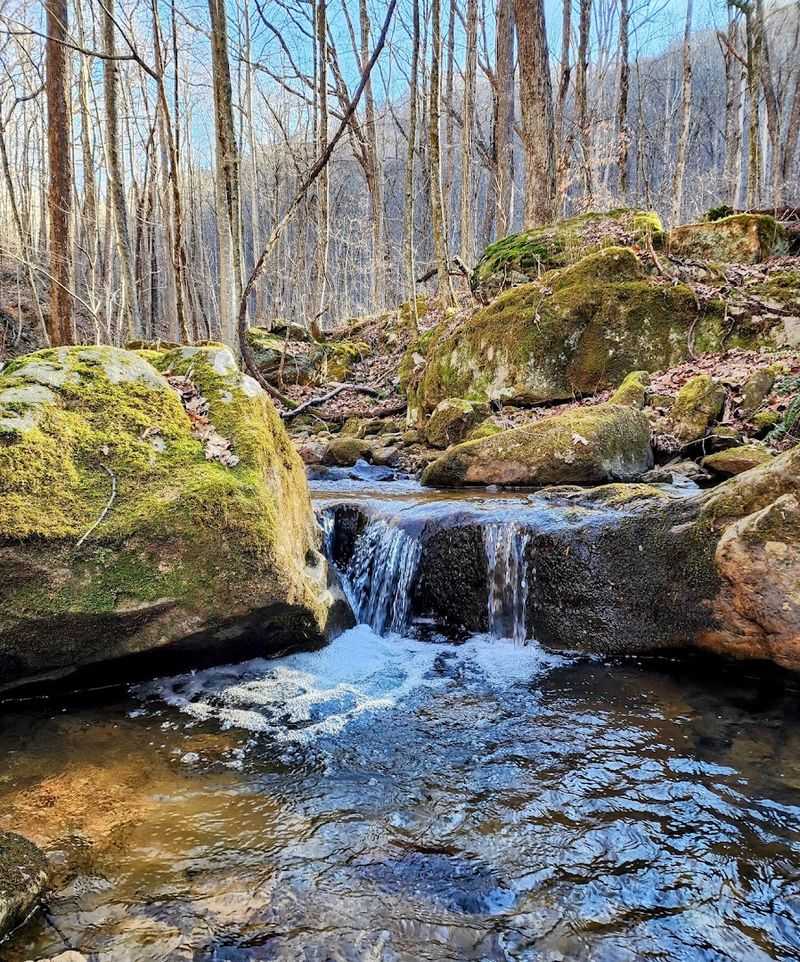
Solitude seekers will find their sanctuary along Emory Gap Falls Trail, where crowds remain blissfully absent and the forest feels genuinely remote. The 3.8-mile round trip takes you through dense mountain woodland that closes in around the trail, creating a tunnel effect that makes the outside world feel very far away.
This isn’t a trail people stumble upon accidentally—you have to want to find it, which means those who make the effort usually have the place mostly to themselves.
Debord Falls appears first, about a mile into the hike, dropping in a graceful ribbon that spreads across a rock face into a shallow pool. It’s beautiful enough to be the main attraction on many trails, but here it serves as an appetizer for the larger Emory Gap Falls waiting further ahead.
The trail between the two falls follows a creek that chatters constantly, providing company and direction even when the path becomes less obvious.
Ferns grow in such abundance here that they create a ground cover several feet thick in places, their fronds unfurling in spring like nature’s own spiral staircases. The forest feels primeval, with old trees wearing thick coats of moss and fallen logs decomposing slowly back into soil, feeding the next generation of growth.
Everything smells green and alive, that particular scent of healthy forest that can’t be bottled or faked.
Emory Gap Falls itself drops into a small amphitheater of stone, surrounded by rock walls that focus the sound into a constant roar. The pool at the base runs deep and clear, tempting on hot days but shockingly cold even in summer.
Dense woodland crowds right up to the water’s edge, creating a secluded feeling that makes the falls feel like your own private discovery. This trail rewards those willing to venture off the beaten path with an experience that feels authentic and unspoiled.
10. Base of Fall Creek Falls Trail — Spencer
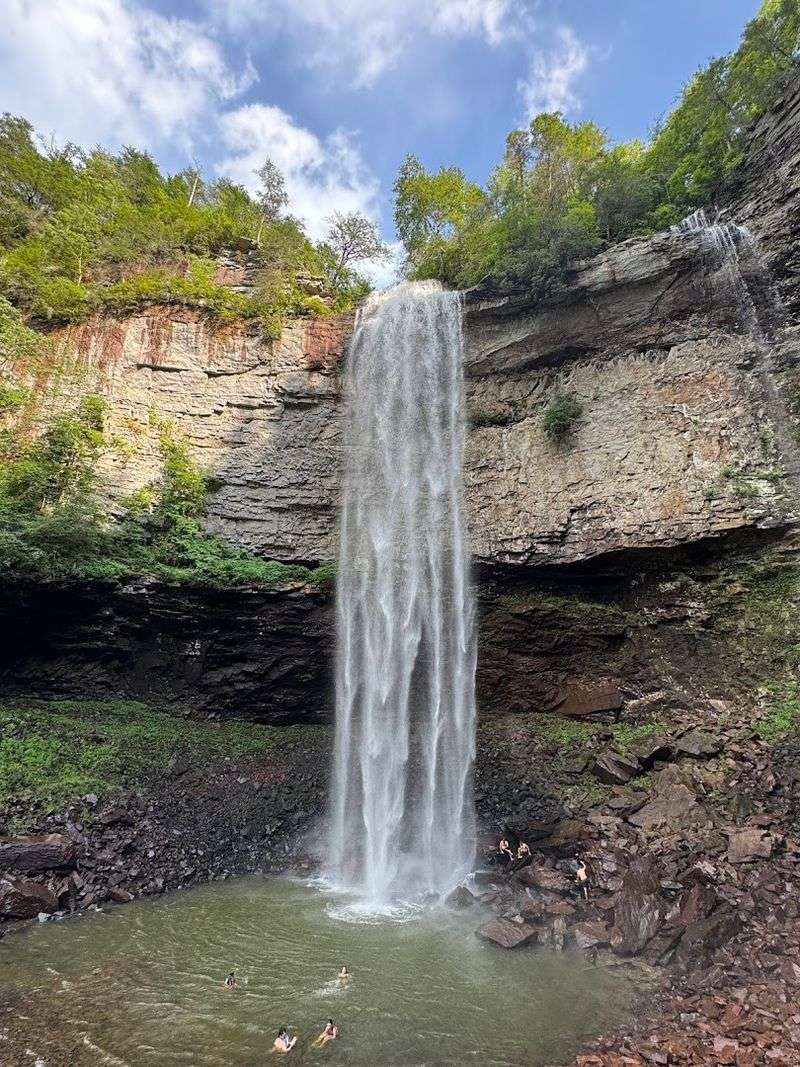
Descending into the gorge at Fall Creek Falls feels like entering the throne room of a water god, with the 256-foot cascade presiding over everything from its perch high above. The trail to the base covers only 0.6 miles, but that short distance drops steeply through switchbacks that make your thighs burn and your heart pound.
Every downward step brings the roar of falling water closer and louder until the sound surrounds you completely, vibrating in your chest and drowning out all other noise.
The gorge walls tower overhead, creating a natural cathedral with stone walls that rise hundreds of feet on all sides. Vegetation clings to every crack and ledge, adding touches of green to the predominantly gray rock faces.
The scale of this place makes humans feel appropriately insignificant, tiny figures dwarfed by geological forces that carved this landscape over millions of years.
Fall Creek Falls ranks among the tallest waterfalls east of the Mississippi River, and standing at its base makes that statistic feel real in a way numbers on paper never could. Water plunges from the cliff edge far above, accelerating as it falls until it hits the pool below with explosive force.
Mist rises in clouds that coat everything within a hundred feet, leaving your face damp and your clothes spotted with moisture. Rainbows form and dissolve in the spray, appearing and disappearing as you move and as the sunlight shifts.
The pool at the base runs deep and stays cold year-round, fed constantly by the falling water. Rocks surround the pool, worn smooth by centuries of spray and providing perches for those who want to sit and absorb the scene.
Looking up from the bottom, the waterfall seems to pour from the sky itself, a ribbon of white against dark rock that defies the eye’s ability to process its full height in a single glance. This isn’t just a waterfall—it’s a natural wonder that justifies the difficult descent and the even harder climb back out.