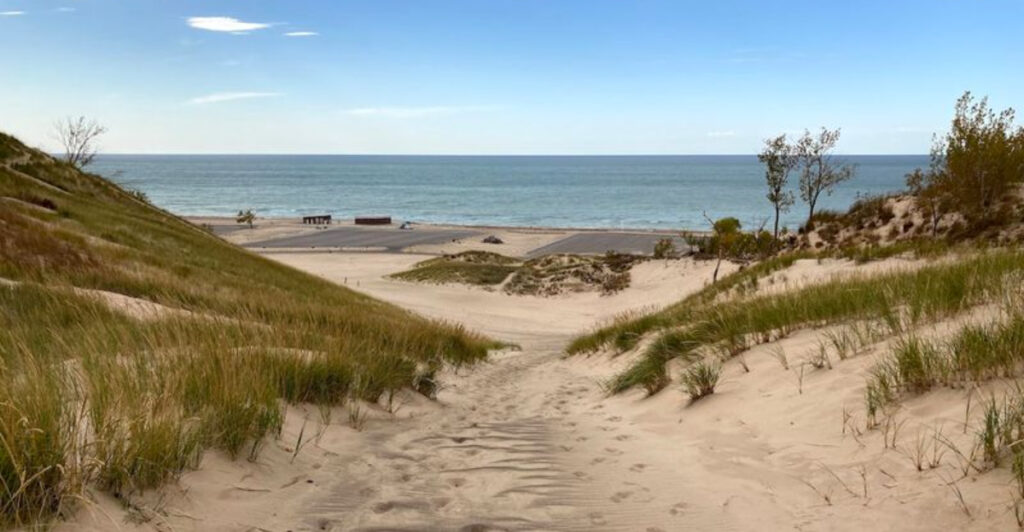
A beach day feels a lot more dramatic when a 240-foot wall of sand is waiting behind the shoreline. Along the southwestern edge of Michigan, Warren Dunes State Park delivers one of the Great Lakes region’s most unforgettable natural playgrounds, with Tower Dune rising high above Lake Michigan and daring visitors to make the climb.
The uphill push is no joke, but the payoff is wide-open water views, wind-swept scenery, and the kind of perspective that makes the whole lake feel enormous. Then comes the best part: the sandy slide back down, a simple thrill that somehow works on kids and adults equally well.
Whether you come for the beach, the trails, or the pure spectacle of those towering dunes, this Michigan park turns an ordinary lakeshore trip into something much bigger.
Tower Dune: The 240-Foot Giant You Have to Earn
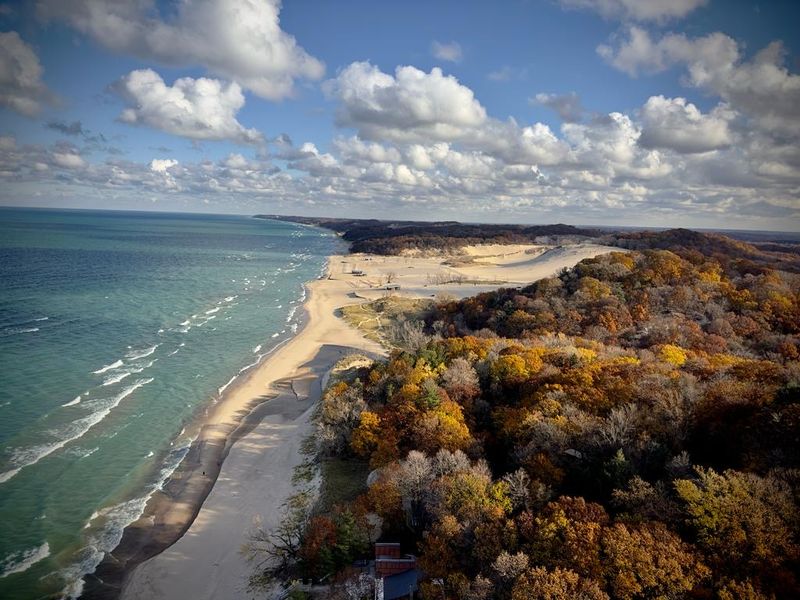
Standing at the base of Tower Dune, the first thing you notice is how the sand just keeps going up. The slope is steep enough to make your thighs burn within the first 50 steps, and the loose sand shifts underfoot with every stride, meaning you work twice as hard as you would on a regular trail.
This is not a casual stroll — it is a full-body challenge that earns every bit of the payoff waiting at the top.
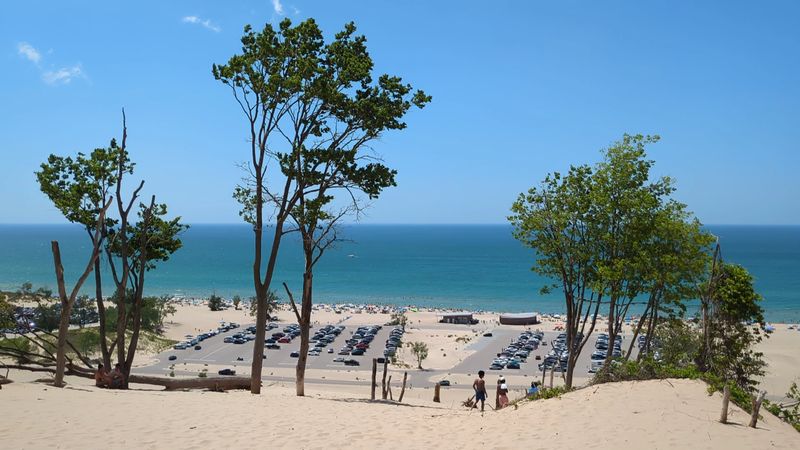
Tower Dune is the tallest dune in Warren Dunes State Park, reaching approximately 240 feet above Lake Michigan. From the summit, the lake spreads out in a wide, glittering sheet of blue-green water that looks almost too large to be real.
On a clear day, you can see far across the water, and the contrast between the pale sand beneath your feet and the deep blue of the lake below is genuinely striking.
The descent is where things get fun. Most people abandon any attempt at walking and simply run, slide, or tumble down the face of the dune, laughing the whole way.
The sand is soft enough to cushion falls and warm enough in summer to feel like a natural playground. Kids treat it like a giant slide; adults usually end up doing the same once they realize there is no dignified way down.
Bring water, because the climb is deceptively demanding in warm weather. Sunscreen is a must since there is no shade on the dune face itself.
Arriving early on summer weekends gives you the best chance of having the dune to yourself before the crowds fill in. The climb takes most people around 15 to 20 minutes at a moderate pace, and every single minute is worth it.
The Beach Below: Lake Michigan at Its Cleanest

After the dune climb, the beach at Warren Dunes feels like a reward waiting at the bottom. The sand is fine and pale, surprisingly free of rocks compared to many Great Lakes beaches, and the water runs clear with a blue-green color that catches people off guard the first time they see it.
Lake Michigan here does not look like a lake — it looks more like a coastal ocean beach on a good day.
The shoreline stretches wide enough that even on busy summer weekends, there is room to spread out without feeling crowded. Families set up near the water, groups toss frisbees in the dry sand further back, and swimmers wade out into water that ranges from refreshingly cool to surprisingly warm depending on the season and the wind direction.
The lack of significant wave action most days makes it especially good for kids and casual swimmers.
One practical detail worth knowing: stable flies can be aggressive on the beach during certain times of summer, particularly in the morning hours. Insect repellent is a smart addition to any beach bag during peak season.
That minor nuisance aside, the beach itself is well-maintained, with clean restrooms nearby and food truck options available during the warmer months.
The north end of the beach is designated dog-friendly, which adds a lively, social energy to that section of the shoreline. Dogs wade into the shallows, shake off in spectacular fashion, and generally seem thrilled with the whole arrangement.
The two sections of beach — family swimming area and the dog-friendly stretch — are clearly separated, so both crowds get the experience they came for without stepping on each other. It is a well-organized setup that keeps the overall beach experience smooth and enjoyable.
Hiking Through Southwest Michigan’s Beech and Maple Forest
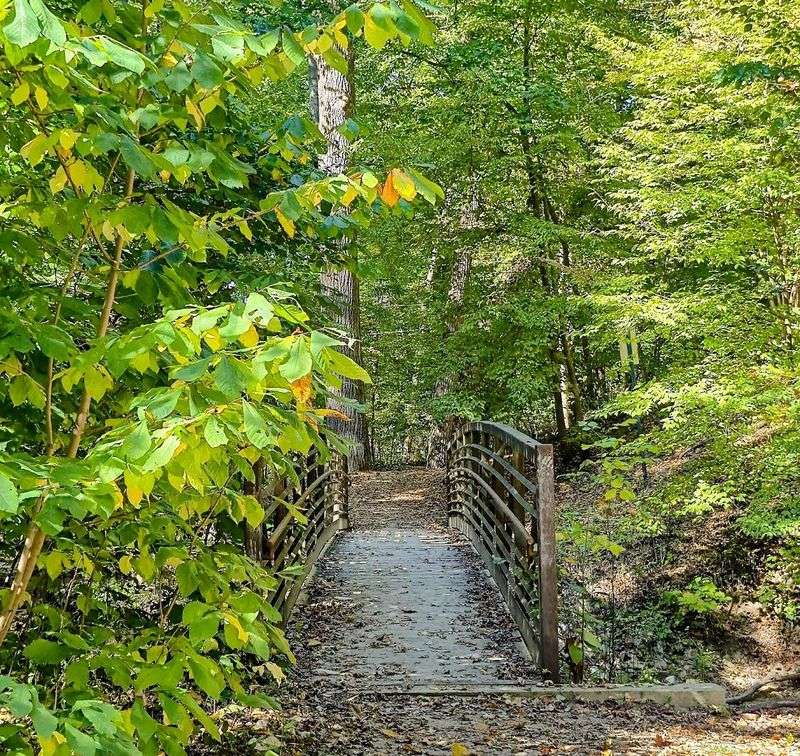
Most people arrive at Warren Dunes thinking only about sand and water, which means the forested trail system often goes underappreciated. The park covers 311 acres of terrain, and a significant portion of that is dense beech and maple woodland that feels completely removed from the open dune landscape.
Stepping into the tree cover is like switching channels — the wind drops, the light softens, and the sound of the lake fades behind you.
The trails wind through the interior of the park, crossing small ravines and moving alongside the Galien River in certain sections. The tree canopy creates natural shade that makes hiking comfortable even on hot summer afternoons when the open dunes are baking in direct sun.
Fall is arguably the best time to walk these paths, when the maple and beech leaves shift into deep golds, oranges, and reds that turn the forest into something worth photographing at every turn.
Trail difficulty stays accessible for most fitness levels. The routes are not technically demanding, but the terrain does roll and dip in places, keeping the experience interesting without being punishing.
Hikers who prefer a quieter, more contemplative version of the park will find these trails give a very different perspective on what Warren Dunes actually contains beyond its famous dunes.
Wildlife sightings are common along the wooded paths. Deer move through the forest edges in the early morning and late evening, and bird activity is steady throughout the warmer months.
The combination of forest, open dune, and shoreline ecosystems packed into one park creates a surprising variety of habitats within a relatively small area. Sturdy walking shoes handle the terrain well, and the trails connect back to the main beach and dune areas so you can combine both experiences in a single visit.
Sunsets Over Lake Michigan That Stop You Cold
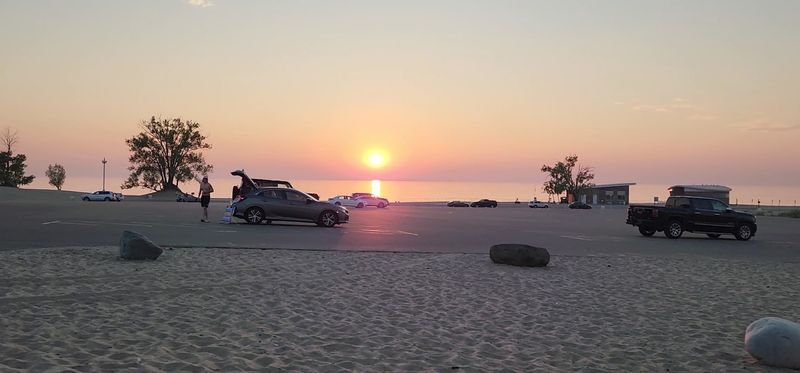
There is a specific kind of silence that falls over the beach at Warren Dunes when the sun starts dropping toward the water. People stop moving.
Conversations trail off. Everyone just watches.
The sunsets here have built a genuine reputation among regular visitors, and standing on the dune crest at the right moment makes it immediately obvious why they keep coming back for it.
Lake Michigan faces west along this stretch of shoreline, which means the sun sets directly over the open water rather than behind a tree line or a building. The result is a full, unobstructed burn of color that spreads from one edge of the visible horizon to the other.
Orange bleeds into deep red, then softens into purple above the waterline as the light fades. On calm evenings, the reflection doubles the whole scene across the lake surface.
The dune crest provides the best viewing position because it adds elevation to an already dramatic natural stage. Arriving 20 to 30 minutes before sunset gives enough time to climb up and settle in before the main event.
Weekday evenings are noticeably quieter than weekends, making them ideal for anyone who wants the experience without the crowd noise.
Photographers set up on the dune face with everything from professional camera rigs to phone cameras, and both produce results worth keeping. The combination of the pale sand foreground, the dark water, and the sky shifting through its full color range gives even basic cameras strong material to work with.
Late September and October sunsets tend to be especially vivid because of the angle of the autumn light and the cleaner air that comes with cooler temperatures. Plan to stay a few minutes past the actual sunset — the afterglow often outlasts the main show.
Camping Inside the Park: Closer Than You Think
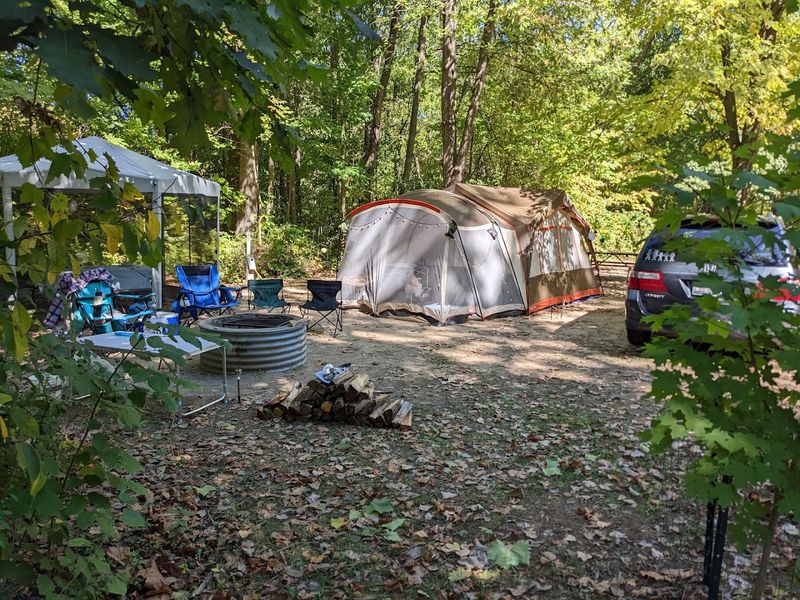
Camping at Warren Dunes puts you close enough to the beach that the walk from your site to the shoreline takes only a few minutes. The campground sits within the park boundaries, which means you are already inside when the day visitors leave and the park quiets down.
That shift in atmosphere — from busy day-trip energy to the slower pace of an evening campfire — is one of the more underrated parts of the whole experience.
The campsites are mostly sandy, which drains well after rain and keeps things from getting muddy. Site sizes run from small to medium, with enough separation between spots to feel like you have some privacy without being isolated.
The bathrooms and shower facilities are maintained consistently well, which matters more on a long weekend trip than people expect before they arrive. Clean facilities make a real difference in the overall camping experience.
One thing to prepare for: raccoons. They are bold here, and they know exactly what a cooler looks like.
Keeping food secured in a vehicle or a hard-sided container is not optional — it is a practical necessity. The raccoons will test every soft-sided bag and unlocked cooler within reach, and they are not shy about doing it while people are still sitting nearby.
Quiet hours are enforced, and the park staff takes them seriously. That is actually a point in the campground’s favor for families and anyone who prioritizes sleep.
The campground is not massive, which keeps it from feeling like a chaotic festival site on peak weekends. Booking well in advance for summer stays is essential — spots fill up fast, particularly for Friday and Saturday nights between June and August.
Off-season camping in September and October offers a dramatically different and noticeably peaceful version of the same park.
Planning Your Visit: Timing, Entry, and Getting There
Warren Dunes State Park sits at 12032 Red Arrow Highway in Sawyer, Michigan, which places it about an hour’s drive from Chicago and within easy range of several southwest Michigan towns including New Buffalo and Three Oaks. The location makes it one of the most accessible major dune parks in the region, which explains why summer weekends fill up fast.
Planning around that reality saves a lot of frustration at the entrance.
The park opens at 8 AM daily and stays open until 10 PM, giving day visitors a solid window to work with. Arriving at or shortly after opening on summer weekends is the single most effective strategy for getting good parking without a long wait.
By mid-morning on a hot Saturday, the parking lots can back up significantly, and the line at the entrance gate moves slowly when the park is near capacity.
Entry requires a Michigan Recreation Passport, which is available for Michigan residents through vehicle registration. Out-of-state visitors pay a daily vehicle entry fee at the gate.
The fee structure is straightforward, and the staff at the entrance is consistently described as friendly and helpful — a small detail that sets a good tone for the visit before you even reach the beach.
A gift shop and food trucks operate on-site during peak season, offering quick bites and basic supplies. The gift shop skews toward the pricey side, so packing your own food and drinks is the smarter move for a full day visit.
Restrooms are clean and well-maintained during the operating season. For anyone combining the park with a broader southwest Michigan day trip, the local restaurants and shops in New Buffalo are worth the short detour before or after your time at the dunes.
Why Warren Dunes Outpaces Every Other Great Lakes Beach Day
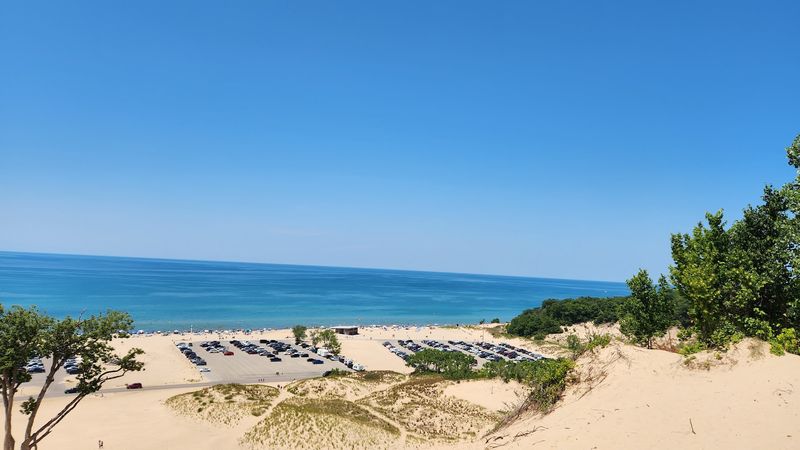
A lot of Great Lakes beach parks offer sand and water and call it a day. Warren Dunes layers something on top of that — a vertical landscape element that turns a passive beach visit into something physically engaging and visually dramatic.
The dunes are not a backdrop here; they are the main event, and they change the entire character of the experience compared to a flat shoreline park.
The variety packed into 311 acres is genuinely impressive. Within a single visit, you can climb a 240-foot sand mountain, swim in clear lake water, walk a shaded forest trail, watch a full-horizon sunset, and eat lunch from a food truck — all without leaving the park.
That range of activity makes it work equally well for families with young kids, couples looking for a scenic day out, and solo hikers who want something more than a beach towel and a paperback.
The dog-friendly north beach section adds another layer of accessibility that many comparable parks skip entirely. Bringing a dog to a Lake Michigan beach without being herded into a tiny designated corner is a rarity, and Warren Dunes handles it well by giving the dog area enough space to actually feel like a beach rather than an afterthought.
The park’s 4.7-star rating across nearly 10,000 reviews is not the result of one spectacular feature — it reflects consistent execution across facilities, trail maintenance, beach cleanliness, and staff quality. Parks that manage all of those things simultaneously over a long season are rarer than they should be.
Warren Dunes earns its reputation not through spectacle alone but through the kind of reliable, well-run experience that makes people return year after year without needing a special occasion to justify the drive.