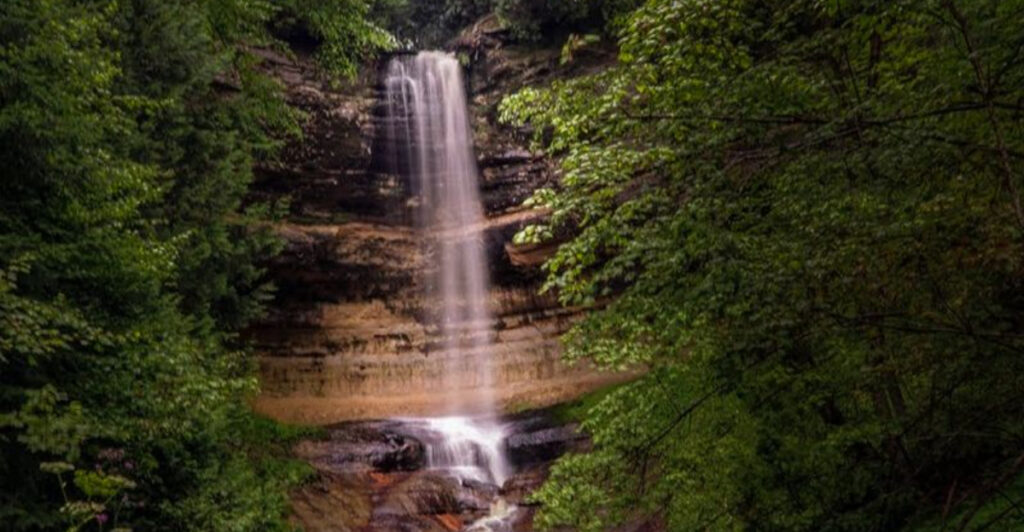
Most people drive through Munising, Michigan, thinking the real show is out on Lake Superior or along the Pictured Rocks shoreline. But tucked just minutes from downtown, a 50-foot waterfall drops through a narrow sandstone canyon that most visitors completely overlook.
Munising Falls sits inside Pictured Rocks National Lakeshore, and getting there takes less effort than finding a parking spot at most tourist traps. This is the kind of place that makes you stop mid-step and just stare.
The First Look: A Canyon That Catches You Off Guard
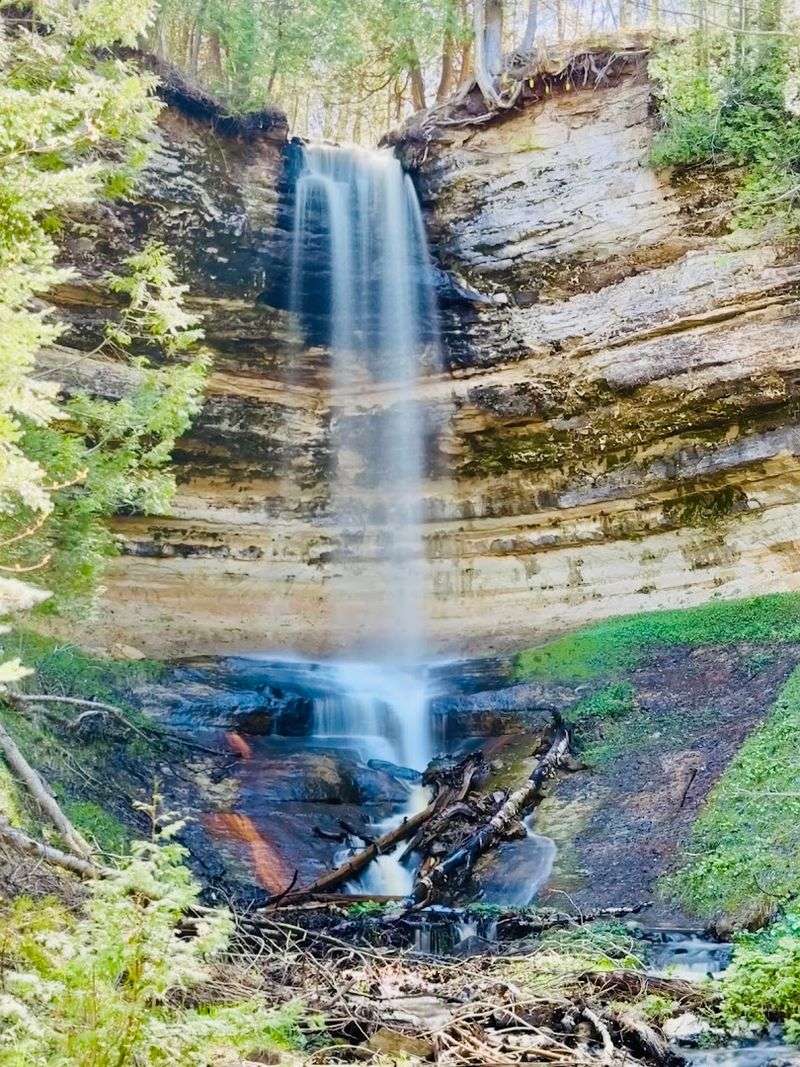
Nothing quite prepares you for the moment the canyon opens up. You are walking along a flat, paved trail barely a quarter mile from the parking lot, surrounded by quiet forest, and then the sandstone walls rise on either side and the sound of rushing water fills the air before you even see the falls.
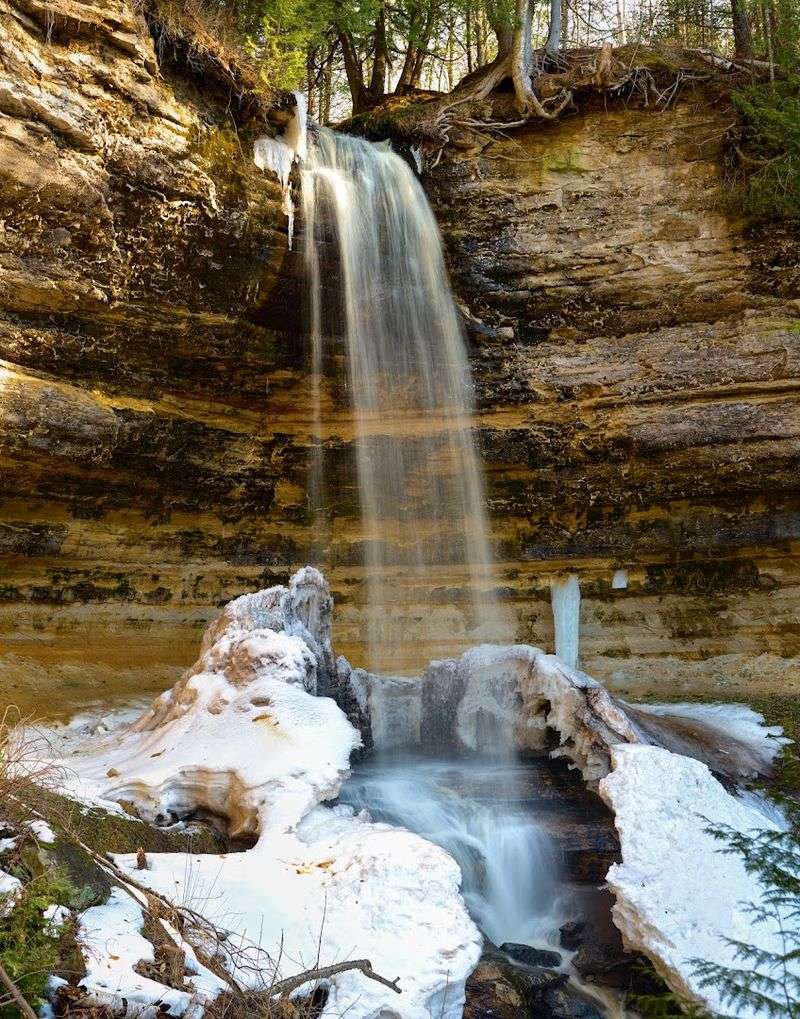
Munising Falls drops 50 feet straight down a layered sandstone cliff, landing in a shallow pool at the base of the canyon. The walls curve slightly inward, creating a natural amphitheater effect that amplifies every splash and echo.
Standing at the lower viewing platform, the scale of the rock face is genuinely surprising for a waterfall this close to a city center.
The sandstone itself tells a story. Bands of rust, tan, and gray streak horizontally across the cliff, formed over millions of years of sediment layering.
Water stains streak downward from the falls, creating dark contrast lines against the lighter stone. Moss clings to the shaded sections near the base, adding patches of deep green to an already striking color palette.
Even on cloudy days, the canyon holds a certain drama. The overcast light softens shadows and makes the stone textures pop in a way that bright midday sun simply cannot replicate.
Photographers who show up on gray mornings often get cleaner, richer shots than those who time their visit around sunshine.
The lower platform gives a straight-on view of the full drop, framed by the canyon walls. It is the kind of scene that looks like it belongs in a national geographic spread, not a short walk from a small Michigan town.
First-time visitors almost always pause longer than they planned.
Two Viewpoints, Two Completely Different Experiences
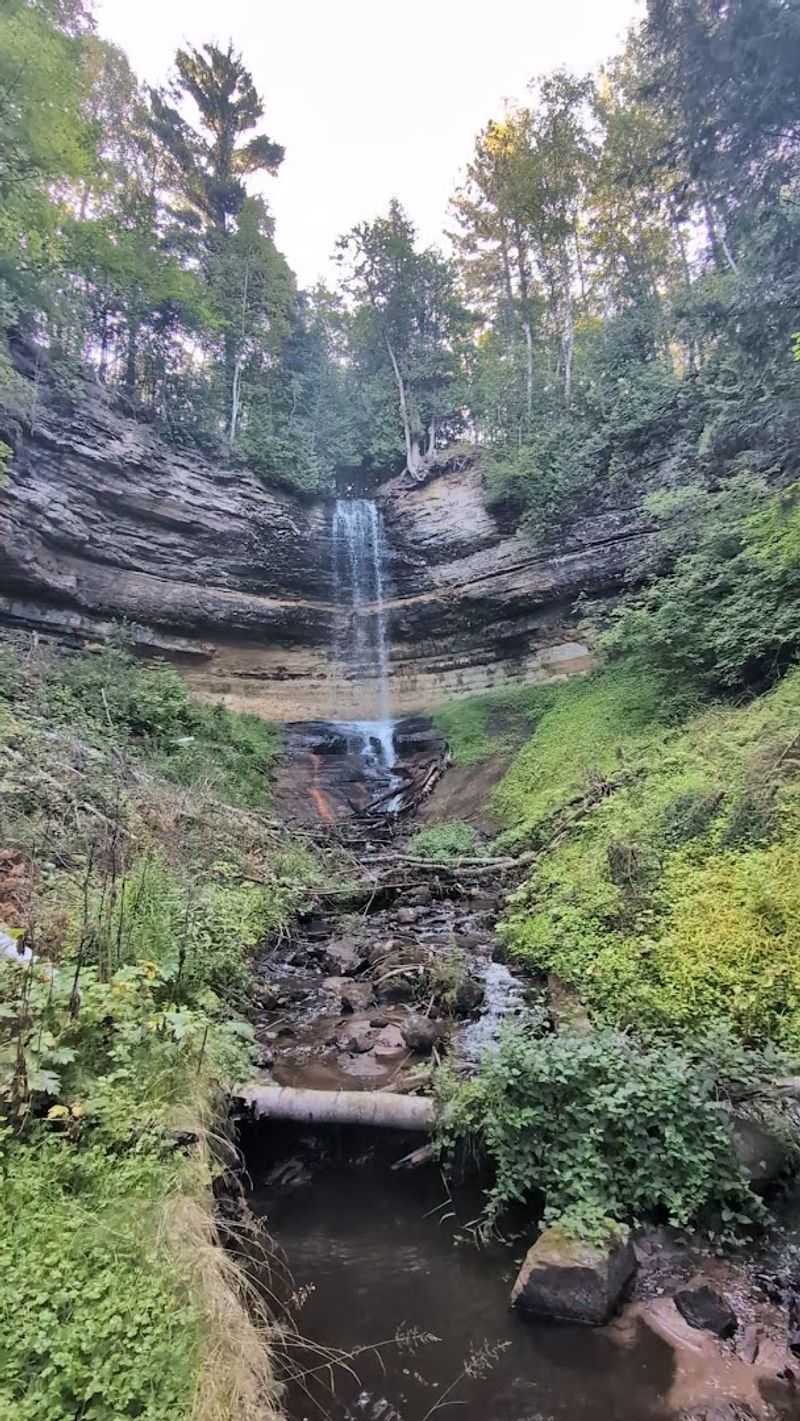
One trail fork changes everything. About 800 feet from the visitor center, the path splits.
Go left and a boardwalk delivers you to the lower viewing platform, where the full 50-foot drop fills your frame and the mist from the base occasionally drifts toward you on a breezy day. Go right and a set of stairs climbs to the upper viewpoint, where the perspective shifts entirely.
From the upper platform, the falls appear below you rather than in front of you. The creek feeding the falls becomes visible, threading through the forest before reaching the lip of the cliff.
The canyon walls spread outward from this angle, giving a broader sense of the geology surrounding the drop. It is a quieter spot too, since many visitors stop at the lower platform and head back without climbing the stairs.
Beyond the official upper platform, a beaten side trail continues toward the top of the falls. There are no railings along this stretch, and the terrain becomes uneven quickly.
The reward is a close-up view of the creek as it rushes over the edge, which is a perspective that feels almost uncomfortably intimate with the water. Caution is genuinely warranted here, especially when the ground is wet or icy.
Each viewpoint rewards a different kind of attention. The lower platform is ideal for wide shots and experiencing the full height of the falls.
The upper platform suits those who want context, the surrounding forest, the creek, the canyon geometry. Together, they make a single short trail feel like two separate hikes without adding any significant distance or difficulty.
Spending a few minutes at both spots rather than rushing back after the first view is always worth the extra time on the stairs.
Michigan’s Upper Peninsula in Winter: When the Falls Freeze Solid
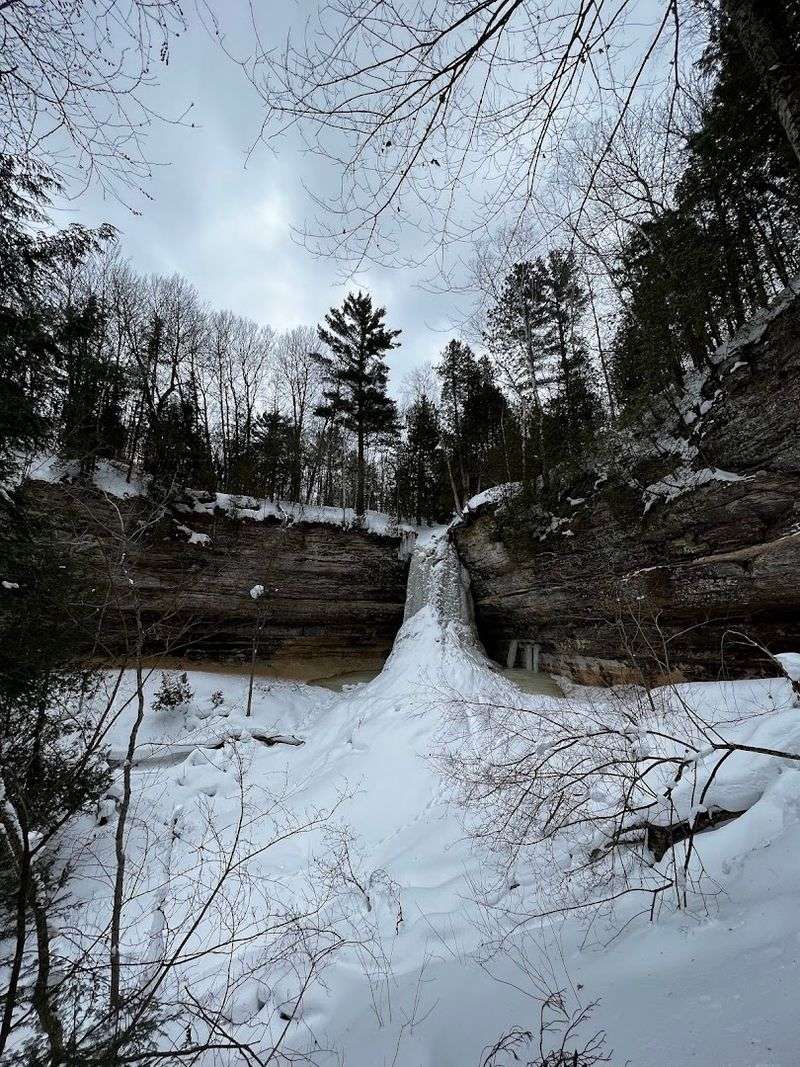
Winter does something extraordinary to Munising Falls. As temperatures drop across Michigan’s Upper Peninsula, the falling water slows, thickens, and eventually locks into a towering column of blue-white ice that clings to the sandstone cliff like a sculpture carved by the season itself.
The transformation is dramatic enough that photographers plan entire trips around catching it.
The ice column builds gradually through December and January, growing thicker and more textured with each cold snap. Up close, the surface is layered with ridges, bubbles, and translucent sections where the water continues moving beneath the frozen outer shell.
The contrast between the warm amber tones of the sandstone and the pale blue ice creates a color combination that no filter can fully replicate.
Ice climbers are drawn here specifically because the frozen falls offer a vertical challenge within easy reach of town. Watching someone work their way up the ice face with picks and crampons adds an unexpected element of sport to what is otherwise a serene natural setting.
It is not a common sight at most waterfall destinations, and it makes winter visits feel genuinely distinct from any other season.
The paved trail typically remains packed enough for a straightforward winter walk, and the canyon walls block wind effectively, making the cold feel more manageable than open terrain nearby. Snowshoers and cross-country skiers often loop the falls into longer routes through the surrounding Pictured Rocks area.
Summer crowds thin dramatically in January and February, meaning the frozen falls can sometimes be experienced in near-complete silence. Snow sits heavy on the pine branches overhead, and the only sound is the faint creak of ice and the occasional drip from a thawing edge.
Few winter scenes in Michigan hit this hard.
The Sandstone Story Beneath Your Feet and All Around You
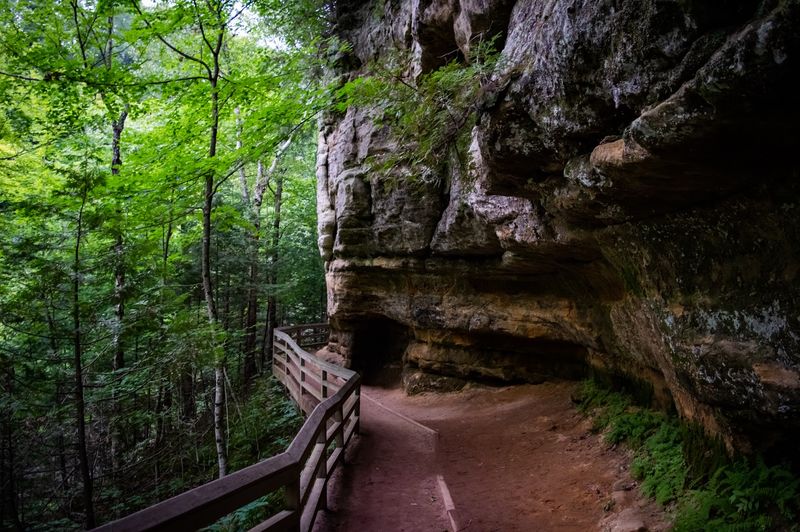
The canyon surrounding Munising Falls is not just a backdrop. It is a geology lesson written in stone, and once you start reading it, the falls become even more interesting.
The sandstone walls date back roughly 500 million years, formed when this region sat beneath a shallow sea. Layers of sediment compressed over time into the banded rock visible today, each stripe representing a different period of deposition.
The reddish-orange coloring comes from iron oxide, the same compound responsible for the famous painted cliffs along the Pictured Rocks shoreline. Water filtering through the rock carries minerals downward, staining the surface in streaks and patches that shift in color depending on moisture levels and light angle.
After heavy rain, the walls deepen to a rich burnt sienna. In dry weather, they fade toward a dusty peach.
Munising Creek carved this canyon over thousands of years, cutting steadily through the soft sandstone and exposing the cliff face where the falls now drop. The overhang above the falls is a classic feature of this erosion process, where harder caprock resists weathering longer than the softer layers below.
Eventually, the overhang will erode further, and the falls will slowly migrate upstream, as has happened at similar formations across the Great Lakes region.
Looking at the base of the falls, you can spot chunks of fallen sandstone scattered across the pool floor. These are pieces of the cliff that have broken away over time, a slow and ongoing process that gradually reshapes the canyon.
The rock feels solid underfoot on the trail, but the landscape here is quietly, constantly changing.
Paying attention to the walls rather than just the water turns a quick waterfall stop into something much richer and more layered.
Getting There Without Breaking a Sweat: Accessibility Along the Trail
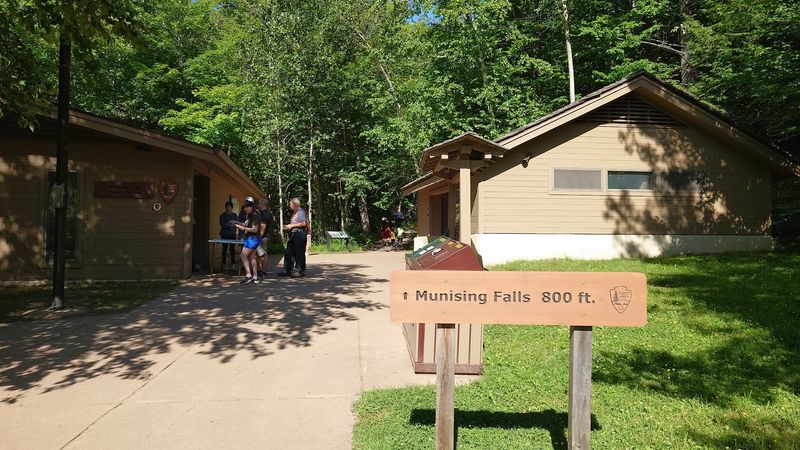
Accessibility at natural landmarks is often an afterthought, but Munising Falls handles it better than most. The main trail from the visitor center to the lower viewing platform is paved, flat, and wide enough for wheelchairs and strollers.
At roughly 800 feet one way, it is one of the shortest walks to a waterfall of this scale anywhere in the national park system.
The paving makes a real difference for visitors who might otherwise skip waterfall hikes entirely. Older adults, families with young children, and anyone with mobility considerations can reach the lower platform without significant physical effort.
The boardwalk section near the base of the falls is well-maintained, and the viewing area itself has enough space for multiple people to stand comfortably without crowding the railing.
The upper trail to the staircase viewpoint is a different situation. Steps replace the flat path, and the terrain becomes less predictable beyond the official platform.
That section requires reasonable footing and some physical confidence, particularly in wet or icy conditions. The split in the trail makes it easy for groups to separate, with some members heading up while others wait comfortably at the lower platform.
Parking is plentiful at the trailhead lot near the visitor center, and restrooms are available on-site during the regular operating season, though they close during winter months. The visitor center itself operates from a temporary structure while a permanent building is under development, but rangers are present and helpful, and the national parks passport stamp is available here for collectors.
A Pictured Rocks National Lakeshore pass is required for entry, though active military and veterans with qualifying passes enter free. Picking up a pass at this stop before exploring the rest of the park makes logistical sense, since this is typically the first major landmark along the corridor.
Timing Your Visit to Avoid the Crowds and Catch the Best Light
Munising Falls sits close enough to downtown that it draws steady traffic throughout the summer months. By mid-morning on a clear day, the lower viewing platform can feel genuinely crowded, with families, tour groups, and passing travelers all funneling through at once.
The trail is short enough that turnover is fast, but timing still matters if a quieter experience is the goal.
Early morning arrivals, before 8 a.m., typically find the canyon nearly empty. The light at that hour hits the sandstone at a low angle, throwing the horizontal rock bands into sharp relief and casting long shadows across the canyon floor.
Mist from the falls catches the morning light in a way that mid-afternoon sun simply cannot produce. For photographers especially, the first hour after sunrise is the most productive window.
Evening visits work almost as well. The canyon shades quickly after the sun drops behind the western treeline, creating a cooler, softer atmosphere that tends to thin the crowd naturally.
One visitor noted arriving in the late afternoon, finding the area packed, leaving, and returning in the evening to have the entire platform to themselves for several minutes. That kind of timing shift costs nothing and changes the experience considerably.
Fall brings a particularly compelling combination of conditions. The surrounding forest transitions through orange, yellow, and red, framing the sandstone canyon in warm seasonal color.
Water volume tends to increase with autumn rain, pushing the falls to their most forceful flow. Weekday visits in September and October offer the best balance of color, water volume, and manageable crowds before the trail quiets down heading into winter.
Checking trail conditions before visiting is always smart, since flash flooding has caused temporary closures that have left travelers making the drive for nothing.
Why This Waterfall Earns Its Place on Any Upper Peninsula Itinerary
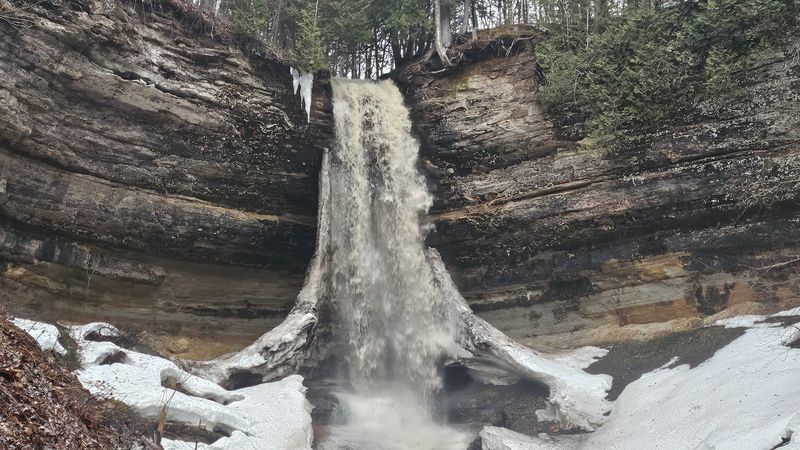
Pictured Rocks National Lakeshore stretches for 42 miles along Lake Superior, and most of its highlights require boat tours, long hikes, or significant planning. Munising Falls requires none of that.
The return trip from parking lot to lower platform and back takes under 20 minutes at a relaxed pace, making it one of the highest-reward, lowest-effort stops in the entire park.
That accessibility does not dilute the experience. A 50-foot waterfall dropping through a sandstone canyon is genuinely impressive regardless of how little effort it took to reach it.
The falls flow reliably through most of the year, fed by Munising Creek, and the surrounding forest provides shade and sound insulation that makes the canyon feel removed from the road and parking lot just a few hundred feet away.
The falls also function as an excellent orientation point for first-time visitors to the area. The visitor center here provides maps, ranger guidance, and park pass options before anyone heads deeper into the lakeshore.
Starting at Munising Falls gives newcomers a quick, satisfying win that sets the tone for the rest of the park without burning time or energy on a long hike before they have their bearings.
Repeat visitors return in different seasons specifically to watch the falls change character. The same sandstone canyon that frames a cool, mossy summer scene becomes a frozen spectacle in January and a riot of fall color in October.
Very few single locations in Michigan offer that range of visual transformation across a calendar year.
Whether it anchors a full day at Pictured Rocks or serves as a quick stop between drives, Munising Falls consistently delivers something worth seeing. The short walk, the canyon scale, and the sound of water echoing off ancient stone make it impossible to regret the detour.