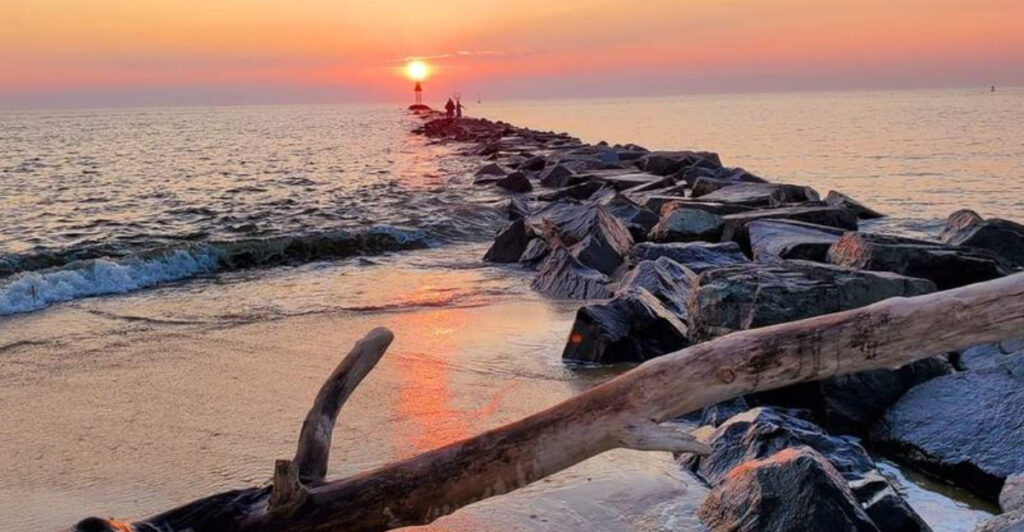
A Cape May–Lewes Ferry moves silently across the horizon while cedar branches scrape together behind you and rusted railroad tracks threaten to appear beneath the wet sand. This is still the Jersey Shore, technically, but Higbee Beach does not play by the usual Shore rules.
There is no boardwalk soundtrack, no neat row of umbrellas, and no lifeguard whistle cutting through the afternoon. The beach sits on the Delaware Bay side of Cape May, where a narrow strip of sand meets dunes, tangled scrub, open fields, and one of New Jersey’s last surviving coastal forests.
It feels remote without actually being far from town, which may be its best trick. One minute you are driving through Lower Township; the next, you are following a sandy path into a landscape that seems to have misplaced the modern world.
Higbee is rugged, changeable, and occasionally muddy, buggy, or windswept. That is precisely why it remains one of the most fascinating places on the state’s coastline.
The Wild Side of the Jersey Shore Still Exists at Higbee Beach
Drive past the polished inns and busy restaurant patios of Cape May, follow New England Road toward its dead end, and the scenery begins to loosen up. Pavement gives way to sand, dense vegetation closes around the trail, and the Delaware Bay appears through the trees with almost no ceremony.
Higbee Beach belongs to the roughly 1,160-acre Higbee Beach Wildlife Management Area, a state-managed preserve in Lower Township created primarily to protect endangered, threatened, and nongame wildlife rather than to operate as a traditional swimming beach.
Its approximately 1.5 miles of shoreline are only one piece of the landscape.
The preserve also contains forest, dunes, scrub habitat, wetlands, and open fields managed for birds, butterflies, dragonflies, and other wildlife. The beach itself can be surprisingly narrow, measuring no more than about 30 yards across at its widest points.
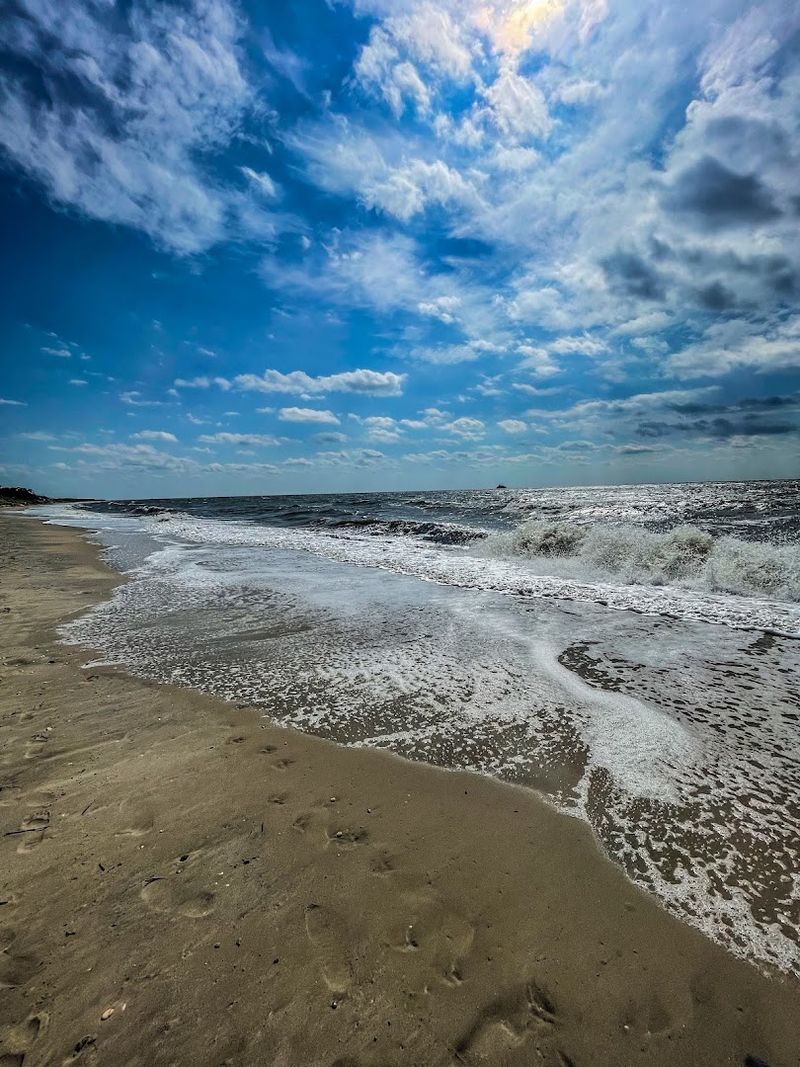
Summer tides build it up, while winter storms peel portions away and rearrange the shoreline. That constant movement explains why one visit can look noticeably different from the next.
Nothing here has been organized around an easy beach day. You will not find beachfront cafés, equipment rentals, or a convenient place to buy a cold drink.
The reward is a kind of quiet that has nearly disappeared from the southern Jersey Shore. Gulls work the waterline, horseshoe crab shells collect near the tide, and ferries glide between Cape May and Lewes across the bay.
On clear days, Delaware is visible beyond the water. Higbee never feels empty in a lifeless way; it feels occupied by everything except the usual beach crowd.
This is a wildlife area first, and visitors are guests in it. That distinction is what keeps the place raw, unpredictable, and far removed from the carefully groomed sand found only a few miles away.
A Coastal Forest Where the Trees Run Right to the Bay
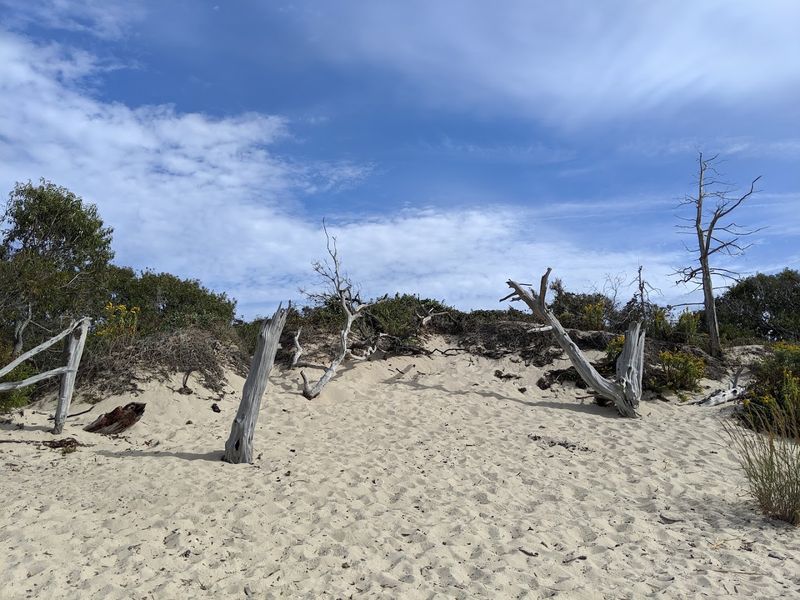
What looks like a wall of green from the beach becomes a surprisingly layered landscape once you step beneath it. The woods at Higbee are part of the last remaining dune forest along the Delaware Bay shoreline, protecting a rare transition between open water, sand, dunes, scrub, fields, and mixed upland forest.
Instead of passing through one uniform stand of trees, you move between pockets of shade, sunny clearings, and thick shrub growth alive with rustling birds. American holly, red cedar, sassafras, black cherry, persimmon, bayberry, wax myrtle, and beach plum are among the plants found in this salt-influenced coastal environment.
Their roots help stabilize shifting ground, while their berries and insects provide essential fuel for migrating songbirds. The forest also changes how the shoreline feels.
At most New Jersey beaches, houses, streets, and businesses are waiting immediately beyond the dunes. Here, trees appear to press toward the bay, creating stretches where the water and woods seem to occupy the same narrow frame.
In late summer, the vegetation can feel almost subtropical, especially when humidity settles into the shaded trails and vines crowd the edges. By November, the leaves thin out and the forest becomes brighter, windier, and easier to see through.
Do not mistake the greenery for a manicured nature park. Trails can be sandy, muddy, overgrown, or temporarily rerouted, particularly while restoration work continues in the southern portion of the wildlife management area.
Ticks and biting flies are also very much part of the local ecosystem. Long pants, closed shoes, and insect repellent are smarter choices than flip-flops once you leave the beach.
The roughness is not an oversight. Higbee’s patchwork of young forest, mature trees, shrubs, and open habitat is managed because that variety gives wildlife places to feed, rest, nest, and hide.
Even the messiest-looking corners are doing important work.
The Shoreline Feels Nothing Like a Typical New Jersey Beach
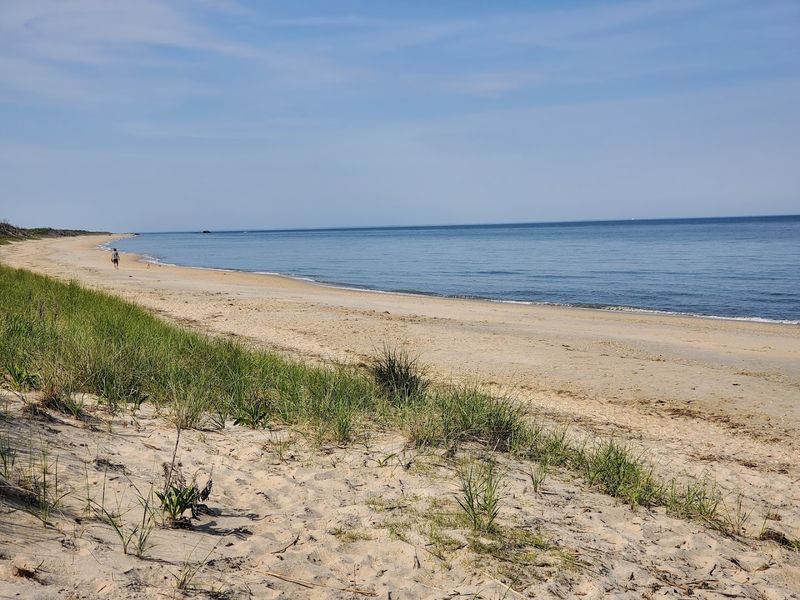
The first surprise is the water. Higbee faces Delaware Bay rather than the Atlantic Ocean, so the waves usually arrive with less force and the horizon carries a steady procession of ferries, fishing boats, and cargo traffic.
The second surprise is how little infrastructure separates you from it. There are no guarded swimming areas, marked surf zones, or rows of rental umbrellas.
Driftwood stays where the tide leaves it. Pebbles, shells, and marsh debris form uneven bands along the shore.
After storms, erosion may create small drop-offs or uncover objects that had been buried for years. This is an excellent place to walk, watch wildlife, fish where permitted, or simply sit near the water, but it should not be treated like a municipal bathing beach.
Swimming and bathing are generally prohibited within New Jersey wildlife management areas unless the state has specifically designated a guarded location, and Higbee has no lifeguards. Wading is also restricted except when connected to permitted activities such as fishing.
State wildlife-area rules prohibit camping and picnicking as well, so this is not the place to build an all-day setup with a canopy, folding table, grill, and oversized cooler. Those restrictions may sound strict until you spend time here.
Higbee’s appeal comes from everything that has not been added. Without music drifting from beachfront bars or crowds gathering around volleyball nets, small details become the entertainment.
You hear the clicking of pebbles as a wave pulls back. Ospreys cross the bay carrying fish.
A ferry seems to move impossibly slowly until it disappears behind Cape May Point. Sunset can be especially memorable, although nearby Sunset Beach receives most of the evening crowd.
Higbee tends to hold on to its wilder mood, even when the sky turns orange and everyone briefly raises a phone toward Delaware.
Fall Migration Turns the Sky Into the Main Attraction

Show up shortly after sunrise following a cool night and you may find more binoculars than beach towels in the parking area. Cape May’s geography funnels migrating birds toward the tip of the peninsula, where the Delaware Bay becomes a major obstacle in their southbound journey.
Higbee’s fields, forest edges, and dense scrub offer places to stop, feed, and wait for favorable conditions. The result is one of the best-known fall birding locations on the East Coast, especially from August through early November.
Northwest winds following the passage of a cold front can produce the busiest mornings. Warblers, vireos, sparrows, thrushes, and other songbirds move through the vegetation or lift into what birders call morning flight, a visible stream of birds adjusting their direction after migrating overnight.
Raptors, monarch butterflies, dragonflies, and even occasional bats may join the movement. A seasonal morning-flight count is typically conducted from August 1 through November 15, with the greatest activity often occurring during the first few hours after sunrise.
You do not need to know the difference between a blackpoll warbler and an American redstart to enjoy it. Stand near a cluster of experienced birders and someone will usually call out what is passing overhead.
Guided birding programs are also frequently held at Higbee, including early-morning walks and observation sessions near the tower off Jetty Road. Some programs are free, while others have traditionally cost around $8 for members and $12 for nonmembers.
The spectacle is not limited to autumn. Blue grosbeaks, indigo buntings, prairie warblers, and yellow-breasted chats breed in or around the preserve during spring and summer.
Fall simply turns the volume up, transforming a quiet patch of coastal forest into an aerial highway before most people have finished their first cup of coffee.
Cape May Diamonds and Forgotten Railroad Tracks Hide in the Sand
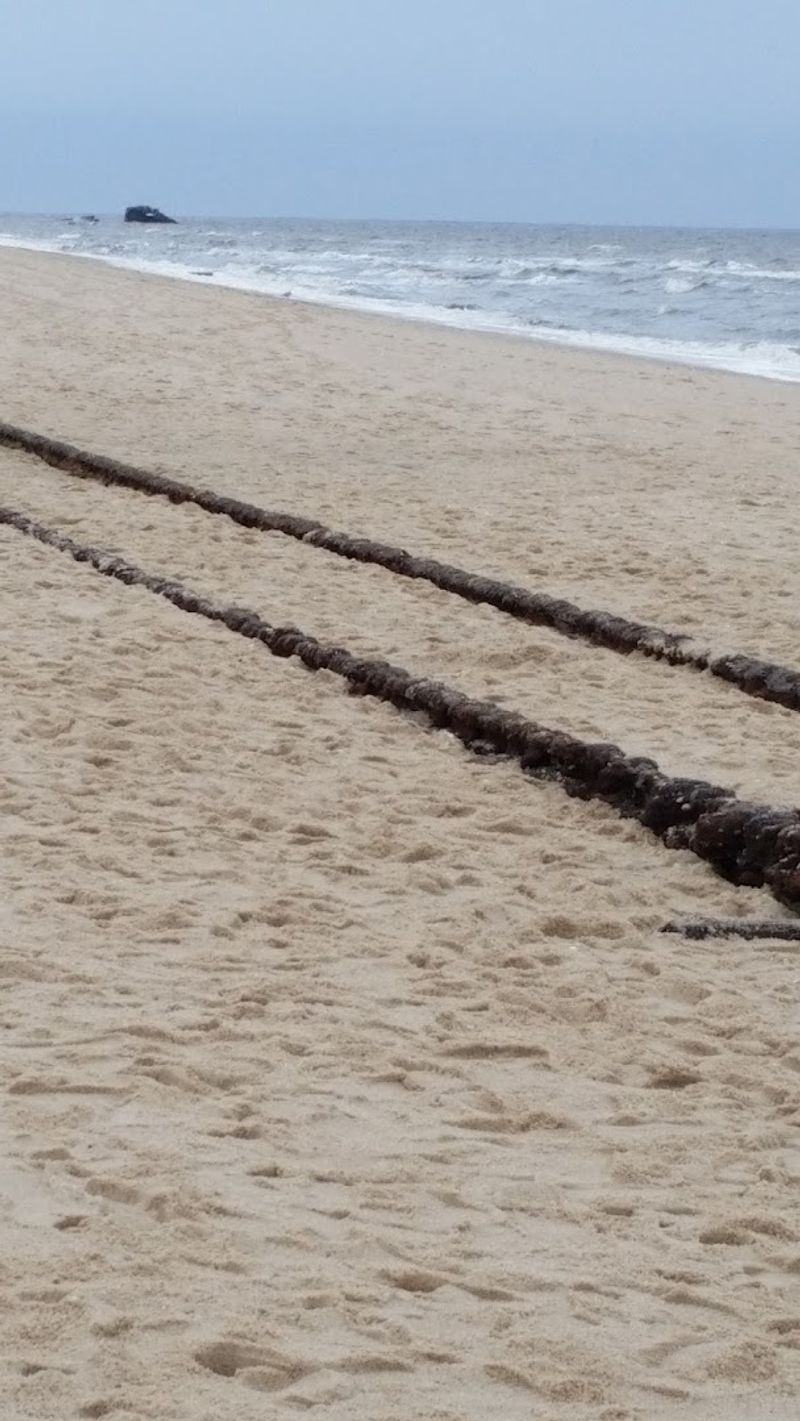
Some beaches reward careful searching with sea glass. Higbee occasionally hands over polished quartz and a piece of industrial history.
Cape May diamonds, the local name for rounded quartz pebbles found along the Delaware Bay, are most easily spotted among the stones near the high-tide line. They are not actual diamonds, of course.
Most are milky white, pale beige, or cloudy rather than perfectly clear, but holding one toward the sun can reveal a translucent glow. The smoothest examples have been naturally rolled and polished by water and sand, which is why beachcombers keep bending down for one more look.
The shoreline’s stranger treasure is much harder to predict. After major storms or long periods of erosion, rusted rails and wooden ties known locally as the ghost tracks sometimes emerge from the sand near Higbee and Sunset Beach.
The tracks have reappeared several times in recent decades, including after storms in 2014, 2018, 2021, 2022, and 2024, only to vanish beneath shifting sand later. Seeing them is never guaranteed because the bay decides when the exhibit opens.
The tracks are connected to several chapters of Cape May’s working past. The Cape May Sand Company, established in 1905, used rail equipment to move sand from its bayfront operation.
Narrow-gauge lines were also associated with Bethlehem Steel’s World War I-era munitions testing grounds, carrying ammunition and heavy equipment through the area. Sand processing continued after the war before Cape May halted the operation in 1936 amid concerns about severe beach depletion.
A magnesite plant later occupied part of the property, producing materials used in heat-resistant bricks until closing in 1983. Current restoration work may affect small portions of the old rail system, although plans call for most visible track remnants to remain.
That uncertainty suits Higbee. Even its history refuses to stay neatly above ground.
What to Know Before Exploring Higbee Beach in 2026
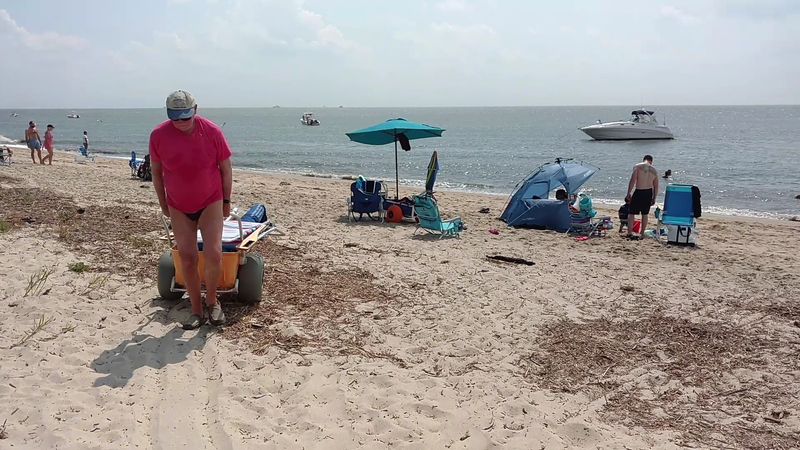
For 2026, the most important thing to bring is an up-to-date sense of where you are allowed to walk. A $37.5 million restoration project is reshaping approximately 290 acres of the wildlife management area around Pond Creek, Davey’s Lake, the former Harbison-Walker magnesite site, and its associated landfill.
The work is restoring tidal flow to the Pond Creek marsh, improving wetland and upland habitats, and creating new trails, boardwalks, viewing areas, and educational access points. Construction closures began in January 2024 and are expected to remain in place until approximately December 2026.
The beach is still accessible in approved areas, but the Pond Creek mouth and the active southern restoration zone are closed. The most direct approach is from New England Road, also designated County Route 641, which ends near a parking area with a sandy path leading toward the beach.
Another approach turns onto Higbee Beach Road before the dead end and continues toward a lot across from the Cape May–Lewes Ferry terminal. Access conditions can change, so posted signs, fencing, and current closure maps should always take priority over an old trail screenshot saved on a phone.
Seasonal wildlife rules matter as well. The designated south-end beach area is normally closed from April 15 through September 15, while the north-end beach remains open year-round for permitted activities.
Dunes are closed to public entry except by designated trails or with written state approval. From September 15 through November 1, early-morning use before 8 a.m. is limited to marked trails, and refuge fields may be viewed only from designated blinds.
Wear shoes that can handle sand and mud, carry water, use tick repellent, and leave the dunes, construction fencing, and closed trails alone. Higbee is not difficult to reach, but once the trees close behind the path and the Delaware Bay fills the horizon, the rest of New Jersey feels unusually far away.