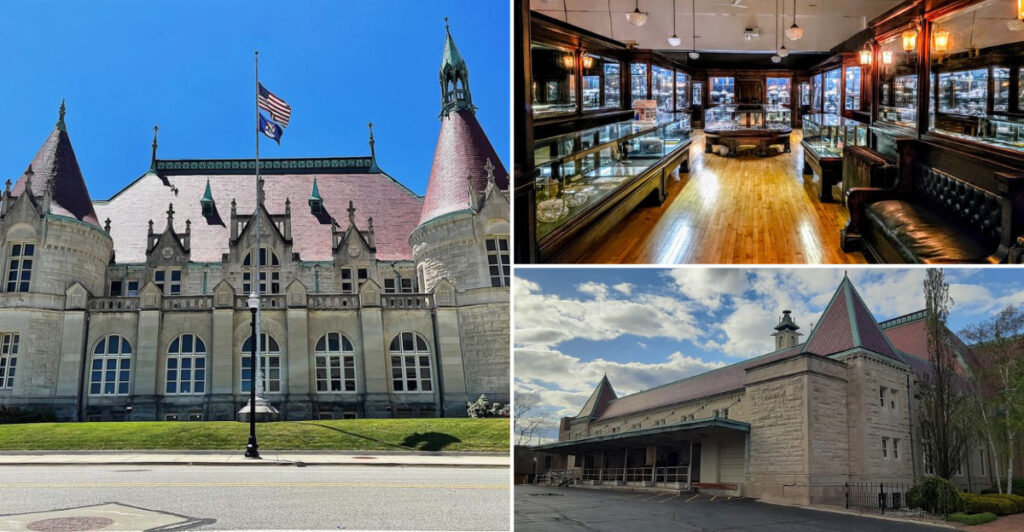
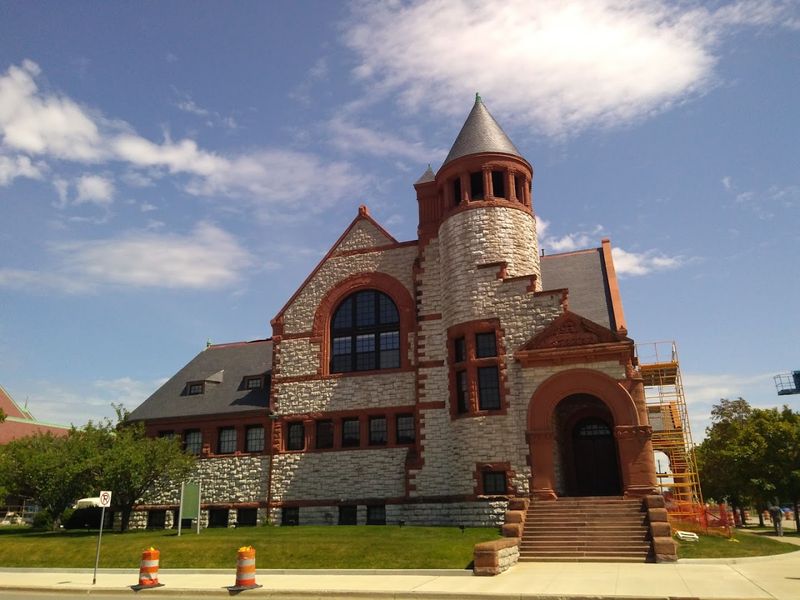
A building that looks like a storybook castle is not usually where people expect to find one of Michigan’s most fascinating local history museums. Along Federal Avenue in Saginaw, the Castle Museum of Saginaw County History rises above the streetscape with French Renaissance Revival details, a former-post-office past, and the kind of architecture that makes people stop before they even step inside.
Built in 1898, the landmark now holds three floors of exhibits tracing thousands of years of local history, from early Native American communities to the industrial growth that helped shape modern Saginaw. Whether you love historic buildings, regional stories, or affordable Michigan stops with real character, this museum offers far more than most visitors see coming.
A Building That Looks Like It Belongs in Paris, Not Michigan
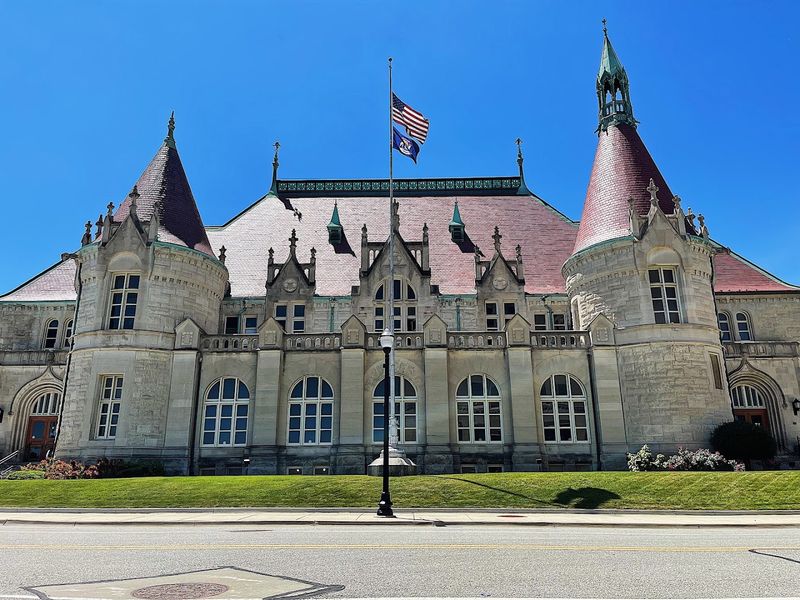
Before a single exhibit catches your eye, the building itself demands your full attention. Rising from a tree-lined corner on Federal Avenue, the Castle Museum looks like something transplanted from a 19th-century European boulevard rather than a mid-Michigan city block.
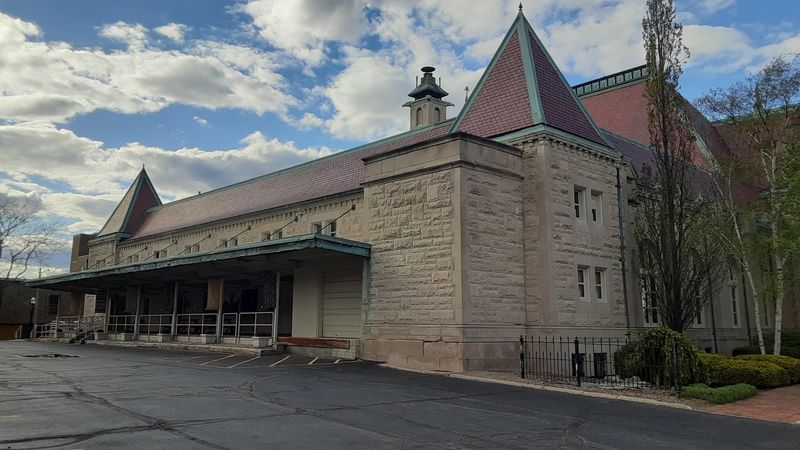
Its French Renaissance Revival architecture features steep rooflines, decorative turrets, arched windows, and detailed stonework that took skilled craftsmen years to execute. Completed in 1898, the structure originally served as Saginaw’s main post office, a fact that surprises most first-time visitors who assume it was always a cultural landmark.
The exterior is photogenic from every angle. Warm afternoon light catches the carved stone details in a way that makes the facade glow, and the symmetrical layout gives the building a commanding presence without feeling oppressive.
It sits confidently in its neighborhood, still anchoring the block more than 125 years after construction crews first broke ground.
Stepping around to the rear entrance, visitors enter through a more practical doorway before being directed to the front desk to check in. That short walk through the ground floor offers a first glimpse of interior woodwork, high ceilings, and period architectural details that set the tone for everything that follows.
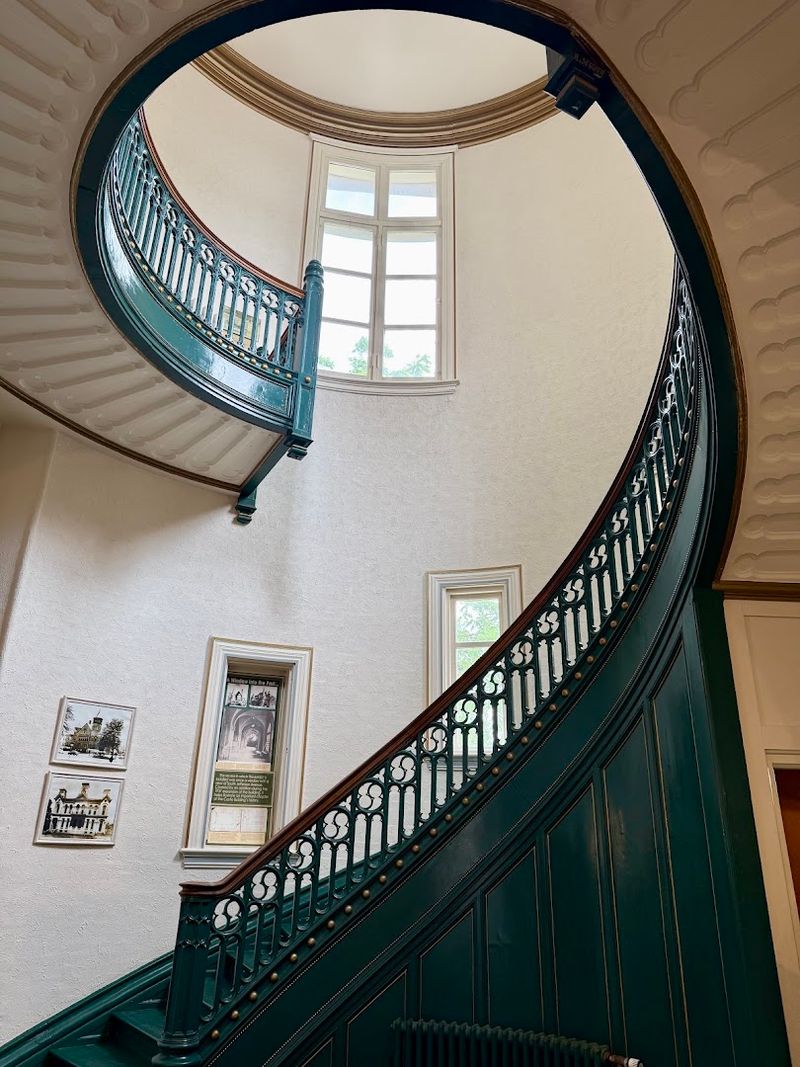
The spiral staircases are a particular highlight, curving upward through the building with a craftsmanship rarely seen in public structures of any era.
For anyone interested in historic architecture, the building alone justifies the visit. Photographs taken here routinely look professional without any effort, simply because the backdrop is that striking.
Saginaw has several notable buildings scattered across its streets, but none carries quite the same dramatic presence as this one. It is the kind of structure that makes you stop, look up, and wonder how it ended up here.
Three Floors of Exhibits That Tell Saginaw’s Full Story
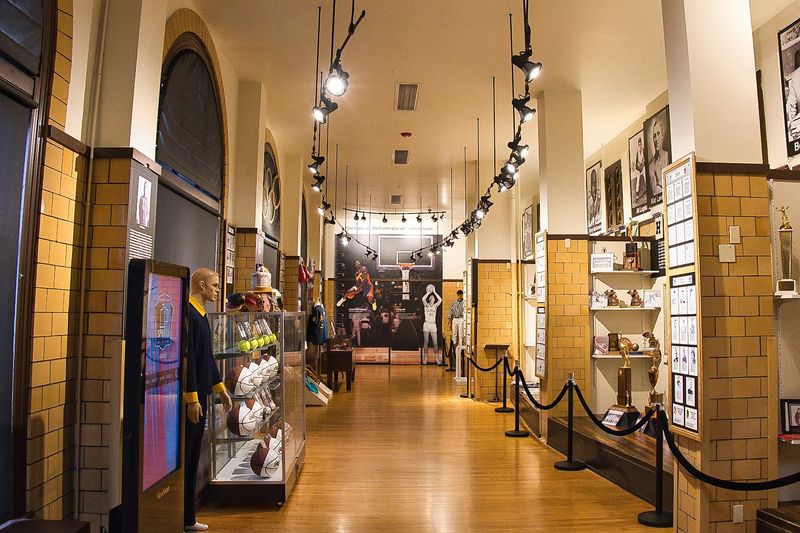
From the outside, the building looks substantial but compact. Once inside, the sheer volume of content across three floors genuinely catches people off guard.
The museum covers Saginaw County’s history from its earliest indigenous inhabitants all the way through the industrial and commercial developments of the 20th century, and it does so with a curatorial care that keeps the narrative coherent rather than overwhelming.
The layout encourages exploration rather than a rigid guided path. Visitors can move through exhibits at their own pace, spending extra time with displays that resonate most.
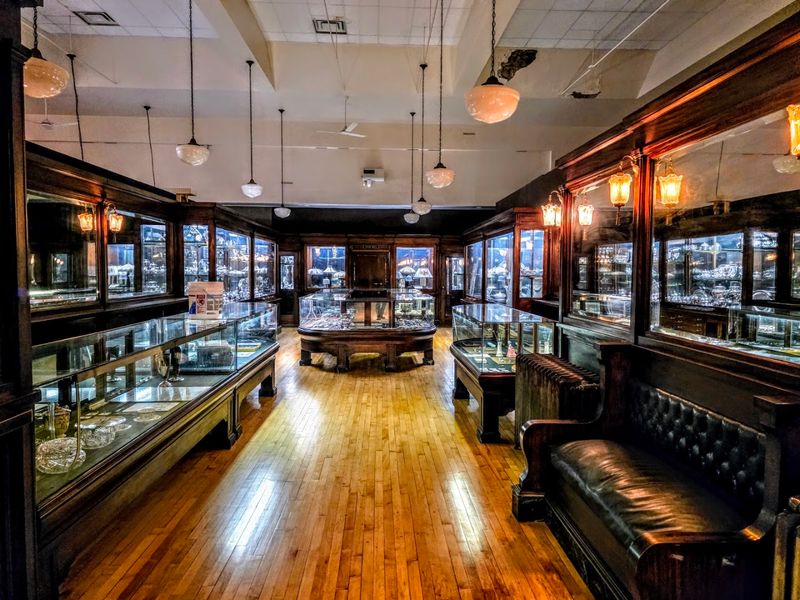
Artifacts are grouped thoughtfully alongside maps, photographs, newspaper clippings, and explanatory text that provides context without turning every panel into a lecture. The combination of objects and supporting materials gives each section a layered quality that rewards slower, more attentive viewing.
Logging, coal mining, furniture manufacturing, and commercial trade all receive dedicated attention, reflecting the industries that drove Saginaw’s growth during its most prosperous decades. These weren’t minor local operations.
Saginaw was once one of the most important lumber-producing regions in the entire country, and the exhibits convey that scale with appropriate weight. Photographs of massive log drives and sawmill operations give a visceral sense of how dramatically the landscape was transformed.
Beyond industry, the museum traces daily life, government, disasters, community rebuilding, and cultural milestones. A sports hall of fame section highlights local athletic achievements, including displays featuring both historical and current Saginaw High School athletes.
The breadth of topics covered means nearly every visitor finds something personally meaningful, whether that’s a familiar family name on a historical document or a photograph of a neighborhood that no longer exists. Plan for at least two hours, though many visitors find themselves wishing they had set aside more time.
The Exhibits That Actually Let You Touch History
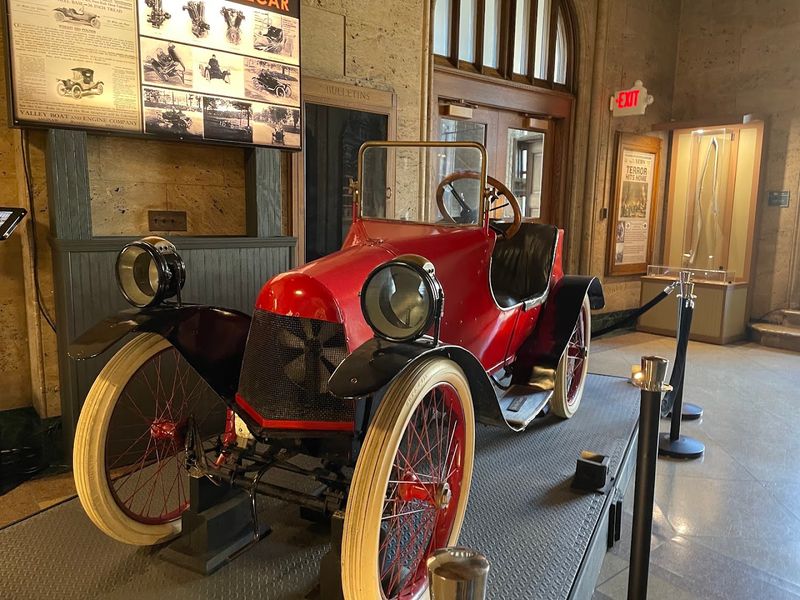
Most museums draw a firm line between visitor and artifact, keeping everything sealed behind glass or roped off at a respectful distance. The Castle Museum takes a more generous approach in several of its exhibits, allowing hands-on engagement that transforms passive viewing into something more memorable.
For families with young children especially, this distinction matters enormously when it comes to holding attention across multiple floors.
The coal mine exhibit stands out as one of the most immersive experiences in the building. Designed to evoke the underground working conditions that Saginaw-area miners faced, the exhibit uses physical elements and atmospheric details to give visitors a tangible sense of that labor.
It is the kind of display that stays with you precisely because it engages more than just your eyes.
The logging exhibit takes a different approach to sensory engagement. Visitors have noted that the section carries the scent of freshly cut wood, a detail that sounds minor until you’re actually standing there and the smell triggers something instinctive.
That olfactory element connects the historical display to lived experience in a way no photograph or caption can replicate. It is an unusually thoughtful curatorial choice.
Scattered throughout the museum are small dioramas tucked into unexpected corners, a detail that particularly delights younger visitors who treat finding them as a kind of scavenger hunt. Fairy doors appear in various spots as well, adding a whimsical layer that keeps kids engaged between the denser historical sections.
The front desk staff are known for being genuinely helpful and enthusiastic, quick to point visitors toward exhibits they might otherwise miss or to explain the best sequence for navigating the floors. Interactive elements are refreshed periodically alongside rotating exhibits, so return visits often reveal something new.
Michigan’s Lumber Boom and the Wealth That Built Saginaw
Few chapters in Michigan’s history are as dramatic as the lumber era, and Saginaw sat at the center of it. During the second half of the 19th century, the Saginaw Valley became one of the most productive timber-producing regions in North America.
Vast white pine forests stretched across the landscape, and the Saginaw River provided the ideal corridor for floating enormous log drives down to the mills. At the industry’s peak, dozens of sawmills operated along the riverbanks, and the wealth generated was staggering by any measure.
The Castle Museum dedicates serious attention to this period, presenting it not as a footnote but as the defining force that shaped the city’s physical growth, social structure, and long-term identity. Exhibits trace the mechanics of the lumber trade, from the logging camps deep in the forest to the mill towns that sprang up almost overnight to process the harvest.
Photographs of the log drives show rivers so thick with timber that they appear almost solid, a visual that makes the scale of the operation impossible to minimize.
Beyond the economic story, the exhibits also acknowledge the environmental transformation that followed. The forests that once seemed inexhaustible were largely cleared within a generation, forcing Saginaw to pivot toward manufacturing and other industries to sustain its economy.
That transition is documented with the same thoroughness as the boom years, providing a complete arc rather than a selective highlight reel.
The lumber section also connects to the building’s own history in subtle ways. The prosperity generated by the timber industry helped fund the kind of ambitious civic architecture that produced the post office building now home to the museum.
Walking through those exhibits inside those walls creates an unexpected but satisfying historical loop that gives the whole experience an added layer of resonance.
From Native Roots to Modern Saginaw: The Timeline on Display
Long before European settlers arrived, the Saginaw Valley was home to Indigenous peoples whose presence shaped the land and its waterways for thousands of years. The Castle Museum opens its historical narrative at that starting point, presenting Native American artifacts and cultural context with the kind of careful attention that establishes a respectful foundation for everything that follows.
Visitors encounter tools, objects, and explanatory materials that situate Saginaw County’s story within a much longer human timeline.
From those earliest chapters, the museum’s exhibits move through successive waves of settlement, trade, industry, and civic development. Each era receives its own dedicated space, but the transitions between sections feel intentional rather than abrupt.
The curators have worked to show cause and effect across time, making it clear how decisions and events from one generation shaped conditions for the next. That connective tissue is what separates a genuinely educational museum experience from a simple collection of old objects arranged in rooms.
Particularly striking is the coverage of more recent Saginaw history, including the city’s evolution through the 20th century, its industrial identity, and the challenges and rebuilding efforts that followed economic shifts. Local government, community organizations, commerce, and even disaster recovery all appear in the exhibits, giving Saginaw a fully human portrait rather than a purely industrial one.
The museum doesn’t flatten the city’s history into a simple success story, and that honesty makes the narrative more compelling.
For longtime Saginaw residents, the experience carries an added personal dimension. Recognizing street names, family surnames, or photographs of demolished buildings creates moments of connection that no amount of external research can replicate.
For first-time visitors, the timeline format makes the entire sweep of local history approachable and engaging without requiring any prior knowledge of the region.
Spiral Staircases, Hidden Corners, and the Architecture Worth Exploring Slowly
The Castle Museum is not a place to rush through. Its architectural bones reward slow exploration in a way that purpose-built modern museums rarely do.
The spiral staircases are perhaps the most talked-about structural feature, curving upward through the building with a craftsmanship that feels more like fine furniture than functional infrastructure. Running a hand along the banister while climbing between floors is one of those small physical pleasures that turns a museum visit into something closer to time travel.
High ceilings throughout the building create a sense of vertical space that the exhibits use effectively. Display cases and wall-mounted materials don’t feel cramped or stacked, because the rooms themselves breathe.
Natural light filters through the arched windows in ways that shift depending on the time of day, making certain corners of the museum feel entirely different during a morning visit versus an afternoon one.
There is also a lookout area that offers a vantage point over the surrounding neighborhood, accompanied by an audio component that explains what you’re seeing and why the view matters historically. It is one of several moments in the museum where the building and its contents work together rather than independently.
The post office exhibit, which the staff often recommend starting with, introduces visitors to the building’s original purpose and helps frame the relationship between the structure and the city it served.
An elevator is available for visitors who need it, though the stairs remain the more atmospheric choice for those who are able. Clean restrooms and a small souvenir selection round out the practical amenities.
Parking is available in a small lot behind the building, removing the need to navigate street parking in an unfamiliar neighborhood. The layout is intuitive enough that most visitors find their footing quickly, even without a formal guided tour.
Affordable Admission, Rotating Exhibits, and Why This Place Deserves More Visitors
At a time when museum admission prices can easily reach into the double digits per person, the Castle Museum operates at a price point that feels almost quaint. Admission has historically been just a few dollars per adult, with family rates that make a multi-hour outing genuinely accessible for households on any kind of budget.
Saginaw residents often receive free admission, a policy that reflects the museum’s commitment to serving its own community rather than simply attracting outside tourism dollars.
The value becomes even more apparent when you consider what the price includes. Three floors of professionally curated exhibits, interactive elements, rotating temporary displays, and a historically significant building all come with a single low admission fee.
Visitors consistently report spending between one and a half to two and a half hours inside, with some staying even longer when the exhibits pull them in. That ratio of cost to content is difficult to match anywhere in the region.
The museum rotates its exhibits every three to six months, which gives repeat visitors genuine reason to return. A collection this size, with this many artifacts in storage, can support fresh presentations across different themes and time periods without exhausting its material.
Staff are known for being welcoming and knowledgeable, happy to point out highlights or answer questions without hovering.
Hours run Tuesday through Saturday from 10 AM to 4:30 PM, with extended Thursday hours until 7 PM and Sunday hours from 1 PM to 4:30 PM. That Thursday evening window is particularly useful for visitors who can’t make a weekday daytime visit work.
The Castle Museum sits at 500 Federal Avenue in Saginaw, Michigan, easy to find and easier still to recommend to anyone passing through the area with even a passing interest in local history.