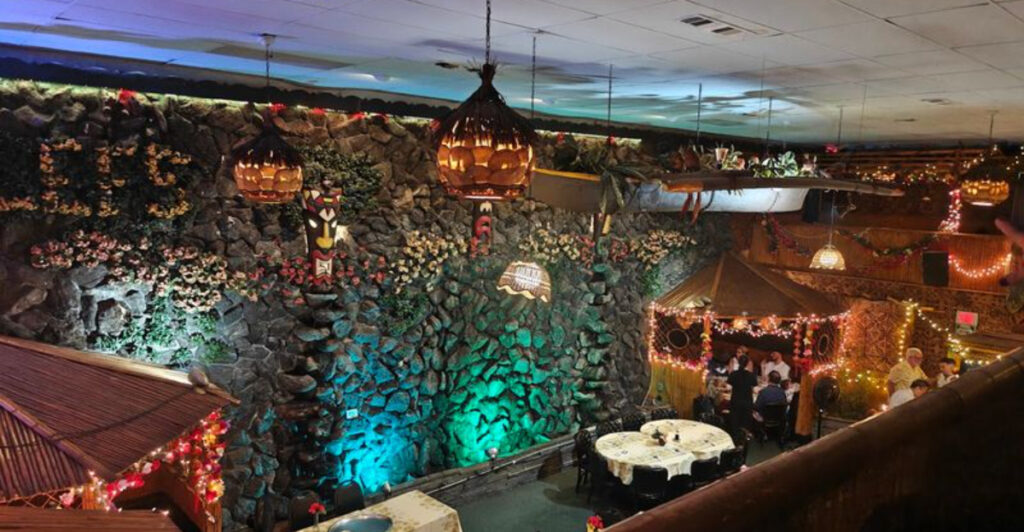
A small flame flickers in the middle of the table while skewered beef, shrimp toast, spare ribs, and chicken wings wait around it like the tastiest campfire circle imaginable. Overhead, an outrigger canoe hangs from the ceiling.
Water trickles down rock-lined walls, carved tiki faces peer through the dim lighting, and a tropical drink arrives in a ceramic mug with enough personality to deserve its own seat. Then you remember that you are not in Honolulu.
You are sitting on Stuyvesant Avenue in Lyndhurst, just a short drive from the Meadowlands. Lee’s Hawaiian Islander has been creating this wonderfully over-the-top illusion since 1974, long before “immersive dining” became a marketing phrase.
The restaurant combines vintage Polynesian décor, old-school Chinese-American cooking, flaming platters, and rum-heavy cocktails without sanding away any of its gloriously retro edges. It is sincere, slightly kitschy, and far more fun because it refuses to pretend otherwise.
The Coral-Colored Lyndhurst Landmark That Hides a Tropical Escape
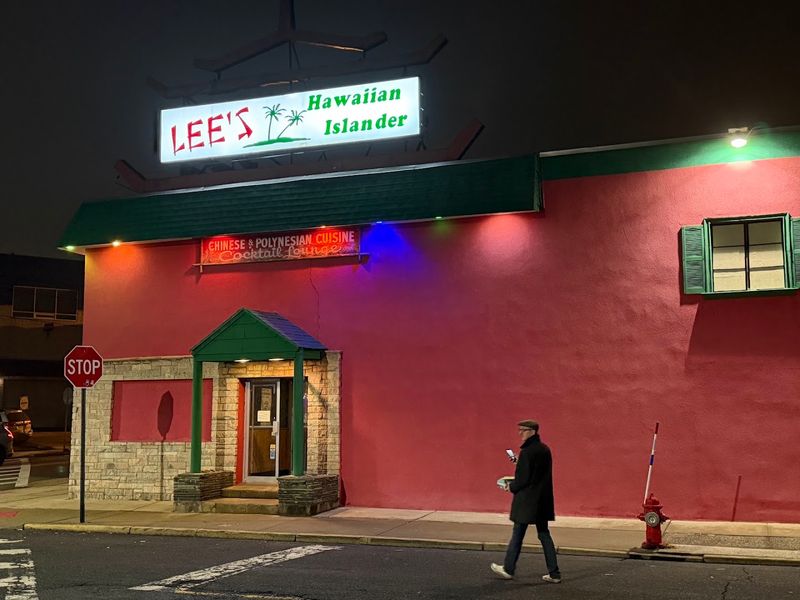
Lee’s Hawaiian Islander stands at 768 Stuyvesant Avenue, where its bright coral-orange exterior makes it nearly impossible to confuse with the neighboring businesses.
The building dates to 1962, while the restaurant itself opened in 1974, giving it more than half a century of history as one of North Jersey’s most distinctive dining rooms.
From the street, the place resembles a surviving roadside attraction from an era when restaurants were expected to announce themselves with color, unusual architecture, and a little theatrical nerve. That first impression matters because the surrounding setting is unmistakably North Jersey.
Lyndhurst sits amid busy highways, residential blocks, rail lines, and the sprawling Meadowlands. Nothing about the drive suggests that bamboo booths, carved masks, tropical drinks, and tabletop flames are waiting at the destination.
The contrast is part of the pleasure. You park outside an eye-catching suburban building, open the door, and leave the familiar landscape behind almost immediately. There is no sleek lobby easing visitors gently into the theme. Lee’s commits from the start.
The lighting drops, the décor thickens, and everyday Lyndhurst disappears beneath layers of bamboo, stonework, greenery, and Polynesian-inspired ornament. The restaurant also remains refreshingly practical beneath all that spectacle.
It has a dedicated parking area, serves both lunch and dinner, and offers takeout and delivery for anyone more interested in the food than the full indoor production. Current posted hours list the restaurant as closed Monday, open from noon to 9:30 p.m.
Tuesday through Thursday and Sunday, and open until 11 p.m. Friday and Saturday. Those details can change, but they make Lee’s as workable for a midweek lunch as it is for a lively weekend night.
Inside the Vintage Tiki Dining Room That Feels Frozen in Time
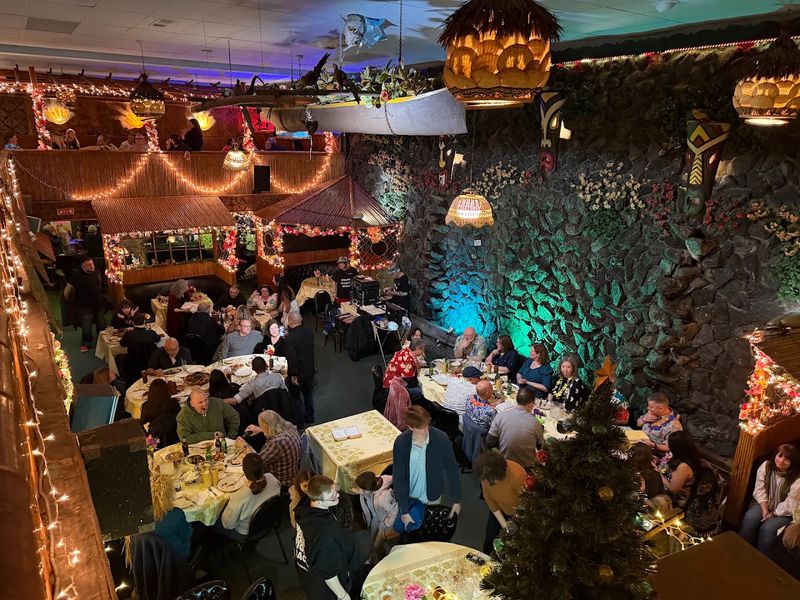
Walk a few steps past the entrance and your eyes immediately start competing for places to land. A full-size outrigger canoe is suspended above the dining area.
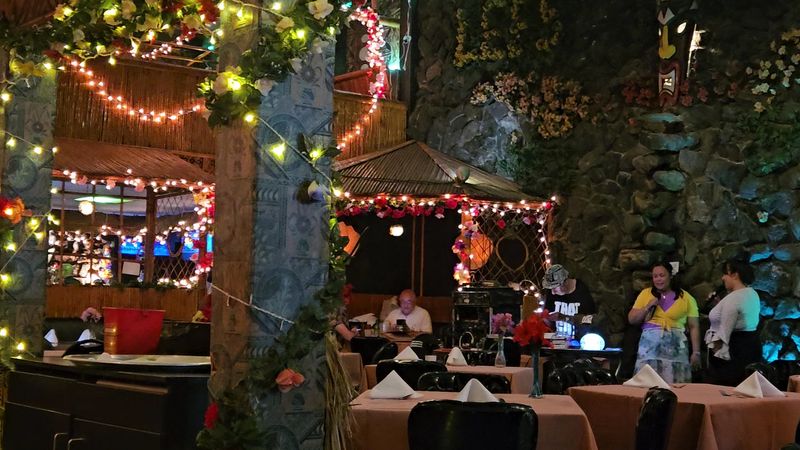
Tiki masks watch from rock-lined walls, water features provide a steady background trickle, and bamboo framing divides the room into shadowy little pockets. There is even an upper balcony with additional tables, giving the interior a layered, almost theatrical quality that modern restaurants rarely attempt.
The lighting stays low enough to make the glowing signs, string lights, fish tanks, and decorative details stand out. This is not a minimalist room with three tasteful palm prints and a pineapple-shaped candleholder.
Lee’s belongs to the maximalist school of tiki design, where an empty wall represents a missed opportunity. The carved figures, artificial foliage, thatched elements, stone textures, aquarium displays, and hanging decorations work together so thoroughly that the outside world becomes easy to ignore.
Some of the most memorable seats are tucked beneath bamboo structures or inside hut-like booths that feel separated from the larger dining room. Families get plenty for children to inspect, while longtime tiki enthusiasts can spend an entire meal noticing details that have survived from another dining era.
That age is important. Plenty of new bars borrow midcentury tiki imagery, but Lee’s does not feel like a recent recreation assembled from online vintage finds.
The restaurant has been living with this identity for decades. The slightly worn surfaces, dense decorative layers, and unapologetic old-school presentation are part of its personality rather than flaws waiting to be renovated away.
Even the soundtrack contributes, with tropical tunes and Hawaiian-style music keeping the mood playful without drowning out conversation. The effect is less polished resort and more elaborate neighborhood fantasy, which is exactly why the room feels so memorable.
The Flaming Pu Pu Platter That Starts Dinner With a Show
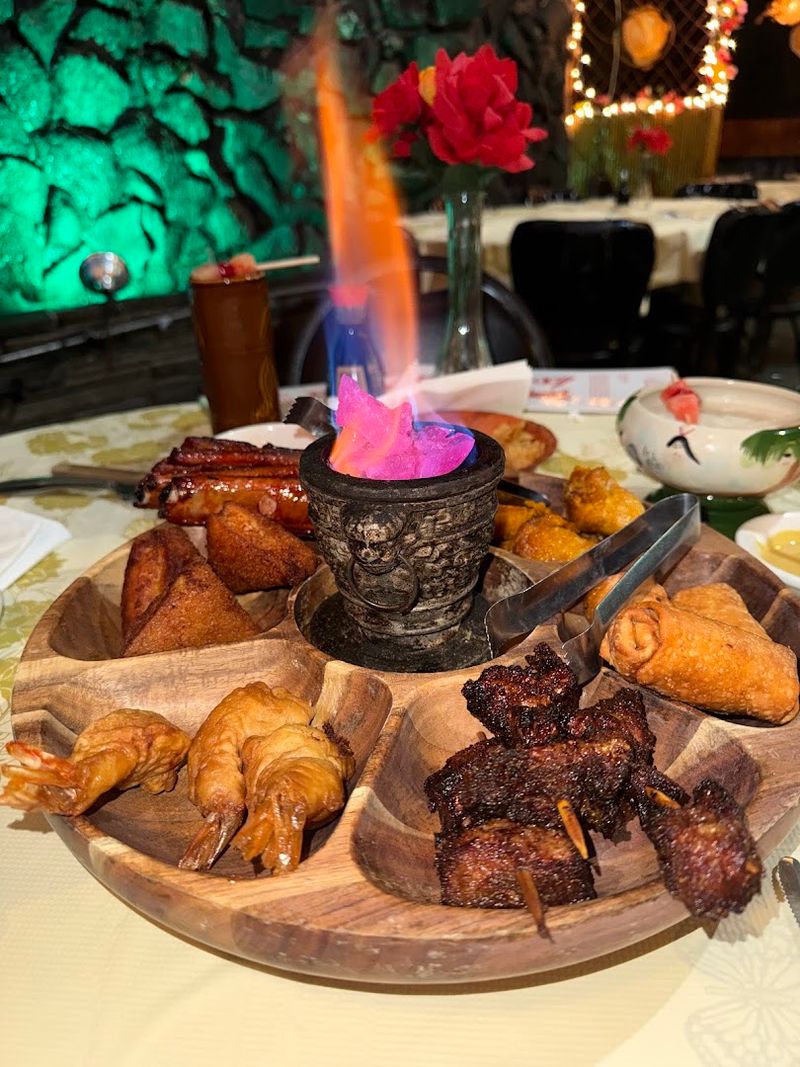
Ordering the pu pu platter is the fastest way to understand what Lee’s does best. Designed for two people and recently listed at $29.50, the circular spread arrives loaded with shrimp toast, Hawaii beef, miniature egg rolls, barbecued spare ribs, chicken wings, and fantail shrimp.
A small flame burns in the center, allowing diners to warm or lightly toast the appetizers at the table. It turns the opening course into a shared activity, although someone in the group will inevitably become overly invested in managing the tiny grill.
The assortment covers plenty of textures before the entrées appear.
Shrimp toast brings a crisp exterior and savory seafood flavor, the spare ribs deliver that sticky-sweet lacquer associated with classic Chinese-American dining rooms, and the miniature egg rolls disappear quickly enough to make ordering an additional portion seem reasonable.
Hawaii beef and fantail shrimp give the platter a little more substance, while the chicken wings pick up extra char when held carefully over the central flame. This style of appetizer once appeared at Polynesian-themed and Chinese restaurants across the country, but it has become much harder to find.
At Lee’s, it remains a centerpiece rather than a nostalgic menu footnote. The presentation suits the room perfectly: dramatic, communal, a bit old-fashioned, and impossible to eat without talking about it.
It also sets the pace for the meal. Lee’s is not the place to rush through a quiet solo plate while checking emails.
The table fills with dishes, drinks arrive in unusual vessels, and everyone starts reaching across one another to trade bites. First-time visitors should resist the temptation to treat the platter as a minor starter.
Between the ribs, fried shrimp, beef, wings, and toast, it can be surprisingly filling, especially once fried rice and full-size entrées join the party. Come hungry, share generously, and let the little tabletop flame do its work.
Polynesian Favorites and Chinese-American Classics Fill the Menu
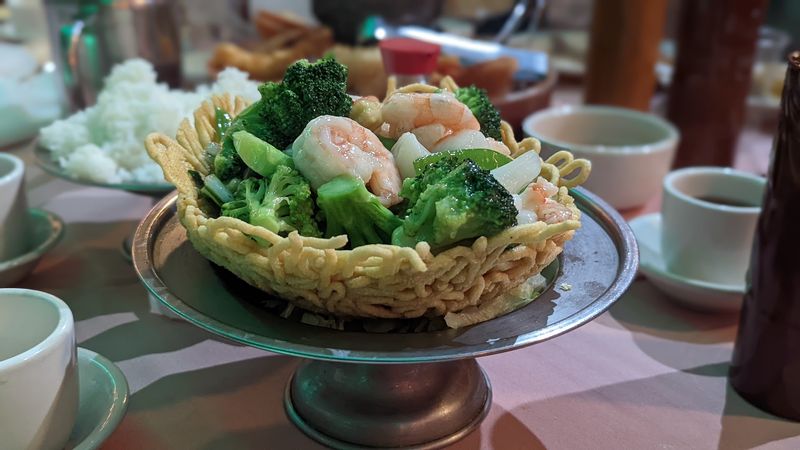
The food at Lee’s is not modern Hawaiian cooking built around poke bowls, kalua pork, or plate lunches. Its menu reflects an older mainland tradition in which Polynesian-themed restaurants blended tropical presentation with Cantonese, Chinese-American, and midcentury supper-club dishes.
That combination explains why lobster, pineapple, filet mignon, fried rice, duck, sweet-and-sour sauces, and flaming rum preparations can all appear within a few pages of one another. The Polynesian section provides the most theatrical choices.
Chicken Mauna Loa, listed at $23.50, places golden fried chicken breast over pineapple and finishes it with a flaming piquant sauce. Mongolian Steak Flambie pairs large pieces of filet mignon with vegetables, pineapple, and a flaming rum sauce for $31.75.
Seafood Hawaii combines shrimp, crab, lobster, scallops, and vegetables, while the Hawaiian Seafood Love Nest serves a similar seafood mixture inside a crisp nest of fried egg noodles. The Hawaiian Four “O” goes even bigger, combining lobster, filet mignon, chicken, and roast pork.
Diners who prefer familiar takeout-style favorites still have a deep bench of choices. General Tso’s chicken, orange beef, butterfly chicken, fried rice, wonton soup, sweet-and-sour dishes, shrimp with garlic sauce, and beef with broccoli all fit comfortably within the restaurant’s old-school identity.
Lee’s Famous Specialties section includes boneless chicken Cantonese, Peking-style spare ribs, lemon chicken, Buddhist Delight, and seafood combinations. Even straightforward vegetable dishes, including broccoli in oyster sauce and mixed Chinese vegetables, are available for balancing a table crowded with richer plates.
Portions tend to encourage sharing, so the smartest strategy is to order across categories rather than committing everyone to separate entrées. A flaming steak, a seafood dish, a dependable chicken favorite, and a large plate of fried rice create a meal that feels more like a family feast than a standard restaurant order.
Mai Tais, Scorpion Bowls, and Tiki Mugs Keep the Island Mood Going
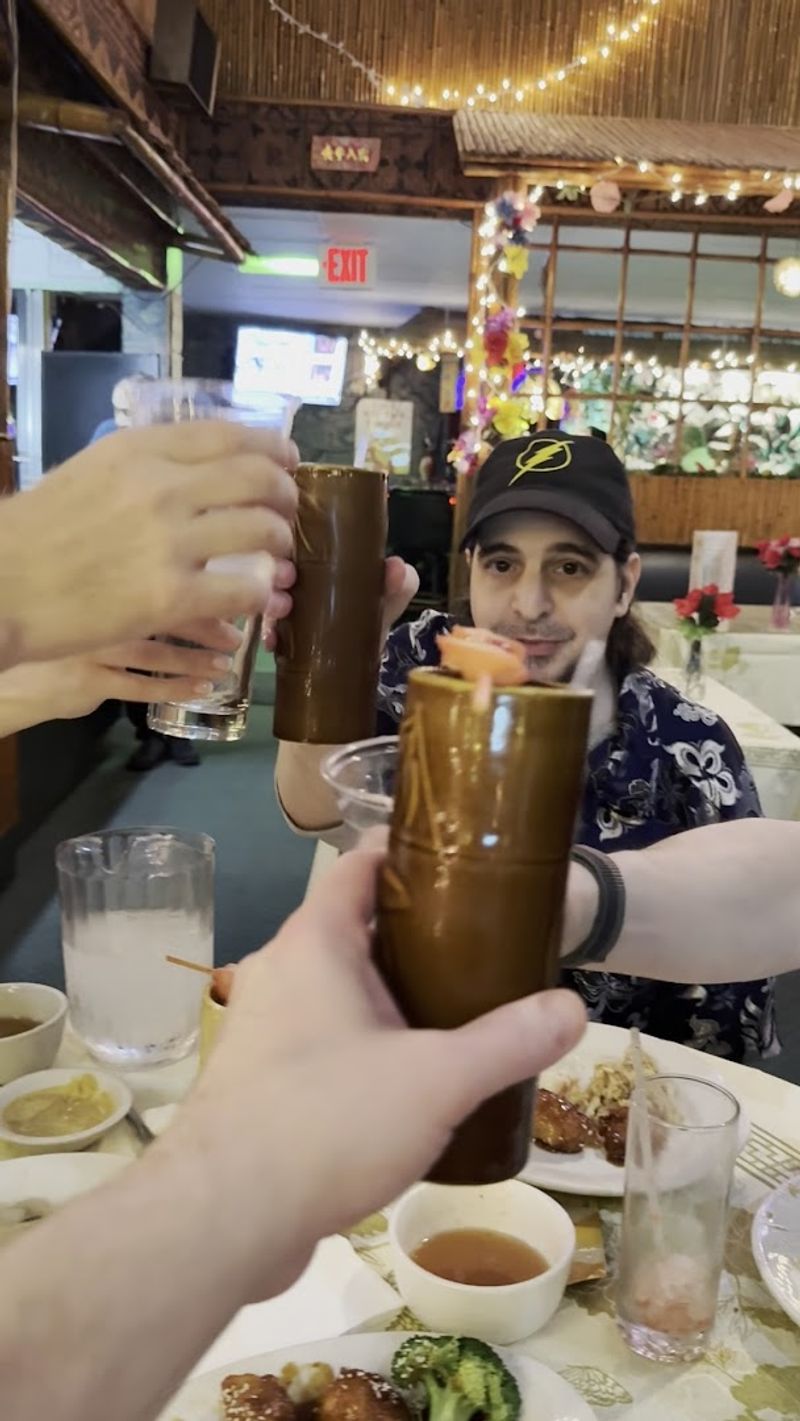
A Scorpion Bowl does not quietly appear at the table. It arrives as a communal event, typically equipped with multiple straws and enough tropical decoration to make an ordinary rocks glass look painfully underdressed.
That playful presentation carries across the cocktail lineup, where classic tiki names such as Mai Tai, Zombie, Fog Cutter, and Navy Grog reinforce the restaurant’s midcentury identity. These drinks are generally fruity, rum-forward, and stronger than their cheerful garnishes suggest.
The sweetness and citrus can make them go down easily, so the sensible approach is to pace yourself, especially after a flaming pu pu platter has already turned dinner into a small celebration. Ceramic tiki mugs are a major part of the fun.
Depending on the cocktail, drinks may arrive in carved-face vessels, tall tropical cups, or oversized bowls intended for sharing. Umbrellas, fruit slices, bright straws, and other flourishes make the bar feel less like a place for grabbing a quick drink and more like another fully decorated corner of the restaurant’s fantasy.
The bar itself is surrounded by bamboo, masks, colored lights, and vintage ornamentation, so even diners who skip alcohol still get the full visual effect. A nonalcoholic fruit punch, recently listed at $3.50, keeps younger diners and designated drivers included in the tropical mood.
Lee’s also becomes livelier on weekend evenings, when karaoke has been a regular Friday and Saturday attraction. The combination of rum drinks, vintage décor, and enthusiastic singing can shift the room from family dinner to wonderfully unpredictable neighborhood party.
It is not a subdued craft-cocktail lounge, and that is hardly the point. The drinks are meant to be seen, shared, photographed, and discussed.
They extend the theme beyond the walls and onto the table, ensuring that even the glassware participates in the evening.
Why Generations Keep Returning to Lee’s Hawaiian Islander
Longevity like this cannot be manufactured with a retro logo and a carefully aged menu. Lee’s has operated since 1974, meaning diners who first visited as children have had plenty of time to return with children and grandchildren of their own.
Birthdays, anniversaries, graduations, family dinners, and first dates have unfolded beneath the same suspended canoe and watchful tiki faces. The décor may bring people through the door, but continuity is what turns a themed restaurant into a local institution.
Part of the appeal is that Lee’s has not chased every passing dining trend. It still serves flaming dishes, large Chinese-American entrées, communal appetizers, colorful cocktails, and desserts such as ice cream or preserved lychee.
The experience remains accessible rather than precious. Families can settle into a bamboo-lined booth, groups can split a Scorpion Bowl, and regulars can order the same wonton soup or orange beef they have enjoyed for years.
Prices largely remain in the casual-to-moderate range, with many full entrées sitting in the low-to-upper $20s and enough food often arriving to justify a takeout container. The restaurant also balances novelty with familiarity.
A first visit feels unusual because so few places still look or operate this way. A fifth visit feels comfortable because the room, menu, and friendly rhythm of service have become recognizable.
That combination explains why Lee’s has outlasted countless more fashionable concepts. It offers an evening that is genuinely different without demanding that diners take it too seriously.
Outside, Stuyvesant Avenue continues doing what North Jersey streets do: traffic moves, trains pass, and the Meadowlands sits nearby. Inside, a flame burns at the center of a pu pu platter, tropical drinks cross the bar, and an outrigger canoe remains suspended above another generation making memories beneath it.