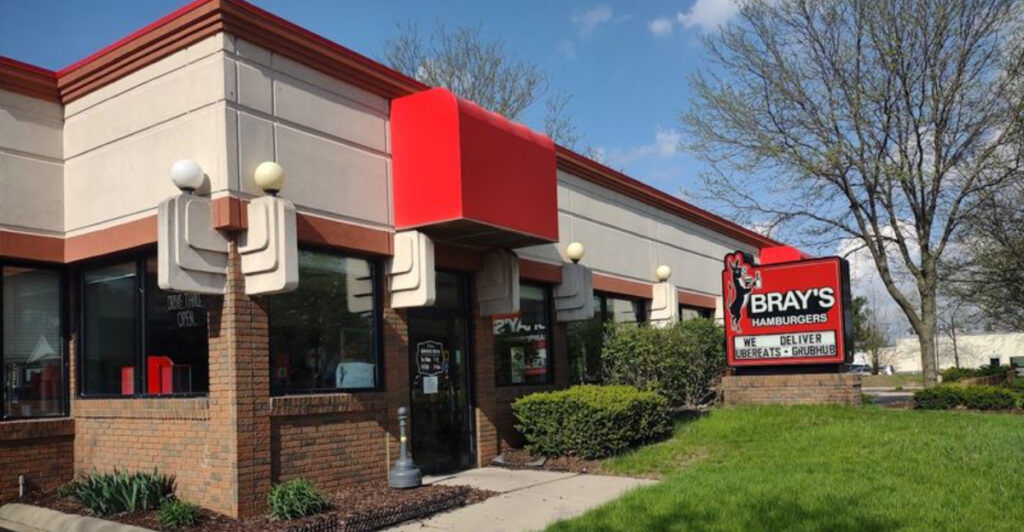
Some burger joints survive on hype, but Bray’s Hamburgers on Ford Road in Westland, Michigan has survived on something far more reliable: consistency, character, and a griddle that never seems to cool down. Tucked into a stretch of road that has changed dramatically over the decades, this little spot has remained a familiar constant for families who have been stopping in since the 1970s and 1980s.
The fresh-grilled onions that sizzle alongside every order have become something of a calling card, triggering food memories the moment the smell hits the parking lot. Whether you grew up nearby or just discovered it, Bray’s carries the kind of low-key charm that keeps people talking long after the last fry is gone.
A Griddle That Sets the Mood Before You Even Order
The smell reaches you before the menu does. Walking up to Bray’s Hamburgers at 35650 Ford Rd in Westland, the first thing that registers is the unmistakable scent of meat and onions cooking together on a flat-top griddle — the kind of smell that skips past your brain and goes straight to your stomach.
It is not a complicated smell. It is not trying to be fancy.
It just works, every single time.
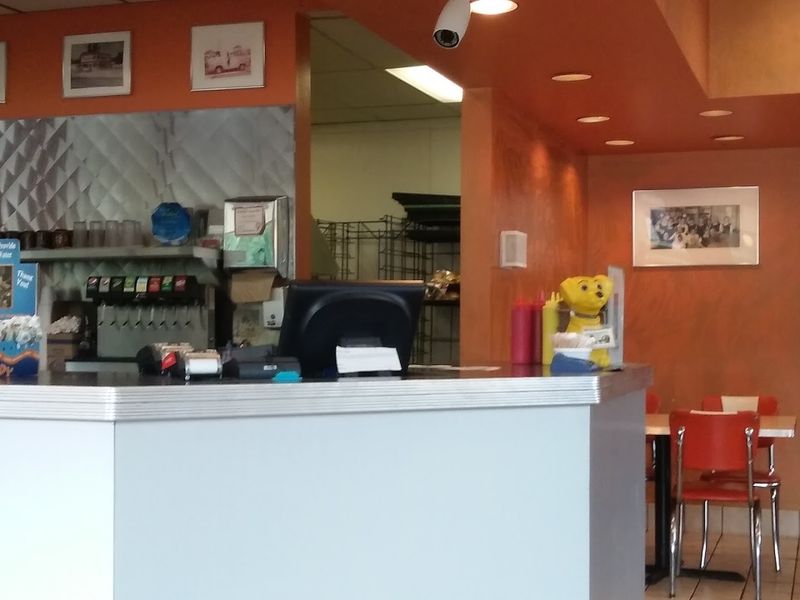
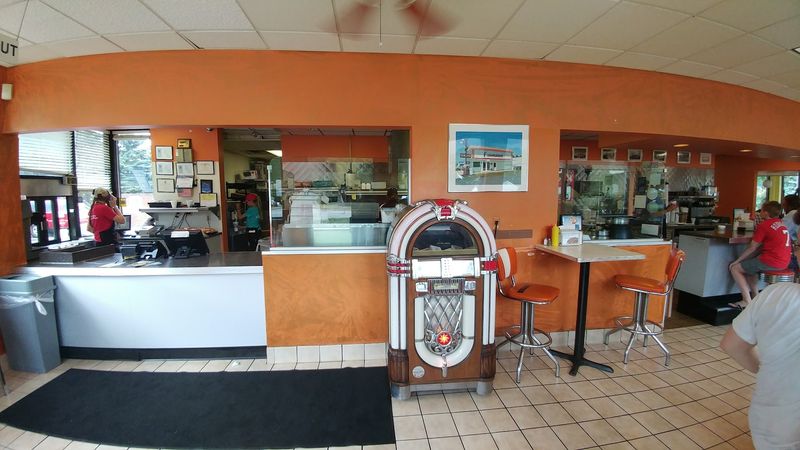
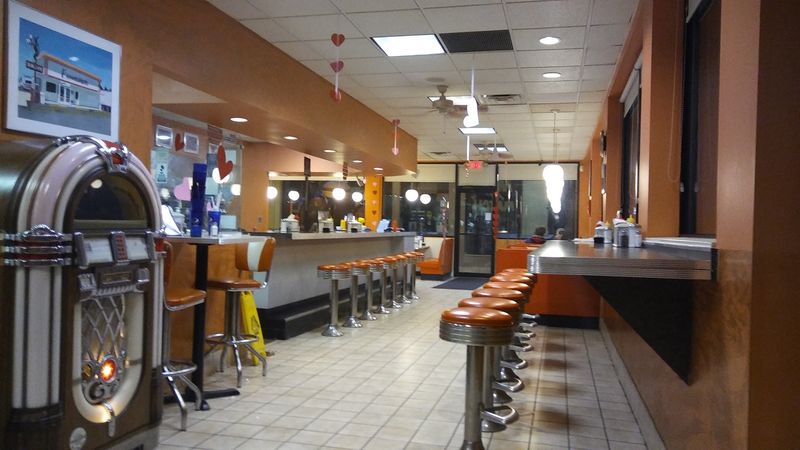
The setup inside is stripped back to basics in the best possible way. Round counter stools, retro booths, and decor that nods hard to the 1950s diner era give the space a visual shorthand that most modern fast-casual spots spend thousands trying to fake.
At Bray’s, none of it feels staged. The layout has clearly been this way for a long time, and the wear on the surfaces tells that story honestly.
A small but meaningful detail sits tucked inside the dining room: the old donkey that once featured on the restaurant’s outdoor sign now lives in its own glass enclosure, available for photos. It is a quirky preservation move that says a lot about how this place views its own history.
Nothing gets thrown away if it still carries meaning.
The counter seating puts you close enough to watch the cooking happen in real time. Patties hit the griddle with a satisfying sizzle, onions go down alongside them, and the whole production moves at a rhythm that feels practiced without feeling robotic.
There is no performance involved — just the straightforward mechanics of a kitchen that has been doing this long enough to make it look effortless. The griddle does not stop.
Neither does the line of people ready to order from it.
The Slider-Style Burgers That Built a Loyal Following
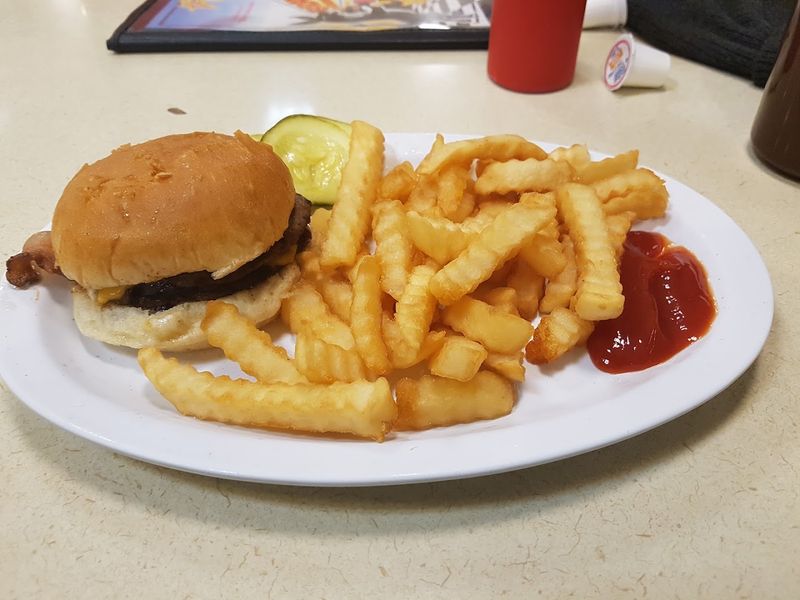
Bray’s burgers run on the smaller side — closer to slider territory than the thick, stacked patties that dominate most burger conversations right now. That is not a flaw.
It is a deliberate format that has been part of the Bray’s identity for decades, and once you understand it, the whole experience clicks into place. Plan on ordering two or three, because one is rarely enough to call it a meal.
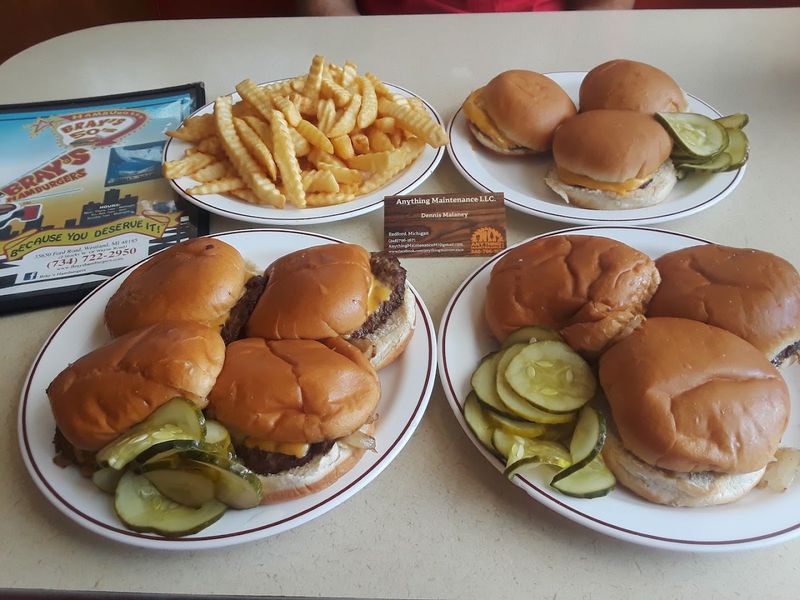
The patties cook thin and fast on the flat-top, developing a lightly crisp edge while staying juicy in the center. Toppings are straightforward — cheese, mustard, ketchup, pickles — and the bun-to-patty ratio is calibrated for maximum bite efficiency.
It is the kind of burger that does not need a lot of extras to justify itself, because the cooking method does the heavy lifting.
Combo options make building a full meal easy without overthinking it. The double cheeseburger combo with fries and a drink covers the bases cleanly, and the pricing stays reasonable enough that ordering a second burger does not feel like a splurge.
Hot dogs also appear on the menu, offering a secondary option that holds its own alongside the main attraction.
The crinkle-cut fries arrive hot — sometimes very hot — and carry a light crisp on the outside with a soft center. They are not the star of the show, but they play a solid supporting role.
Shakes round out the menu with flavors that lean classic, including chocolate cherry, which manages to be both nostalgic and genuinely good. The whole lineup is built around comfort and familiarity rather than novelty, and that focus is exactly why it has worked for so many years across multiple generations of Westland regulars.
Why Those Grilled Onions Keep Showing Up in Every Conversation
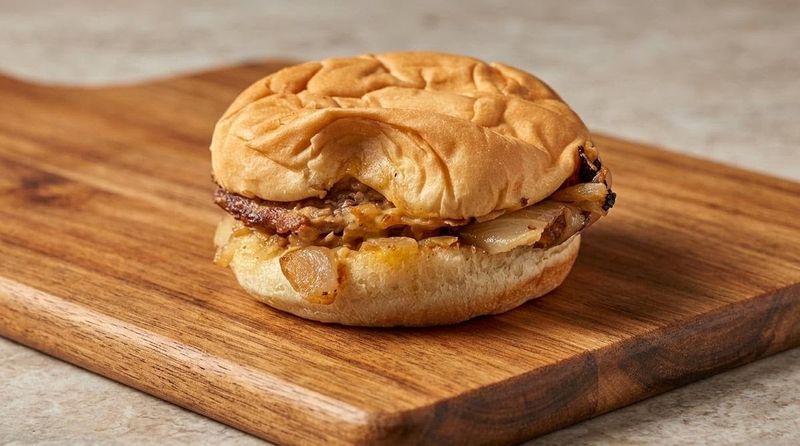
Ask anyone who has eaten at Bray’s more than once and the onions will come up. They are cooked directly on the griddle alongside the burger patties, absorbing the fat and heat in a way that transforms them from a basic topping into something more layered and savory.
The griddle contact gives them a slightly charred edge while keeping the interior soft, and they carry enough flavor to shift the entire profile of a burger.
The onions have become so associated with the Bray’s experience that they function almost as a signature. Long-time regulars reference them specifically when describing what makes the food here different from a standard fast-food burger.
The smell alone — onions caramelizing on a hot griddle — is enough to trigger a decade’s worth of food memories for people who grew up eating here on weekends with their families.
Opinions on the cut and texture do vary. Some prefer a cleaner, more uniform dice that holds together better in each bite, while others accept the stringy, irregular style as part of the charm.
That debate has been running in the background of Bray’s conversations for years and shows no sign of resolution. What both sides agree on is that the onions are cooked with heat and attention, not dropped on cold from a bag.
For a topping that costs nothing extra and takes up minimal real estate on the bun, the grilled onion carries a disproportionate amount of Bray’s identity. Skipping them is always an option — and some regulars do — but first-timers are almost universally encouraged to try the burger as intended, onions included.
The griddle does something to them that a microwave or steam tray simply cannot replicate, and that gap in quality is noticeable from the first bite.
Decades of History Packed Into One Ford Road Address in Michigan
Bray’s has been part of the Ford Road landscape long enough that multiple generations of the same families have eaten here. Parents who stopped in during the 1970s brought their kids in the 1990s, and some of those kids are now bringing their own children.
That kind of generational continuity is not something a restaurant manufactures through marketing — it accumulates slowly through consistent food and a space that does not constantly reinvent itself.
The Westland location is not the only Bray’s that has existed over the years. Longtime locals reference other locations, including one near 9 Mile and Dequindre, suggesting the brand carried enough regional weight to operate multiple spots.
The Ford Road address has remained the anchor, holding down its corner of Westland through decades of neighborhood change and the rise and fall of countless competitors nearby.
The retro interior is not a renovation decision — it is the original atmosphere, maintained rather than reconstructed. Counter stools, booth seating, and the preserved donkey mascot all point to a place that has stayed close to its roots rather than chasing trends.
In an era when restaurant design cycles through aesthetics every few years, that kind of consistency reads as confidence more than stubbornness.
Family loyalty to Bray’s runs deep enough that some regulars describe it as a tradition rather than a preference. Road trips through the area include a stop on Ford Road as a matter of course.
Business travelers who grew up in the region make detours specifically to eat here. The food is part of it, but so is the continuity — the sense that some things in the neighborhood have stayed recognizable even as everything around them has shifted.
Bray’s sits at that intersection of memory and present-tense experience in a way that very few local spots manage to sustain.
Counter Stools, Retro Booths, and a Mascot With Its Own Glass Room
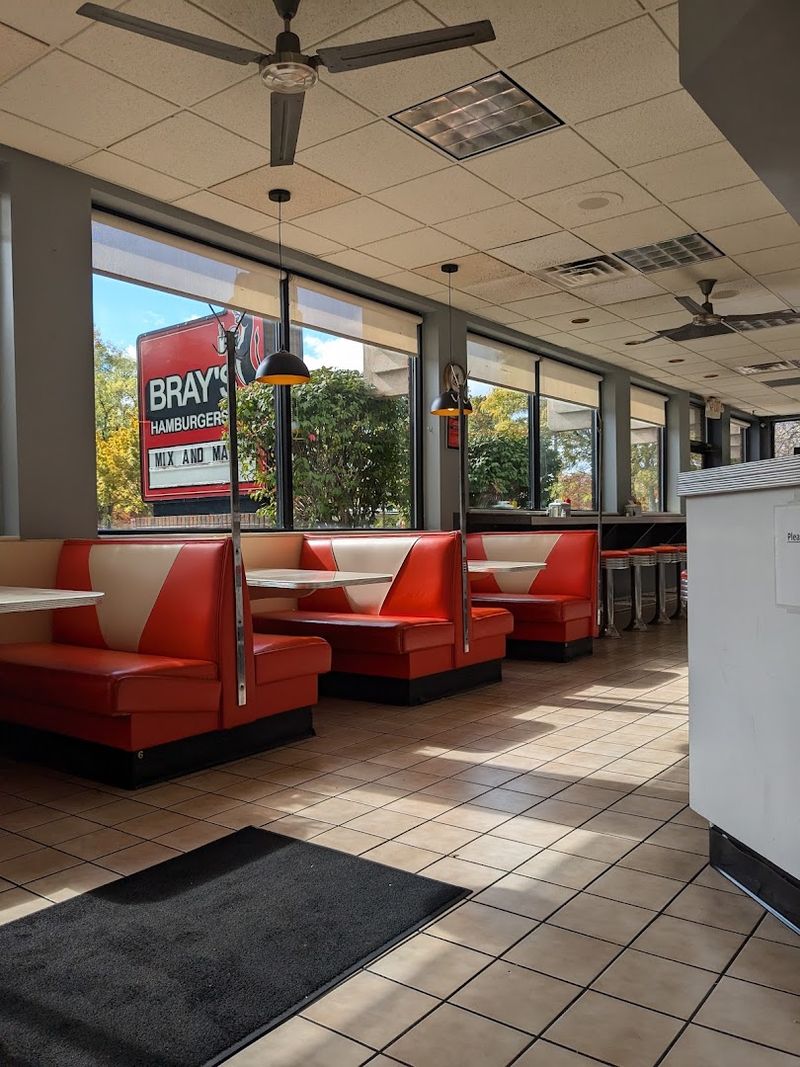
The dining room at Bray’s is not large, but it uses its space efficiently. Counter seating runs along one side, putting customers close to the action of the kitchen without feeling cramped.
The round stools are the kind that spin slightly and squeak just enough to feel appropriately old-school. Booth seating along the walls offers a bit more separation and works well for small groups who want to spread out a little.
Decorations lean into the 1950s diner aesthetic without overdoing it. There is no ironic distance in the styling — no deliberate kitsch layered over a modern frame.
The look is simply what the place has always been, and it holds together because of that authenticity. Signage, color choices, and the general arrangement of the space all point to a design sensibility that has not been significantly updated, which in this case is a compliment.
The standout feature for first-time visitors is almost always the glass enclosure near the dining area that houses the original donkey mascot. The figure used to appear on the restaurant’s outdoor signage and has since been retired indoors, given its own display space where customers can step in for a photo.
It is a small, unexpected moment of museum-level care applied to a fast-food mascot, and it tends to catch people off guard in the best way.
Parking is available in an adjacent lot, and a drive-thru lane runs alongside the building for customers who prefer to skip the dining room entirely. Both options stay busy during peak hours, and the flow between them is generally smooth.
The physical setup of the restaurant — modest, functional, and unchanged in its essential character — mirrors the food philosophy: do not complicate what already works, and do not apologize for being exactly what you are.
Best Times to Go and How to Order Like a Regular
Bray’s Hamburgers opens at 10 AM Monday through Saturday and runs until 10 PM, giving it a solid window for both lunch and dinner crowds. Sunday is closed, which is worth remembering before making a special trip.
The hours are consistent across the week, making it easy to plan around without needing to double-check every visit.
Lunch hours between noon and 2 PM tend to draw a steady crowd, especially from nearby workplaces along the Ford Road corridor. Arriving just before or just after the peak lunch window cuts down on wait time without sacrificing anything in terms of food quality.
The kitchen moves quickly, but orders during rush periods can stack up, particularly at the drive-thru.
First-timers do best by ordering a double cheeseburger — with onions — alongside the crinkle-cut fries and one of the shakes. That combination covers the core Bray’s experience in one tray and gives a clear baseline for everything else on the menu.
Regulars often build their own combinations after years of experimenting, landing on personal favorites that rarely change once discovered.
The drive-thru is a legitimate option and handles a high volume of orders on busy days. Dining inside, though, gives access to the counter experience and the chance to watch the griddle in action — details that matter if this is a first visit.
The staff tends to move efficiently, and the counter setup makes communication easy when customizing an order. Tipping the counter staff is common practice among regulars and reflects the kind of neighborhood-restaurant culture that Bray’s has maintained over the years.
Bringing cash or a card both work fine, though checking your order before leaving the window is always a practical move regardless of where you eat.
What Separates Bray’s From Every Other Burger Stop on the Block
A lot of burger places exist along Ford Road and in the surrounding Westland area. Chain restaurants, newer fast-casual spots, and local competitors all compete for the same lunch and dinner traffic.
Bray’s does not try to out-market any of them. The restaurant operates on the assumption that the food and the experience will do the work, and after decades of staying open, that assumption appears to be holding up.
The chocolate cherry shake deserves specific mention because it is the kind of menu item that sounds like a novelty but delivers as a genuine standout. The combination works in a way that feels balanced rather than overwhelming, and it pairs with the savory weight of a double cheeseburger better than a plain vanilla or chocolate shake might.
It is not listed as a signature item, but it functions like one.
Staff quality fluctuates, as it does at most independently operated spots, but the kitchen output stays relatively consistent. Certain staff members have developed their own reputations among regulars — names come up in conversation as reasons people enjoy a particular visit more than others.
That personal dimension is something chain restaurants cannot manufacture, and it adds a layer of warmth to the counter experience that goes beyond the food itself.
Bray’s is not trying to be the best burger in Michigan or the most Instagram-worthy food stop in Wayne County. The goal is narrower and more achievable: serve a recognizable, consistently cooked burger with fresh-grilled onions, keep the prices reasonable, and give people a reason to come back.
Decades of repeat customers across multiple generations suggest that the strategy works. Not every restaurant needs to reinvent itself to stay relevant — some just need to keep the griddle hot and the onions sizzling.