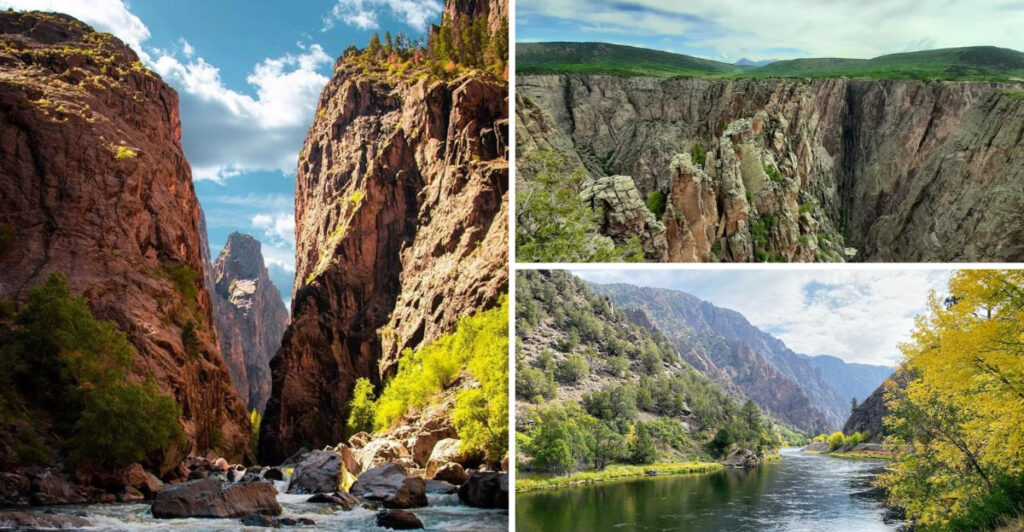
Black Canyon of the Gunnison National Park is home to one of Colorado’s most dramatic landscapes, where sheer cliffs, extreme depths, and narrow canyon walls block sunlight from reaching parts of the canyon floor for much of the day. Carved over millions of years by the Gunnison River, this remarkable natural wonder offers breathtaking overlooks, scenic drives, challenging hiking trails, and some of the steepest rock faces in North America.
The canyon’s immense scale and striking shadows create an unforgettable experience unlike anywhere else in the state. If you’re searching for one of Colorado’s most awe-inspiring destinations, Black Canyon of the Gunnison belongs at the top of your travel list.
The Rim Hits Like a Sudden Cut in the Earth
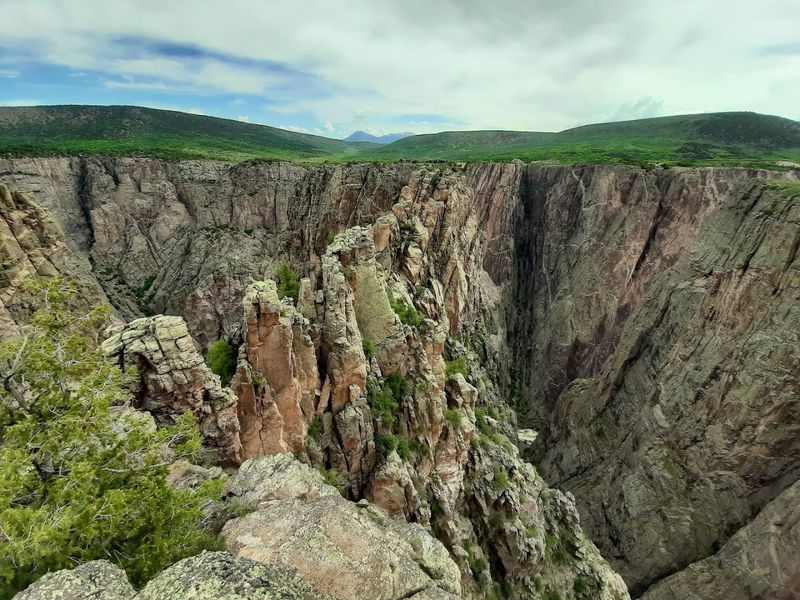
The first surprise at Black Canyon of the Gunnison is how abruptly the land gives up. There is no long, gradual reveal, no gentle widening of the horizon, no soft buildup before the drama starts.
Forest, brush, and rock hold steady right up to the edge, then the ground falls away into a slash of darkness so steep it can make your stomach tighten before your brain catches up.
That sudden drop is a huge part of the park’s power. Plenty of western viewpoints spread out like a grand stage, but this one behaves more like a trapdoor.
The canyon is narrow by big-landscape standards, and that tightness concentrates everything – the cliffs, the shadows, the river far below, and the sense that the walls were cut with unusual force.
The color palette sharpens the effect. Black, charcoal, rust, silver, and sunlit tan stack across polished rock faces, while the Gunnison River flashes at the bottom like a moving thread.
Depending on the hour, parts of the canyon look almost sealed off from daylight, which helps explain why this place has earned such a dark, memorable name.
Even from easy overlooks, your eyes keep tracing vertical lines instead of wandering outward. The canyon invites downward looking, not distant gazing.
That changes the experience completely, because you are not only taking in scenery – you are measuring depth, angle, and exposure with every glance over the rim.
It is one of the few landscapes in Colorado that can feel severe before it feels beautiful. Then, after a minute, the beauty arrives anyway, sharpened by the severity.
Black Canyon does not ease you in. It makes its point immediately, with cliffs, shadow, and a silence that seems to rise straight out of the stone.
Why the Canyon Floor Barely Sees the Sun
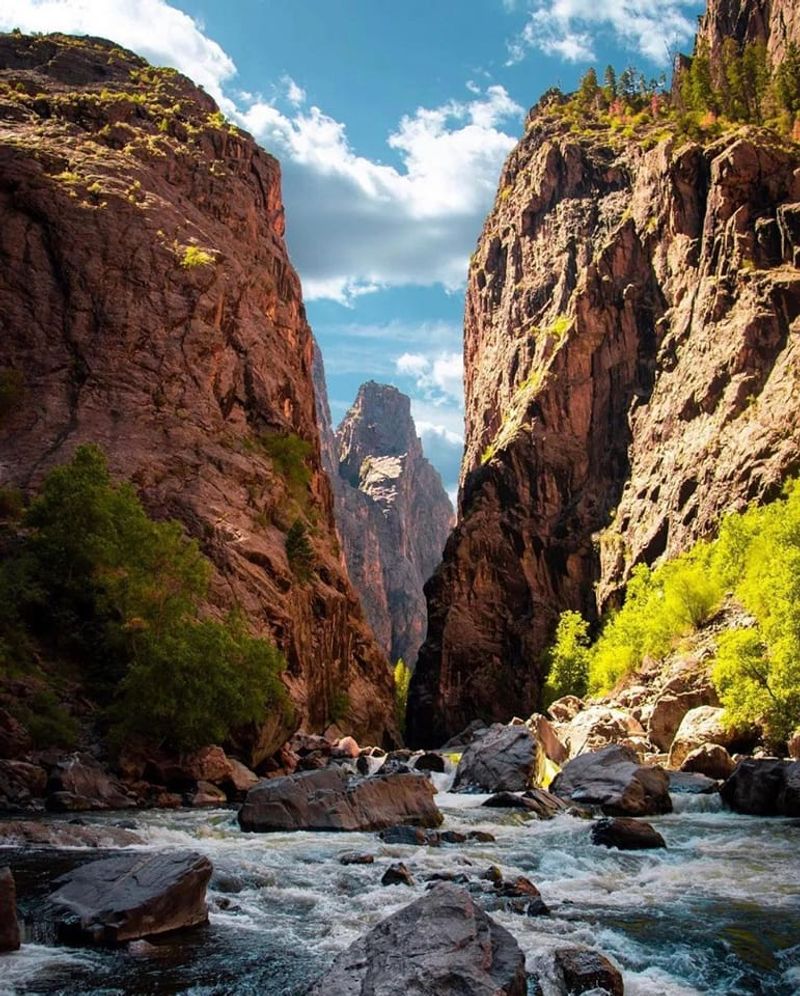
The park’s most talked-about detail is not hype – the floor of the canyon receives remarkably little direct sunlight in some places because the gorge is both deep and unusually narrow. That geometry matters more than any dramatic slogan.
Here, light has to work its way past towering walls that rise hard and close, leaving stretches of the inner canyon in shade for much of the day.
That shadow is not a minor visual accent. It shapes the mood of the whole place, turning the rock darker and more severe than many canyon landscapes that glow openly from rim to rim.
Midday can create stark contrast, with bright ledges catching the sun while the depths remain cool, muted, and almost hidden from view.
The darkness also changes how distance reads to your eye. In broad daylight, the canyon bottom can still look remote, compressed, and difficult to understand at a glance.
You may see the river, but not always in a clean uninterrupted line, which makes the interior look more secretive than expansive.
This is where Black Canyon separates itself from parks built on wide panoramas. Instead of offering one giant, easy-to-read scene, it withholds pieces of itself.
Light, depth, and angle keep rearranging the view, so the same overlook can feel completely different depending on the hour and the direction of the sun.
That is why photographers pay close attention to timing here. Morning and evening can reveal texture without flattening the canyon’s mystery, while harsher light emphasizes the vertical drop.
Either way, the limited sunlight is not just a fun fact. It is the reason the landscape looks carved from shadow as much as stone, and it gives the park its rare, almost subterranean intensity.
Painted Wall Steals the Scene Without Trying
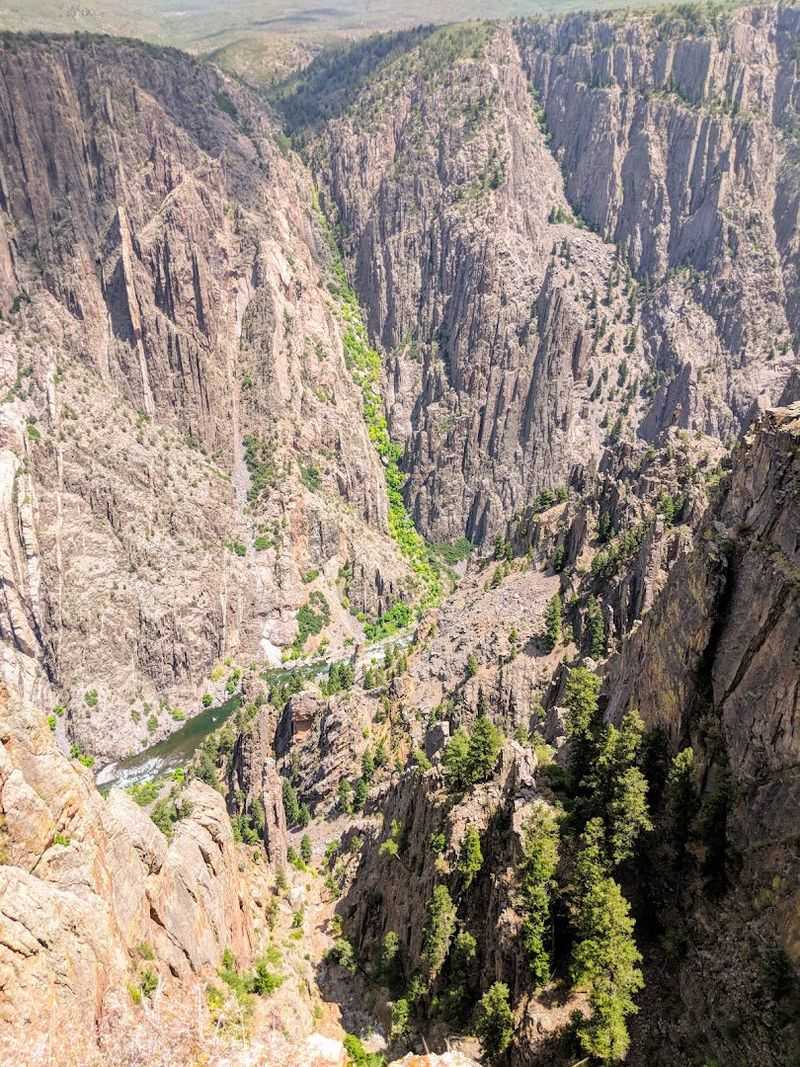
If one cliff summarizes the park’s visual style, it is Painted Wall. This towering face stands out for its pale bands of pegmatite slicing through darker rock, creating a pattern that looks brushed on from a distance and sharply mineral up close.
In a canyon full of heavy shadows and brutal angles, that streaked surface adds precision, contrast, and a little visual shock.
The name fits because the wall really does look worked over by an artist with a severe palette. Creamy veins run across dark stone in irregular lines, not neat stripes, and the effect changes as the sun moves.
Early light can pull out more detail, while lower sun gives the cliff stronger contrast and a more theatrical presence against the canyon’s darker interior.
What makes Painted Wall especially compelling is scale. It is not a decorative feature tucked into the landscape. It dominates its section of canyon and gives viewers a landmark to lock onto when the rest of the gorge threatens to overwhelm the eye with depth and shadow.
Seeing it from an overlook also helps explain why Black Canyon works so well as a roadside park without feeling shallow. Short walks can still deliver a very large payoff because the geology does so much heavy lifting.
A single stop can provide pattern, height, depth, and changing light all at once, which is more than many longer trails manage in less dramatic terrain.
Painted Wall is the image many first-time visitors carry home, and it earns that role honestly. It is specific, unmistakable, and tied to the canyon rather than interchangeable with western scenery in general.
When sunlight hits those pale streaks above the dark void below, the cliff becomes less like a backdrop and more like the canyon’s signature sentence written vertically in stone.
South Rim in Colorado Delivers the Fastest Payoff
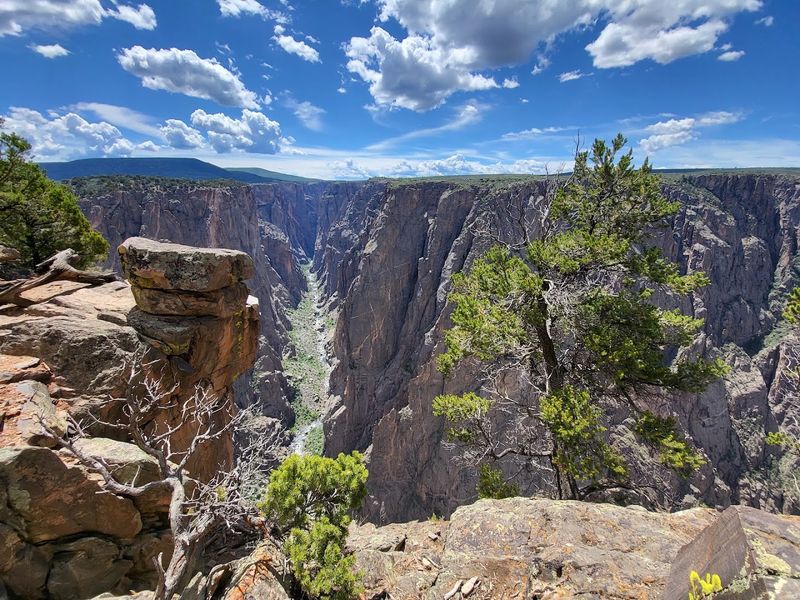
For most travelers, the South Rim is the smartest first encounter with Black Canyon. It is the more developed side, the easier one to navigate, and the place where a string of overlooks lets you build a fuller understanding of the canyon without committing to a long hike.
That setup matters because this park is strongest when you see the gorge from multiple angles rather than treating one viewpoint as the whole story.
The rhythm here is simple and effective. Drive a short stretch, pull over, walk a brief path, then watch the canyon change shape again.
One stop emphasizes raw depth, another highlights the river, another frames Painted Wall, and another shows just how narrow the chasm can look when the walls crowd tightly together.
That makes the South Rim ideal for fast scanners and serious landscape lovers at the same time. If your schedule is tight, you can still experience the park’s essential drama in a few hours.
If you have longer, those same pullouts reward slower looking because light and shadow shift constantly across the cliffs.
Accessibility is part of the appeal too. Some viewpoints are easier to reach than others, and several short walks keep the park from becoming exclusive to strong hikers only.
Black Canyon can absolutely challenge skilled adventurers, but the South Rim proves that intensity and access do not have to cancel each other out.
The practical catch is that easy access attracts plenty of people, especially in busier seasons and at popular times of day. Parking can fill at overlooks, and the most convenient stops naturally draw the biggest clusters.
Still, the design works. In a landscape defined by vertical extremes, the South Rim offers a remarkably efficient way to see Colorado at its most severe without needing an expedition to understand the view.
Below the Edge, the Park Gets More Serious
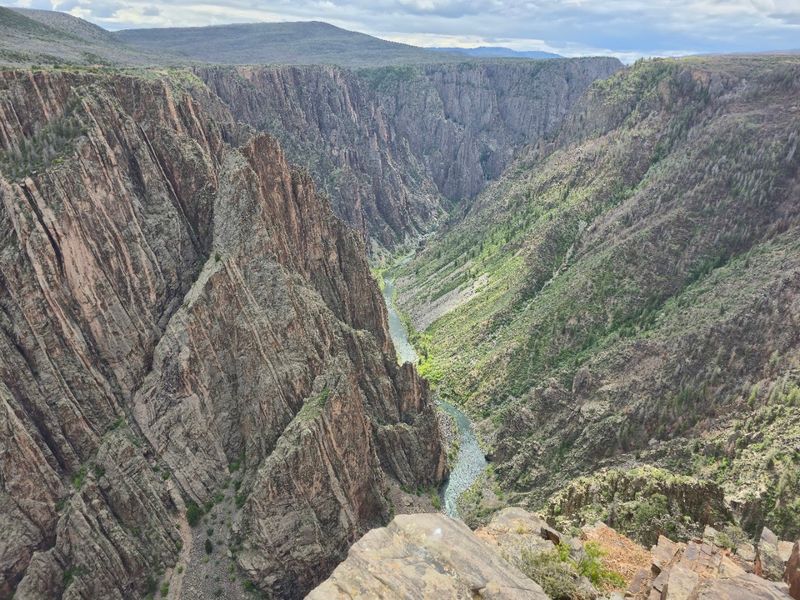
It is easy to label Black Canyon as a drive-and-look park, but that misses the harder edge tucked beneath the rim. The canyon does offer short walks and straightforward overlooks, yet the moment you try to go deeper, the tone changes.
Routes descending into the inner canyon are steep, demanding, and far less casual than the park’s roadside layout might suggest at first glance.
That contrast is part of the park’s identity. On top, you can move efficiently between scenic pullouts and absorb huge views with modest effort.
Below, the terrain becomes rugged, exposed, and highly physical, with routes that require honest self-assessment instead of vacation optimism.
Even trails that dip below the rim without aiming for the river can feel notably more intense than their mileage suggests. The ground angle, the loose footing in places, and the psychological pressure of cliff country all work harder on your body than a basic distance number would imply.
This is not the kind of canyon where a short map line automatically means easy. That matters for planning, especially if you are used to national parks where a marquee trail carries everyone into the main feature. Black Canyon is less forgiving and less standardized.
Its interior is a place for preparation, not improvisation, and the divide between scenic touring and strenuous descent is sharper here than in many better-known parks.
The upside is that the canyon keeps its edge. It never feels fully domesticated, even where roads and overlooks make access convenient.
You can admire it comfortably from above, then spend ten minutes studying a route downward and realize the landscape is still in charge. That tension gives Black Canyon unusual credibility.
It is accessible enough to welcome a wide range of travelers, but wild enough to resist being reduced to a simple scenic stop.
The North Rim and East Portal Change the Story
Once the South Rim establishes the canyon’s main drama, the other approaches add depth to the story. The North Rim is less developed and often quieter, which gives the landscape a rougher, more remote character even before you reach an overlook.
The views remain severe, but the experience changes because the infrastructure steps back and the canyon takes up more of the conversation.
That quieter mood can be especially rewarding if you want fewer interruptions between pullout and horizon. The North Rim tends to attract people willing to trade convenience for a stronger sense of space and solitude.
It is not a separate attraction so much as a different reading of the same canyon, with new angles, new light, and slightly less polish around the edges.
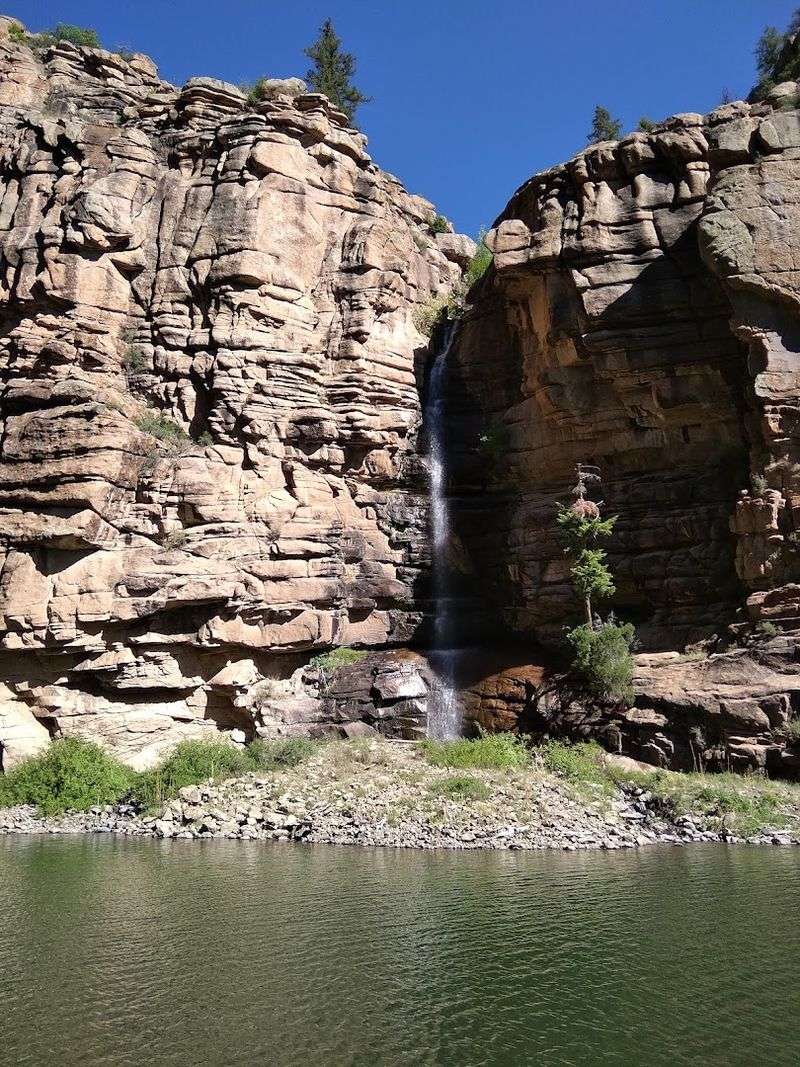
Then there is East Portal, where the perspective shifts again. Instead of looking mostly from above, the route drops steeply toward the river, giving you a more intimate sense of the canyon’s lower reaches and the scale of the enclosing walls.
The descent itself becomes part of the experience because it physically demonstrates just how abrupt this landscape really is.
These alternate approaches matter because Black Canyon can be underestimated if you only sample the most obvious stops. A park that first appears compact begins to unfold when you vary elevation, direction, and rim.
The cliffs look different, the river reads differently, and the canyon’s narrowness becomes easier to understand as a structural fact rather than a dramatic impression.
If time allows, combining at least two perspectives is one of the best upgrades you can give your visit. It prevents the park from flattening into a single postcard view.
Black Canyon is not enormous in the way some western parks are, but it is highly sensitive to angle. Change your position, and the entire place sharpens into a more complete, more formidable landscape.
When to Go, What to Expect, and Why It Lasts
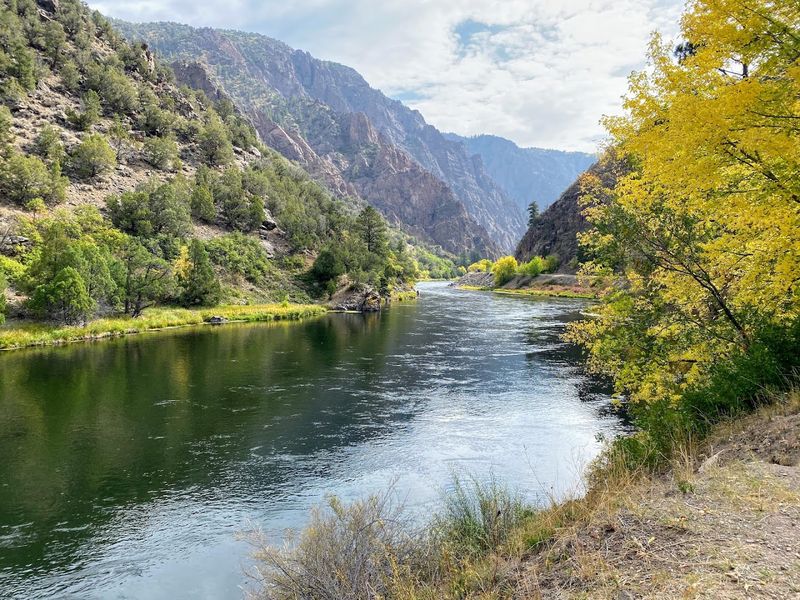
Black Canyon rewards timing more than people expect. Because the park is built around cliff faces, shadow, and angle, changing light can completely alter what you see from the same overlook.
Morning and evening are often the sweet spots for stronger texture, richer contrast, and less glare on the stone, while midday can flatten some surfaces even as it intensifies the canyon’s harsh geometry.
Summer brings long days and full access, but also more competition for parking at popular pullouts. Short walks to overlooks make the park approachable for a wide range of travelers, which is great news if hiking is not the main goal, though it also means roadside stops can get busy at peak hours.
Earlier starts usually pay off with calmer viewing, cooler temperatures, and cleaner light. It also helps to arrive with the right expectations. This is not a park where every highlight sits at the end of a long trek, and it is not one where the scenery gradually builds over a full day.
Black Canyon is immediate, concentrated, and often best appreciated through a sequence of strategic stops rather than one grand march through the landscape.
Practical details matter here more than they might in more urbanized destinations. Cell service can be limited, facilities may vary by season or maintenance needs, and weather or fire-related conditions can affect parts of the park.
A little preparation goes a long way, especially if you plan to visit multiple rims or catch specific light. The reason this canyon lasts in your mind is simple: it is unusually direct. It does not distract with excess spectacle, and it does not need a complicated itinerary to prove itself.
You arrive, step to the edge, and confront a piece of Colorado that is darker, steeper, and more severe than most travelers expect. Few national park landscapes deliver that kind of clarity so quickly.