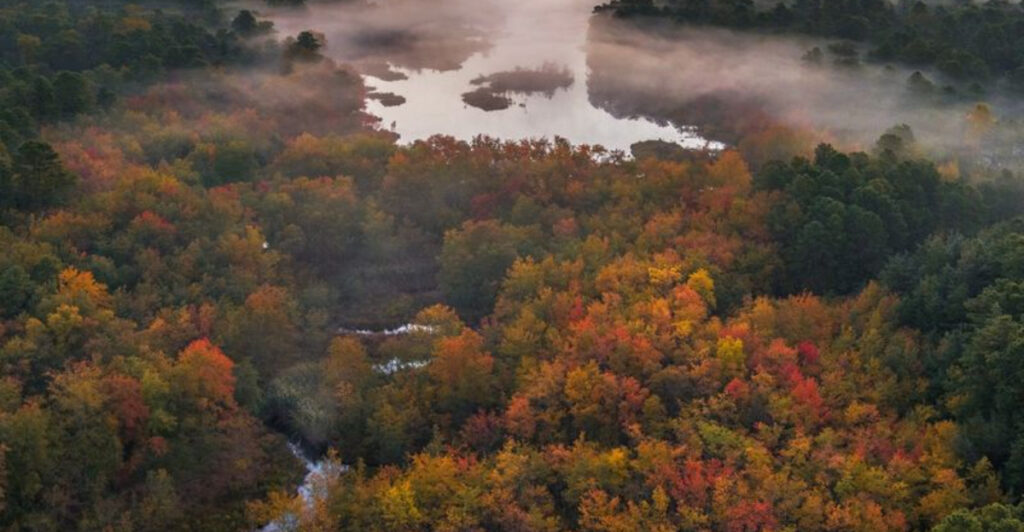
The pool at the end of this Pine Barrens trail has no stream flowing into it, no spring bubbling beneath it, and no underground water source keeping it full. It survives on whatever falls from the sky.
After a wet spring, the shallow basin may hold enough water to echo with frogs and reflect the surrounding trees. Return after a dry spell, and the same spot can look like little more than a damp depression beneath the pines.
Known locally as a spung, this unusual wetland sits inside Michael Huber Prairie Warbler Preserve in Burlington County. A buried layer of dense clay prevents its rainwater from disappearing into the region’s famously sandy ground, creating a small but remarkably important habitat.
Reaching it requires a proper walk into the preserve, but the route delivers plenty along the way, including cedar swamps, quiet forest roads, migrating songbirds, and the unmistakable feeling that suburban New Jersey has been left far behind.
The Pine Barrens Preserve Protecting Nearly Two Thousand Acres of Wild Habitat
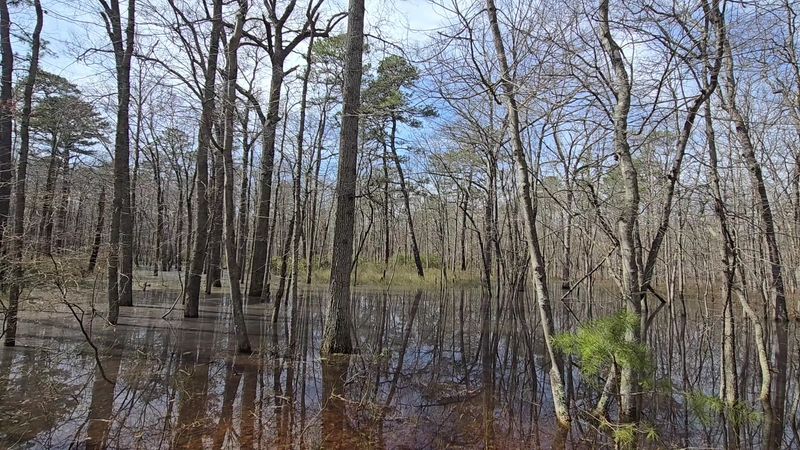
At 1,918 acres, Michael Huber Prairie Warbler Preserve is large enough to make a walk through it feel like a genuine Pine Barrens outing rather than a quick loop around a neighborhood nature park.
The protected land spreads across Woodland Township in Burlington County, where sandy roads and marked trails pass through pitch pine and oak forest, scrubby openings, wetlands, and stands of Atlantic white cedar.
The preserve’s size increased dramatically in 2023 with the acquisition of a neighboring 691-acre former cranberry farm. That addition included roughly 608 acres of wetlands, tributaries of Burrs Mill Brook, and cedar habitat that had once been affected by logging and agricultural use.
The result is a broad, connected landscape where birds, amphibians, reptiles, mammals, and specialized Pine Barrens plants have room to move between different habitats.
The preserve is named for Michael Huber, a longtime local resident and conservation advocate who served with several environmental organizations, including New Jersey Conservation Foundation, the Pinelands Preservation Alliance, and the American Littoral Society.
That background feels appropriate once you step beyond the roadside entrance on Sooy Place Road. There is no grand gateway or landscaped promenade announcing that you have arrived somewhere important.
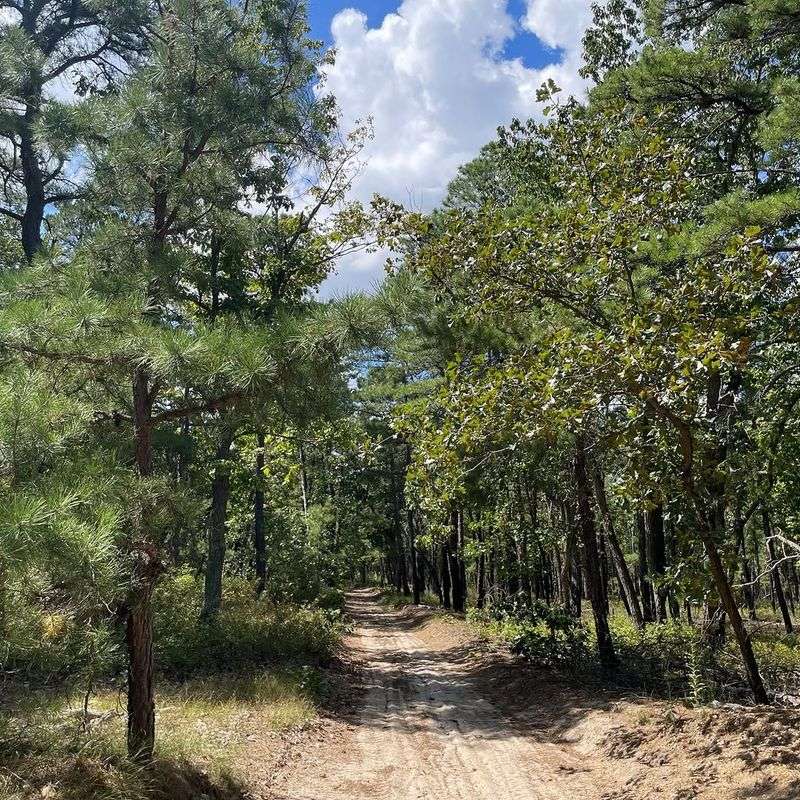
The scenery starts quietly, with pale sand underfoot, pine needles along the trail edges, and forest stretching ahead. Keep walking, though, and the preserve gradually reveals its variety.
Dry uplands give way to darker wetland edges. Atlantic white cedars rise from low, damp ground. Old forest roads disappear around bends with no buildings in sight. Despite its peaceful character, this is not untouched wilderness.
Former cranberry operations, timber cutting, and other human uses helped shape portions of the property. Preservation has allowed those altered areas to recover while protecting the waterways and mature forest that survived around them.
It is a landscape with history, not a museum piece, and that makes the wildness feel more interesting rather than less.
The Rare Rain-Fed Spung Hidden Along the Red Trail
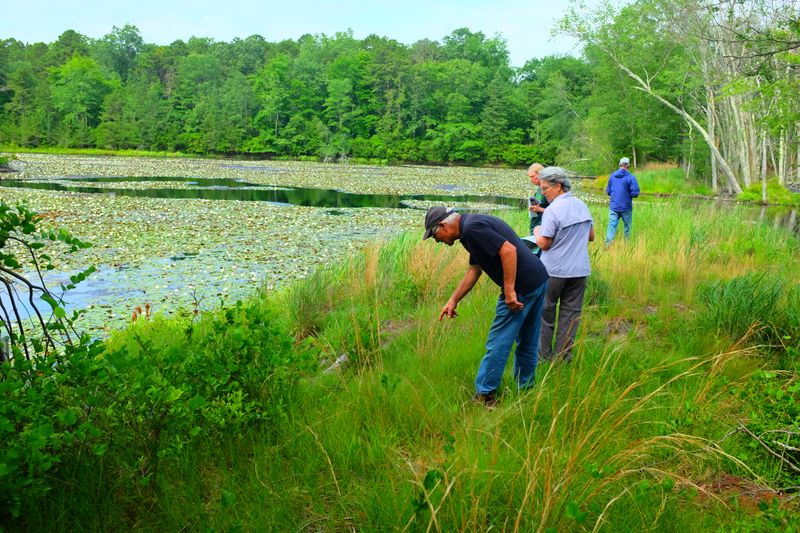
Two miles into the preserve, the hike begins to feel properly committed. According to the preserve’s published trail map, visitors reach the start of the red loop by following the white trail from the Sooy Place Road parking area.
The red route then forms a four-mile loop through the interior, with an offshoot leading toward the feature that makes this preserve especially unusual. It is called a spung, a regional term for an isolated, shallow wetland basin.
Unlike a pond supplied by a creek or a wetland connected to the water table, this one depends entirely on rain and snowfall. That dependence means the spung does not deliver the same scene every time.
Following weeks of steady precipitation, water may spread across the clay-lined basin and turn it into a lively seasonal pool. During a dry summer, the waterline can retreat dramatically or vanish from view, leaving wet soil, moss, leaf litter, and plants adapted to changing conditions.
That is not the wetland failing. The cycle of filling and drying is part of how the habitat works.
Visitors expecting a permanent blue pond may initially wonder whether they have found the right place, especially when rainfall has been scarce. The better approach is to look for the basin itself and notice how sharply it differs from the surrounding sandy forest.
The route also makes the discovery feel earned. This is not a roadside overlook where everyone steps out, takes the same photograph, and leaves five minutes later.
Reaching the red trail’s spung requires several miles of walking, attention to trail markers, and enough time to enjoy the return trip. The terrain is generally flat, but Pine Barrens sand can make distances feel longer than they look on a map.
Depending on the route chosen, a visit to the spung can easily become a substantial half-day hike. The reward is not a dramatic waterfall or towering cliff.
It is a subtle natural feature that becomes more impressive the longer you stand beside it and consider the fact that every inch of water arrived directly from the sky.
How a Dense Layer of Clay Keeps the Wetland From Draining Away
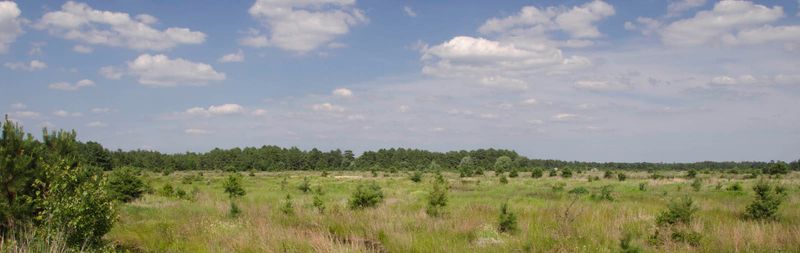
Most rainwater landing in the Pine Barrens does not hang around politely for visitors to admire. The region’s sandy, porous soils allow water to filter downward, helping recharge the vast underground aquifer beneath South Jersey.
At the Michael Huber preserve, however, one patch of ground breaks the usual rule. Beneath the spung lies a compact layer of clay dense enough to block the normal exchange between surface water and groundwater.
Instead of sinking quickly through sand, precipitation collects above the clay and remains trapped inside a natural basin. Think of it as a shallow bowl hidden beneath the forest floor.
The bowl has no faucet and no dependable refill schedule. Rain and melting snow raise the water level, while evaporation and dry weather gradually lower it.
Because the pool is hydrologically isolated, even modest changes in precipitation can transform its appearance and ecological conditions. A rainy season may expand the wet area and extend the amount of time it holds water.
A prolonged drought can shrink it to damp soil. That constant fluctuation helps create a habitat distinct from the cedar swamps, streams, and groundwater-fed wetlands found elsewhere in the preserve.
The clay also explains why the spung exists in a landscape where a puddle can otherwise disappear surprisingly fast. Without that barrier, rainfall would pass through the sand and the basin would lose the defining feature that makes it valuable.
The wetland’s importance, then, is not only visible at the surface. Much of the story is underground, in a layer most hikers will never actually see.
That makes the stop a useful reminder that Pine Barrens scenery is shaped as much by geology and hydrology as by the familiar pitch pines overhead. The region can look dry, flat, and sandy from the trail, yet small differences beneath the soil create cedar swamps, tea-colored streams, boggy depressions, and seasonal pools.
At this spung, a hidden patch of clay determines when water appears, how long it stays, and which creatures are able to use it. The ground is doing far more work than its quiet appearance suggests.
Prairie Warblers and Migrating Songbirds Fill the Forest With Sound
A Prairie Warbler is much easier to hear than to spot. Its song rises in a quick, buzzy series of notes, as though someone is turning a tiny dial higher and higher inside the scrub.
During spring and early summer, that sound gives the preserve its most fitting soundtrack. Prairie Warblers travel north from wintering grounds in the West Indies to breed in the northeastern United States, and the open, shrubby sections of the preserve provide the sort of habitat they favor.
Pine Warblers are regular warm-season residents too, adding a slower musical trill from higher in the trees. The birding does not stop with the two species in the preserve’s name and landscape.
Spring migration brings waves of songbirds through the forest, while summer visitors may encounter Eastern Wood-Pewees and Great Crested Flycatchers moving between branches in search of food.
In fall, the cast begins to change again as southbound migrants pass through and White-throated Sparrows and Dark-eyed Juncos start appearing later in the season.
Winter is quieter but hardly empty. Mixed flocks of chickadees and titmice may include Golden-crowned Kinglets, Red-breasted Nuthatches, and Brown Creepers, while Barred Owls can sometimes be heard shortly after dawn.
The uncommon Red-headed Woodpecker is another year-round possibility, especially when bare winter branches improve the view. Much of the fun comes from how little equipment is required to notice the activity.
Binoculars certainly help, but simply arriving early and pausing whenever the forest gets noisy can turn up plenty. The wide sandy trails provide clear sightlines in some areas, while denser cedar and pine sections reward patient listening.
A rustle low in the brush may be an Eastern Towhee scratching through leaves. A sharp call overhead may reveal a passing hawk.
The preserve’s different habitats sit close enough together that the bird community can change over a relatively short distance. One stretch feels open, sunny, and busy with warblers; the next becomes shaded and still beneath taller trees.
For the strongest spring chorus, morning is the obvious choice. By midday, the birds often become less vocal, the sand feels warmer, and the preserve settles into a quieter rhythm.
Frogs, Salamanders and Other Wildlife Thrive Around the Shallow Pool
Listen near the wetter portions of the preserve in late spring, and one call can sound almost electronic. The Pine Barrens treefrog produces a nasal, buzzing note that carries surprisingly far across ponds and wetlands.
New Jersey Audubon specifically identifies the preserve as a place to listen for the species from spring into early summer, while the spung itself can be an excellent area for observing frog and salamander activity.
Sightings are never guaranteed, but the habitat offers exactly the combination of temporary water and surrounding forest that many amphibians need.
Seasonal pools are especially valuable because their changing water levels can prevent permanent populations of fish from becoming established. Fish are efficient predators of amphibian eggs and larvae, so wetlands that periodically dry can give frogs and salamanders a safer place to reproduce.
Across New Jersey, seven amphibian species are considered obligate vernal-pool breeders, meaning they rely on this type of seasonal habitat, while another 14 species also use vernal pools even though they can breed elsewhere.
The animals may spend much of the year in the surrounding upland forest, returning to shallow water when conditions are right.
That connection between pool and forest is why the spung should be treated as more than an isolated puddle. The leaf litter, fallen logs, damp soil, and shaded woods around it are part of the same ecological system.
Staying on the established path protects fragile ground and reduces the chance of stepping on small animals hidden beneath leaves. It also leaves visitors in a better position to notice wildlife behaving naturally.
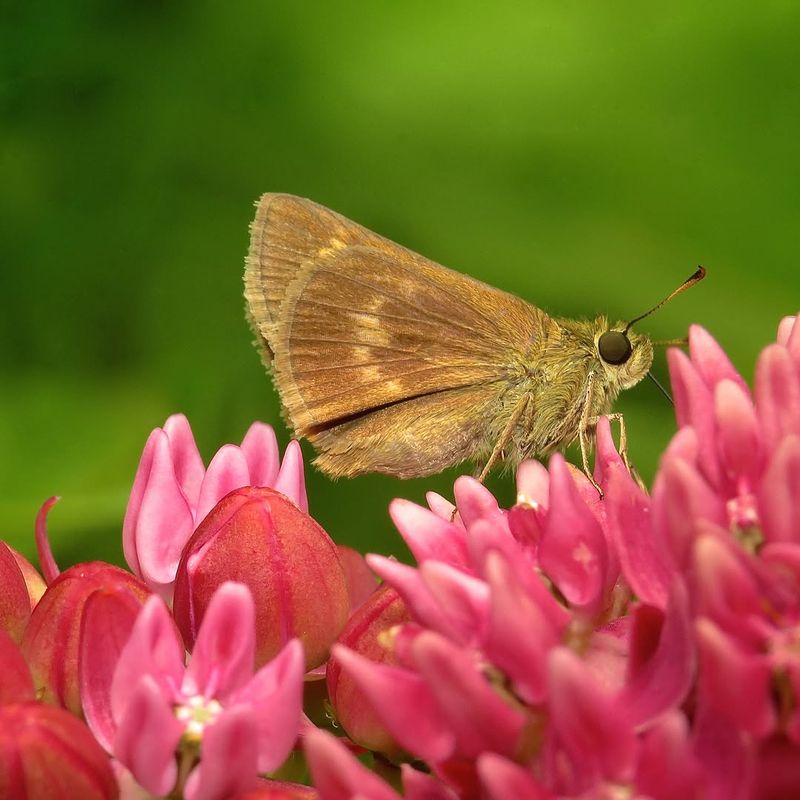
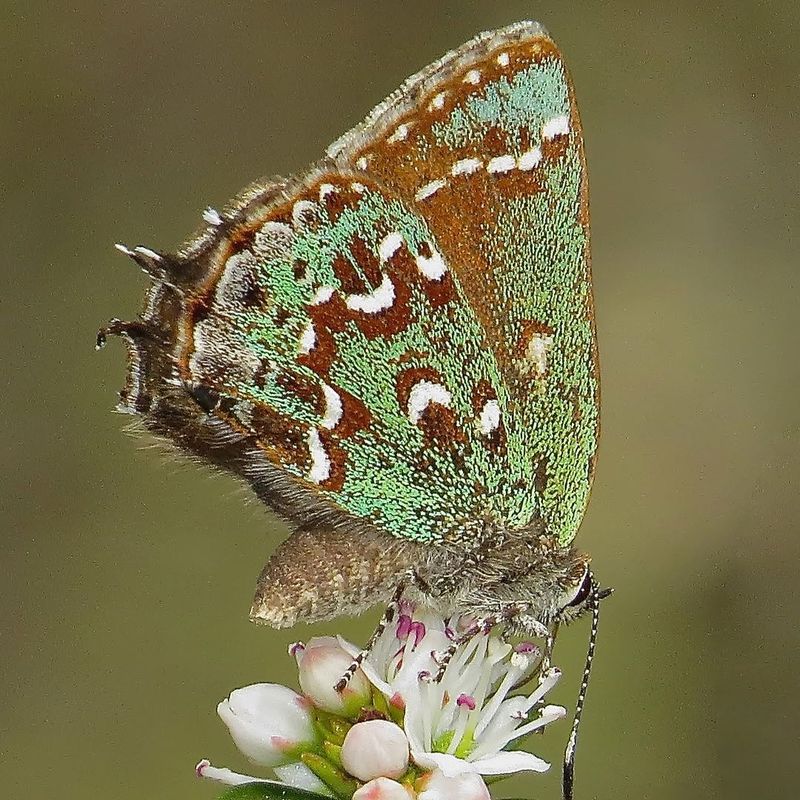
Beyond amphibians, the preserve supports fence lizards, black racers, damselflies, red squirrels, chipmunks, and a range of mammals that are more likely to leave tracks than make a personal appearance.
Ebony jewelwings and common bluets become active near streams and wetlands during warmer weather, flashing above the water for a second before disappearing against the vegetation.
Mushrooms and lichens add another layer of interest along the mostly shaded trails, particularly after rain. The spung may be the headline attraction, but its real value becomes clearer when viewed as one piece of a much larger habitat where water, forest, and wildlife depend on one another.
What to Know Before Visiting Michael Huber Prairie Warbler Preserve
The entrance is easy to miss, which feels entirely on brand for this place. The preserve is located at 449 Sooy Place Road in the Vincentown mailing area, with the main access marked by a preserve sign and kiosk.
Parking is along the roadside rather than in a large developed lot, and the property is generally open from dawn to dusk. Arriving early improves the birding, provides cooler hiking conditions in warm weather, and makes it easier to find a sensible place to pull off near the entrance.
Bring the trail map rather than relying entirely on cell service. The published network includes a 3.5-mile white main trail, a four-mile red loop, a three-mile green loop, a 1.5-mile blue loop, and a one-mile yellow trail.
The distances do not all begin at the parking area, so a route that looks modest on paper may require several extra miles of approach and return walking. The start of the red loop, for example, is two miles from the parking area along the white trail.
White and red routes allow foot travel and mountain bikes, while the green, blue, and yellow routes are designated for foot traffic. Motorized vehicles are prohibited beyond the parking area.
Expect flat ground, sand, roots, occasional wet patches, and the possibility of downed limbs after storms. Sturdy shoes are more useful than heavy hiking boots, although waterproof footwear can be worthwhile after extended rain.
Ticks are part of the Pine Barrens package, so repellent, long socks, and a careful check afterward are sensible. Carry water and any snacks you need, since this is a preserve rather than a staffed recreation complex.
Most importantly, plan the visit around the landscape that exists that day. Heavy rain may leave portions of the trail wet and bring the spung to life.
Drought may reveal little open water but make the basin’s dependence on precipitation even more obvious. In spring, birdsong and frog calls take center stage.
In winter, bare branches open longer views through the forest. The preserve does not put on the same show twice, because the wetland at its heart is still following the oldest schedule in the Pine Barrens—the weather.