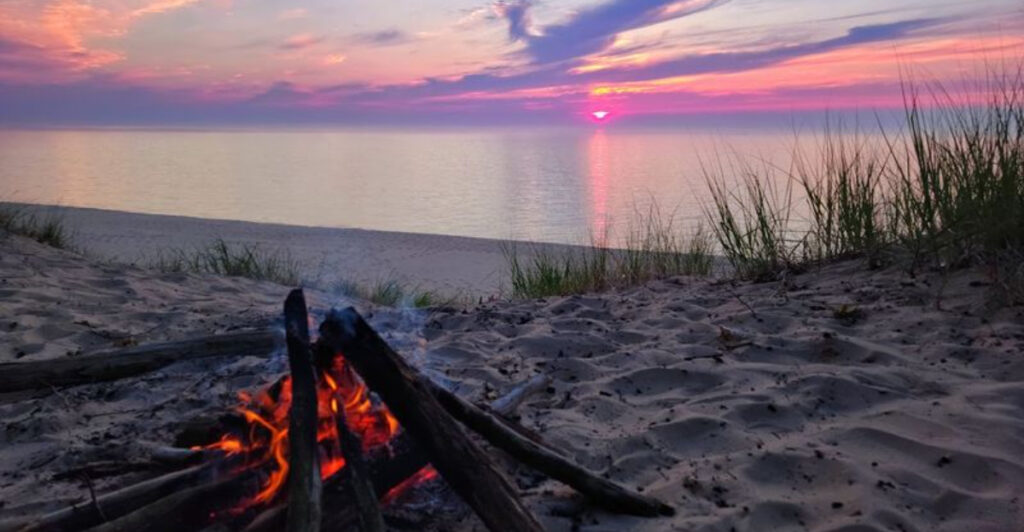
Wild shoreline still exists in Michigan if you know where to step off the easy path. Between Ludington and Manistee, Nordhouse Dunes Wilderness Area protects 3,450 acres of raw sand, wind-shaped dunes, forest, and open Lake Michigan shoreline that feels far removed from the usual beach-day routine.
It is the only federally designated wilderness area in Michigan’s Lower Peninsula, which means the experience stays intentionally rugged. No campsite numbers, no paved paths, no polished resort energy — just quiet trails, sweeping dunes, and the kind of natural space that makes you feel like you earned every view.
For anyone craving a Michigan escape that feels truly untamed, this hidden stretch of shoreline is worth the walk in.
Sand, Forest, and Open Sky: The Landscape That Stops You Cold
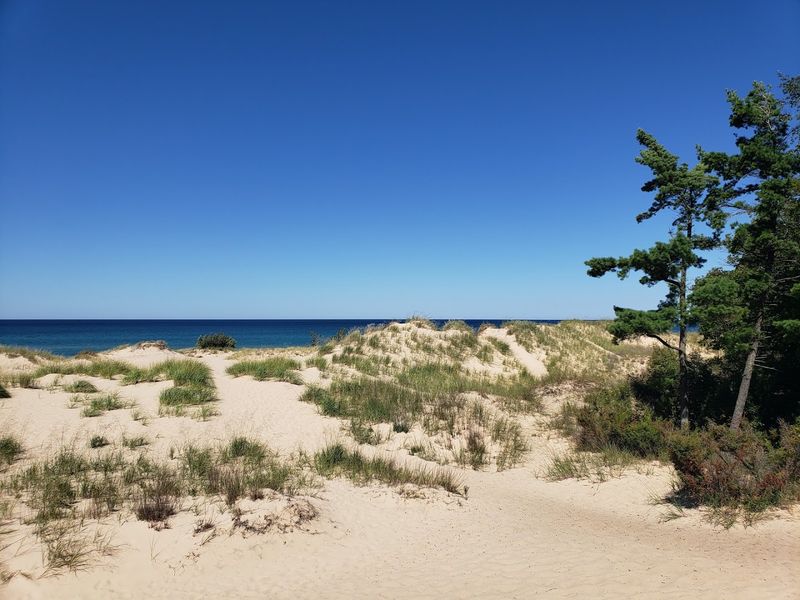
The first thing that hits you at Nordhouse Dunes is how drastically the terrain shifts within a single hike. One moment you are moving through a cool, shaded forest of mature pines and hardwoods, and the next you are climbing a steep wall of open sand with nothing between you and the horizon.
That contrast is not subtle — it is the whole personality of this place.
The dunes themselves rise dramatically along the Lake Michigan shoreline, shaped by wind and time into forms that look almost sculpted. Some crests sit high enough to give you a full view of the water stretching west, and on a clear day the blue of the lake and the blue of the sky blur into one wide, unbroken line.
The sand is pale and fine, shifting underfoot in a way that makes every uphill push feel like a small workout.
Inland from the dunes, the forest trails feel completely different — shaded, soft-floored, and quiet in a way that slows your pace naturally. A small interior lake sits along one of the trail routes, tucked into the trees and surrounded by the kind of stillness that makes wildlife spotting genuinely likely.
Coyotes, birds, and other forest animals move through this corridor regularly.
The scale of the landscape is one of its most underestimated qualities. At 3,450 acres, Nordhouse Dunes is large enough that even on a busy summer weekend, walking a mile or two past the main beach access puts you in near-total solitude.
The crowds thin fast, and the land opens wide. That sense of earned space — terrain that requires some effort to reach — is exactly what makes the scenery land so hard once you get there.
Michigan’s Only Lower Peninsula Wilderness and What That Title Actually Means
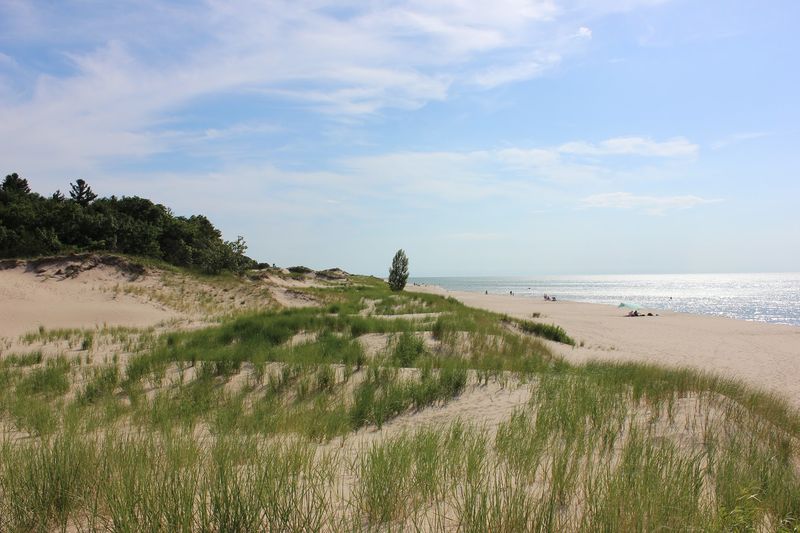
Nordhouse Dunes carries a designation that no other place in Michigan’s Lower Peninsula holds: federally protected wilderness under the National Wilderness Preservation System. That classification, granted in 1987, is not just a label.
It shapes everything about how the land is managed and how visitors experience it.
Federal wilderness designation means no motorized vehicles, no permanent structures, and no developed amenities beyond the most basic infrastructure at the trailhead. The land is managed to remain as close to its natural state as possible, which is why you will not find numbered campsites, picnic pavilions, or maintained fire rings scattered across the area.
Whatever comfort you want, you carry in yourself.
The area falls under the Huron-Manistee National Forests, which oversees a large stretch of Michigan’s western forest land. Within that broader system, Nordhouse Dunes functions as a protected core — a place where the usual recreational development stops and raw terrain takes over.
That distinction matters most when you compare it to the state parks and recreation areas nearby, which offer far more infrastructure but far less solitude.
Camping here is dispersed, meaning you pick your own spot rather than checking into an assigned location. There are no hookups, no shower facilities, and no trash collection.
You pack out everything you bring in, and waste disposal follows Leave No Trace principles including digging a cathole when nature calls. It sounds demanding, and honestly, it is — but that is precisely the trade-off that keeps the land looking the way it does.
The wilderness title is earned every time a visitor respects it, and the reward is a stretch of Michigan coastline and forest that looks almost exactly as it did long before anyone thought to build a road nearby.
Trails That Choose Their Own Difficulty Level
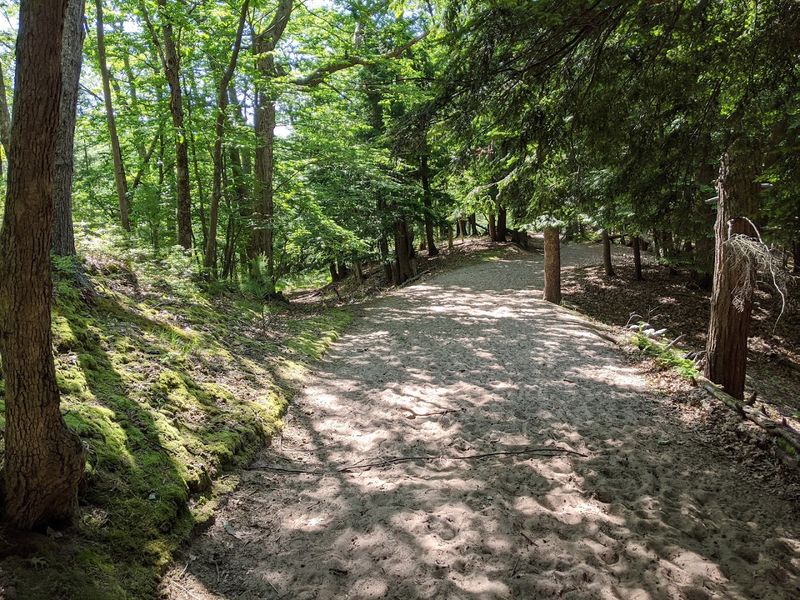
Trail systems at Nordhouse Dunes do not all behave the same way, and that variability is worth understanding before you head out. The network covers a range of terrain types, and the difficulty of your hike depends almost entirely on the route you pick and whether you stay on packed trail or push through open sand.
The main trail to the Lake Michigan shoreline is relatively straightforward — easy-going, well-traveled, and short enough that most hikers complete the one-way trip in under an hour at a casual pace. That path draws the bulk of day visitors and tends to be the busiest corridor, especially on summer weekends.
It is a good entry point for first-timers or families with younger kids who want to reach the beach without committing to a strenuous outing.
Move off the main route and the challenge level climbs fast. Hiking through open dune sand is slow, physically demanding work.
Each step sinks slightly, and ascending a steep dune face requires real effort — the kind that makes your calves feel it the next morning. Some trail sections are not heavily marked, so carrying a map and paying attention to your surroundings is genuinely necessary rather than just good advice.
The inland loop options pass through mature forest and skirt the small interior lake, offering a quieter and more visually layered experience than the straight shot to the beach. Restrooms and picnic tables are available at both trailhead ends, which helps with planning longer outings.
Round-trip hiking times run roughly two hours at a casual pace for the main lake-facing trails. The trail system rewards explorers who are willing to wander a bit farther from the parking lot — the payoff in scenery and quiet grows with every extra mile covered.
Camping on the Shoreline With Nothing Between You and the Sunset
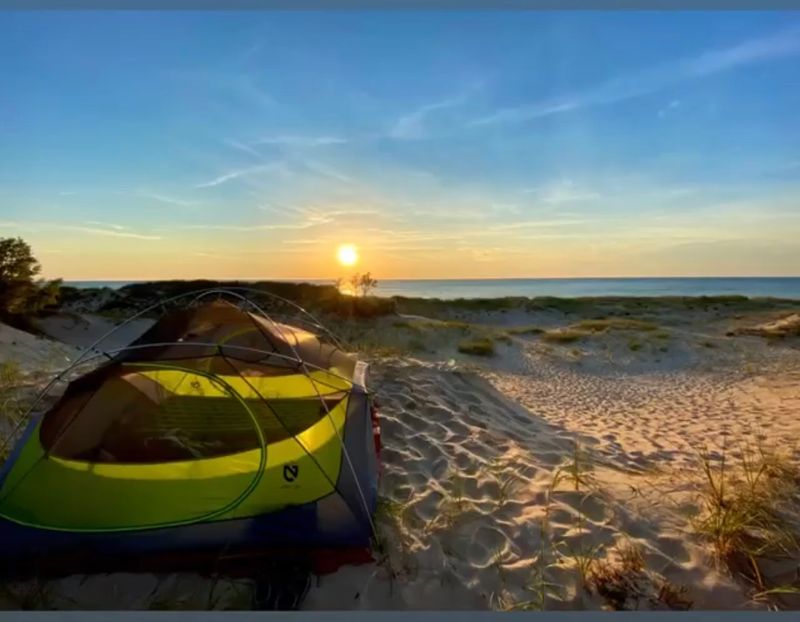
Pitching a tent 400 feet from Lake Michigan, with an unobstructed view of the sun dropping into the water, is the kind of camping experience that people plan repeat trips around. At Nordhouse Dunes, that setup is not a premium option reserved for a handful of designated spots — it is the standard way things work across the entire shoreline stretch.
Dispersed camping along the beach means you find your own patch of sand or forest edge and settle in. No check-in process, no campsite neighbor six feet away, no generator noise from an RV lot.
The beach camping here is genuinely remote-feeling even when the overall area sees moderate traffic, because the shoreline is long enough to spread people out naturally. Walk a mile or two south of the main access point and the density drops sharply — sometimes to zero.
Campfires are permitted, which adds a dimension to the overnight experience that many wilderness areas do not allow. Gathering fallen wood from the inland forest edge before reaching the open beach is a practical move, since the immediate shoreline area has been picked over by previous campers.
Bringing your own firewood from outside the area is the most reliable option if a fire matters to your trip.
Winter camping at Nordhouse Dunes draws a smaller but enthusiastic crowd. Visiting during the colder months means near-empty trails, no mosquitoes, and a version of the landscape that looks completely different — snow-dusted dunes, frozen sand at the water’s edge, and the kind of quiet that feels earned.
Payment for day use is handled through an on-site kiosk, making arrival logistics simple. The fee is low, the process is quick, and then the wilderness is yours to navigate on your own terms.
What the Crowds Look Like and How to Avoid Them
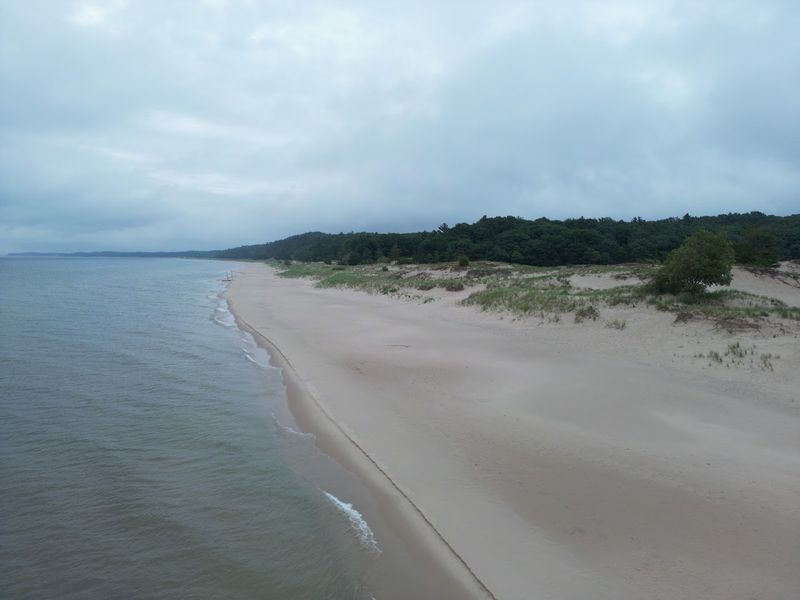
Nordhouse Dunes has a parking lot that fills up fast on summer weekends, and that detail tells you something important: this place is not exactly a secret among Michigan outdoor enthusiasts. Fourth of July weekend brings a full lot, and popular trail sections near the beach see steady foot traffic.
Knowing this upfront helps you plan smarter rather than arriving frustrated.
The counterintuitive thing about busy days at Nordhouse is how quickly the crowd disperses once people move away from the main access trail. The parking lot overflows, but the interior trails stay relatively quiet.
Walk past the first beach access point and continue south along the shoreline for a mile or two, and the number of people within sight drops from dozens to maybe one or two per hour. The land absorbs visitors in a way that smaller parks simply cannot manage.
Timing your visit makes a real difference. Weekday trips, especially mid-week in summer, offer a noticeably calmer experience than Saturday afternoons.
October visits still draw some campers but with far fewer people overall and virtually no insects, which changes the comfort level dramatically. Winter visits are the most solitary option — a small group reported practically having the entire area to themselves during a cold-season trip, with fresh tracks in the sand and no competition for shoreline spots.
Parking along the road outside the main lot is an option when the lot fills, and the walk from roadside to the trailhead is short enough not to add significant distance. The small parking fee is paid at an on-site kiosk, so having cash or a card ready speeds up your entry.
Arriving early on weekend mornings — before 9 a.m. — is the most reliable way to secure a spot in the main lot and hit the trail before the midday surge arrives.
Wildlife, Wildfire Haze, and the Unpredictable Side of Real Wilderness
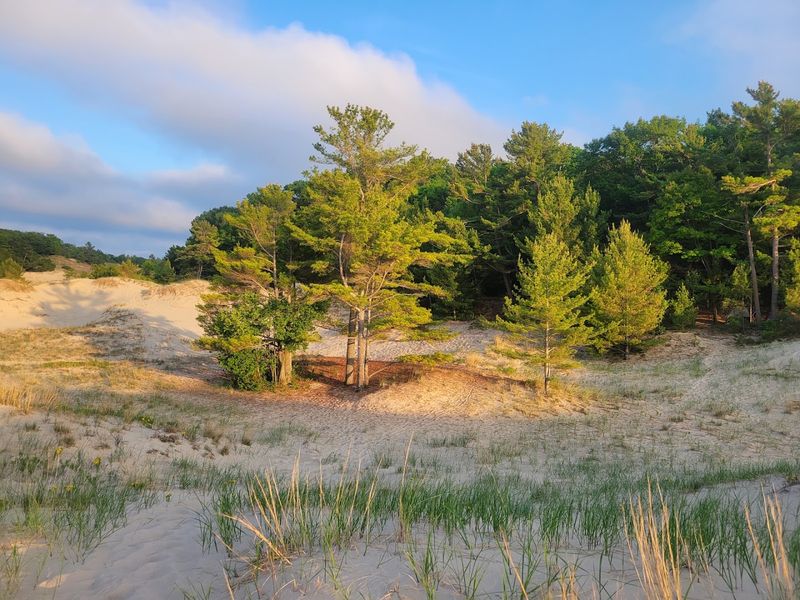
Real wilderness does not run on a predictable script, and Nordhouse Dunes makes that clear in ways both spectacular and inconvenient. A coyote trotting down a dirt road near a campsite is not an unusual sighting here — the interior forest provides exactly the kind of undisturbed habitat that supports a healthy wildlife population.
Seeing one up close, moving at its own pace through the trees, is a reminder that this land belongs to more than just the humans passing through it.
Dog owners need to stay alert in the wilderness zone. Leashing and supervising dogs at all times is not just a courtesy rule — it is a practical safety measure in an area where coyotes move freely and the terrain makes a bolting dog difficult to track.
The same attentiveness applies to food storage. Raccoons have proven themselves capable of getting into unattended backpacks, which means hanging a bear bag or using a sealed container is genuinely worth the extra effort at camp.
Mosquitoes are a real factor from late spring through midsummer, and the density can be significant enough to affect comfort during peak season. Long sleeves, insect repellent, and a head net for the worst conditions are practical additions to any summer packing list.
The mosquito pressure drops sharply in fall and disappears entirely in winter, which is part of why cooler-season visits have a devoted following among repeat visitors.
Smoke from distant wildfires — including those from Canada — can occasionally drift over the Lake Michigan region and soften what would otherwise be a sharp sunset. That haze does not ruin the view, but it does change the color palette, turning golden hour into something more amber and diffuse.
Pack flexibility into your expectations, and the unpredictability becomes part of the experience rather than a disruption to it.
Practical Details for Planning a Trip to Nordhouse Dunes
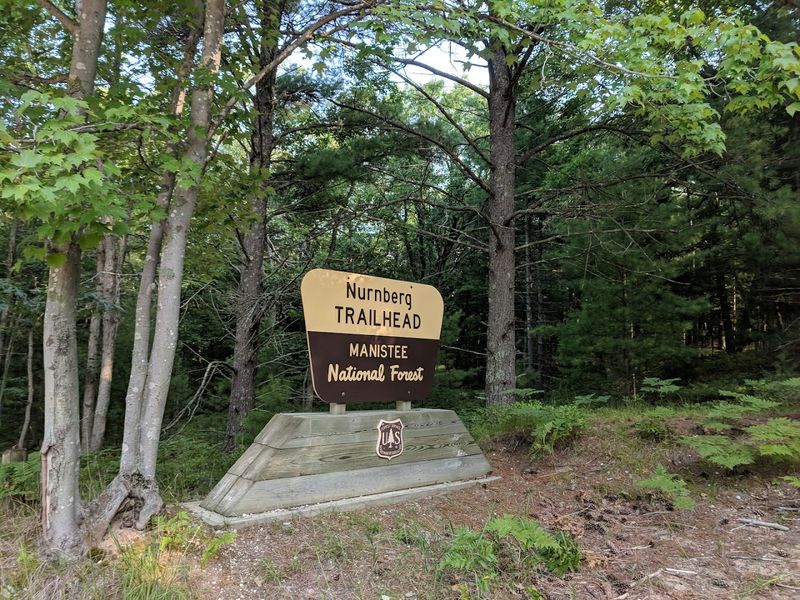
Getting to Nordhouse Dunes requires a bit of navigation since the area sits off the main highway corridor between Ludington and Manistee. The address falls under Free Soil, MI 49411, and the trailhead is accessible via Nurnberg Road, which leads to the main parking area managed by the Huron-Manistee National Forests.
Signage in the area is present but not overwhelming, so reviewing a map before arrival is a sensible step.
The parking fee is modest — around five dollars per vehicle per day historically — and is paid at a drop-box or on-site kiosk depending on the access point. Cash has traditionally been the required payment method at some entry points, so carrying small bills is a practical precaution.
The area is open 24 hours a day, every day of the year, which supports both early morning arrivals and overnight stays without any gate or check-in deadline.
Pit toilets are available near the parking area, which covers the basics for day visitors before they head into the trail system. Beyond that, facilities drop off sharply once you move into the wilderness zone.
No trash cans, no running water, and no maintained fire infrastructure exist on the trail or at dispersed campsites. Packing out all waste and carrying in your own water or a reliable filtration method is non-negotiable for overnight trips.
Cell service in the area is limited, which makes downloading offline maps before leaving home a genuinely useful habit. The trail network covers enough ground that some routes are less clearly marked than others, and navigating by memory alone on an unfamiliar path is not the ideal approach.
A small day pack with water, snacks, a first aid kit, and sun protection covers the essentials for most visits. The wilderness handles the rest.