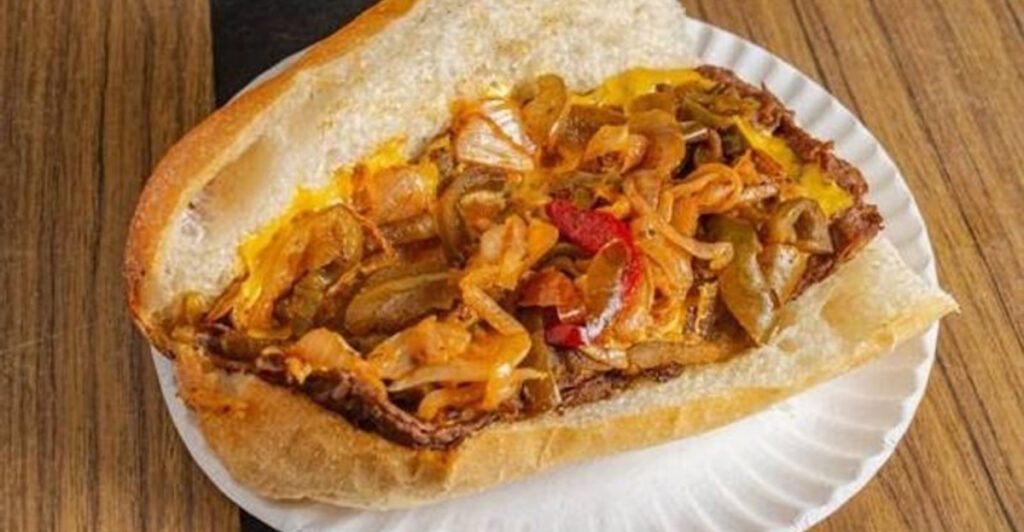
A paper plate lands on the table carrying something that barely qualifies as a hot dog anymore. Two fried franks disappear beneath a heap of potatoes, peppers, and onions, while a thick pocket of pizza bread struggles heroically to contain the whole operation.
This is the Italian hot dog at Dickie Dee’s, a Newark original built for people who consider an ordinary bun a missed opportunity.
The restaurant has occupied its Bloomfield Avenue corner since 1958, long enough for generations of North Ward families to develop strong opinions about single versus double, hot dog versus sausage, and whether ketchup deserves to be anywhere near the table.
Nothing about the sandwich is delicate. It is hot, heavy, gloriously untidy, and engineered so every bite brings meat, bread, vegetables, and crisp-edged potato together.
Plenty of restaurants serve loaded hot dogs, but Dickie Dee’s serves the kind of Newark creation that could only have come from New Jersey.
The Newark Neighborhood Institution Serving Italian Hot Dogs Since 1958
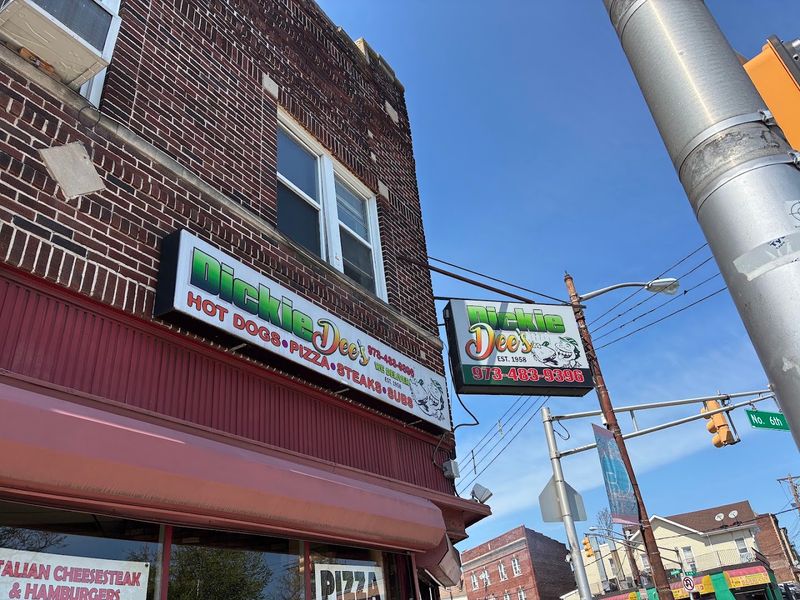
On a busy stretch of Bloomfield Avenue, Dickie Dee’s looks less like a carefully preserved landmark than a restaurant that simply never stopped doing its job.
Dominick “Dick” D’Innocenzio and Enrico Bruno opened the place in 1958, establishing it in Newark’s North Ward at a time when the surrounding neighborhood was filled with Italian American bakeries, shops, social clubs, and family-run restaurants.
More than six decades later, Dickie Dee’s remains at 380 Bloomfield Avenue and is operated by the third generation of the family. The location matters because the Italian hot dog is not merely a hot dog with vaguely Italian toppings.
It is a Newark-born regional sandwich with its own rules, architecture, and vocabulary. The classic formula combines fried franks with potatoes, peppers, and onions inside thick pizza bread, a round loaf traditionally made by local Italian bakeries.
Dickie Dee’s arrived early enough to become part of that tradition rather than a restaurant attempting to revive it decades later. Inside, the orange seating, wall photographs, menu boards, and straightforward counter-service setup make it clear that the food remains the main attraction.
There is no manufactured retro theme because the restaurant has accumulated the real thing: years of regulars, family stories, television appearances, and lunch orders repeated so often that they barely need explaining.
Its identity is summed up in the family’s own description of the business as being built around “The Neighborhood.” That philosophy shows in a menu designed for everyday appetites rather than special occasions.
A single Italian hot dog is currently listed at $6.90, while the double costs $11.60, prices that still position the restaurant as a practical local lunch stop rather than a novelty-food destination. Dickie Dee’s has earned statewide attention, but it still feels rooted in the North Ward block where the story began.
The Deep-Fried Hot Dog That Delivers the Signature Snap
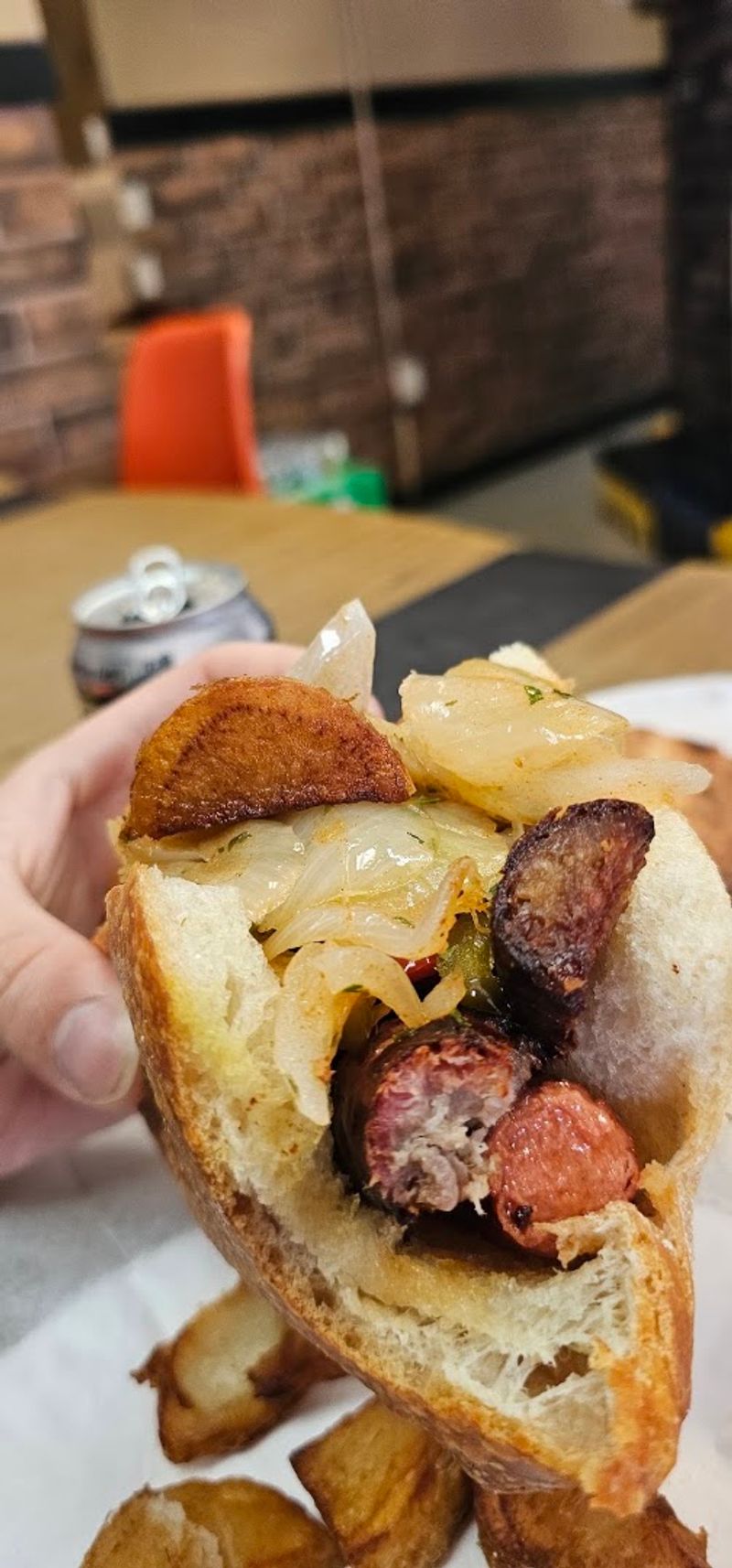
Listen closely when you bite into one of the franks. Before the peppers slide loose and the potatoes begin testing the structural limits of the bread, there is a small but unmistakable snap from the hot dog’s casing.
That texture comes from frying, the preparation that separates a Newark-style Italian hot dog from the grilled backyard version or the soft “dirty water” dog pulled from a street-cart bath. The hot oil tightens the exterior and gives it a lightly crisp edge while the center stays juicy.
It is not fried until it becomes a craggy, split-open ripper. The goal is a casing with resistance, not a hot dog reduced to charcoal.
Traditional New Jersey Italian hot dogs rely on local-style natural-casing franks because that casing supplies the contrast that makes the sandwich work. At Dickie Dee’s, customers choose between a single and a double, though the double is the version that best explains the restaurant’s over-the-top reputation.
Two franks give the bread enough meat to compete with the mountain of vegetables piled around them, preventing the potatoes from turning the sandwich into an accidental breakfast hash.
Mustard brings sharpness and cuts through the fried components, while the restaurant’s jokingly firm “no ketchup allowed” stance keeps the flavor focused on the hot dog rather than sweetness.
Hot cherry peppers can be added for a sharper, vinegary kick that wakes up the entire sandwich. The result is rich without tasting flat.
Every component has a role: the frank provides salt and snap, the mustard provides bite, and the peppers and onions soften the edges. There is nothing dainty about the preparation, yet it depends on timing.
Leave the hot dog in the fryer too briefly and it lacks texture; leave it too long and the casing becomes tough. After thousands upon thousands of orders, Dickie Dee’s has the rhythm down to muscle memory.
Thick Pizza Bread Holds Together Every Overstuffed Bite
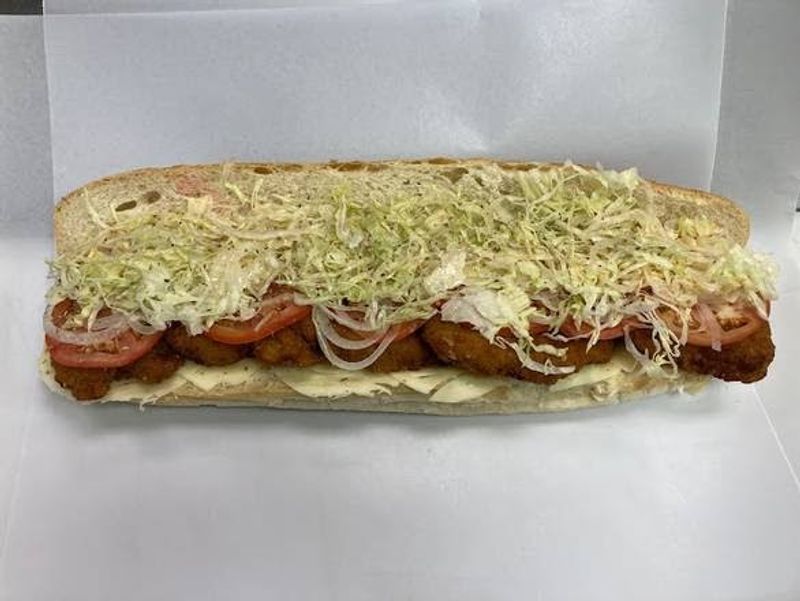
A standard hot dog bun would surrender before this sandwich reached the table. It would split at the hinge, soak through at the bottom, and leave the customer eating fried potatoes with a fork.
Newark-style pizza bread is built for heavier work. The round loaf is cut into a thick pocket with enough interior space for one or two hot dogs, vegetables, and a substantial layer of potatoes.
Its crust provides grip, while the soft interior absorbs oil and cooking juices without immediately collapsing. That bread is one of the reasons an authentic Italian hot dog can be difficult to reproduce outside North Jersey.
A sub roll may carry similar ingredients, but it changes the proportions and turns the dish into something closer to a sausage-and-pepper sandwich. Pizza bread makes the fillings feel enclosed rather than merely stacked.
Traditional loaves have even been compared to muffuletta bread because of their broad, circular shape and sturdy crumb. At Dickie Dee’s, the bread also determines the natural pace of the meal.
You cannot politely nibble around the edges or lift the sandwich with two fingertips. It requires both hands, a forward lean, and a strategy for catching any potato pieces that escape.
The first bite is often mostly crust and vegetables. The next reaches the hot dog.
By the middle, the bread has absorbed enough flavor from the onions, peppers, mustard, and fried ingredients that it becomes as important as anything stuffed inside it. Despite the sandwich’s size, good pizza bread keeps the experience surprisingly manageable.
It holds the grease rather than shedding it, which is why the Italian hot dog can be indulgent without turning into a completely soggy mess. The loaf is not decorative packaging.
It is the piece that makes the whole idea possible, functioning as bun, bowl, and edible cleanup crew at the same time.
Fried Potatoes, Peppers, and Onions Turn One Sandwich Into a Full Meal
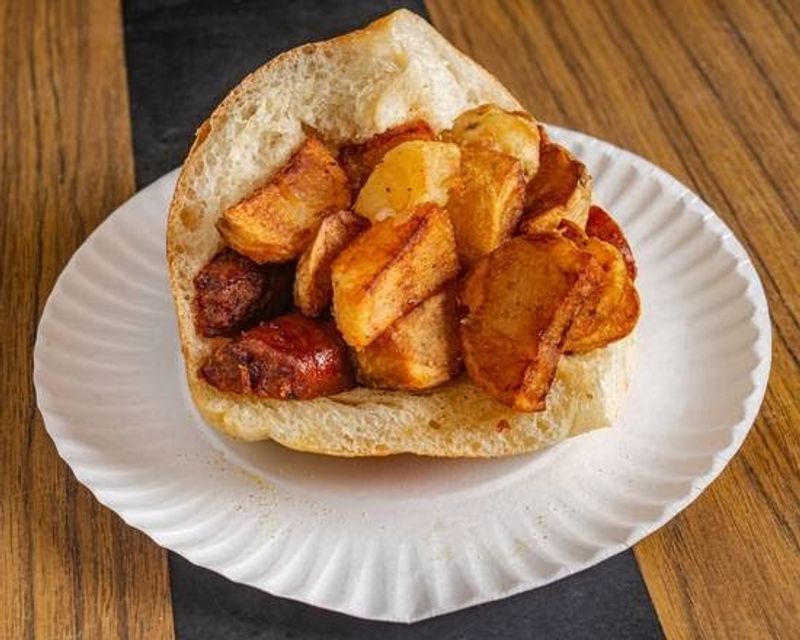
Here is the basic architecture of a Dickie Dee’s Italian hot dog: meat at the center, sturdy bread around the outside, and enough fried vegetables to make ordering a separate side almost comical. Every hot dog and sausage on the menu comes with peppers, onions, and potatoes, not as optional garnishes but as defining ingredients.
The potatoes bring the bulk. Cut into hearty pieces and fried until the edges turn golden, they land somewhere between home fries and thick chips.
The best ones have a crisp exterior and a fluffy center that catches mustard, onion juices, and the seasoning from everything else in the pocket. Green peppers contribute a faint bitterness and freshness that keep the sandwich from becoming one long note of salt and oil.
Onions soften as they cook, adding sweetness and a savory depth that spreads through the bread. Each ingredient is familiar on its own, especially to anyone raised around Italian American kitchens where potatoes, peppers, and onions regularly appeared together in skillets, foil trays, and Sunday leftovers.
Piling them onto fried hot dogs is the bold Newark twist. The arrangement also solves the eternal lunch problem of choosing between a sandwich and fries.
Here, the fries are effectively inside the sandwich, wedged into every available corner and likely to tumble onto the plate anyway. Customers who consider the vegetables the best part can order extra potatoes or extra vegetables, and the menu even offers a meat-free sandwich filled entirely with potatoes, peppers, and onions.
A separate veggie plate covers fries with the same pepper-and-onion mixture, while a potato sandwich strips the formula down to bread and potatoes. Those options reveal how important the supporting cast really is.
Remove the vegetables and the dish becomes a couple of fried hot dogs in oversized bread. Keep them, and it becomes a complete Newark meal with the proportions cheerfully turned upside down.
Italian Sausage, Cheeseburgers, and Steaks Get the Same Jersey Treatment
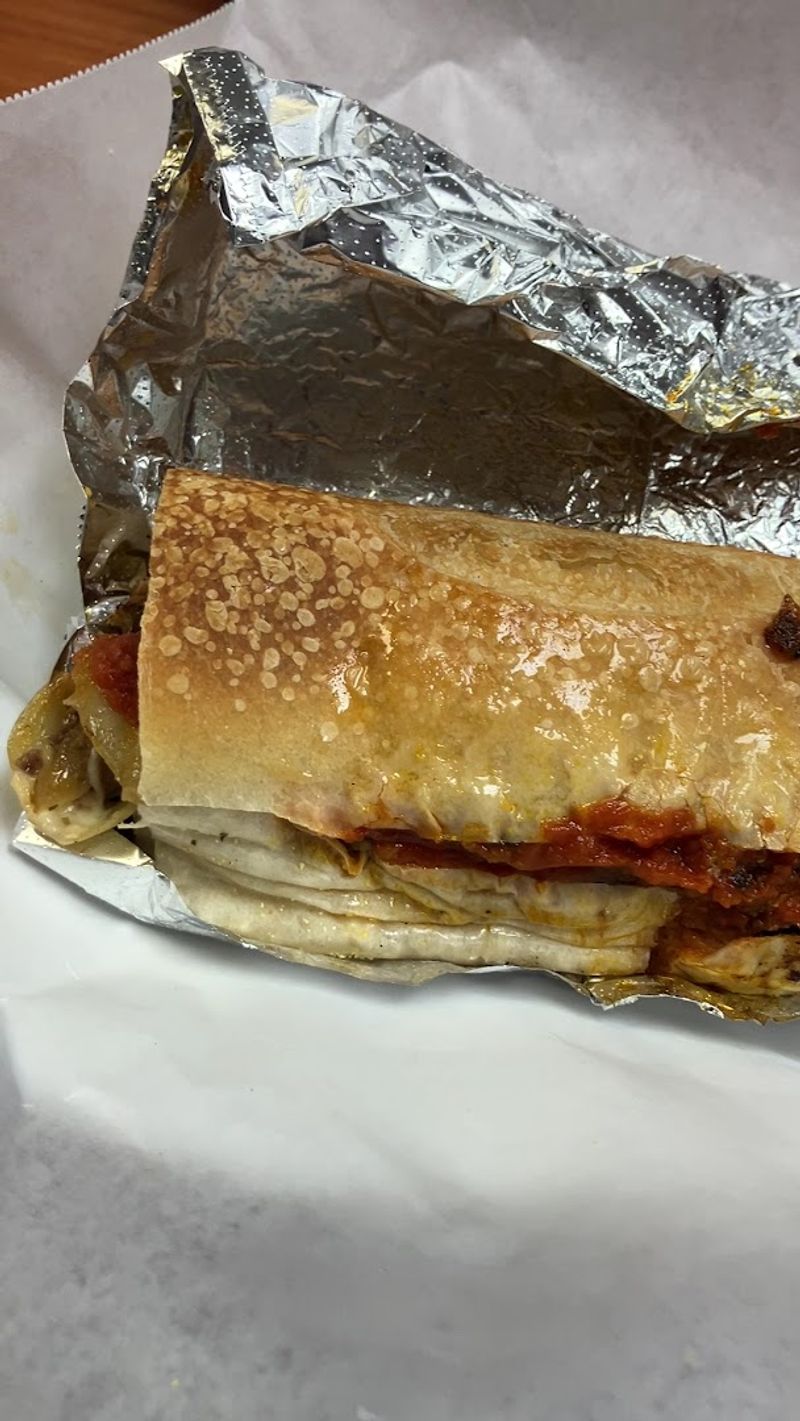
The menu refuses to let the hot dog have all the fun. Nearly every familiar sandwich can be pulled into Dickie Dee’s orbit by adding potatoes, peppers, onions, or some combination of the three.
Italian sausage is the closest relative to the signature order, offering a meatier texture and heavier seasoning while keeping the same pizza-bread setup. A single sausage is listed at $6.90, and a double at $10.90.
Indecisive customers can order a hot dog-and-sausage combination, creating a two-meat survey of the restaurant’s specialties in one overloaded pocket. Then there is the Italian cheeseburger, which replaces the frank with a burger patty but keeps the peppers, onions, and potatoes.
It is exactly the sort of creation that sounds excessive until you remember that burger-and-fries is already a standard combination; Dickie Dee’s simply removes the plate separating them.
The Super Steak follows the same logic with steak, cheese, peppers, onions, and potatoes, while the Super Combo Steak goes further by adding either a hot dog or sausage.
At $13.25 on the posted menu, it may be the clearest example of the kitchen treating restraint as an optional condiment. Other choices show that the restaurant is still a neighborhood pizzeria at heart.
Plain pies, pepperoni slices, chicken parm subs, meatball parm, and cold Italian-style sandwiches sit beside specialty pizzas topped with Italian hot dog or sausage ingredients. That pie spreads peppers, onions, potatoes, and meat across pizza crust, turning the restaurant’s best-known sandwich inside out.
The menu’s appeal comes from this controlled repetition. Dickie Dee’s does not chase unrelated food trends or build dishes around ingredients that have no reason to be there.
Instead, it takes a proven Newark combination and applies it wherever it makes sense: franks, sausage, burgers, steaks, fries, and pizza. The toppings change form, but they never lose their neighborhood accent.
Why Dickie Dee’s Still Feels Like a True North Ward Original
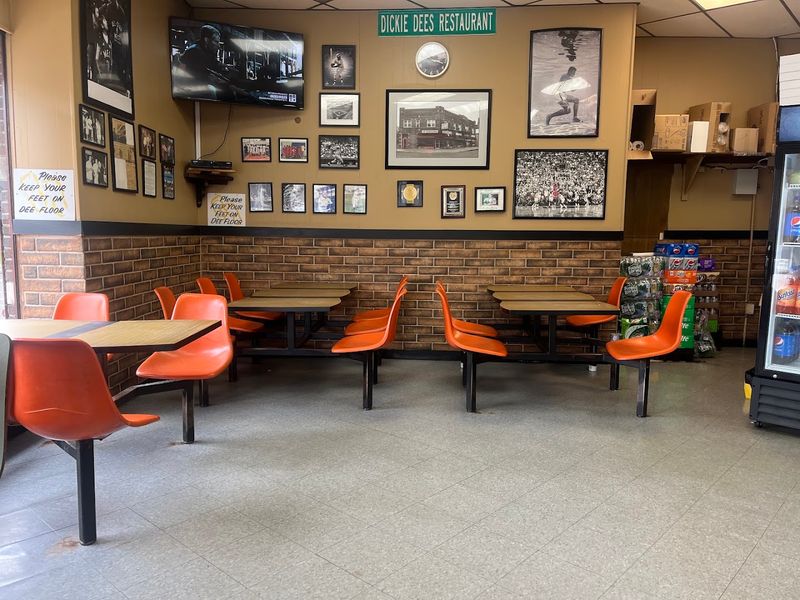
Longevity is easy to claim when a business smooths away every rough edge and turns its history into branding. Dickie Dee’s feels different because its age is visible in the most ordinary ways.
The room is practical rather than polished, the service moves with the speed of a busy local counter, and the menu assumes customers came hungry.
Families who knew the restaurant decades ago can return and order the same basic combination of fried meat, potatoes, peppers, onions, and pizza bread, now prepared by another generation of the founding family.
That continuity matters in Newark, a city whose food traditions have survived waves of demographic change, redevelopment, and the disappearance of countless old neighborhood businesses.
Dickie Dee’s remains in the North Ward, not as a museum piece but as a working restaurant with regular hours, online ordering, pizza by the slice, and a phone number that still begins with Newark’s familiar 973 area code.
The restaurant currently lists hours from noon to 5 p.m. on Sunday, 10 a.m. to 7 p.m. on Monday, and 10 a.m. to 7:30 p.m. Tuesday through Saturday.
National television exposure has introduced the Italian hot dog to people who may never have heard of pizza bread, but the sandwich still makes the most sense in its original setting. It belongs on Bloomfield Avenue, wrapped in paper, surrounded by the sound of orders being called and chairs scraping across the floor.
The double hot dog may look outrageous in a photograph, yet there is nothing gimmicky about it here. This is simply how Dickie Dee’s has fed Newark since 1958: generously, efficiently, and with enough fried potatoes packed into the bread to make a side order entirely unnecessary.