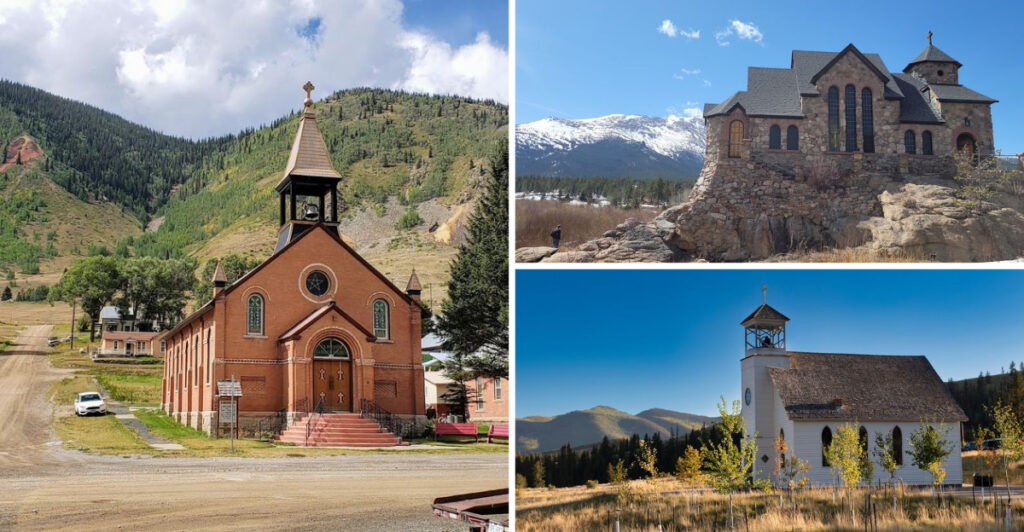
Mountain roads have a way of leading to unexpected places, and some of Colorado’s most rewarding discoveries are the chapels tucked among towering peaks, alpine meadows, and evergreen forests. Built from weathered stone, rustic timber, or simple white clapboard, these peaceful sanctuaries offer more than a place to pause—they frame some of the state’s most spectacular scenery.
Some sit beside winding highways, while others are hidden in historic mining towns or overlooking broad mountain valleys. These 11 scenic Colorado chapels prove that the journey can be just as inspiring as the destination.
1. Saint Catherine’s Chapel on the Rock (Allenspark)
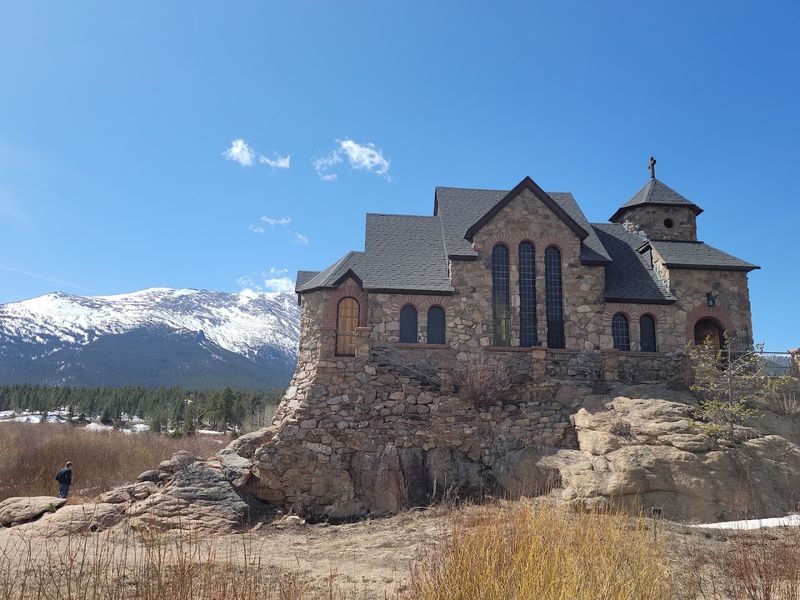
Saint Catherine’s Chapel on the Rock looks exactly like the kind of place Colorado would invent just to show off. The stone building sits on a giant granite outcrop above the road, and the backdrop is the real head-turner: Mount Meeker and Longs Peak rising in crisp layers behind it.
Even if you have seen photos before, the scale lands differently in person. The approach along the Peak to Peak Scenic Byway already puts you in the right mood.
Curving mountain roads, changing light, and sudden openings in the trees make the chapel reveal itself in a way that is far more cinematic than expected.
It is easy to understand why cameras come out immediately here, even from travelers who usually say they are not stopping.
The building itself keeps things simple. Rough stone walls, a compact footprint, and a modest profile let the setting do most of the talking, which is exactly the right move. Nothing about it tries too hard, and that restraint is part of why the view hits so well.
This is one of those stops where timing can completely change the look. Morning light sharpens the peaks, afternoon clouds add drama, and a dusting of snow can turn the whole scene into a postcard without warning.
In autumn, the surrounding slopes often add extra color that plays beautifully against the gray stone. For a scenic chapel road trip, this one belongs near the top of the list because it combines instant visual payoff with classic Front Range mountain character.
You get architecture, geology, and alpine scenery in one frame, with no need for a long hike or complicated detour. Pull over, breathe for a minute, and let the landscape handle the hard part.
2. Chapel at Beaver Creek (Beaver Creek)
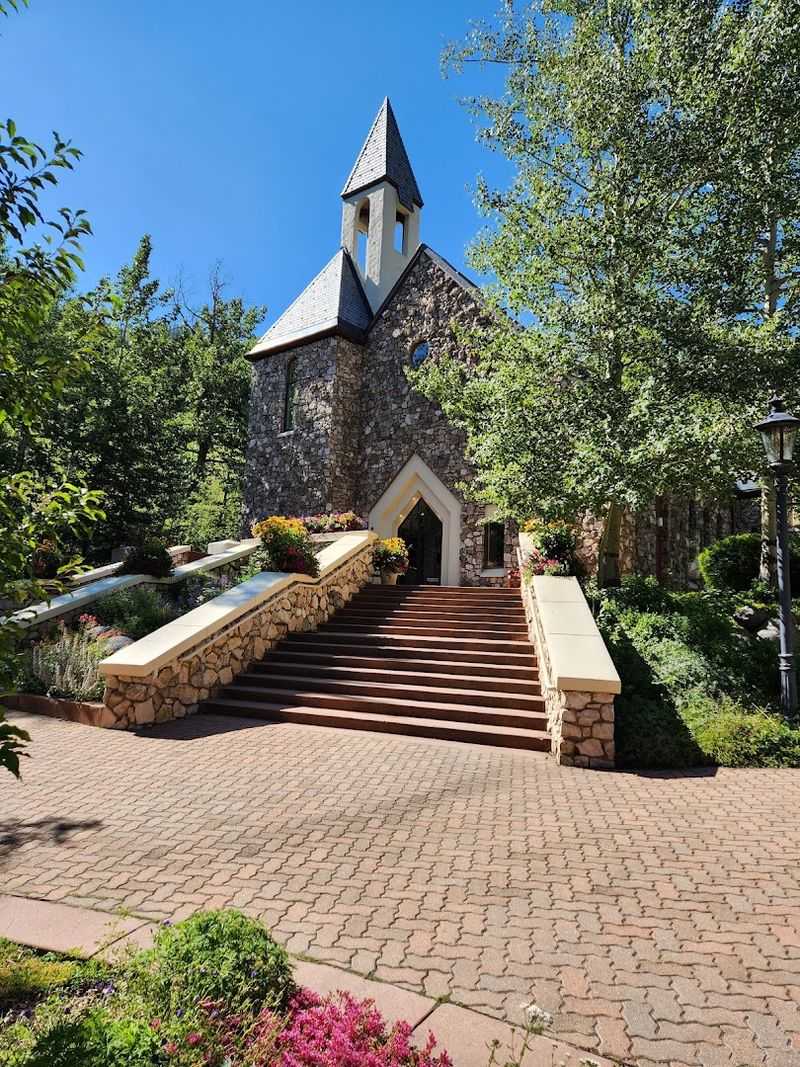
Right in the middle of Beaver Creek’s polished alpine village, the Chapel at Beaver Creek offers a quieter counterpoint to all the resort energy around it.
Stone walls, steep rooflines, and tidy landscaping give it a storybook look without drifting into theme-park territory. When the mountains rise behind the village, the whole scene clicks into place.
This chapel works in every season, which is part of its charm. In winter, snow softens every edge and nearby ski slopes create that full-on Rocky Mountain resort backdrop people travel long distances to find.
In summer and early fall, aspens, flowers, and open blue skies brighten the setting in a completely different way. What stands out most is how easy it is to fold this stop into a bigger day.
You can wander village paths, grab coffee, browse shops, then step over to a peaceful chapel that slows the pace without requiring a major plan change.
That mix of convenience and beauty makes it especially appealing if you want scenic moments without a big logistical effort.
The architecture fits the surroundings instead of competing with them. You get natural stone, warm wood tones, and mountain-style lines that feel at home among the lodges and peaks.
The result is neat, balanced, and photogenic from almost every angle, especially when seasonal decorations or fresh snowfall add texture.
For travelers building a chapel route through Colorado, this stop brings a different flavor than the remote hilltop or roadside classics. It is more village-centered, more polished, and still unmistakably mountain framed.
If you want a scenic chapel with easy access, strong visual appeal, and a setting that changes beautifully through the year, Beaver Creek makes a very convincing case.
3. Overlook Chapel (Estes Park)
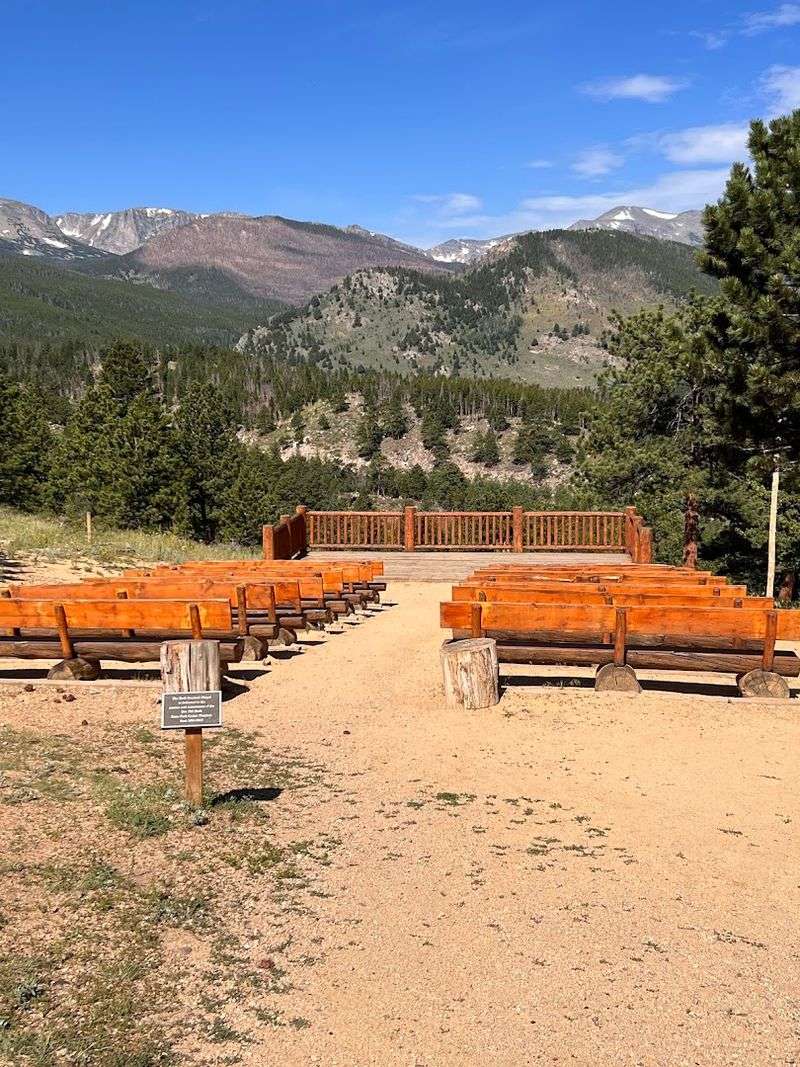
Overlook Chapel in Estes Park skips the enclosed walls and gets straight to the main event: one huge Rocky Mountain panorama.
Set at YMCA of the Rockies, this open-air worship space uses rustic benches and a simple platform, then lets the national park scenery handle the rest. The result is spare, memorable, and very Colorado.
The first thing you notice is the view’s sheer width. Peaks stack across the horizon, the sky feels enormous, and there is almost nothing to interrupt the line of sight.
That unobstructed look gives the chapel a strong sense of scale, especially when clouds drift through and shift the light across the mountains.
Because the design is so minimal, every natural element matters more. The grain of the wood, the angle of the benches, the open air, and even the silence between gusts all become part of the experience.
It feels less like entering a building and more like stepping into a frame built specifically for alpine scenery. This is also a smart stop if you want something visually distinct from stone chapels and forest sanctuaries. There is no steeple fighting for attention, no heavy ornament, no dramatic façade trying to steal the scene.
Instead, the whole place leans into simplicity, and that choice makes the surrounding mountains look even bigger.
On a road trip through Estes Park, Overlook Chapel earns its spot because it delivers a clean, unforgettable combination of structure and landscape. You get the quiet order of a chapel with the raw openness of Rocky Mountain country, all in one sweep.
Bring a camera, but also plan to sit for a few minutes, because this is one of those views that keeps changing while you are looking straight at it.
4. Sunnyside Chapel (Creede)
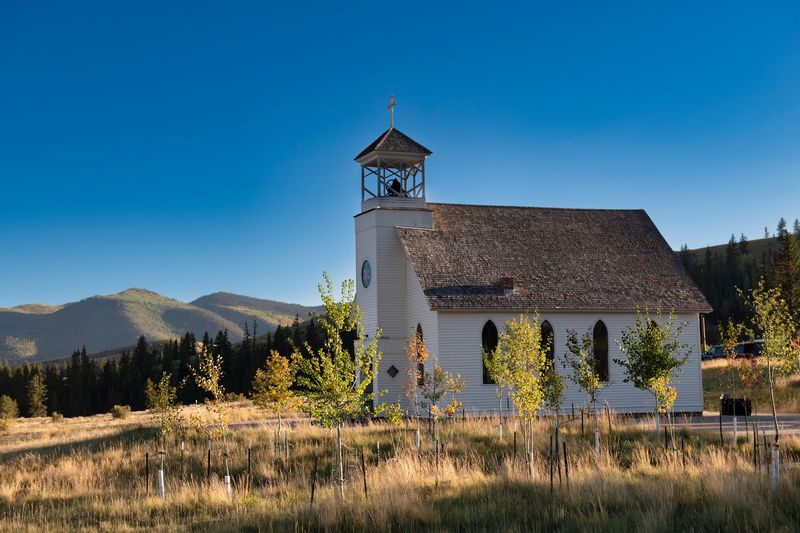
High above Creede, Sunnyside Chapel catches your eye with the kind of clean silhouette that works beautifully against mountain country.
The white exterior stands out on the hillside, and the bell tower adds just enough vertical punch to keep the building prominent without overwhelming the landscape. Behind it, the San Juan Mountains do what they do best: create a dramatic horizon with very little effort.
Creede already has a striking setting, so a chapel up on the slope has a lot to live up to. Sunnyside manages that by staying simple.
Its lines are straightforward, the color is crisp, and the placement gives it room to breathe, which makes the surrounding ridges and open sky feel even bigger.
This is an especially strong stop for photographers because the composition is so cooperative. From some angles, the chapel reads as a bright focal point against darker hillsides or changing weather, while from others it settles into the scene more gently.
Either way, the contrast between modest architecture and expansive terrain works in its favor. There is also a certain appeal in how removed it feels from busier mountain travel corridors.
Creede has character, history, and plenty of scenery, but Sunnyside Chapel adds a quieter visual pause above town rather than in the middle of it.
That hillside position gives the site a sense of elevation and openness that suits southern Colorado especially well. If your scenic chapel route leans toward the wilder side of the state, this one deserves a place.
You get San Juan mountain views, a classic white chapel profile, and a setting that reads beautifully in photos without losing its calm in person. It is the kind of stop that rewards a slower look, especially when the light starts moving across the ridges.
5. Mother Cabrini Shrine (Golden)
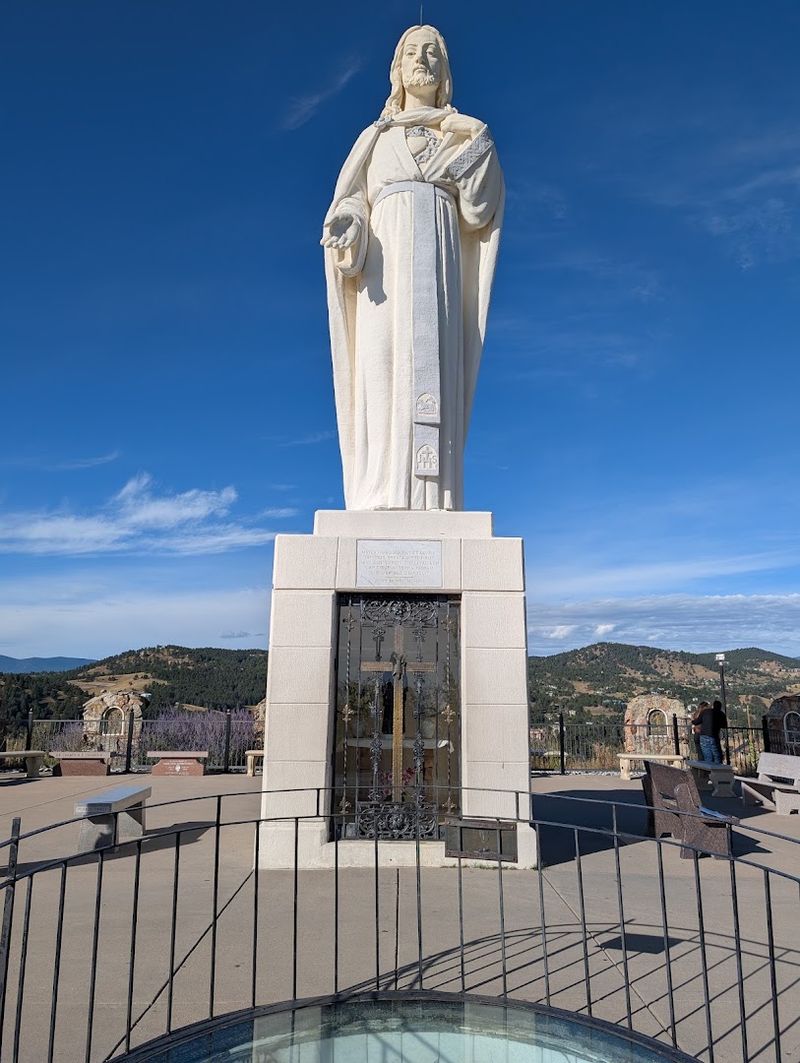
Mother Cabrini Shrine offers a different kind of scenic chapel experience, one that mixes mountain-edge views with a broad overlook toward the city.
Set above Golden, the site combines a chapel, gardens, and walking paths in a way that encourages lingering rather than rushing in for one quick photo. The Front Range stretches out nearby, while wider views open toward the Denver area.
That contrast is the appeal. You get foothill terrain, changing light on the slopes, and a strong sense of elevation, but you also see how the built landscape spreads out beyond the ridge line.
It creates a layered perspective that feels distinctly Colorado, where mountain drama and metro skylines often share the same frame.
The grounds help shape the visit just as much as the chapel itself. Paths invite a slower pace, landscaped areas soften the hillside, and the different viewpoints keep the scenery from becoming a one-angle stop.
Instead of one fixed composition, you get a sequence of looks that shift as you move around. Architecturally, the chapel and surrounding features sit comfortably within the setting rather than trying to dominate it.
The visual balance is part of why this place works so well for travelers who want more than a roadside pullout. You can appreciate the structure, then turn and catch long-distance views that stretch far beyond the immediate hillside.
For a scenic chapel itinerary, Mother Cabrini Shrine adds range. It brings in devotional architecture, garden spaces, and one of the better combinations of foothill scenery and urban overlook in the state.
If you want a stop that feels spacious, walkable, and visually varied, this one delivers a fuller experience than many quick mountain viewpoints can manage on their own.
6. Chapel in the Pines (Evergreen)
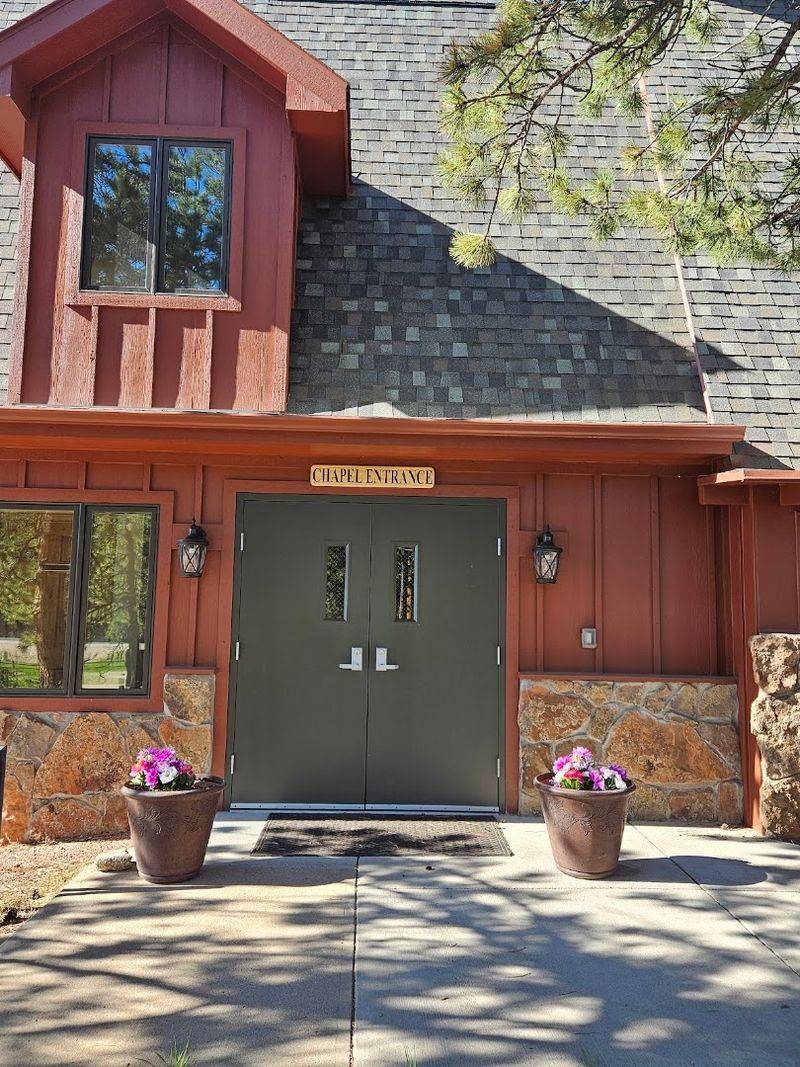
Chapel in the Pines trades grand exposed peaks for something more intimate, and that is exactly why it belongs on this list.
Tucked among tall ponderosa pines near Evergreen, it leans into the foothills setting with a rustic style that looks right at home under the trees. Instead of dominating the landscape, the chapel settles into it.
The approach is part of the charm. Forested roads around Evergreen already have that easy, scenic rhythm, with patches of light slipping through the branches and granite outcrops appearing where you least expect them.
By the time the chapel comes into view, the mood has shifted away from city speed and into something quieter and more grounded.
Architecturally, this is a place where texture does the heavy lifting. Wood, stone, and natural tones connect the structure to its surroundings, while the modest scale keeps everything approachable.
Nothing is oversized, nothing feels staged, and the whole setting benefits from that restraint. This stop also works well when you want scenic variety on a Colorado chapel route. Not every memorable chapel needs a giant mountain wall directly behind it.
Here, the beauty comes from towering pines, filtered sunlight, and the way the building blends into the forest instead of standing apart from it.
Evergreen’s foothill landscape gives the chapel a relaxed, lived-in kind of appeal that is different from more dramatic roadside landmarks.
You can pair it with a day of lake views, short drives through wooded neighborhoods, or a wander through nearby mountain town streets without forcing the schedule.
For travelers who appreciate a calm setting, strong natural materials, and a chapel that matches the land rather than competing with it, Chapel in the Pines is an easy addition.
7. Vail Interfaith Chapel (Vail)
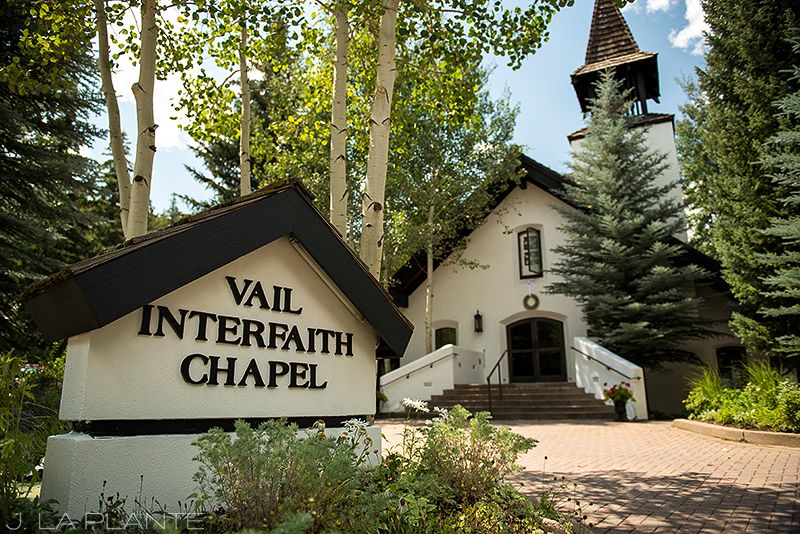
Vail Interfaith Chapel feels perfectly matched to its surroundings, where alpine architecture, towering evergreens, and mountain peaks all seem to work together without competing for attention.
Located in the heart of Vail Village, the chapel has served as a spiritual gathering place since 1969, but even first-time visitors often remember the setting before anything else.
Step outside the entrance, and the Gore Range immediately reminds you why this mountain town has become one of Colorado’s most iconic destinations. Unlike more isolated roadside chapels, this one blends naturally into a lively pedestrian village filled with stone walkways, flower boxes, and European-inspired buildings.
That combination creates a different kind of scenic experience. Instead of standing alone against dramatic wilderness, the chapel becomes part of one of Colorado’s most beautiful mountain communities, where every direction seems to reveal another postcard-worthy view.
The architecture complements the landscape with steep rooflines, natural stone, and warm wood details that echo the surrounding lodges. Large windows bring daylight into the sanctuary, while the quiet interior provides a welcome contrast to the activity just outside.
Even during busy summer weekends or ski season, the chapel maintains a peaceful atmosphere that encourages visitors to slow down for a few moments. Its location also makes it one of the easiest chapels on this list to include during a Colorado road trip.
After visiting, you can stroll through Vail Village, ride the nearby gondolas, browse local shops, or simply enjoy the mountain scenery from one of the surrounding plazas. Few chapels combine accessibility, architectural charm, and alpine surroundings quite so naturally.
For travelers looking to experience Colorado’s mountain beauty without leaving a vibrant resort town behind, Vail Interfaith Chapel earns its place among the state’s most scenic chapels.
8. St. Patrick Catholic Church (Silverton)
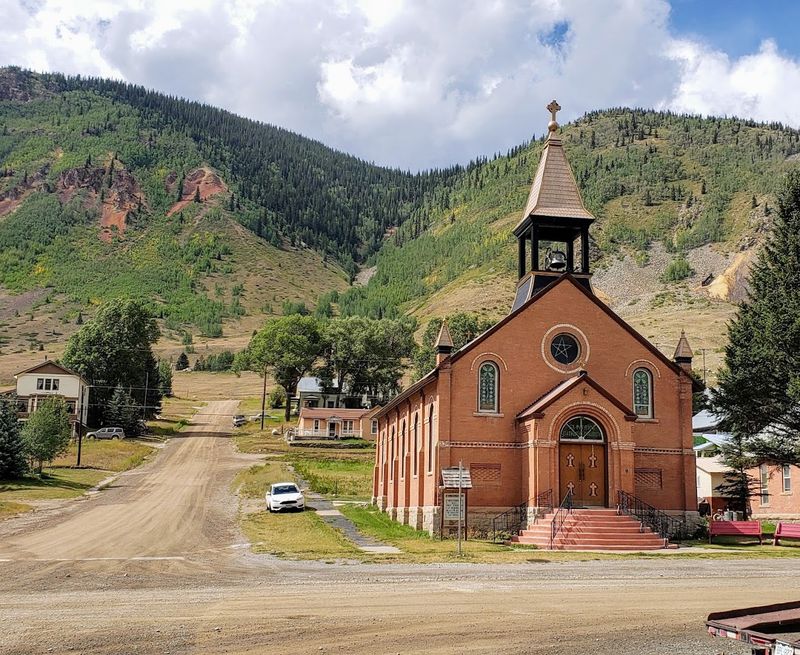
St. Patrick Catholic Church feels perfectly at home in Silverton, where nearly every street ends with a view of rugged mountain peaks.
Built in 1905, the historic stone church has stood through the town’s mining days, railroad era, and transformation into one of Colorado’s most beloved mountain destinations.
Its Romanesque Revival architecture gives it a timeless presence, while the towering San Juan Mountains ensure the scenery is every bit as memorable as the building itself. The setting is what makes this stop especially rewarding.
Silverton sits high in a narrow mountain valley, so dramatic peaks rise in nearly every direction. Whether you’re arriving via the Million Dollar Highway or the Durango & Silverton Narrow Gauge Railroad, the church blends naturally into the surrounding landscape of historic buildings, evergreen-covered slopes, and alpine ridges.
Architecturally, St. Patrick Catholic Church balances simplicity with craftsmanship. The locally quarried stone exterior, rounded archways, and sturdy bell tower reflect the character of the mining community that built it more than a century ago.
Rather than competing with the scenery, the church complements it, creating the kind of composition that photographers and history lovers both appreciate. The location also makes it an easy stop while exploring one of Colorado’s most scenic mountain towns.
After visiting the church, you can wander Silverton’s historic downtown, browse local shops, ride the famous narrow-gauge railroad, or continue along the spectacular Million Dollar Highway.
Every direction offers another postcard-worthy view, reinforcing why this corner of the San Juan Mountains remains one of the state’s most unforgettable landscapes.
For travelers seeking a chapel where historic architecture and breathtaking mountain scenery come together naturally, St. Patrick Catholic Church is an easy choice and a worthy addition to any Colorado road trip.
9. Little Church in the Pines (Salina)
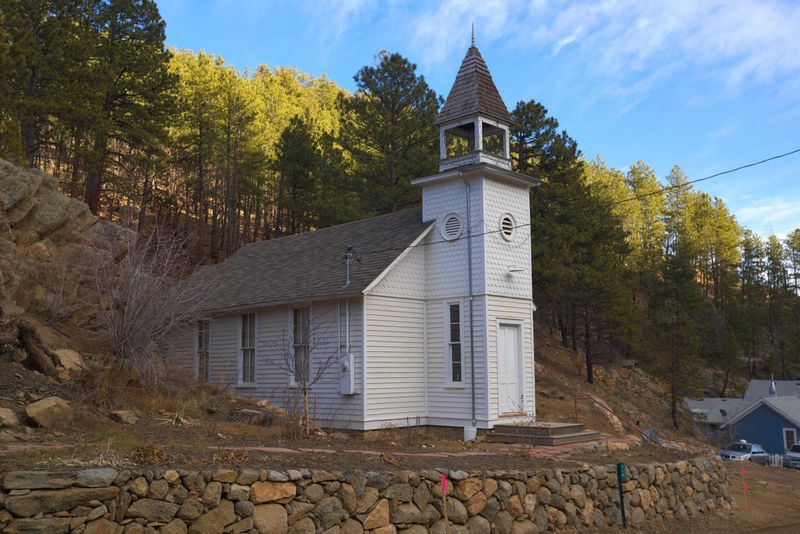
Little Church in the Pines proves that some of Colorado’s most memorable chapels are also among its most understated. Nestled in the tiny mountain community of Salina along Boulder Canyon Drive, this charming stone chapel has welcomed visitors since 1889, making it one of the oldest churches in the canyon.
Surrounded by towering pines, rugged granite cliffs, and the rushing waters of Boulder Creek nearby, it feels like a natural extension of the landscape rather than a building placed within it. Getting there is part of the experience.
The drive through Boulder Canyon winds beside the creek, passing dramatic rock walls, dense forests, and scenic pullouts before the chapel quietly appears beneath the trees.
Unlike larger mountain landmarks, this stop rewards travelers who enjoy discovering places that reveal themselves gradually instead of demanding attention from a distance.
The chapel’s rustic stone construction and simple design reflect the character of Colorado’s early mountain communities. Rather than elaborate ornamentation, its appeal comes from sturdy craftsmanship, modest proportions, and a setting that has changed remarkably little over the decades.
Every season offers a different atmosphere, from lush green forests in summer to brilliant golden aspens in autumn and fresh snow blanketing the surrounding canyon during winter.
Little Church in the Pines also pairs naturally with a day exploring Boulder Canyon or nearby Nederland, making it an easy addition to a scenic Front Range road trip.
Whether you stop for a few quiet moments, admire the historic architecture, or simply take in the peaceful mountain surroundings, the chapel offers the kind of timeless Colorado experience that stays with you long after the drive is over.
For travelers searching for a historic chapel framed by forests, granite cliffs, and classic Rocky Mountain scenery, Little Church in the Pines is one of the state’s most rewarding hidden gems.
10. Our Lady of the Pines Catholic Church
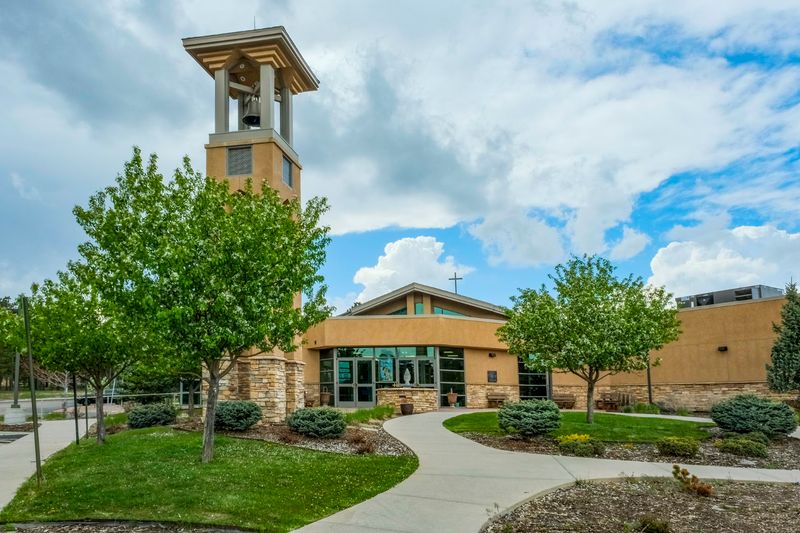
Tucked among the towering ponderosa pines of Black Forest, Our Lady of the Pines Catholic Church offers a quieter kind of Colorado mountain beauty. Rather than dramatic alpine overlooks, the setting is defined by peaceful woodland, filtered sunlight, and the dense forest that gave the community its name.
The church feels naturally woven into its surroundings, creating the impression that it has always belonged among the trees. The parish traces its roots to the early 1960s, while the original church building welcomed its first Christmas Mass in 1965 before the growing congregation expanded with a larger sanctuary in 2004.
The approach is part of the experience. Scenic roads wind through one of Colorado’s largest ponderosa pine forests, with glimpses of open meadows and distant Front Range scenery appearing between the trees.
By the time the church comes into view, the pace naturally slows, making it feel less like a destination and more like a peaceful retreat tucked away from the city’s bustle. Architecturally, the church favors clean lines, warm natural materials, and understated elegance rather than elaborate ornamentation.
Large windows welcome natural light into the sanctuary, while the surrounding forest provides a constantly changing backdrop through every season.
Spring and summer bring lush green canopies, autumn adds warm golden tones, and fresh winter snow transforms the property into a quiet woodland landscape.
Our Lady of the Pines offers a different perspective on Colorado’s scenic churches. Instead of towering peaks dominating the horizon, the beauty comes from its intimate relationship with the Black Forest itself.
Visitors can enjoy the tranquil grounds, outdoor prayer areas, and the peaceful atmosphere before continuing toward nearby mountain communities or Colorado Springs.
For travelers who appreciate serene forest settings as much as dramatic vistas, this church provides a memorable stop that showcases another side of Colorado’s natural beauty.
11. Taylor Memorial Chapel (Black Forest)
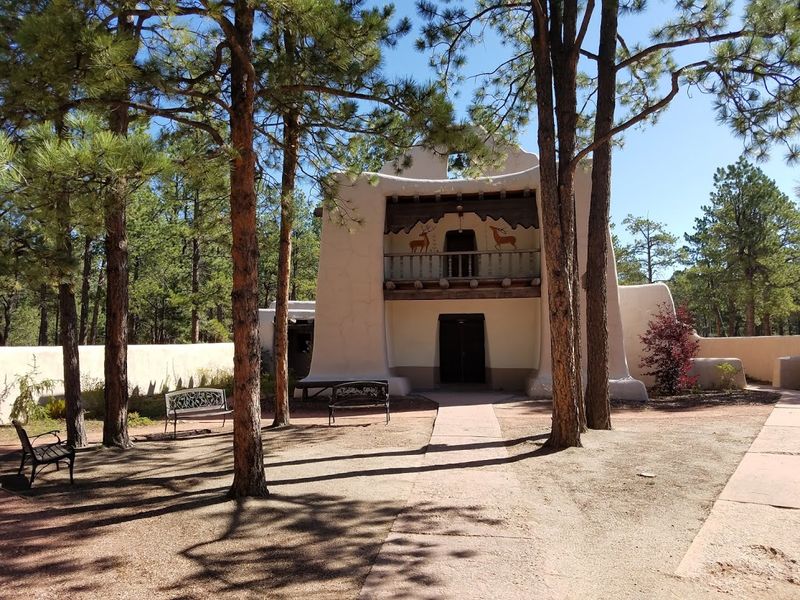
Taylor Memorial Chapel brings a whole different architectural flavor to a Colorado chapel drive, and that alone makes it stand out. Located at La Foret Conference & Retreat Center in Black Forest, this 1929 Pueblo Revival chapel pairs Southwestern design with tall pines and outward views toward Pikes Peak.
It is an unusual combination on paper, yet in person it fits the landscape with surprising confidence. The design gives you plenty to look at before the scenery even enters the conversation.
Handcrafted woodwork, strong forms, and the earthy character associated with John Gaw Meem’s architecture create a chapel that feels thoughtful from every angle.
Rather than relying on a steeple or stone-wall drama, it uses shape, material, and proportion to make an impression.
Then the setting takes over. Towering pines provide vertical texture around the building, while breaks in the forest can open toward bigger views in the direction of Pikes Peak.
That mix of enclosure and distance is one of the chapel’s strongest features, because you get both a sheltered woodland mood and a clear connection to the larger Front Range landscape.
It also helps that the chapel feels like a destination with real personality, not just another pretty stop. The Pueblo Revival style adds visual variety to this list, especially among chapels shaped more by Gothic, rustic, or simple white-country traditions.
For travelers who care about architecture as much as scenery, this one is especially satisfying. As part of a scenic Colorado chapel route, Taylor Memorial Chapel rounds things out beautifully. It brings history, design pedigree, forest setting, and mountain-oriented views into one stop without feeling overworked.
If you want a chapel that looks distinct in photos and even better in person, Black Forest’s standout Southwestern sanctuary is a smart final addition.