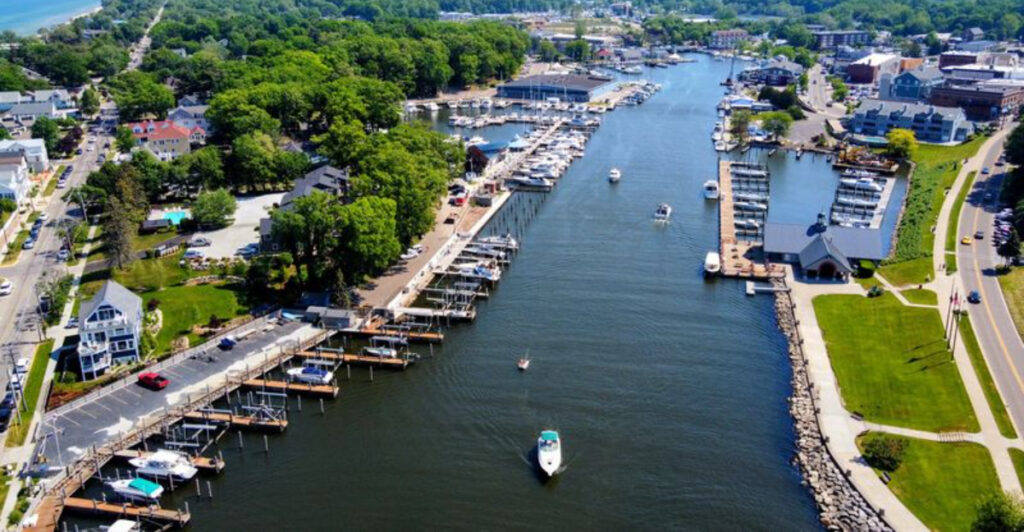
Tucked along the eastern shore of Lake Michigan, South Haven is one of those places that quietly delivers more than you expect. A working port city where the Black River empties into the Great Lake, it sits at a crossroads of water, farmland, and small-town life that few Michigan communities can match.
Blueberry fields stretch inland while lighthouse-topped piers reach out over the water, and the whole scene feels genuinely unhurried. Whether you’re passing through or planning a long weekend, South Haven has a way of holding your attention.
Where the Black River Meets Lake Michigan
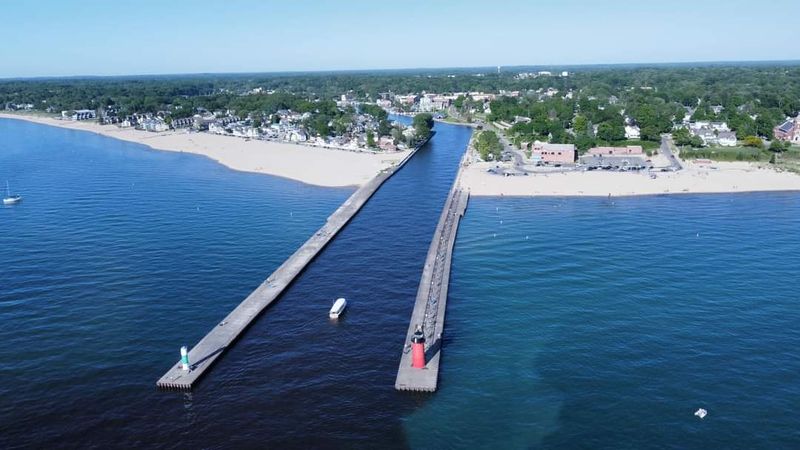
Standing at the South Haven pier, you can watch two completely different bodies of water come together in real time. The Black River, dark-tinted from the tannins of inland vegetation, pushes steadily westward through a narrow channel before fanning out into the open blue of Lake Michigan.
It’s a collision of ecosystems that happens quietly but visibly, and it gives South Haven a geographic identity that almost no other lakeshore town in the Midwest can claim.
The pier itself extends several hundred feet into the lake, capped by the South Pier Inner Light — a compact red lighthouse that has become the town’s most photographed landmark. On calm days, the water on the river side sits noticeably darker and stiller than the lake side, where waves roll in from the open water.
That contrast becomes especially sharp at sunrise, when the light catches both surfaces differently.
Fishermen line the pier railings in the early morning, pulling in salmon, perch, and steelhead depending on the season. Kayakers navigate the river channel toward the lake while charter boats head the opposite direction, returning from open-water runs.
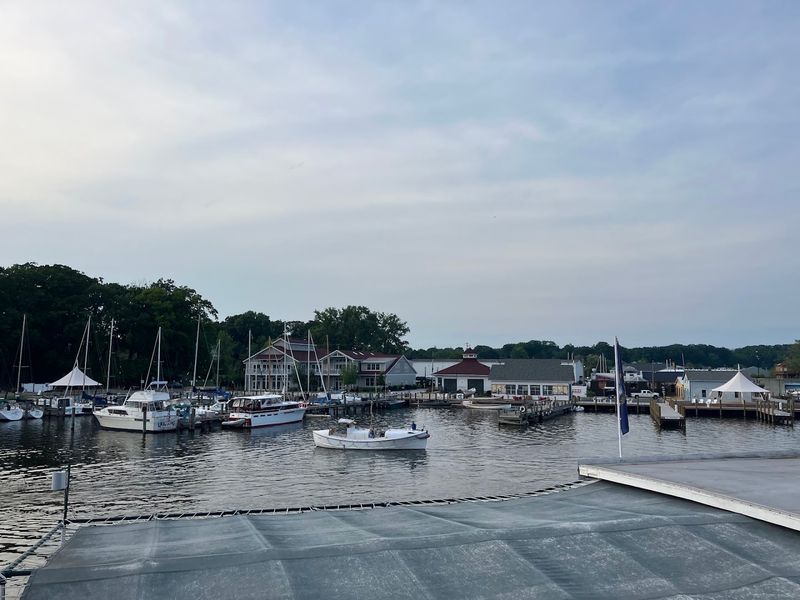
The mouth of the river also serves as a working harbor, with boat slips lining both banks just before the channel opens up.
The surrounding beach stretches north and south of the pier, offering wide sandy access for swimming and sunbathing in summer. Even on busy weekends, the pier itself stays walkable and open.
You can follow the boardwalk along the south bank of the river, past docked sailboats and fishing vessels, and feel the shift from resort town to working waterfront within just a few steps. That layered geography is the core of what makes South Haven distinct.
South Haven’s Blueberry Belt and the Farms That Feed the Region

Van Buren County, where most of South Haven sits, produces more blueberries than almost any other county in the United States. The sandy, well-drained soil and the moderating climate created by Lake Michigan’s proximity create near-perfect growing conditions.
Drive a few miles east of downtown and the landscape shifts quickly — orchards, berry fields, and farm stands line the rural roads in a way that feels less like a detour and more like the actual point of being here.
Pick-your-own blueberry farms open every summer, typically from mid-July through August. Families show up with buckets and spend hours moving through the rows, eating as much as they collect.
The berries tend to be large, sweet, and abundantly ripe by peak season. Several farms also grow peaches, cherries, and apples, so there’s a rotating harvest calendar that keeps the farmland productive from early summer well into fall.
The South Haven area takes its blueberry identity seriously enough that the National Blueberry Festival runs annually in August, drawing tens of thousands of visitors into a town of fewer than 4,000 residents. The festival fills downtown with food vendors, live music, and blueberry-themed everything — pancakes, jam, wine, and pie competitions included.
It’s become one of the most attended summer events on Michigan’s western shoreline.
Beyond the festival, local restaurants and bakeries incorporate regional produce into their menus throughout the growing season. Blueberry pancakes, fresh-pressed cider, and peach cobblers made with fruit from nearby farms show up on menus across town.
The connection between the agricultural inland and the resort-oriented lakefront isn’t just scenic — it shapes what South Haven actually tastes like when you’re there.
The Red Lighthouse That Became a Michigan Icon
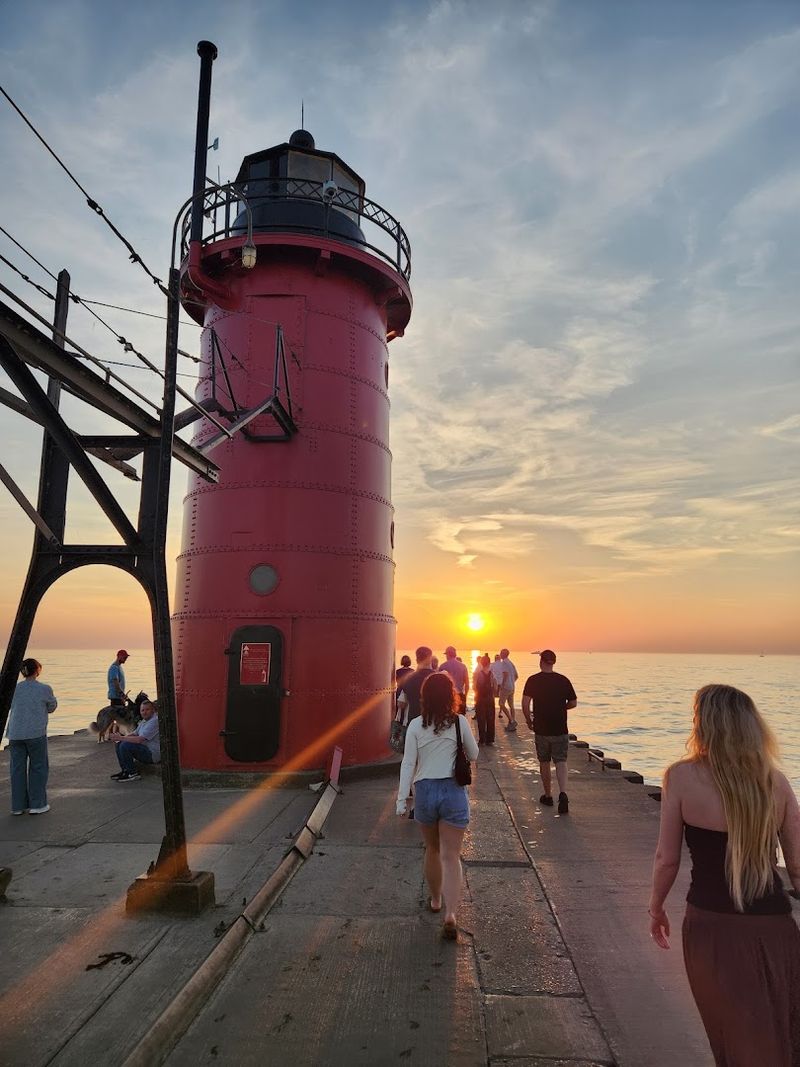
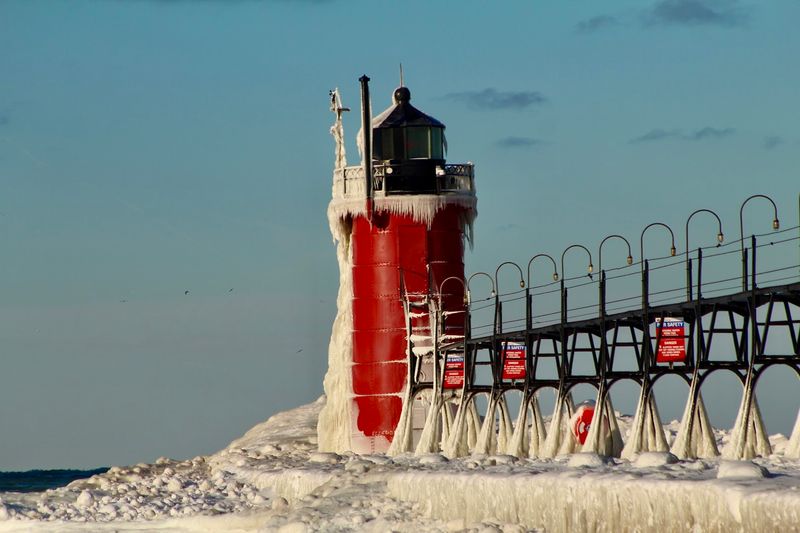
Not every lighthouse earns a reputation beyond its functional purpose, but the South Haven South Pier Inner Light has become something more than a navigational marker. Painted a bold red and positioned at the end of a long concrete pier extending into Lake Michigan, it appears on postcards, paintings, and social media feeds year-round.
The lighthouse is compact and cylindrical, rising maybe 35 feet above the pier surface, but its color and placement against open water make it visually striking in almost any lighting condition.
The structure dates to the late 1800s, with the current tower built in 1903. It was originally used to guide commercial vessels — lumber schooners, fruit boats, and passenger steamers — into the Black River harbor.
South Haven was a significant port during the late 19th century, and the lighthouse played a practical role in keeping that commerce moving safely. Today, it’s still maintained as an active aid to navigation, even as its main role has become cultural rather than commercial.
Walking the pier to reach the lighthouse takes about five to ten minutes each way, depending on your pace. The walk itself is part of the experience — you’re moving out over open water, with the lake on one side and the river channel on the other, watching the town recede behind you.
On windy days, waves crash against the pier walls and send spray across the walkway, which adds some drama to the approach.
Photographers position themselves along the pier at sunset to capture the lighthouse silhouetted against orange and pink skies. The red tower against a pastel sky over Lake Michigan is the kind of image that defines South Haven’s visual identity for people who have never visited.
Arriving in person, the real thing holds up well to its reputation.
Downtown South Haven: A Working Waterfront With Real Character
Downtown South Haven runs along both sides of the Black River, with Phoenix Street serving as the main commercial corridor. The layout is compact enough to walk entirely in under 20 minutes, which keeps the energy concentrated rather than spread thin.
Shops, restaurants, galleries, and ice cream parlors line the streets close together, and on summer weekends the sidewalks fill up with a steady mix of locals and visitors who seem equally at ease.
The river-facing side of downtown includes a riverwalk that connects the harbor area to the marina slips and the beach access at the mouth of the channel. Benches and open views of docked boats make it a natural place to slow down between stops.
A few restaurants position their outdoor seating along the water, so you can eat and watch boat traffic moving in and out of the harbor at the same time.
What keeps downtown from feeling like a generic tourist strip is the presence of working businesses that serve year-round residents alongside the seasonal ones. A hardware store, a pharmacy, a local diner — these run alongside the boutiques and galleries and prevent the whole district from tipping into pure resort mode.
The balance shifts depending on the season, but the bones of a functional small town stay visible throughout.
Several local restaurants focus on fresh-caught Great Lakes fish, regional produce, and house-made preparations rather than chain-style menus. A few craft beverage spots — including a winery built around locally grown fruit — add another layer to the dining and drinking scene.
The combination of walkability, water views, and genuine local commerce makes downtown South Haven one of the more enjoyable stretches of lakeshore retail in western Michigan, without requiring a lot of effort to navigate.
Timing Your Visit: Seasons Shape Everything in South Haven
South Haven operates on a strong seasonal rhythm, and knowing when to show up changes the experience significantly. Summer — roughly Memorial Day through Labor Day — is peak season by a wide margin.
The beaches fill up, downtown bustles, boat charters run daily, and the blueberry farms hit full swing in July and August. Hotel and rental prices climb accordingly, and parking near the beach requires patience on weekends.
But the energy is high, and nearly everything is open and running at full capacity.
Fall brings a quieter version of South Haven that regulars often prefer. The farm stands stay active through apple and pumpkin season, the lake turns a deeper shade of blue-gray, and the crowds thin out considerably after Labor Day.
Restaurants and shops that stay open through October offer a more relaxed atmosphere, and the fall color along the Black River corridor adds a scenic layer that summer visitors miss entirely.
Winter closes many seasonal businesses, but the lakeshore in winter has its own appeal. Ice formations build along the pier and breakwater, sometimes encasing the lighthouse in dramatic frozen layers.
Storm-watching from the beach is a real pastime among locals and a small community of year-round visitors who appreciate the raw power of Lake Michigan in January and February.
Spring is transitional — some businesses reopen in April, the fishing season picks up, and the farms begin their growing cycle. Prices are lower, the town is quiet, and the light over the lake in April and May has a clarity that summer haze tends to soften.
For travelers who want to see South Haven without the summer crowds, late May or early October tends to offer the best balance of access and atmosphere without the peak-season pressure.
The Michigan Maritime Museum and South Haven’s Port History
South Haven’s position at the mouth of the Black River made it a natural harbor during the 19th century, and the town grew directly from that geographic advantage. Lumber, fruit, and passengers all moved through the port during its peak commercial years, connecting inland Michigan to Chicago and other Great Lakes cities.
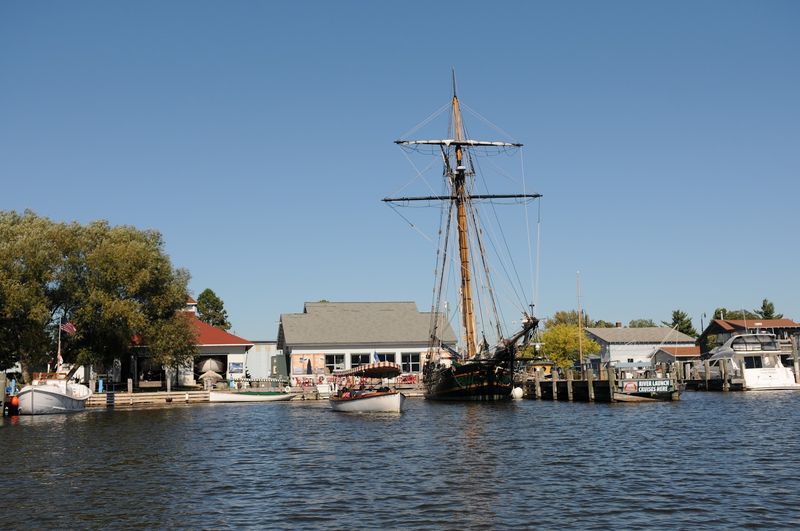
The Michigan Maritime Museum, located on the south bank of the Black River in downtown South Haven, tells that story through artifacts, vessels, and exhibits that trace the working life of the lake.
The museum’s collection includes historic small craft, Coast Guard equipment, navigation tools, and documentation of the commercial fishing and fruit-shipping industries that shaped the regional economy. One of its most distinctive features is a fleet of traditional wooden boats that can be seen in the water and, in some cases, experienced on guided paddling programs.
The museum runs educational programs for school groups and seasonal demonstrations that bring the maritime history into a more hands-on format.
The building itself sits close to the water, with views of the river channel and marina slips just outside. Even visitors who aren’t drawn to museum-style exhibits tend to find the setting compelling — the combination of historic context and active waterfront makes the experience feel grounded rather than purely archival.
South Haven’s port history also explains the town’s layout. The river channel running through downtown, the wide streets near the harbor, and the industrial infrastructure that still shows in some of the older buildings all trace back to the era when this was a working commercial port rather than a leisure destination.
The shift from working port to resort town happened gradually over the 20th century, but the physical structure of the city still reflects its origins in ways that the museum helps clarify and contextualize for curious visitors.
Why South Haven Sits in a Category of Its Own on the Michigan Shoreline
Plenty of towns line the eastern shore of Lake Michigan, and several of them offer beaches, lighthouses, and downtown strips with ice cream shops. South Haven checks those boxes too, but the combination of elements it brings together is harder to replicate.
The convergence of a navigable river, a working harbor, productive agricultural land, and a genuine small-town population base creates a layered destination rather than a single-note resort.
The scale matters too. South Haven’s population sits under 4,000 full-time residents, which keeps the town from feeling overbuilt or overcrowded in the way that larger Michigan resort communities sometimes do.
The infrastructure is sized for a town, not a theme park, and that restraint shows in the way the streets feel and the pace at which things move. You can cover the main attractions in a day or two without rushing, and the transitions between beach, downtown, river, and farmland happen within a few minutes of driving.
The agricultural connection gives South Haven something most lakeshore towns lack — a reason to visit that extends beyond the water. The blueberry farms, the seasonal produce markets, and the farm-to-table thread running through the restaurant scene tie the town to the surrounding landscape in a way that feels earned rather than curated.
The land and the lake are genuinely linked here, not just scenically adjacent.
Travelers who prioritize variety over singular spectacle tend to respond well to South Haven. A morning on the pier, an afternoon at a pick-your-own farm, and an evening meal with locally sourced ingredients covers geography, history, agriculture, and Great Lakes access in a single day.
That range, packed into a compact and walkable town on the Michigan shoreline, is what sets South Haven apart from the alternatives up and down the coast.