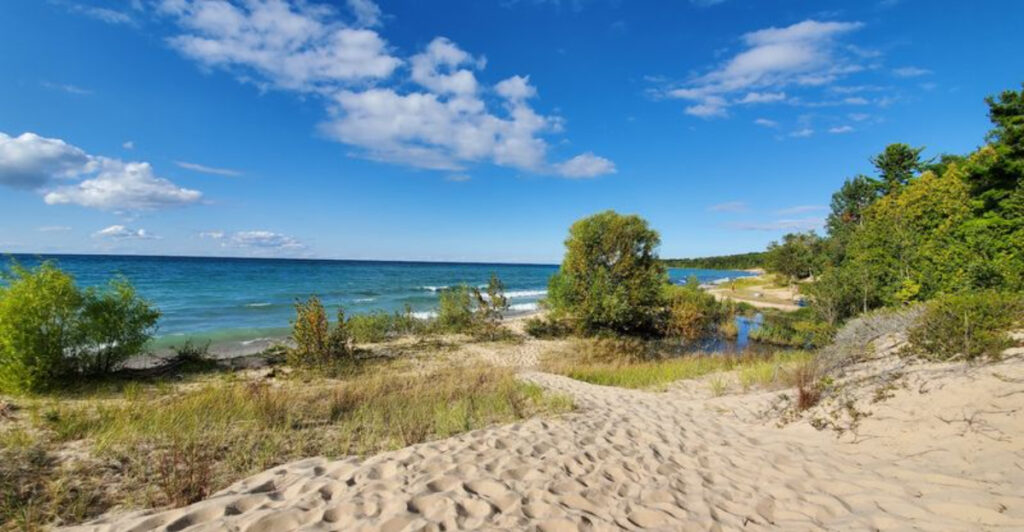
Some Michigan beaches feel like they were made for crowds, parking lots, and busy summer energy. This one feels like it was made for disappearing for a while.
Just minutes outside Charlevoix, Fisherman’s Island State Park stretches along the northern Lake Michigan shoreline with soft sand, clear water, rolling dunes, and a quieter kind of beauty that feels wonderfully removed from the usual tourist circuit. Set off Bells Bay Road, the park protects an undeveloped lakeshore where visitors can camp, search for rare stones, wander the beach, or simply sit at the water’s edge without feeling rushed.
For anyone craving a Michigan beach that still feels wild, spacious, and deeply peaceful, this Charlevoix-area escape delivers.
A Shoreline That Looks Like Nobody Found It Yet
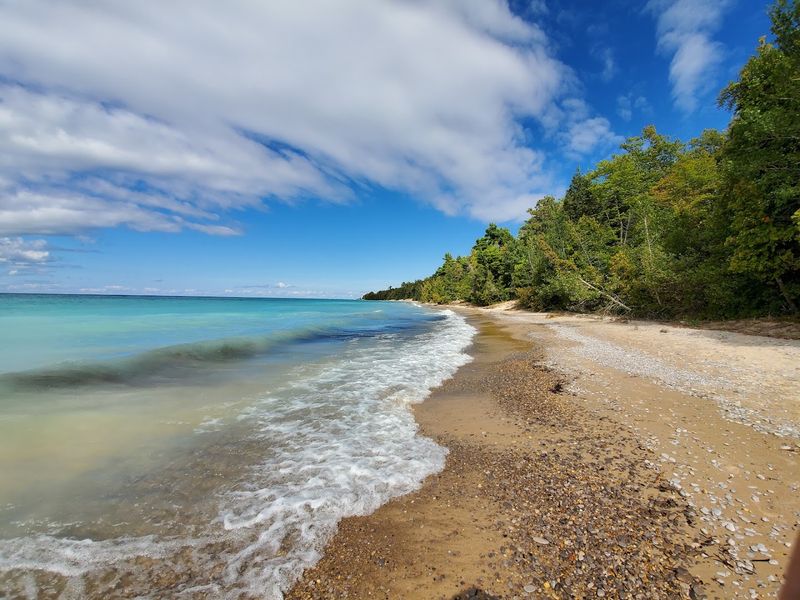
Standing at the water’s edge here, the first thing that hits you is the silence. No jet skis buzzing the surface, no packed umbrella rows, no vendor carts rolling through the sand.
The shoreline at Fisherman’s Island State Park stretches out in both directions with a raw, uninterrupted quality that is increasingly rare along Michigan’s popular lakefront corridors.
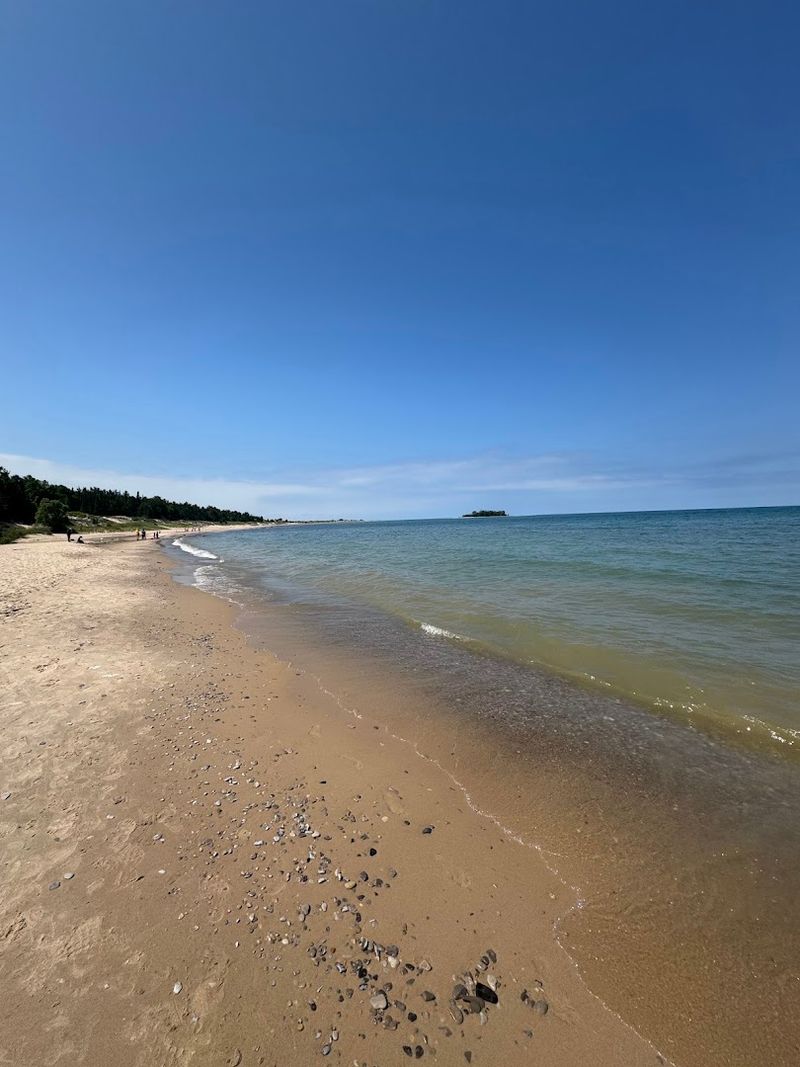
The beach itself shifts in texture as you walk it. Some stretches run soft and sandy underfoot, easy for barefoot strolling.
Other sections turn pebbly and flat, covered in smooth stones worn down by centuries of wave action. That rocky-to-sandy variation is part of what makes the beach so interesting to explore — every hundred yards offers something slightly different to look at and walk through.
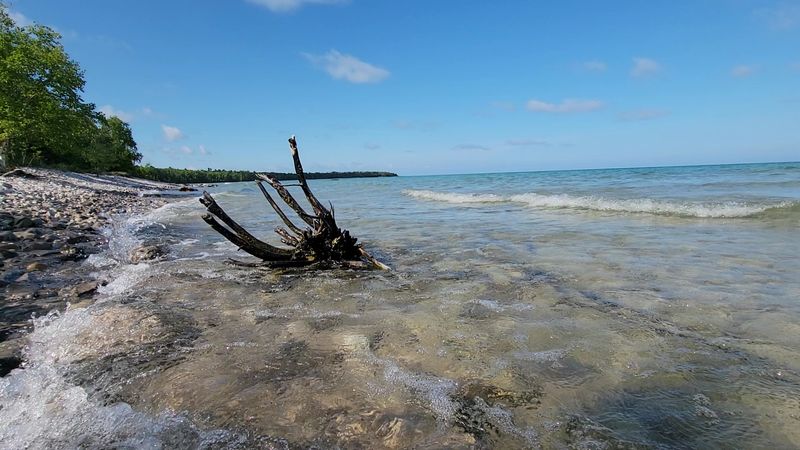
The water runs a striking shade of blue-green in clear weather, and on calm days the lake bottom stays visible several feet out from shore. Shallow entry makes it accessible for kids and casual waders, while the deeper sections cool off nicely for swimmers looking to escape summer heat.
In early September, the water temperature can still be surprisingly comfortable.
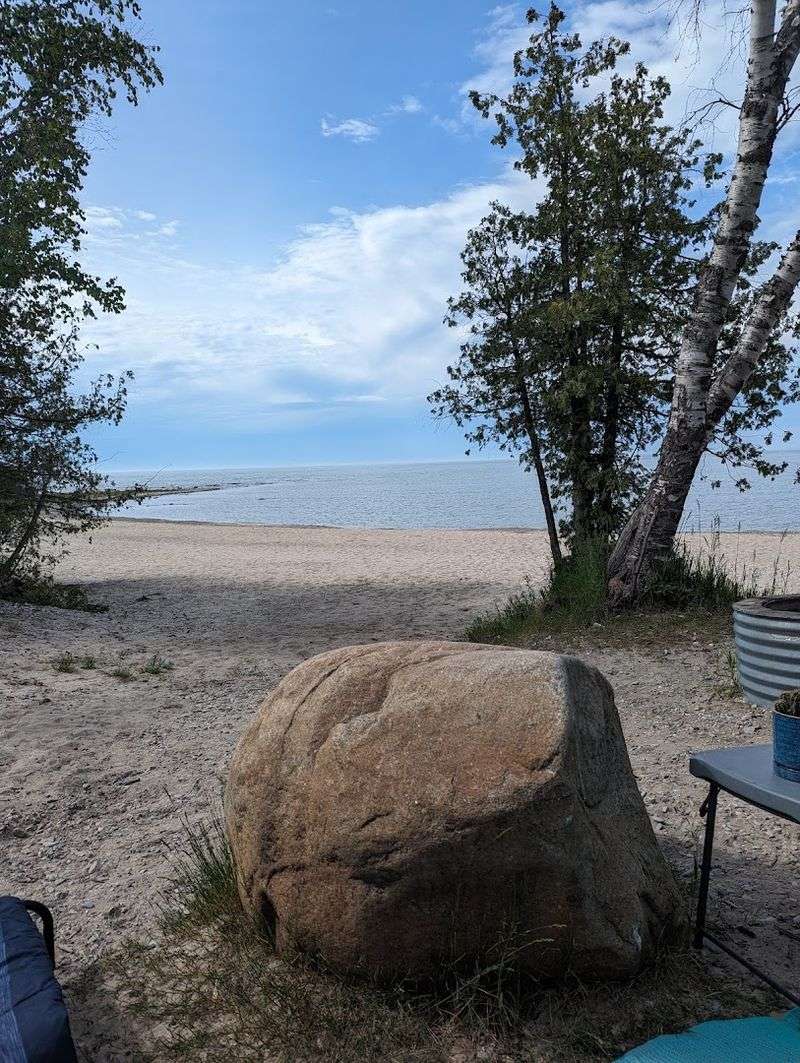
Cedar trees grow close to the shoreline in several spots, casting patches of shade directly onto the sand. Those shaded areas fill up slowly even on warm weekends, giving the park a relaxed, unhurried pace that feels different from the crowded beaches closer to downtown Charlevoix.
The park’s limited development means no concession stands, no rental shacks, and no amplified music competing with the sound of waves. You bring what you need, find a spot, and the lake does the rest.
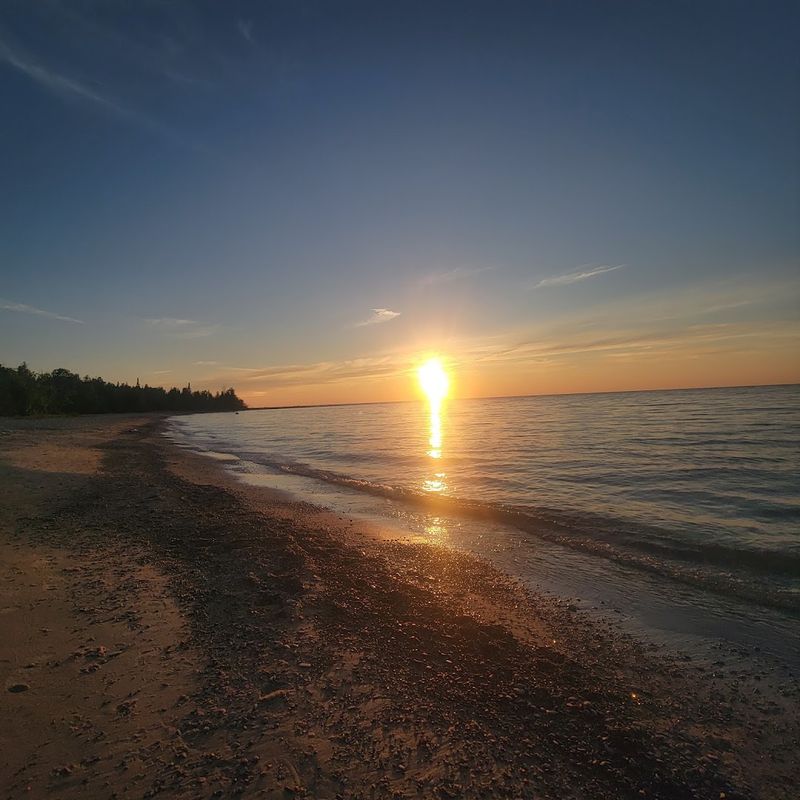
Sunsets here reportedly stretch close to forty minutes, painting the water in long, slow gradients of orange and pink before darkness finally settles in.
Rock Hunting on One of Michigan’s Best Fossil Beaches
Petoskey stones are Michigan’s state stone, and Fisherman’s Island might be one of the most reliable places in the entire Lower Peninsula to find them. The pebbly sections of the shoreline are loaded with smooth, flat stones that reward a patient eye.
Charlevoix stones, horn corals, brachiopods, crinoids, and even septarian nodules have all turned up along this stretch of beach, making it a legitimate destination for fossil hunters of every skill level.
The trick is timing. Early morning visits, especially after a good overnight wind or rain, tend to surface fresh stones that the waves have rolled up onto the shore.
Wet stones show their patterns much more clearly than dry ones, so walking the wet sand line near the water gives you the best chance of spotting something worth keeping. Kids pick up the method fast and tend to be surprisingly good at it.
Charlevoix stones — a specific type of fossilized coral found almost exclusively in this region — show up here regularly alongside their more famous Petoskey cousins. The two stones look similar but have distinct pattern differences once you know what to look for.
Charlevoix stones display smaller, tighter hexagonal cells, while Petoskey stones show larger, more pronounced coral structures.
Beyond the collector’s appeal, there is something genuinely meditative about working a stretch of rocky shoreline on a quiet morning. Time moves differently when your attention is fixed on small stones at your feet, waves pulling back and forth a few inches away.
Families have spent four or five hours here without realizing it, drawn along the beach by curiosity and the next promising stone. The beach never charges admission for that kind of slow, absorbing afternoon.
Bring a small bag or container — you will find more than you expect.
Camping Where Your Backyard Is Lake Michigan
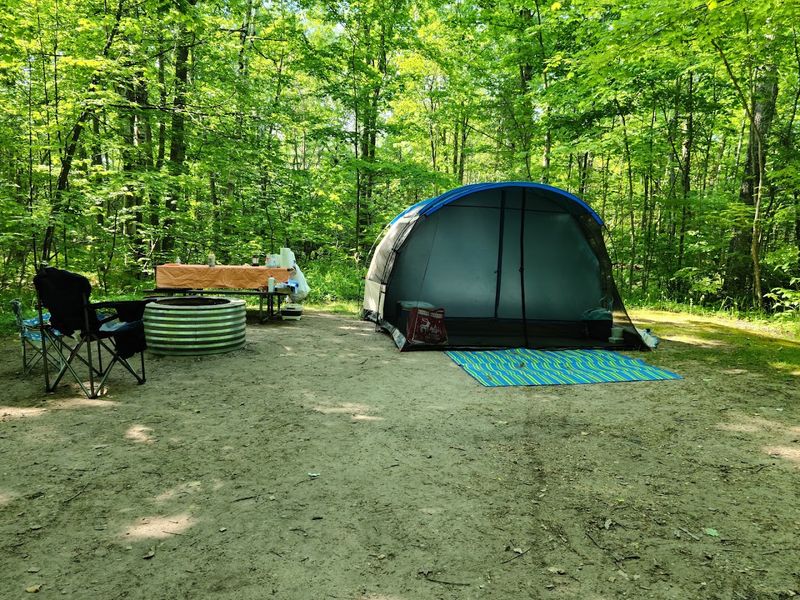
Pulling into a lakefront campsite at Fisherman’s Island and seeing Lake Michigan directly in front of you is the kind of setup that makes other campgrounds feel like parking lots by comparison. The park runs two main campground loops — one closer to the shore and one set further inland — plus a handful of pull-through sites that accommodate larger rigs near the water.
Sites along the lakeshore fill up fast, and for good reason.
This is a fully rustic park, which means no electrical hookups, no dump station, and no water fill on-site. Vault toilets serve the campground, kept clean by staff on a daily basis.
That rustic designation is not a flaw — it is a filter. The campers who show up here generally want exactly what the park offers: quiet, space, and direct lake access without the noise and congestion of a developed campground.
Some sites sit nearly level with the water, close enough that you can hear waves from inside your tent. Others in the inner loops offer more shade and privacy from tree cover, though they can attract mosquitoes in peak summer.
Site selection matters here — the lakeshore sites vary considerably in size and slope, so checking photos before booking pays off. Larger rigs have found leveling on sandy, sloped sites to be a real challenge.
Firewood runs ten dollars per bundle at the campground itself, so picking some up at local stores before arrival saves money. The park sits only about five minutes from downtown Charlevoix, making grocery runs or dinner in town completely practical without sacrificing the remote feel of the campground.
Reservations for prime lakefront spots disappear quickly during summer weekends, so planning ahead by several weeks is the standard approach for anyone serious about landing one.
Walking Out to the Island at the End of the Park Road
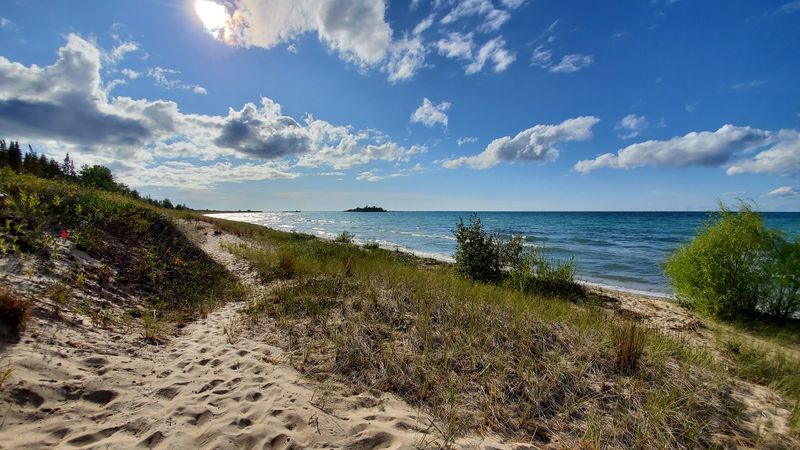
At the far end of the park road, past the third and final parking area, the beach curves toward a small island sitting just offshore in Lake Michigan. When water levels cooperate, visitors can wade across a shallow crossing and walk the island’s perimeter — a short but genuinely memorable experience that most day visitors never discover because they stop at the first parking lot and never drive further in.
The island crossing sits ankle-to-knee deep in most conditions, making it manageable for adults and older kids comfortable in moving water. The sandy lake bottom underfoot makes the crossing feel stable rather than slippery.
Once across, the island offers a completely unobstructed view back toward the mainland shoreline and out across open Lake Michigan in the other direction — a perspective on the park that simply cannot be replicated from the beach itself.
Getting there requires a bit of a walk from the parking area, which is exactly why it stays quiet. Most people who reach it do so with a sense of mild accomplishment, and the solitude on the island on a summer afternoon can feel almost implausible given how close Charlevoix sits.
The surrounding water stays shallow enough for wading in several directions, making it easy to explore the island’s edges without committing to a full swim.
The park’s name references this island directly, and the connection between the park and that small landmass gives the whole place a coherent identity. Fishermen historically worked these waters, and the island served as a landmark along the northern Lake Michigan coastline for generations before the state acquired the land.
Arriving at it on foot, having walked the beach from the main parking area, gives the visit a satisfying sense of destination rather than just a day at the water.
Trails, Dunes, and Cedar Bogs Just Back From the Water
Most visitors come for the beach and never look behind them. That turns out to be a significant oversight.
The park’s interior holds a hiking trail that runs roughly parallel to the campground loops, cutting through a landscape that swings between open dune terrain and dense cedar bog — two ecosystems that rarely sit this close together anywhere else in northern Michigan.
Cedar bogs have a specific character that takes a moment to register. The air smells sharper and more resinous than a typical forest.
The ground shifts underfoot in ways that feel slightly unpredictable. Light filters through the canopy in broken patterns that make the trail feel shadowed and cool even on warm afternoons.
Walking through one after spending time on an open, sun-bright beach creates a jarring sensory contrast that somehow makes both environments feel more vivid.
The dune sections offer elevation changes that open up partial views toward the lake before the trail drops back into tree cover. These are not the massive dunes of Sleeping Bear, but they have a quieter, more intimate scale that suits the park’s overall personality.
Sand shifts underfoot on the steeper sections, and the trail markers stay modest — this is not a place with boardwalks and interpretive signs at every turn.
The trail runs approximately one mile along the shore, making it a manageable out-and-back for most fitness levels. Dogs on leashes are welcome, and the trail sees light enough traffic that encounters with other hikers stay infrequent.
Combining a beach walk with a trail loop through the interior gives the park a satisfying two-part structure — water and woods, open and enclosed, loud waves and near-total quiet. That contrast is the strongest argument for spending a full day here rather than just an afternoon.
How Close Charlevoix, Michigan Actually Is — and Why That Matters
One of the more surprising things about Fisherman’s Island State Park is the geography. The park entrance sits roughly five minutes by car from downtown Charlevoix — a polished, walkable northern Michigan town with good restaurants, independent shops, a working harbor, and a full grocery store.
That proximity means campers and day visitors do not have to sacrifice comfort or convenience to enjoy a genuinely remote-feeling natural area.
Charlevoix has a distinct character compared to other northern Michigan resort towns. It sits between Lake Michigan and Lake Charlevoix, giving it a double-waterfront identity that shapes the whole town’s layout.
The drawbridge on Bridge Street is a local landmark, and the harbor fills with sailboats and charter fishing vessels through the summer season. Dinner options range from casual fish-and-chips waterfront spots to sit-down dining that works well for a post-hike meal.
For campers staying at the park, the five-minute drive into town solves the dump-station and water-fill gap that the rustic campground does not provide. Ice runs, firewood pickup at local stores, and quick grocery resupply all become easy errands rather than logistical problems.
That accessibility changes the calculus for campers who might otherwise skip a rustic park in favor of one with full hookups.
Day trippers benefit from the proximity in a different way. Pairing a morning at the park — rock hunting, swimming, or hiking — with lunch in Charlevoix and an afternoon on the town’s harbor makes for a full, varied day without any long drives.
The park gives you the raw, unpolished lakeshore experience, and Charlevoix gives you the comfortable, well-fed version of northern Michigan. Using both on the same trip is the most efficient way to get the most out of this part of the state.
Practical Notes Before You Pack the Car
A Michigan Recreation Passport is required for vehicle entry into the park, so having one on your license plate before arrival avoids a fee at the gate. The park operates from 8 AM to 10 PM daily, which gives day visitors a solid window but means late arrivals after 10 PM are not an option.
Campground guests staying overnight are already inside, so the closing time applies mainly to the gate access for day use.
Three separate parking areas provide beach access, and their locations matter. The first lot puts you on the main beach quickly.
The second sits mid-park. The third, at the far end of the road, is the one that puts you within walking range of the island crossing.
If the island walk is a priority, driving past the first two lots and heading straight to the end saves backtracking.
A few practical realities are worth knowing in advance. The park has no electrical hookups and no dump station, so self-sufficient camping rigs do better here than those that rely on shore power.
Vault toilets are the only restroom option, cleaned regularly by park staff. Bugs can be a factor in the inland campsites during summer, so insect repellent is worth packing.
The nearby cement plant produces a low, constant hum audible from sections of the beach closest to it — something to factor into campsite selection if noise sensitivity is a concern.
Father’s Day weekend brings a local marathon that temporarily blocks the park road, so checking the event calendar before booking that particular weekend prevents an unpleasant surprise. Firewood is available in the park at ten dollars per bundle, but local stores near Charlevoix typically charge less.
Arrive with enough supplies to be comfortable, and the park’s rustic simplicity becomes a feature rather than a limitation.