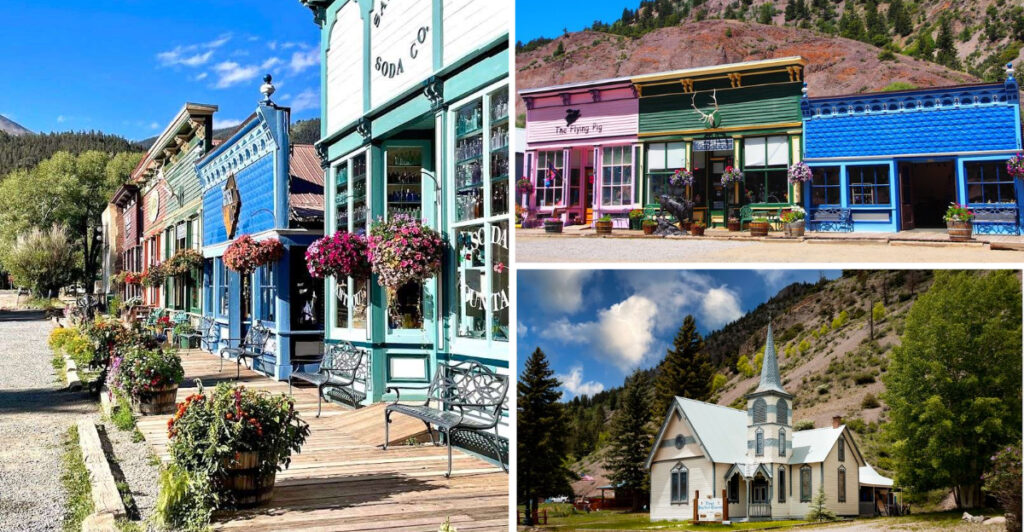
Late summer brings out a different side of Colorado, and few places showcase it better than Lake City. Surrounded by the towering San Juan Mountains, this historic alpine town pairs colorful wildflower meadows, Victorian-era storefronts, sparkling mountain streams, and spectacular hiking trails with a pace that invites you to slow down.
August is an especially rewarding time to visit, when clear skies, comfortable temperatures, and vibrant scenery make every walk, scenic drive, and outdoor café feel picture-perfect. It’s the kind of destination that reminds you some of Colorado’s most memorable mountain towns are still wonderfully unhurried.
Silver Street Under August Light
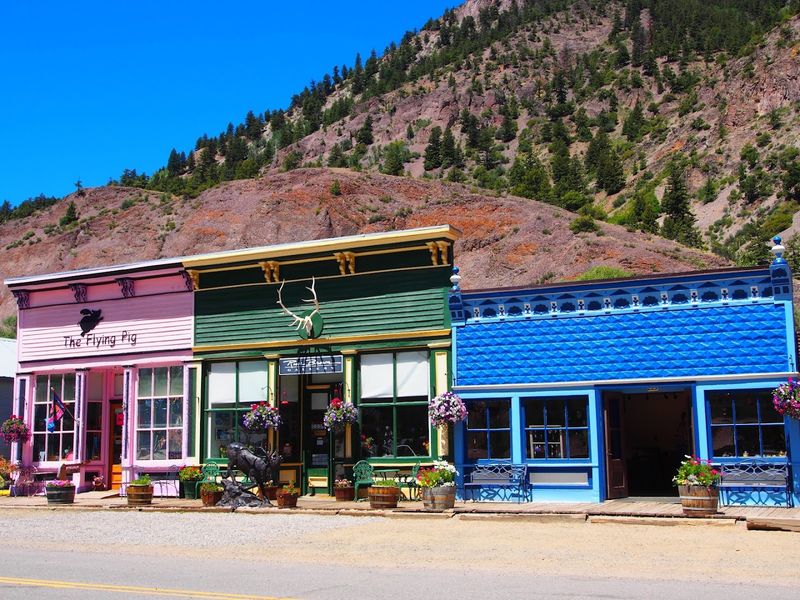
Lake City grabs attention in a very specific way: not with size, noise, or spectacle, but with perfect visual proportion. The main street sits low and orderly, framed by mountains that rise so abruptly behind town they almost look staged for a movie set.
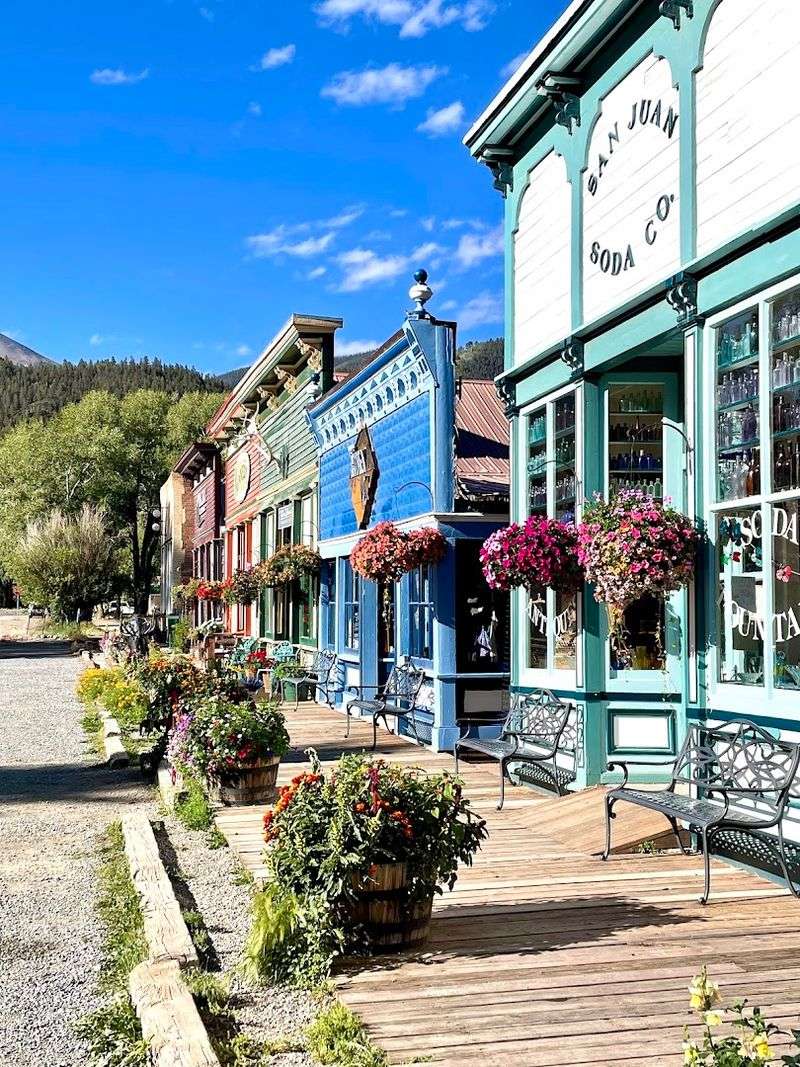
In August, the light sharpens every edge, pulling the wood facades, porches, hanging baskets, and painted trim into one compact, camera-ready block.
Silver Street is where that postcard effect comes together. Historic buildings line the road with a straightforward western rhythm, while side streets open glimpses toward slopes that still hold streaks of green, gray, and late summer color.
Nothing here needs theatrical styling because the contrast is already built in: broad valley floor, modest town scale, oversized alpine backdrop.
That visual balance changes how you move through the place. You are not hurrying from one attraction to the next, because nearly every direction offers a frame worth pausing for, whether it is a church steeple, a weathered sign, or a row of pickup trucks parked beneath huge mountain walls.
Even practical errands look scenic here. August helps by softening the harsher edge of high country weather without flattening the landscape.
Days are bright, mornings stay crisp, and afternoon clouds can roll in just enough to add depth instead of drama. The season makes the town look settled and alive at the same time.
That is the first surprise Lake City delivers. It is not trying to overwhelm you, yet it keeps arranging one carefully scaled mountain-town view after another, until the ordinary act of walking a few blocks starts resembling a stack of postcard fronts.
Where Water Meets the Town Grid
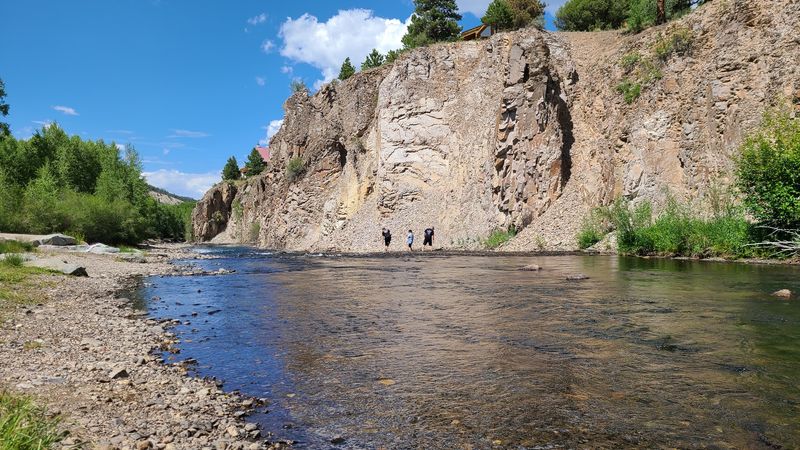
Step a little beyond the storefronts and Lake City starts showing one of its best structural advantages: water runs right through the experience of town.
The Lake Fork of the Gunnison River and nearby Henson Creek are not distant scenic accessories tucked behind development. They shape the sound, spacing, and coolness of the place in a way you notice almost immediately.
That matters most in August, when mountain towns can either feel dusty and sunbaked or freshly rinsed by moving water. Here, the creeks break up the grid with flashes of current, narrow bridges, grassy edges, and pockets of shade where the air drops a few degrees.
Even short walks gain a different tempo when the soundtrack shifts from traffic to water over rocks.
The effect is especially strong near the places where town and landscape overlap instead of separating cleanly. One moment you are looking at cabins, fences, and parked cars, and the next you are scanning ripples, cottonwoods, and open meadow edges beneath the same mountain skyline.
Lake City handles that transition better than many larger resort towns because it stays physically compact. Water also keeps the scenery from becoming too static.
Peaks and historic buildings can sit like fixed scenery, beautiful but still, while the creeks add motion and reflected light. In late summer, that movement brightens the whole valley floor.
If the mountains give Lake City scale, the water gives it pulse. It threads through daily life without fanfare, cooling the streetscape, sharpening the views, and quietly turning a simple town stroll into something more layered than a standard downtown wander.
Colorado Wildflowers on the Edge of Town
August is when Lake City starts earning that postcard comparison in full color. Hillsides and roadside edges around town pick up late summer wildflowers, and the surrounding basin turns from simply rugged to finely detailed.
Instead of one uniform green wall, the landscape breaks into patches of bloom, willow, rock, and open meadow that read differently every few minutes as the light shifts.
The beauty of it is how quickly you can reach those views from town. Lake City does not make you commit to an all-day expedition before the scenery opens up.
A short drive, a roadside stop, or an easy walk near the valley edges can put you in sightlines full of flowers with high ridges stacked behind them.
Because the town sits within a larger ring of public land and mountain roads, late summer color shows up in layers rather than one single display area.
You might notice bright clusters near a creek crossing, then broader meadows farther out, then tiny flowers tucked among stones at higher elevation. The variety keeps the experience from flattening into one repetitive scenic note.
Wildflowers also change the emotional temperature of the San Juan setting. Big peaks can feel austere, even forbidding, but August adds softness at ground level with purples, reds, yellows, and the loose texture of blooming roadside margins.
That contrast gives Lake City a more inviting face than raw mountain drama alone. Timing is everything here. Come too early and the season can still feel transitional; come too late and the valley starts leaning toward fall.
August lands in the middle, when the town still looks lively and green while the surrounding slopes carry those bright little details that make every overlook and pullout worth a second glance.
A Small Town with Mining Bones
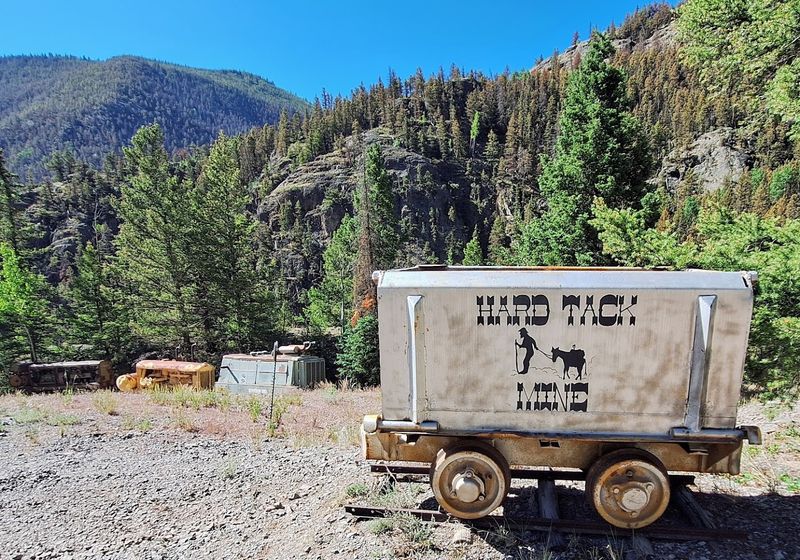
Lake City is not polished into a generic mountain resort, and that is one of its strongest qualities. The town still reads as a real county seat with working rhythms, historic bones, and a scale set long before tourism became the dominant design priority.
Its small population is part of the story, but the built environment tells even more. Historic structures remain central to the streetscape rather than pushed off as decorative leftovers.
Wood facades, simple commercial fronts, older homes, and public buildings create a place that looks shaped by utility first, then preserved because the original pattern still makes sense.
You can read the past in the proportions of the blocks, the width of the street, and the practical spacing between structures.
That background matters because it keeps Lake City from feeling manufactured. Many mountain towns sell nostalgia through carefully curated storefront districts that detach history from ordinary life.
Here, the historic character is tied to geography and isolation, to the fact that a high basin community had to organize itself around weather, access, and local needs.
The result is a town with texture instead of theme. Side streets do not suddenly stop being interesting once you leave the central strip, because old cabins, fences, utility lines, sheds, and mature trees continue the story outward.
Even modest details add to the sense that this is a place still living inside its own layout rather than performing for weekend traffic.
In August, that history becomes easier to see because the weather invites slow wandering. You are not ducking cold wind or racing afternoon storms.
You can look up at cornices, window trim, porches, and weathered boards, then lift your eyes again to peaks that explain exactly why a settlement here had to be sturdy, compact, and unpretentious.
The Scenic Drives That Start Right Here
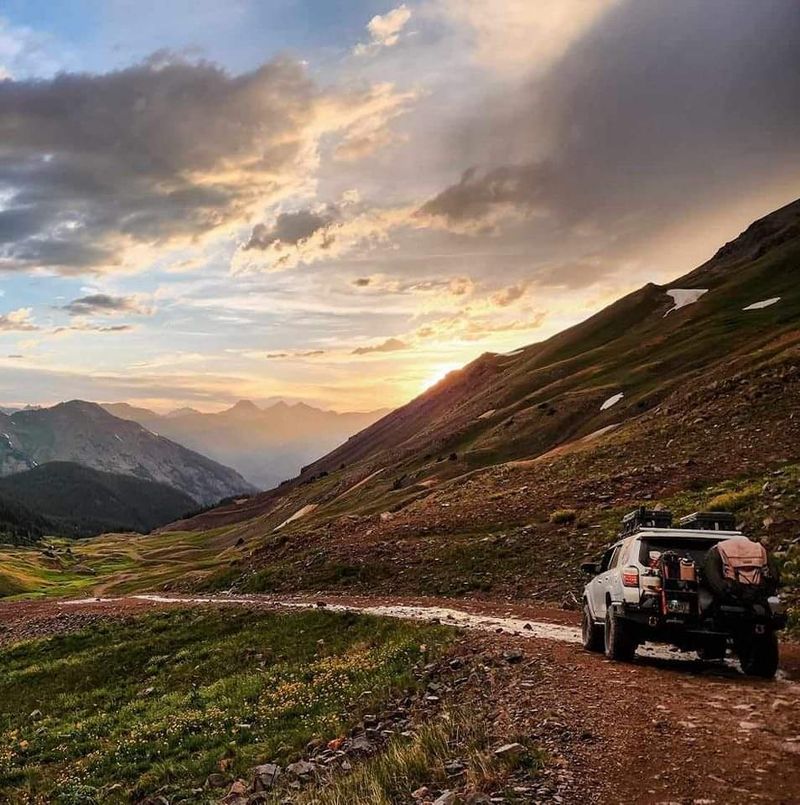
Some mountain towns are beautiful places to stay put. Lake City is beautiful that way too, but it has another advantage: the surrounding road network turns the town into a launch point rather than a scenic endpoint.
In practical terms, that means the postcard view keeps unfolding after breakfast instead of stopping at the edge of downtown.
The nearby mountain routes are a major part of Lake City’s identity, especially in late summer when access is generally easier and the high country is open for longer days of exploring.
Even if you are not chasing difficult four-wheel-drive terrain, the roads leading away from town quickly climb into bigger panoramas, wider valleys, and more dramatic angle changes on the surrounding peaks. Lake City sits at the threshold of that transition.
What makes these drives stand out is the pace of the reveal. You leave a neat historic core, pass water and meadow edges, then begin gaining elevation where old mining remnants, switchbacks, and broad overlooks start entering the frame.
The town never feels fully disconnected from the landscape because the route into the mountains is so immediate.
August is especially good for this because the scenery is still full, not yet muted by shoulder-season browns. Creeks are visible, meadows hold color, and cloud shadows can slide over huge sections of hillside while town sits quietly below. You are watching the basin widen in real time.
Even if the day plan is simple, Lake City rewards the instinct to keep driving a little farther. The town works as a base camp without losing its own character, and that balance is rare.
Too much road access can spoil a place; here, it expands the experience while keeping the center compact, grounded, and visually intact.
How to Catch Lake City at Its Best in August
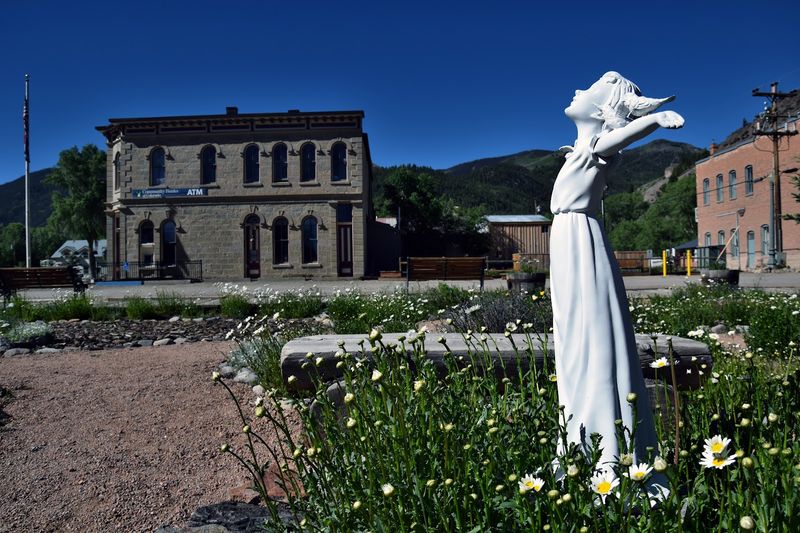
Timing changes everything in Lake City, and August rewards a little strategy. Midday brings clean mountain light and active streets, but the most photogenic windows usually arrive earlier and later, when shadows stretch across town and the surrounding slopes gain more depth.
If you want the place at its sharpest, treat the day like a slow arc rather than one long block of sightseeing. Mornings are excellent for walking the center while the air is still cool and the streets feel lightly held together by creek sound and soft sun.
Storefront details show up clearly, parked vehicles are fewer, and the mountains often look especially crisp before afternoon cloud buildup starts shifting the mood. It is the easiest time to notice how neatly the town sits in the valley.
Afternoons are better for wider exploring. This is when nearby drives, short scenic stops, and water-side breaks make sense, since the stronger light works well on open landscapes and the town itself can feel sleepier under the brightest sun.
A brief pause in shade near the creek can reset the pace without losing half the day. Evening is where Lake City becomes almost suspiciously picturesque. The sun lowers, building faces warm up, and the basin starts pulling long shadows down toward town.
August usually keeps that transition comfortable enough for lingering outside instead of retreating indoors as soon as the light changes.
There is also a practical benefit to visiting in this stretch of summer: the town is lively without needing the full machinery of a major resort destination. You get access to scenic roads, walkable streets, and favorable weather in one compact package.
Lake City does not ask for complicated planning, just decent timing and room in your schedule to slow down when the light gets good.
Why Lake City Stands Out in a Crowded Colorado Summer
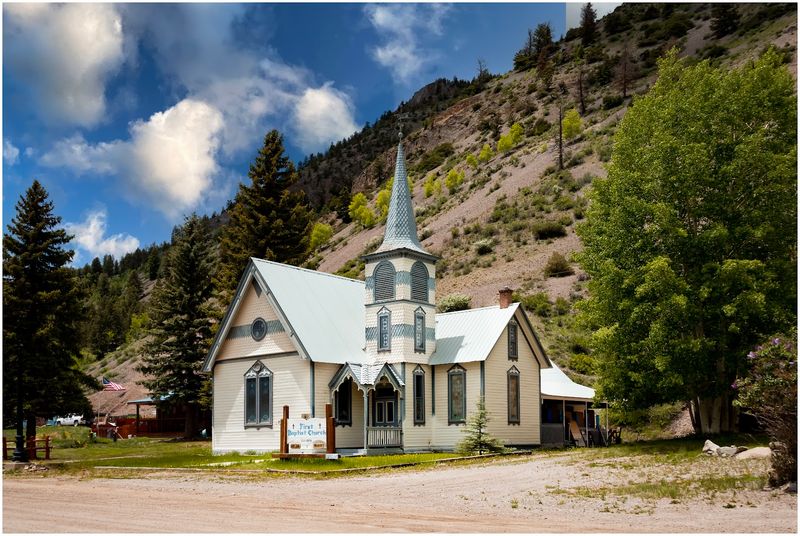
Colorado has no shortage of mountain towns, which makes it harder for any one place to hold your attention without leaning on hype. Lake City stands out by doing almost the opposite.
It stays small, keeps its historic center readable, and lets the surrounding San Juan landscape provide the drama instead of overbuilding around it.
That combination gives the town a different summer identity than busier destinations built around nonstop retail energy or major resort infrastructure. In August, Lake City feels active but not overprogrammed.
You can actually see the relationship between town, water, valley floor, and mountains without visual clutter getting in the way.
The scale is a huge part of the appeal. Because the community is compact, every walk carries a sense of orientation: peaks remain visible, creeks remain close, and the historic core remains central instead of dissolving into sprawl.
That makes the scenery easier to absorb and the town easier to understand in a single visit. Lake City also benefits from a kind of visual honesty. The roads, buildings, riverbanks, and mountain edges do not seem arranged to manufacture a reaction.
They simply fit together unusually well, especially in late summer when flowers, green slopes, and clean high-country light sharpen the entire setting.
If you are choosing one Colorado town for that distinctly August combination of beauty, breathing room, and memorable geography, Lake City makes a persuasive final case. It looks exceptional without trying too hard.
More importantly, it gives you the rare chance to enjoy a mountain basin that still reads as a real place first and a scenic destination second, which may be the most striking detail of all.