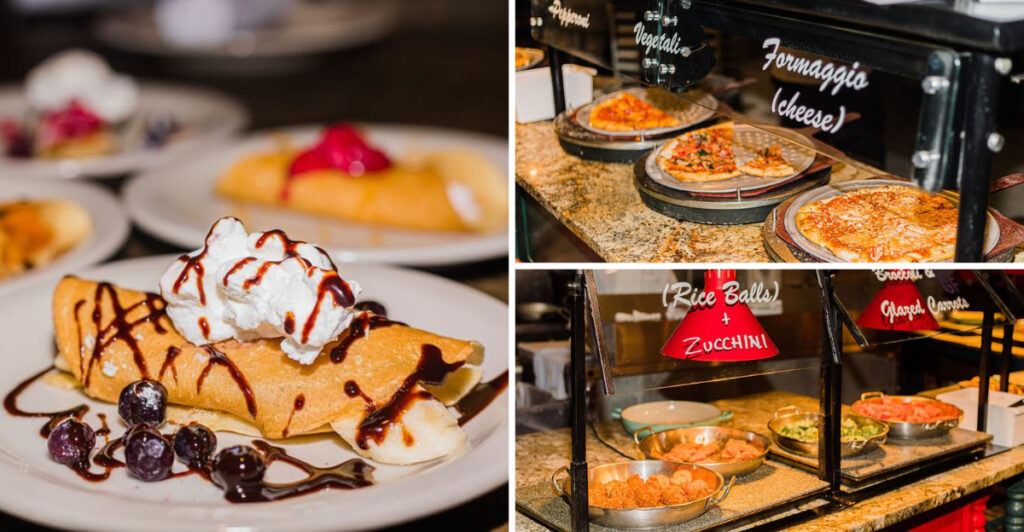
Walking into Cinzzetti’s feels less like entering a typical buffet and more like stepping into a lively Italian marketplace filled with the aromas of fresh pasta, wood-fired pizza, roasted meats, and warm bread. This longtime Northglenn favorite has earned a loyal following by serving an expansive all-you-can-eat selection prepared in exhibition-style kitchens, where guests can watch many dishes come together before heading back for another plate.
The energetic atmosphere makes it just as popular for family dinners as birthdays and celebrations. When variety matters as much as quality, Cinzzetti’s continues to stand out as one of Colorado’s favorite buffet destinations.
A Tuscan Detour Off 104th Avenue
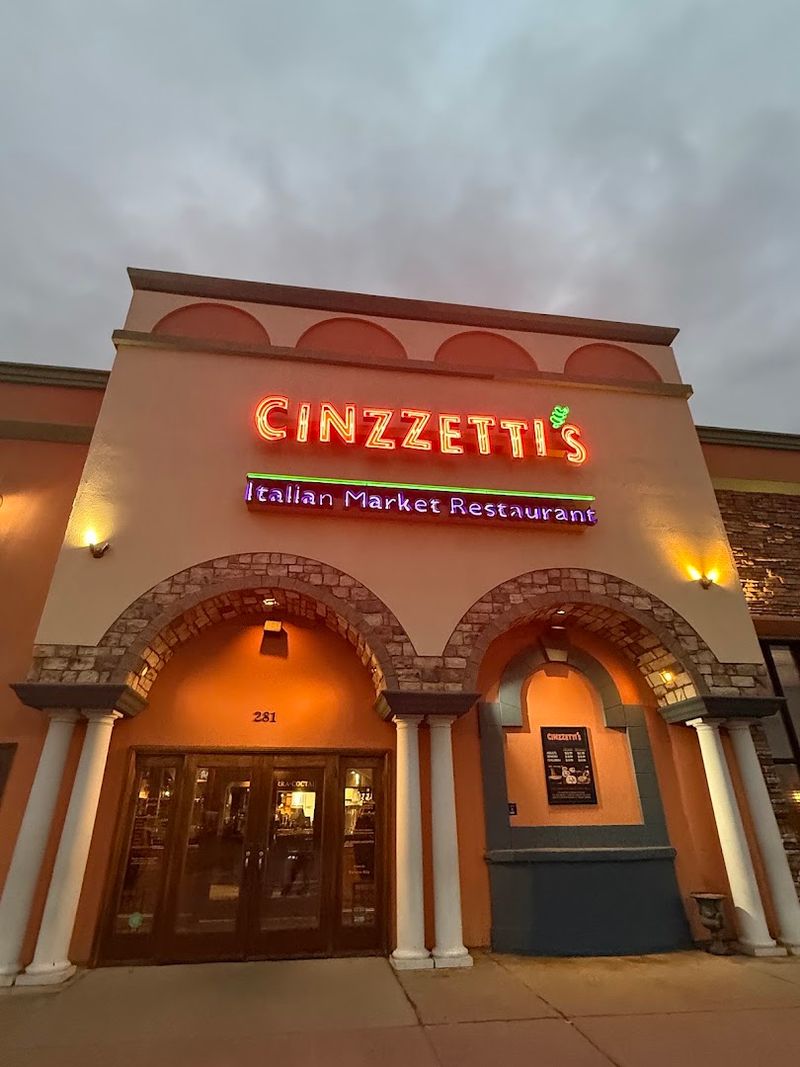
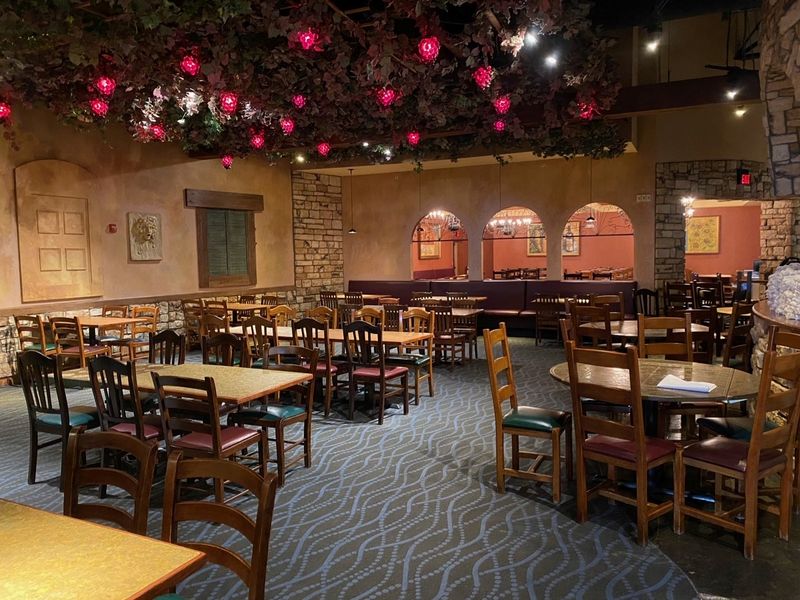
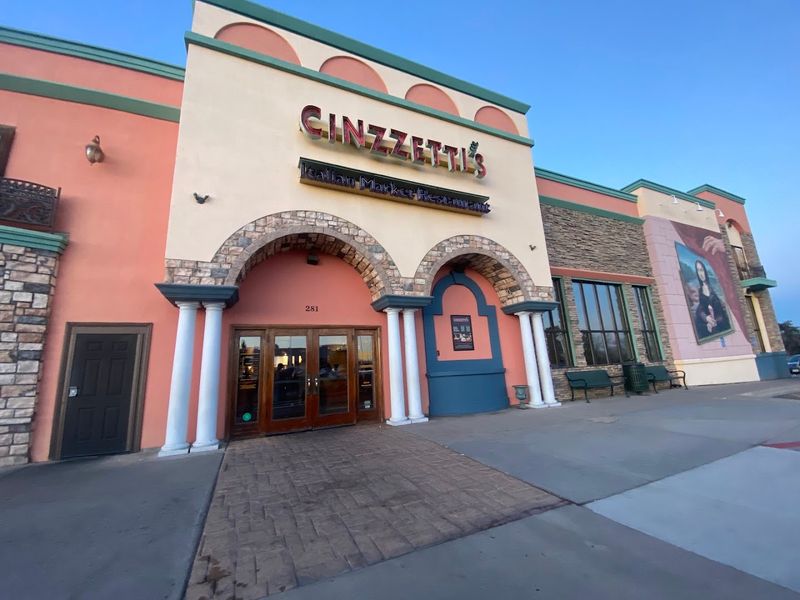
Seen from the commercial stretch along West 104th Avenue, Cinzzetti’s does not exactly announce itself as a transportive evening out. Then the doors open and the visual script changes fast: warm stucco tones, decorative greenery, arched openings, and a dining room arranged more like a small indoor streetscape than a basic buffet hall.
Instead of stainless steel cafeteria lines dominating the room, the layout breaks into stations, which immediately changes how you move through the meal.
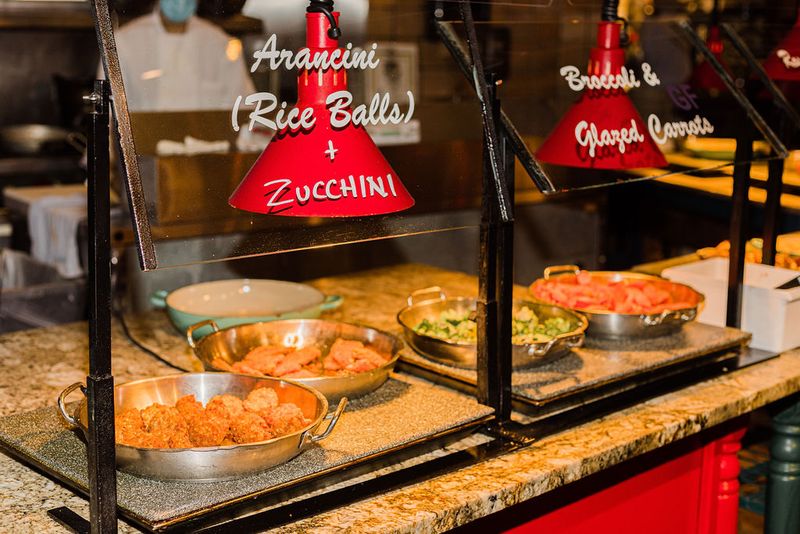
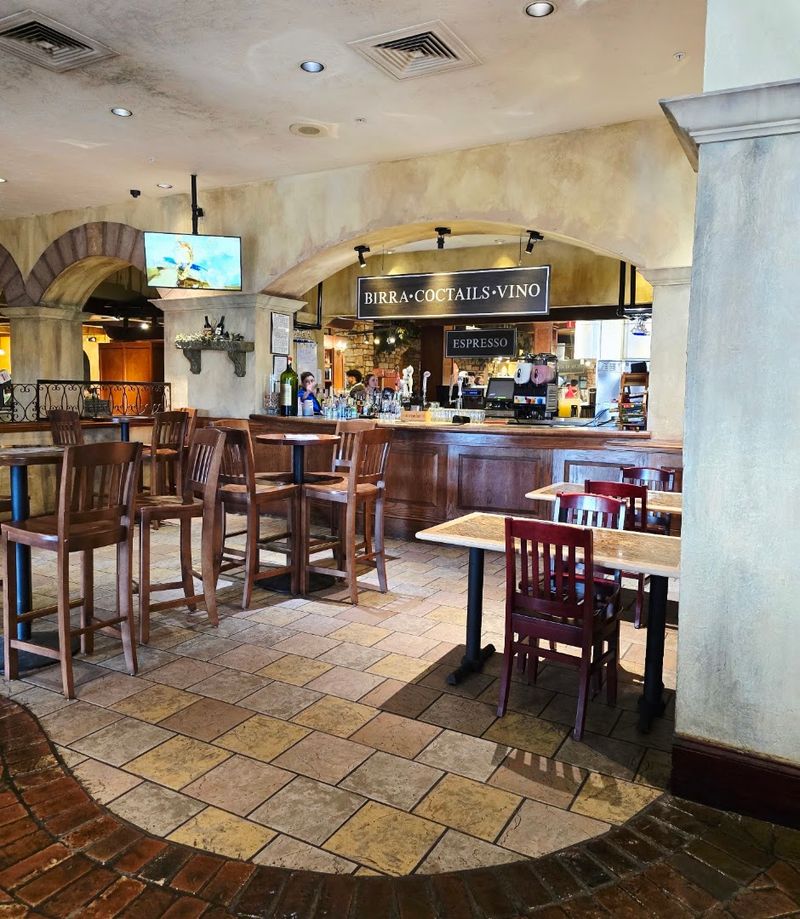
That design choice matters because it keeps the experience from turning into one long queue with heat lamps. You circulate, pivot, double back, and notice new corners as you go, whether that means a pasta area, pizza station, dessert counter, or a bar tucked into the broader scene.
The room has enough visual detail to feel animated without demanding formal behavior, so large families, date nights, birthdays, and casual weekday dinners can all fit under the same roof.
Northglenn is not short on convenient places to eat, but convenience alone does not build a destination restaurant with nearly nine thousand Google reviews.
Cinzzetti’s works on a different wavelength by pairing an accessible all-you-can-eat setup with a setting that aims for a rustic Italian mood rather than bare utility. That contrast explains a lot about its staying power.
You are not walking into a stripped-down bargain room built only around volume. You are stepping into a place that uses decor, layout, and movement to make abundance feel more like an event.
Even before the first plate is filled, the restaurant has already told you this meal is supposed to be explored, not merely consumed.
The Real Hook Is Range, Not One Signature Plate
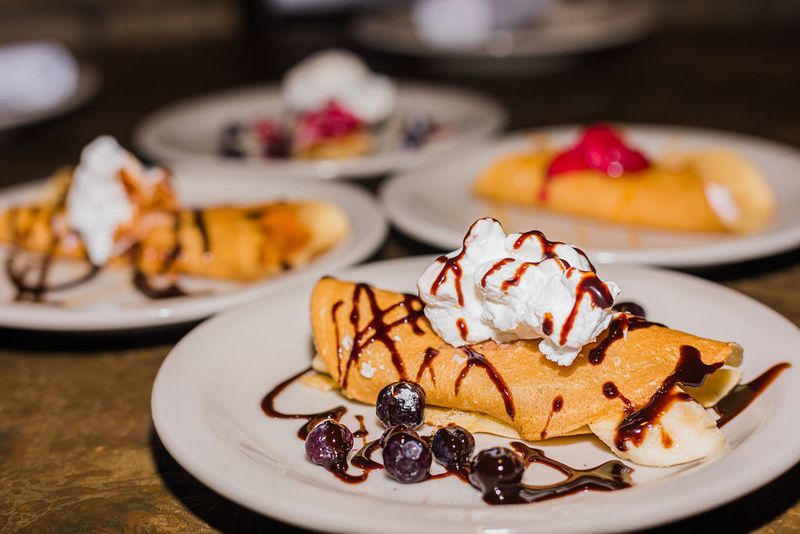
Some restaurants build their identity around one famous dish. Cinzzetti’s leans into a broader promise: the freedom to shape dinner according to whatever sounds good right now, then change course ten minutes later.
That matters more than it sounds, because an Italian buffet can easily drift into sameness if every tray lands in the same creamy-beige zone, yet the appeal here comes from moving between categories and textures.
Pasta is an obvious anchor, but it is not the whole story. Pizza, soups, salads, seafood options, vegetable sides, desserts, and brunch-specific favorites on weekend mornings widen the field, which makes the place especially useful for groups with wildly different appetites.
One person can head straight for chicken marsala and pasta, another can build a lighter plate, and someone else can save room for sweets and crepes without treating dessert as an afterthought.
The buffet format also creates a practical kind of confidence. Instead of committing to a single entree and hoping it lands, you can test a little, return for the best bites, and skip what does not call your name.
That flexibility softens the risk that comes with a large menu and explains why families and mixed-age groups tend to find common ground here faster than they would at a standard sit-down Italian restaurant.
Even the less glamorous strength of the concept matters: pace. You do not have to wait for one kitchen ticket to determine the whole table’s night.
You eat in waves, following your own appetite, which makes the meal feel generous in more ways than portion size alone. At Cinzzetti’s, abundance is the product, but choice is the reason it keeps working.
Where the Room Gets Busy and the Best Strategy Kicks In
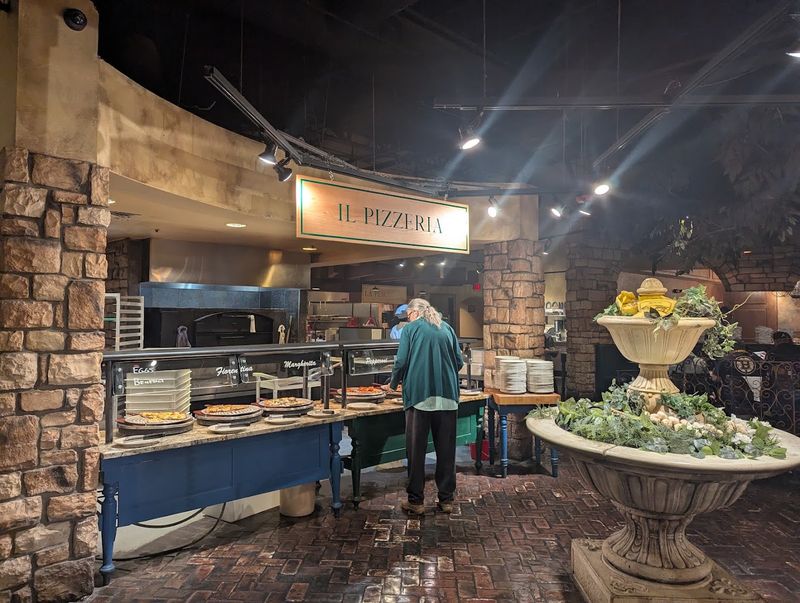
Cinzzetti’s is best understood as a moving room, not a static dining room. People are constantly getting up, drifting toward a different station, returning with a fresh plate, or pausing to scan what just came out.
That circulation creates energy, but it also means your experience improves when you treat the meal like a timed loop rather than a single mad dash.
The smartest approach is to start with a light reconnaissance lap. A quick walk helps you clock where the pizza is turning out, where the pasta options are concentrated, how the dessert area is arranged, and which station looks freshest in the moment.
Going in blind with a huge first plate can backfire, especially in a restaurant known for variety, because it is easy to fill up before reaching the sections that might suit you better.
Timing matters too. Weekends and celebrations are busier stretches, and the room can feel intense when several large parties hit the stations at once.
Reservations can be helpful for exactly that reason, not because the restaurant is overly formal, but because demand is real and the flow gets easier when your table is already secured.
There is also a useful buffet truth here: freshness can be dynamic. If something has just been replenished, that is the moment to try it; if a sauce seems to be settling or a line is packed shoulder to shoulder, circling back in a few minutes can pay off.
Cinzzetti’s rewards diners who read the rhythm of the room. Once you stop treating it like a one-pass feeding line and start using it like a choose-your-own-route dinner, the whole place makes much more sense.
Colorado Nights, Weekend Brunch, and When to Go
The schedule at Cinzzetti’s quietly shapes the whole personality of the place. On weekdays, dinner service runs in a tighter evening window, which gives the restaurant a targeted, after-work purpose rather than an all-day open-door sprawl.
By Friday, Saturday, and Sunday, the tempo broadens, and that is when the restaurant reveals its range as both a casual family destination and a celebration-friendly outing.
Saturday and Sunday are especially important because brunch enters the picture. That shift is more than a different clock setting.
It changes how people use the restaurant, bringing in groups looking for a leisurely late morning table, sweet breakfast-leaning options, and a meal that can stretch into a social event rather than a simple dinner stop. Sweet rolls and crepes get singled out often enough to suggest that weekend daytime service has its own loyal audience.
Evening visits offer a different reward. The interior lighting has more impact after dark, and the old-world decor reads more dramatically once the room settles into dinner mode.
If you are choosing between a daytime first visit and a night one, the answer depends on whether you want broad brunch variety or the fuller atmospheric effect of the dining room under warm light.
For Colorado locals, that split personality is part of the draw. A place that can absorb a birthday dinner on Monday, a family outing on Saturday afternoon, and a celebratory Sunday brunch becomes useful in a way trendier restaurants often are not.
Cinzzetti’s does not rely on one ideal time slot. It earns repeat visits by giving you distinct versions of the same restaurant across the week, each with its own pace, cravings, and crowd energy.
Not Fancy, But Surprisingly Event Ready
Buffet restaurants are often treated as backup plans for big groups, the kind of place chosen because it is easy rather than because it is desirable. Cinzzetti’s flips that assumption.
Its format is practical for crowds, but the room and service model push it beyond pure convenience, making it a place people actively choose for birthdays, visiting relatives, and multigenerational dinners where everyone needs something different.
The buffet itself handles one major stress point immediately: nobody has to negotiate a single menu lane. Adults can go hearty or light, kids can stay familiar, and the pickier diners are not cornered into one plated entree.
That flexibility lowers table tension fast, which is a bigger advantage than restaurants often admit when a party includes grandparents, teenagers, and friends with different appetites all at once.
Service plays an important role too. Even though guests collect their own food, the dining room still depends on attentive table maintenance, drink refills, plate clearing, and clear orientation for first-timers.
When that support is strong, the restaurant avoids the abandoned feeling that weaker buffet operations can create. Many guests appreciate the attentive table service staff who keep things moving without making the room feel rushed.
Then there is the celebratory factor. A full bar, a lively interior, and a broad dessert zone give the evening enough occasion energy that it can support more than a routine meal.
You do not need white tablecloth formality for a birthday to feel intentional. Cinzzetti’s succeeds by being easy to use while still offering enough visual flair and enough food range to make gathering there feel planned, not improvised.
That distinction helps explain why so many repeat visits happen in groups instead of strictly one-on-one dinners.
The Service Model That Keeps the Buffet From Feeling Cheap
The easiest way for a buffet to lose people is by acting as though self-service should replace hospitality. Cinzzetti’s appears to understand that those are two different things.
Yes, you get your own food, but the restaurant still depends on active table service to keep the meal comfortable, especially once plates begin to stack up and drinks start disappearing halfway through round two.
That sounds basic until you compare it with lower-effort buffet rooms where the burden quietly shifts onto the diner. Here, quick bussing matters because a buffet meal naturally creates more dish turnover than a standard entree dinner.
Clearing plates promptly keeps tables from becoming crowded landing zones for used cutlery and half-finished experiments, which in turn makes the room feel more orderly even when the stations are busy.
There is also a psychological difference when someone explains the setup well. First-timers benefit from a clear sense of how the space works, whether there are timing windows, where to begin, and how drinks and payment are handled.
That orientation reduces the awkwardness that can creep into large-format restaurants, particularly for diners who are unsure whether to wander, wait, or flag someone down.
Attentive table service helps distinguish the restaurant from many traditional buffets, and that detail matters because it helps separate the restaurant from the bargain-bin buffet stereotype. Good service cannot erase every fluctuation in food quality or crowd density, but it can make the entire evening run smoother and feel more considered.
At a place built around movement, support at the table becomes the anchor. You roam for the food, then return to a space that stays reset, refreshed, and ready for the next plate.
That steady rhythm is one reason the restaurant reads as a complete night out rather than a purely transactional meal.
Why Cinzzetti’s Still Holds Its Ground in Northglenn
Restaurants that survive on novelty usually fade once the surprise wears off. Cinzzetti’s has lasted by offering something more durable: a format that solves several dining problems at once while still giving the night a sense of occasion.
It is dinner for indecisive groups, a practical answer for celebrations, and a place where abundance is part of the entertainment rather than just the math.
Cinzzetti’s enduring appeal comes from the complete experience rather than any single dish. The combination of variety, lively surroundings, attentive service, and the freedom to sample dozens of Italian-inspired favorites keeps guests coming back year after year.
Few restaurants in the Denver area offer the same blend of abundance, atmosphere, and flexibility for groups of all sizes.
In the Northglenn and greater Denver-area dining landscape, there are plenty of Italian restaurants and plenty of buffets, but relatively few places combining those ideas at this scale with this kind of room design. That distinct niche matters.
Cinzzetti’s is not competing only on sauce quality or dessert alone. It is competing as an experience built for people who want choice, movement, and enough spectacle to justify gathering there on purpose.
So the loyalty makes sense. Not because the restaurant is polished in a fine-dining way, and not because it chases trends, but because it understands its role and delivers a version of it that remains unusually useful.
When locals head back to Cinzzetti’s, they are not simply returning for unlimited pasta. They are returning for a dinner format that accommodates real life, real group dynamics, and real appetites without draining the fun out of any of them.