A fluorescent rock glowing electric green inside a former zinc mine. A six-story elephant with a staircase hidden in her back leg.
A battleship where you can squeeze through passageways once crowded with sailors. New Jersey history gets much more interesting once you leave the laminated worksheets behind.
Across the state, old factories, battlefields, lighthouse towers, aircraft hangars, and wonderfully strange roadside landmarks turn the past into something you can climb, hear, touch, and occasionally duck your head to avoid. These are not places where you shuffle past glass cases while someone whispers dates at you.
They reward curiosity, whether that means walking through Thomas Edison’s machine shops, watching a blacksmith work in an early industrial village, or standing beside a waterfall that helped launch an American manufacturing city. Pack comfortable shoes and forget whatever happened on your fourth-grade bus trip.
These 12 historic New Jersey spots prove the state’s best history lessons happen outside the classroom.
1. Battleship New Jersey Museum & Memorial – Camden
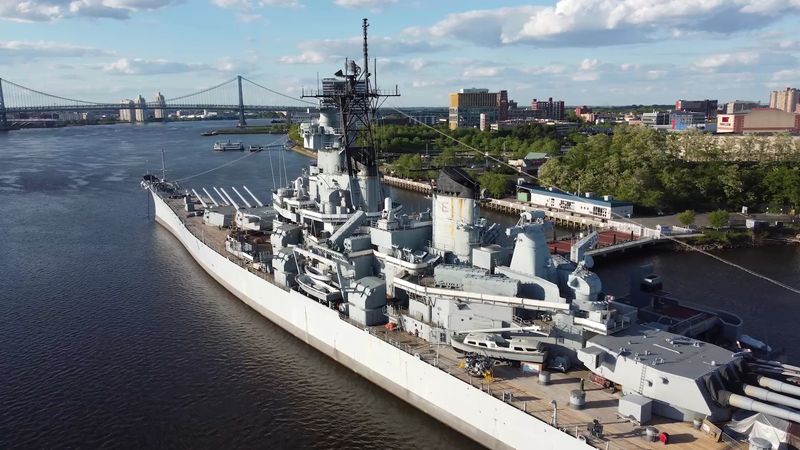
The first thing you notice is the scale. The gray hull stretches along the Camden waterfront like an entire city block decided to become a warship, and the enormous gun barrels overhead make every classroom diagram of naval history suddenly feel inadequate.
Once aboard the Battleship New Jersey, you can move through crew spaces, command areas, exhibits, and decks that help explain what daily life looked like for the sailors who served here.
The ship earned distinction across several eras, seeing service during World War II, the Korean War, the Vietnam War, the Cold War, and operations in the Middle East.
That long career gives the museum far more range than a single-period military display. One room may focus on crowded sleeping quarters and meals at sea, while another introduces the communications systems, weapons, and increasingly sophisticated technology required to operate the vessel.
What makes the experience work is its physicality. You are not staring at a scale model; you are inside the real thing, surrounded by pipes, steel doors, machinery, and passageways designed for function rather than visitor convenience.
Wear practical shoes and expect plenty of walking. Specialty tours and overnight programs are offered in addition to regular visits, so serious naval-history fans can go deeper than the standard route.
The Philadelphia skyline across the Delaware River provides a fitting final view from one of New Jersey’s most imposing museums.
2. Sterling Hill Mining Museum – Ogdensburg
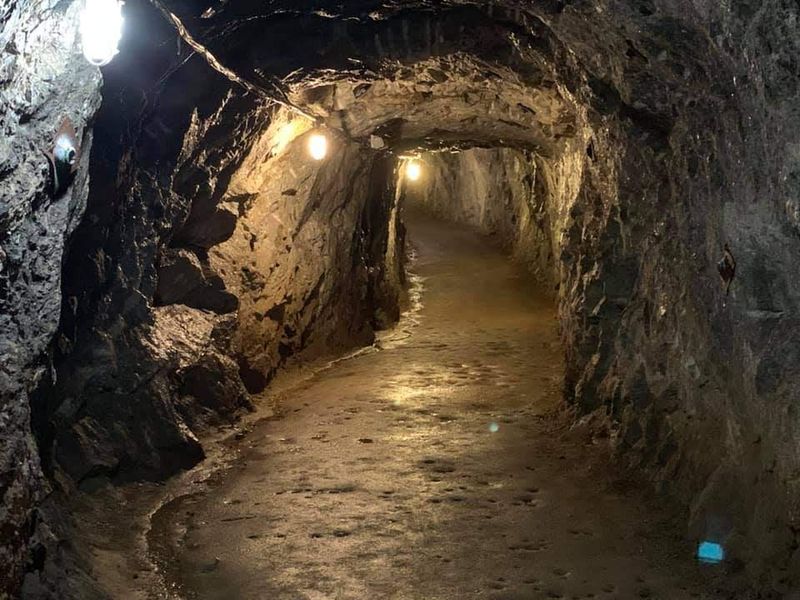
A few steps underground, the summer heat disappears and the walls begin telling a story that no textbook mineral chart can match.
Sterling Hill was once part of one of the world’s richest zinc deposits, and its tunnels now form the center of a museum that blends industrial history, geology, science, and just enough darkness to make the tour feel like an expedition.
Guides lead visitors through roughly 1,300 feet of mine passageways, stopping at former work areas, equipment displays, shaft stations, and galleries that date back to the 1830s.
The explanations are grounded in the realities of mining: how workers navigated the tunnels, what tools they used, what conditions they faced, and why extracting ore from this corner of Sussex County mattered far beyond Ogdensburg.
Then there are the fluorescent minerals. Under ultraviolet light, otherwise ordinary-looking rocks burst into intense shades of orange, green, red, and blue.
The Warren Museum of Fluorescence is the kind of place that can turn someone who has never cared about geology into a person comparing mineral specimens in the gift shop twenty minutes later. Tours operate at scheduled times, and the underground portion is a walking experience rather than a train ride.
Closed-toe shoes and a light jacket are sensible even on a warm day. Leave additional time for mineral collecting or sluicing when available; finding something yourself is considerably more satisfying than buying a polished rock on the way out.
3. Thomas Edison National Historical Park – West Orange
Rows of dark brick buildings in West Orange hide rooms where recorded music, motion pictures, batteries, and countless other ideas were tested, improved, rejected, and tested again. Thomas Edison’s laboratory complex does not present invention as a single dramatic flash of inspiration.
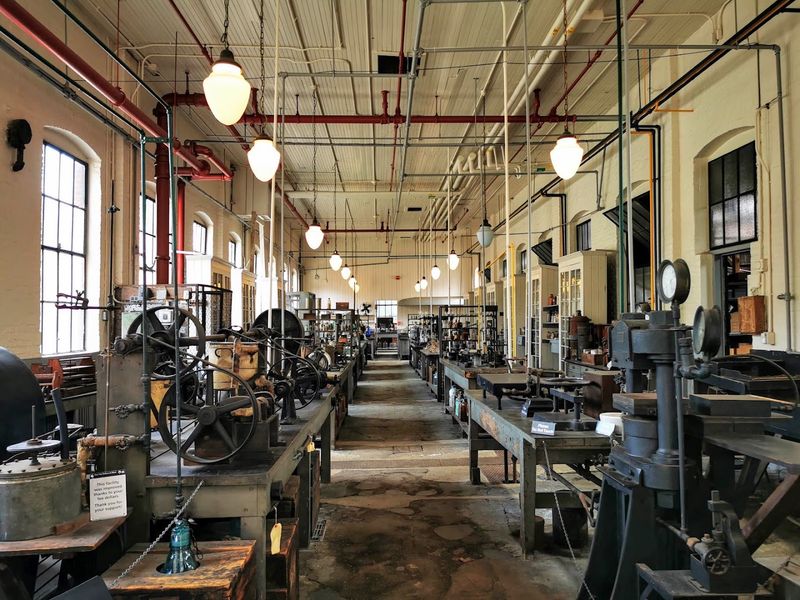
It shows the cluttered, mechanical, trial-and-error business of turning an idea into something that could change everyday life. The Main Laboratory Building is the essential stop.
Its machine shops, library, music room, workspaces, and original equipment make it feel as though the employees have only stepped out for lunch. Belts, pulleys, tools, cabinets, and experimental materials fill the rooms, creating a fascinating contrast with today’s clean, screen-filled image of a technology workplace.
The chemistry laboratory may also be accessible when staffing permits. Visitors can enter a full-scale replica of the Black Maria, Edison’s unusual early film studio, and see how the building was designed to capture sunlight for motion-picture experiments.
The park also includes Glenmont, the Edison family estate, though access and tours can have separate procedures and limited availability. Begin at the laboratory visitor center, where staff can explain what is open that day and how to obtain access to Glenmont’s grounds or tours.
The park runs on a limited weekly and seasonal schedule, including a winter closure, so this is one trip that benefits from checking the calendar first. Give the laboratory complex time to unfold; its best details are often tucked inside drawers, corners, and crowded worktables.
4. Paterson Great Falls National Historical Park – Paterson
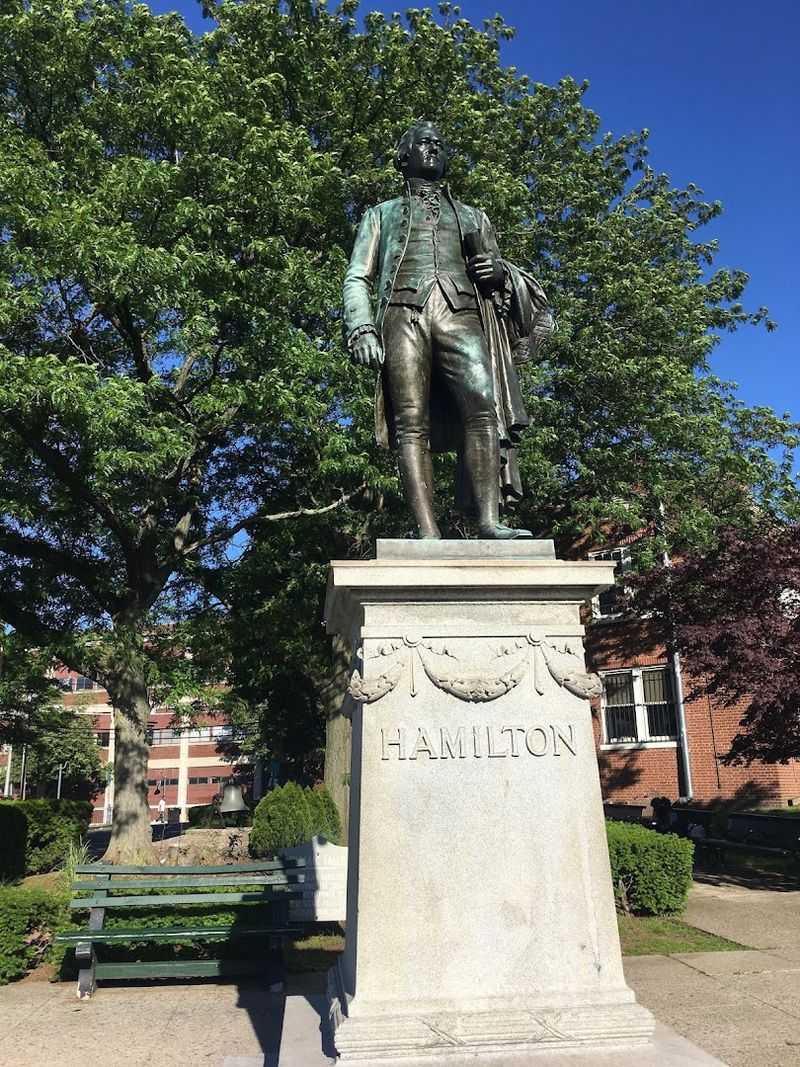
You hear the water before you fully see it. Then the Passaic River drops through a rugged basalt gorge, sending up mist beside brick mills, old raceways, bridges, and the remains of an industrial landscape unlike anything else in New Jersey.
The Great Falls would be impressive on scenery alone, but the story surrounding them turns this Paterson landmark into something much bigger. In 1792, Paterson was established as America’s first planned industrial city, centered on the idea that the river’s power could drive manufacturing.
Silk, locomotives, firearms, paper, textiles, and aircraft engines were among the products eventually made here. Walking around the park reveals how closely the natural and built environments were connected: water moved through carefully engineered channels while factories crowded the riverbanks nearby.
Start at the main overlooks, where changing water levels can make the falls look either elegantly forceful or completely thunderous. From there, follow the park’s self-guided walking route through the historic district.
The surrounding Mill Mile adds old factory buildings, public art, monuments, and views that help explain why Alexander Hamilton saw this location as crucial to his vision of American economic independence.
The park itself is free, and a visit can be as quick as a dramatic overlook stop or as long as an afternoon exploring downtown Paterson.
Certain paths and facilities may close in winter or during poor conditions, so check access before heading out. Bring a camera, but do not rush away after getting the obvious waterfall shot; the industrial details are half the point.
5. Old Barracks Museum – Trenton
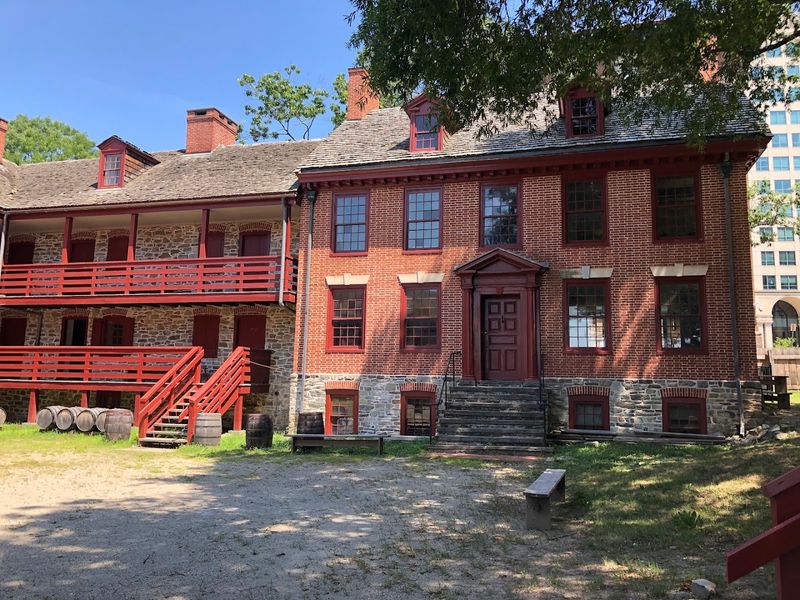
Colonial history gets considerably more immediate when a uniformed interpreter is standing inside a room built to house soldiers in 1758.
The Old Barracks Museum survives in the middle of Trenton, surrounded by modern streets and government buildings, yet its stone walls remain closely connected to the French and Indian War, the American Revolution, and the city’s most consequential military moments.
Originally constructed as quarters for British troops during the French and Indian War, the building later served several purposes for both British and American forces during the Revolution. It stood near the action during the Battle of Trenton and was also used as a military hospital.
Today, it is New Jersey’s only surviving colonial barracks and one of the clearest places to understand what eighteenth-century military life demanded from ordinary soldiers. The museum combines guided interpretation, living-history presentations, a short film, artifacts, and galleries exploring the people who passed through the building.
Weapons and uniforms attract immediate attention, but the strongest stories often concern food, disease, sleeping arrangements, medical treatment, and the civilians whose lives were disrupted by armies moving through town. Because the building is in central Trenton, it fits neatly into a wider history day.
The New Jersey State House, New Jersey State Museum, and Trenton Battle Monument are all nearby. Check the museum’s schedule before visiting, particularly around holidays and special reenactment events.
Those programs can be crowded, but they also add marching, demonstrations, and musket smoke to a place already rich in character.
6. Historic Cold Spring Village – Cape May
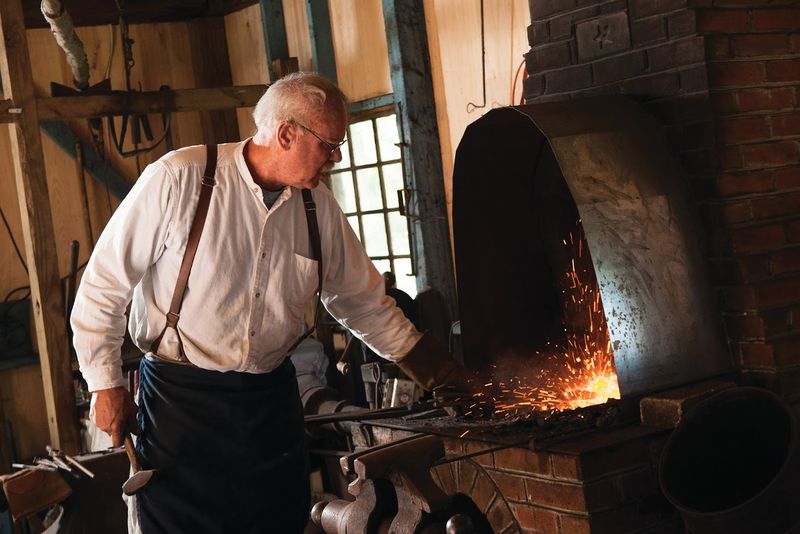
Blacksmith hammers, spinning wheels, wood smoke, and the smell of old timber replace boardwalk noise at this open-air village just outside Cape May.
Historic Cold Spring Village focuses on everyday South Jersey life during the age of homespun, when households, farms, and small workshops depended on skills most modern visitors have only encountered as hobbies.
Restored historic buildings are arranged along shaded lanes, creating a setting you can explore at your own pace rather than a museum with one fixed route.
Costumed interpreters demonstrate traditional trades and domestic work, which may include blacksmithing, woodworking, printing, weaving, basket making, or cooking depending on the day.
The demonstrations give the visit its personality. A working craftsperson explaining why a tool is shaped a certain way can make the nineteenth century feel far more approachable than a room full of labels.
The village also pays attention to agriculture, family routines, commerce, and the small details required to keep a community functioning before electricity and modern transportation. Children have room to move, ask questions, and watch sparks fly without being constantly reminded to whisper.
Historic Cold Spring Village is primarily a seasonal attraction, with special events extending beyond its regular summer schedule. Festival weekends, military encampments, holiday programs, and themed demonstrations can significantly change the experience, so look at the calendar when planning.
It is close enough to Cape May and the Wildwoods to provide a refreshing change of pace during a Shore trip, especially when everyone needs a few hours away from sand, arcades, and parking meters.
7. Naval Air Station Wildwood Aviation Museum – Lower Township

The hangar is part of the exhibit. Before examining a single aircraft, you are already standing inside a massive World War II structure built when Naval Air Station Wildwood trained aviators for combat.
The cavernous space, exposed framework, concrete floor, and rows of machinery make the museum feel more like an active flight facility than a polished gallery. Aircraft, helicopters, engines, vehicles, military equipment, and personal artifacts fill Hangar No. 1 at Cape May Airport.
Visitors can get close enough to appreciate the rivets, cockpit dimensions, landing gear, and mechanical complexity that disappear when an aircraft is seen high overhead. Interactive exhibits and climb-in displays, when available, keep the experience from becoming a slow march past machines with identification cards.
The museum also tells the story of the people connected to the station. Pilots trained here during World War II, when the surrounding airfield was used to prepare dive-bomber squadrons for deployment.
Photographs, uniforms, equipment, and oral histories bring attention back to the young service members behind the aircraft. Unlike many Shore attractions, the aviation museum operates year-round, making it a reliable rainy-day or off-season stop.
The hangar can feel cool even when the weather outside is warm, so bringing an extra layer is not a bad idea. It is located at Cape May Airport in Lower Township rather than on the Wildwood boardwalk, and free parking makes the logistics refreshingly simple.
Allow enough time to wander; the building is much larger inside than it first appears.
8. Twin Lights Historic Site – Highlands
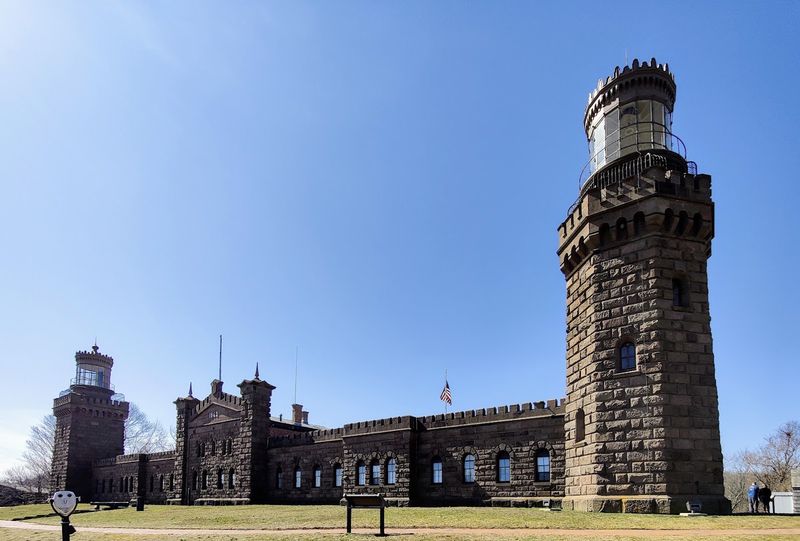
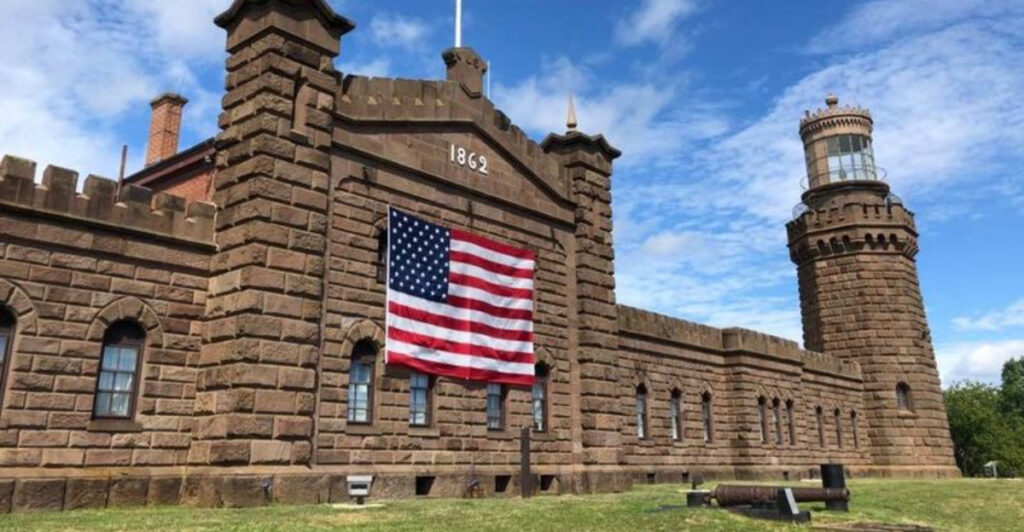
Two mismatched brownstone towers rise above the Highlands like a miniature fortress guarding the entrance to New York Harbor. Twin Lights does not resemble the classic white lighthouse of coastal postcards, and that architectural oddness is part of its appeal.
The station combines maritime history, technological innovation, and one of the broadest views along the northern Jersey Shore. The Navesink Light Station played an important role in guiding vessels toward the harbor, and it became the first American lighthouse equipped with a Fresnel lens.
The revolutionary lens design concentrated light far more efficiently than earlier systems, transforming navigation along dangerous coastlines. One of the historic lenses remains a highlight of the museum, where exhibits also cover lighthouse keepers, shipping, communications, and the station’s place in commercial history.
Twin Lights later became connected with early military radar experiments, giving the site an unexpected second chapter in technological history. That mixture of lighthouse machinery and twentieth-century innovation makes the museum more varied than its compact size suggests.
Tower access is the reward for anyone willing to handle the stairs. From the top and surrounding grounds, you can look across Sandy Hook, the Atlantic Ocean, Raritan Bay, and toward the New York City skyline.
Clear days are obviously best, though blustery weather gives the headland a suitably dramatic edge. Admission policies and tower availability can vary, so confirm the day’s schedule before driving up.
Parking is available on site, but the steep Highlands roads provide a memorable approach long before you reach the entrance.
9. Historic Village at Allaire – Farmingdale
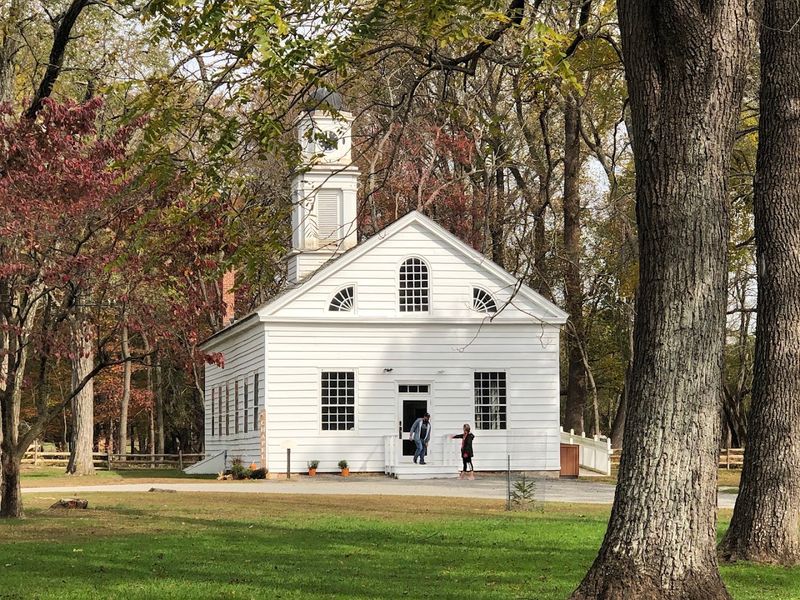
Most company towns vanished or were absorbed into modern development. At Allaire, the houses, workshops, store, chapel, and industrial buildings still sit together, making it possible to walk through the social structure of an early nineteenth-century iron-producing community.
The village represents the Howell Iron Works as it appeared around 1836. James P.
Allaire developed the site into a largely self-contained community where workers and their families lived close to the furnaces and shops that supported the business. Rather than isolating a mansion or factory, the museum shows how an entire town functioned around one industry.
Costumed interpreters occupy historic homes and workspaces, explaining trades, household routines, education, religion, and the sharp differences between the lives of owners, managers, skilled craftspeople, and laborers. The blacksmith shop is usually a natural crowd magnet, but the quieter interiors can be equally revealing.
A store stocked with period goods or a small worker’s home often says more about daily life than the grandest building in the village. Allaire sits within Allaire State Park, so it is easy to combine history with a picnic, short walk, or ride on the neighboring Pine Creek Railroad when it is operating.
Regular village access and special-event admission may work differently, particularly during festivals, flea markets, reenactments, and holiday programs. Check the event schedule before visiting; an ordinary interpretation day offers more time for conversation, while a major weekend brings extra demonstrations, vendors, and activity.
10. Lucy the Elephant – Margate City
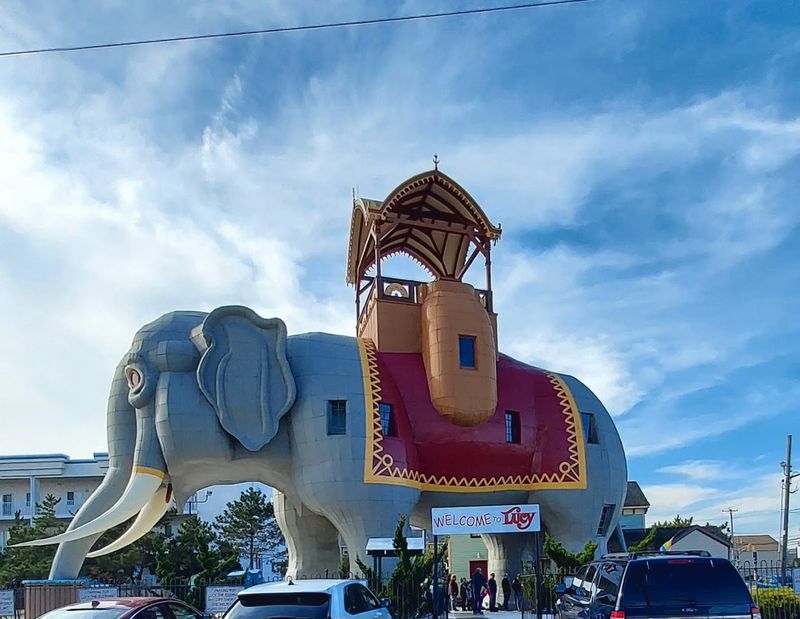
There is no dignified way to walk into a giant elephant through her back leg, which is precisely why Lucy remains one of New Jersey’s most enjoyable historic landmarks.
Standing six stories tall near the Margate beach, this wood-and-tin architectural oddity is whimsical, slightly absurd, and older than many far more serious-looking monuments.
Engineer and real estate promoter James Lafferty created Lucy in the nineteenth century to attract attention to land sales along the developing Shore. The strategy was certainly memorable.
Over the years, the elephant-shaped building served several purposes and narrowly escaped demolition before preservationists saved and moved her to the current location. Guided tours enter through one leg, climb through the interior, and explain how the unusual structure was built and restored.
Small windows offer glimpses through Lucy’s eyes, while the upper observation area provides views over Margate, the beach, and the Atlantic City skyline.
The inside is tighter and stranger than the exterior suggests, filled with visible wooden framing and the satisfying realization that you are standing inside an enormous National Historic Landmark shaped like an animal.
There is no charge to visit the grounds or browse the gift shop, though admission is required for the guided interior tour. Parking near the beach can become competitive during summer, so mornings and shoulder-season visits are easier.
The tour does involve stairs and confined spaces, but even visitors who stay outside can appreciate the sheer nerve required to build a 90-ton elephant beside the ocean and expect people to take it seriously.
11. Red Mill Museum Village – Clinton
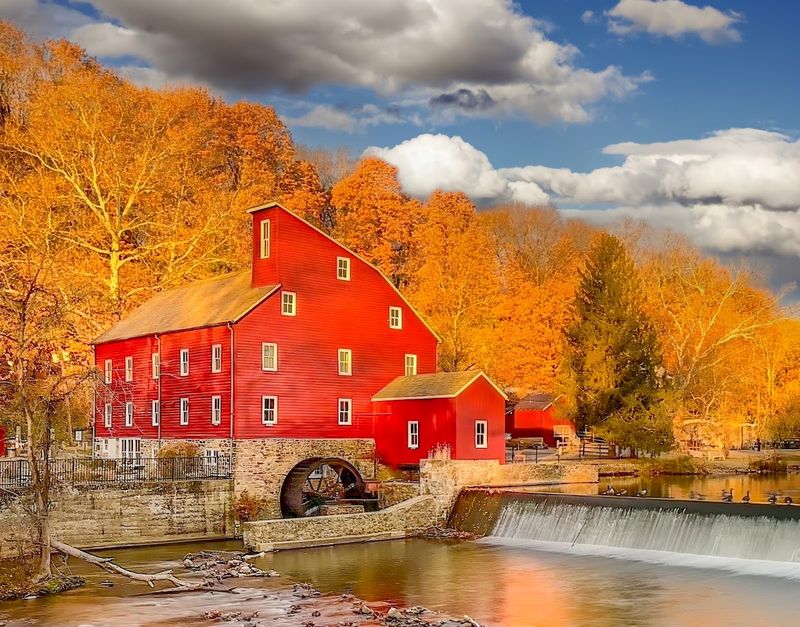
Clinton’s postcard view is only the beginning. The bright red mill reflected in the South Branch of the Raritan River may be one of New Jersey’s most photographed scenes, but crossing the bridge and entering the museum grounds reveals a much broader story of industry, quarrying, agriculture, education, and small-town work.
The main building dates to 1810 and changed purposes repeatedly. Over its long industrial life, it was connected with processing wool, grain, plaster, graphite, and other materials.
That restless history makes the mill especially interesting because it was never frozen in one tidy role. Each new owner and business adapted the building to a different economic need.
The surrounding 10-acre village adds quarry structures, a schoolhouse, log cabin, wagon shed, agricultural buildings, and a working blacksmith shop. Together, they shift the focus from one photogenic landmark to the people who worked in Hunterdon County’s mills, limestone operations, workshops, farms, and classrooms.
Machinery and tools are balanced by household objects and personal stories, giving the museum enough variety for visitors who are not naturally drawn to industrial history. Red Mill operates throughout much of the year, but its calendar changes considerably with seasonal events.
Craft fairs, festivals, historical programs, the popular Haunted Red Mill, and winter displays can temporarily alter regular tours or admission. Plan around those events depending on whether you prefer a quieter museum visit or a busier festival atmosphere.
Afterward, walk across the river into downtown Clinton for coffee, lunch, and another look at the mill from its classic viewing angle.
12. Princeton Battlefield State Park – Princeton
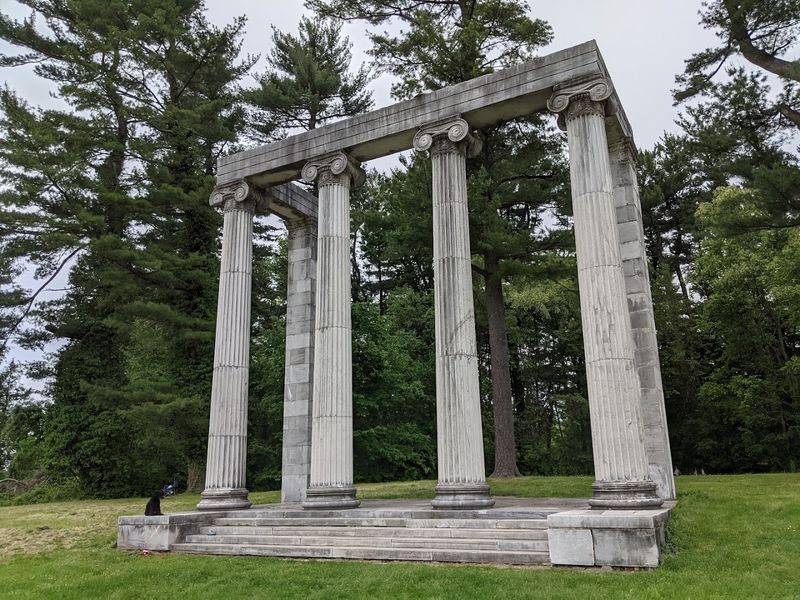
An open field can be surprisingly dramatic once you understand how quickly events unfolded there. On January 3, 1777, American and British forces collided outside Princeton in a fierce battle that capped ten extraordinary days beginning with George Washington’s crossing of the Delaware.
The American victory helped reverse the despair surrounding the Revolution and proved Washington’s army could do more than simply survive. The battlefield remains largely open, allowing visitors to walk the terrain rather than view it from behind a barrier.
Monuments and markers identify significant locations, but the Thomas Clarke House gives the human cost of the fighting a physical center. General Hugh Mercer was mortally wounded nearby and carried into the house, where he died nine days later.
The restored farmhouse now contains exhibits and hosts occasional demonstrations, tours, and educational programs. Other features include the Ionic Colonnade, the Mercer Oak memorial, and a stone marker identifying the approximate burial place of American and British soldiers killed in the battle.
None is flashy, yet together they help reconstruct the movement and aftermath of a confrontation that lasted only a few hours. The park grounds are free and generally open from sunrise to sunset.
House hours and interpretive programs are more limited, so consult the schedule when the interior is important to your visit. Wear walking shoes and bring a battlefield map or join a guided program when possible.
Without context, it is a pleasant Princeton meadow. With the story in mind, every slope, tree line, and stone wall begins to matter.