
A wooden walkway rises above a Vernon marsh, turns through shoulder-high reeds, and keeps going until the road noise disappears.
Elsewhere, a stone arch opens into a garden that resembles an abandoned country estate, and a narrow South Jersey road runs so far into the salt marsh that the mainland begins to feel theoretical.
None of these places is truly unknown. They appear on maps, maintain parking lots, and occasionally attract weekend crowds.
Yet each has a way of making visitors feel as though they slipped through an overlooked gate. Some hide behind ordinary suburban roads.
Others are spacious enough to absorb everyone who arrives. A few simply contain so many winding paths, old buildings, wooded corners, and unexpected views that solitude never seems far away.
From rock gardens and mining tunnels to cranberry bogs and sculpture-filled forests, these New Jersey destinations prove that a place does not have to be undiscovered to deliver the delicious feeling that it belongs only to you.
1. Leonard J. Buck Garden — Far Hills
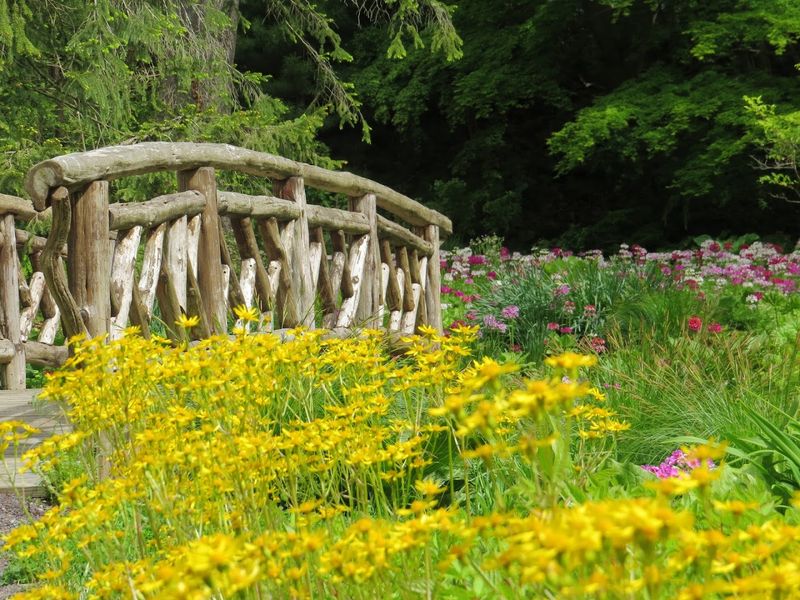
Stone stairways descend into a wooded valley where miniature alpine plants grow from cracks, ferns soften enormous boulders, and narrow paths vanish around rocky corners. That landscape gives Leonard J.
Buck Garden its wonderfully improbable quality. It feels less like a carefully constructed public garden than a naturally occurring hideaway somebody happened to discover in Far Hills.
The illusion was intentional. Beginning in the late 1930s, Leonard Buck and landscape architect Zenon Schreiber shaped the property around existing rock outcroppings, using differences in sunlight, moisture, and elevation to create distinct planting environments.
Today, the 33-acre garden unfolds as a sequence of intimate scenes rather than one sweeping display. Spring brings tiny woodland flowers, azaleas, rhododendrons, and alpine blooms, but the mossy rocks, stream valley, and mature trees keep the walk interesting well beyond peak season.
Follow the paths slowly; the smallest plants are often the ones worth crouching down to inspect. A visitor center and expanded parking make the logistics easy, though the garden still feels remarkably removed from everything around it.
Pets are not permitted, which helps preserve the quiet. The best approach is to arrive without a rigid route and allow every bridge, stairway, and fork in the trail to make the next decision.
2. Bamboo Brook Outdoor Education Center — Chester Township
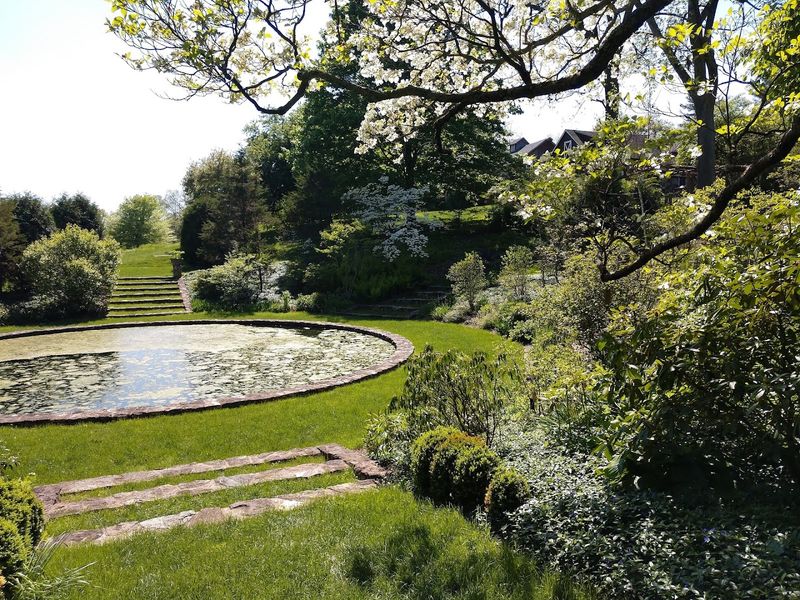
Water is the quiet guide at this Chester Township retreat. It appears in reflective pools, slips through stone-lined channels, and draws visitors down slopes toward tucked-away garden rooms.
Bamboo Brook was once Merchiston Farm, the home of Martha Brookes Hutcheson, one of America’s earliest professional female landscape architects.
Her design used changes in elevation, carefully framed views, native and exotic plants, terraces, and interconnected water features to make a relatively formal property feel full of discovery.
The gardens have been restored to their appearance around 1945, but they do not feel frozen in time. Mature trees interrupt old sightlines, wild edges soften geometric paths, and the Little House beside the stream looks like something encountered during a woodland ramble.
Five garden areas offer plenty to explore, including the Circular Pool, East Lawn, Coffee Terrace, and upper and lower waters. Bring a picnic, since visitors may spread out on the lawns, but pack everything needed because food and drinks are not sold on-site.
A seasonal self-guided phone tour adds context without forcing the visit into museum mode. Comfortable shoes help on the slopes, and pets must stay home.
Open from morning until sunset, Bamboo Brook is especially satisfying during the quieter edges of the day, when reflections settle across the pools and the place returns to the contemplative mood Hutcheson designed into it.
3. Deep Cut Gardens — Middletown
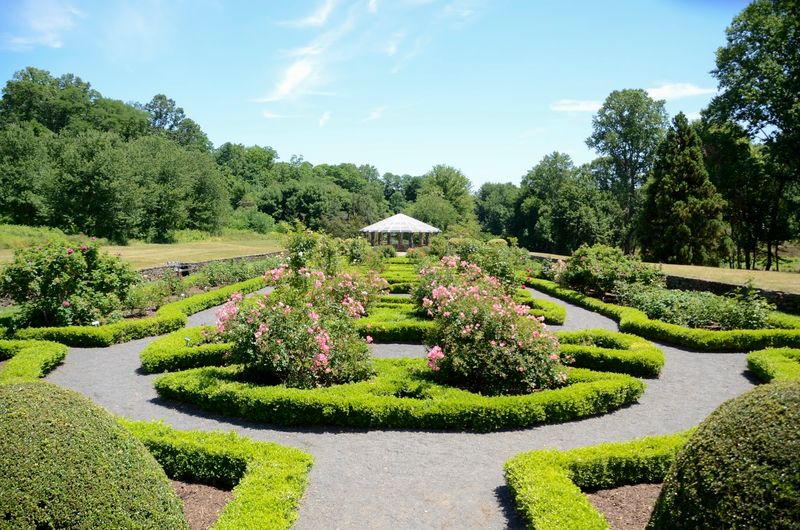
A formal rose garden is not usually where you expect to lose track of your surroundings, yet Deep Cut Gardens makes it surprisingly easy.
The Middletown property spreads across 54 acres, allowing its polished displays to mingle with wooded paths, broad lawns, a greenhouse, and corners that seem much farther from suburban Monmouth County than they really are.
The showpiece is the renovated rose parterre, planted with more than 180 bushes representing 52 varieties. Visit during the blooming season and the combination of fragrance, clipped geometry, and layered color can stop a casual walk in its tracks.
Still, roses are only the opening act. The greenhouse provides a welcome change of scenery, the koi pond rewards anyone willing to pause, and display gardens function as a living catalog for people looking to steal an idea or two for home.
That practical horticultural focus keeps Deep Cut from feeling overly precious. Visitors can ask staff gardening questions, browse the reference library, take classes, or simply wander without pretending to know the difference between cultivars.
Families can sometimes borrow free Garden Safari backpacks from the horticultural center, turning the grounds into a low-key scavenger hunt. The park opens at 8 a.m. and closes at dusk throughout the year.
Pets are not allowed, so expect a calmer stroll than at many public parks.
4. Sayen House & Gardens — Hamilton
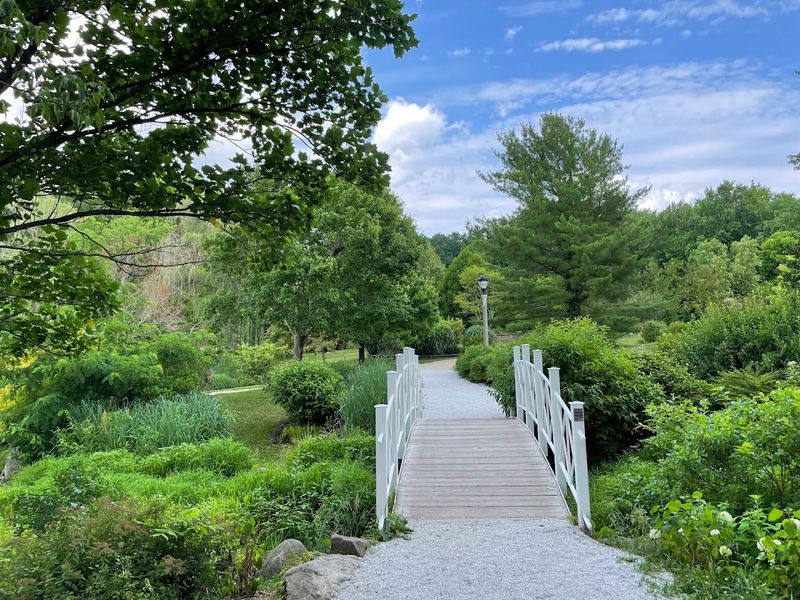
One white footbridge, a pond edged with flowers, and a curving path beneath old trees are enough to make the surrounding Hamilton streets feel suddenly distant. Sayen House & Gardens has become a favorite setting for weddings and portraits, so it hardly qualifies as undiscovered.
Even so, the property contains enough trails, streams, rolling lawns, gazebos, and wooded pockets to make a weekday wander feel private. The landscape changes character quickly.
A bright flower bed gives way to dense shade; a formal structure appears beside a natural-looking pond; birds move through the canopy while fish stir beneath the water.
Spring is the obvious time to come, particularly when azaleas, rhododendrons, and flowering trees are putting on their strongest display, but the garden’s bridges and layered greenery carry it through the warmer months.
Rather than rushing directly toward the most photographed spots, circle the outer paths first. They reveal quieter angles and make the central gardens feel like a reward.
Admission is free, and the grounds are open daily from dawn to dusk, which makes this one of the easiest spontaneous escapes in Mercer County. Leashed dogs are welcome outdoors, though not inside the house.
Since private events sometimes claim portions of the property, earlier visits generally offer the best chance to explore without accidentally appearing in the background of somebody’s wedding album.
5. Duke Farms — Hillsborough
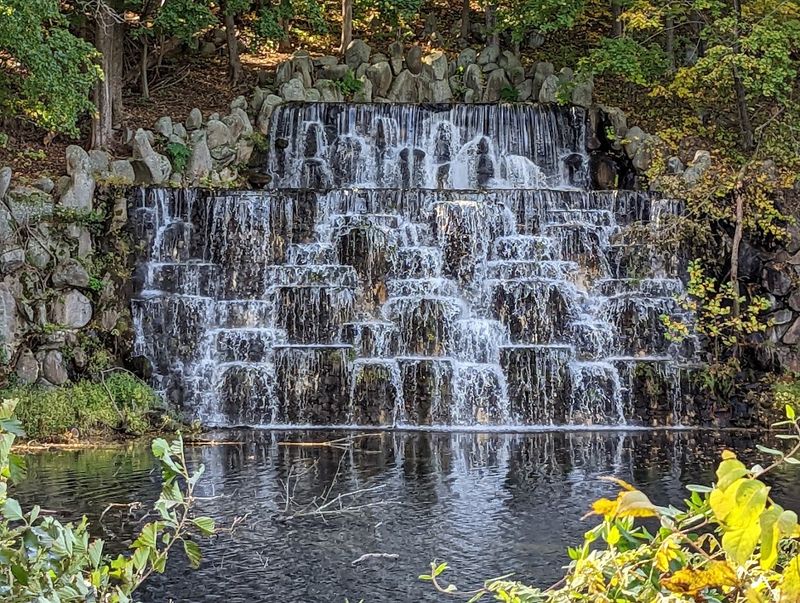
The scale is the trick here. Duke Farms is well known, carefully managed, and large enough to host major conservation work, yet its 2,700 acres can make another visitor seem like a rare wildlife sighting.
The Hillsborough property operates as a living laboratory for ecosystem restoration, clean energy, and wildlife conservation, but a day on the grounds never feels like homework.
Trails and paved routes move through meadows, woodlands, wetlands, historic structures, and broad open spaces where the horizon seems unusually generous for central New Jersey.
Depending on the route, visitors may pass pollinator habitat, reforested floodplains, old estate features, or birding areas connected to the property’s much-watched bald eagles.
Bicycles are useful for covering more ground, though walking allows time to notice smaller details: insects working through meadow flowers, turtles near water, and the way reclaimed landscapes blend into remnants of the former estate.
The property’s popularity becomes most apparent at the entrance, then disperses as people choose different paths. Saturday visitors from April through October must reserve a free parking pass in advance, a detail worth handling before making the drive.
Once inside, resist the urge to see everything. Choose one section, take the long route, and leave something for another visit.
Duke Farms feels most secretive when its immense size is treated as permission to wander rather than a checklist to conquer.
6. Whitesbog Historic Village — Browns Mills
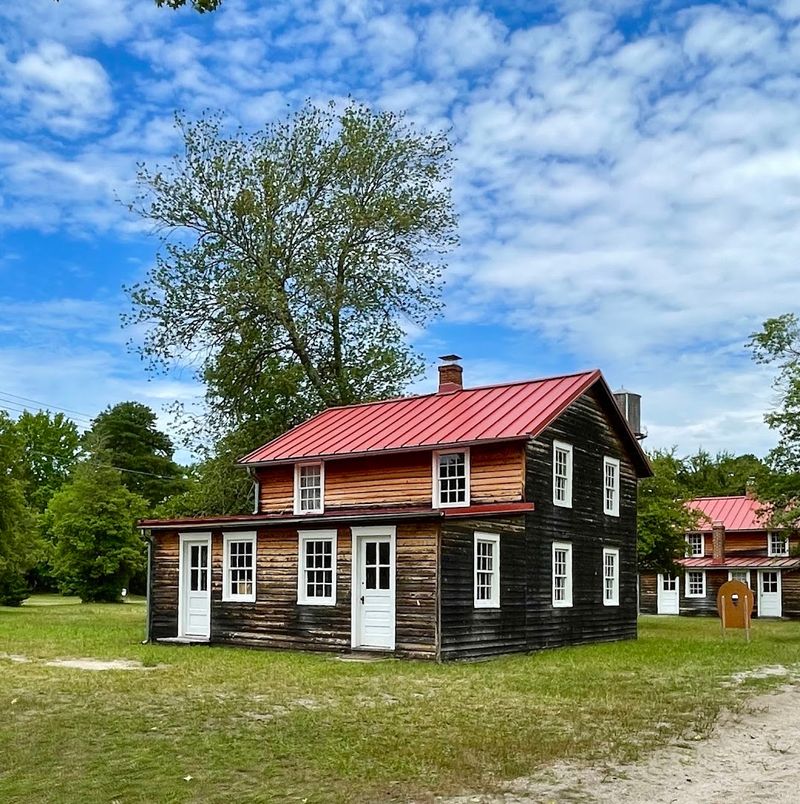
The roads around Whitesbog seem determined to shake off the modern world. Sugar sand tracks pass cranberry bogs, reservoirs mirror the sky, and weathered village buildings sit beneath the pines with none of the polished neatness of a conventional attraction.
Founded in 1857, this former cranberry-farming community is surrounded by roughly 3,000 acres of bogs, blueberry fields, forest, and water within Brendan T. Byrne State Forest.
It also holds an outsized place in food history: Elizabeth Coleman White and botanist Frederick Coville developed the first successfully cultivated highbush blueberry here. That achievement sounds academic until you walk past the fields and realize how much familiar produce traces back to this quiet corner of the Pine Barrens.
The village includes workers’ cottages, agricultural buildings, a general-store area, and paths that head into the surrounding landscape. Short routes such as the Union Pond Trail and nature trail make it easy to combine local history with an uncomplicated walk.
Summer water lilies and autumn cranberry harvest colors are obvious draws, but cloudy days may suit Whitesbog best. The muted light, dark pines, and still reservoirs strengthen the impression of entering a place operating on a separate clock.
Hiking access is available daily, while building openings, markets, tours, and seasonal events vary. Check the calendar beforehand, or come simply to walk and let the empty lanes do the storytelling.
7. Batsto Village — Hammonton
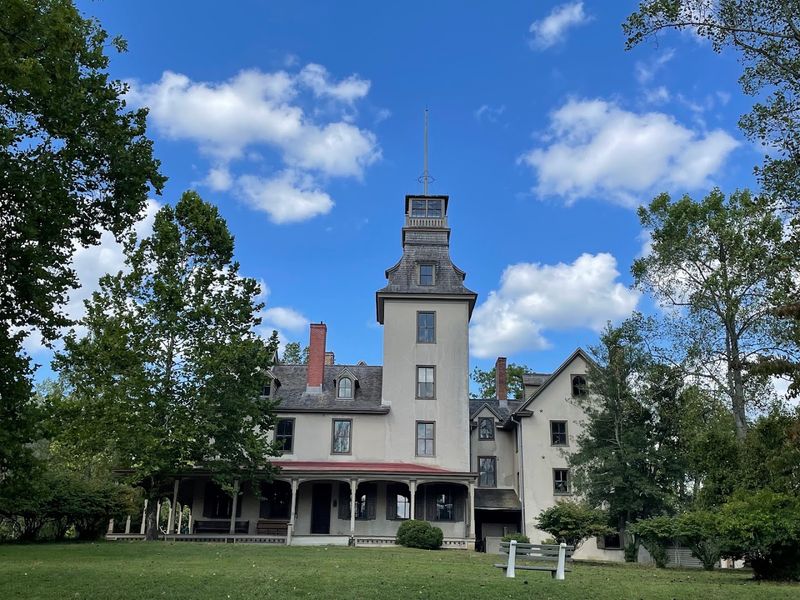
A post office from 1852 still operates in the middle of this preserved Pine Barrens village, which should tell you something about Batsto’s relationship with time. Once an important ironmaking and glassmaking community, the settlement later became a farming and milling center under industrialist Joseph Wharton.
Its surviving buildings now stand inside Wharton State Forest, surrounded by pines, sandy soil, and the dark water of Batsto Lake. The combination is what makes the place feel unusually immersive.
You are not viewing a lone historic house while traffic hums beyond the fence; you are walking through the remains of an entire community. The 36-room mansion attracts much of the attention, but the smaller structures give Batsto its texture.
Look for workers’ homes, barns, the general store, and the 1882 water-powered sawmill. The visitor center museum provides enough background to make the village legible without draining it of mystery.
Guided mansion tours generally run Wednesday through Sunday, last about an hour, and cost only a few dollars, though calling ahead is smart because programs can change the schedule. The grounds themselves are open from dawn to dusk, allowing plenty of time for a self-guided circuit or a walk beside the lake.
Batsto is known and frequently visited, but step beyond the central green and the forest quickly restores its sense of isolation.
8. Historic Smithville Park & Smith’s Woods — Eastampton
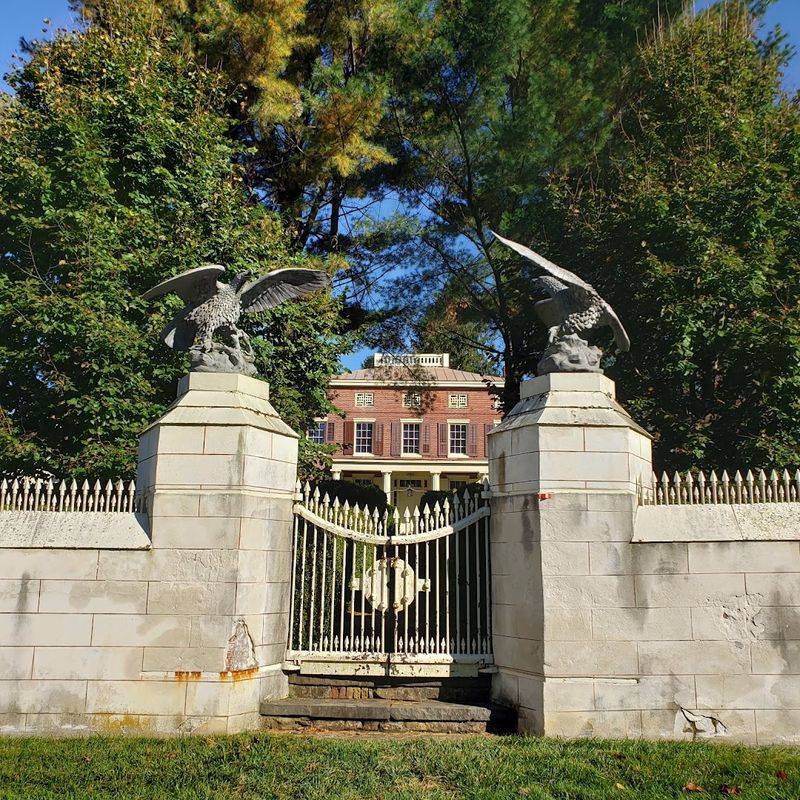
Start with the floating walkway. It stretches across the water with Smithville Mansion rising nearby, creating a view that seems too cinematic to be sitting just outside Mount Holly.
The larger park combines a former model industrial village with 312 acres of lake, meadow, forest, wetlands, streams, and creek shoreline. That range gives visitors several different outings in one place.
History-minded wanderers can explore the mansion area and learn how inventor and industrialist Hezekiah Bradley Smith shaped the community around his woodworking machinery company. His Smithville experimented with worker benefits, recreation, education, and ambitious inventions, including unusual bicycles.
Anyone more interested in fresh air can follow trails around the 22-acre lake, cross the floating path, fish, launch a canoe, or head across Smithville Road into Smith’s Woods. That side contains picnic areas, a playground, a butterfly garden, and shaded trails that often feel much quieter than the historic district.
The park works particularly well for groups with mixed interests because nobody has to choose between a museum day and a nature walk. Mansion and museum access follows separate schedules, so confirm tour availability when interiors matter.
Otherwise, arrive with a couple of hours, cross every bridge that presents itself, and allow the route to shift between architecture and woodland. The changes in scenery keep the park feeling larger—and more hidden—than its convenient location suggests.
9. Cattus Island County Park — Toms River
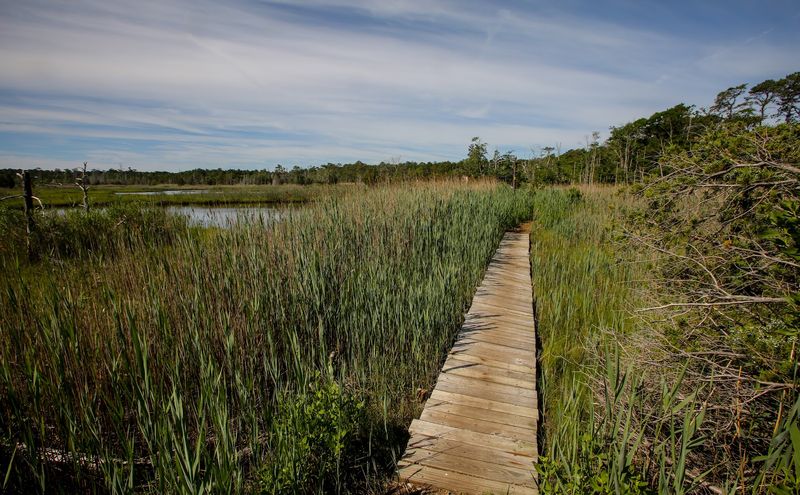
Salt air arrives before the bay fully comes into view. Then the trees thin, marsh grasses spread toward the horizon, and one of Toms River’s most satisfying landscapes opens almost without warning.
Cattus Island County Park protects nearly 500 acres beside Silver Bay, with a network of trails leading through maritime forest, salt marsh, sandy stretches, and waterfront viewpoints.
The main trail to the beach is an easy introduction, but branching onto the longer loops reveals quieter overlooks and the ghostly shapes of trees exposed to coastal conditions.
Wildlife is central to the experience. Ospreys circle above the marsh, wading birds work the shallows, and pollinators crowd the native plantings in the butterfly garden.
The Cooper Environmental Center makes a worthwhile first or final stop, especially for families. Its hands-on displays include an osprey camera, bird-viewing spaces, children’s activities, and live reptiles and fish connected to local habitats.
That indoor element is useful on hot or drizzly days, but the park’s real appeal remains outside, where every turn seems to offer a different meeting point between land and bay. The main parking area sits near the environmental center, with restrooms available inside.
Bring bug spray in warm weather and expect some exposed, sunny stretches. Early mornings deliver the greatest sense that the boardwalks, beaches, and marsh have been temporarily reserved for you.
10. Sterling Hill Mining Museum — Ogdensburg
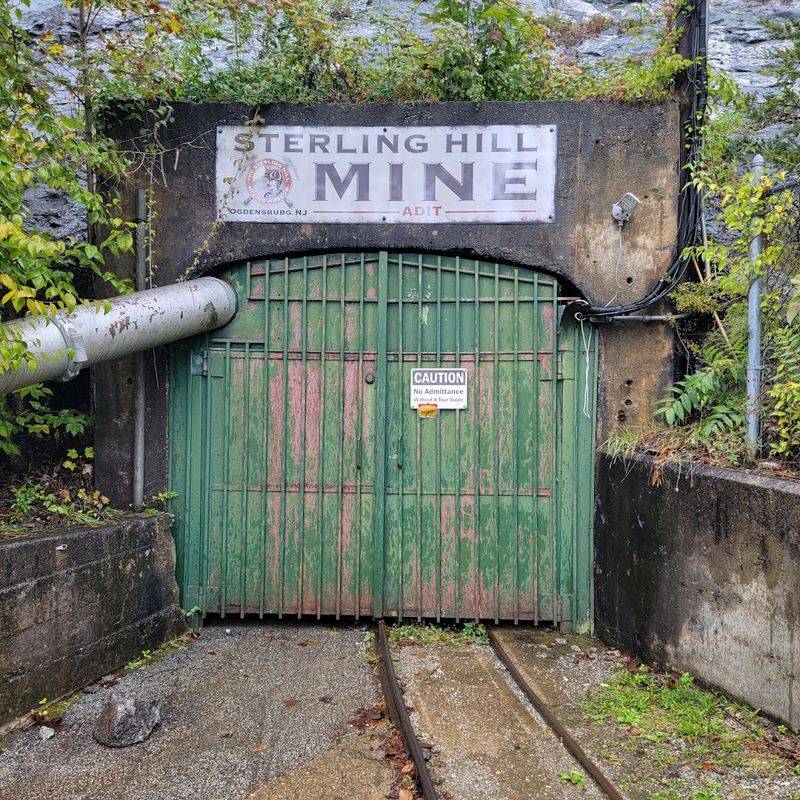
The temperature drops as the tour moves underground, and ordinary gray rock begins glowing in electric greens, reds, and oranges. That transformation is the moment Sterling Hill Mining Museum stops feeling like a regional history attraction and starts resembling a journey into an entirely different New Jersey.
The Ogdensburg site occupies a former zinc mine that once tapped one of the world’s richest and most unusual mineral deposits. Guided tours combine the mine itself with two museums, historic machinery, explanations of drilling and blasting, and the fluorescent Rainbow Tunnel.
Under ultraviolet light, minerals that look unremarkable above ground reveal colors vivid enough to seem artificial. They are not, which makes the effect even better.
The experience balances geology, industrial history, and a little theatrical magic without requiring visitors to arrive as mineral enthusiasts. Outside the main tour, younger visitors can try sluicing for minerals and fossils, while serious collectors may be interested in designated rock-collecting opportunities.
Wear sturdy closed-toe shoes and bring a light layer even in summer, since the underground environment stays cool. Tour times and seasonal operating hours vary, and the main guided experience may be offered only once on certain days, so this is one destination where checking the schedule before leaving home matters.
Once the group enters the tunnel, though, the surrounding highways and towns feel very far away.
11. Stairway to Heaven and Pochuck Boardwalk — Vernon
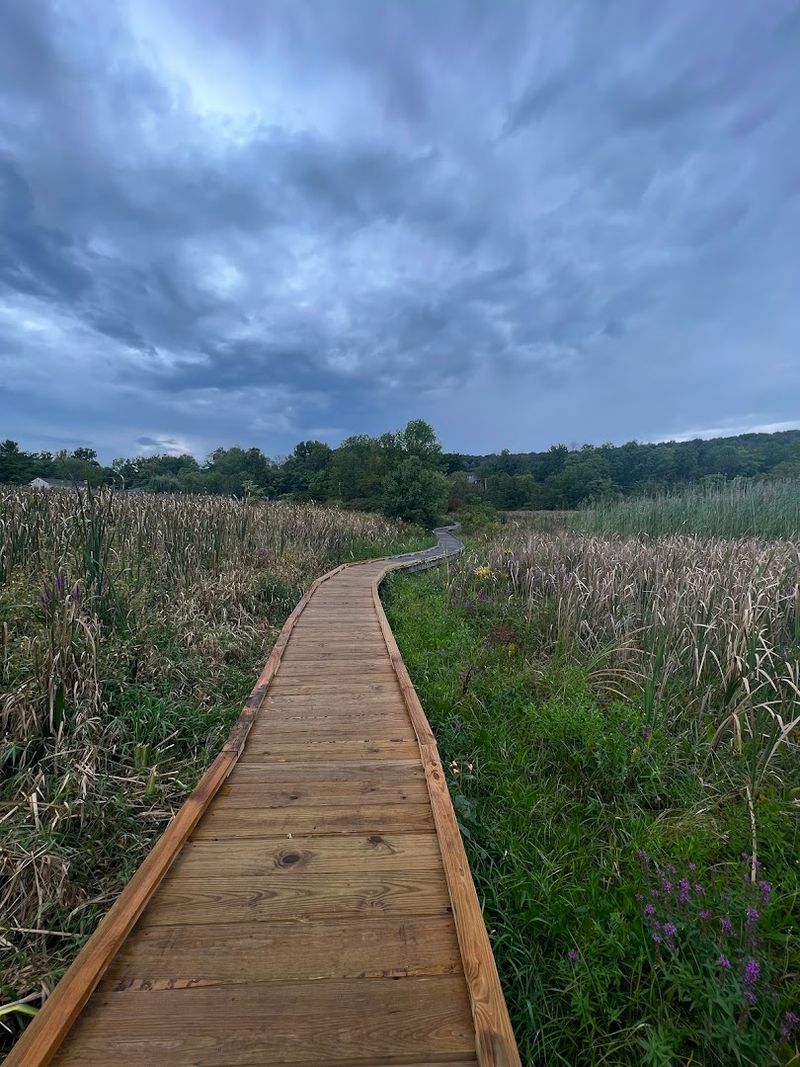
New Jersey’s strangest boardwalk is nowhere near the ocean. The Pochuck section of the Appalachian Trail runs for more than a mile above wetlands in Vernon, crossing open marsh, small streams, and fields beneath an enormous Sussex County sky.
The elevated planks create an easy, almost hypnotic walk, with cattails close to the rail and turtles, birds, and wildflowers appearing below. A suspension bridge adds just enough bounce to make the route memorable.
Those seeking a relaxed outing can turn around after the boardwalk section. Those who continue toward Stairway to Heaven get a completely different experience.
The trail eventually climbs steeply over rock slabs and uneven stone steps to Pinwheel’s Vista, where Vernon Valley unfolds below. Pairing the flat wetlands with the rocky ascent makes the full hike feel like two separate New Jersey landscapes stitched together.
Good footwear is essential for the climb, particularly after rain, and water matters more than the modest mileage might suggest. Parking near the Route 517 trailhead is limited to a small roadside area, and surrounding restrictions are enforced, so arrive early and park only where permitted.
Weekday mornings offer the best chance of quiet. Even when other hikers are present, the long sightlines across the marsh create enough space to preserve the route’s secret-passage feeling.
12. Deserted Village of Feltville — Berkeley Heights
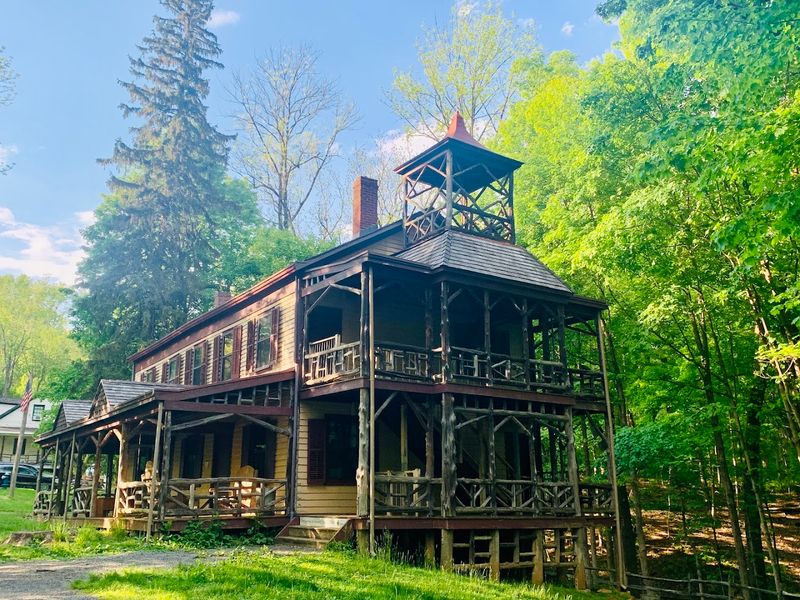
Empty porches line a narrow road beneath the trees, each one suggesting a story that stopped halfway through. The Deserted Village of Feltville sits inside Watchung Reservation, but it feels less like a preserved exhibit than a town encountered after everyone mysteriously left.
David Felt established a printing factory here in 1845 and built a mill community around it. By 1850, about 175 people lived in the village.
After the industrial venture faded, later owners attempted other businesses before Warren Ackerman converted the property into a summer resort called Glenside Park in 1882. That chapter ended in 1916 as vacationers increasingly favored the Jersey Shore.
Today, surviving cottages, the church-store building, Masker’s Barn, a cemetery, and archaeological remnants trace those repeated reinventions. Interpretive panels provide useful details, but the roughly one-mile self-guided walk is atmospheric enough to hold the attention of visitors who normally skim historical signs.
Do not step onto the old residential porches; some structures remain fragile, and a few houses are occupied. The village grounds are open daily from dawn to dusk, with parking just off Glenside Avenue.
Connecting trails make it easy to extend the visit into the surrounding reservation. Come in late fall, when bare branches reveal more of the buildings, or on a misty morning when the old resort road seems especially reluctant to explain itself.
13. Great Bay Boulevard Wildlife Management Area — Tuckerton

The pavement narrows, the houses disappear, and salt marsh begins pressing in from both sides. Great Bay Boulevard, often called Seven Bridges Road, follows an unfinished dream of reaching the barrier islands and instead ends deep in one of New Jersey’s finest coastal landscapes.
The surrounding wildlife management area covers nearly 6,000 acres of fresh, brackish, and saltwater estuary, marsh, and islands. There is no grand entrance or polished visitor center.
The road itself is the experience. Pull-offs and bridge approaches provide places to watch herons, egrets, rails, shorebirds, and sparrows working through the tidal habitat.
Anglers and crabbers use the accessible waterways, while photographers wait for low evening light to turn the grasses bronze. Northern diamondback terrapins also live and nest in the area, and drivers should move carefully—especially during warmer nesting periods when turtles may cross the road.
The route eventually reaches a wonderfully remote stretch near Great Bay, where sky and water dominate almost everything else. Bring binoculars, mosquito repellent, and whatever food or drink is needed, because services vanish quickly after leaving Tuckerton.
Weather matters here more than at a manicured park; wind, tides, heat, and insects can change the mood completely. That unpredictability is part of the appeal.
Great Bay Boulevard feels like a secret because it asks visitors to slow down enough to notice what usually passes outside a car window.
14. New Jersey Botanical Garden at Skylands — Ringwood
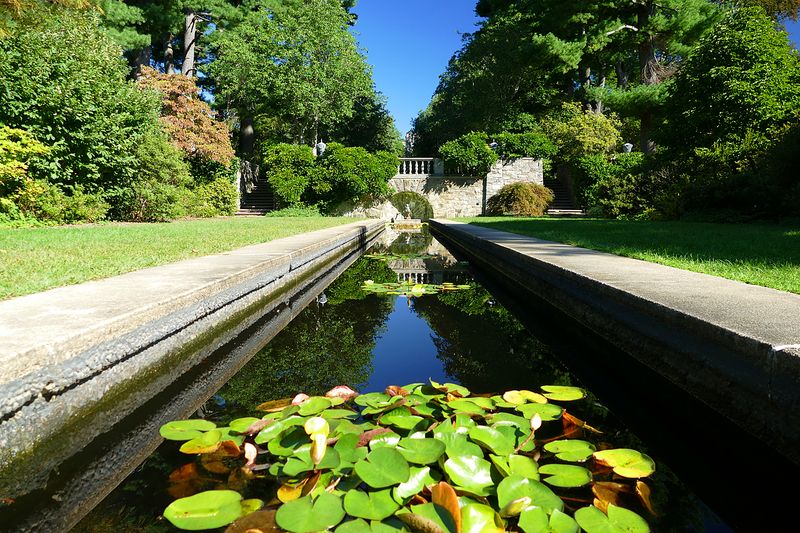
A stone arch beneath cascading branches can make the next garden room feel like a private discovery, even when a map confirms that hundreds of visitors have walked through it before.
The New Jersey Botanical Garden occupies 96 acres within Ringwood State Park, surrounded by Ramapo Mountain woodland and anchored by the imposing Skylands Manor.
Its specialty gardens change the rhythm of a visit every few minutes. One path may lead through lilacs or peonies; another opens onto formal annual beds, a magnolia walk, wildflowers, rhododendrons, or the long crabapple allée.
Mature specimen trees provide drama even outside the main blooming seasons. The 44-room manor adds another layer.
Designed in the late 1920s by architect John Russell Pope, the native-stone house borrows from English Jacobean architecture, complete with half-timbering and stained glass. The exterior alone is worth circling, while guided ground-floor tours are offered on selected Sundays.
Garden admission is generally free, though Ringwood State Park charges a modest vehicle fee on summer weekends and holidays. Arrive early during peak bloom or autumn color, then move beyond the paths closest to the parking area.
The estate’s many walls, stairways, courtyards, and branching routes quickly absorb visitors, leaving quiet benches and tucked-away corners available to anyone willing to keep exploring.
15. Grounds For Sculpture — Hamilton

A peacock crosses the path, a human figure appears to be climbing out of a pond, and a polished steel form flashes between the trees. Grounds For Sculpture is one of New Jersey’s best-known cultural attractions, yet its winding layout keeps producing the sensation of stumbling upon something nobody else has noticed.
The 42-acre Hamilton sculpture park contains more than 300 contemporary works arranged among landscaped gardens, water features, galleries, courtyards, and densely planted paths. Some pieces command open lawns; others hide behind hedges or reveal themselves only from a particular angle.
That element of surprise makes it far more engaging than walking through a conventional outdoor museum in a straight line. Do not rely too heavily on the map during the first hour.
Choose whichever path looks least direct and let scale, color, or movement pull you toward the next work. The horticulture deserves attention too, particularly around lotus ponds, mature trees, pergolas, and carefully composed garden rooms.
Rat’s Restaurant provides an elaborate sit-down option on the property, while lighter food choices suit visitors who prefer to keep moving. Timed ticket reservations are required, and weekends can be busy, so booking an earlier or later entry helps.
Despite its popularity, Grounds For Sculpture never feels fully revealed. The next turn always seems prepared to keep one more artwork hidden until the exact right moment.