Tennessee hides some of the most bizarre and breathtaking places you could ever imagine. From underground lakes and handmade castles to UFO-shaped houses and towering metal sculptures, the Volunteer State is packed with attractions that sound too wild to be true.
Whether you’re a curious traveler or a lifelong resident, these oddball destinations will make you see Tennessee in a whole new light.
1. Greenback Castle — Maryville
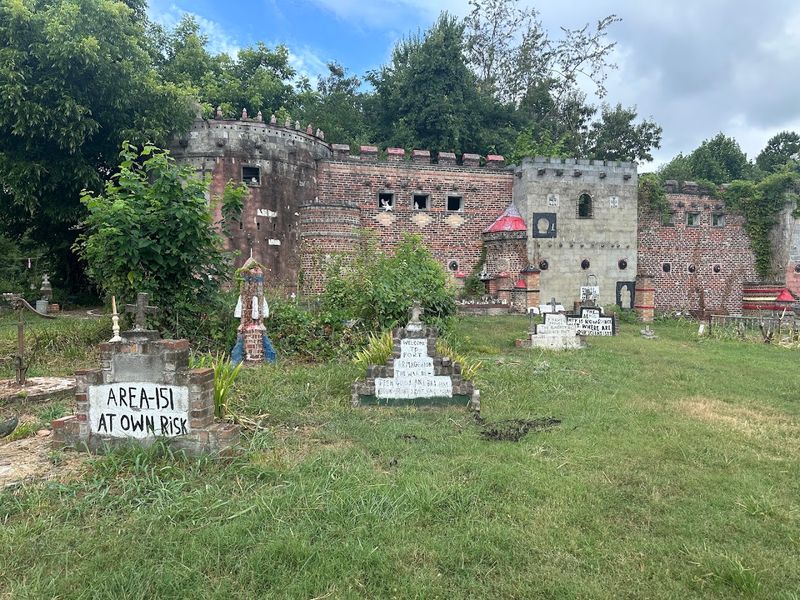
Driving through the quiet countryside near Maryville, the last thing you’d expect to see is a towering medieval-style fortress rising from the landscape. Yet there it stands, built entirely by hand over decades using recycled materials, religious devotion, and pure determination.
The castle’s creator began this massive project as an act of faith, and the result is a labyrinth of passageways, turrets, and open-air rooms that feel like stepping into another world.
Walking through the castle reveals layer after layer of surprises. Sculptures and religious messages appear around every corner, crafted from materials most people would throw away.
Broken glass, scrap metal, discarded tiles, and salvaged wood have been transformed into something beautiful and deeply personal. The twisting hallways and unexpected staircases make exploration feel like a treasure hunt.
Visitors should wear comfortable shoes since the terrain can be uneven and there’s plenty of climbing involved. The castle continues to evolve as new sections get added and old areas receive fresh touches.
It’s not a polished tourist attraction with gift shops and guided tours—it’s raw, authentic, and wonderfully strange.
This isn’t just a building; it’s a testament to what one person can create when driven by vision and faith. The Fortress of Faith stands as proof that Tennessee’s most remarkable places often come from the most unexpected sources.
2. The Lost Sea Adventure — Sweetwater
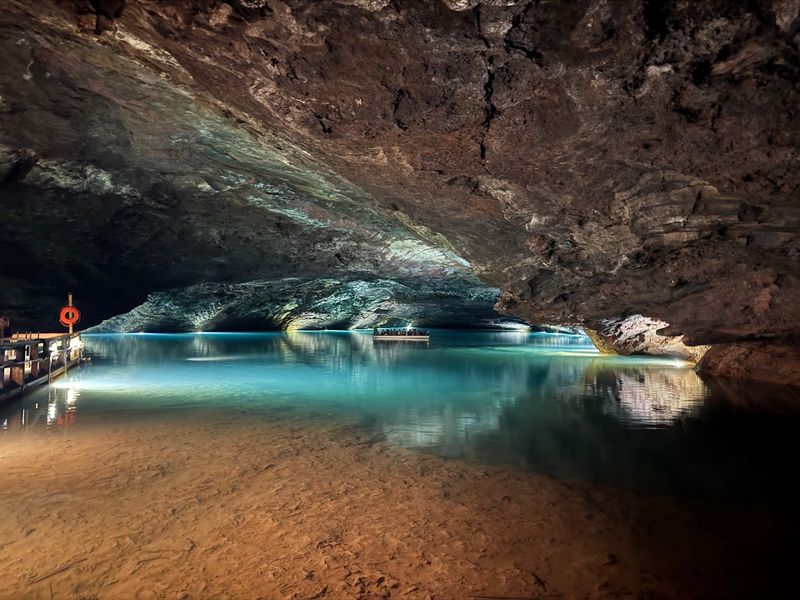
Imagine descending into the earth and finding a body of water so vast it holds a national record. The Lost Sea sits hidden beneath the Tennessee mountains, recognized as one of America’s largest underground lakes.
What makes this place even more remarkable is that you can actually float across it in a glass-bottom boat, peering down into crystal-clear depths while surrounded by ancient rock formations.
The journey begins with a guided walk through winding cave passages. Your guide shares stories about the cave’s history, including how it was used by Cherokee people and later by Confederate soldiers during the Civil War.
The temperature stays around 58 degrees year-round, so bringing a light jacket makes the experience more comfortable.
Then you reach the lake itself, and the cave opens into a massive chamber. The water stretches beyond what your eyes can see, disappearing into darkness.
Climbing aboard the glass-bottom boat feels surreal—you’re floating on a lake that exists in complete darkness when the lights go off. The boat ride lasts about twenty minutes, giving everyone time to spot the rainbow trout that swim in these cold, clear waters.
Kids absolutely love this adventure because it combines education with genuine excitement. The guides keep things interesting without overwhelming you with technical geology terms.
They’ll point out interesting formations, explain how the cave system was discovered, and answer questions about what lies in the unexplored sections.
The entire tour takes about an hour and fifteen minutes. Reservations aren’t always required but definitely help during busy seasons. The walkways are paved and relatively easy to navigate, though there are some stairs involved.
3. Billy Tripp’s Mindfield — Brownsville
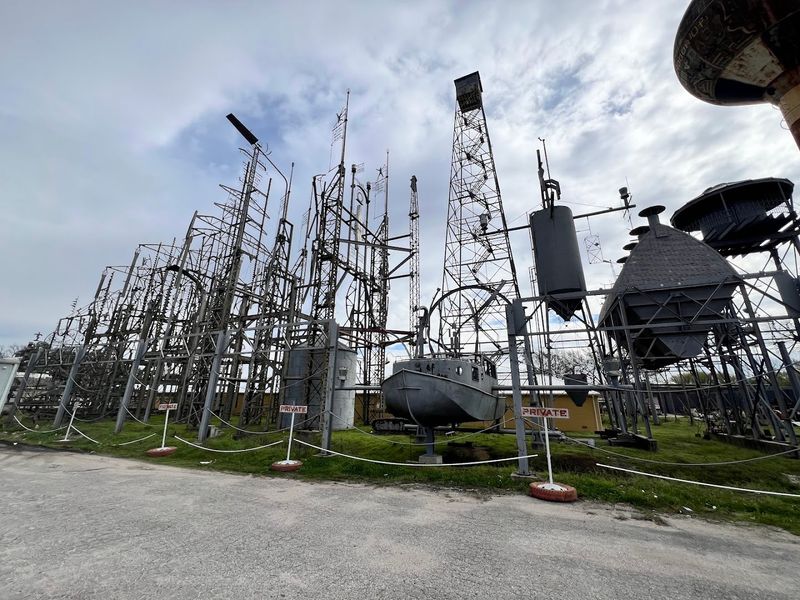
Standing in an open field in Brownsville, a massive metal structure reaches toward the sky like something from a science fiction movie. Billy Tripp started building this sculptural masterpiece in 1989, and he’s never stopped.
Each welded piece represents thoughts, emotions, and experiences from his life, creating a three-dimensional autobiography that now towers over seven stories high.
The Mindfield doesn’t follow traditional artistic rules or architectural logic. Beams jut out at unexpected angles, platforms hang suspended in mid-air, and staircases lead to nowhere. From certain perspectives, it looks like an industrial jungle gym designed by someone who refused to color inside the lines. From others, it resembles a futuristic city frozen mid-construction.
Visiting during different times of day completely changes the experience. Morning light casts long shadows that add another layer of complexity to the already intricate structure.
Sunset turns the metal into a silhouette that looks even more otherworldly. Some people spend just a few minutes here; others sit and study it for hours, finding new details each time their eyes wander across the metalwork.
The sculpture sits on private property but can be viewed from public areas nearby. Tripp has welcomed visitors over the years, though it’s important to be respectful of his space and his ongoing work.
What makes the Mindfield truly special is its raw honesty. This isn’t art created for galleries or wealthy collectors.
It’s one person’s life transformed into metal and left standing in a field for anyone to interpret. Whether you see genius, madness, or something in between, you won’t forget it.
4. The Crystal Shrine Grotto — Memphis
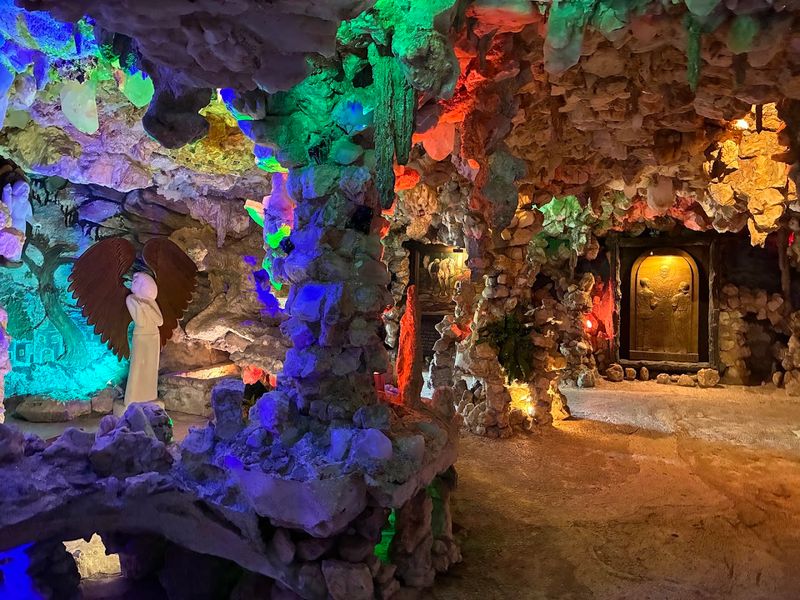
Most people visiting Memphis cemeteries expect peaceful gardens and traditional monuments. Memorial Park Cemetery offers something far more unusual: a sparkling cave decorated with thousands of crystals, colorful stones, and religious scenes that look like they belong in a fantasy novel.
The Crystal Shrine Grotto was built in the 1930s by a Mexican artist named Dionicio Rodriguez, who specialized in creating artificial rock formations so realistic they fooled the eye.
Stepping inside feels like entering a different dimension. Every surface glitters with quartz crystals, semi-precious stones, and glass pieces arranged in intricate patterns.
Biblical scenes carved into the walls depict stories from both the Old and New Testaments. The craftsmanship is extraordinary—Rodriguez shaped concrete to look like natural stone, then covered it with his glittering materials to create something that seems to glow from within.
The grotto winds through several connected chambers, each revealing new surprises. A small stream flows through part of the structure, adding the peaceful sound of running water.
The lighting has been carefully designed to make the crystals sparkle without overwhelming the space. On sunny days, natural light filtering through openings creates rainbow effects across the walls.
Photography is allowed and highly encouraged. The challenge is capturing how the space actually looks, since photos rarely do justice to the three-dimensional sparkle and the way light plays across different surfaces.
Many visitors return multiple times, finding new details they missed during previous explorations.
The grotto is free to visit during cemetery hours. It’s a quiet, contemplative space that manages to be both spiritual and whimsical.
Some people come for religious reflection; others simply appreciate the artistic achievement. Either way, it’s unlike anything else you’ll find in Tennessee or anywhere else.
5. Millennium Manor Castle — Alcoa
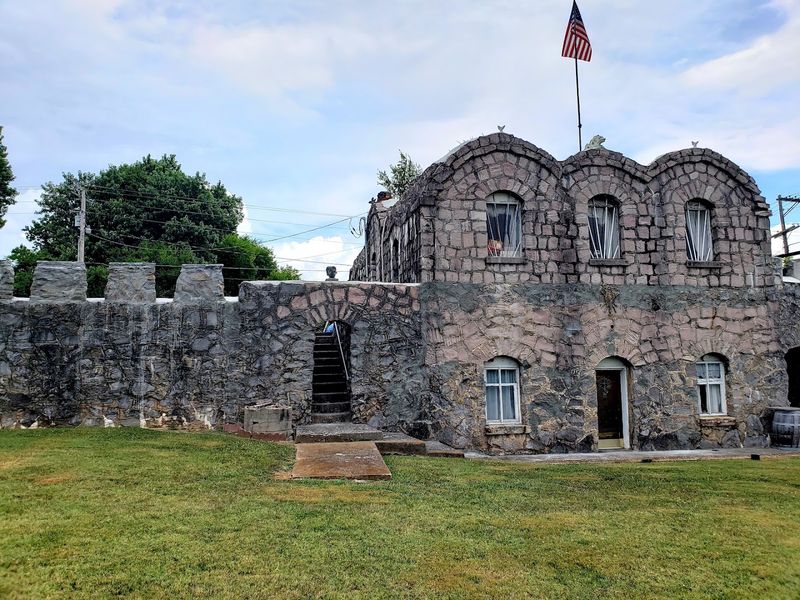
Hidden in Alcoa sits a residence that looks like it was transported from medieval Europe, yet it was built with modern materials and futuristic ambitions. The Millennium Manor was constructed entirely without wood, using stone, concrete, and steel designed to stand for a thousand years.
The original owners wanted to create something that would outlast them by centuries, and they succeeded in building one of Tennessee’s most unusual private homes.
The castle’s architecture blends medieval inspiration with practical modern design. Thick stone walls provide insulation and durability.
Multiple towers give the structure its fairy-tale silhouette. Every construction decision prioritized longevity over convenience, resulting in a building that feels both ancient and timeless.
What makes this place particularly intriguing is the mystery surrounding it. The castle sits on private property and isn’t open for public tours, which only adds to its mystique.
People driving past can glimpse its towers rising above the trees, sparking curiosity about what lies inside those stone walls. The lack of wood means no rotting, no termites, and no fire risk—just solid materials built to endure.
The concept of building something meant to last a millennium raises fascinating questions. What will Tennessee look like in a thousand years? Will this castle still be standing when everything around it has changed? The builders clearly believed in creating something permanent in a world where most construction is designed to last just decades.
While you can’t tour the interior, the exterior alone is worth seeing. The stone craftsmanship and overall design demonstrate serious commitment to the vision.
It’s a reminder that some people build for themselves, while others build for generations they’ll never meet. The Millennium Manor falls firmly in the second category, standing as a modern castle with ancient ambitions.
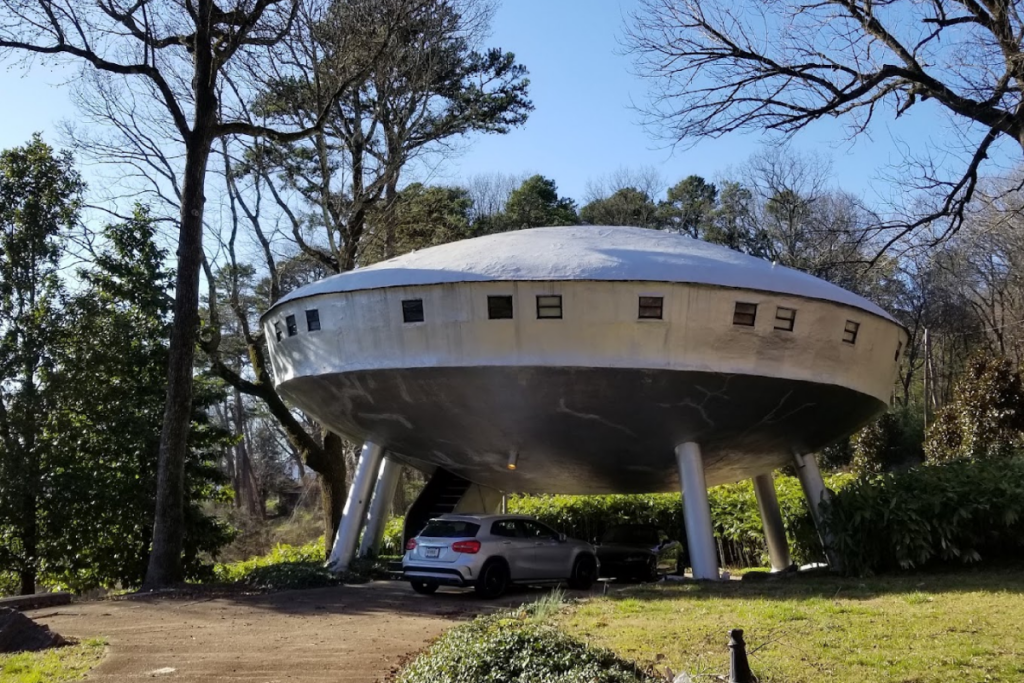
6. The Flying Saucer House — Signal Mountain
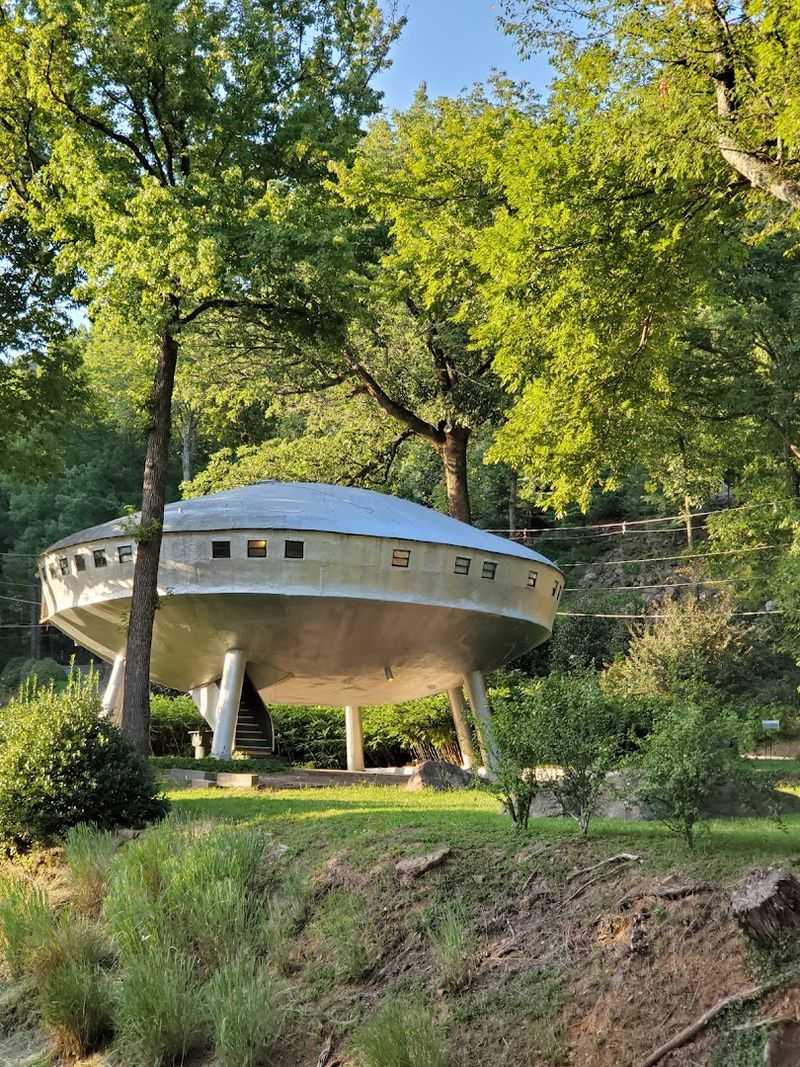
Perched on Signal Mountain, a bright white structure that looks exactly like a UFO catches the attention of everyone who spots it. This is a Futuro house, one of fewer than 100 still existing worldwide.
These prefabricated homes were designed in the 1960s by Finnish architect Matti Suuronen, who imagined a future where people lived in portable, space-age pods that could be placed anywhere.
The design is pure retro-futurism. The saucer shape sits on a central pedestal, creating the illusion that it could blast off at any moment.
Windows wrap around the structure like a spaceship’s observation deck. The white fiberglass exterior gleams against the Tennessee landscape, looking completely out of place in the best possible way.
These houses were meant to be ski chalets originally, but they became symbols of 1960s optimism about the future. They were lightweight, could be heated efficiently, and looked like nothing else on Earth.
Unfortunately, the oil crisis of the 1970s made fiberglass production expensive, and the Futuro never achieved commercial success. Today, they’re rare architectural curiosities scattered around the globe.
Tennessee’s Futuro sits on private property, which means you can admire it from public roads but shouldn’t trespass. The best views come from driving past and pulling over safely to take photos.
The house’s location on the mountain gives it an even more dramatic appearance, as if aliens chose the highest point to land their craft.
Architecture enthusiasts travel from other states specifically to see this Futuro. It represents a moment when designers believed the future would look radically different from the past.
Standing there decades later, the house still looks futuristic, which says something about how timeless truly bold design can be. It’s a reminder that Tennessee’s strange places include visions of tomorrow that arrived yesterday.
7. Bell Witch Cave — Adams
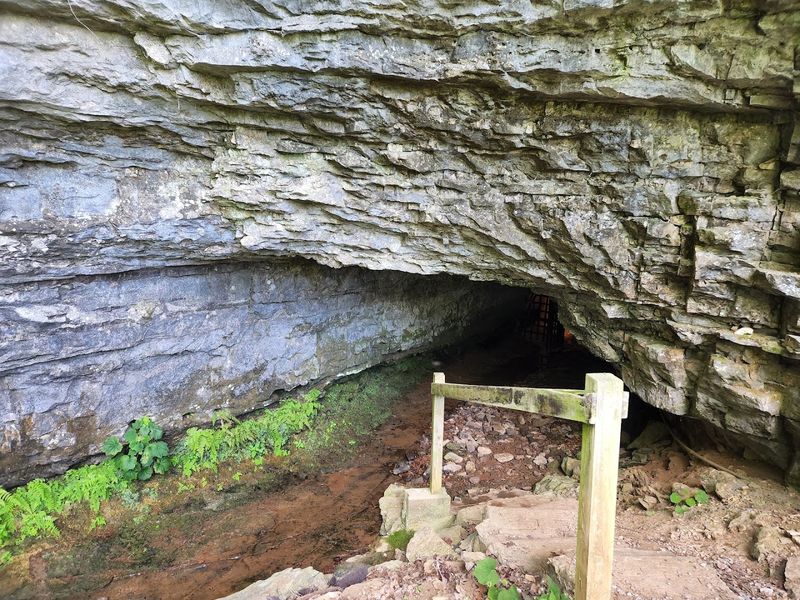
Few Tennessee locations carry as much supernatural weight as the Bell Witch Cave in Adams. This dark cavern sits at the heart of one of America’s most famous ghost stories, involving the Bell family and the mysterious entity that allegedly tormented them in the early 1800s.
The legend has been investigated, written about, and debated for over two centuries, yet the cave remains as eerie and unexplained as ever.
The Bell Witch story involves strange sounds, physical attacks, voices speaking from nowhere, and events that terrified an entire community. According to the legend, the entity focused its attention on John Bell and his family, eventually claiming responsibility for John’s death.
The cave became part of the story when the spirit allegedly retreated there, and locals began reporting strange experiences near and inside the cavern.
Visiting the cave today still feels unsettling. The entrance yawns dark and cold, leading into passages that twist deeper into the earth. Even skeptics admit the atmosphere is heavy here. Shadows seem darker, sounds echo strangely, and there’s a persistent feeling of being watched.
Whether that’s psychological suggestion or something more remains an open question.
The property offers guided tours during certain seasons, and the guides share both historical facts and personal experiences. Some visitors report unusual occurrences during their visits—cameras malfunctioning, strange sounds, or unexplained cold spots. Others walk through without incident but leave feeling distinctly uncomfortable.
The cave isn’t just about ghost hunting. It’s also a legitimate historical site connected to documented events that affected real people.
The Bell family’s experiences were witnessed by neighbors and recorded in journals. Whatever happened here, it left a lasting mark on Tennessee folklore.
The cave serves as a physical connection to that strange chapter of history, offering a place where the line between legend and reality feels particularly thin.
8. Salt and Pepper Shaker Museum — Gatlinburg

In a town known for mountain views and pancake houses, one museum celebrates something wonderfully specific: salt and pepper shakers. The Salt and Pepper Shaker Museum in Gatlinburg houses over 20,000 sets, making it one of the world’s most comprehensive collections of these everyday items.
What sounds like a joke is actually a fascinating look at design, culture, and the things people collect.
The museum’s founder, Andrea Ludden, began collecting shakers in the 1980s and never stopped. Her collection grew to include sets from every era, style, and theme imaginable.
Vintage shakers from the 1940s sit near modern novelties. Sets shaped like famous landmarks share space with ones designed as animals, foods, vehicles, and cartoon characters.
The variety is genuinely astonishing.
Walking through the museum reveals how much creativity goes into designing these tiny objects. Some sets are beautiful works of art. Others are hilariously bizarre. You’ll find shakers shaped like outhouses, tourists, foods that look nothing like salt or pepper, and countless other unexpected forms.
The collection documents changing tastes, popular culture trends, and manufacturing techniques across decades.
Kids enjoy the museum because it’s colorful, quirky, and filled with recognizable characters. Adults appreciate the nostalgia factor—many visitors spot shakers identical to ones their grandparents owned.
The museum proves that even the most ordinary household items have interesting stories when you collect enough of them.
Admission is inexpensive, and the museum takes less than an hour to explore thoroughly. There’s also a gift shop where you can purchase your own unique shakers to start your collection.
The museum operates seasonally, so checking hours before visiting is smart. Whether you’re a serious collector or just curious about this oddball attraction, the Salt and Pepper Shaker Museum delivers exactly what it promises: thousands of tiny vessels displayed with genuine affection and humor.
9. Backyard Terrors Dinosaur Park — Bluff City
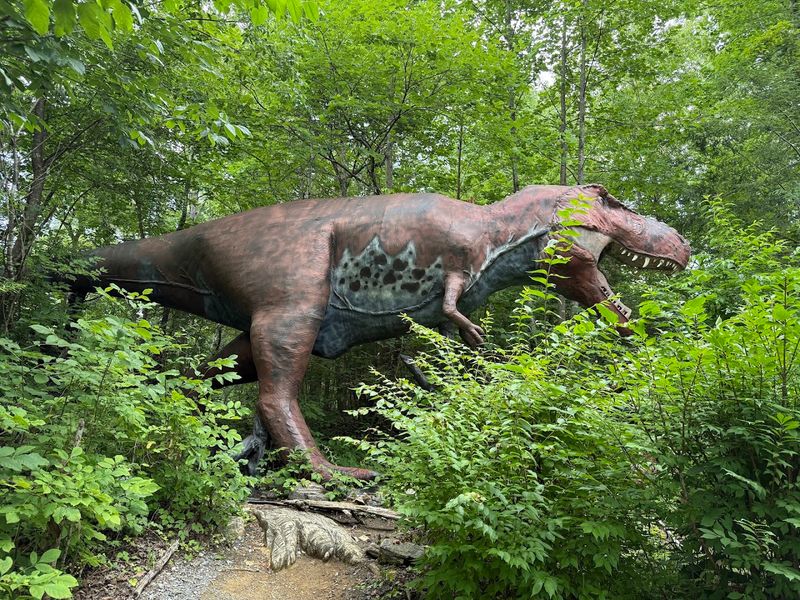
Bluff City might be the last place you’d expect to encounter dinosaurs, yet a wooded trail there is filled with massive prehistoric creatures. Backyard Terrors Dinosaur Park is exactly what it sounds like: a backyard project that grew into a full-fledged attraction featuring handmade, life-size dinosaur sculptures.
The park has a charmingly DIY quality that makes it feel like someone’s passion project come to life—because that’s exactly what it is.
The dinosaurs were built by hand using materials like metal, concrete, and fiberglass. They’re not scientifically perfect reconstructions, and they don’t try to be. Instead, they capture the spirit of these ancient creatures with enthusiasm and creativity. A towering T-Rex looms over the path.
A Triceratops stands ready to charge. Velociraptors lurk in the underbrush, waiting to surprise unsuspecting visitors.
What makes this place special is its lack of corporate polish. There are no animatronics or fancy sound effects, just static sculptures placed throughout natural woods.
The experience feels like wandering through someone’s ambitious backyard project, which is endearing rather than disappointing. Kids love it because dinosaurs are inherently cool, and these ones are big enough to feel impressive.
The trail takes about thirty to forty-five minutes to walk, depending on how much time you spend examining each dinosaur and taking photos. The path is relatively easy, though it’s outdoors and subject to weather conditions.
Backyard Terrors won’t be confused with a major theme park, and that’s part of its charm. It’s a reminder that you don’t need massive budgets to create something fun and memorable.
Someone looked at their property and thought, “This needs dinosaurs,” and then made it happen. The result is one of Tennessee’s most unexpectedly delightful attractions, proving that the best roadside stops often come from pure enthusiasm.
10. Airplane Gas Station — Knoxville
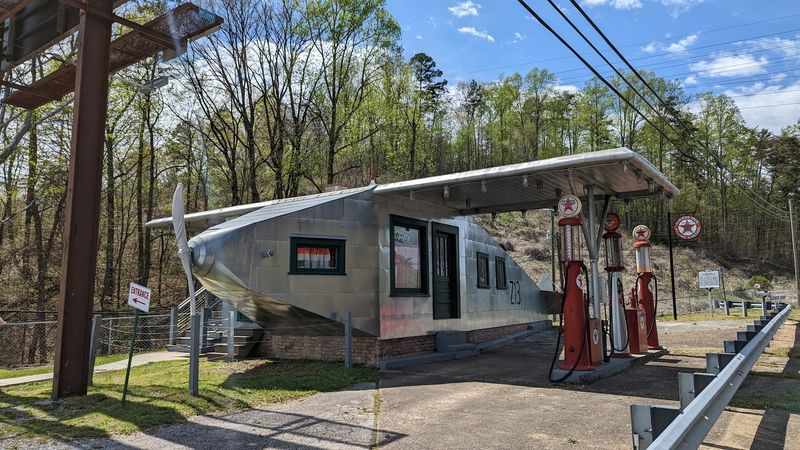
Knoxville once had something truly unique: a gas station built inside an actual airplane. While the original structure no longer operates as a working station, the concept remains one of Tennessee’s most memorable examples of roadside Americana.
During the golden age of quirky architecture, business owners competed to create the most eye-catching buildings possible, and putting a gas station inside a plane definitely qualified.
The idea was simple but brilliant: take a decommissioned aircraft, anchor it to the ground, and convert the interior into a functioning service station. Customers could fill up their tanks while standing beneath the wings of a real plane.
It was the kind of novelty that made people stop, take photos, and tell friends about the weird gas station they’d discovered.
These airplane conversions weren’t unique to Tennessee—several popped up across America during the mid-20th century. They represented an era when roadside businesses embraced wild creativity to attract travelers.
Giant donuts, enormous chickens, buildings shaped like shoes—if it made people slow down and look, it was worth building.
Today, the airplane gas station concept lives on primarily through photographs and memories. The structure that once stood in Knoxville became a local landmark and a symbol of a more playful era in American commerce.
While you can’t pull up and fill your tank under its wings anymore, the story remains part of Tennessee’s quirky history.
Similar aviation-themed businesses still exist in other states, preserving this slice of Americana. They remind us that commerce doesn’t have to be boring and that sometimes the best marketing comes from simply being impossible to ignore.
The airplane gas station was exactly that—a flying machine permanently grounded but elevated to local legend status. It’s the kind of place that makes you wish you could travel back in time just to experience it firsthand.
11. Ruby Falls — Chattanooga
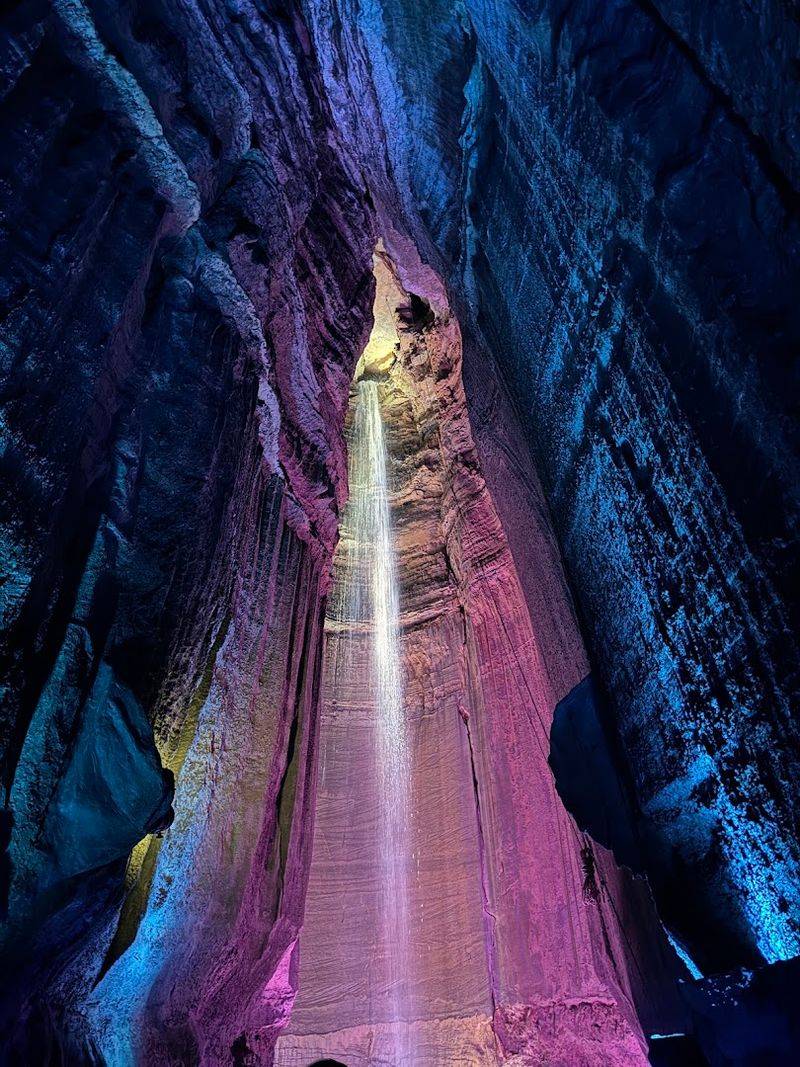
Deep inside Lookout Mountain, a waterfall plunges 145 feet through a cavern that most people never knew existed. Ruby Falls is one of Tennessee’s most spectacular natural wonders, and the fact that it’s completely underground makes it even more remarkable.
The falls were discovered in 1928 by Leo Lambert, who named them after his wife, Ruby. Today, visitors can take an elevator down to the cave system and walk to the falls through winding passages.
The journey begins with a descent over 260 feet below the surface. Once you exit the elevator, a guided tour leads you through narrow passages and past impressive rock formations.
Your guide explains the cave’s geology, how the falls were discovered, and why this particular cavern remained hidden for so long. The anticipation builds as you move deeper into the mountain.
Then you enter the main chamber, and there it is: a towering waterfall cascading down through solid rock. Colored lights illuminate the falls, creating a dramatic scene that photographs can’t quite capture.
The sound of rushing water fills the cavern, and the scale of the space becomes clear. You’re standing in a massive underground room watching a waterfall that exists in complete darkness when the lights are off.
The tour takes about an hour and twenty minutes total. The temperature underground stays around 60 degrees year-round, making it a comfortable escape during hot Tennessee summers.
The walkways are paved and accessible, though there are some inclines and stairs involved. Reservations are strongly recommended, especially during peak tourist seasons.
Ruby Falls combines natural beauty with the thrill of underground exploration. It’s not just a waterfall—it’s a waterfall hidden inside a mountain, accessible only through cave passages that wind through ancient rock.
That combination makes it one of Tennessee’s most unforgettable destinations.
12. Dunbar Cave — Clarksville
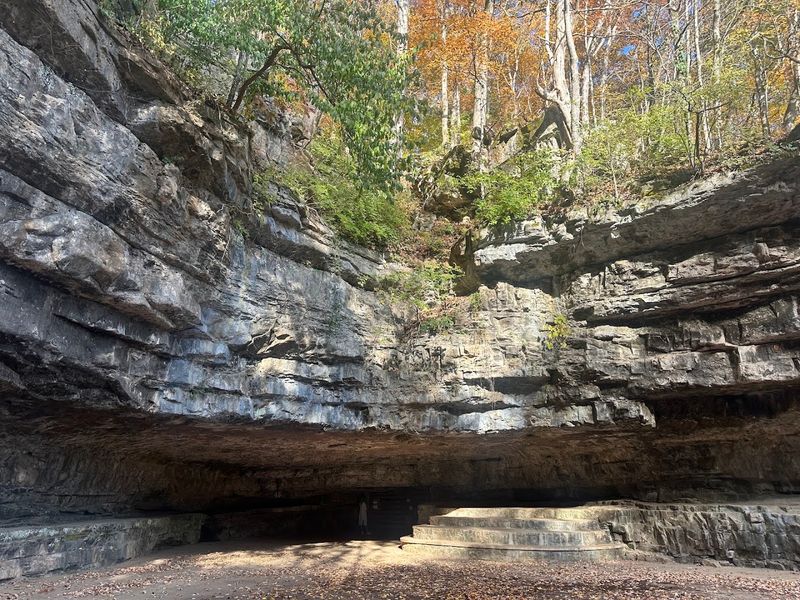
Clarksville’s Dunbar Cave offers more than just geological interest—it preserves some of Tennessee’s oldest art. The cave entrance is massive, opening like a giant mouth in the limestone hillside.
But the real treasure lies deeper inside, where prehistoric Indigenous people left behind cave art that has survived for thousands of years. These ancient markings connect modern visitors to Tennessee’s earliest inhabitants in a direct, tangible way.
The cave has been used by humans for millennia. Archaeological evidence shows that people sought shelter here as far back as 10,000 years ago.
Later, Indigenous groups created the cave art that still adorns the walls. The drawings and symbols provide glimpses into the spiritual and daily lives of people who lived here long before European contact.
Access to the cave art requires joining a guided tour, which are offered seasonally and on a limited basis. This restriction helps preserve the fragile artwork from damage caused by excessive visitors.
The guides provide context about the Indigenous peoples who created the art, the meanings behind certain symbols, and the ongoing efforts to study and protect these irreplaceable historical treasures.
Beyond the cave itself, the surrounding state park offers hiking trails, picnic areas, and a lake. The property has an interesting history beyond its prehistoric use—it was once a resort and dance hall in the 1930s and 40s, hosting big band performances inside the enormous cave entrance.
Visiting Dunbar Cave means planning ahead since tour availability is limited. Checking the park’s schedule and booking in advance ensures you don’t miss the chance to see the cave art.
It’s worth the effort to stand in the presence of artwork created thousands of years ago, preserved in darkness and now carefully shared with those willing to make the journey.
13. The Titanic Museum Attraction — Pigeon Forge

Along the busy Parkway in Pigeon Forge, a massive ship appears to be sailing through the Smoky Mountains. The Titanic Museum Attraction is built as a half-scale replica of the famous ocean liner, complete with recreated interiors, authentic artifacts, and interactive exhibits that tell the story of the ship’s tragic maiden voyage.
Walking up to the building feels surreal—it’s a ship in the mountains, frozen mid-voyage.
The museum experience begins when you receive a boarding pass featuring a real passenger’s name. Throughout your visit, you’ll learn about that person’s life and eventually discover whether they survived the disaster.
This personal connection makes the tragedy feel more immediate and real than just reading statistics. You’re following an actual person’s journey aboard the doomed ship.
Inside, the museum recreates key areas of the Titanic with impressive attention to detail. The grand staircase is a highlight, reconstructed to match the original’s opulence.
First-class cabins show how the wealthy traveled, while third-class accommodations demonstrate the stark differences in passenger experiences. You can touch an iceberg to feel how cold the water was that night, stand on sloping decks that simulate the ship’s final angle, and see artifacts recovered from the wreck site.
The museum houses over 400 artifacts, including luggage, clothing, ship components, and personal items that belonged to passengers and crew. These objects provide tangible connections to the people aboard. Seeing a child’s shoe or a passenger’s jewelry makes the human cost of the disaster impossible to ignore.
The entire visit takes about two hours. The museum is designed for all ages, with interactive elements that engage kids while providing enough historical depth to satisfy adults.
It’s educational without being dry, emotional without being exploitative. The Titanic Museum successfully honors the memory of those who sailed on the real ship while creating an attraction that helps new generations understand this pivotal maritime disaster.