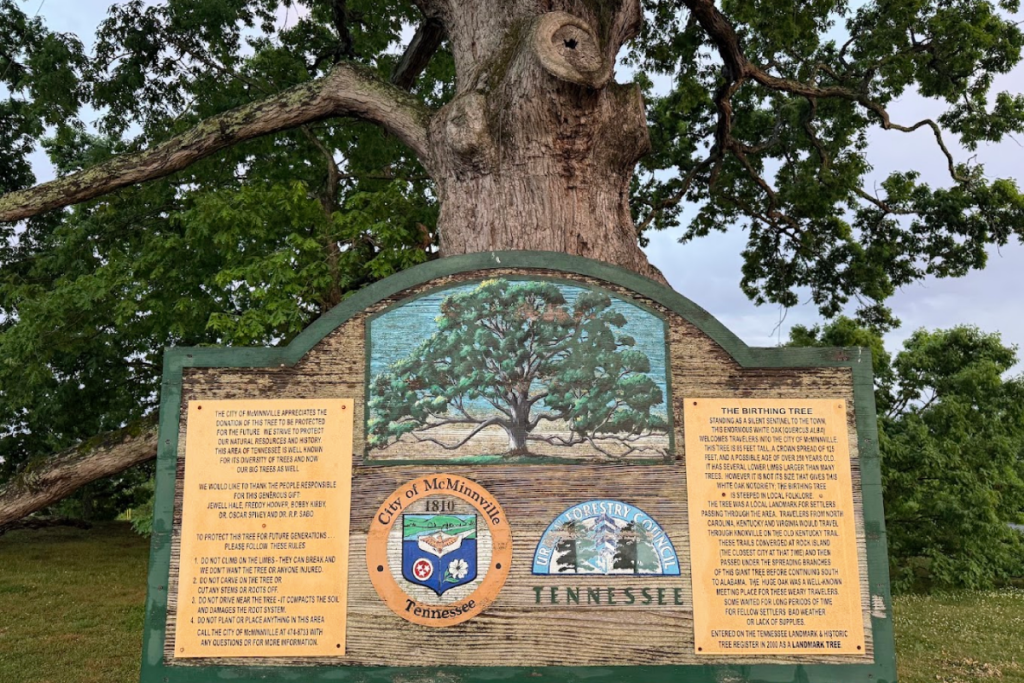
Just off a quiet street in McMinnville stands a living monument that has witnessed centuries of Tennessee history. The Birthing Tree, a massive oak estimated to be over 250 years old, has earned its name through generations of local tradition and folklore.
Visiting this ancient giant offers a rare chance to connect with the past and experience the awe of nature’s endurance.
A Quiet Roadside Landmark With Centuries of Stories
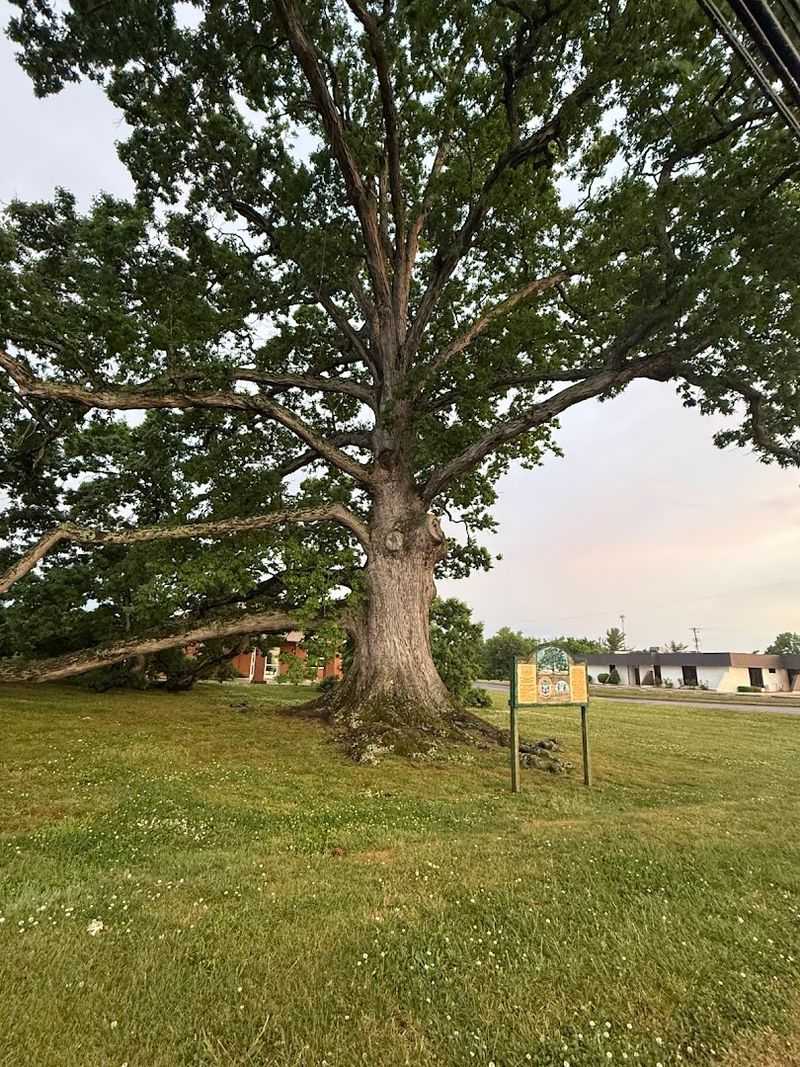
Right there on Sparta Street, tucked between regular homes and everyday life, stands something that predates just about everything around it. The Birthing Tree isn’t hiding in some remote forest or protected park.
It’s right out in the open, accessible to anyone who wants to pull over and take a look.
What makes this tree so remarkable isn’t just its age, though 250-plus years is nothing to sneeze at. It’s the fact that it’s survived everything thrown at it—storms, development, changing neighborhoods, and the general chaos of modern life.
While buildings have come and gone around it, this oak has held its ground, literally rooted in the same spot since before Tennessee was even a state.
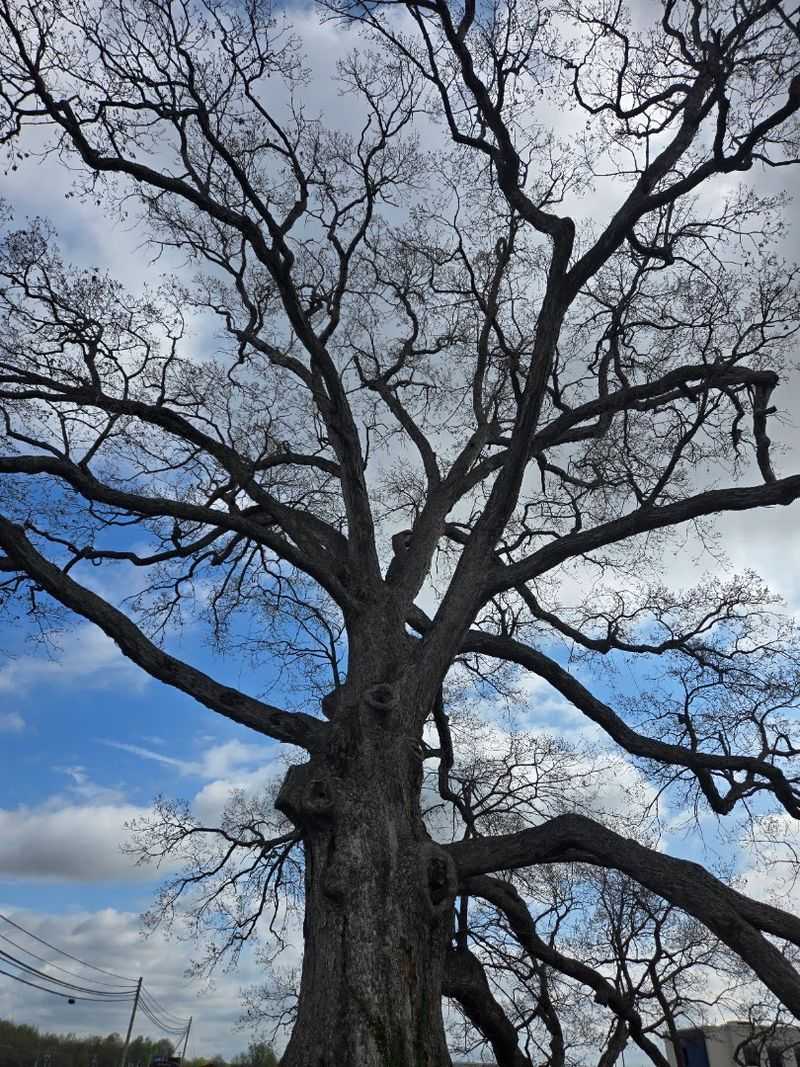
The tree’s location makes it surprisingly easy to visit. You don’t need hiking boots or a guide. Just drive down Sparta Street and you’ll spot it—trust me, you can’t miss something this massive. The trunk alone is wide enough to make you stop and stare, and the branches spread out like nature’s own cathedral ceiling.
Local visitors describe the experience as moving, and it’s easy to understand why. Standing next to something that has lived through the Revolutionary War, the Civil War, and everything since creates a strange sense of perspective.
Your daily worries suddenly feel pretty small when you’re face-to-face with 250 years of survival.
The tree sits in a residential area, which means it’s maintained as part of the neighborhood rather than as a formal tourist attraction. There’s no admission fee, no gift shop, no crowds.
Just you and an ancient oak that has outlived countless human generations. Some branches have been cleared over the years for safety, which has changed its appearance slightly, but the core majesty remains intact.
That’s exactly the kind of reflection this spot inspires—it makes you think beyond yourself and your own timeline.
Whether you’re passing through McMinnville or specifically seeking out Tennessee’s natural history, this roadside landmark delivers something genuinely special without requiring much effort on your part.
Why This Ancient Tree Became Known as the Birthing Tree
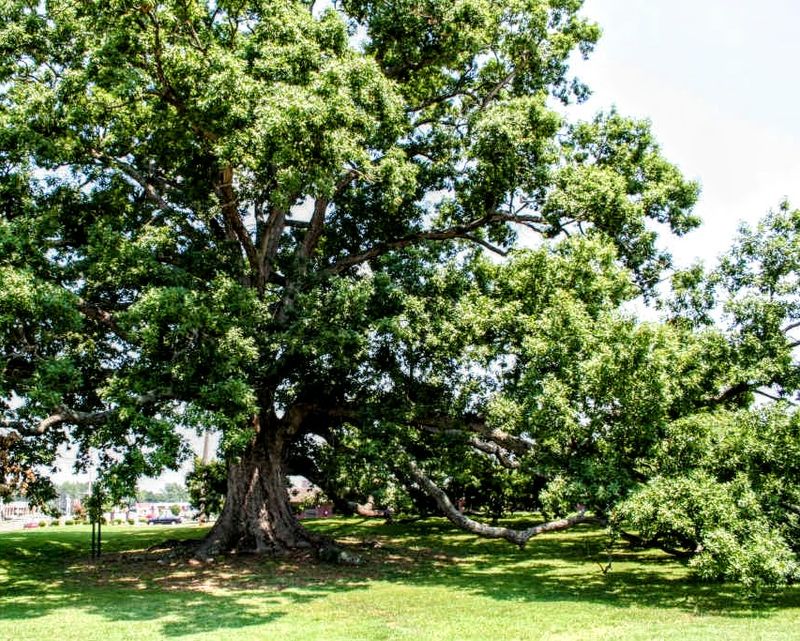
Names matter, and this one carries weight. The Birthing Tree earned its title through local tradition that stretches back generations.
According to folklore passed down through McMinnville families, Native American women used this tree as a sheltered spot during childbirth, finding refuge in its hollow or beneath its protective branches.
Whether this story can be historically verified doesn’t diminish its cultural importance. The name has stuck because it connects the tree to human experience in a deeply personal way.
Birth represents new life, continuation, and hope—all themes that resonate when you’re standing next to something that has lived for centuries.
The tree’s hollow would have provided natural shelter, and its location near water sources made practical sense for a birthing site. Native American communities in Tennessee had intimate knowledge of the landscape and used natural features for various purposes.
Trees with hollows or cavities were particularly valued for their protective qualities.
Over time, the story became part of McMinnville’s identity. Locals grew up hearing about the Birthing Tree, and the name carried forward even as the surrounding area developed.
It’s one of those pieces of oral history that binds a community to its landscape and reminds everyone that this land has a story much older than any building nearby.
The emotional response visitors have to this tree often connects to its name. Knowing that it might have sheltered women during one of life’s most vulnerable moments adds layers of meaning to its physical presence.
You’re not just looking at wood and bark—you’re contemplating generations of human experience tied to this exact spot.
Some skeptics might question the historical accuracy, and that’s fair. Documentation from 250 years ago is sparse, especially regarding Native American practices in the region.
But the story has been told and retold enough times that it has become part of the tree’s identity, whether it started as fact or folklore.
What’s undeniable is that this tree has stood witness to countless births, deaths, and everything in between over its lifespan. The name captures that sense of witnessing life’s cycles.
Even if the specific birthing story is more legend than documented history, it speaks to a larger truth about how humans have always sought connection with nature during significant life events.
The Remarkable History Hidden Beneath Its Branches
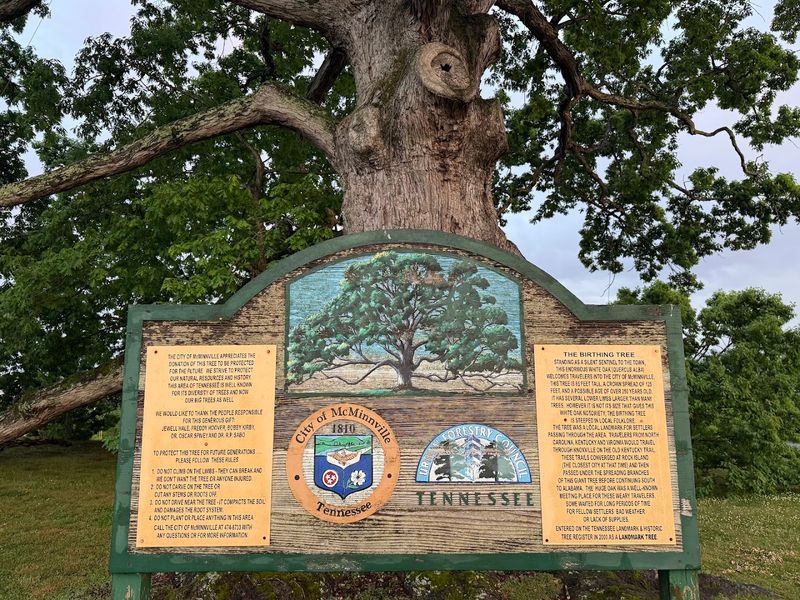
Trees don’t keep journals, but if this one could talk, it would have stories that would fill libraries. Planted or sprouted sometime in the 1770s, this oak was already growing when the Declaration of Independence was signed. It was a young tree when Tennessee became the sixteenth state in 1796.
Think about what this tree has witnessed from its spot on Sparta Street. It watched as Native American communities gave way to European settlers.
It stood through the turmoil of the Civil War, when Tennessee became a bloody battleground with divided loyalties. McMinnville itself saw occupation by both Union and Confederate forces, and this tree was there for all of it.
The tree survived the agricultural era when the land around it was likely farmland. It weathered the transition to residential development as McMinnville grew from a small settlement into a proper town.
Roads were built, houses constructed, and modern life gradually surrounded this ancient witness.
Natural disasters have come and gone during the tree’s lifetime. Tornadoes, ice storms, droughts, and floods have all passed through this region, yet the tree endures.
Its survival speaks to both luck and remarkable resilience. Oaks are known for their strength, but lasting this long requires more than just hardy wood.
The tree has also adapted to human intervention. Branch clearing for safety reasons has altered its appearance, particularly in recent years.
Some visitors note that the trimming has reduced its visual impact, but it was likely necessary to prevent damage to nearby structures or injury to people. Maintenance is part of preservation when a historic tree exists in a populated area.
McMinnville’s community has clearly valued this tree enough to protect it through generations of development. That protection itself is part of the tree’s history.
Someone, at multiple points over the decades, had to decide that this tree mattered enough to keep. Those decisions have allowed it to reach its current age.
The tree’s designation as a historical landmark acknowledges its significance beyond just being old. It represents continuity in a world of constant change.
Standing beneath its branches, you’re occupying the same space that people occupied 200 years ago, looking up at the same tree, probably feeling similarly small.
What to Expect When You Visit in McMinnville
Planning a visit requires minimal effort, which is part of the appeal. The tree is located at 1524 Sparta Street in McMinnville, easily accessible by car. You’ll find it in a residential neighborhood, so keep in mind that people live nearby and respect the area accordingly.
Parking is informal—you can pull over along the street near the tree. There’s no designated parking lot or visitor center because this isn’t a commercial attraction.
It’s simply a tree that happens to be historically significant, and the community has kept it that way.
When you arrive, you’ll immediately understand why people make the stop. The tree’s size is genuinely impressive, with a trunk circumference that takes several people holding hands to encircle.
The branches spread wide, creating a canopy that provides substantial shade even after trimming.
There’s no admission fee, no hours of operation, and no staff on site. You can visit any time during daylight hours. Most people spend between ten and thirty minutes here—enough time to walk around the tree, take photos, and absorb the experience without feeling rushed.
Don’t expect elaborate facilities or interpretive signs with detailed historical information. The tree speaks for itself, and part of the charm is its simplicity.
You’re not being sold anything or guided through a scripted experience. You’re just visiting a tree, which somehow makes it more authentic.
Photography is encouraged, and the tree provides a dramatic subject. Different times of day offer different lighting, and seasonal changes affect the tree’s appearance.
Spring and summer show it in full leaf, while fall and winter reveal more of its structural form. However, most visitors still find the tree impressive despite any alterations.
McMinnville offers other attractions if you’re planning a longer visit. The town has restaurants, shops, and additional historical sites.
Many visitors treat the Birthing Tree as a quick stop while exploring the broader area rather than as a standalone destination. That approach makes sense—it’s worth seeing, but it’s not an all-day affair.
Bring water, especially in summer, and wear comfortable shoes even though you won’t be hiking. The ground around the tree is generally level and easy to navigate.
Why This Living Piece of Tennessee History Is Worth the Stop
In a world obsessed with new experiences and manufactured attractions, there’s something refreshing about a place that asks nothing of you except a moment of attention. The Birthing Tree doesn’t try to entertain you with gimmicks or wow you with special effects.
It simply exists, as it has for over two centuries, and that’s enough.
The value of this stop lies in perspective. Modern life moves fast, and we rarely pause to consider timelines beyond our own lifespans.
Standing next to something that was alive before your great-great-great-grandparents were born forces a mental shift. Suddenly, your timeline is just a tiny slice of a much larger story.
This tree has earned its 4.7-star rating from visitors who appreciate authenticity. Multiple reviews describe the experience as moving, fascinating, and unbelievable.
The convenience factor shouldn’t be overlooked either. You don’t need special equipment, advanced planning, or significant time investment.
Drive to Sparta Street, park, get out, and you’re there. For travelers passing through McMinnville or exploring Tennessee, it’s an easy addition to your route that delivers genuine value without demanding much in return.
The tree connects you to Tennessee’s deeper history in a tangible way. Reading about history in books or seeing artifacts in museums is valuable, but standing next to a living thing that was present during that history creates a different kind of connection.
This tree was here during events you’ve only read about, and that makes those events feel more real.
For families, it’s an educational opportunity that doesn’t feel like a lesson. Kids can grasp the concept of age when they see something this large and learn it’s been growing for 250 years.
It sparks questions and curiosity in a way that abstract facts often don’t.
Ultimately, the Birthing Tree is worth stopping for because it reminds us that some things endure. In a disposable culture, permanence feels radical.
This tree has outlasted empires, technologies, and countless human dramas, and it’s still here, still growing, still worth your time.