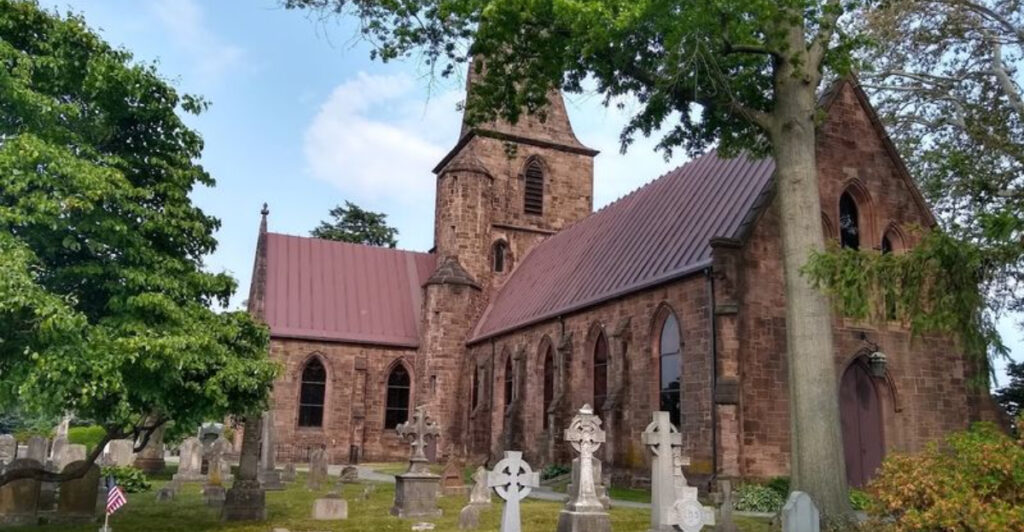
A 30-foot Buddha appears beyond the trees in Franklin Township. In Newark, twin Gothic towers climb above Branch Brook Park, while a few blocks away an old synagogue protects a carved ark that predates the building around it.
New Jersey’s sacred landmarks do not tell one tidy architectural story, and that is exactly what makes this trip through them so rewarding. Some have survived wars, fires, demographic shifts, and more than three centuries of Sunday mornings.
Others are modern structures built with ancient design rules, hand-carved stone, and rituals carried across oceans. Together, they show how faith communities preserve memory: in box pews, stained glass, burial grounds, bells, processions, silent worship, and carefully repeated ceremonies.
You do not need to belong to any particular tradition to appreciate these places. Arrive respectfully, look closely, and remember that these are active houses of worship first and historical attractions second.
The past here is not behind glass. It is still being used.
1. Cathedral Basilica of the Sacred Heart – Newark
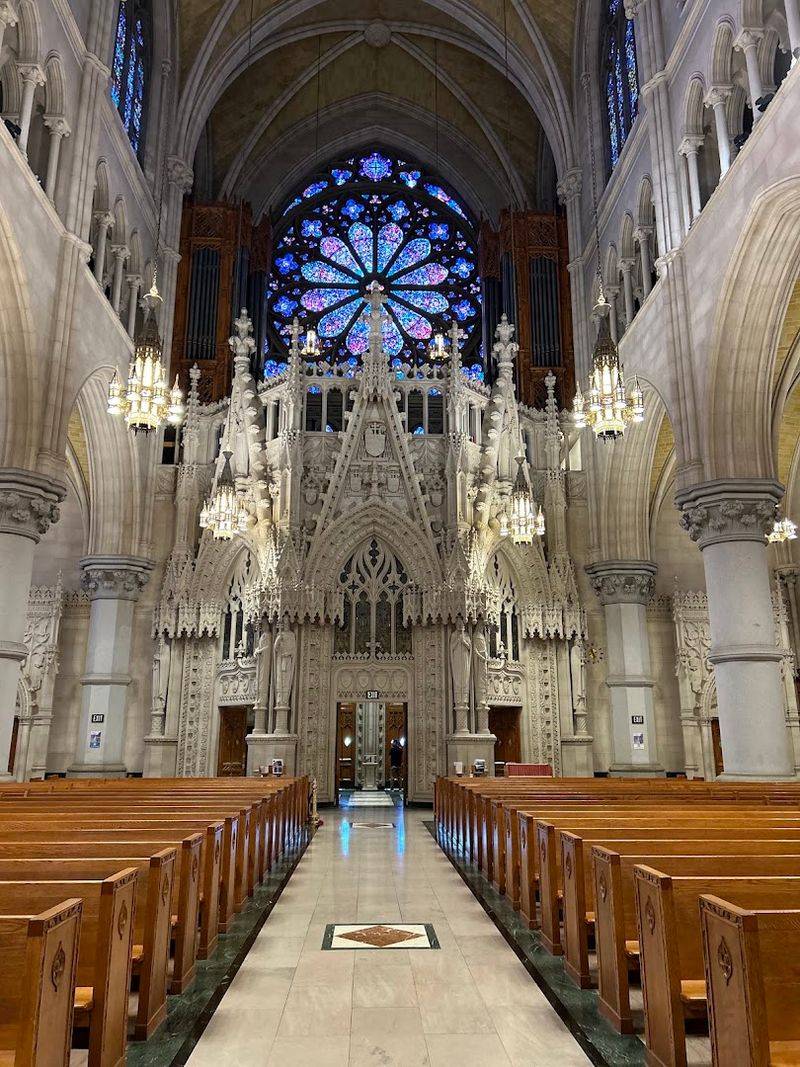
From the edge of Branch Brook Park, the two limestone towers look less like part of Newark than a piece of medieval France that took a wrong turn across the Atlantic. Construction began in 1898, but the cathedral was not dedicated until 1954, a 55-year building saga that helps explain its unusual richness.
The design evolved from an English-Irish Gothic concept toward a more distinctly French Gothic style, filling the immense interior with pointed arches, carved stone, imported marble, oak woodwork, and stained glass made in Munich. The scale is the first surprise; the smaller details are the reason to slow down.
Five chapels curve around the sanctuary, reflecting communities that shaped the Archdiocese of Newark, while a 36-foot rose window dominates the gallery above the main entrance.
Music lovers should keep an eye on the cathedral’s concert calendar because its organ contains more than 9,500 pipes and can turn the nave into an instrument of its own.
Outside, the 232-foot towers make an especially dramatic pairing with Branch Brook Park during cherry blossom season. Visitors should remember that this is Newark’s principal Catholic church, not a museum, so services and ceremonies may limit casual access.
Step in quietly when the doors are open, give your eyes a minute to adjust, and let the building reveal itself from floor to ceiling.
2. Congregation Ahavas Sholom – Newark
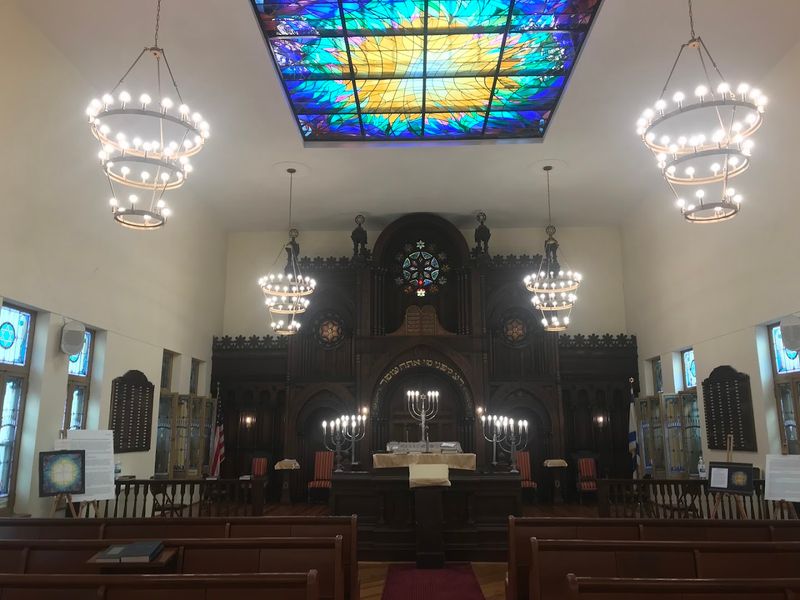
The most precious object inside this Broadway synagogue is older than the sanctuary and has already survived the disappearance of another house of worship.
Congregation Ahavas Sholom formed in the early 1900s, and its present brick-and-stone building opened in 1923, when Newark supported dozens of Jewish congregations.
The community’s carved mahogany ark came from a 19th-century Manhattan synagogue that was demolished; it was adapted and installed here in 1929.
With Gothic arches, layered ornament, and a commanding presence behind the bimah, it is believed to be the oldest known synagogue ark in New Jersey and one of the oldest in the country.
That single object would justify a visit, but the larger story is even stronger. Ahavas Sholom endured as Jewish families moved away from Newark, becoming the city’s oldest continuously operating synagogue rather than a preserved shell from a vanished neighborhood.
Stained-glass memorial windows and photographs in the social hall hold the names and faces of members who kept the congregation going through changing decades.
The building also houses the Jewish Museum of New Jersey, which presents exhibitions and programs connected to Jewish history and culture.
This remains an active congregation, so dropping by unannounced is not the best approach. Check ahead for a service, museum program, or arranged visit.
Once inside, look beyond the grand ark to the smaller memorial details; they make the building feel less like a monument and more like a family album written in wood, glass, and stone.
3. St. Lucy’s Church and National Shrine of St. Gerard – Newark
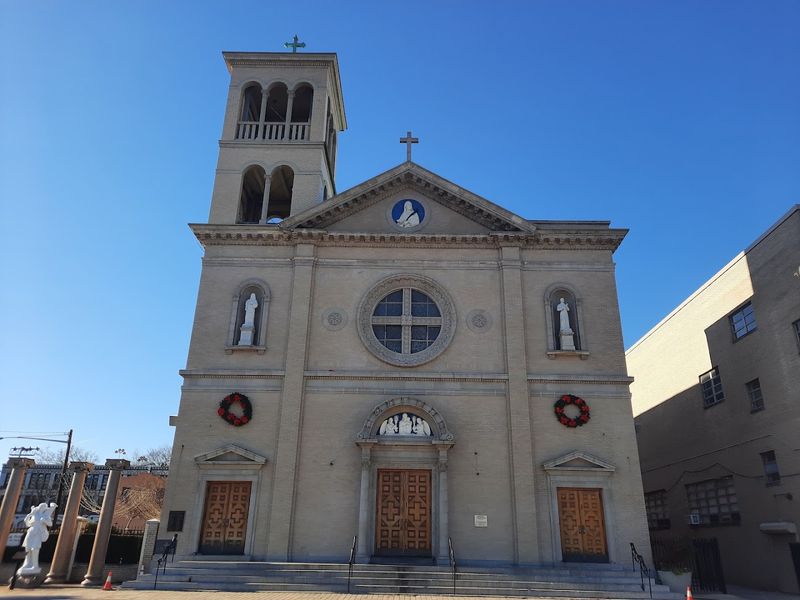
On an ordinary weekday, the candles before St. Gerard can make this richly decorated church feel intensely personal.
During the annual October feast, the same devotion spills into the streets with Masses, music, a procession, and generations of Italian American families returning to the old First Ward.
The current church was completed in 1925 and quickly became known as Newark’s “Italian Cathedral,” an affectionate nickname earned through both its size and its role in the city’s once-thriving Little Italy. Its Romanesque Revival exterior gives only a partial warning of what waits inside.
Murals, stained glass, reliefs, statues, and elaborate painted surfaces cover the sanctuary, much of the decorative program associated with artist Gonippo Raggi. The church’s defining spiritual focus is the National Shrine of St. Gerard Majella, patron of mothers, children, and difficult pregnancies.
The shrine received national designation in 1977 after decades of pilgrims arriving to pray, leave petitions, and return with children whose births they considered answers to those prayers. That continuing stream of visitors is what separates St. Lucy’s from a purely architectural stop.
It carries Newark’s Italian immigrant history, but it also remains a place of present-tense hope for families from far beyond the neighborhood. The church sits near Branch Brook Park and can be paired with the cathedral for a striking two-stop visit.
Come outside feast days for a quieter look, or plan for October when faith, food, brass-band energy, and neighborhood memory all converge.
4. BAPS Swaminarayan Akshardham – Robbinsville
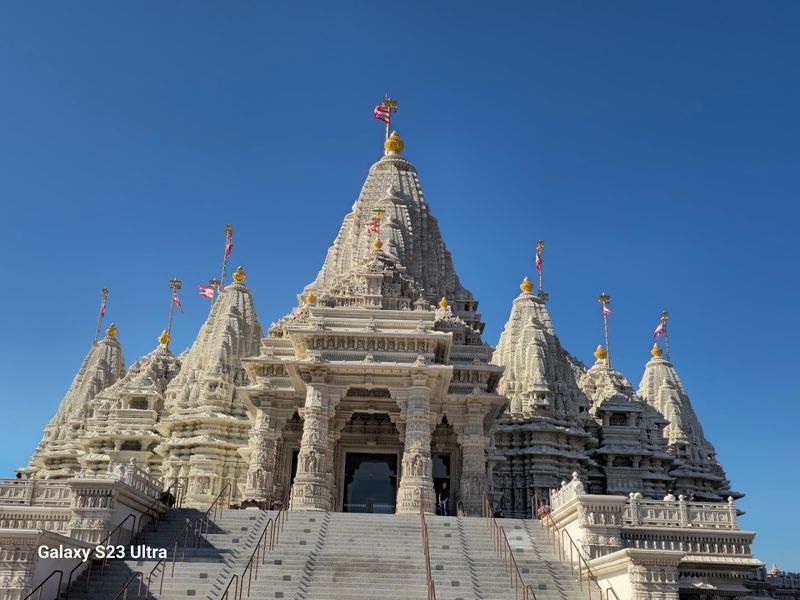
Nothing about the 2023 completion date prepares you for a place that looks as though generations of artisans must have worked on it.
BAPS Swaminarayan Akshardham is not historic because of age; it belongs here because it translates ancient Hindu sacred architecture, symbolism, and craftsmanship into one of New Jersey’s most ambitious modern religious complexes.
At its center stands the Akshardham Mahamandir, assembled from intricately carved stone and designed to reward close inspection rather than a quick photo from the parking lot.
Figures, plants, deities, dancers, musicians, and scenes drawn from Hindu traditions cover pillars and walls in a visual language that reaches back centuries.
The broader campus continues that conversation between old forms and a new setting. A 49-foot image of Nilkanth Varni welcomes visitors, while the Brahm Kund reinterprets a traditional Indian stepped pond and contains water gathered from sacred rivers in India and waterways across the United States.
Nearby, the earlier marble mandir offers another, more intimate example of stone carving and devotional space. Visitors of all backgrounds are welcomed, but respectful dress, quiet behavior, and posted photography rules matter.
Allow more time than you think you need, especially if you plan to explore the welcome center or stop at the vegetarian café. The most interesting way to see Akshardham is not as an exotic spectacle.
Treat it as a living lesson in how a diaspora community can carry an ancient architectural tradition forward without freezing it in the past.
5. Princeton University Chapel – Princeton
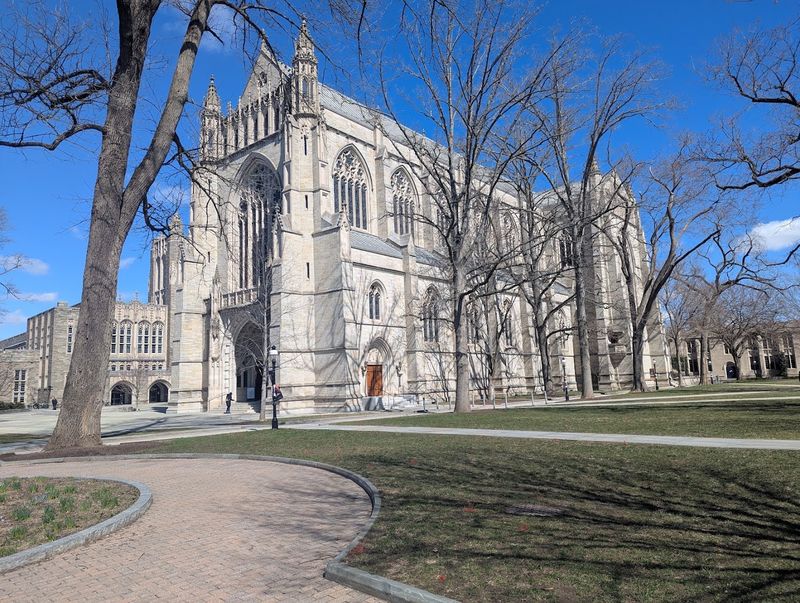
One devastating fire created the opening for Princeton to build one of America’s great collegiate chapels.
The university’s earlier Marquand Chapel burned in 1920, and the replacement, completed in 1928, was designed by Gothic Revival master Ralph Adams Cram on a scale intended to anchor the expanding campus.
Its limestone walls, soaring vaults, carved wood, and 14th-century English Gothic inspiration make the building feel far older than it is, especially when footsteps echo through the nave between events. The stained glass deserves more than a passing glance.
Religious scenes share space with figures tied to Princeton and American history, including John Witherspoon, the university president and clergyman who signed the Declaration of Independence, and his student James Madison.
Other windows draw from Dante, Milton, Malory, and Bunyan, turning the chapel into a surprisingly literary building.
The oak pews, memorial stones, silver furnishings, and immense organ add layers that can easily disappear if you enter, snap one wide-angle photograph, and leave.
Seating roughly 2,000 people, the chapel remains a working venue for worship, memorials, weddings, lectures, and concerts rather than an ornamental campus backdrop.
Its organ, with around 8,000 pipes, is reason enough to attend a musical program. Public access can change around university ceremonies and private events, so check the schedule before making a special trip.
Pair the chapel with a slow walk through Princeton’s older campus rather than rushing straight back to Nassau Street; the surrounding Gothic buildings extend the mood beautifully.
6. Sri Venkateswara Temple – Bridgewater
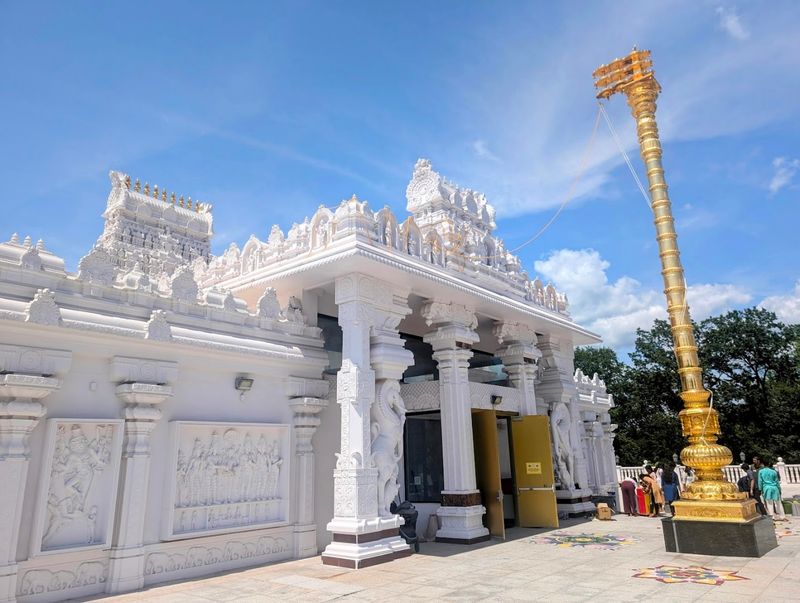
Before stepping into the main worship space, visitors encounter a tall flagstaff that signals they are entering a sacred landscape governed by traditions far older than the suburban roads outside.
The Hindu Temple and Cultural Society of USA formed in 1989, purchased its Bridgewater property in 1992, and inaugurated the traditional stone temple in 1998.
Indian temple architects designed it according to the Agamas, sacred texts that guide both temple architecture and worship. That continuity is the real time-capsule quality here.
The building is modern, but the placement of shrines, movement of worshippers, ritual offerings, and sculptural program follow systems refined over centuries.
Sri Venkateswara, a form of Vishnu, is the principal deity, yet the interior includes multiple sannidhanams dedicated to other deities, allowing visitors to see how a Hindu temple functions as a layered sacred world rather than a room focused on a single altar.
The dhwajasthambham, or flagstaff, marks an important starting point, and the self-guided route introduces customs such as circumambulation, prostration, and stopping at individual shrines.
First-time guests should follow posted etiquette, remove footwear where directed, and avoid interrupting worshippers for photographs or explanations.
Festival days bring color, music, flowers, and larger crowds; quieter periods make it easier to study the carved details and understand the layout.
The adjacent cultural and community activities also matter, showing how the temple serves as a religious home, teaching center, and gathering place for Indian American families throughout the region.
7. New Jersey Buddhist Vihara and Meditation Center – Franklin Township
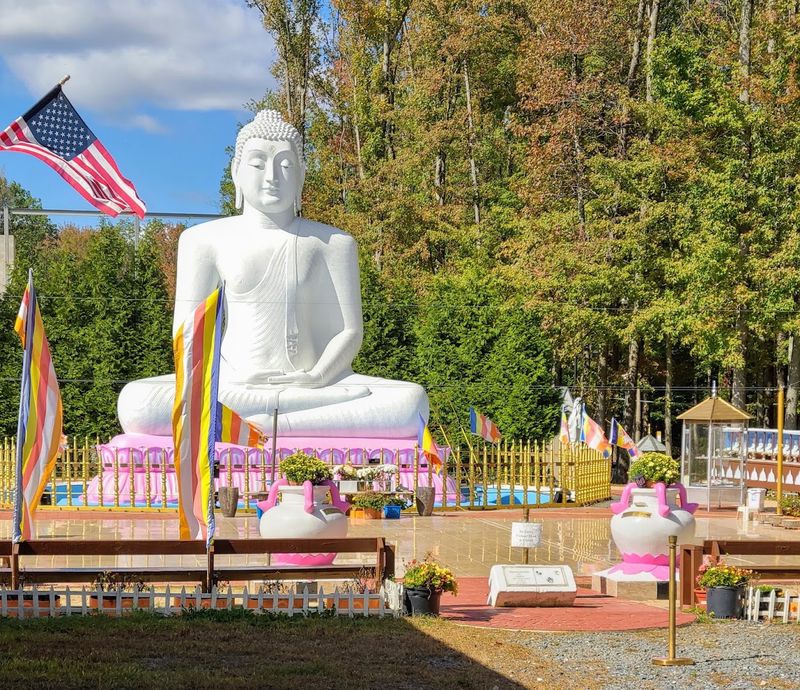
The surprise arrives before any introduction: a 30-foot seated Buddha rising above a wooded property near Princeton, composed in the calm Samadhi pose associated with deep meditation.
The New Jersey Buddhist Vihara and Meditation Center was founded in 2003, and the statue was unveiled in 2009 as an expression of Sri Lankan Theravada Buddhism.
It has since become the visual heart of a 10-acre campus devoted to Buddhist practice and interfaith exchange. Unlike a church whose history is embedded in colonial timbers or Revolutionary-era graves, this site creates a sense of continuity through posture, ritual, landscape, and disciplined stillness.
The Buddha’s lowered gaze changes the pace of a visit immediately. Nearby gardens, devotional objects, prayer flags, and wooded spaces encourage visitors to stop treating the property like a roadside curiosity and experience it as a place built for reflection.
The center welcomes Buddhists and non-Buddhists, hosts meditation and religious programs, and has drawn participants from several Buddhist traditions as well as neighboring faith communities. Expansion work has added a larger meditation and activity center, reflecting the congregation’s growth and broad community role.
Visitors should dress modestly, speak softly, and give ceremonies plenty of space. Checking the calendar is worthwhile if you hope to attend a meditation session or cultural observance.
Even on a simple daytime visit, do not rush straight to the statue and back to the car. Walk the grounds slowly; the quiet transition from highway traffic to birds, trees, and stillness is part of the experience.
8. Old Tennent Presbyterian Church – Manalapan
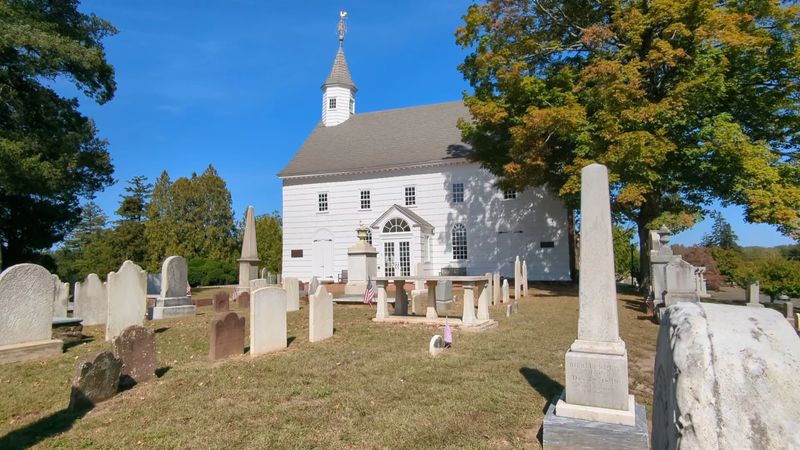
Battlefield silence hangs differently around a building that once held wounded soldiers. Old Tennent’s congregation dates to 1692, and the present white meetinghouse was erected between 1751 and 1753, decades before the Revolution reached the surrounding Monmouth County farmland.
On June 28, 1778, the Battle of Monmouth swept across the area, and the church served as a temporary hospital for Continental troops. Its plain exterior and restrained Georgian form make that history feel almost startling; there are no grand stone towers announcing that a national drama unfolded nearby.
Inside, the simple sanctuary, old woodwork, and traditional layout preserve the feeling of an 18th-century Presbyterian meetinghouse still being used for its original purpose. Outside, the adjoining cemetery deepens the story.
Established before the present church, it contains the graves of Revolutionary figures, local families, and soldiers connected to the battle, including British officer Henry Monckton.
The property borders the broader Monmouth Battlefield landscape, so this stop works best as part of a history-focused outing rather than a quick roadside photograph.
Walk the graveyard carefully, read the oldest stones, and then look across the open land to understand why the church became involved in the fighting. Regular worship continues, while historical access and tours may require advance arrangements.
That active use matters. Old Tennent is not a reconstructed colonial exhibit; it is a congregation meeting in a building that has carried prayer, fear, injury, mourning, and ordinary Sunday life for nearly three centuries.
9. St. Mary’s Episcopal Church – Burlington
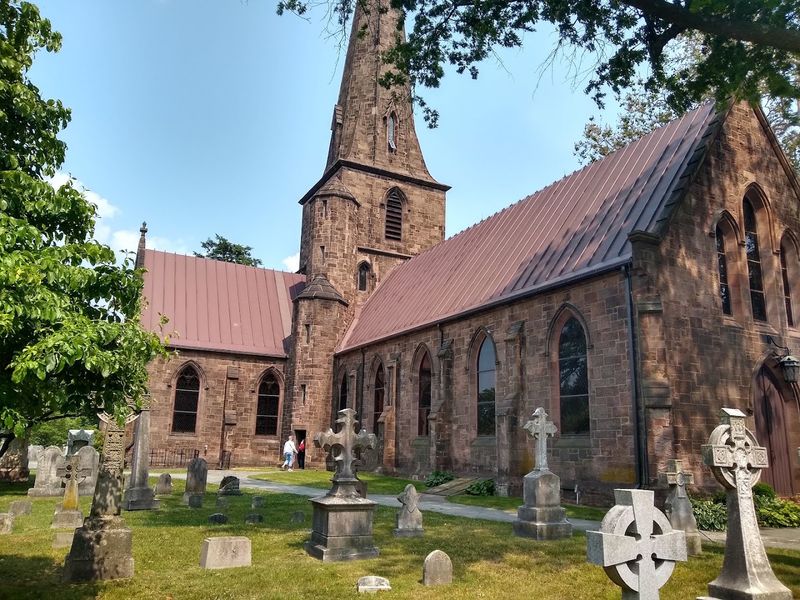
Two churches share this historic parish campus, and seeing them together is like turning two chapters of American architecture at once. Old St. Mary’s began in 1703, making it one of New Jersey’s earliest Episcopal church buildings.
Its compact form, churchyard, and colonial associations provide the intimate half of the experience. George Washington attended services here while visiting troops in Burlington in 1782, and a bell cast for the parish in 1769 still survives in the present belfry.
By the 19th century, the congregation wanted something larger and more architecturally ambitious. The result was New St. Mary’s, designed by Richard Upjohn, whose Gothic Revival churches helped reshape American religious architecture.
Its cornerstone was laid in 1845, and the building was consecrated in 1854. The 175-foot spire rises above Burlington with elegant confidence, while the stone walls, pointed arches, stained glass, rood screen, and church furnishings create a distinctly Anglican sense of ceremony.
A major fire in 1976 severely damaged the newer church, but restoration returned it to use, adding another layer to a parish already accustomed to survival. Old St. Mary’s remains active for seasonal worship and special events, so the campus is not simply an architectural pairing frozen for visitors.
Take time for the burial ground as well as both interiors when access permits. Burlington’s walkable historic district makes it easy to combine the church with nearby colonial streets, but this is the landmark likely to stay in your mind after the rest blur together.
10. Historic Cold Spring Presbyterian Church – Cape May
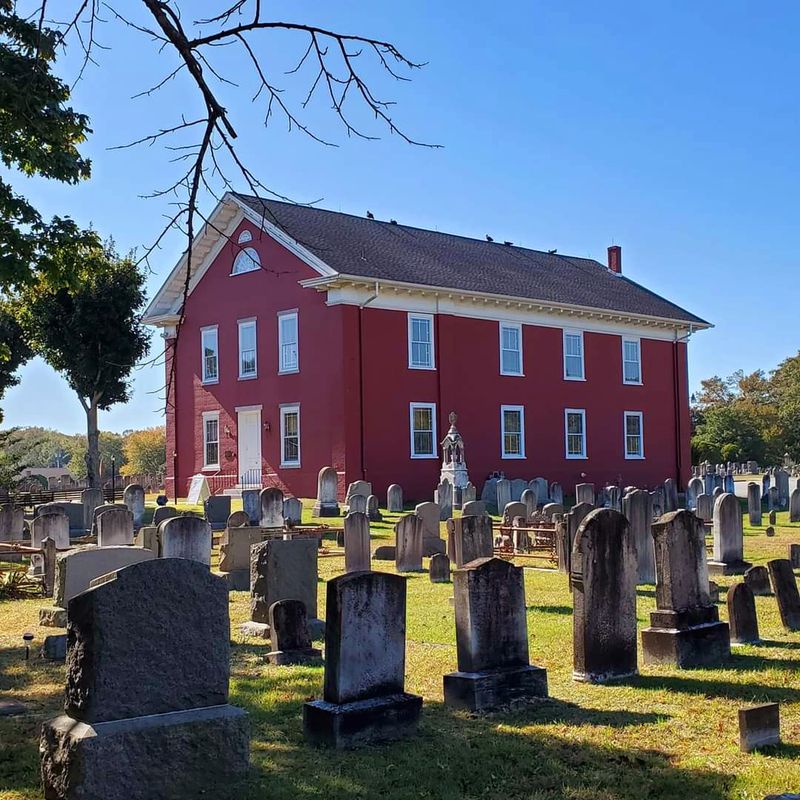
Red brick, white trim, and rows of old gravestones make this church feel like the opening scene of a period drama, especially when summer greenery presses close around the cemetery. The congregation began in 1714, but the present building—affectionately called Old Brick—dates to 1823.
Thomas Hughes, the architect associated with Cape May’s Congress Hall, designed the Federal-style sanctuary with a simplicity that becomes more interesting once you step inside. Numbered box pews still have their individual doors and latches, remnants of a time when families purchased pews to help finance construction.
A U-shaped gallery wraps around the room, adding an almost civic-meeting quality to the worship space. The surrounding cemetery is equally important.
Its oldest marked grave dates to 1742, and the grounds contain an extraordinary concentration of Mayflower descendants, along with veterans and generations of Cape May County families.
That combination of church and burial ground makes Cold Spring one of the clearest places in South Jersey to trace a community across centuries.
During warmer months, guided historical walks may include costumed interpreters sharing stories from both the sanctuary and cemetery. Even without a tour, the site rewards patient wandering.
Parking is available behind the church, and a ramped side entrance improves accessibility. Historic Cold Spring Village is next door, making the pairing obvious, but leave enough time for the church itself.
The box pew doors, worn stones, broad lawns, and occasional bald eagle overhead make history feel less staged here than quietly accumulated.
11. Mount Holly Friends Meeting House – Mount Holly
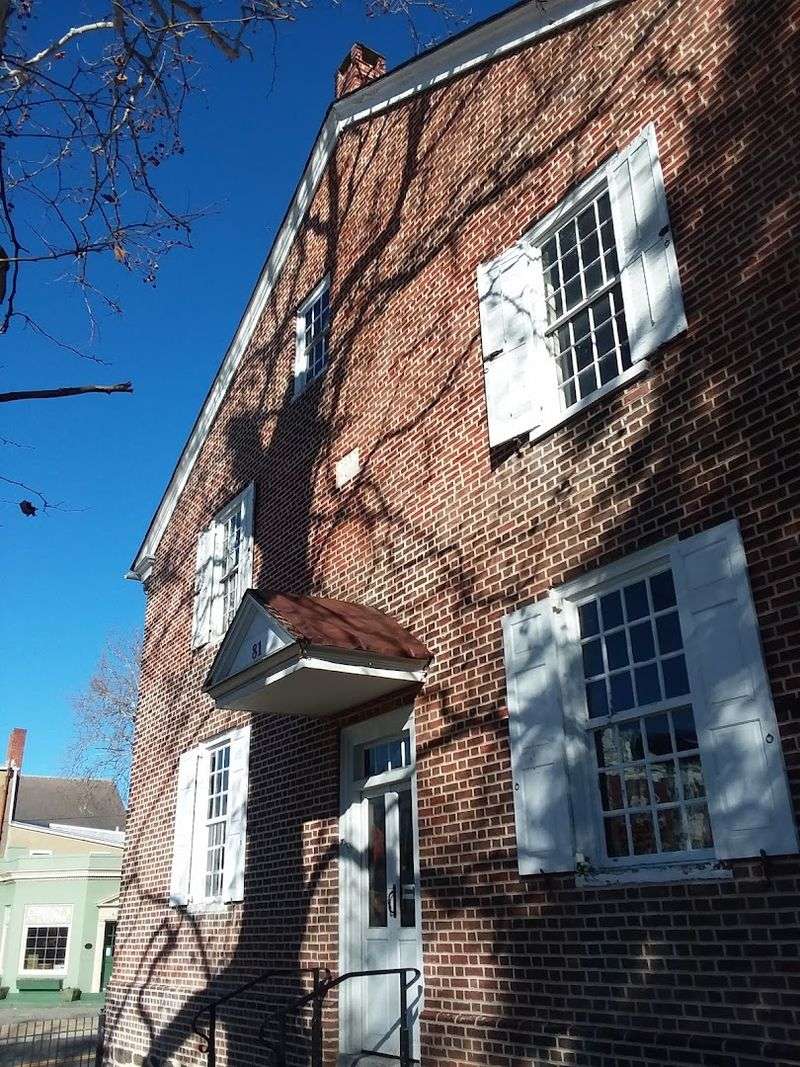
Silence is not an absence at a Quaker meeting; it is the central practice, and this 1775 brick building was shaped around it. Mount Holly Friends Meeting House stands on High Street with restrained early Quaker proportions—no steeple, no stained-glass spectacle, and no elaborate altar directing attention.
The plainness is intentional. Worshippers gather together, wait in silence, and speak only when moved to offer a message.
That continuing use gives the room a rare historical immediacy because the essential experience of worship remains closely connected to what 18th-century Friends would have recognized. The building also played a civic role during the Revolutionary period.
When British forces occupied Trenton, the New Jersey Legislature used the meeting house, briefly turning a quiet religious space into part of the state’s wartime government. It is considered the oldest public building in the Mount Holly Historic District and now hosts community events as well as weekly worship.
Visitors interested in architecture may initially find fewer decorative details to study than at a cathedral or Hindu temple, but that is precisely the point. Notice the balanced room, straightforward woodwork, and way the seating encourages shared attention rather than performance.
The meeting welcomes guests, though anyone attending worship should be prepared to sit quietly and follow the community’s lead. Confirm the current schedule before arriving, then give yourself time to walk Mount Holly’s surrounding historic streets.
The simplicity becomes more powerful once you stop looking for ornament and start noticing what the building deliberately leaves out.
12. Old Bergen Church – Jersey City
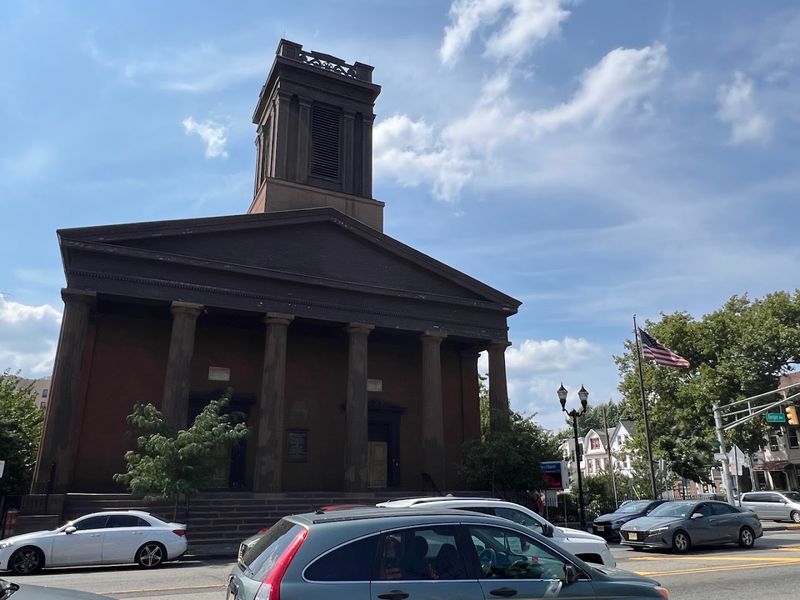
Jersey City traffic streams past a congregation whose roots reach back to the Dutch village of Bergen in 1660. That contrast is the hook at Old Bergen Church: one of the state’s longest continuous religious stories survives in the middle of a modern neighborhood.
The first worshippers met in a log schoolhouse before constructing an octagonal sandstone church in 1680. A second stone building followed in 1773, and the present structure was erected in 1841 and dedicated the next year.
Its Greek Revival design is far removed from the shape of the original Dutch church, but the broad portico, six columns, and brownstone façade give it a dignified civic presence on Bergen Avenue. The most meaningful details connect the current building to the congregations that came before it.
Historic communion silver dating to 1730 and other artifacts from earlier churches preserve a physical link to colonial worship, while the nearby Old Bergen Cemetery marks the location of the community’s first sacred ground.
The congregation’s history also reflects the complicated politics of the Revolutionary era and the changing population of Jersey City over more than three and a half centuries.
This is not a polished heritage attraction with constant tours, so arrange access rather than assuming the doors will be open. Even from outside, the church makes a strong final stop.
Stand beneath the portico, then look toward the surrounding storefronts, buses, and apartment buildings. Few places illustrate New Jersey’s habit of layering new cities over old communities quite this clearly.