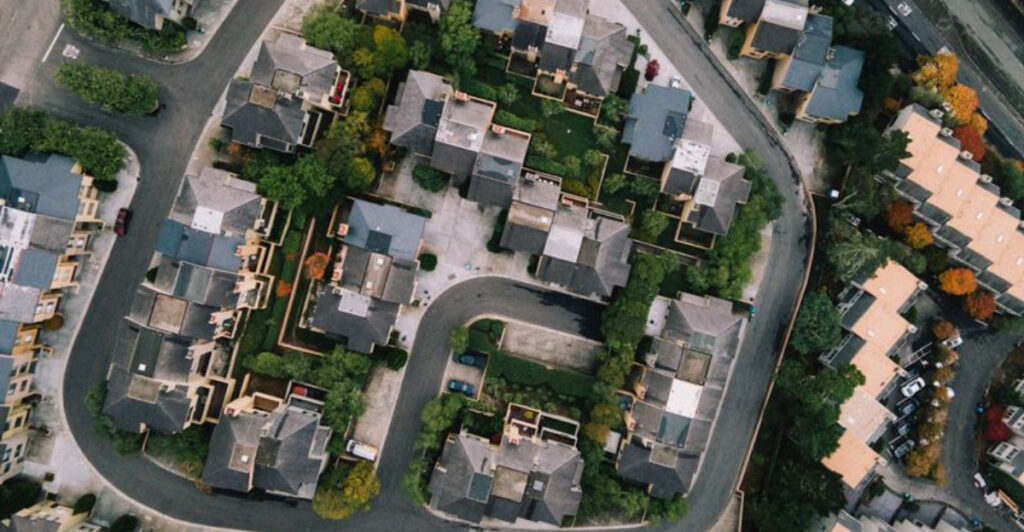
A million-dollar house barely raises an eyebrow in these corners of New Jersey. On certain streets, it is simply the opening bid.
Behind downtowns, commuter platforms, stone mansions, and immaculate hedges are household incomes that place Garden State communities in national company.
A 2026 analysis of suburbs with at least 5,000 households put five New Jersey towns in America’s top 50 for average household income; all carried average home values above $1 million.
Smaller enclaves such as Short Hills and Alpine did not meet that study’s size requirement, but their income and real-estate figures make them impossible to ignore. What makes this group interesting is how differently the wealth appears.
One town feels like a Main Street movie set, another revolves around an Ivy League campus, and another hides enormous estates behind wooded roads. Here are seven New Jersey suburbs where affluence shapes the landscape without giving every place the same personality.
1. Westfield
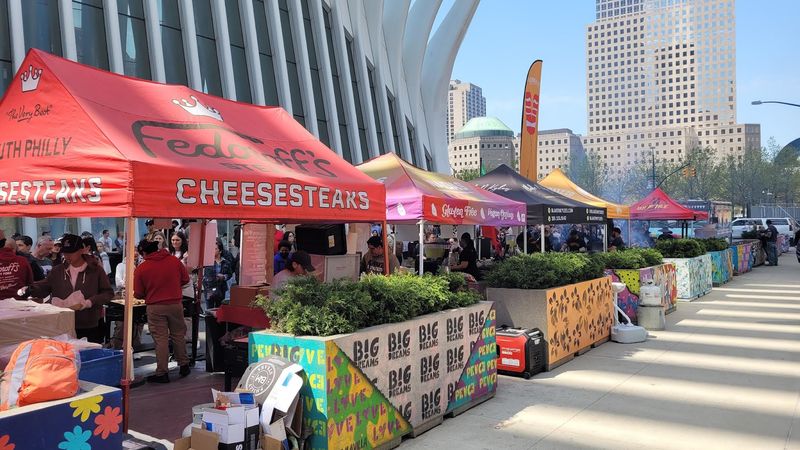
A Saturday morning on East Broad Street can look deceptively ordinary: coffee cups in hand, strollers rolling past shop windows, and someone cutting through Mindowaskin Park before brunch. Then the numbers arrive.
Westfield placed No. 30 nationally, with an average household income of $306,889 and an April 2026 average home value of $1,315,940. Both figures rose from the previous year, including an 8.4 percent jump in home value.
The appeal is not built on grand estates alone. Westfield has the kind of downtown that lets residents complete half a weekend without getting back in the car.
Quimby Street and the surrounding blocks mix restaurants, boutiques, bakeries, fitness studios, and practical errands, while the train station keeps Manhattan within the rhythm of daily life. That balance helps explain why buyers compete so fiercely for houses within walking distance of the center.
A few blocks away, 12.6-acre Mindowaskin Park softens the polished commercial district with a pond, gazebo, gardens, and shaded paths. It is where the town’s affluence feels most approachable: less velvet rope, more picnic blanket.
Architecturally, the residential streets provide their own tour, shifting from Victorians and Tudors to renovated colonials and newer custom builds. Westfield is wealthy, certainly, but its strongest trick is making that wealth feel woven into a functioning town rather than displayed behind gates.
2. Summit
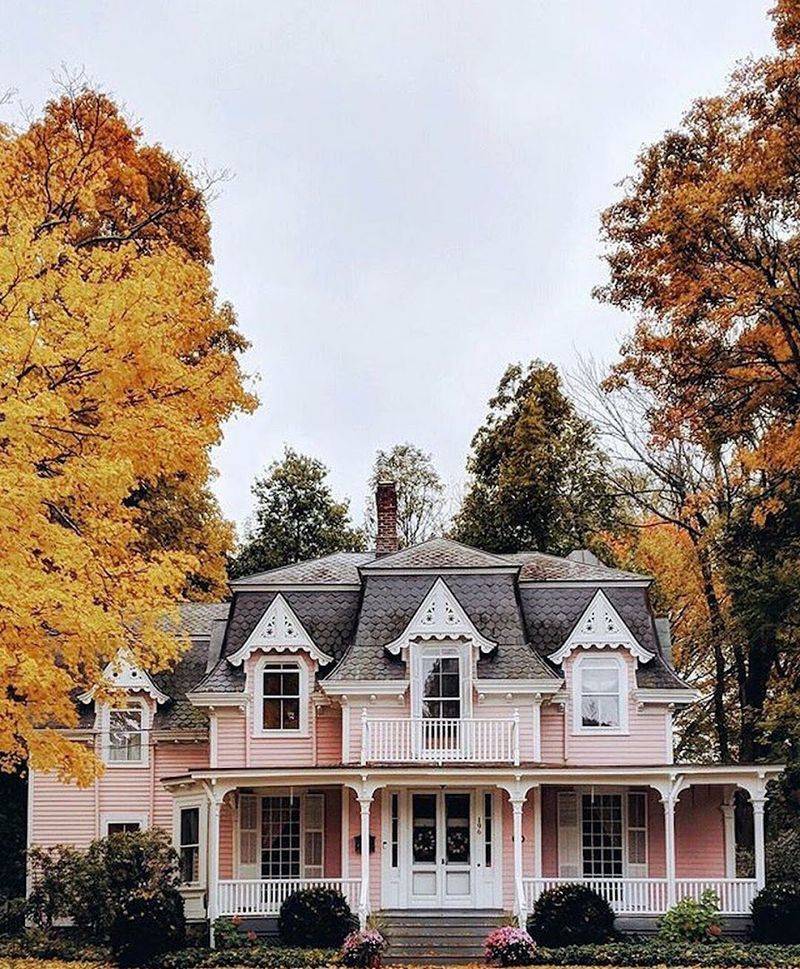
The sharpest number attached to Summit is not its No. 32 national ranking. It is the 11.4 percent year-over-year rise in average home value, the largest increase among the five New Jersey communities that made the 2026 top 50.
By April, the average stood at $1,455,811, paired with an average household income of $306,473. That is serious money even before a bidding war enters the chat.
Summit wears it with a little more city polish than many suburban peers. Springfield Avenue has independent shops, busy restaurants, and a train station positioned close enough to downtown that commuters can pick up dinner on the walk home.
Side streets quickly transition into leafy neighborhoods filled with substantial colonials, Tudors, and older estates, often on lots that feel generous without becoming isolated. The best counterpoint to the real-estate intensity is Reeves-Reed Arboretum.
The historic estate and garden offers walking paths, seasonal plantings, woodland areas, and community programs, giving residents an elegant outdoor escape that does not require leaving town.
Summit also has the Visual Arts Center of New Jersey and a long-running community theater scene, so the cultural calendar is fuller than the quiet residential streets suggest.
For visitors, downtown is the easiest place to start, especially around lunch or early evening. Parking can take patience during peak periods, but once the car is settled, the compact center rewards wandering.
Summit’s wealth is obvious in the housing market; its staying power comes from everything residents can reach beyond the front door.
3. Tenafly
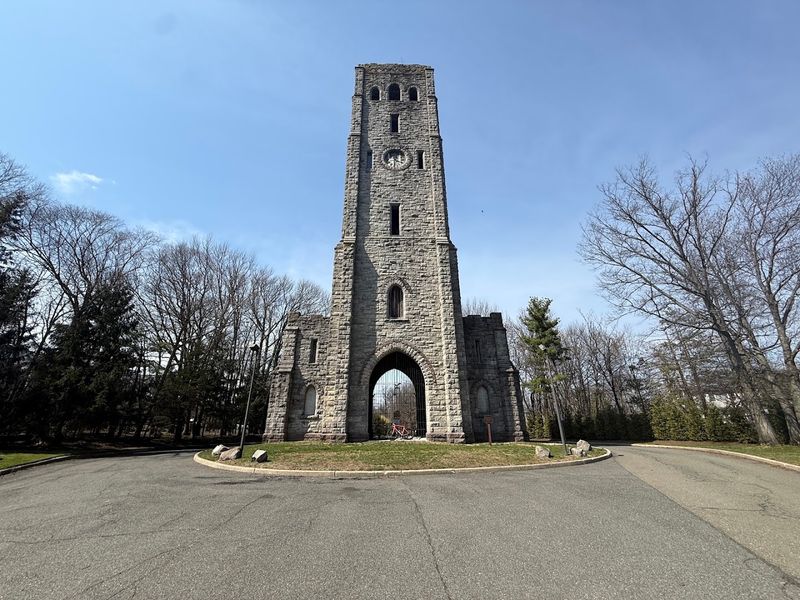
One turn off a busy Bergen County road can lead to a neighborhood of broad lawns, mature trees, and houses set far enough back to make the traffic disappear. That sense of breathing room is central to Tenafly’s appeal—and expensive to acquire.
The borough ranked No. 33 in the country, recording an average household income of $306,119 and an average home value of $1,331,396 in April 2026. Unlike towns whose identity is concentrated around a large commercial center, Tenafly feels more residential.
Its downtown is compact and useful, with cafes, restaurants, markets, and everyday services rather than blocks designed as a regional shopping destination.
The result is a quieter kind of affluence, shaped by privacy, proximity to New York City, and access to some of Bergen County’s most desirable residential streets.
The local surprise is Tenafly Nature Center, a preserve with more than seven miles of trails winding through woods, around Pfister’s Pond, and past seasonal wetlands. It gives the borough an outdoor dimension that is easy to miss from the manicured avenues.
Trails are reserved for foot traffic, and pets and bicycles are not permitted, which helps preserve the calm. Weekend parking can fill early, so morning visits are the smarter move.
Tenafly does not need a flashy landmark to justify its place on the list. Its value lies in the combination: substantial homes, a restrained downtown, wooded open space, and a location that keeps Manhattan close without letting it dominate the view.
4. Princeton
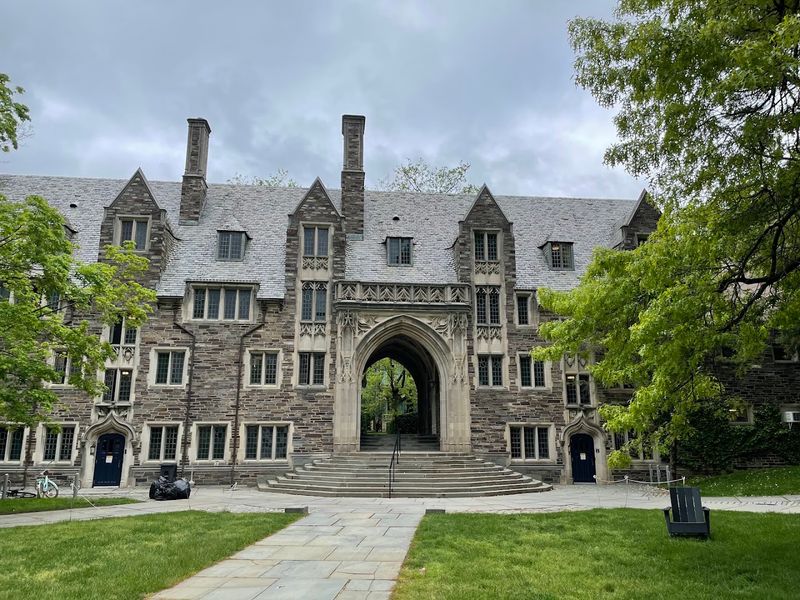
Gothic towers, bicycles, bookstores, and million-dollar real estate make an unusual combination, but Princeton has never behaved like a standard suburb. It entered the national top 50 for the first time in 2026 at No. 47, with an average household income of $275,137 and an average home value of $1,057,480.
The income figure slipped slightly year over year, while home values continued upward. What money buys here is not merely square footage.
It buys access to one of New Jersey’s richest mixes of architecture, culture, history, and walkability. Nassau Street and Palmer Square can carry an entire afternoon, moving from coffee and book browsing to galleries, restaurants, and campus paths.
The residential landscape changes quickly: stately houses near the university, wooded properties farther from the center, and pockets where historic character matters as much as size. The reopened Princeton University Art Museum adds a major reason to linger.
Admission is free, the galleries span global collections, and evening hours on Thursdays and Fridays make it practical to pair a visit with dinner downtown. Outside the campus core, Princeton Battlefield State Park and the Delaware and Raritan Canal offer quieter ways to spend time.
Princeton’s affluence feels less uniform than in communities built primarily around commuting. Professors, executives, entrepreneurs, longtime families, and students all share the same sidewalks.
That constant mixing keeps the town from becoming a museum of expensive homes. The wealth is real, but so is the intellectual energy that gives the place its unmistakable edge.
5. Ridgewood
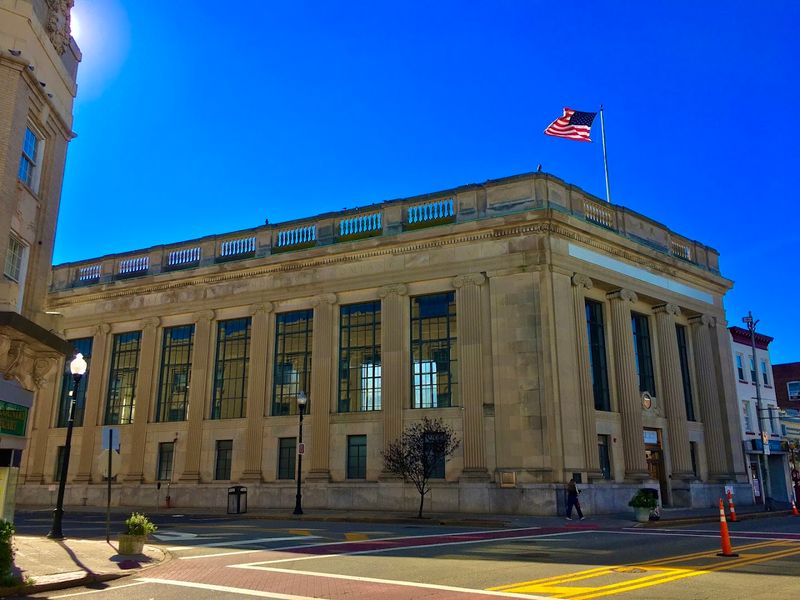
The benches at Van Neste Square tell you more about Ridgewood than a mansion tour would. People stop with takeout bags, children cut across the paths, and seasonal events turn the small park into a community gathering room.
A few steps away, the downtown spreads along Ridgewood Avenue and nearby streets, packed with restaurants, shops, and a rail station. This is affluence with foot traffic.
Ridgewood landed at No. 48 nationally, supported by an average household income of $273,185 and an April 2026 average home value of $1,238,821. Home values climbed 8 percent year over year even as the income figure declined, a reminder that demand for the village extends beyond a single annual statistic.
The housing stock helps explain the pull. Ridgewood offers Tudors, colonials, Victorians, and carefully updated older homes on streets where mature trees do much of the visual work.
Yet the village does not depend solely on curb appeal. Graydon Pool, a spring-fed swimming area, gives summer its own local ritual, while the park system includes nature trails, playgrounds, athletic fields, and smaller green spaces tucked between neighborhoods.
For a first visit, park once near the central business district and explore on foot. The restaurant scene ranges from casual family spots to polished date-night rooms, and the compact layout makes spontaneous changes of plan easy.
Ridgewood’s wealth does not make it sleepy. Its downtown stays busy, its parks stay used, and its public spaces keep the village feeling inhabited rather than merely admired.
6. Short Hills
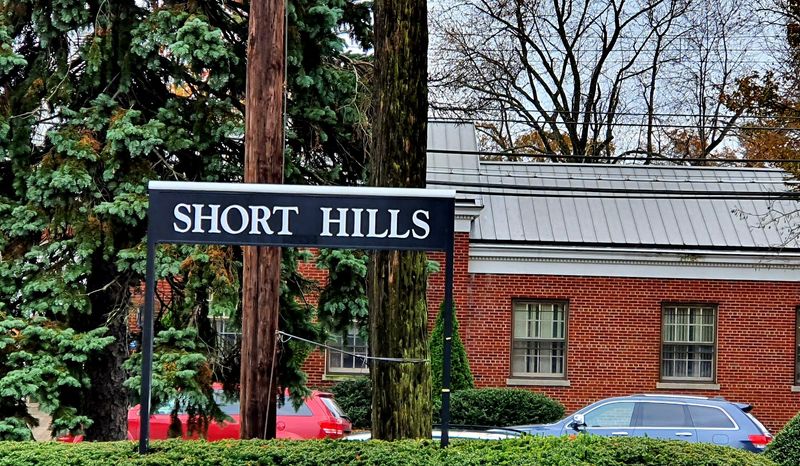
A driveway disappearing behind stone pillars is almost a local architectural feature in Short Hills. The Essex County community is technically part of Millburn Township, but its name has become shorthand for high incomes, prestigious addresses, and homes that often trade well into seven figures.
Census data for 2024 placed the median household income at $250,001 and the median value of owner-occupied housing at approximately $1.67 million. The sales market goes further.
Short Hills’ 07078 ZIP code posted a $2.415 million median sale price in 2025, placing it No. 69 among America’s 100 most expensive ZIP codes. Its absence from the separate 2026 top-50 suburb ranking is a matter of eligibility: that analysis required at least 5,000 households, while Short Hills had an estimated 4,665.
There is more here than immaculate lawns and the luxury shops at The Mall at Short Hills. Greenwood Gardens occupies 28 acres of a former private estate, with terraces, meadows, woodlands, fountains, grottoes, and winding paths surrounded by preserved parkland.
The contrast is delightful: one minute you are on a heavily traveled North Jersey road, and the next you are walking through an early-20th-century garden that feels carefully hidden. Greenwood operates seasonally and recommends advance tickets, so it rewards a little planning.
Elsewhere, the Short Hills rail station and nearby Millburn downtown keep daily life connected and practical. The community’s wealth may announce itself through real estate, but its enduring appeal comes from privacy without complete isolation.
7. Alpine
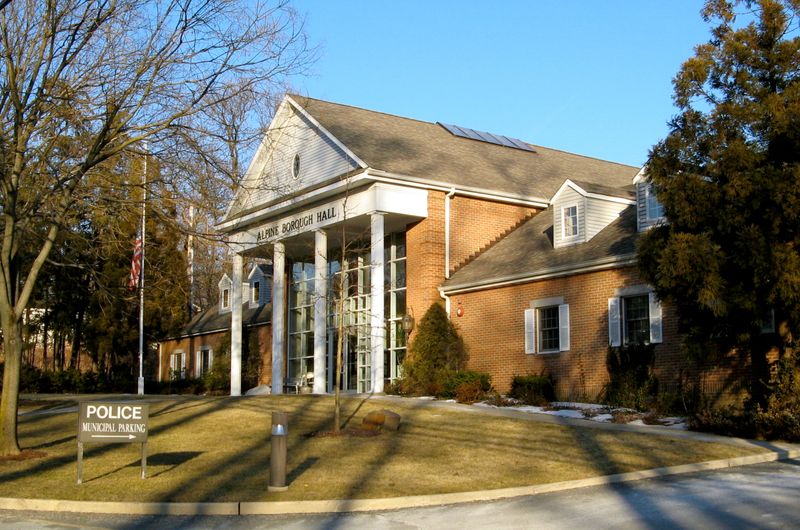
There is no bustling Main Street to distract from the central fact of Alpine: the houses are the headline. Long driveways vanish into wooded acreage, gates offer only partial glimpses, and some properties resemble private resorts.
In 2025, the borough’s 07620 ZIP code recorded a $4.35 million median sale price, ranking No. 13 among the most expensive ZIP codes in the United States. Alpine is far too small for the 2026 national suburb study, which required at least 5,000 households.
The borough had just 522 households in the latest Census profile, along with a median household income of $246,944. Limited supply makes individual transactions influential, but the pattern is unmistakable: Alpine has remained New Jersey’s most expensive ZIP code in nine of the past ten years.
The landscape keeps the place from feeling entirely sealed off. Palisades Interstate Park places 2,500 acres of forest, more than 30 miles of trails, Hudson River overlooks, picnic areas, and shoreline access beside the borough.
A stop at State Line Lookout delivers the kind of sweeping view that even a mansion cannot keep private. Visitors should not expect a traditional town-center outing.
Alpine is best understood through a scenic drive and time in the park, where trail conditions and occasional closures should be checked before setting out. The borough’s wealth is quieter than Short Hills’ retail polish or Princeton’s cultural energy.
Here, luxury means land, seclusion, and Manhattan close enough to matter but far enough away to disappear behind the trees.