A plate lands on the table carrying fresh rigatoni, meatballs, spicy sausage, braciole, country-style ribs, ricotta, and enough red sauce to make a white shirt seem like a reckless choice. This is Sunday at Matthew’s Italian Restaurant in Clifton, where dinner still unfolds at the comfortable pace of a family gathering.
The restaurant sits along busy Bloomfield Avenue, but the mood inside is far removed from the traffic outside. Conversations overlap, servers remember familiar faces, and the menu is packed with dishes people tend to crave rather than merely consider.
Matthew’s has been serving Clifton since 2010, yet its story stretches back to owner Matthew Tyahla’s first restaurant job as a teenager. That history helps explain why the place feels polished without becoming stiff.
Fresh pasta, seafood, chicken parmigiana, and old-school hospitality share equal billing here, creating the kind of neighborhood restaurant where an ordinary Tuesday can quickly turn into a full Italian feast.
The Clifton Busboy Who Turned a Lifelong Dream Into Matthew’s
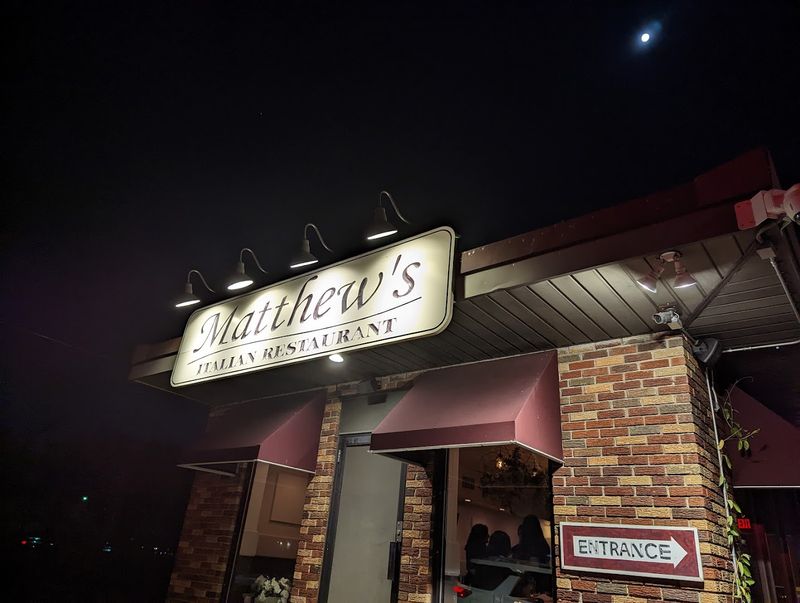
Long before his name appeared above the door, Matthew Tyahla was the teenager clearing plates, running food, and trying to learn everything he could about the restaurant business. His first opportunity came at age 14, after he repeatedly asked the owner of La Finestra, an Italian restaurant near his Clifton home, for a job.
Persistence eventually earned him weekend shifts as a food runner and busboy. It was not glamorous work, but Tyahla was hooked almost immediately.
When La Finestra closed in 2000, he moved on to a Bloomfield Avenue restaurant called Bella Napoli, which later became Cafe d’Amici. Over the next decade, he worked his way from food runner to busboy to waiter while finishing high school, attending college, and earning a business communications degree from Ramapo College.
By the time Cafe d’Amici closed, Tyahla understood the building, the clientele, and the rhythm of the dining room from nearly every angle. He was only 26, but he had spent years saving money and waiting for the right opportunity.
Instead of watching the familiar location become something else, he put his savings and reputation behind a restaurant of his own. The process took roughly 100 days of permits, applications, contracts, design decisions, and the thousand tiny choices nobody sees once dinner service begins.
Matthew’s Italian Restaurant officially opened on December 14, 2010. Tyahla chose everything from the flooring and menu typeface to the salt and pepper shakers, aiming for a room that felt sophisticated but comfortable.
More importantly, he built the restaurant around the lessons learned while working alongside cooks, bartenders, servers, and guests. That busboy-to-owner story is not decorative background.
It is the reason Matthew’s feels run by someone who understands that a restaurant succeeds one table, one plate, and one remembered name at a time.
The Cozy Bloomfield Avenue Dining Room That Feels Like Home
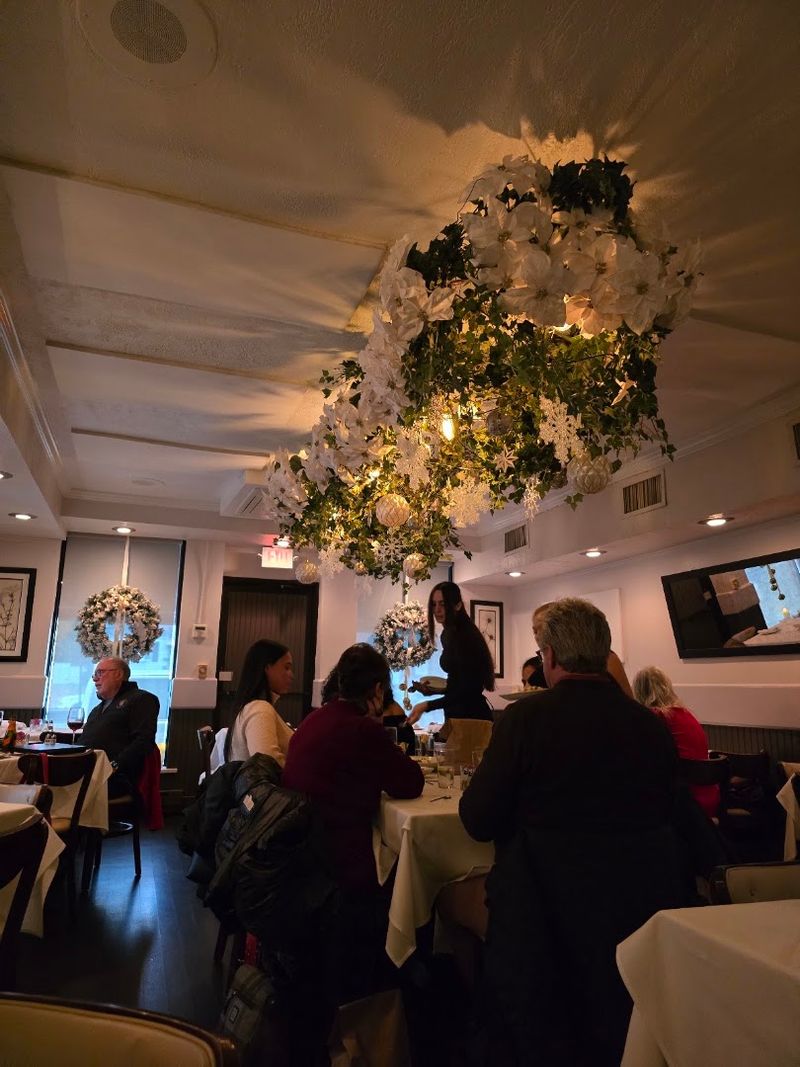
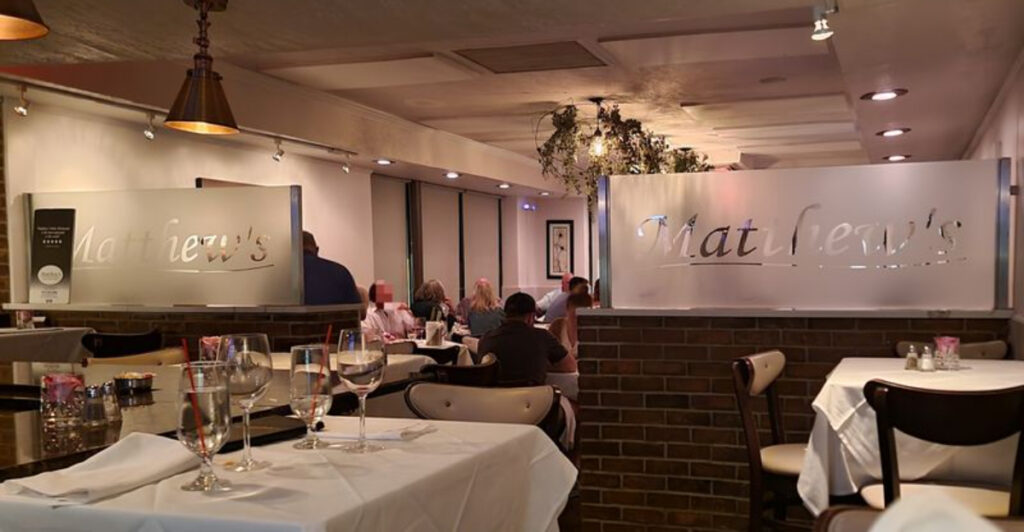
At 1131 Bloomfield Avenue, the restaurant occupies the kind of location that North Jersey drivers could easily pass while concentrating on traffic. Inside, however, the room quickly pulls attention away from the road.
Matthew’s avoids the usual Italian-restaurant costume department. There are no theatrical village murals or decorative grapevines attempting to transport diners to Tuscany.
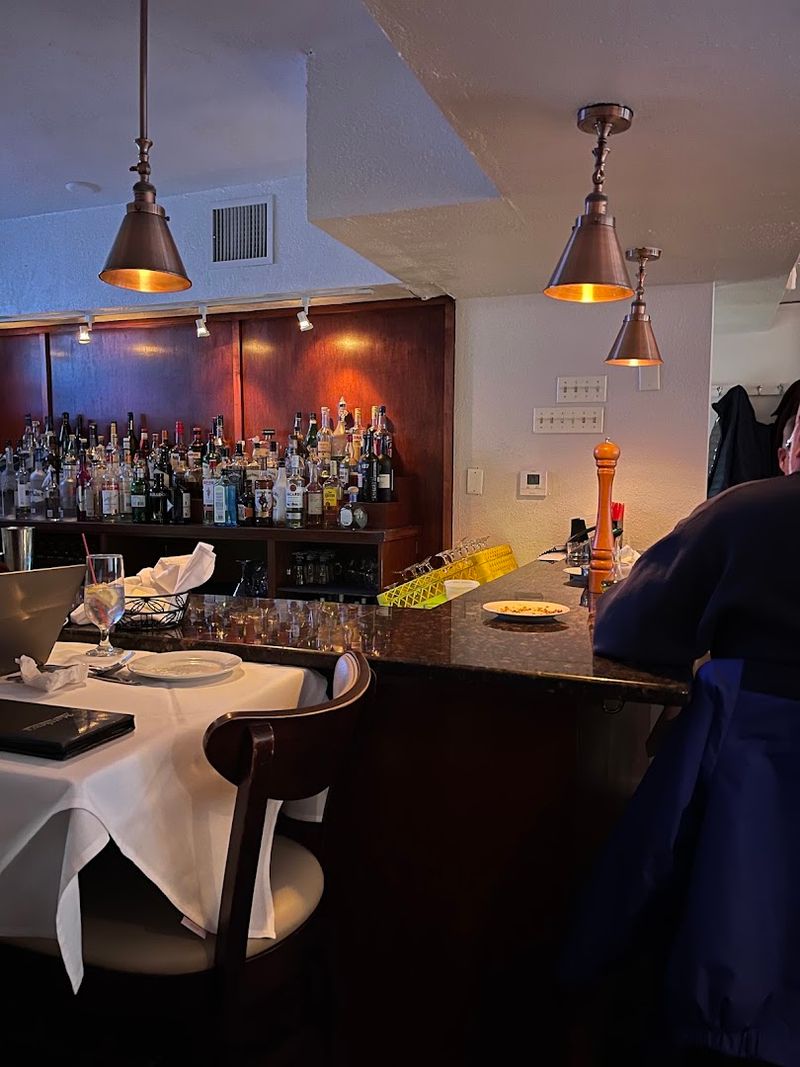
The look is cleaner and more contemporary, with soft lighting, closely arranged tables, and an easy flow between the dining room and bar. It feels dressed up enough for an anniversary dinner but relaxed enough for parents bringing the family out on a Wednesday.
That middle ground is harder to achieve than it sounds. Too much formality can make a plate of spaghetti feel like a ceremony; too little can turn dinner into a noisy race.
Matthew’s keeps things comfortable. Servers move through the compact room without making the service feel hurried, and the steady background of conversations gives the place the familiar energy of a gathering where several stories are being told at once.
A full bar and wine list add to the occasion without changing the neighborhood character. You can settle in with a glass of red, split a stuffed artichoke, and take your time deciding between pasta and seafood without feeling as though the table is being timed.
The restaurant generally lists daily hours from noon to 10 p.m., covering lunch, an early family meal, or a later dinner. Reservations are a smart move, particularly on Friday and Saturday evenings, when the intimate size that makes the room appealing can also make open tables scarce.
Seasonal closings and holiday schedules are occasionally announced, so checking before a special trip is sensible. Once seated, though, the practical details fade quickly.
The room works because it does not compete with the people, the food, or the pleasure of staying through dessert.
Fresh Rigatoni and Sunday Sauce Keep Pasta Lovers Coming Back
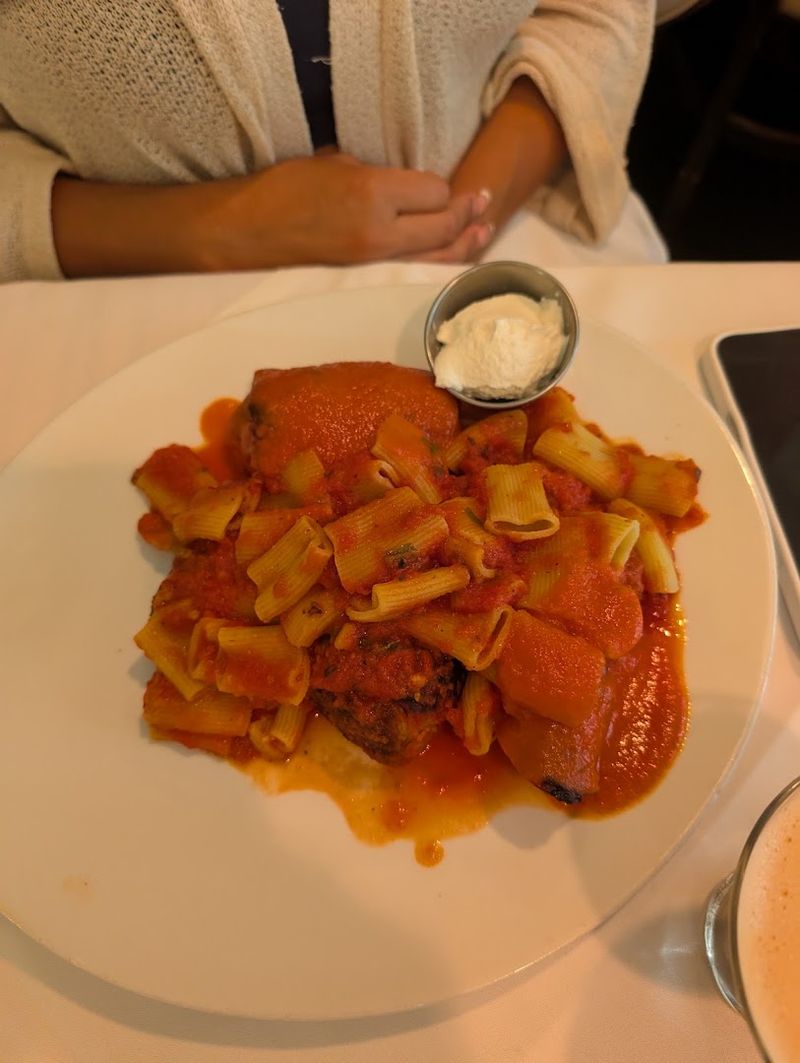
Sunday in North Jersey has its own culinary clock, and it usually starts ticking the moment tomato sauce begins simmering. Matthew’s gives that tradition an especially generous treatment with its Sunday Sauce, a $29 special built around fresh rigatoni and an entire supporting cast of slow-cooked meats.
Country-style ribs, braciole, spicy sausage, and meatballs arrive together beneath red sauce, with ricotta and basil served alongside. It is the kind of plate that makes ordering a separate entrée seem ambitious, although someone at the table will probably do it anyway.
The fresh rigatoni is an important part of the equation. Its sturdy tubes and ridged exterior hold onto the sauce rather than letting it collect at the bottom of the dish, while the texture stands up to the meats without becoming heavy or mushy.
A spoonful of ricotta softens the tomato’s acidity and creates those creamy streaks that make each forkful slightly different from the last. The Sunday special gets plenty of attention, but the regular pasta menu offers several reasons not to wait for the weekend.
Rigatoni vodka comes with peas, pancetta, and onion for $20, adding savory depth to the familiar pink sauce. Cavatelli and broccoli, listed at $18, takes a richer route with garlic cream sauce, while tortellini alla panna combines cheese-filled pasta with pancetta, peas, mushrooms, and cream.
Diners looking for an uncomplicated classic can stay with penne and tomato sauce, linguine with meat sauce, lasagna, manicotti, or ravioli. Gluten-free and whole-wheat pasta are also available.
What keeps the choices from feeling like a generic catalog of red-sauce standards is the kitchen’s sense of proportion. Sauces coat rather than drown, pasta retains its character, and familiar combinations are treated seriously.
Nobody needs rigatoni reinvented into something unrecognizable. Sometimes the winning move is fresh pasta, a sauce with patience behind it, and enough Sunday gravy to justify asking for extra bread.
Chicken Parmigiana and Italian Classics Are Done the Right Way
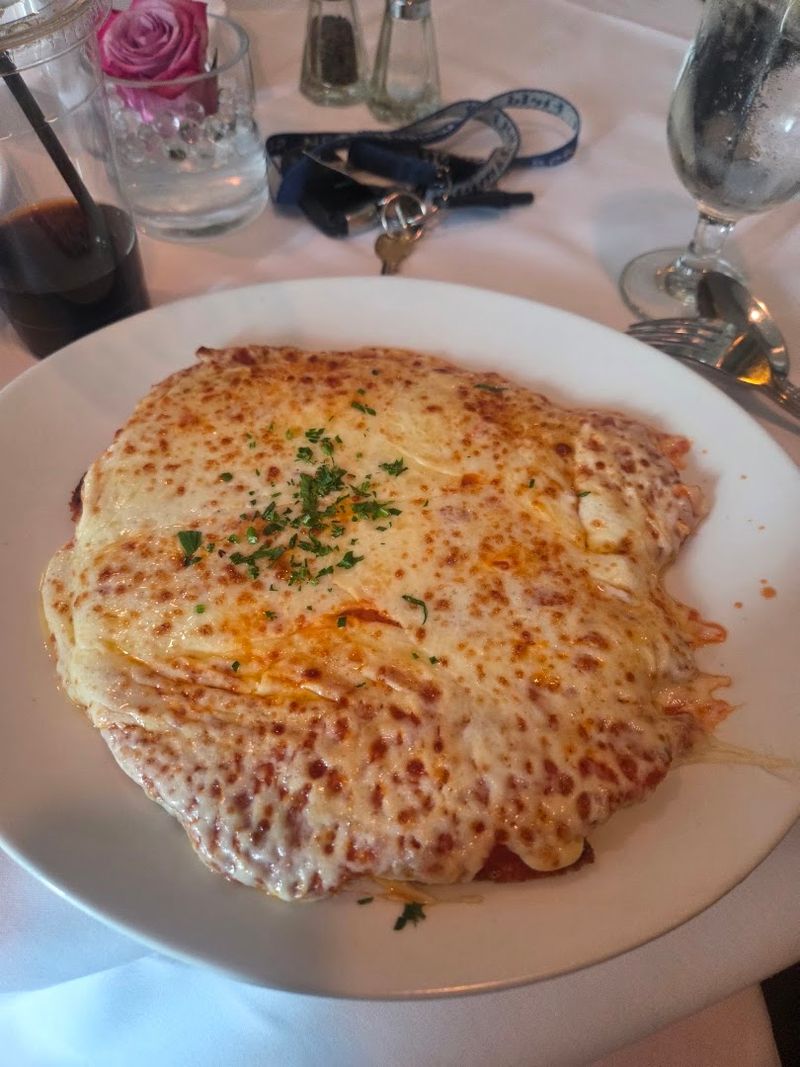
There is nowhere to hide with chicken parmigiana. Diners know exactly what it should be, and they can spot the problems immediately: soggy breading, dry chicken, sugary sauce, or a slab of cheese so thick that every other flavor disappears.
Matthew’s serves its $20 version with mozzarella and tomato sauce, keeping the description almost comically simple. The appeal is in how those familiar parts come together.
The chicken is breaded for contrast, topped generously without being buried, and given enough sauce to bring richness while preserving the texture underneath. It is comfort food, certainly, but not careless comfort food.
The same straightforward approach carries through the rest of the chicken menu. Marsala pairs the meat with mushrooms and brown sauce, while francese uses an egg batter and lemon sauce for a brighter finish.
Scampi brings garlic, white wine, and lemon; oreganata leans on seasoned breadcrumbs; and cacciatore arrives with peppers, onions, and tomato. The chicken giambotta is the hungrier choice, combining mushrooms, sausage, peppers, and potatoes, with an on-the-bone preparation available.
Beyond poultry, the menu keeps working through the classics. Eggplant rollatini folds ricotta and basil into tender eggplant under tomato sauce.
Meatballs can begin the meal as a $10 appetizer, although ordering them early creates a real possibility that the bread basket will be emptied before the entrées arrive. Veal gets an equally broad treatment, from parmigiana and marsala to saltimbocca, Milanese, pizzaiola, and Sorrento with eggplant, mushrooms, and mozzarella.
There are also steaks for anyone at the table unmoved by pasta, including filet mignon with roasted potatoes, string beans, and red wine sauce. Matthew’s succeeds with these dishes because it does not treat familiarity as an excuse to coast.
The menu reads like the lineup at a large Italian family dinner, but every plate still has to earn its place on the table.
Calamari, Clams, and Seafood Favorites Bring the Feast
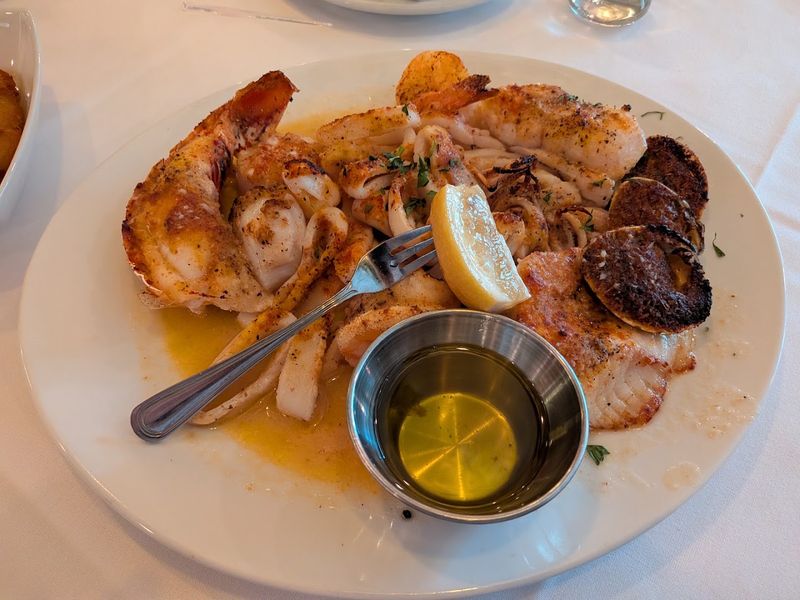
A table serious about seafood can begin filling up before anyone has even discussed the main course. Little neck clams come by the half-dozen or dozen with cocktail sauce and lemon, while clams oreganata add their seasoned, baked richness.
Zuppa di clams and zuppa di mussels are built for bread-dipping, and the $14 crispy calamari provides the familiar fried option with tomato sauce. The cold seafood salad takes a brighter approach, combining shrimp, calamari, mussels, and scungilli with lemon vinaigrette.
From there, restraint becomes increasingly difficult. Calamari and scungilli can each be ordered as an entrée in marinara or fra diavolo, allowing diners to choose between mellow tomato comfort and a more assertive chile kick.
Linguine with red or white clam sauce remains one of the menu’s essential pasta-and-sea combinations. For a bigger spread, the $28 linguine frutti di mare brings together calamari, clams, mussels, shrimp, and scungilli, while spaghetti mala femmina pairs lobster, clams, and shrimp in white wine sauce.
Then come the platters designed for the diner who looked at the seafood section and decided choosing was unnecessary. The broiled seafood plate includes shrimp, scallops, sole, clams, calamari, and lobster tail in a light broth.
Zuppa de pesce goes even further, adding snapper, scungilli, and mussels to an already crowded bowl. Both are listed at $38.
There are quieter options too: sole prepared broiled, fried, francese, or almondine; scallops in lemon and white wine; shrimp scampi; and stuffed sole or shrimp with seafood stuffing.
The menu’s breadth reflects the kind of Italian-American dining common in North Jersey, where a restaurant serving red sauce is also expected to know its way around clams, calamari, and a proper Friday-night fish dinner.
Matthew’s does not tuck seafood into a forgotten corner of the menu. It lets the ocean crowd the table, pass the bread, and join the family.
The Hands-On Hospitality That Turns First-Timers Into Regulars
The real tell comes midway through dinner, when nobody at the table is checking the time. Plates are being passed, someone is negotiating for the final piece of calamari, and a server arrives at exactly the right moment without interrupting the conversation.
That unforced rhythm is where Matthew Tyahla’s years on the dining-room floor continue to matter. He did not enter the business as an investor learning restaurant culture from spreadsheets.
He learned it by carrying food, clearing dishes, waiting tables, remembering preferences, and staying until the final guests left. When he became an owner, he already understood how many small interactions determine whether people return.
Hospitality here is attentive without becoming a performance. The room is polished, but nobody acts scandalized when extra sauce is requested.
Families can settle in, couples can make dinner feel like an occasion, and longtime friends can linger over wine and veal marsala without being nudged toward the door. Many neighborhood restaurants describe guests as family; Matthew’s earns the comparison through continuity.
Tyahla spent a decade working in the same Bloomfield Avenue location before opening his own place, and some former colleagues joined him when Matthew’s began. The restaurant’s early reputation grew largely through word of mouth, a particularly fitting path for a business built around returning customers.
More than 15 years after opening, the formula remains recognizable: classic Italian cooking, a comfortable room, a full bar, and an owner whose connection to the restaurant extends back to adolescence. Dessert provides the final excuse to stay.
Tiramisu or tartufo makes sense after red sauce, although finishing either may require the sort of shared effort usually reserved for carrying furniture up stairs. By then, the staff has learned who wants coffee, who is taking leftovers, and who will insist they are too full before accepting one more bite.
That is how a first meal begins to feel familiar and how a restaurant becomes part of a family’s own collection of traditions.