Architecture becomes a lot more memorable when it refuses to blend into the landscape. Across Illinois, you’ll find remarkable buildings that range from storybook castles and ornate temples to oversized roadside landmarks and architectural masterpieces unlike anything else in the Midwest.
Some celebrate the state’s rich history, while others surprise visitors with bold design, unusual craftsmanship, or wonderfully unexpected concepts. Whether you’re planning a road trip or simply looking for attractions beyond the usual tourist stops, these 8 one-of-a-kind Illinois buildings prove that some of the state’s most unforgettable sights are built from brick, stone, steel, and imagination.
1. Baha’i House of Worship (Wilmette)
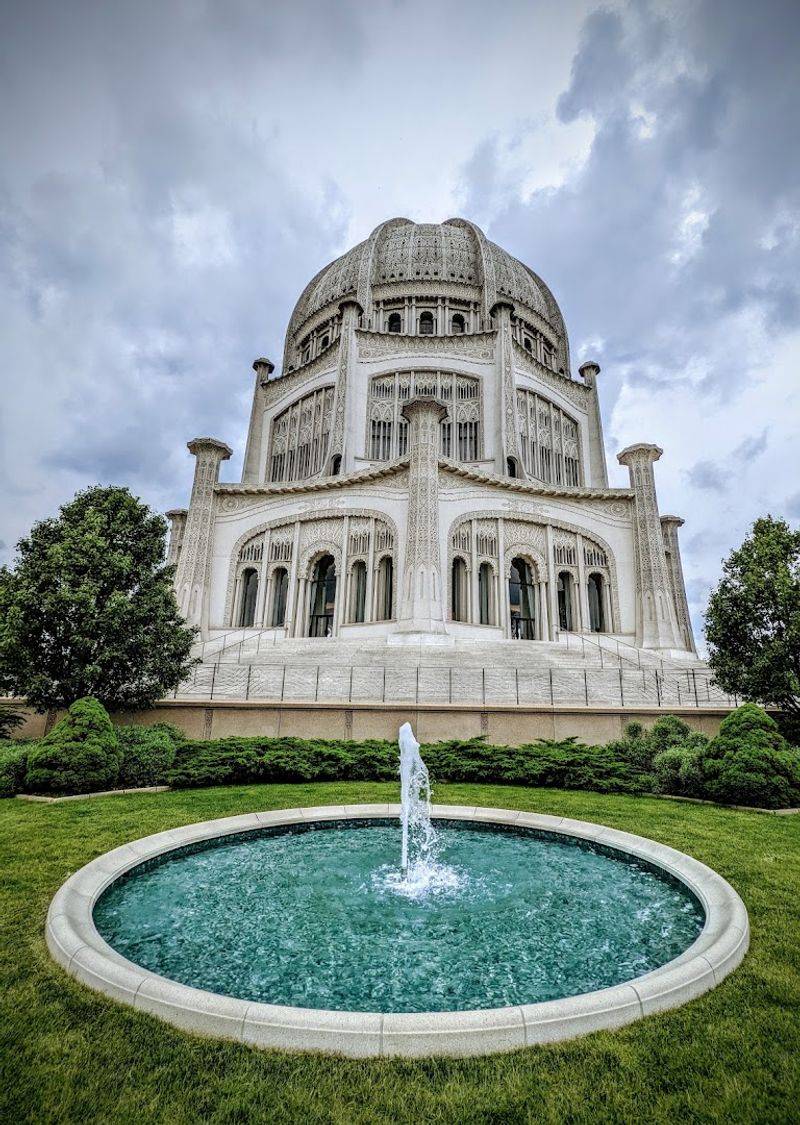
On Chicago’s North Shore, the Baha’i House of Worship rises with the kind of detail that stops conversation mid-sentence. Its pale exterior is covered in intricate ornament that reads like carved lace from a distance, then turns into a maze of symbols and patterns as you move closer.
The dome, famously built with quartz-infused concrete, catches sunlight in a way that gives the whole building a soft shimmer instead of a flat white finish.
This is the only Baha’i House of Worship in North America, and that alone gives it unusual presence. Yet the bigger draw is how different it looks from nearly every religious building most visitors know, with a design that mixes delicacy, symmetry, and monumental scale.
Instead of towering spires or heavy stone walls, you get openness, light, and geometry that keeps your eyes moving upward.
The setting adds another layer. Landscaped gardens frame the temple with clipped hedges, flowers, and broad walkways, creating a calm approach before Lake Michigan’s horizon quietly takes over in the background.
Even if architecture is not usually your thing, this place rewards slow looking, because every side offers a new combination of curves, screens, and shadows.
Practical tip: give yourself enough time to circle the exterior rather than treating it like a quick photo stop. Morning and late afternoon light bring out more texture in the surface, and the grounds make it easy to linger without feeling crowded or rushed.
In a state filled with memorable structures, this one stands apart by being both visually intricate and remarkably still, which is a rare combination.
2. World’s Largest Mailbox (Casey)
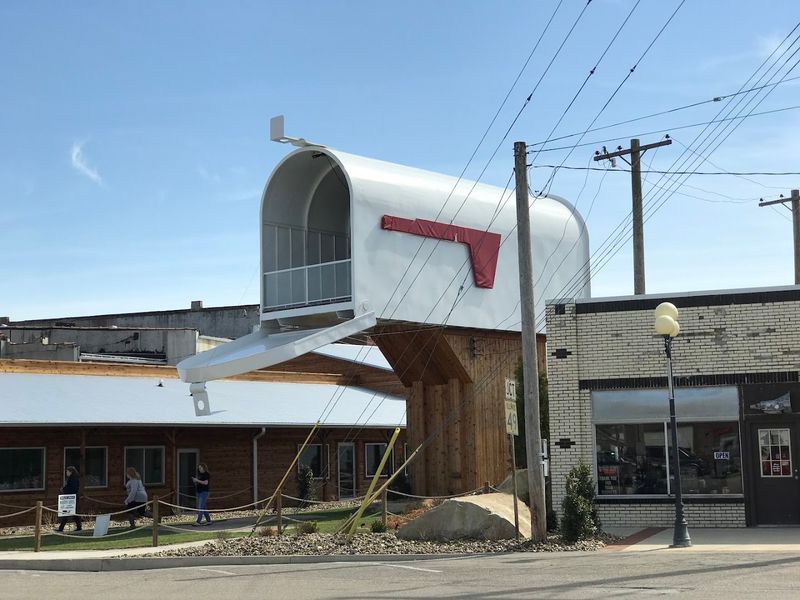
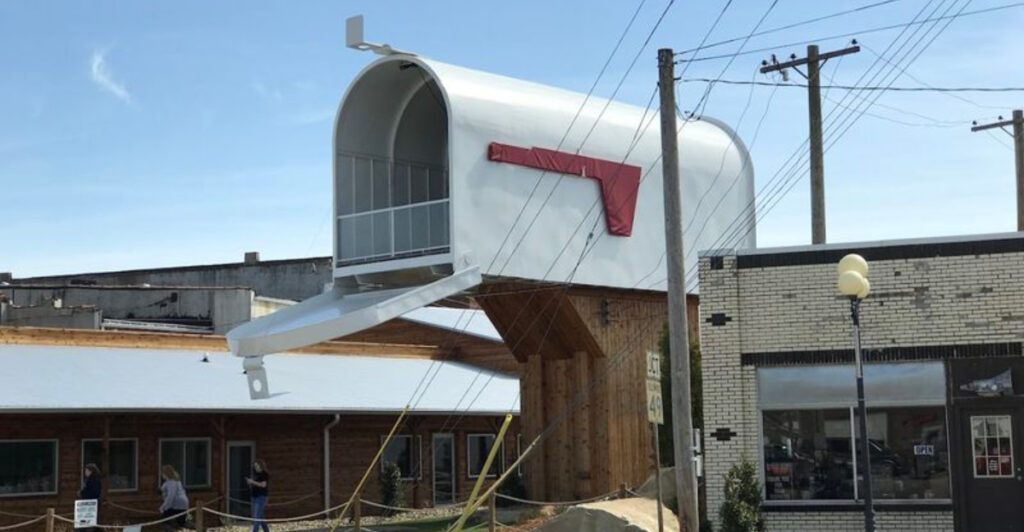
Casey has built a reputation on supersized roadside fun, but the World’s Largest Mailbox earns attention for more than scale. This enormous white mailbox is not a hollow prop dropped beside the road for a joke and a selfie.
It actually functions, which changes the whole experience from a quick glance to a stop where you can climb inside, look out over downtown, and send real mail from a giant landmark.
The structure is playful in the best Midwestern way: straightforward, slightly absurd, and fully committed to the bit. Its working red flag, oversized form, and built-in upper platform give it more personality than many larger tourist attractions.
Instead of hiding the novelty behind irony, Casey leans into it, and that confidence is exactly why the mailbox works so well.
Standing beneath it, you notice how carefully the attraction balances spectacle and access. The stairs invite movement, the platform adds a fresh view of town, and the act of mailing a letter turns the stop into a small story you can carry home.
There is also a nice contrast between the gigantic object and the modest downtown setting, which makes the whole scene more memorable than if it were planted on a highway shoulder alone.
This is a building-sized wink, but it is also solid design for a roadside stop because it gives you things to do, not just something to photograph. Go with a postcard or note ready if you want the full effect.
Among Illinois oddities, this one lands especially well because it mixes civic cheer, giant-scale craftsmanship, and a tiny bit of childlike satisfaction without trying too hard.
3. Gold Pyramid House (Wadsworth)
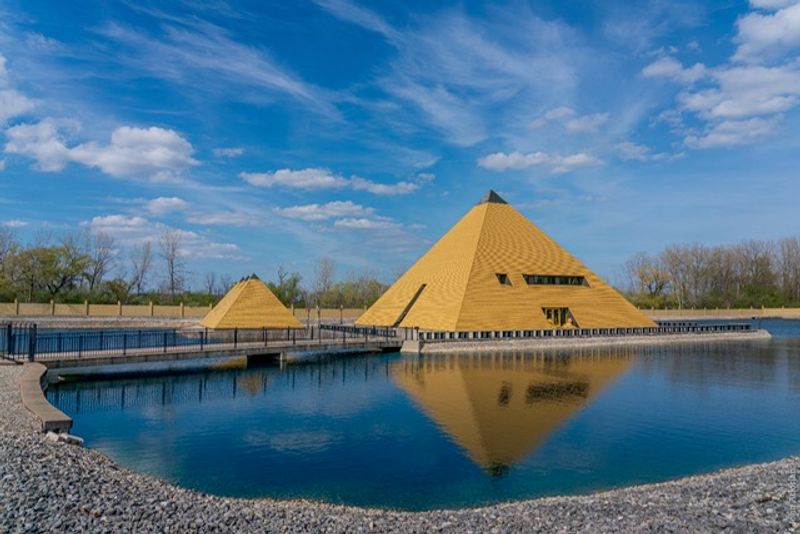
Drivers on Interstate 94 do a double take for good reason when the Gold Pyramid House comes into view. In northern Illinois, where you might expect subdivisions, woods, or open highway edges, this gold-colored pyramid appears with total disregard for regional expectations.
That surprise is part of the appeal, but the property gets even stranger once you notice the surrounding details built to match the theme.
The main residence is only the start. A three-pyramid garage extends the silhouette, a massive statue of Ramses II raises the visual stakes, and the replica of King Tutankhamun’s tomb pushes the whole site from unusual house to full Egyptian-inspired compound.
Few buildings in Illinois commit so fully to a singular idea, especially in a location where that idea looks almost dreamlike against Midwest skies.
Because it is a private home, this is better appreciated respectfully from a distance rather than treated like a standard public attraction. Even so, the structure has undeniable roadside power.
Its reflective gold surface, geometric purity, and theatrical add-ons create the sort of landmark that lodges in memory after only a brief glimpse from the car window.
Architecturally, the house fascinates because it ignores local precedent and instead builds identity through shape, color, and symbolism. You do not need to know every detail of its history to understand why it has become one of Illinois’ most talked-about oddities.
In a list filled with remarkable buildings, the Gold Pyramid House stands out for being so boldly improbable, a monument to the idea that domestic architecture can also operate like pure spectacle on the side of a busy interstate.
4. The Tower of Baa (Windsor)
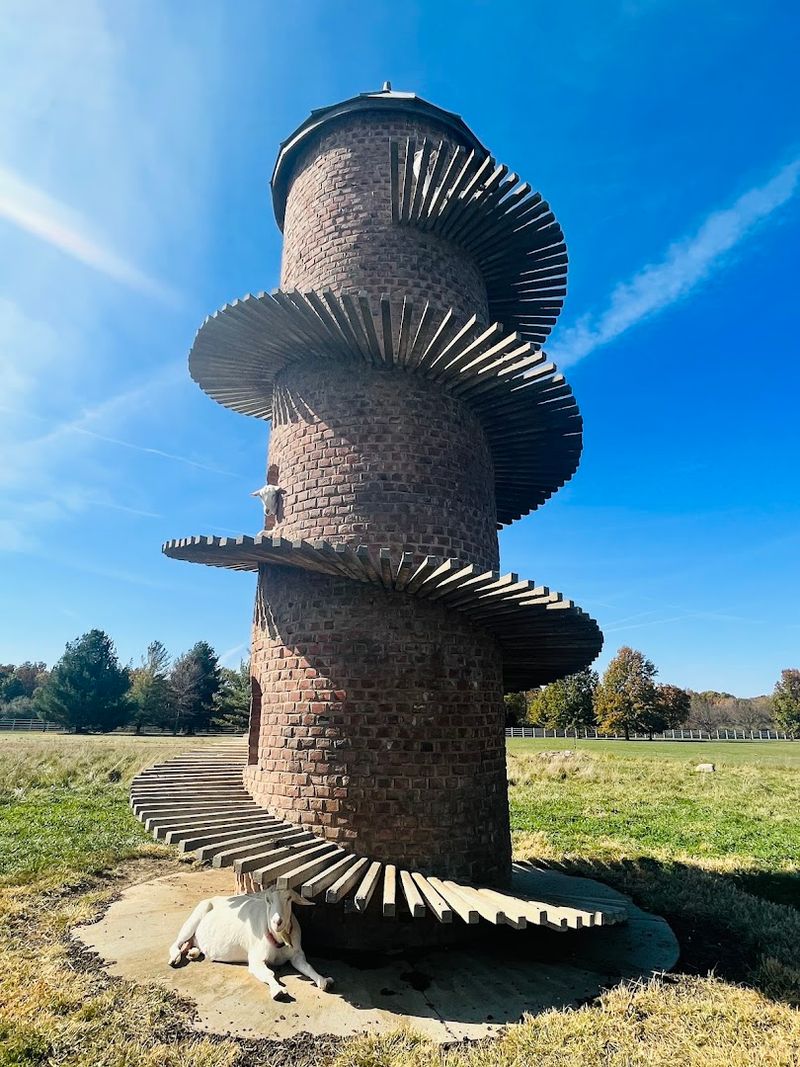
Some unusual buildings impress through size, some through ornament, and the Tower of Baa wins by being delightfully specific. This brick tower in Windsor was built for goats, not people, which already places it in a category of one.
At around 31 feet tall, it borrows inspiration from goat towers found in Europe and South Africa, then plants that idea squarely in central Illinois farmland.
The structure is whimsical, but not random. Inside are multiple resting chambers connected by a spiral wooden staircase, allowing goats to climb, lounge, and occupy the tower vertically in a way that turns ordinary farm life into a small architectural spectacle.
The building’s narrow profile, repeating openings, and sturdy brickwork give it the look of a miniature fortress, except its residents have hooves and a tendency to make the scene even better.
Part of the charm comes from the contrast between refined design logic and the inherently funny premise. Animal architecture usually hides in the background, but this tower asks to be noticed and remembered.
It also says something refreshing about rural creativity in Illinois, where a farm structure can be practical, eccentric, and visually distinct without trying to mimic an urban landmark.
Visiting it is a reminder that memorable buildings do not need huge budgets or famous skylines. They need conviction, a clear form, and a purpose strange enough to spark instant curiosity.
The Tower of Baa checks every box, and its oddball elegance keeps it from reading as a gimmick. Among the state’s many roadside surprises, this one deserves real attention because it turns a livestock enclosure into a building people discuss long after they have left the pasture behind.
5. Marina City (Chicago)
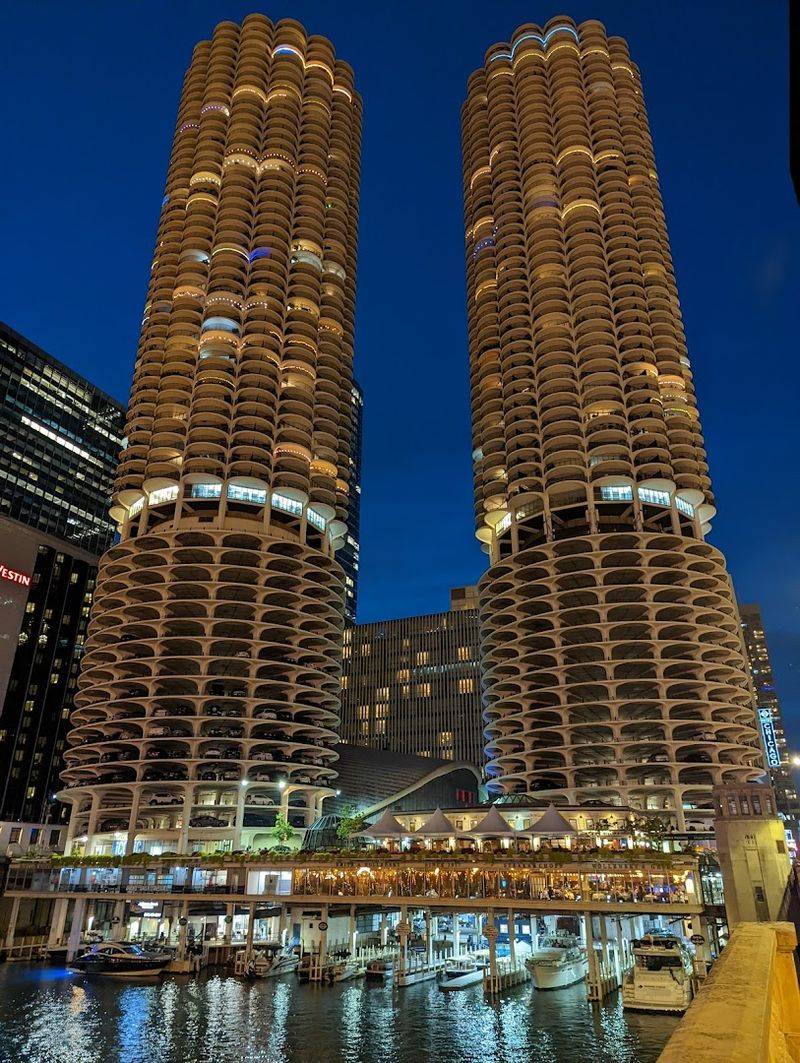
In a city loaded with famous architecture, Marina City still grabs the eye immediately. The twin towers rise above the Chicago River with their unmistakable rounded balconies stacked in rings, which is how they earned the nickname “corncob towers.”
Their sculptural form looks striking from nearly every angle, making them one of the most recognizable landmarks on Chicago’s skyline and a favorite subject for photographers.
What makes Marina City especially remarkable is that it was designed as far more than a pair of apartment buildings. Architect Bertrand Goldberg envisioned a self-contained “city within a city,” combining residences, parking, a marina, restaurants, offices, and commercial space into one ambitious development.
When the complex opened in the early 1960s, it challenged conventional ideas about urban living by placing everyday necessities within a single architectural masterpiece. The towers become even more impressive as you move closer.
Their repeating circular balconies create constantly shifting patterns of light and shadow throughout the day, while the open parking levels at the base remain one of the building’s most recognizable design features.
Even after decades on the skyline, the futuristic appearance still feels remarkably modern, proving that truly innovative architecture can outlast changing styles.
Marina City has also become one of Chicago’s best-known cultural icons. It has appeared in countless films, television shows, postcards, and photographs, and even graced the cover of Wilco’s Yankee Hotel Foxtrot.
Whether viewed from a river cruise, a nearby bridge, or the bustling Riverwalk, the towers never fail to command attention.
Among Illinois’ many architectural landmarks, Marina City stands apart for blending visionary design, everyday function, and unmistakable visual identity into one of the state’s most enduring and influential buildings.
6. The R. Buckminster Fuller Dome (Carbondale)
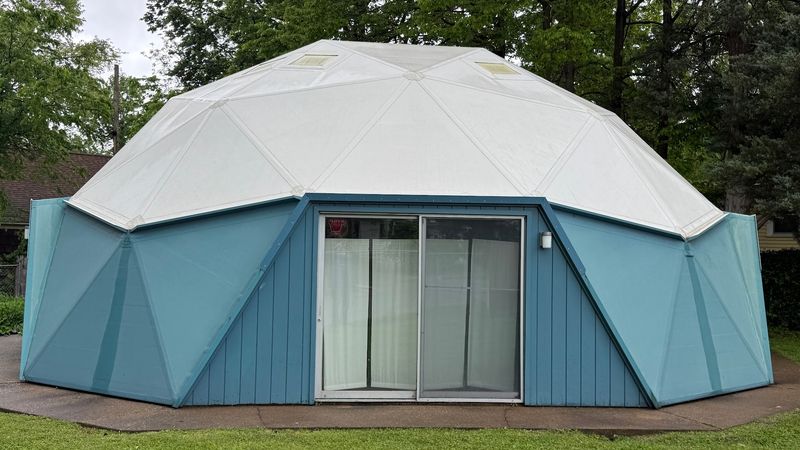
Carbondale holds one of the most important experiments in modern residential design, and it looks refreshingly unlike a standard house.
The R. Buckminster Fuller Dome is a geodesic home associated with the inventor who helped popularize the form, and its network of interlocking triangles still reads as forward-thinking decades later. Even before you know the backstory, the structure signals invention through shape alone.
Fuller famously lived here while teaching at Southern Illinois University, which gives the building unusual biographical weight in addition to architectural interest. The dome demonstrated how lightweight materials and geometric efficiency could create strength while enclosing generous space.
Instead of relying on heavy walls and conventional angles, the design turns engineering principles into the visual identity of the home itself.
That is what makes a visit rewarding. You are not just looking at a rare house; you are seeing a built argument about how people might live differently using fewer materials and smarter structural logic.
The restored dome also helps translate a once-experimental idea into something approachable, so even visitors without a design background can appreciate the balance of economy, daring, and practical problem-solving.
Among Illinois landmarks, this one stands apart because its novelty is deeply tied to ideas, not decoration. The triangular framework is striking, but the bigger impression comes from understanding how radical that form was and how influential geodesic thinking became.
If your taste runs toward architecture that changed conversations instead of simply decorating a skyline, the Fuller Dome belongs high on your list. It is compact, brainy, and visually distinct in a way that still looks fresh rather than frozen in a past era of optimistic experimentation.
7. Leaning Tower of Niles (Niles)
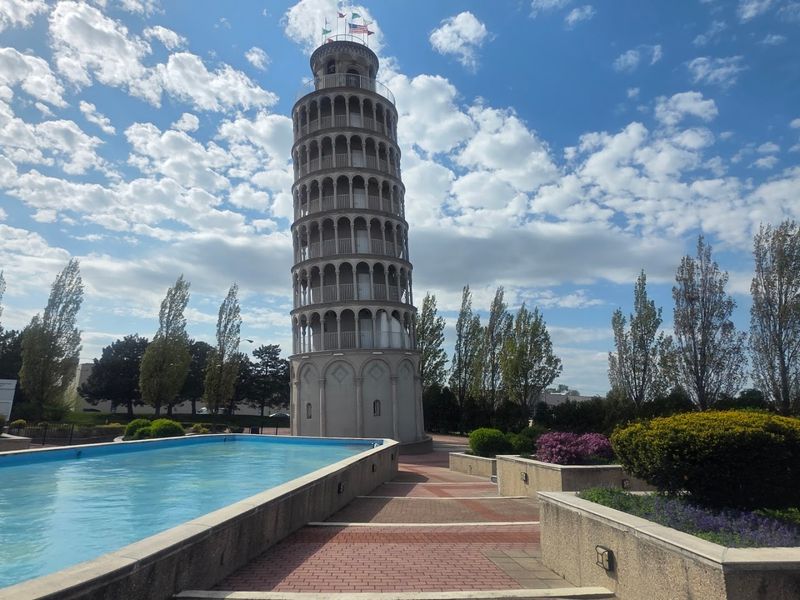
You do not expect to find a slice of Pisa in suburban Cook County, which is exactly why the Leaning Tower of Niles lands so well.
This half-scale replica of Italy’s famous tower rises 94 feet and faithfully recreates the signature tilt that makes the original instantly recognizable. The result is a landmark that is playful from a distance but surprisingly convincing once you get closer to the detailing.
Its origin story adds another layer of charm. The tower was originally built in 1934 to conceal a water tower, turning a practical piece of infrastructure into one of the area’s best-known visual icons.
That combination of utility and theatricality gives it more character than a simple decorative replica, and the authentic Italian bells from the seventeenth and eighteenth centuries bring in a detail that shifts the experience from novelty to curiosity.
Because the tower sits in a suburban setting rather than an old European square, the contrast does a lot of the work. You see familiar Illinois surroundings, then suddenly this tilted silhouette appears and rewrites the scene.
It is a reminder that memorable architecture does not always have to be original in concept if it is adapted with confidence and given a strong local story.
For visitors, the appeal is immediate and easy to read. You know why it matters the second you spot it, yet there is enough history and odd civic personality behind it to keep the stop from being disposable.
Illinois has plenty of oversized and offbeat attractions, but the Leaning Tower of Niles earns its place by turning camouflage, imitation, and engineering into one compact landmark with lasting name recognition.
8. RavenStone Castle (Harvard)
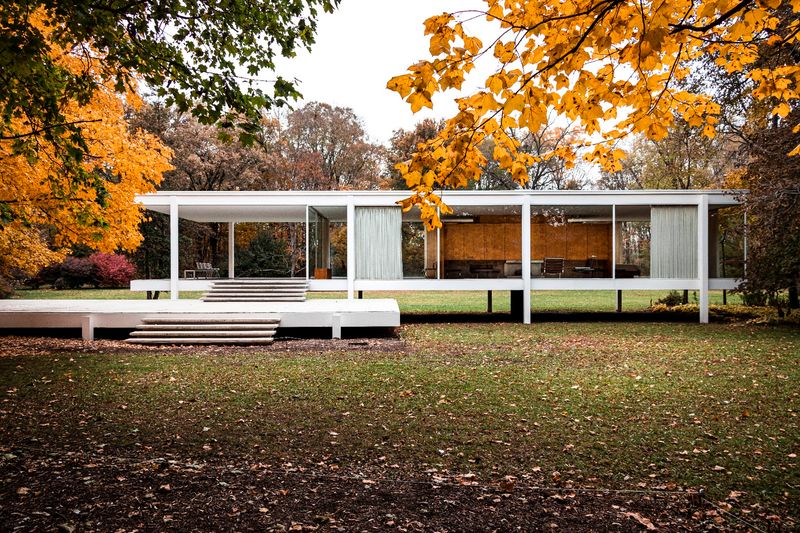
The Edith Farnsworth House proves that a building does not need ornament to leave a lasting impression. Set among trees along the Fox River in Plano, this glass-walled retreat appears to float lightly above the landscape, with its crisp white steel frame and floor-to-ceiling windows blurring the boundary between indoors and outdoors.
The result is striking in every season, whether surrounded by lush summer greenery or framed by snow-covered branches in winter.
Designed by legendary architect Ludwig Mies van der Rohe and completed in 1951, the house is widely regarded as one of the defining masterpieces of modernist architecture.
Every detail reflects Mies’ famous philosophy of “less is more,” stripping the home down to its essential forms while creating a space filled with light, openness, and carefully balanced proportions.
The elevated design was also intended to help protect the house from the Fox River’s floodplain, giving it the distinctive appearance of hovering above the ground.
Visiting today offers far more than a look inside an iconic home. Guided tours explain the groundbreaking ideas behind the design, the collaboration between Mies and physician Edith Farnsworth, and the lasting influence the house has had on modern architecture around the world.
Walking the peaceful grounds also reveals how carefully the building was positioned to become part of its natural surroundings rather than dominate them. Among Illinois’ many remarkable buildings, the Edith Farnsworth House stands apart because it transformed simplicity into an art form.
Decades after its completion, its clean lines, transparent walls, and timeless design continue to inspire architects and visitors alike, proving that one of the state’s most unforgettable buildings is also one of its quietest.