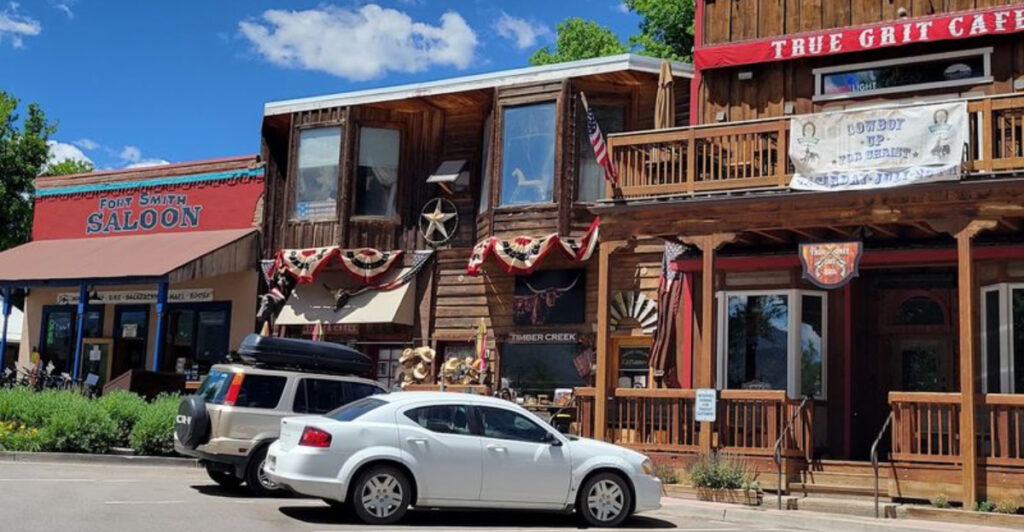
Not every memorable Colorado mountain town revolves around ski lifts or bustling resort streets. In Ridgway, the appeal comes from a colorful mix of Old West history, striking public art, railroad heritage, and sweeping San Juan Mountain views that give every stroll a cinematic backdrop.
Visitors can browse locally owned galleries, explore historic downtown, ride the scenic railroad nearby, or venture into the surrounding landscapes that have appeared in countless films and photographs. Blending creativity, history, and outdoor beauty in equal measure, Ridgway offers the kind of authentic small-town experience that’s becoming increasingly rare.
Where the San Juans Drop Straight Into Town
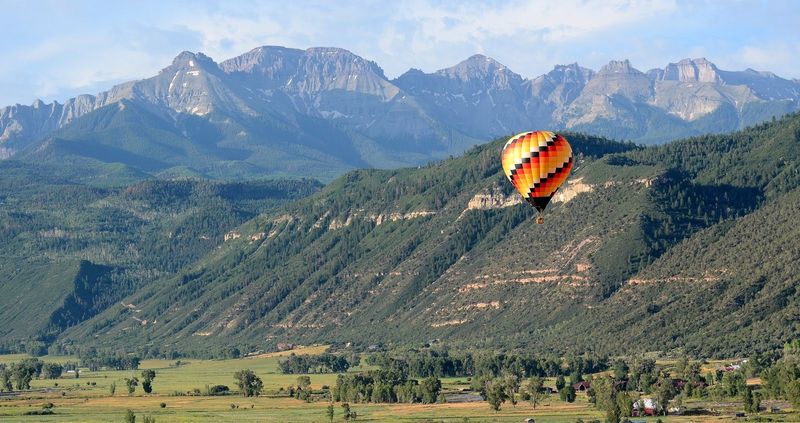
Ridgway does not ease you in with a gentle introduction. The mountains show up immediately, rising so close and so sharply behind town that even an ordinary errand run can look cinematic.
Wide streets, old brick and wood facades, and clean sightlines toward the San Juans give the place an open, sturdy look that reads as western without turning into costume.
That visual clarity shapes the whole experience. You are never far from the sense that Ridgway sits in a working landscape, not a decorative one, and the town layout lets the surrounding peaks stay part of every scene.
Even simple corners have a layered frame: a mural, a hitching-post mood, a truck parked outside a low building, and then that wall of Colorado geology beyond it.
Ridgway’s scale also changes how you notice things. Instead of a packed tourist strip competing for attention, details arrive one by one: painted signs, shade trees, small public spaces, storefront windows with local character rather than polished sameness.
The result is a town you can read quickly but not shallowly, because each block reveals a different mix of practical mountain life and visual surprise.
For a first pass, walking is the right speed. You can pause at intersections, look down side streets, and catch how the light shifts across the buildings and ridgelines as clouds move overhead.
Ridgway’s opening impression is not about spectacle alone – it is about proportion, contrast, and the unusual way a small Colorado town lets big country stand center stage.
A Railroad Past That Still Moves the Place
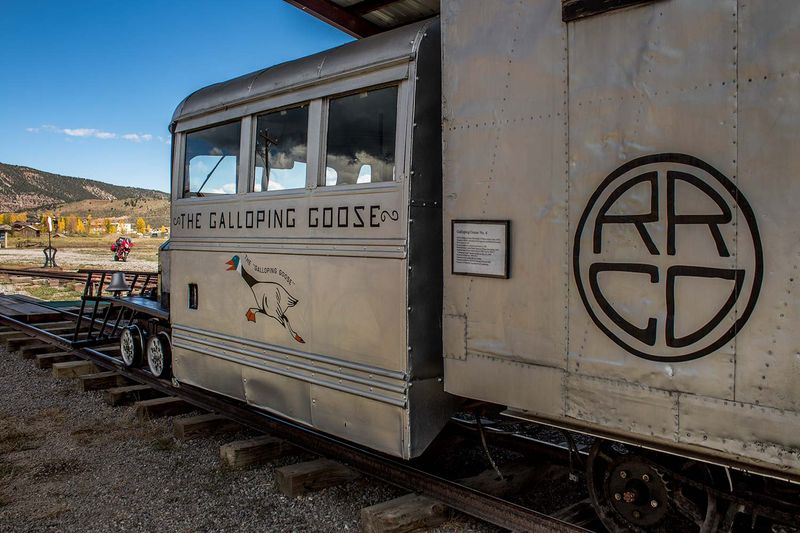
Ridgway’s railroad story is not tucked away as a footnote. This town grew as a railroad stop, and that history still gives structure to how the place presents itself, from its sense of arrival to the industrial traces that contrast with the polished mountain scenery.
You can feel that Ridgway once connected people, freight, and rugged terrain in a practical, daily rhythm rather than serving as a scenic backdrop alone.
The railroad legacy becomes most tangible around local rail preservation and museum spaces, where old equipment, interpretive displays, and weathered materials anchor the town’s identity in something physical. Steel, timber, faded paint, and mechanical forms bring a different texture than the typical Colorado postcard view.
Instead of generic nostalgia, the train history here carries grit, engineering, and the reminder that mountain communities depended on routes like this to function.
That matters when you explore the town because the old-west charm lands differently once you connect it to movement and industry. Storefronts and broad streets stop looking merely picturesque and start making sense as part of a former transportation hub.
Ridgway’s history is easier to appreciate when you imagine steam, cargo, schedules, and the hard logistics of building connections through difficult country.
If you are choosing one theme to follow through town, rail is the strongest thread. It links the past to the present without requiring a reenactment, and it gives Ridgway a backbone that many pretty mountain towns never quite develop.
Even after the tracks lost their original role, the railroad imprint stayed behind in the town’s shape, pace, and practical confidence.
Art That Prefers Surprise Over Formality
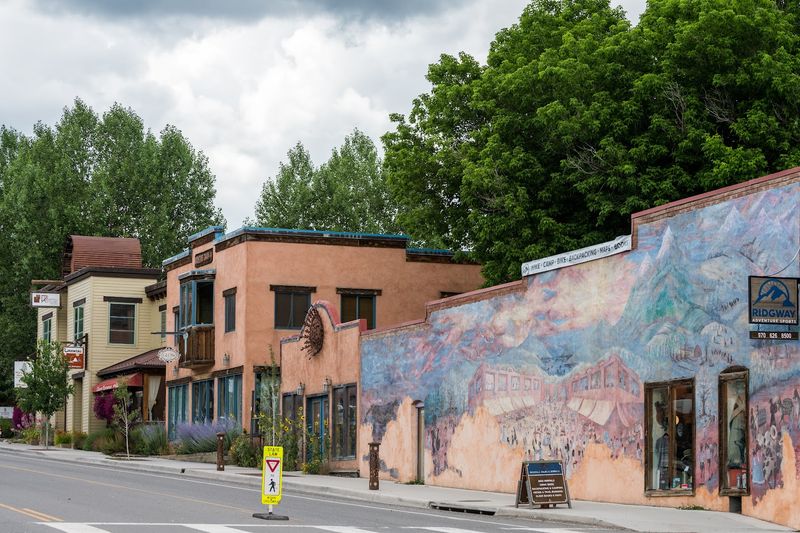
Ridgway’s artistic side does not announce itself with big-city grandness. It turns up in the middle of ordinary streetscapes, beside historic buildings, near parks, and in the kinds of small visual interruptions that make you slow down for a second look.
That low-key approach suits the town, because the art works best when it plays against rugged scenery and old-west structure rather than competing with them.
You notice a local taste for the slightly unexpected. Murals, sculptures, handmade signage, gallery windows, and playful details around businesses break up the frontier lines of the town with color and wit.
Instead of smoothing Ridgway into one neat identity, these pieces make the place more layered, as if railroad history, mountain practicality, and creative experimentation all agreed to share the same few blocks.
The fun of exploring here comes from not knowing where the next odd little visual will appear. A weathered wall might hold a bright artistic flourish, while a quiet corner could deliver a piece that feels both handmade and sharply intentional.
Ridgway never reads as over-curated, which is exactly why the artistic personality comes through so clearly: it looks lived in, local, and comfortable with a little eccentricity.
For travelers, that means the best strategy is to leave room for wandering. Step inside shops, scan alleys and side facades, and look for places where design decisions feel personal rather than branded.
In Ridgway, art is less about a single landmark and more about the cumulative effect of creative touches slipping into everyday view until the whole town starts reading as a lightly offbeat outdoor gallery.
Colorado Old-West Streets Without the Theme-Park Gloss
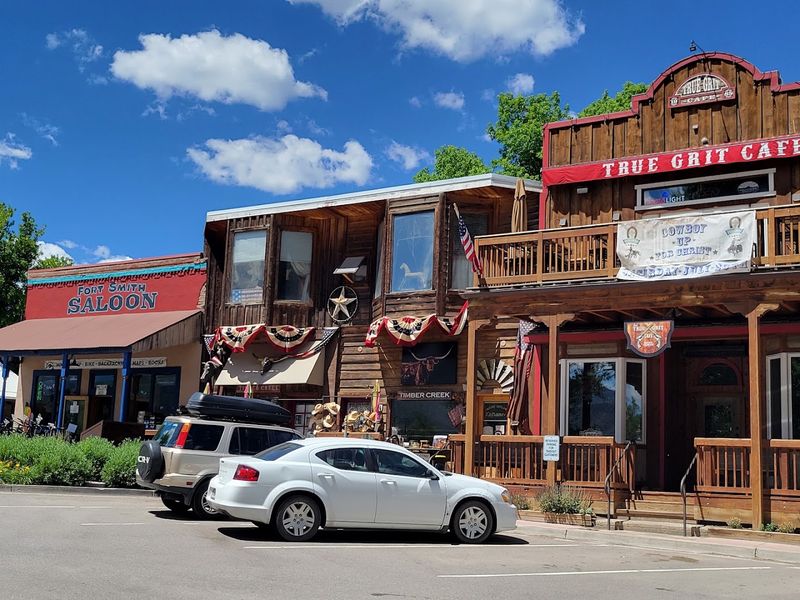
Plenty of western towns lean so hard into their past that the streets begin to look staged. Ridgway avoids that trap.
Its old-west charm works because the built environment still looks useful, grounded, and connected to local life, with historic facades and broad roadways that carry daily activity instead of performing for cameras.
You can see the difference in the textures. Buildings show age without collapsing into shabby theater, and commercial spaces still feel like places where errands happen, neighbors cross paths, and work gets done.
The visual pleasure comes from proportions and materials – boardwalk-style edges, old storefront rhythms, weathered wood, brick, and signs that look rooted in place rather than imported to manufacture nostalgia.
That practical authenticity gives Ridgway a steadier mood than flashier mountain destinations. There is room for charm, but it sits alongside municipal buildings, local businesses, parked vehicles, and the everyday choreography of a real town center.
Because of that, even a casual walk delivers more than a pretty photo set; you get a sense of continuity between the nineteenth-century outline and the present-day pulse.
If your idea of western character includes a little grit and restraint, Ridgway lands beautifully. It offers enough visual history to satisfy architecture lovers, enough breathing room to keep the streets readable, and enough present-tense life to prevent the place from turning static.
In a state full of polished resort corridors, this part of Colorado stands out by keeping its frontier lines intact without sanding away the ordinary life that makes them believable.
Parks, River Air, and the Town’s Softer Side
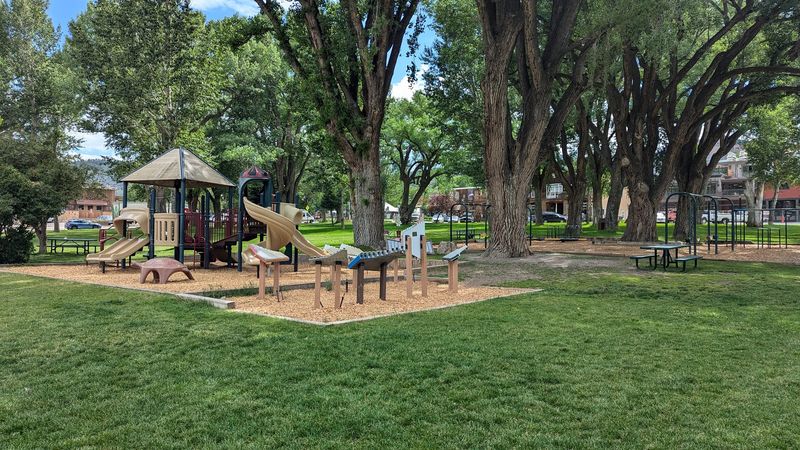
After the storefronts, train history, and artistic details, Ridgway opens into something gentler. Parks and open areas around town bring in shade, grass, sky, and the cooling presence of the Uncompahgre River corridor, shifting the tone from structured streetscape to breathing room.
That change matters because it rounds out the town’s personality; Ridgway is not all facades and heritage lines. Places like Hartwell Park and nearby Ridgway State Park create useful pauses in the experience.
Instead of hurrying from one attraction to another, you can sit, reset, and watch how locals actually use the town – walking dogs, meeting friends, moving slowly through the day under a lot of visible sky.
Trees soften the stronger western angles, and the mountain backdrop remains close enough to keep the landscape in the conversation.
The river presence is less about dramatic waterfront spectacle and more about atmosphere, ecology, and placement. Ridgway’s setting in the Uncompahgre Valley helps explain why the town feels both exposed and sheltered, with open terrain around it and high country pressing nearby.
In practical terms, that means parks are not an afterthought here; they function as part of how the town balances rugged identity with ease.
This is also where Ridgway becomes especially pleasant for unstructured time. Bring coffee, wander without an agenda, or give yourself a slow hour between downtown stops and a drive toward surrounding scenery.
The softer side of Ridgway does not compete with the trains or the old-west look – it gives them contrast, making the harder edges of town read even better once you step back into them.
How to See Ridgway Best: Slow Loops, Side Streets, Golden Light
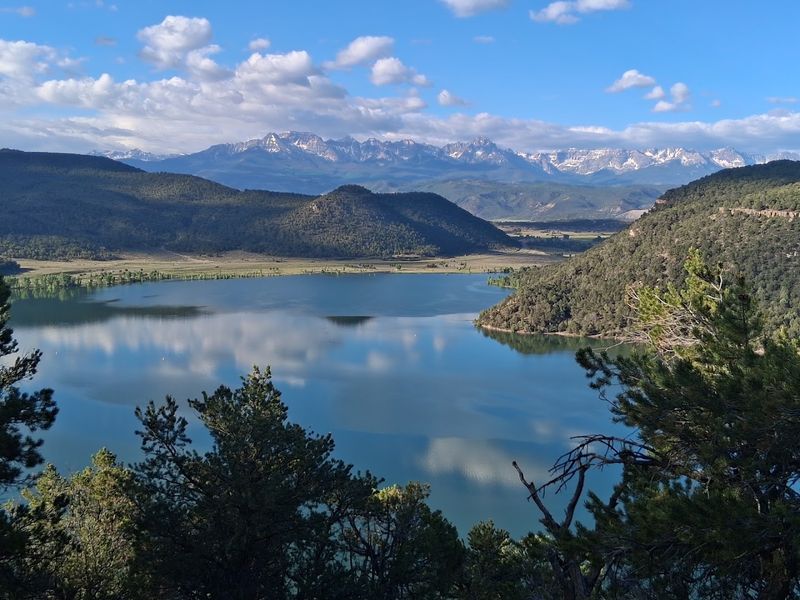
Ridgway is best handled at a measured pace. This is not a place that asks for an aggressive checklist, because much of its charm sits in transitions: the walk from a historic block to a pocket of public art, the glance toward mountains between buildings, the shift from industrial railroad memory to river-valley calm.
If you rush it, you will see the parts but miss the editing. The ideal visit starts with a downtown loop on foot. That gives you the storefronts, public spaces, older buildings, and visual relationship to the San Juans before you branch into museum stops or parks.
Once the town center clicks into place, nearby routes and side streets become more legible, and you start noticing how Ridgway’s modest size works in your favor by keeping everything connected rather than scattered.
Light also changes the experience more than you might expect. Morning tends to make the town feel crisp and sharply outlined, while late-day sun adds warmth to wood, brick, and mountain contours.
Photographers will appreciate how quickly ordinary corners improve when shadows lengthen, but even without a camera, golden hour makes Ridgway’s contrasts – art and history, hard lines and open space – easier to read.
If you have extra time, leave room to simply drift. Peek into local businesses, pause in a park, and let the next view arrive instead of forcing a route every minute.
Ridgway rewards curiosity that stays flexible, and that easygoing strategy suits the town’s scale perfectly. The best version of this visit is not crowded with tasks; it is built around observation, short walks, and well-timed light.
Why Ridgway Leaves a Different Kind of Colorado Story
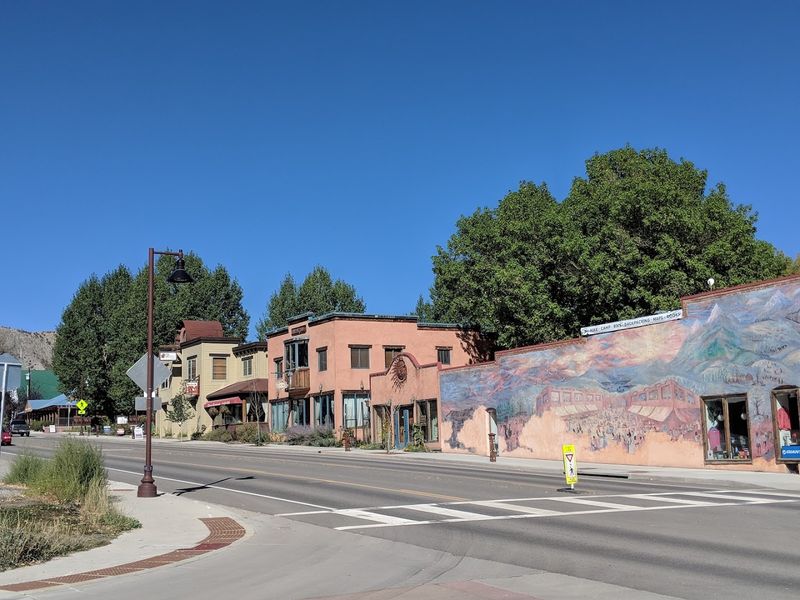
Ridgway stands out because its character comes from overlap rather than a single headline attraction. Railroad heritage gives it structure, old-west streets provide visual identity, public art adds wit, and the surrounding mountains keep everything anchored in a landscape that is far bigger than the town itself.
Those elements could easily clash somewhere else, yet here they read as one coherent place with a slightly unconventional streak.
That coherence is the real surprise. Ridgway never has to oversell its quirks because they are embedded in the town’s layout and habits, not pasted on top for effect.
You can move from a rail-focused stop to a creative storefront to a park view and understand each one as part of the same local story: a small municipality shaped by transportation, terrain, and a community comfortable mixing tradition with independent expression.
It also helps that Ridgway remains readable. You do not need a complicated plan, a long explanation, or a packaged experience to grasp why it works.
The town shows itself through materials, spacing, views, and the visible coexistence of utility and personality, which makes the place satisfying for travelers who want more than scenery but less than spectacle.
In a state full of famous alpine destinations, Ridgway offers a different kind of Colorado payoff. It is compact without feeling thin, historic without becoming dusty, creative without trying too hard, and scenic without disappearing beneath the mountains around it.
If your travel taste runs toward towns that reveal themselves through texture, pacing, and a little offbeat confidence, Ridgway delivers a sharper story than its size suggests.