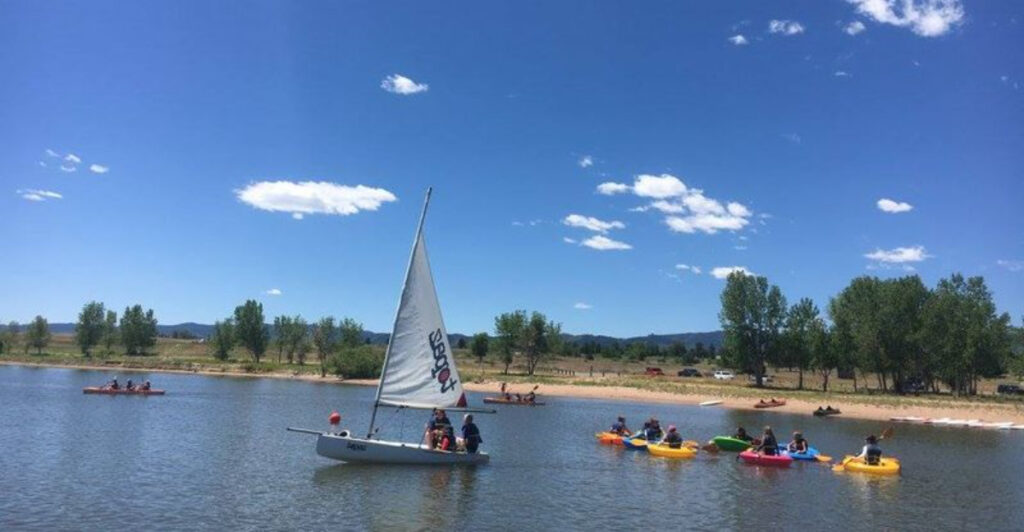
Escaping for a summer lake day doesn’t have to mean driving deep into the mountains. Just southwest of Denver, Chatfield State Park and its expansive reservoir offer sandy swim beaches, boating, paddleboarding, kayaking, fishing, and miles of scenic shoreline with the Rockies rising in the distance.
The combination of easy access and wide-open water makes it one of the Front Range’s favorite warm-weather destinations for families, couples, and outdoor enthusiasts alike. Whether you’re planning an active afternoon on the lake or a relaxing picnic by the water, Chatfield Reservoir delivers the kind of summer getaway that’s remarkably close to home.
Where the City Suddenly Gives Way to Water
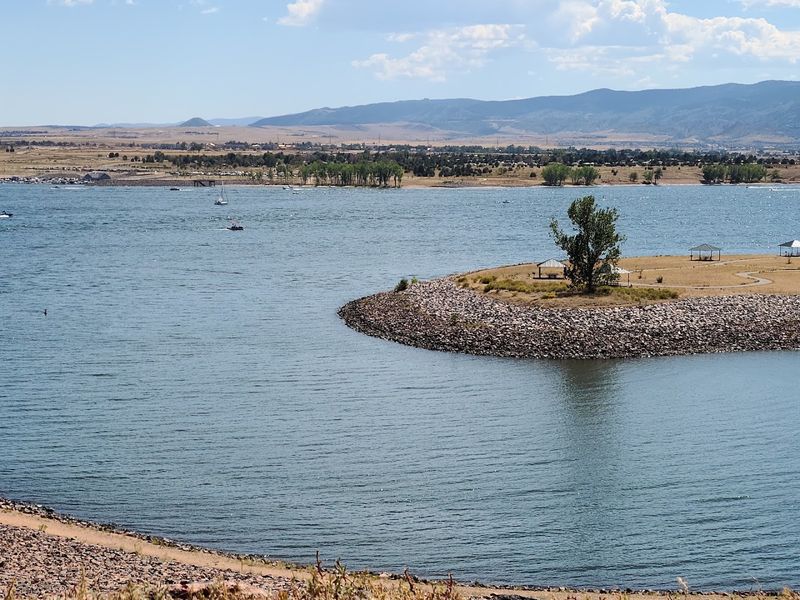
The first surprise at Chatfield Reservoir is scale. So much of the Denver-area landscape reads as dry, open, and landlocked that arriving at a broad sweep of blue water can feel almost theatrical, especially on a bright summer morning when the shoreline, marina, and distant ridgelines all snap into focus at once.
Instead of a tucked-away alpine lake, you get a reservoir with room to breathe, room to move, and enough visual openness to make the whole place feel bigger than a typical day-use spot.
That wide layout changes the mood immediately. Boats trace long lines across the surface, paddleboards drift closer to shore, and beach areas introduce a casual rhythm that feels more lakeside than mountain excursion.
The Front Range remains part of the backdrop, which matters, because Chatfield never loses its Colorado identity even when the scene starts leaning beachy. You are still framed by dry hills, big sky, and that crisp, high-elevation light that makes the water look extra sharp.
There is also an interesting contrast built into the approach. The reservoir sits close enough to population centers to be practical, yet once you are near the water, the day starts operating on lake time instead of city time.
Parking lots, ramps, trails, and access points create structure, but the visual experience stays loose and expansive. That mix is a big reason the place works for spontaneous summer plans.
If the goal is a day trip that starts paying off fast, Chatfield has an advantage. You do not need a long scenic buildup before the setting delivers.
Blue water, moving sails, sandy edges, and mountain views appear almost all at once, and the whole outing suddenly looks much more ambitious than the drive required to get there.
The Beach Scene That Makes Summer Plans Easy
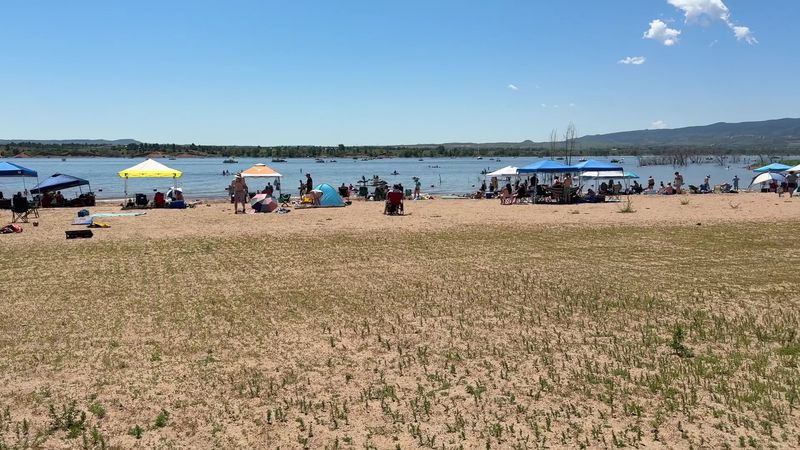
Chatfield Reservoir earns much of its summer reputation at its designated swim beach. This is where the reservoir shifts from scenic backdrop to actual all-day hangout, with sandy space to spread out, shallow water for casual wading, and enough room for families, friend groups, and sun-seekers to claim a patch of shoreline.
It is not trying to imitate an ocean beach, and that is part of the appeal. The setup is practical, accessible, and clearly built for people who want to get in the water without overcomplicating the day.
What makes the beach area useful is how many versions of a summer outing it supports at once. Some people are there to swim, some to let kids burn energy, some to park under a small shade setup and spend hours rotating between snacks, reading, and quick dips.
The shoreline gives the reservoir a social center, and that center helps first-time visitors instantly understand how to use the place. You do not need specialized gear to enjoy this section, which lowers the barrier in a good way.
There are, however, a few realities that shape the experience. Shade can be limited, especially during hotter stretches, so sun protection matters more here than at tree-heavy lakes.
Weekend demand is also very real, and early arrival can make the difference between an easy start and a crowded one. Chatfield is popular because it solves a specific problem for summer in Colorado: where to find swimmable water, room to spread out, and a change of scenery without a long haul.
That combination keeps the beach from feeling like an afterthought. It is a core attraction with its own rhythm, especially once towels, coolers, floaties, and sandy feet take over the day. By late morning, Chatfield starts looking exactly like the kind of summer plan people were hoping to find.
Paddleboards, Sailboats, and a Windy Learning Curve
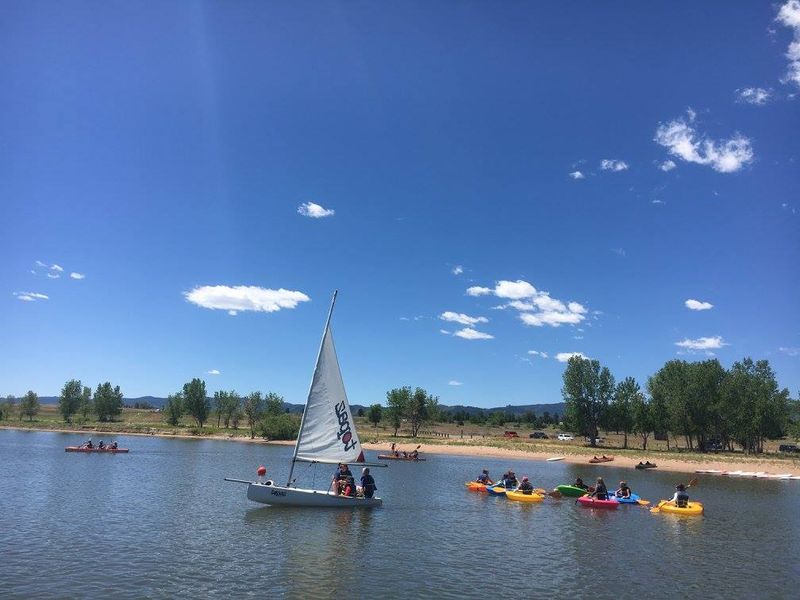
Once you move beyond the beach, Chatfield Reservoir reveals its biggest strength: variety on the water. You can spot sailboats cutting across open sections, kayaks working closer to shore, paddleboards gliding through calmer patches, and larger boats using the reservoir in a more fast-moving way.
That layered activity gives the lake real energy. Instead of one dominant use, Chatfield functions like a shared summer playground where different styles of recreation can coexist, provided everyone reads the conditions correctly.
The word to take seriously here is wind. Conditions on the reservoir can change quickly as winds pick up, and that detail is not minor background information.
A reservoir that looks mellow early in the day can turn rough enough to challenge smaller craft, especially boards and kayaks. Personal flotation devices are not optional in spirit, even if some people treat them casually.
The place rewards preparation, not bravado, and that is an important part of understanding its personality. That shifting water is also why timing matters.
Mornings usually offer a cleaner window for paddling, with calmer conditions and a more manageable rhythm before heavier traffic builds.
Later, the lake can become busier and bumpier, especially on warm weekends when every possible activity seems to be happening at once.
If your ideal day includes quiet strokes, cleaner reflections, and less wake, early launch beats midday improvisation. None of this takes away from the fun. It actually sharpens it.
Chatfield is most satisfying when you treat it like a real body of water rather than a decorative backdrop. Pack for the wind, wear the life jacket, pick your hour wisely, and the reservoir opens up into one of the metro area’s most dynamic outdoor escapes, with enough motion on the surface to keep the entire scene alive.
A Colorado Reservoir With More Than Just a Shoreline
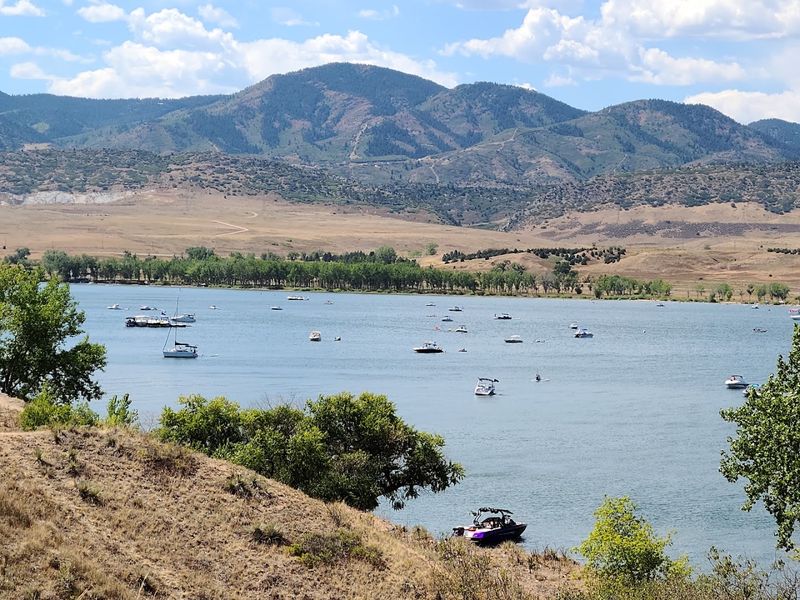
One reason Chatfield Reservoir stands out is that the lake is only part of the story. Around the water, the larger recreation area broadens the day in useful ways, giving you trails, camping zones, dog-friendly stretches, and enough varied terrain to keep the outing from collapsing into a single activity.
That matters for mixed groups, where not everyone wants the exact same version of summer. At Chatfield, one person can paddle, another can bike, and someone else can stay grounded with a quieter shoreline setup.
The trail network adds structure to the place. Riders and walkers can loop through open terrain with changing views of the reservoir, grassland, and distant foothills, which creates a different kind of appreciation than the beach scene offers.
The area also connects to bigger outdoor movement in the region, making Chatfield less isolated than it first appears. It behaves like a hub, not just a waterfront.
Even if the main plan is lake time, the surrounding paths and access points give the landscape more depth. That flexibility shows up in the atmosphere too.
You might pass anglers working for bass, trout, perch, or walleye, families hauling inflatables, dog owners heading toward pet-friendly zones, and cyclists treating the reservoir loop as a workout with a better view than most city rides.
There is even a slightly unexpected recreational sprawl to the place, the kind that makes you realize Chatfield serves different communities at once without feeling fragmented.
For a day trip, that is a major advantage. Weather shifts, energy levels change, kids get restless, and not every plan survives the afternoon exactly as imagined.
Chatfield gives you backup options without requiring a reset. When the water is the headline but the larger landscape keeps offering alternatives, the whole destination becomes easier to recommend, especially for groups that need a place with room for different agendas.
The Quiet Detail Most First-Timers Miss
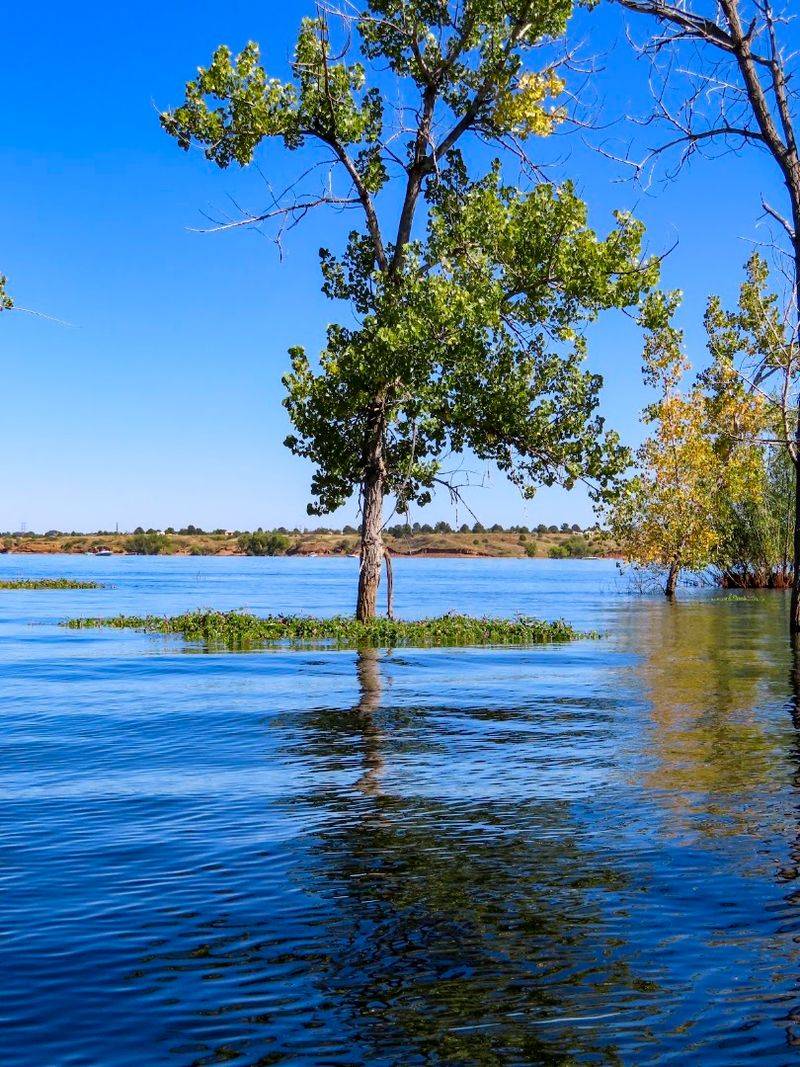
Chatfield Reservoir can look straightforward from a distance: open water, beaches, boat traffic, big sky. Spend a little more time around the edges, though, and smaller details start changing the experience.
One of the most intriguing is how shoreline conditions can shift with water levels, creating pockets where trees, vegetation, and shallow margins give paddlers a more intimate route than the broad central basin suggests.
Those tucked-in areas offer relief from the exposed feel of the main water and add texture to a day that might otherwise read as one-note.
This is also where the reservoir becomes most visually interesting. Near-shore vegetation, changing water lines, and irregular inlets break up the wide-open geometry and make the place feel less engineered than expected.
On calmer days, those sections can be especially appealing by kayak or paddleboard, with partial shade in some seasons and a sense of discovery that does not rely on dramatic distance. You are still within a very popular recreation area, but the scale briefly shrinks down to ripples, reeds, branches, and close-up reflections.
There is a practical side to these edges as well. Shallow zones and floating vegetation can affect smaller craft and require a little patience, and not every shoreline segment is equally suited to every activity.
Anglers, swimmers, paddlers, and boaters do not always want the same kind of access, which is why choosing your section matters. Chatfield rewards looking at the map, reading the shoreline, and matching the launch point to the actual plan.
That attention pays off because the reservoir has more nuance than its busiest areas suggest. The broad summer headline is obvious from the parking lot, but the quieter appeal sits near coves, margins, and waterline transitions. Those are the places where Chatfield starts offering not just recreation, but a more observant kind of outing.
Best Timing for a Smoother Chatfield Day
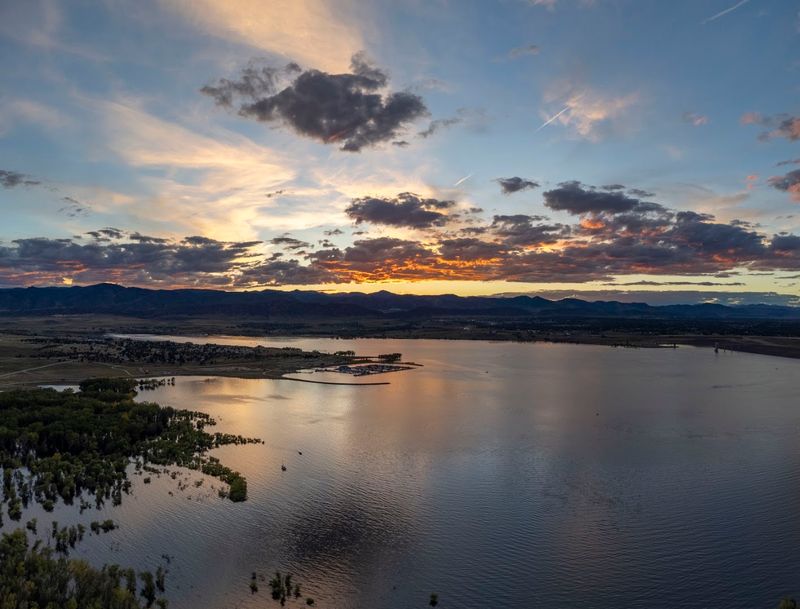
If timing shapes any Colorado lake day trip, it shapes Chatfield Reservoir even more. This is a place where the difference between 8 a.m. and early afternoon can completely rewrite the outing.
Arrive early and the reservoir often reads as spacious, organized, and full of possibility. Wait too long on a prime summer weekend, and the same destination can become a much more crowded, windier, more logistically demanding version of itself.
Morning gives you the cleanest shot at several things at once: easier parking, calmer water, lower beach competition, and better conditions for paddleboards, kayaks, or beginner boaters. The light is also better then, with the Front Range backdrop looking crisp before heat and midday glare flatten some of the detail.
Cyclists and walkers benefit too, especially around exposed stretches where the sun becomes a real factor later. Chatfield does not hide from weather. It sits out in it, and your schedule should respect that.
By midday, the reservoir tends to fill in fast during peak season. Boat traffic increases, noise rises, and the beach scene shifts from relaxed setup mode to full operational summer mode, with coolers, inflatables, gear hauls, and plenty of movement in parking areas and access roads.
None of that is inherently bad if you want lively energy, but it does demand a more deliberate plan. This is not the kind of place where casual late arrival always gets rewarded.
The smartest approach is to decide what kind of day you want before leaving home. If the priority is swimming and social beach time, an early claim on space is ideal.
If it is paddling, wind avoidance matters. If it is biking or walking, beat the hottest part of the day. Chatfield is generous with options, but best results come from using the clock as carefully as the map.
Why This Summer Day Trip Actually Delivers
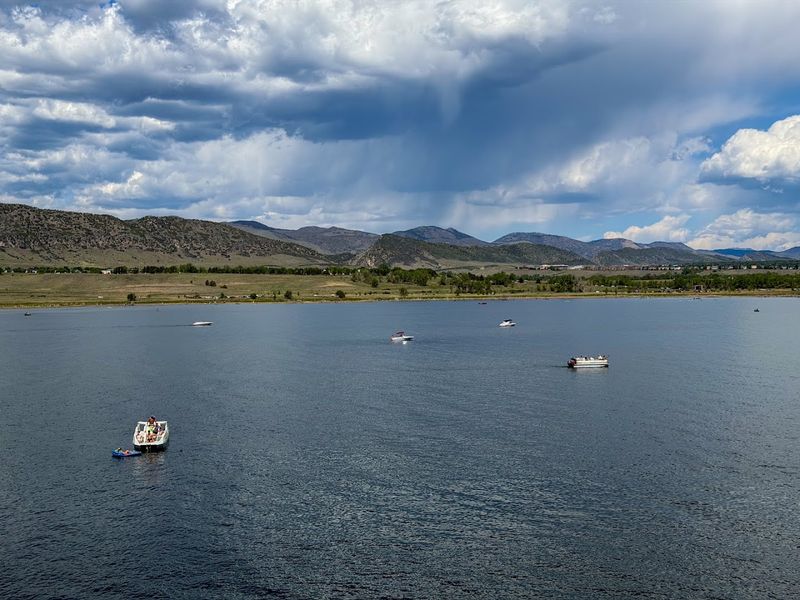
Some day-trip destinations survive mainly on convenience. Chatfield Reservoir does more than that. Yes, it is close enough to make spontaneous planning realistic, but the place also offers enough visual payoff, activity range, and summer-specific usefulness to justify the attention it gets.
It solves a practical Front Range problem with style: where to find a water-centered outing that can handle swimmers, paddlers, cyclists, anglers, families, and casual sun-chasers without sending everyone deep into the mountains.
Its strongest quality may be versatility without blandness. The reservoir can be energetic and social at the swim beach, technical and wind-aware out on the water, quieter along selected shoreline edges, and active on land through trails and looping routes.
That spread means you are not locked into one mood. If the beach fills up, there are other angles. If boating is not the plan, the day still has shape. Few easy-access lake trips offer that many workable versions of themselves.
Chatfield also benefits from being unmistakably local rather than fantasy-driven. You are not here for a pristine alpine postcard with no complications.
You are here for a large, well-used reservoir that reflects how people in Colorado actually spend summer when they want water, movement, and a full day outside. That honesty makes it easier to enjoy the place on its own terms.
Bring shade, expect company, watch the wind, and lean into the range of things to do. In return, the reservoir gives you a day that can be as active or relaxed as needed, while still looking great in the process.
Blue water under a huge sky, sails moving across the surface, sandy feet by noon, bikes circling later, maybe a fishing stop before leaving – that is a very complete summer day, and Chatfield makes it unusually easy to pull off.