A park feels a lot more impressive when water seems to frame it from every direction. In Ludington, Michigan, Ludington State Park sits between the crashing edge of Lake Michigan and the calmer sweep of Hamlin Lake, with sand, dunes, forest, and trails filling the space in between.
That rare layout gives the park a kind of range most beach stops cannot match. One visit can move from shoreline waves to shaded woods, river bends, quiet inland water, and wide-open dune views without ever feeling like the scenery has run out.
For anyone looking for a Michigan park that keeps changing character as you explore, this Ludington favorite is worth studying closely.
Seven Miles Framed by Two Lakes
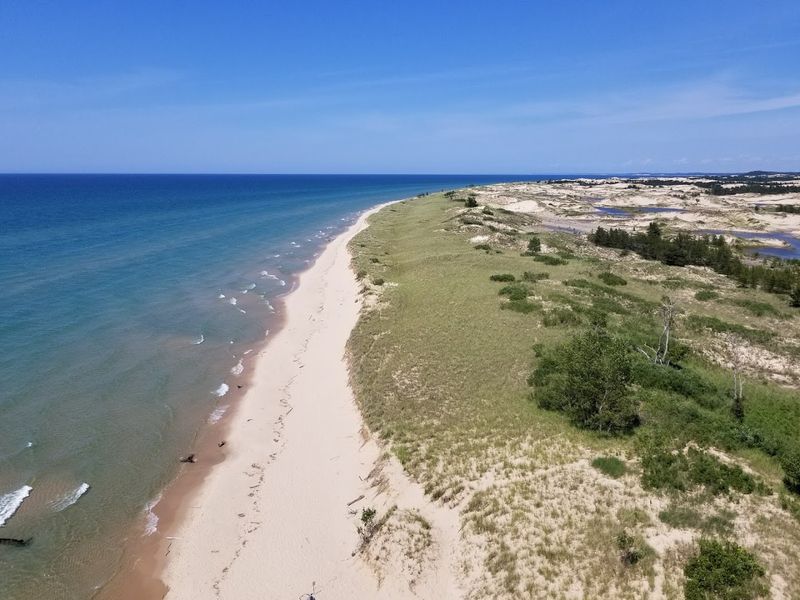
Plenty of Michigan beaches are beautiful, but this park grabs attention because the layout is so dramatic. Ludington State Park sits between Lake Michigan and Hamlin Lake, with dunes, woods, and the Big Sable River adding extra texture instead of background filler.
You are not looking at one shoreline here. You are moving through a whole strip of shifting land where open water, protected inland lake, and sandy ridges constantly trade places.
That geography gives the park a bigger visual punch than many first-time visitors expect. One direction opens into broad surf and horizon, while another turns calm, sheltered, and quieter near inland water and marshy edges.
Even the drive through the park hints at the range ahead, because paved routes, trailheads, camp loops, and beach access points all sit inside a landscape that keeps changing shape. Nothing about it feels flat or one-note.
The sand is part of the story, but so is the way the terrain organizes your day. You can start with a beach walk, step into shaded forest, cross toward water again, and end up near a river or dune overlook without leaving the park boundary.
That variety makes the place read less like a single destination and more like a compact coastal region. It is large enough to feel expansive, yet structured enough that you can actually navigate it without guesswork.
For a state park, that balance is impressive. The scenery has the scale of somewhere wilder, but the access points, parking areas, and maintained routes make the experience approachable.
Before you even choose a trail or spread out a towel, the setting itself explains why Ludington holds such a strong reputation in Michigan.
The Lake Michigan Beach That Carries the Headline
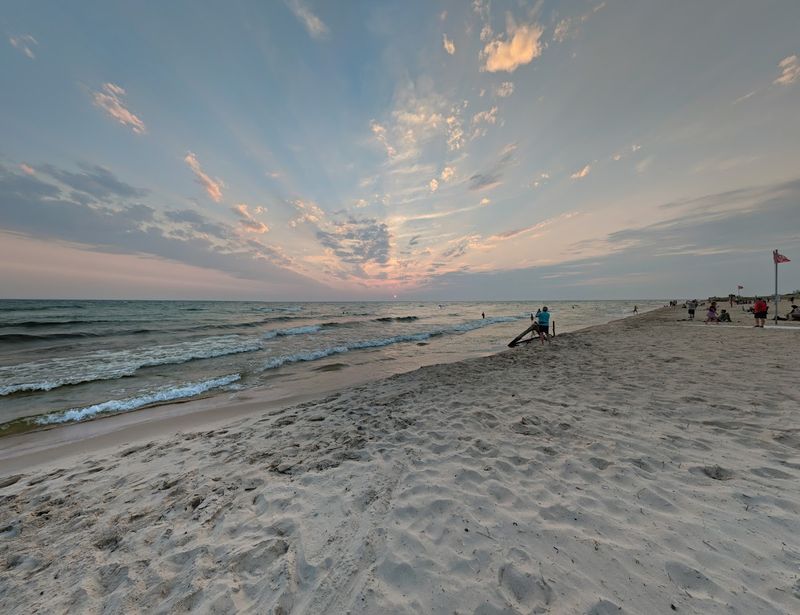
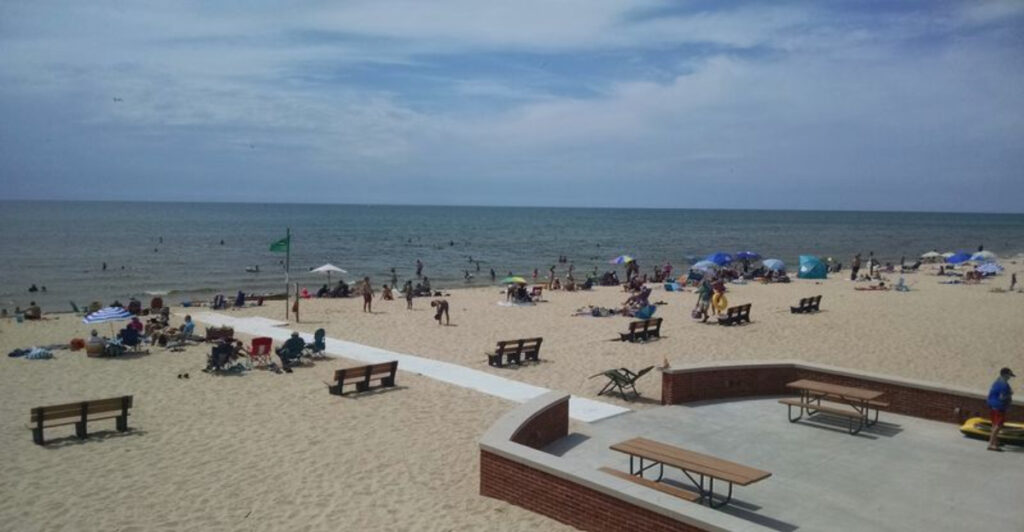
The beach is the headline feature for good reason. On the Lake Michigan side, Ludington State Park opens into a broad sandy shoreline with room to spread out, walk for long stretches, or simply stand and watch the water shift color under changing light.
It is not a cramped cove or a narrow ribbon of sand. The beach has width, breathing room, and a clean horizon that makes everything around you look larger.
That sense of space changes how the park functions. Families can settle in without feeling stacked on top of one another, walkers can keep moving instead of weaving through dense clusters, and the shoreline still looks expansive even when the park is busy.
Clear water and long sightlines help the beach feel bright rather than boxed in. On windy days it reads more dramatic, with waves and blowing sand adding energy.
On calmer days, it leans classic and easy.
Useful details make this beach more than a pretty strip of shoreline. There is an accessible walkway extending toward the sand, restrooms in the beach shelter, and beach wheelchairs available, which matters when a place with dunes and soft sand could otherwise be difficult to navigate.
Volleyball courts add a social pocket without overtaking the beach itself. A small museum upstairs in the shelter and a store or cafe space below give the area a little extra life when you want a break from sun and wind.
Most important, the beach does not feel disconnected from the rest of the park. It is the anchor, not the entire show.
You can spend hours here, then pivot into trails, river scenery, dunes, or a lighthouse walk without ever feeling like you have left the main experience behind.
Michigan Dunes, Forest Shade, and Trails That Keep Switching Scenery
Ludington State Park works especially well for people who do not want an entire day limited to one beach chair and one view. The trail system keeps changing the visual script.
Some routes are paved or crushed gravel and easier to handle, while others bring stairs, roots, sand, or hills into the picture. That range means the park can meet casual walkers, families with kids, and hikers chasing longer mileage without forcing everyone onto the same type of path.
The most useful thing to know is that the trails are not interchangeable. Some focus on wooded shade and gentler movement, while others reward you with dune climbs, elevated overlooks, and stronger exposure to sun and wind.
Reviews consistently point to combinations around Lost Lake, Island Trail, and Skyline-related routes for especially varied scenery. The appeal is not just exercise.
It is the way one segment can feel enclosed by pines and another suddenly opens toward water or sandy elevation.
That shifting terrain keeps the park from becoming visually repetitive. You are not following a single forest loop and calling it a day.
One turn introduces quiet inland water, another cuts past dune formations, and another reconnects with broader coastal drama. Even short hikes can feel fuller than expected because the landscape changes so quickly across a relatively compact area.
It rewards attention to where you are, not only how far you have gone.
Practical expectations matter here. Parking for trail access can be limited at some points, and certain routes begin farther into the park than newcomers expect.
Still, once you are on the network, Ludington offers a mix many state parks struggle to deliver: meaningful variety, maintained paths, and enough contrast between routes that choosing one trail over another actually changes the day.
Big Sable River, Lost Lake, and the Park’s Quieter Water World
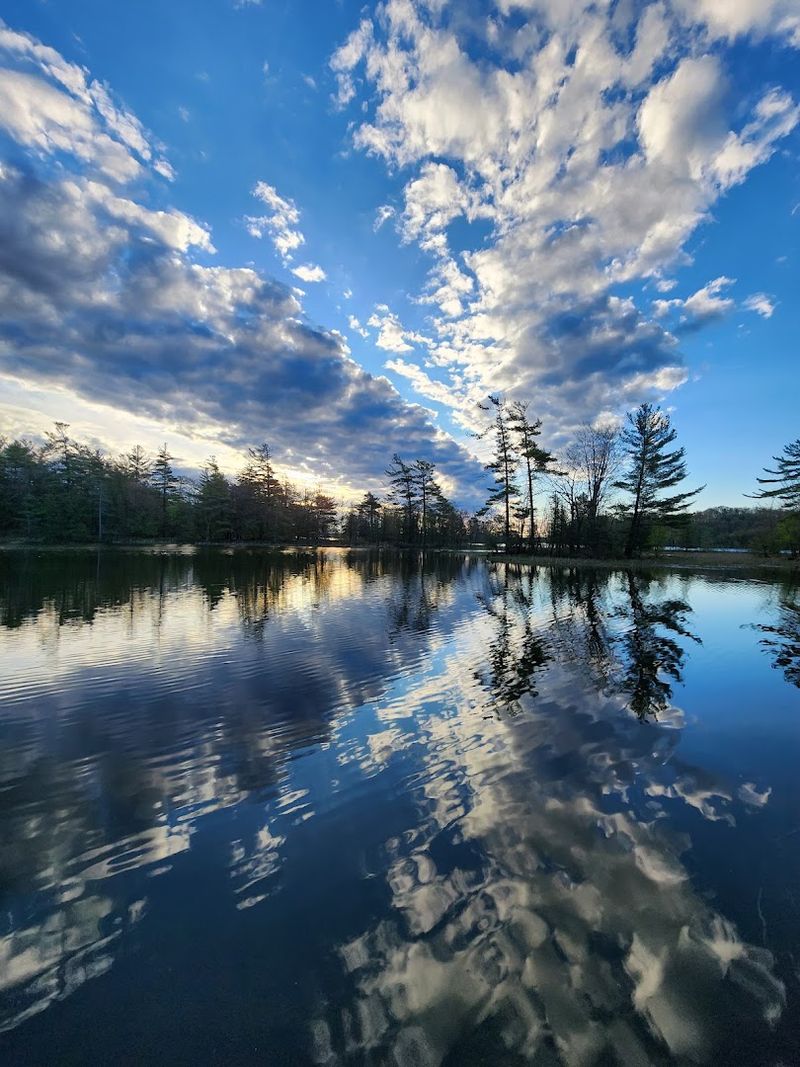
The park’s quieter side shows up when you turn away from Lake Michigan and follow the water that does not crash. Lost Lake, Hamlin Lake edges, and the Big Sable River give Ludington a second personality, one built around stillness, paddling, and narrower passages where the scenery closes in.
Instead of horizon and surf, you get reflections, shoreline detail, and a more intimate pace. That contrast is one of the park’s smartest strengths.
If the beach is expansive and obvious, these inland waters are more textured. Canoes and kayaks fit naturally here because the environment invites slower movement and closer observation.
You notice overhanging trees, small changes in current, birds working the shoreline, and the way sand and water meet in softer lines. Reviews mention canoeing out toward islands and floating or fishing parts of the river, which tracks with the park’s multi-water layout.
It is not all about standing on dunes and staring west.
That matters for trip planning because inland water can rescue a day when Lake Michigan is too windy, too cool, or simply too intense for what you want. Families looking for a calmer outing, photographers chasing reflections instead of waves, and hikers wanting a waterside trail with more shade all benefit from this side of the park.
The variety keeps Ludington from becoming weather dependent in the way some beach destinations can be.
Just as important, these calmer zones deepen the park’s identity. Without them, Ludington would still be attractive, but more predictable.
With them, the park becomes a study in contrast: rough water and sheltered water, broad shoreline and tighter channels, dune exposure and wooded cover. You can cross between those worlds in a single visit, which is exactly why the landscape feels richer than a standard beach park.
The Lighthouse Walk Gives the Coast a Clear Destination
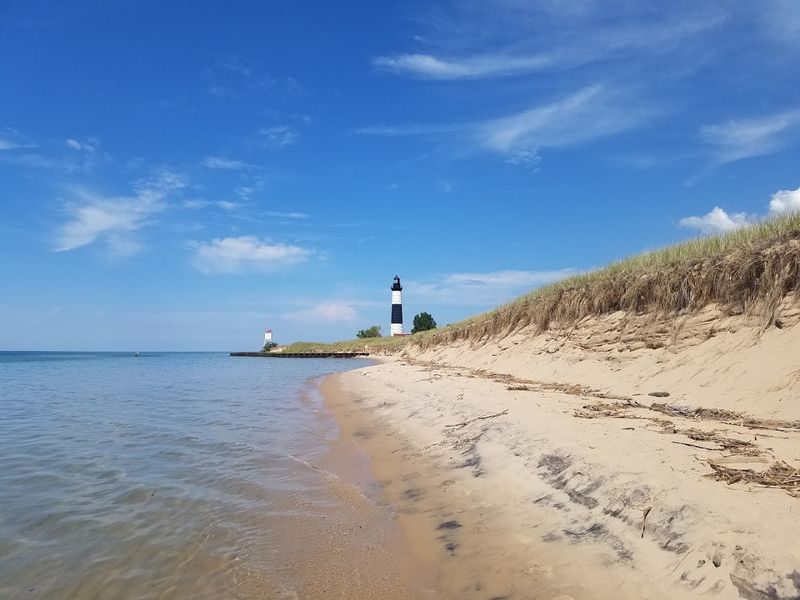
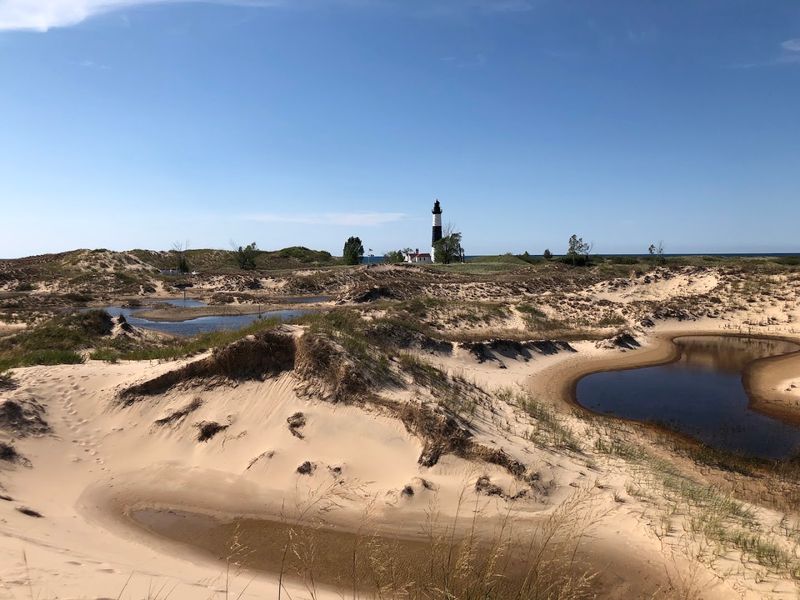
Large beaches can sometimes feel directionless after the first hour, but Ludington has a built-in focal point farther up the coast. The walk toward Big Sable Point Lighthouse gives the park a defined destination, which changes the rhythm of a beach day.
Instead of wandering with no endpoint, you have a reason to keep moving north along sand, dunes, and shoreline. The lighthouse turns scenery into a route.
That route matters because the park is at its best when movement is part of the experience. A flat, sandy road or trail approach lets you cover ground without technical effort, and the coastal setting does most of the work visually.
You pass through zones where the beach feels open and bright, then sections where vegetation and dune shapes begin to frame the way forward. By the time the lighthouse appears, it reads as part landmark, part reward.
Even those who skip climbing it still get the payoff from the approach.
The lighthouse also helps connect Ludington to the longer story of Lake Michigan’s shoreline. It introduces a human-made element without competing with the landscape, and it gives structure to photographs that might otherwise be all horizon and sand.
A tower, a roofline, and the meeting point between architecture and dune country make the coast look more specific to place. This is not just any beach.
It is a working stretch of shoreline with a recognizable marker out on the edge.
For visitors, that means the lighthouse walk can anchor an entire half day. Start at the main beach, build in time for the shoreline or trail approach, and let the destination set your pace.
Ludington’s scale can be impressive on its own, but this walk adds purpose, turning a scenic expanse into a journey with a visible finish.
Camping, Bikes, and the Everyday Logistics That Shape the Experience
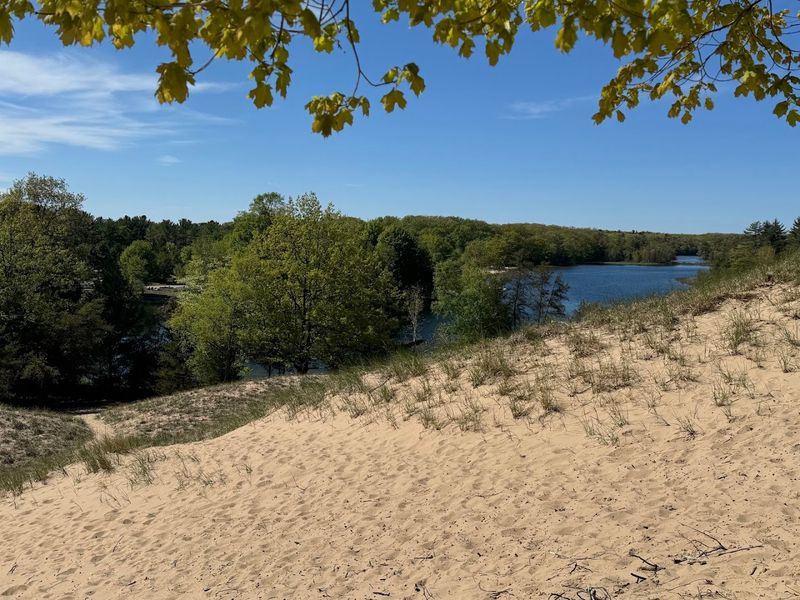
Ludington State Park earns attention for scenery, but the everyday infrastructure plays a huge role in why people return. This is a park where beach access, trails, campgrounds, bike routes, and support facilities all sit inside one cohesive system.
That means your day does not dissolve into constant backtracking or wondering where the next useful stop might be. Even with its size, the park is organized in a way that supports full days of activity.
Camping is a major part of that ecosystem. The park offers both modern and more remote camping options, and demand is high enough that reservations can be difficult during prime season.
The appeal is easy to understand. Campers wake up close to trails, shoreline, and inland water rather than driving between separate attractions.
Reviews repeatedly highlight clean grounds, maintained bathrooms and showers in many camping areas, roomy setups in some loops, and a generally strong standard of care, even if a few sites skew gravel-heavy or tighter than ideal.
Biking adds another layer. Paved roads and bike paths help the park feel more navigable, especially for families or groups splitting time between the beach, camp store, and trailheads.
Dogs on leash are welcome in parts of the park too, which broadens the audience without changing the overall tone. Small conveniences such as a camp store and accessible support buildings matter more here than they might elsewhere because the park is large enough to need them and active enough to justify them.
None of that sounds glamorous at first glance, yet these practical pieces directly affect the quality of a stay. A beautiful shoreline gets better when cleanup is easy, restrooms are nearby, and trail links make sense.
Ludington succeeds because the headline scenery is backed by infrastructure sturdy enough to carry a very busy park.
How to Time a Visit to Ludington State Park for the Best Day
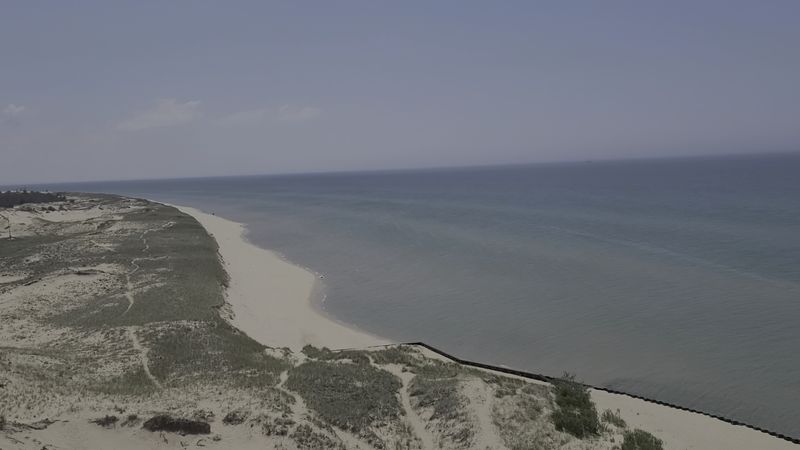
Timing matters at Ludington more than at smaller parks because the place offers several distinct experiences, and each one peaks under different conditions. Midday naturally draws the biggest beach crowds, strongest sun, and the least shade on open sand.
Early morning gives the park a different profile: cooler air, softer light on dunes, easier parking, and quieter trails before beach activity ramps up. If your main goal is hiking or photography, that first window is hard to beat.
Weather should shape your plan just as much as the clock. On windy or chilly days, the inland side of the park and more sheltered trails can outperform the Lake Michigan beachfront.
If the shoreline is calm and warm, you can build around swimming, beach walking, and lighthouse mileage instead. The park’s real advantage is flexibility.
You do not need perfect beach weather for a strong visit because there are enough alternate settings within the boundary to rework the day without feeling like you settled.
Season also changes the experience in obvious ways. Peak summer brings maximum energy, fully active campgrounds, and easier access to all the park’s social features, but it also raises the odds of crowded parking and busier loops.
Shoulder-season visits can feel quieter and more spacious, though the water may be colder and the wind sharper. Winter and colder months shift Ludington into a stark, scenic mode that some travelers love, especially for driving, walking, and dramatic shoreline views.
For most people, the smartest approach is simple. Arrive with one anchor plan, then let conditions decide the details.
Start early if you want trails or solitude, lean into the beach when the lake cooperates, and keep a backup route in mind. Ludington rewards flexible visitors because the park changes character so easily across a single day.
Why This Park Stands Apart on Michigan’s West Coast
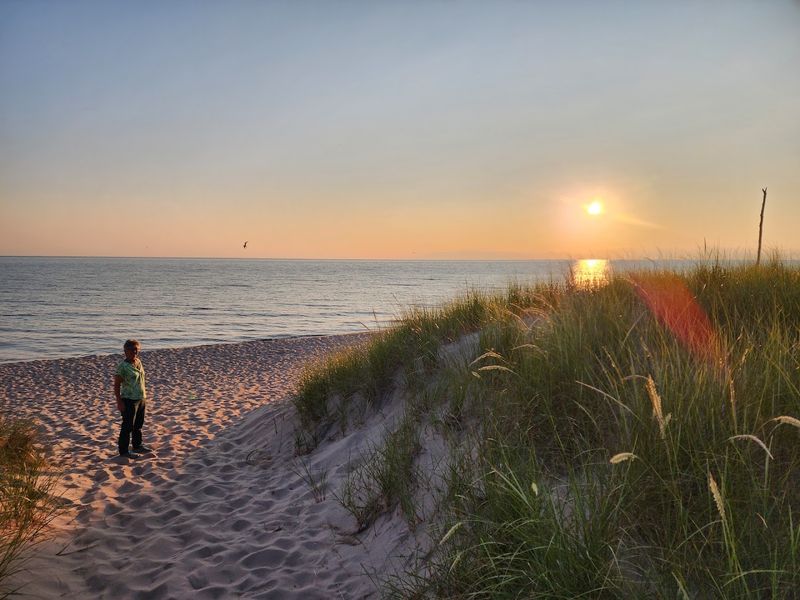
Some parks are easy to enjoy but hard to describe beyond one dominant feature. Ludington State Park is different because its identity comes from combination.
The beach is excellent, the dunes are substantial, the trails cover real variety, and the inland water changes the mood completely. None of those pieces has to carry the whole place alone.
Together they create a park that stays interesting long after the first scenic overlook or first walk down to the sand.
That layered design is why Ludington keeps its edge on Michigan’s west coast. You can build a trip around swimming, hiking, camping, paddling, biking, a lighthouse walk, or simply a long shoreline stroll, and none of those choices feels like the lesser version of the park.
The setting supports all of them naturally. Instead of forcing attractions into one area, the landscape seems to organize them on its own.
Lake Michigan provides scale, Hamlin Lake provides contrast, and the land between them does the connecting.
There is also an unusual balance here between access and immersion. Facilities are strong enough that families, day trippers, and first-time visitors can settle in comfortably.
At the same time, dune overlooks, wooded paths, and inland water routes preserve enough texture that the park never reads like a fully tamed recreation zone. You can stay near the action or move into quieter corners with very little effort.
That flexibility broadens the appeal without flattening the experience.
If one sentence explains Ludington, it is this: the park gives you more than one version of Michigan in a single address. You get open coast, calmer inland water, sand underfoot, shade overhead, and enough room to choose your own pace.
That is why seven miles of shoreline here feel bigger than the number suggests.