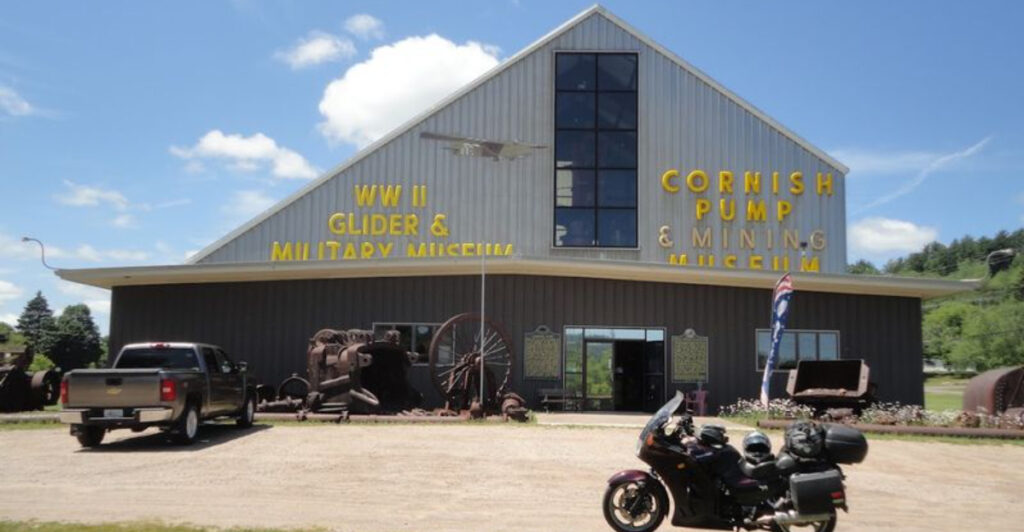
Industrial history feels very different when the machine in front of you is almost too large to process. In Iron Mountain, Michigan, the Cornish Pumping Engine and Mining Museum turns the Upper Peninsula’s mining past into something heavy, physical, and impossible to reduce to a textbook paragraph.
The massive pumping engine anchors the experience, showing the scale of engineering once required to keep deep iron mines working. It is iron, pressure, ambition, and problem-solving made visible all at once.
For anyone who wants a Michigan museum stop with real weight behind it, this Iron Mountain landmark delivers history on a scale you can feel.
The First Sight Is All Steel and Scale
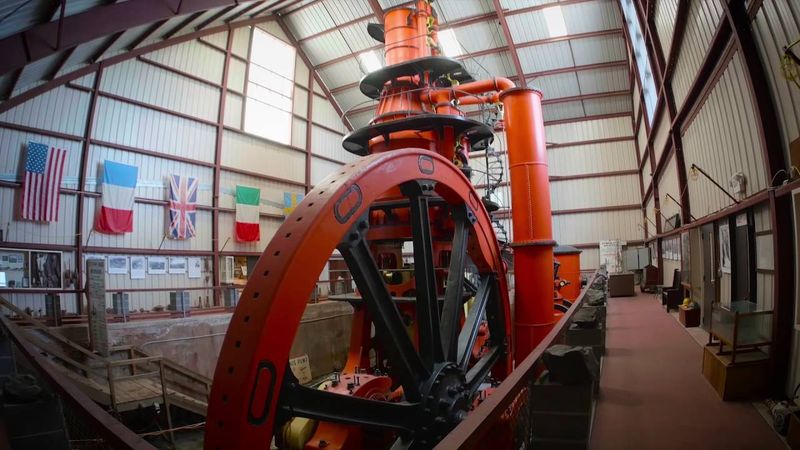
You do not ease into this museum. The giant engine dominates the room so completely that your eyes need a second to adjust, not because the space is confusing, but because the proportions are.
A machine of this size turns industrial history from a textbook topic into a blunt physical fact.
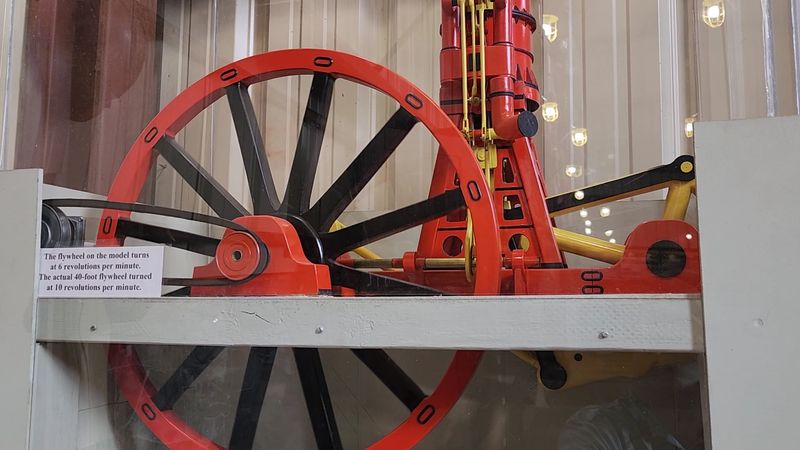
Inside the pump house, the height of the structure matters almost as much as the mechanism itself. Metal beams, vast moving parts now at rest, and the famous flywheel create a scene that is closer to a power cathedral than a tidy gallery.
Even before you read a single label, you understand that mining here was never small work.
That immediate visual force is the museum’s sharpest advantage. Plenty of historical sites ask you to imagine labor, noise, water, pressure, and danger from photos behind glass.
Here, the machinery does most of the explaining on its own, simply by standing in front of you at a scale that ordinary buildings rarely allow.
Iron Mountain adds context without stealing focus. This is not a giant object dropped into an unrelated town for display; it belongs to a landscape shaped by iron mining, shafts, and the stubborn practical problem of groundwater.
The setting gives the engine a stronger presence because you are seeing it where mining history actually mattered.
If you like places with instant visual payoff, this one delivers before the first minute is over. The building frames the engine, the engine frames the whole visit, and the effect is wonderfully direct.
You arrive expecting an old machine and end up face to face with industrial ambition at full size.
Why This Enormous Pump Mattered Underground
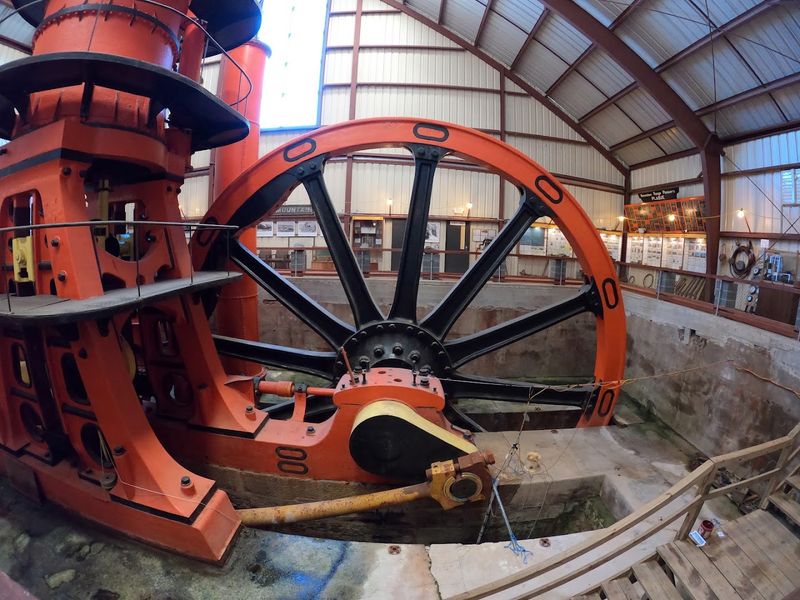
The core story here is refreshingly concrete. Mines filled with water, water stopped work, and a pumping engine of extraordinary size helped solve that problem.
You are not looking at decorative machinery or a symbolic relic, but at equipment tied to the survival of mining operations below ground.
That practical purpose gives the museum unusual clarity. Instead of wandering through a broad collection and trying to guess what mattered most, you can organize the visit around one central question: how did a community keep deep mining possible when nature kept pushing back?
The engine becomes the answer, and suddenly every rod, wheel, and cylinder has a reason to exist.
Some of the most interesting details are mechanical rather than sentimental. The unusual design, the arrangement of major components, and the sheer need for power all point to a period when engineering had to be oversized because the challenge was oversized.
The machine was there to move water relentlessly, not to look elegant.
That is why the pump has such force as a museum piece. It represents the side of industrial history that rarely photographs neatly: infrastructure, maintenance, and the unglamorous systems that made extraction possible day after day.
Ore gets the headlines, but drainage is what kept a mine from becoming unusable.
By the time you circle the exhibit, the machine reads less like an isolated marvel and more like a working argument about how mining towns functioned. Iron ore wealth depended on hidden battles underground, and water was one of the biggest.
The museum makes that struggle visible in the biggest possible way, with iron, geometry, and astonishing mass.
Beyond the Flywheel, Look for the Human-Size Clues
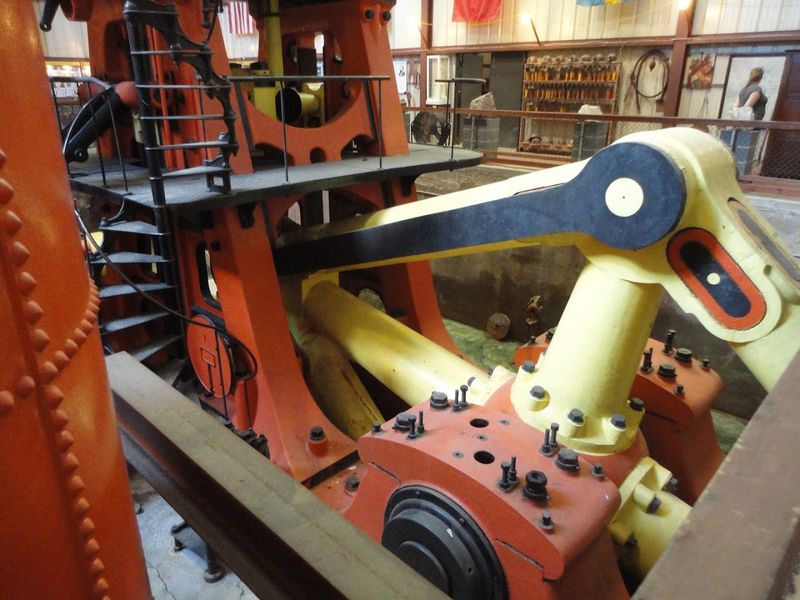
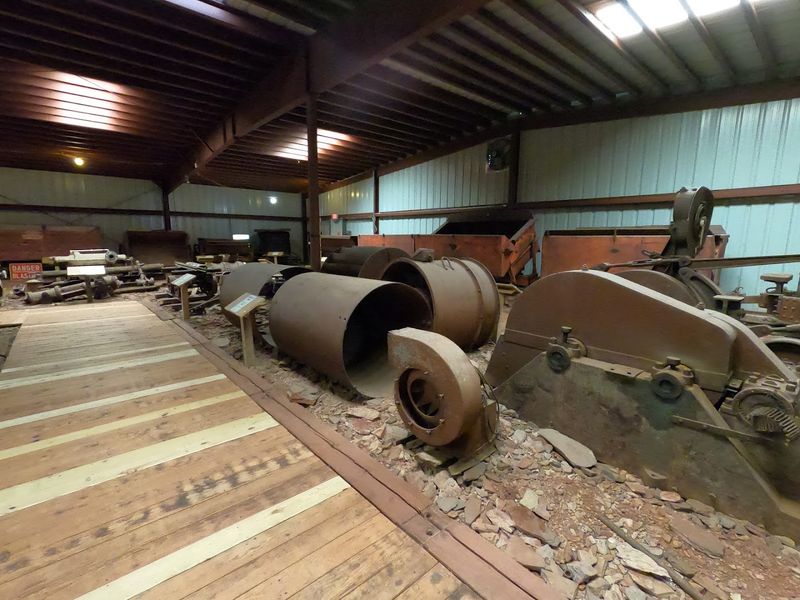
After the giant engine lands its first punch, the smaller details start doing quieter work. Ore samples, mining artifacts, and interpretive displays give your eyes places to reset, which is important in a building where the main object can overwhelm everything around it.
Those secondary pieces turn spectacle into understanding.
Some of the most revealing moments come from objects that fit in your hands or stand at waist height. A chunk of iron-bearing rock says more about weight, density, and extraction effort than a polished paragraph ever could.
You can immediately grasp that the industry’s daily reality involved not just grand machinery, but punishing material.
The museum also benefits from contrast. Massive mechanical forms are surrounded by evidence of ordinary work, tool use, and the practical systems that supported mining beyond the shaft itself.
That shift in scale keeps the visit from becoming a one-note experience built entirely around bigness.
When the exhibits are at their best, they show how industrial history operates on two levels at once. There is the headline image – a towering engine with monumental proportions – and there is the closer view of labor, geology, and equipment.
The combination helps you picture the chain from underground ore to above-ground infrastructure without flattening everything into one dramatic object.
If you tend to move quickly through machine museums, this is the section of the experience that rewards slower pacing. Step away from the flywheel, read selectively, and notice how the supporting artifacts sharpen the bigger story.
The museum is strongest when you let the giant engine set the stage and the smaller clues explain the everyday reality around it.
A Very Michigan Story Written in Iron and Water
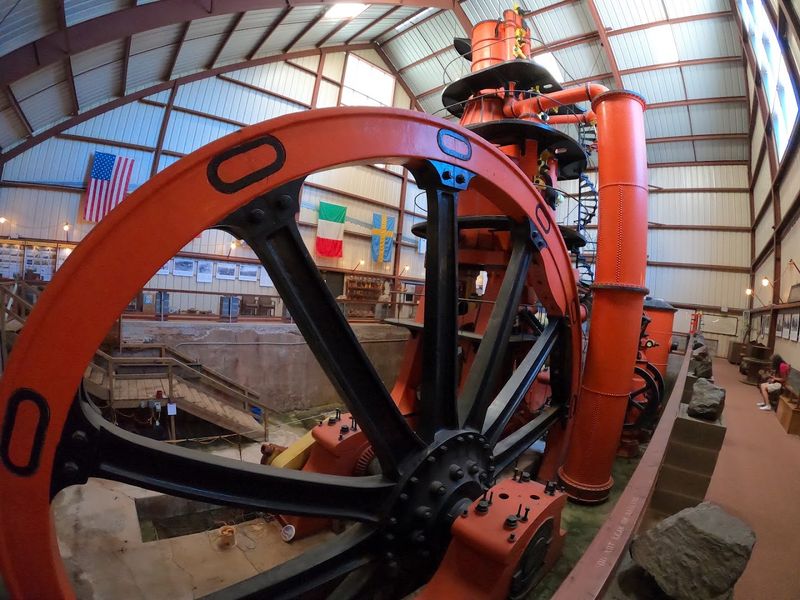
This museum works especially well because it is rooted in place. In Michigan’s Upper Peninsula, mining history is not a side note attached to a quirky artifact; it is part of how towns developed, how labor was organized, and how regional identity took shape.
The engine gains weight because Iron Mountain gives it a real historical home.
The Cornish name points to a broader migration of mining knowledge, but the local story remains firmly grounded in northern Michigan. Here, ore extraction depended on difficult geology, demanding conditions, and expensive solutions to basic operational problems.
Water control was not a technical luxury. It was central to whether deep mining could continue at all.
That regional specificity separates this museum from industrial displays that feel disconnected from their surroundings. You are not being asked to admire engineering in the abstract.
You are seeing how technology intersected with a particular mining district, a particular community, and a particular era of growth shaped by iron.
The effect is stronger than simple nostalgia. Instead of polishing the past into an uncomplicated success story, the site suggests the scale of effort required beneath the surface.
A town had to support enormous systems, skilled work, and constant adaptation to keep the industry functioning. The machine on display stands as evidence of that pressure.
For travelers passing through the U.P., this Michigan stop provides more than local color. It explains, in very solid terms, why certain towns exist where they do and why industrial heritage still matters in the landscape.
The museum is local, but the questions it raises about labor, extraction, and technology stretch far beyond one county line.
How to Visit Without Missing the Best Parts
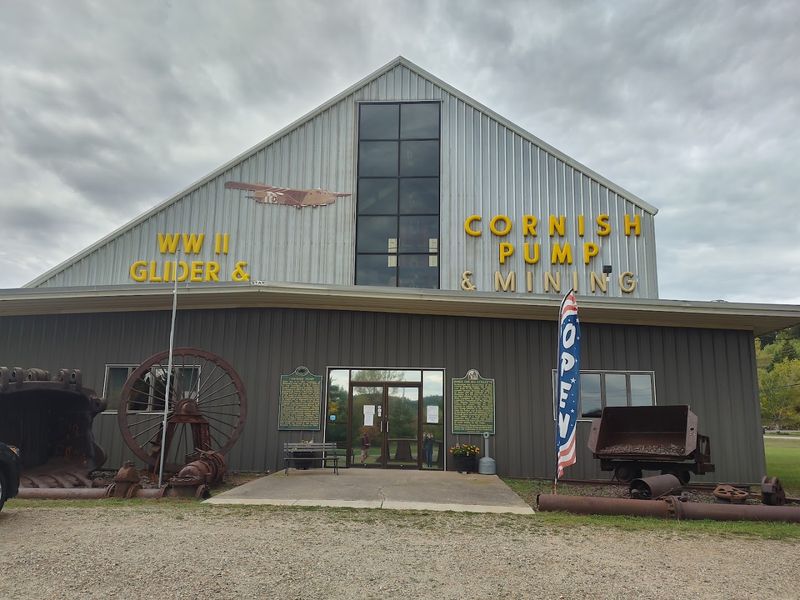
The best way to approach this museum is to resist the urge to rush straight past the entrance, snap one photo of the engine, and move on. Give the giant machine its dramatic minute, then start circling slowly.
The exhibit rewards a lap-by-lap approach because scale, layout, and interpretation reveal themselves in layers.
Begin with the widest view you can get. That first overview helps you understand how the building frames the engine and how the major parts relate to one another.
Once you have that full mental map, the closer details make more sense, and labels stop feeling like isolated bits of information.
After the big visual read, shift to the supporting displays. This is where the museum starts connecting machinery to mining practice rather than presenting the pump as a lone marvel.
If you travel with kids or anyone who likes hands-on explanation, the smaller mechanical models and concrete examples can make the engineering easier to follow.
Pacing matters here more than sheer time. The site can work as a compact stop, but it becomes much richer when you allow pauses for looking upward, stepping back, and noticing how objects are arranged around the main engine.
The room is part of the experience, not just a container for it.
One practical note is simple but useful: warm weather can make the interior feel stuffy, so timing your visit earlier in the day is smart. Comfortable shoes and a little patience will improve the experience more than any detailed preparation.
This is a museum that unfolds through attention, not speed, and that slower rhythm suits the subject perfectly.
Timing, Layout, and What the Museum Is Actually Like
Practical details matter here because the museum is more distinctive than slick. It is open during daytime hours on Tuesday through Saturday and closed Sunday and Monday, which makes it an easy midday stop if you are already moving across the western Upper Peninsula.
The schedule suits road-trip planning better than late wandering.
Inside, expect a straightforward museum experience shaped by the artifact rather than by modern theatrical design. The giant engine is the anchor, and the layout supports it with related mining displays and interpretive material.
That means the visit leans more toward industrial substance than toward glossy multimedia presentation.
This is helpful to know before you arrive. If you want an immaculate, climate-controlled attraction packed with digital effects, the experience may feel more rugged than polished.
If you like places where the object itself carries the drama, the museum’s no-nonsense presentation is part of its appeal.
The building and exhibits can also feel warm during hotter periods, something worth considering when choosing your timing. Earlier hours are often the best bet, especially if you plan to read carefully and linger around the engine.
A cooler day can sharpen your concentration and make the visit more comfortable.
As a stop in Iron Mountain, the museum fits especially well for travelers who want one focused experience rather than a sprawling all-day commitment. You can move through it in about an hour, but that does not mean it is slight.
The scale of the machinery gives even a relatively short visit more heft than many larger museums manage.
Why This Iron Mountain Museum Stands Apart
Plenty of local museums are interesting in a polite, worthy way. This one is different because it has a center of gravity.
The Cornish Pumping Engine does not merely illustrate mining history in Iron Mountain – it concentrates it into one object so large and so direct that the subject becomes impossible to treat as background.
That distinction matters in a region where industrial heritage can easily blur into a sequence of dates, names, and familiar equipment. Here, the story has shape and tension.
Water threatened mining, engineering answered back, and the answer took the form of a machine large enough to stop casual conversation for a moment.
The museum also avoids becoming a pure monument to scale. Yes, the size is the first hook, and it is a strong one.
But the surrounding interpretation, ore specimens, and mining context give the engine a working life beyond its silhouette, which keeps the visit grounded in function instead of turning it into a giant-photo backdrop.
For travelers, that makes the stop unusually satisfying. You get visual drama, regional history, and a clear industrial narrative without needing expert knowledge beforehand.
The museum meets you where you are, then steadily raises the level of detail until the mining story becomes sharper, heavier, and more specific.
If you are building a route through Michigan with places that offer more than scenery, this museum earns a spot. It shows how a town once wrestled with geology using nerve and machinery on an outrageous scale.
By the time you leave, Iron Mountain is no longer just a name on the map. It is a place where engineering once had to be enormous to keep the ground itself under control.
Share this story