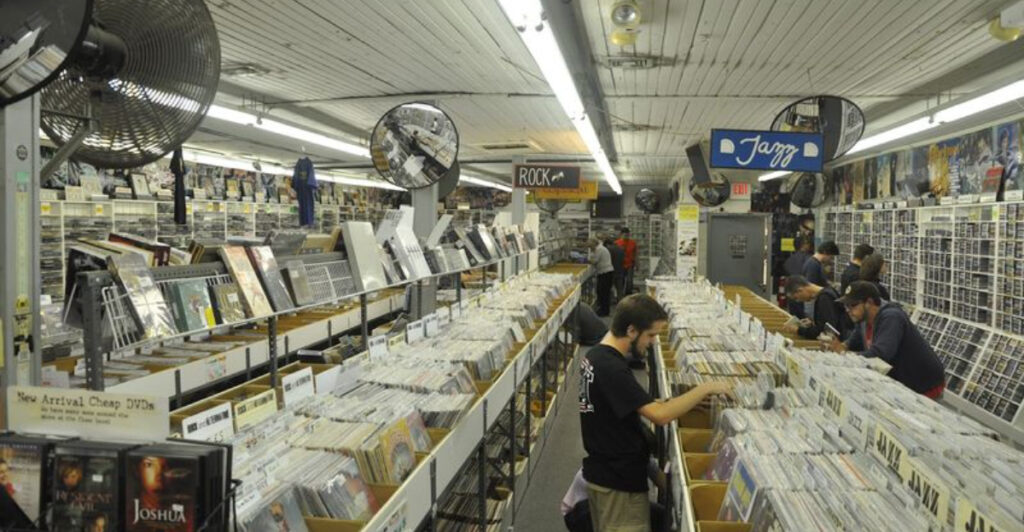
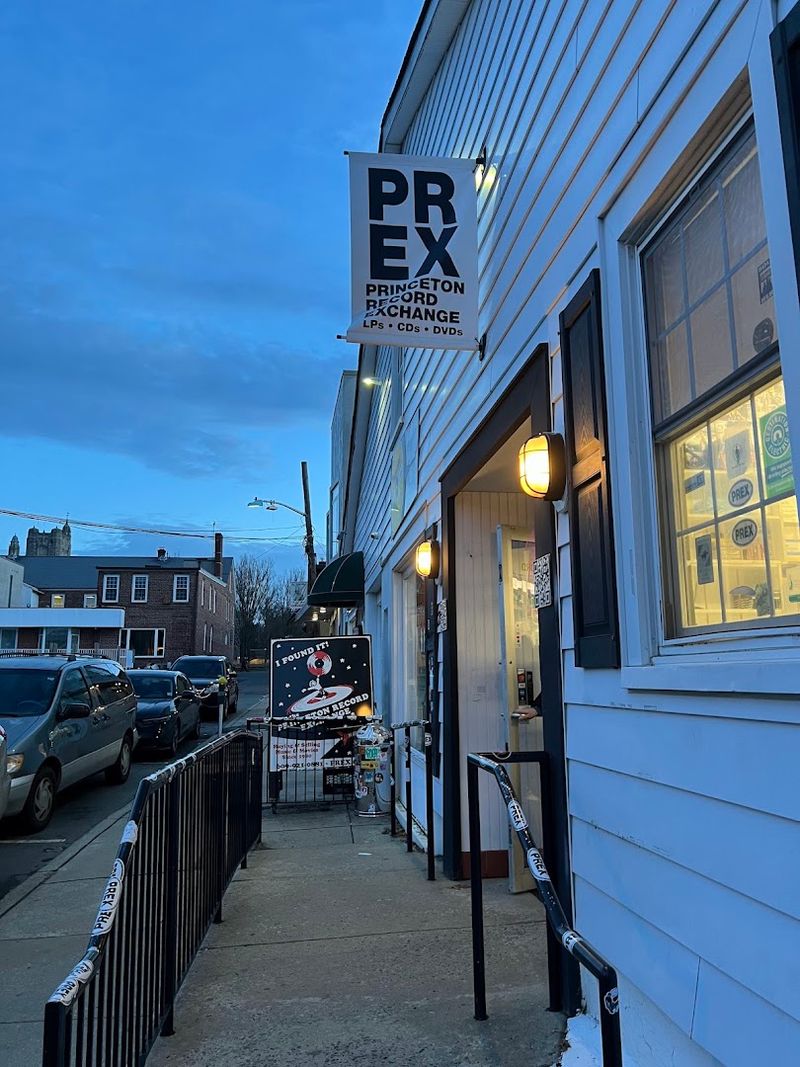
A white building on a side street in downtown Princeton contains enough music to keep a determined crate digger occupied for days. Inside Princeton Record Exchange, albums crowd the racks, vintage posters climb the walls, and thousands of bargain records wait for someone willing to flip through them one by one.
The store holds more than 100,000 LPs, CDs, DVDs, and other titles, yet sheer volume is only part of its appeal. Known to regulars simply as PREX, this independent shop has survived changing formats, vanished retail chains, digital downloads, and the rise of streaming.
It has done so without sanding away the qualities that made record stores fun in the first place. Prices begin at just $1, the stock changes constantly, and an experienced staff keeps the sprawling collection surprisingly approachable.
More than four decades after opening, this South Tulane Street institution remains a place where finding one unexpected album can reshape an entire afternoon.
Barry Weisfeld Turned a Van Full of Records Into a Princeton Institution
Five years before Princeton Record Exchange had a storefront, Barry Weisfeld was selling albums from the back of a van. Beginning in 1975, he traveled to flea markets and college towns, buying records where he found them and carrying his mobile inventory to places filled with young, curious listeners.
It was an unpolished start, but it established the basic formula that would later define PREX: keep the selection interesting, price it fairly, and put plenty of music within reach. Weisfeld settled in Princeton in 1980 and opened the store’s first location on Nassau Street.
That original shop was tiny, reportedly not much larger than a walk-in closet, but Princeton was a smart place to plant roots. The university brought a steady rotation of students into town, while the surrounding community included professors, musicians, radio enthusiasts, and serious collectors.
New York and Philadelphia were each roughly an hour away, giving the store access to two major music markets without losing the character of a locally owned shop. As the business grew, it eventually moved to 20 South Tulane Street, just off Princeton’s main commercial streets.
The larger building allowed Weisfeld to turn his road-tested record operation into something much more ambitious. Instead of specializing in a narrow slice of popular music, PREX could stock deep runs of rock, jazz, soul, classical, punk, metal, blues, hip-hop, and film.
Longtime employee and general manager Jon Lambert purchased the business in 2015, preserving the independent identity Weisfeld had built. Lambert had joined the staff in 1988 and understood the shop from the inside, so the transition did not feel like an outsider arriving to reinvent it.
The essential experience remained intact: a slightly unruly, proudly physical world built around the pleasure of finding music you did not know you needed.
More Than 100,000 Titles Fill 4,500 Square Feet of Music History
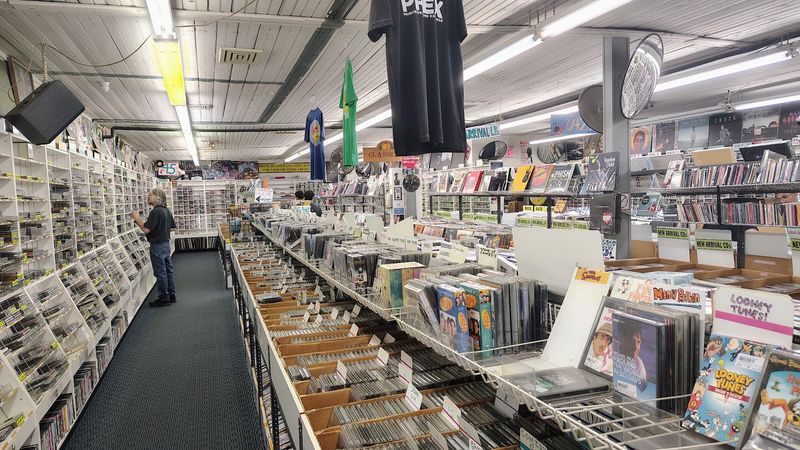
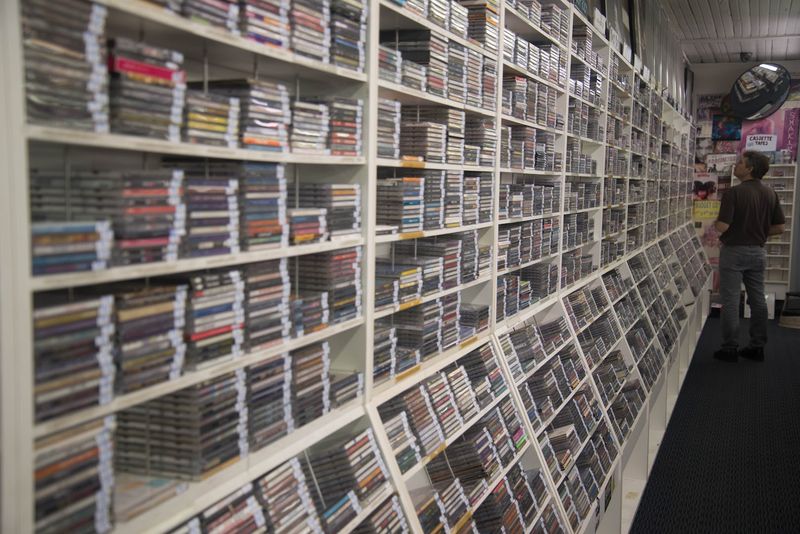
The numbers sound almost comically large for an independent shop. Princeton Record Exchange occupies more than 4,500 square feet and keeps over 100,000 titles in stock, placing it among the largest independent record stores in the United States.
Those titles are not hiding in a remote warehouse, either. They fill the sales floor, where customers can move from dollar records to collectible pressings, new releases, used CDs, and shelves of movies without leaving the building.
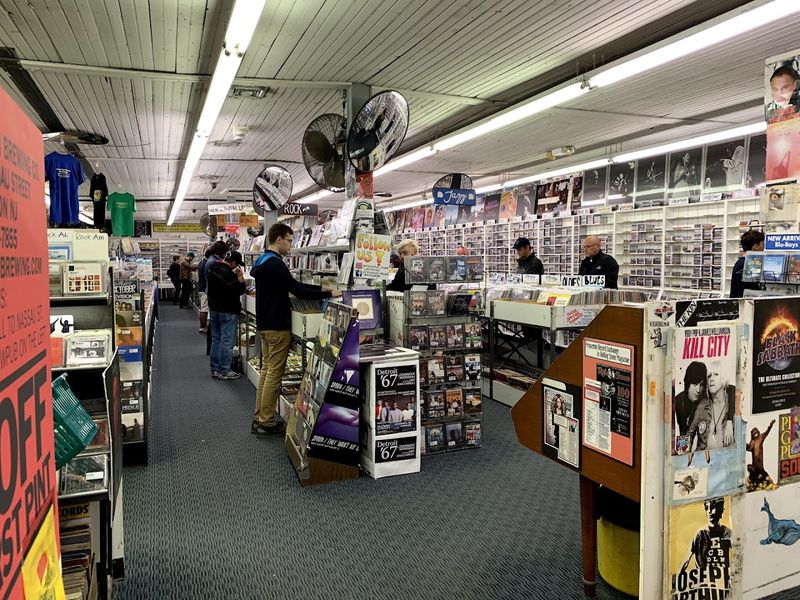
Despite the staggering inventory, the space is designed for actual browsing rather than merely storing as much merchandise as possible. Wide aisles leave room for shoppers to pass one another, padded carpeting makes a long digging session easier on the feet, and bright lighting helps collectors inspect sleeves and read fine print.
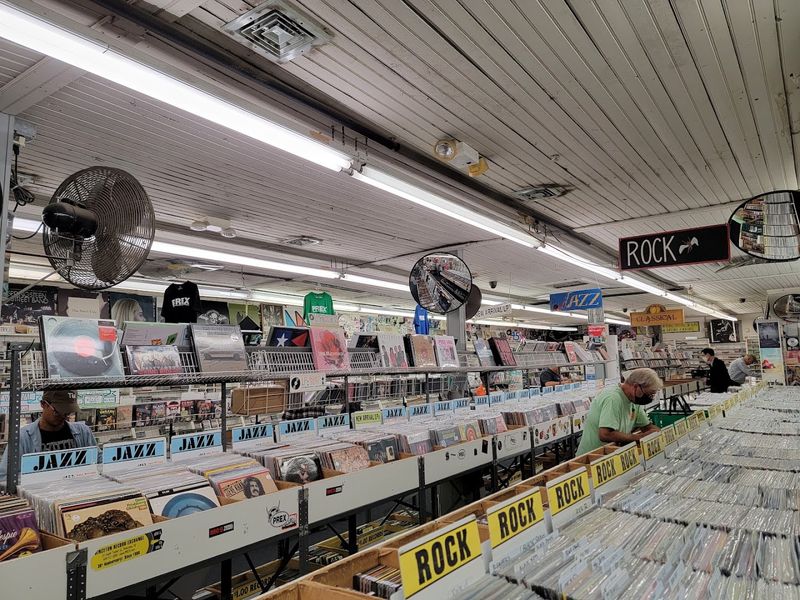
The racks are clearly divided, turning what could have been musical chaos into a surprisingly navigable maze. Prices cover nearly as much territory as the collection.
Plenty of titles cost only $1, making it possible to take a chance on an unfamiliar artist or build the beginnings of a collection without spending much. At the opposite end are scarce and collectible records priced according to their rarity and condition.
That mixture is important. A first-time vinyl buyer with twenty dollars can browse beside a seasoned collector hunting an elusive pressing, and neither feels as though the store was built exclusively for the other.
Condition also matters when so much of the inventory is used. Experienced appraisers check incoming stock before it reaches the floor, helping shoppers understand why one copy lands in the bargain racks while another commands a collector’s price.
The result feels less like entering a museum of untouchable artifacts and more like walking through an enormous, constantly rearranged music library where nearly everything can go home with you.
Vinyl CDs and Movies Cover Nearly Every Genre Imaginable
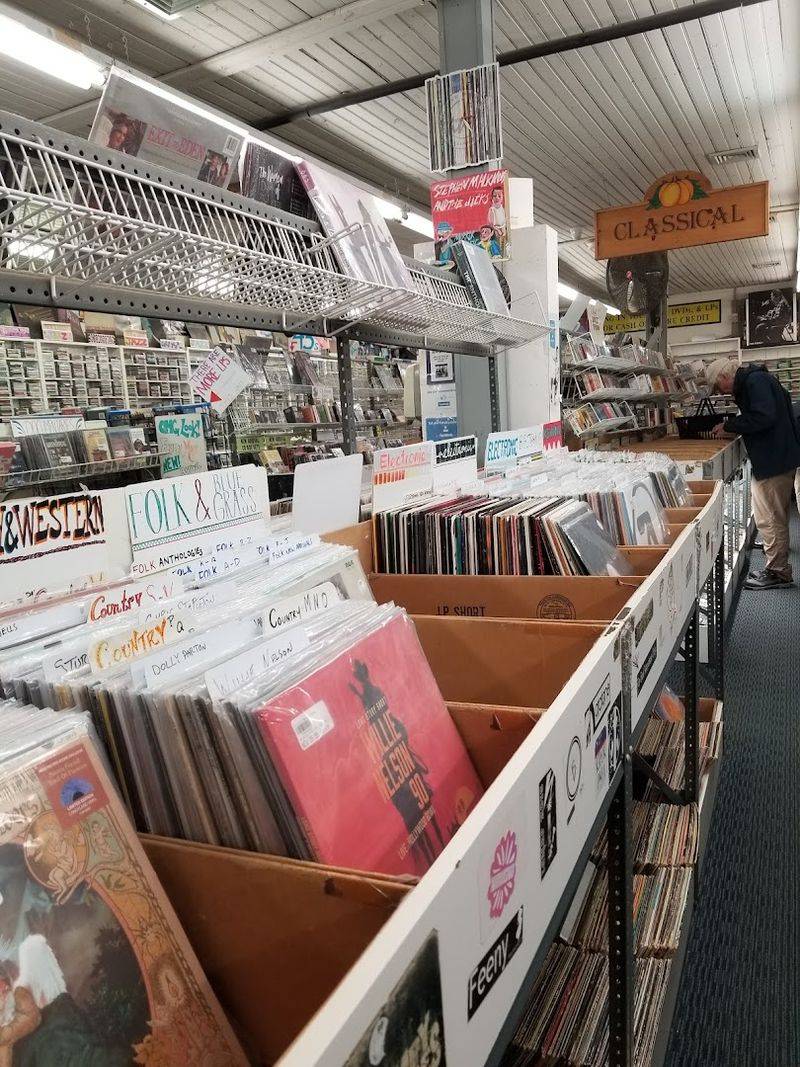
Start in classic rock and it would be easy to assume that LPs are the whole story here. Keep walking, however, and the collection keeps branching outward.
Jazz, blues, soul, psych, punk, metal, hip-hop, modern rock, country, and classical music all receive serious attention, with both familiar staples and less obvious discoveries mixed into the racks
A shopper might arrive looking for Led Zeppelin and leave wondering how a Louis Armstrong album, a regional punk single, and a Beethoven recording ended up in the same stack.
Vinyl is now the store’s biggest attraction, a reversal from the period when CDs dominated music sales. Records invite the kind of unhurried browsing that PREX has always encouraged.
Cover art catches the eye, liner notes reveal unexpected names, and an unfamiliar label can send a collector down a completely new path. New pressings make room for younger artists and recent releases, while used bins carry decades of musical history in every imaginable state of fashion and rediscovery.
CD shoppers are not treated as holdovers from another era. The format still fills substantial sections of the store, often at prices that make it practical to explore an artist’s back catalog or rebuild a collection discarded during the early days of streaming.
Classical music is particularly well represented on CD, alongside rock, jazz, metal, soul, and other genres. The movie inventory expands the hunt beyond music.
DVDs and Blu-rays range from major Hollywood releases to television sets, cult favorites, foreign films, and unusual editions that have disappeared from mainstream retailers. Cassettes and other physical formats also pass through the store as collections arrive.
This breadth gives PREX a rare kind of cross-generational appeal. One customer may be chasing an original LP, another a cheap CD for the car, and a third a movie that has never appeared on their preferred streaming service.
Thousands of Fresh Arrivals Keep the Treasure Hunt Constantly Changing
Behind the browsing racks, a relentless sorting operation keeps the store from ever feeling frozen in time. Princeton Record Exchange processes roughly 30,000 to 40,000 pieces every month, an astonishing churn for a single independent location.
Personal collections, estate libraries, radio-station surplus, review copies, and even entire store inventories move through the hands of its staff before selected items reach the sales floor. That turnover explains why regulars can visit repeatedly without simply retracing the same aisles.
A section that seemed thoroughly explored on Tuesday may contain an entirely different temptation by Saturday. Used inventory is inherently unpredictable, and PREX treats that unpredictability as an advantage.
The store does not post its complete stock online, aside from a curated selection offered through Discogs, so the broadest view of what is available still requires an in-person search. For shoppers accustomed to typing an exact title into a search bar, the experience can be pleasantly inefficient.
A handwritten list may provide direction, but it cannot account for the album wedged beside the intended purchase, the one-dollar record with irresistible artwork, or the out-of-print CD that has been quietly missing for years. There is no algorithm narrowing the options based on previous listening.
The racks allow curiosity to make the decisions. Even the bargain section benefits from the constant flow.
Thousands of low-priced LPs give patient shoppers room to experiment, whether that means sampling jazz, collecting forgotten soundtracks, or buying a record solely because its cover raises questions. At the collectible end, new acquisitions can produce rarities that draw serious enthusiasts from well beyond Princeton.
The common thread is uncertainty in the best possible sense. Nobody walking through the door knows exactly what arrived that morning, and that small mystery keeps the treasure hunt alive.
Knowledgeable Staff Help Collectors Buy Sell and Discover Hidden Gems
A collection this large would be overwhelming without people who know how to make sense of it. PREX employs a staff of experienced music and movie enthusiasts whose knowledge stretches across many genres and formats.
Their role is not to hover over customers or push whatever happens to be expensive. Shoppers are given room to browse, but help is available when a question becomes more complicated than locating the rock section.
That expertise is particularly valuable for collectors comparing editions. Two copies of the same album can differ in pressing, label, country of origin, condition, and value, details that are easy to overlook when the cover art appears identical.
Staff members assess incoming merchandise and organize it accordingly, giving buyers a more reliable starting point than they might find at a general thrift store or neighborhood yard sale. The same knowledge shapes the selling process.
Princeton Record Exchange purchases individual records as well as personal collections, estates, radio and reviewer surplus, and complete store inventories.
Its buyers are especially interested in strong collections of classic and modern rock, jazz, blues, soul, hip-hop, psych, punk, metal, and classical CDs, though the range extends beyond those categories.
Decades of purchasing experience allow the team to recognize both obvious rarities and less flashy titles whose value may not be apparent to their owners. Just as importantly, the staff contributes to the sense that PREX is a place for conversation, not merely transactions.
Someone searching for a specific sound can ask for a recommendation from a person who understands the distinction between subgenres, eras, labels, and scenes. A quick question about one album may lead to a better pressing, a cheaper alternative, or an artist the customer had never encountered.
That human exchange is difficult to reproduce online, and here it remains part of the everyday rhythm of the store.
Decades of Local Loyalty Have Made Princeton Record Exchange a Music Landmark
On a busy Saturday, South Tulane Street draws everyone from Princeton students buying their first records to longtime collectors carrying carefully prepared wish lists. Some customers live nearby; others fold the store into trips from New York, Philadelphia, and farther afield.
Inside, vintage promotional pieces, buttons, postcards, flyers, and old concert posters give the room what Jon Lambert has jokingly described as a college-dorm style, only with several decades of genuine music history layered across the walls. The store’s relationship with Princeton extends well beyond foot traffic.
PREX has worked with the Arts Council of Princeton, Princeton Public Library, McCarter Theatre, local merchants, charitable groups, and WPRB, Princeton University’s student-run radio station. For Record Store Day in 2012, it co-sponsored a performance by They Might Be Giants with the public library.
The annual celebration remains one of its biggest occasions, drawing devoted shoppers who have been known to line up long before opening. That loyalty has accumulated in more personal ways, too.
Parents who once browsed the racks as students now return with their children. Couples have staged marriage proposals inside the store.
Regulars recognize employees, employees learn their customers’ tastes, and a quick stop can turn into an hour of flipping through albums and debating music.
PREX is open from 10 a.m. to 6 p.m. Monday through Wednesday, 10 a.m. to 8 p.m. Thursday through Saturday, and 11 a.m. to 6 p.m. Sunday. Those generous hours suit a place where browsing is rarely quick.
After more than four decades, Princeton Record Exchange has become part shop, part archive, and part community gathering place—an independent institution where 100,000 titles still feel less like inventory than possibilities.