A tulip tree that began growing roughly 275 years ago is not the sort of neighbor most people expect to find in suburban Short Hills. Yet there it stands, rising above a quiet network of woodland paths while the traffic, houses, and daily commotion of Essex County fade behind a wall of leaves.
Cora Hartshorn Arboretum and Bird Sanctuary packs three miles of trails into just over 16 acres, using every hill, hollow, and bend to make the forest feel much larger than it looks on a map.
The routes climb over terrain molded by glaciers, slip beneath towering native trees, and pass pockets of wildflowers and ferns that change with the seasons.
Birds rustle in the canopy, stone steps appear along steeper slopes, and a rustic 1930s nature center waits near the entrance. It is a wonderfully unexpected place: part arboretum, part wildlife sanctuary, and part neighborhood secret that can make an ordinary afternoon feel genuinely removed from everything.
Cora Hartshorn’s Woodland Sanctuary Has Flourished in Short Hills Since 1923
This pocket of forest began with a family gift. In 1923, Stewart Hartshorn gave the land to his daughter, Cora L.
Hartshorn, who set about preserving it as a place where wild plants and animals could live safely and people could experience them without causing harm. More than a century later, that straightforward idea still shapes nearly everything about the property.
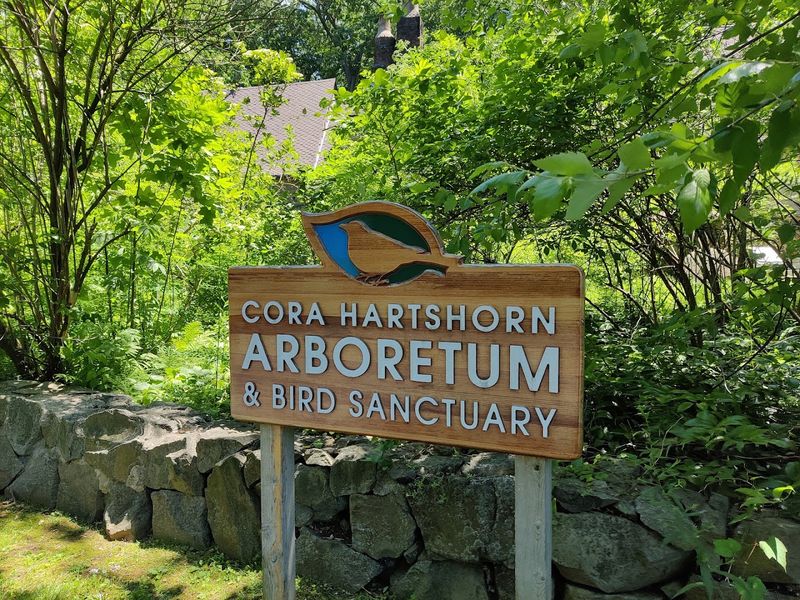
The Cora Hartshorn Arboretum and Bird Sanctuary now covers 16.45 acres in Short Hills, a community better known for handsome homes and convenient rail access than hidden glacial terrain. The contrast is part of the fun.
One moment, visitors are traveling along residential streets; the next, they are entering dense woodland where mature trunks crowd the view and fallen leaves soften the sounds underfoot. Cora did more than leave a patch of land untouched.
She developed walking paths and helped establish the property as a sanctuary with a clear educational purpose. When she died in 1958, she willed the arboretum to Millburn Township, ensuring that the forest would remain connected to the community rather than disappear beneath development.
The Short Hills Garden Club helped carry that vision forward, and an arboretum association was formed in 1961 to work with the township on protecting the grounds.
That long stewardship explains why the place feels less like a landscaped public garden and more like a preserved fragment of the forest that once covered this corner of New Jersey.
Native species are given priority, natural features are allowed to set the rhythm, and visitors are asked to remain on marked trails to protect sensitive habitat. There are no grand gates or elaborate formal beds announcing the importance of the place.
Its history reveals itself more quietly, through old trees, winding paths, and a landscape that has survived while much of the surrounding area changed dramatically.
Three Miles of Trails Wind Through Hills Shaped by Ancient Glaciers
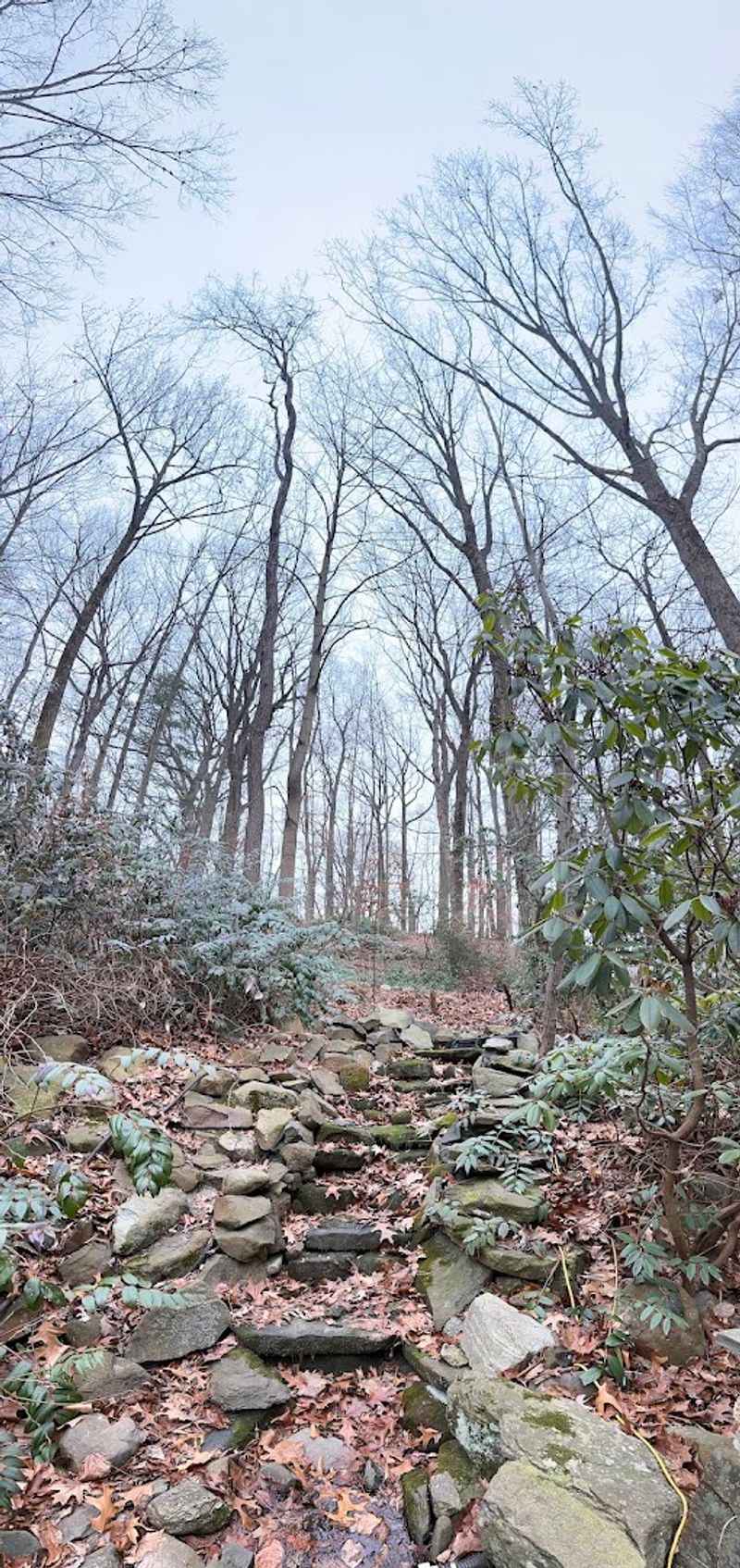
Sixteen acres may sound like the setting for a quick lap, but the trail map tells a more interesting story. Approximately three miles of paths twist across the arboretum, doubling back through a surprisingly varied landscape of hilly slopes, kettle moraines, shaded hollows, and a natural amphitheater created by glacial activity.
This is not a flat garden stroll past rows of labeled shrubs. The terrain rises and falls enough to keep the walk lively, with woodchip-covered paths, stone steps, exposed roots, and narrow turns that make sturdy shoes a much better choice than flip-flops.
The compact trail system also has a pleasingly maze-like quality. A route may dip into a cool, heavily canopied section before climbing toward a brighter ridge, and intersections allow visitors to shorten the walk or keep exploring.
Named features on the grounds include Fern Dell, Wildflower Preserve, Rhododendron Dell, Fawn Dell, Harmony Hill, Hilltop Overlook, and the wonderfully dramatic Devil’s Punchbowl. The distances between them are manageable, but the bends and elevation changes prevent the property from revealing itself all at once.
Even when homes and roads are geographically close, the thick canopy does an impressive job of pushing suburban life to the background. Benches offer places to stop, listen, and notice how much activity is happening beyond the obvious scenery.
A woodpecker tapping somewhere uphill or a chipmunk scattering dry leaves can become the loudest sound around. Visitors should stay on the established routes, both because poison ivy grows off-trail and because the forest floor contains fragile plants protected by the arboretum’s restoration work.
Bicycles and sledding are prohibited, and dogs are not permitted under Millburn Township regulations. Those rules help preserve the peaceful character of the trails, where the main traffic tends to consist of hikers, young nature explorers, and birds moving between branches.
Towering Tulip Trees and More Than 40 Tree Species Fill the Forest
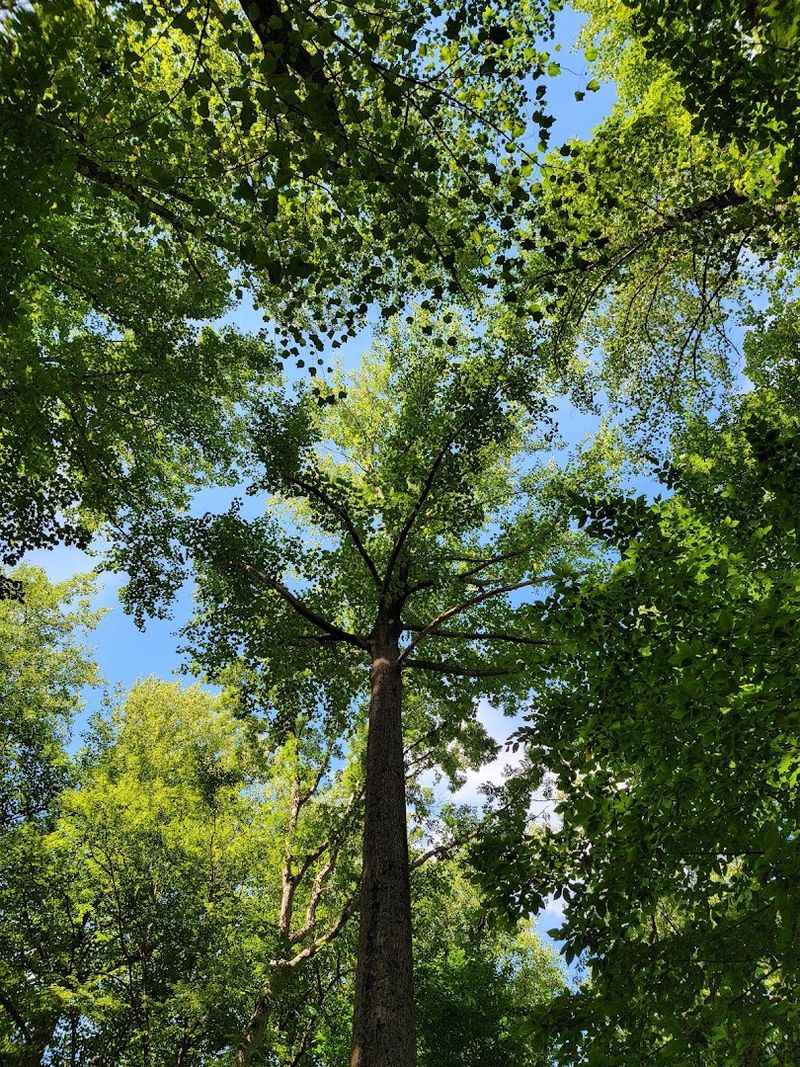
Some of the oldest residents of Short Hills have bark, enormous trunks, and a head start of several centuries. The arboretum contains more than 40 species of trees, including tulip trees believed to be around 275 years old.
These giants tower over the younger understory, their straight trunks rising toward a canopy that can seem almost impossibly high when viewed from the trail below. Tulip trees are among the tallest native hardwoods in eastern North America, and mature specimens bring real vertical drama to this small sanctuary.
Standing near one changes the scale of the entire walk. The surrounding forest is not simply a collection of impressive individual trees, however.
It is a layered ecosystem in which mature hardwoods, saplings, shrubs, wildflowers, fungi, and fallen logs each have a job. Dead wood feeds insects and returns nutrients to the soil.
Cavities provide shelter for birds and small animals. Leaves filter sunlight before carpeting the ground and breaking down into the next generation of forest soil.
That natural complexity is especially noticeable here because the arboretum is a woodland garden rather than a manicured display space. Trees are not lined up in neat rows, and the forest is allowed to look like a forest.
Seasons continually rearrange the view. Spring sunlight reaches the ground before the canopy fills in, creating a brief window for early flowers.
Summer produces deep shade and a ceiling of green. Autumn turns the trails into corridors of yellow, copper, orange, and rust, while winter exposes the branching architecture hidden by leaves during the rest of the year.
The oldest tulip trees remain the headliners, but slower walkers will notice plenty of supporting characters, from textured bark and twisting roots to young native trees emerging beneath the canopy.
Together, they create the feeling of entering a much larger woodland, even though downtown Millburn and the Short Hills train station are only a short drive away.
Native Wildflowers Rare Ferns and Seasonal Colors Reward a Slower Walk
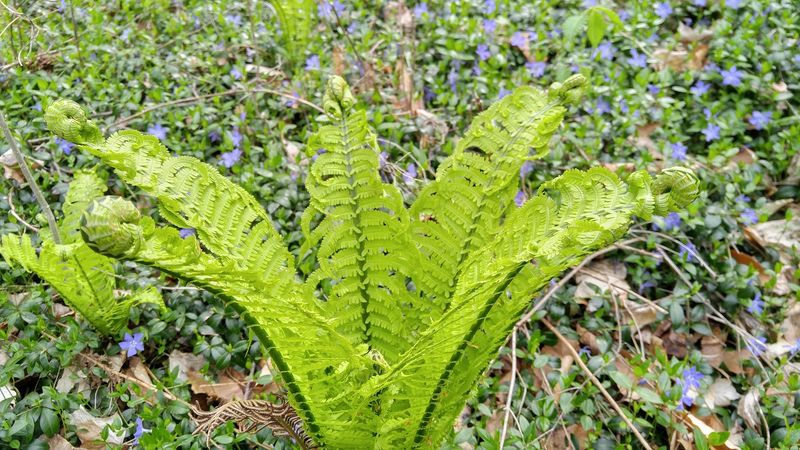
Look down as often as you look up. While the tallest trees naturally command attention, some of the arboretum’s best details sit only inches above the soil.
Native New Jersey wildflowers appear across the grounds, and ferns flourish in the cooler, damper pockets where filtered light reaches the forest floor. Fern Dell and the Wildflower Preserve make those smaller-scale discoveries a central part of the experience rather than an afterthought.
Spring is particularly rewarding because woodland flowers take advantage of the sunshine available before the trees produce a full canopy. Fresh leaves emerge, delicate blossoms appear between roots, and tightly curled fern fronds begin to unfurl.
By summer, the woods become denser and greener, with deep shade settling over many of the paths. Rhododendrons add another layer of foliage, while vines, mosses, shrubs, and ground-level plants fill the spaces beneath the mature trees.
Fall shifts attention upward again as the canopy changes color, but the ground puts on its own show with acorns, seedpods, mushrooms, and crisp leaves gathering along the trail edges. None of it demands a botanical background.
The pleasure comes from noticing how quickly the scenery changes when the pace slows down. A patch that initially reads as “green” begins separating into different leaf shapes, textures, and heights.
That diversity is no accident. Arboretum volunteers have spent years removing invasive plants and encouraging species indigenous to New Jersey, particularly in parts of the woodland where the native understory had nearly disappeared.
The work is intentionally subtle. Visitors do not walk through something resembling a freshly planted garden center; they see a living forest gradually regaining its natural layers.
Staying on the trail protects that progress, especially during spring when emerging plants can be easy to miss beneath a careless shoe. The payoff is a woodland that offers something new at every scale, from a centuries-old trunk to a fern no bigger than a hand.
Birds and Other Wildlife Thrive in This Carefully Restored Habitat
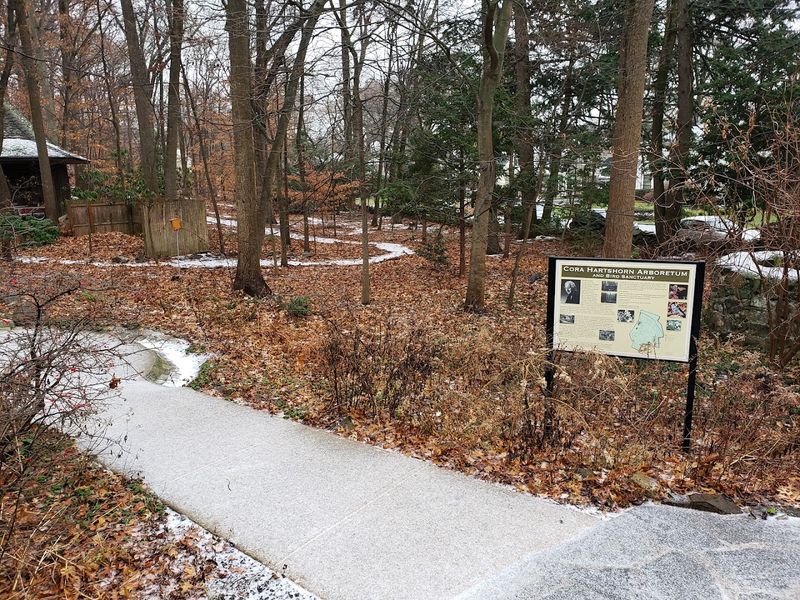
A white-breasted nuthatch may travel down a trunk headfirst while a woodpecker works the bark overhead and a wood thrush searches the leaf litter below. The arboretum’s bird sanctuary designation is more than a pleasant addition to its name.
Its trees, shrubs, insects, seeds, and protected understory provide food and shelter for both resident birds and seasonal visitors moving through northern New Jersey. Binoculars help, but they are hardly essential.
Patient walkers can listen for calls, watch for movement at the edge of the trail, or pause near the Stone House bird feeders, where activity is often easier to observe. The woodland’s wildlife diversity is closely tied to a long-running restoration effort.
By the end of the 20th century, heavy browsing by white-tailed deer and the spread of invasive plants had severely damaged sections of the understory.
Some areas had become nearly barren beneath dense stands of Norway maple, an imported species whose thick canopy and shallow roots make it difficult for other plants to regenerate.
Beginning in the early 2000s, the arboretum removed seed-producing Norway maples, replanted native vegetation, and tested deer fencing. After fenced sections showed promising regrowth, a barrier was installed around the full woodland in 2008.
The gates visitors pass through today are therefore functional pieces of habitat protection, not decorative entrances. Keeping them closed prevents deer from undoing years of slow recovery.
Native spicebush, young trees, wildflowers, and other understory plants can then return, supporting insects that feed birds and strengthening the entire woodland food web. Rabbits, turtles, snakes, amphibians, butterflies, and small mammals also benefit from a healthier forest.
The restoration is ongoing because wind and birds continually carry new seeds into the property, but its results are visible in the layered vegetation along the trails. What looks like a peaceful patch of woods is also an active conservation project unfolding in the middle of one of New Jersey’s most developed counties.
The Historic Stone House Brings Local Nature and Conservation Indoors
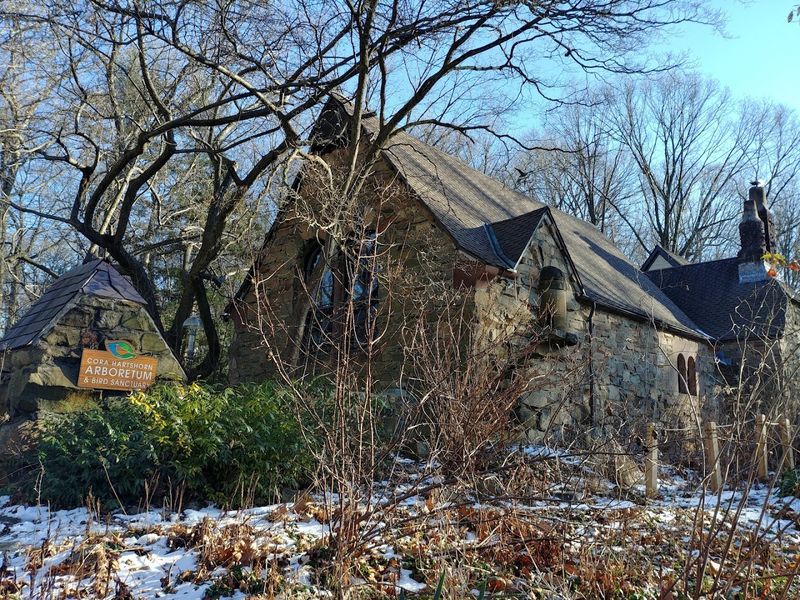
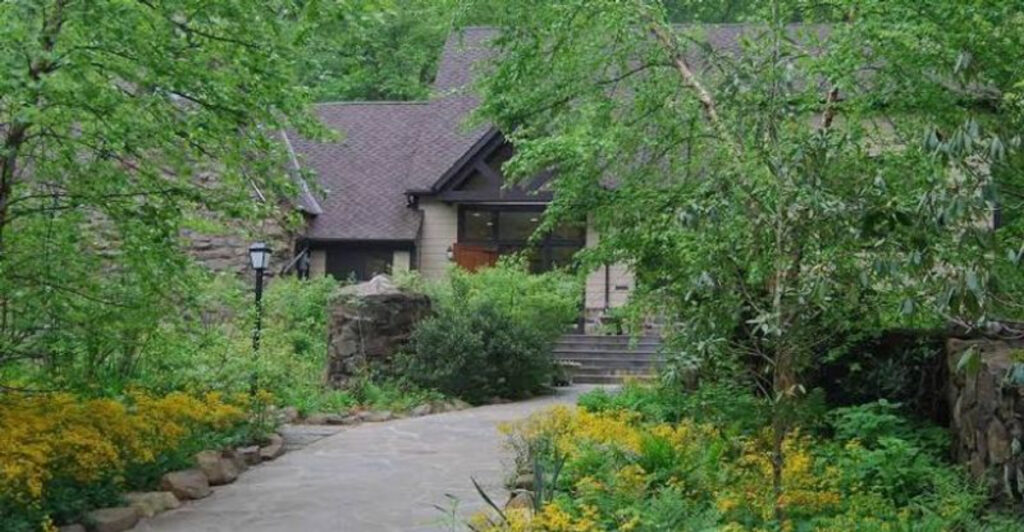
Built in 1933, the Stone House looks exactly right beside the forest, as though someone gathered rocks from the surrounding hills and assembled a woodland cottage. That impression is not far from the truth.
Architect Bernhardt E. Muller designed the building using trap rock from Stewart Hartshorn’s quarry in nearby Springfield.
Its rugged stone walls give the arboretum a physical link to the Hartshorn family and provide a memorable counterpoint to the living landscape outside. Today, the building serves as the educational center of the sanctuary.
Exhibits include mounted specimens of birds and mammals, while a small collection of live animals gives families a close look at creatures they might otherwise glimpse only briefly on the trails.
Native turtles and snakes are among the animals visitors may encounter, turning an ordinary nature walk into a more hands-on introduction to New Jersey wildlife.
The building also contains a bird observatory, laboratory space, offices, and areas used for classes and community programs, additions that were incorporated during renovations completed in 2007.
School field trips, scout activities, family events, adult workshops, and summer camps all build on Cora Hartshorn’s original belief that people will value wild places more deeply when they have opportunities to understand them.
The Stone House is typically open daily from 9 a.m. to 4 p.m., while the woodland grounds extend the experience outdoors. Admission to the trails is free, though donations and memberships help support education and forest maintenance.
Parking is found along nearby residential streets, reinforcing the curious sense that this century-old sanctuary is hiding in plain sight. After time spent examining an animal exhibit or watching birds near the building, the trail entrance waits only steps away.
Beyond its gate, stone walls give way to glacial slopes, rustling leaves, and trees that were already old long before Short Hills grew around them.