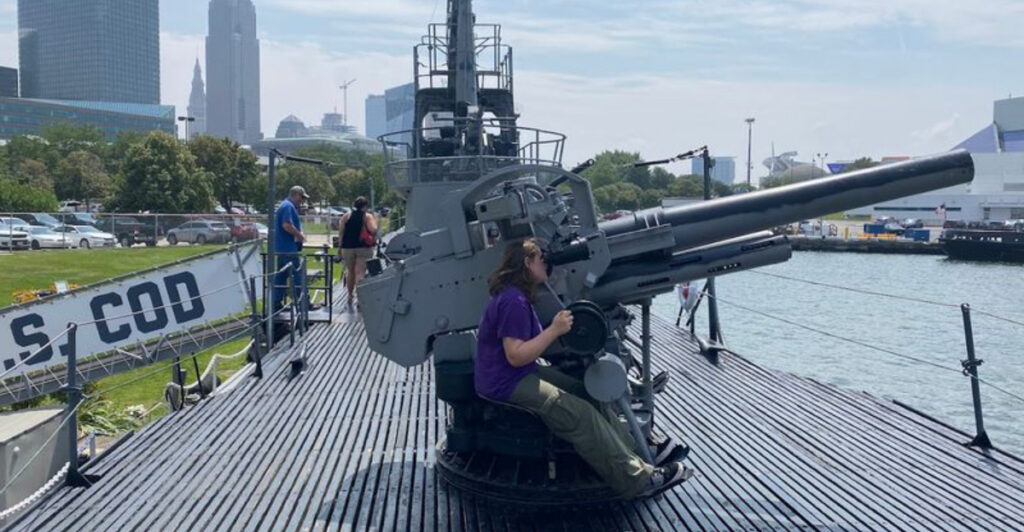
Some historic attractions let you look at the past from behind glass, but the USS Cod pulls you straight into it. Moored along Cleveland’s lakefront, this World War II submarine still feels rugged, cramped, and startlingly real in ways that polished museums rarely do.
From its weathered exterior to its original hatch entry, every part of the visit reminds you that this was once a working war machine. If you want one of the most unforgettable history experiences in Ohio, this is the kind of place that stays with you.
1. A first look from the Cleveland waterfront
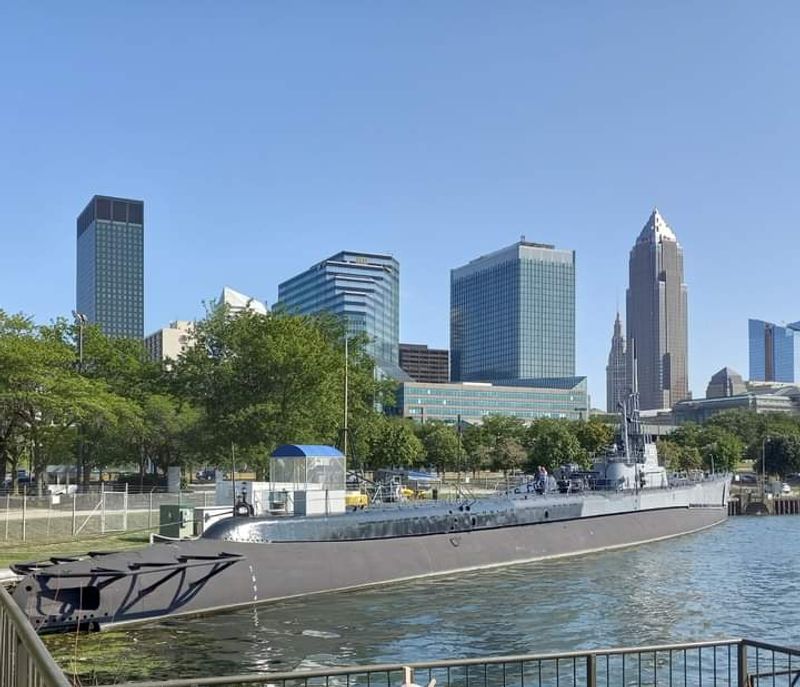
Standing at the edge of North Marginal Road, I immediately felt how unusual this Cleveland landmark is. The USS Cod sits low and dark beside Lake Erie, looking less like a polished attraction and more like a vessel that simply returned from patrol yesterday.
That weathered steel presence is exactly what makes the first glance so powerful. You are not approaching a replica or a heavily altered exhibit.
What struck me most was the setting. With the skyline nearby, gulls overhead, and water moving quietly against the hull, the memorial feels solemn without being stiff.
Reviews repeatedly mention how authentic the submarine looks, and that impression begins before you ever step aboard. Even from the dock, the Cod carries the weight of wartime service in a way that feels immediate, physical, and unforgettable.
Its restored details and battle-tested silhouette make the entire waterfront stop feel genuinely rare.
2. Entering through the original hatch
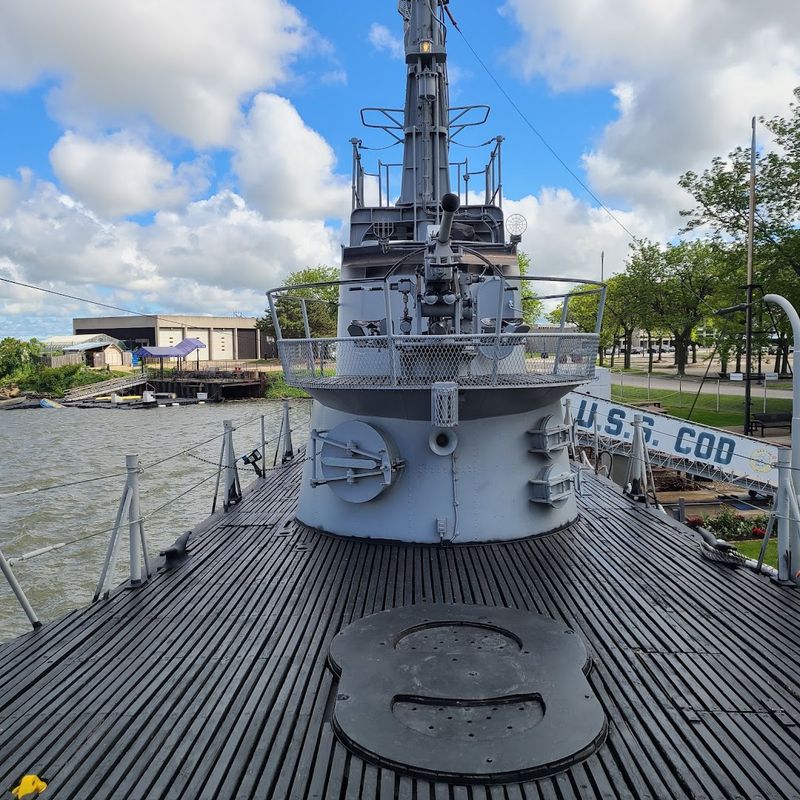
The most important thing to know before visiting is that the USS Cod remains wonderfully original. Its pressure hull has never been cut open for easy access, so you enter the way sailors did, by climbing down a vertical ladder through a hatch.
That single detail changes the whole experience. Instead of observing history from a comfortable distance, you physically commit to it.
I would tell anyone to plan honestly for the challenge. Several visitors loved the tour but noted that getting in and out can be difficult for people with limited mobility, knee issues, or discomfort in tight spaces.
If you are able-bodied, though, the descent feels thrilling rather than intimidating. The moment your shoes hit the deck below, the museum stops feeling like a museum and starts feeling like a living machine.
That authenticity is rare, and it stays with you long after the visit ends.
3. The deck, guns, and lakeside setting
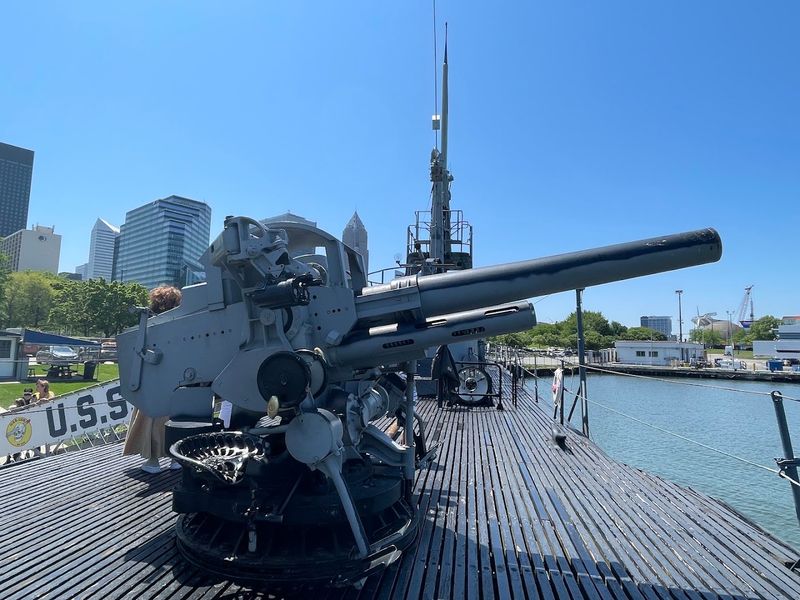
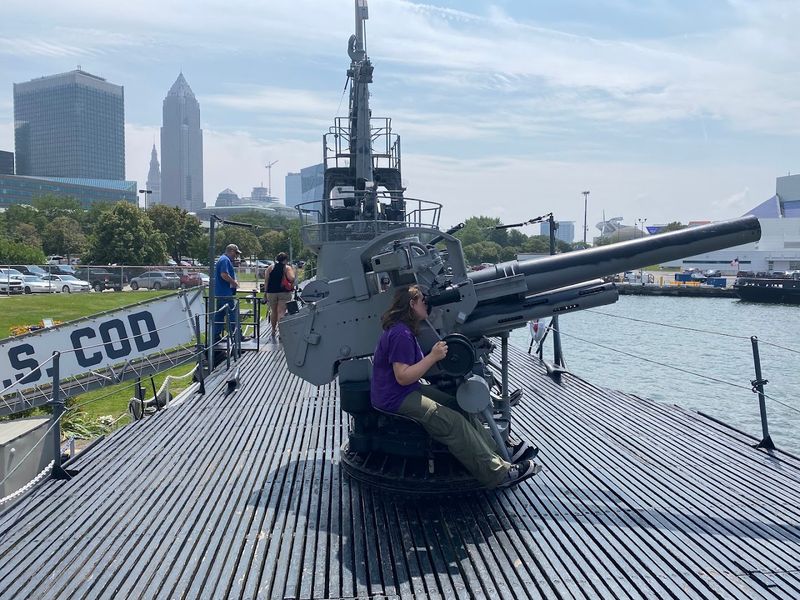
Before going below, I would spend a few extra minutes on deck and around the pier. The exterior alone tells a story, from the long black hull to the rugged deck guns and the practical, compact lines that once carried crews across the Pacific.
Nothing here feels decorative. Even the open air seems to sharpen the sense that this submarine was built for danger, endurance, and long stretches far from shore.
The waterfront setting adds another layer. On one side, you get Lake Erie light and moving water; on the other, the Cleveland skyline reminds you how unexpectedly this wartime survivor now lives inside a modern city.
Some visitors mention display pieces outside, including the original periscope and propeller, which help frame the submarine as both engineering and memorial. It is a striking place to pause, look closely, and appreciate the Cod before stepping into its tighter interior.
4. Torpedo rooms that make history feel real
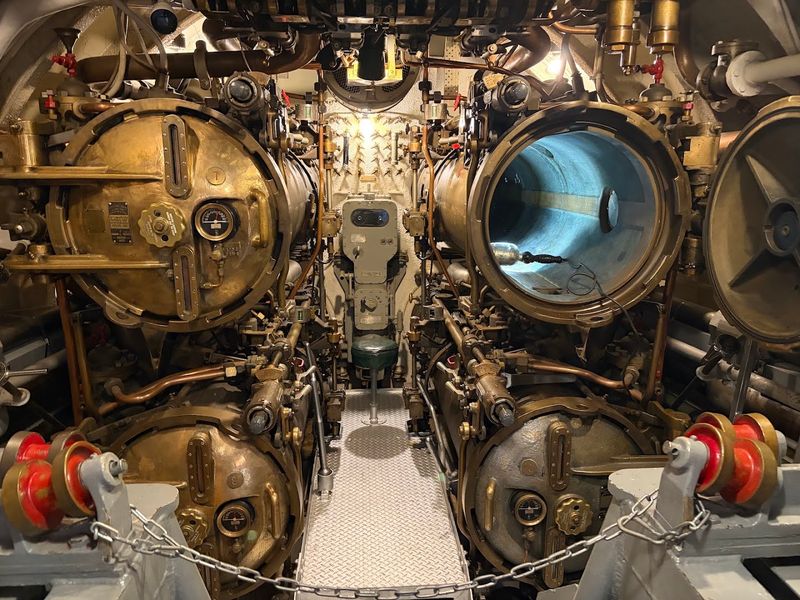
Once inside, the torpedo spaces are some of the most memorable areas to see. I kept thinking about how much machinery, ammunition, and human activity had to coexist in a place that now feels startlingly narrow.
The scale is not abstract when you are standing beside torpedoes with pipes, valves, bunks, and metal everywhere. It becomes obvious that efficiency was not a design preference here.
It was survival.
Visitors often talk about being impressed by the technology used during World War II, and that reaction makes sense. The Cod shows how advanced and intense submarine operations were, even decades before digital systems reshaped naval life.
Looking around these compartments, you get a practical lesson in engineering under pressure rather than a polished textbook summary. For anyone curious about military history, these rooms make the stakes feel immediate, mechanical, and very real for visitors today too.
5. A control room packed with purpose
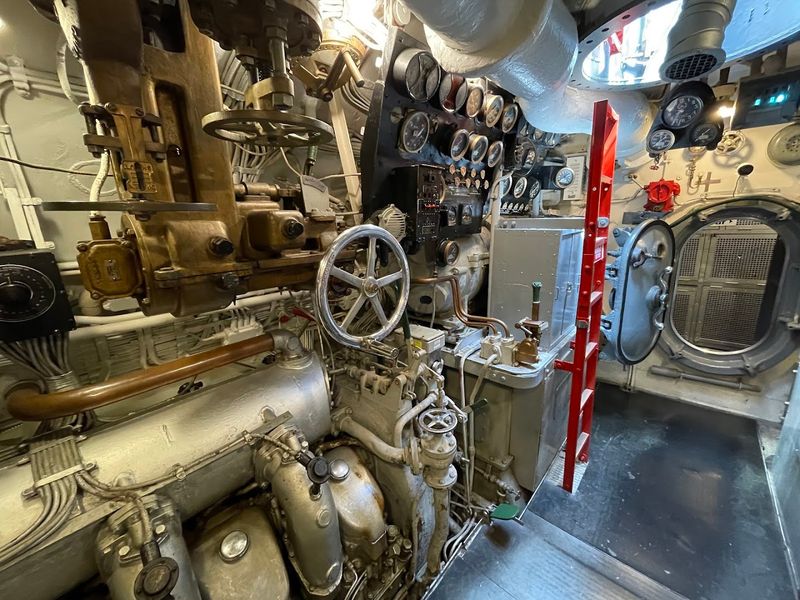
If there is one interior space that captures the imagination fastest, it is the control room. Here, the Cod feels less like a preserved object and more like a command center paused mid-mission, with wheels, gauges, levers, and periscopes crowding the view.
I loved the sense of layered purpose in every direction. Nothing aboard seems accidental, and every surface appears to answer a life-or-death question.
One of the best parts of the visit is how the history is explained. Reviews frequently praise the self-guided format, especially the push-button audio stations that let you move at your own pace while still learning meaningful details.
In some cases, veterans or knowledgeable guides are also on board to narrate and answer questions, which adds even more depth. That combination makes the control room feel dramatic without turning it into a theme park version of the past for modern visitors.
6. What daily life aboard really felt like
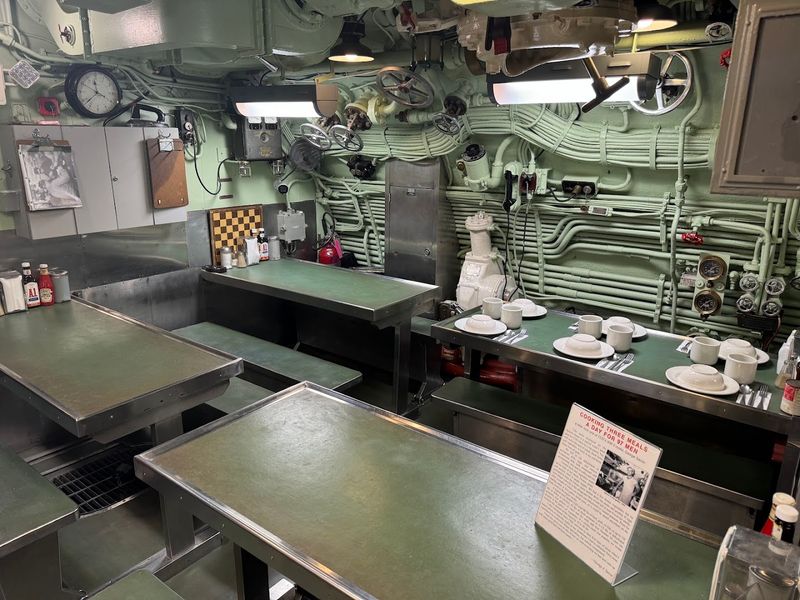
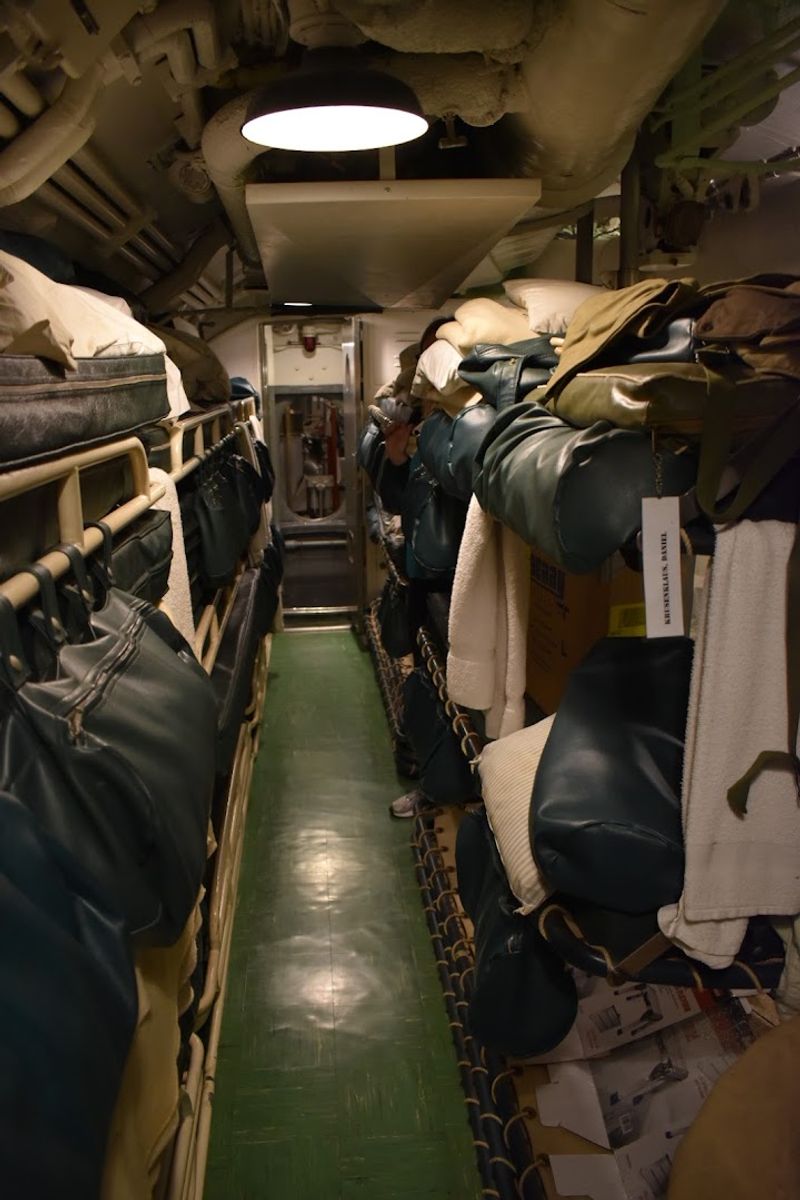
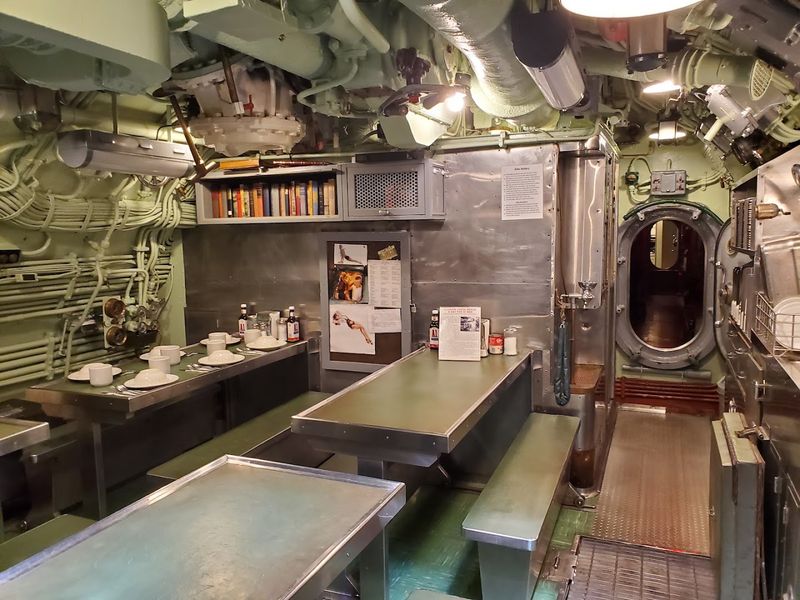
What stayed with me most was not just the weaponry or machinery, but the human scale of daily life inside the boat. The bunks, galley spaces, narrow passageways, and shared quarters make it easy to imagine the routines that filled long patrols between moments of crisis.
You start to think about sleep, noise, heat, smells, and the challenge of finding privacy where almost none existed. That kind of empathy is one reason this memorial feels so powerful.
Several visitors say the submarine feels like the crew just stepped away, and I understand exactly what they mean. Period details, staged interiors, and ticking instruments create the impression that time paused rather than disappeared.
In some compartments, recorded explanations and even 1940s music deepen that sensation without becoming gimmicky. The result is an experience that brings wartime service into focus through ordinary living conditions, not just dramatic battles.
7. Why the Cod matters beyond its steel hull
The USS Cod is not important only because it survived the war. It also carries a remarkable service record, including seven successful Pacific war patrols and the first international submarine-to-submarine rescue in history, when it helped save the crew of a stranded Dutch submarine.
Knowing that background changes how you see the vessel. The steel around you is no longer anonymous.
It is tied to specific danger, decisions, and acts of courage.
That history gives the memorial emotional weight beyond simple nostalgia. This is a museum that honors fallen submariners, so the experience naturally invites reflection as much as admiration.
I found that balance especially moving because the Cod never feels overly staged or sentimental. It lets the submarine speak for itself, which may be why so many visitors leave describing it as one of the coolest and most meaningful places to see in Cleveland.
8. Practical tips before you go
Planning a visit is fairly straightforward, but a little preparation will make the day smoother. The memorial is open for tours from May 1 through September 30, with most days running from late morning to 5 PM, and recent reviews suggest adult admission is about $15.
I would also keep in mind that payment logistics may not always feel ultra-modern, since one visitor reported issues when card processing was unavailable. A check of the official website before heading over is a smart move.
Parking and access are convenient near the waterfront, and several reviewers mention that the self-guided tour gives you freedom to move fast or slow. The bigger practical concern is physical access, not navigation.
If you are bringing kids, helping them on the ladders is wise, and if you have mobility limitations, this may be a tough fit. For everyone else, that effort becomes part of why the visit feels authentic.
9. Why this is one of Ohio’s most unforgettable museums
What makes the USS Cod so remarkable is that it never asks you to imagine history from a safe, polished distance. You climb into it, squeeze through it, listen inside it, and feel the limits that sailors once lived with every day.
That directness is rare, especially in a museum world where so many historic vehicles are heavily modified for convenience. Here, the difficulty and closeness are part of the meaning.
By the time I finished the tour, I understood why this place earns such passionate reviews and a 4.8-star rating. The Cod is visually striking from the pier, educational inside, and emotionally resonant in ways that linger after you leave the lakefront.
Whether you love World War II history or just want to see one of Ohio’s most unusual attractions, this Cleveland memorial delivers something memorable. It is not a submarine on display.
It is a preserved encounter with courage, engineering, and sacrifice.