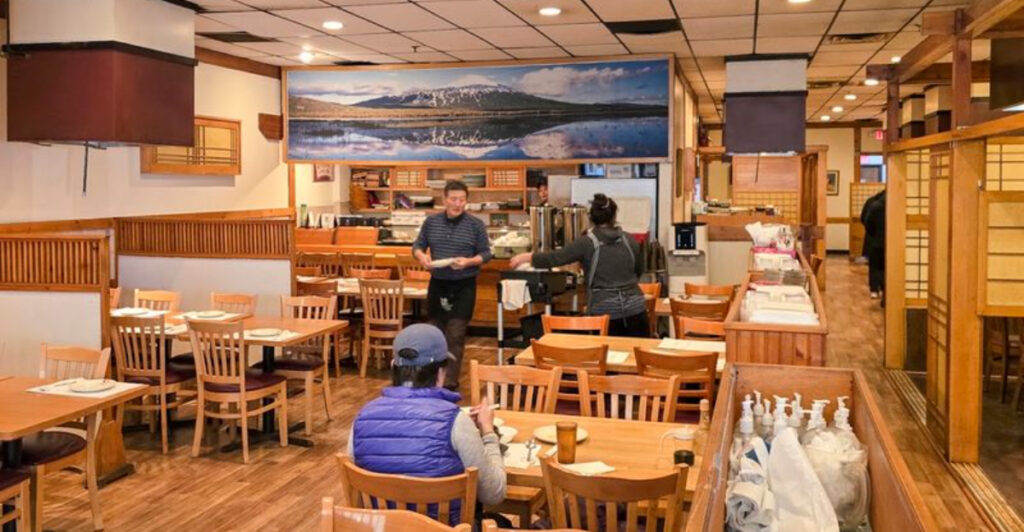
The first clue is the smoke. Before the platters of marinated beef arrive, before anyone reaches for a lettuce leaf, the scent of charcoal begins curling above the grill built into the middle of the table.
This is dinner at Kimchihana, a longtime Korean and Japanese restaurant tucked into the Middlesex Mall in South Plainfield.
Its modest strip-mall location hardly announces what is waiting inside: thick Wang Kal Bi sizzling over genuine hot coals, an overflowing assortment of banchan, and a seafood pancake with enough crisp edges to trigger negotiations over the final piece.
The restaurant has spent decades earning a loyal following without the polished dining room or Manhattan address that often accompanies serious Korean barbecue. Come for the short ribs, certainly, but do not treat everything around them as filler.
From restorative Kal Bi Tang to bubbling tofu stew, Kimchihana delivers the kind of sprawling, deeply satisfying meal that makes smelling like charcoal afterward feel like a fair trade.
Kimchihana Has Been a South Plainfield Favorite for Decades
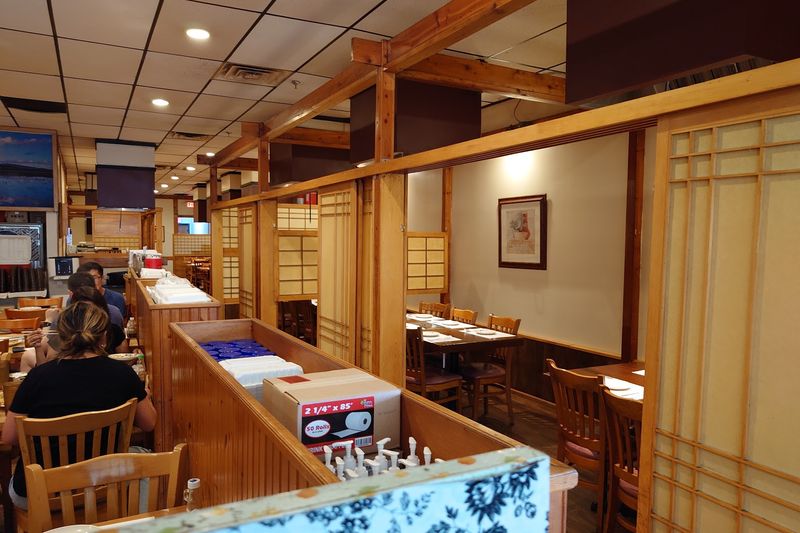
A restaurant does not remain part of the local dining conversation for more than three decades by relying on novelty. Kimchihana has occupied its corner of South Plainfield since the late 1980s, long enough to become the sort of place where regulars know what they want before they sit down.
Its home at 6101 Hadley Road places it in the Middlesex Mall shopping center, close to Interstate 287 and only a short drive from Piscataway, Edison, and Plainfield.
Nothing about the surrounding parking lot hints at a destination restaurant, which is precisely why walking through the door feels like stumbling onto useful local intelligence.
Kimchihana’s identity spans both Korean and Japanese cooking, and the menu reflects its longevity. There are sushi and sashimi combinations, teriyaki plates, tempura, noodle dishes, hot casseroles, rice bowls, and a broad selection of Korean soups and stir-fries.
Still, the restaurant’s reputation rests most securely on traditional Korean barbecue. Groups gather around tabletop grills while platters, rice bowls, sauces, and small side dishes gradually claim nearly every available inch.
The experience is communal without feeling staged. Staff members help manage the coals and meat, an especially welcome bit of guidance for diners who have never cooked Korean barbecue at the table.
Longtime customers tend to praise consistency rather than reinvention. They return for familiar marinades, generous banchan, and dishes that taste the way they remember them.
That history gives Kimchihana an easy confidence. It does not need neon signs explaining its authenticity or theatrical menu descriptions telling diners what to admire.
The proof arrives on hot metal over glowing charcoal. In a state packed with excellent Korean restaurants, especially across Bergen County and the Fort Lee–Palisades Park corridor, this Central Jersey veteran continues to hold its own.
Wang Kal Bi Is the Undisputed Star of the Menu
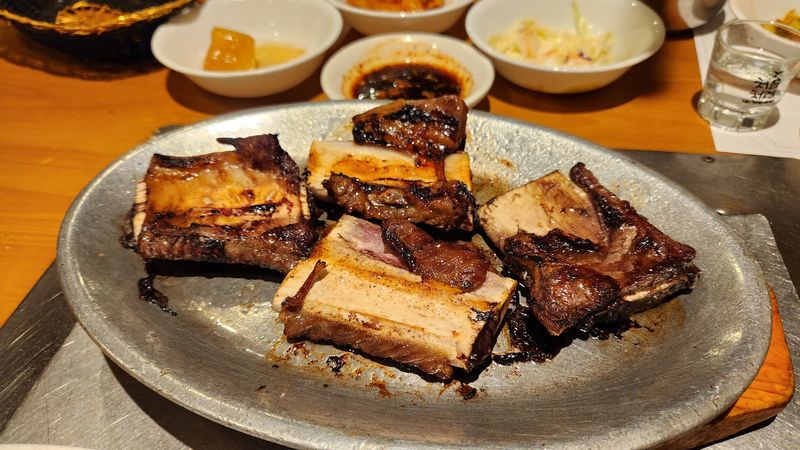
Conversation tends to pause when the Wang Kal Bi hits the grill. The cut is substantial, the marinade begins caramelizing almost immediately, and the first flare of smoke signals that dinner has moved from appetizers to the main event.
“Wang” means king, and these king-size beef short ribs justify the title with both their dimensions and their depth of flavor.
Unlike thin slices that cook in seconds and disappear just as quickly, these ribs have enough heft to develop contrasting textures. The exterior catches over the intense heat, creating dark, sticky edges, while the meat beneath stays juicy and tender.
Kimchihana’s marinade lands in the classic Korean barbecue sweet spot: savory first, gently sweet behind it, with garlic and soy adding richness rather than burying the beef. Eat a piece straight from the grill to appreciate the char, then build the complete bite.
Place the meat inside a lettuce leaf, add a dab of ssamjang, tuck in some rice or kimchi, and fold the whole thing into a compact bundle. The cool lettuce and fermented bite of the kimchi keep the richness in check.
Wang Kal Bi is designed for sharing, though enthusiasm can make the definition of “sharing” unexpectedly flexible. It also rewards patience.
Leaving each piece alone long enough to sear produces a better crust than constantly flipping it, and the staff can help judge when the thickest portions are ready. The barbecue menu offers plenty of alternatives, including bulgogi, unseasoned Seng Gal Bi, pork belly, spicy pork loin, shrimp, beef tongue, and thinly sliced brisket.
Those are worthwhile additions for a larger group, particularly if everyone wants to compare marinades and textures. Even in that crowded company, Wang Kal Bi remains the order that defines Kimchihana.
It is generous, deeply seasoned, and smoky enough to make the usual trip into New York for Korean barbecue feel decidedly unnecessary.
Real Charcoal Gives Every Bite a Smoky Edge
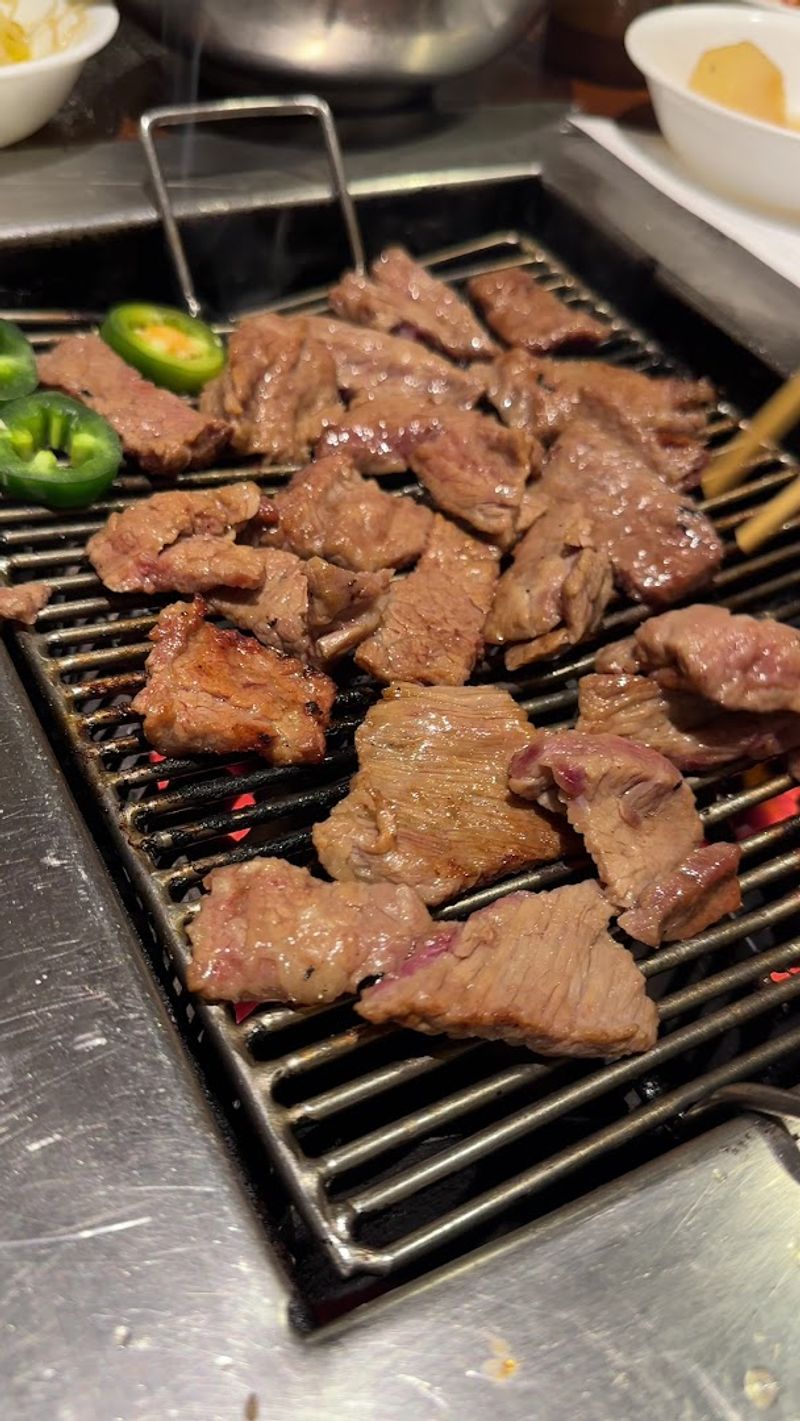
Not all tabletop grills produce the same result. Gas is efficient and predictable, but Kimchihana uses real hot coals, and that traditional choice changes both the flavor of the meat and the rhythm of the meal.
Charcoal burns intensely, helping the surface of the short ribs sear before the interior dries out. Fat drips onto the heat below, sending up quick wisps of smoke that settle back onto the beef.
The effect is not aggressive or ashy. It is a subtle woodsy layer that deepens the sweet soy marinade and gives the caramelized edges their unmistakable barbecue character.
There is also something pleasantly elemental about gathering around glowing coals in the middle of a South Plainfield strip mall. One person watches the pork belly, another reaches for the tongs, and everyone suddenly has an opinion about whether a piece needs another thirty seconds.
The grill turns a meal into a shared activity without requiring diners to be experts. Staff members routinely step in to arrange, cut, turn, or remove the meat, preventing the most expensive order on the table from becoming a well-done experiment.
The heat also means cooking moves quickly once the grill is loaded, so it helps to have rice, lettuce, sauces, and side dishes positioned before the first batch is ready. There is one practical detail worth accepting in advance: charcoal smoke travels.
Jackets and sweaters may carry a trace of dinner home, particularly after a long meal. Regulars generally consider that a minor inconvenience, and lighter layers are a sensible choice if the weather allows.
Kimchihana’s charcoal setup is not a decorative flourish added for effect. It is central to why the Wang Kal Bi tastes different from short ribs cooked on an electric plate or gas flame.
The coals deliver the char, aroma, and little bursts of crispness that make each freshly grilled piece hard to leave alone.
The Banchan Spread Nearly Steals the Show
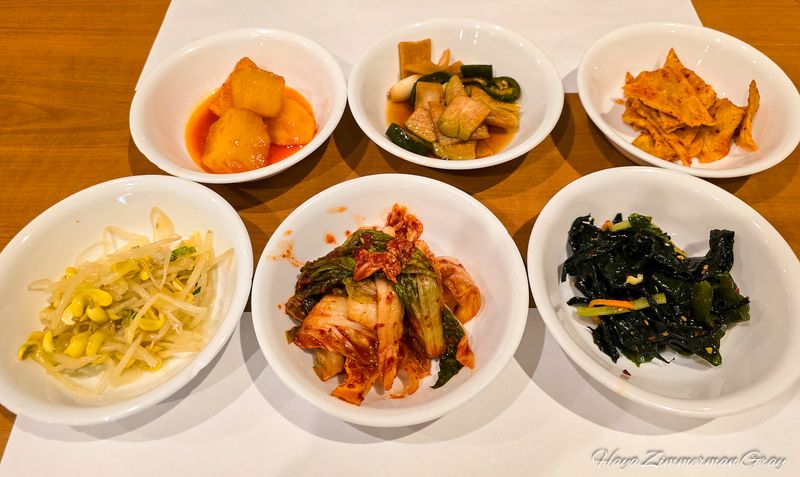
Before anyone has cooked a single rib, the table begins disappearing beneath small dishes. This is banchan, the assortment of complementary sides served with a Korean meal, and Kimchihana approaches it with the generosity of a host who suspects you have not eaten all day.
The lineup can change, but kimchi is the anchor. Its fermented tang and chile heat are more than an opening snack; they cut through the richness of marinated beef and reset the palate between smoky bites.
From there, the spread may include seasoned potatoes, vegetables, pickles, or soft, cool eggplant. That eggplant has become a particular favorite among longtime diners, proving that the quietest bowl on the table can inspire as much loyalty as the grilled meat.
The pleasure comes from mixing contrasts rather than eating each dish in isolation. Follow a sweet, charred piece of Wang Kal Bi with something cold and vinegary.
Add a bite of rice after a spicy side. Tuck kimchi into a lettuce wrap, then build the next one differently.
Banchan allows a meal to change flavor every few seconds, even when the same platter of beef remains at its center. It also reflects the kitchen’s attention to detail.
These dishes arrive without fanfare, yet each requires its own seasoning and preparation. When they are treated as an obligation, diners notice; when they are fresh, varied, and thoughtfully balanced, they become part of a restaurant’s signature.
At Kimchihana, they are emphatically the latter. First-time visitors sometimes mistake the initial spread for everything they ordered, only to realize the main dishes are still coming.
Refills may be available for favorites, though it is always best to ask rather than assume. Pace yourself accordingly.
The instinct to finish every potato and piece of kimchi before the grill gets going is understandable, but the smartest move is to save enough for pairing with the meat. Otherwise, that crowded table becomes mysteriously empty far too soon.
Seafood Pancakes and Comforting Soups Round Out the Feast
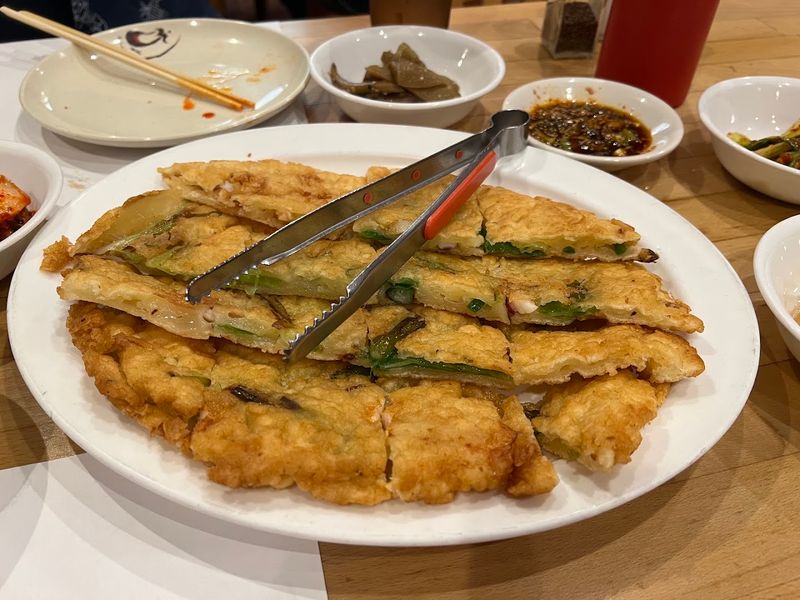
Listen for the crunch when the Hae Mool Pajun is cut. Kimchihana’s Korean seafood pancake arrives broad and golden, with crisp edges surrounding a softer, savory center dotted with seafood and scallions.
It is an ideal table starter because it is easy to divide, approachable for newcomers, and sturdy enough to stand beside the bold flavors of barbecue. Dip a wedge lightly into the accompanying sauce rather than soaking it; the goal is to preserve the fried exterior that makes the dish so satisfying.
A full pancake is substantial, so four diners will have a much easier time finishing it alongside Wang Kal Bi than a table of two. Soups bring a different kind of comfort.
Kal Bi Tang pairs short ribs with a clear beef broth that tastes delicate at first and becomes increasingly rich as you work through the bowl. The meat is cooked until tender, making it a soothing counterpoint to the charred ribs from the tabletop grill.
On a gray Central Jersey afternoon, it is filling enough to serve as lunch by itself. Diners who prefer more heat can look toward Yook Gae Jang, a spicy beef soup with shredded meat and scallions, or Kim Chi Ji Ge, the familiar, bracing combination of fermented cabbage, pork, and chile-laced broth.
Hae Mool Soon Doo Boo brings seafood and silken tofu together in a bubbling spicy stew, while Duk Man Doo combines dumplings and sliced rice cakes in a mild beef broth.
The kitchen also turns out Japchae, with slippery glass noodles, vegetables, and beef, plus stone-pot bibimbap that develops a prized layer of crisp rice against the heated bowl.
This range matters when a group contains mixed appetites. One diner can commit fully to charcoal-grilled beef while another orders sushi, noodles, or tofu stew.
The menu may take a few minutes to absorb, but a sensible first visit needs only three anchors: Wang Kal Bi, Hae Mool Pajun, and one soup for the table.
The Unpretentious Setting Makes It Feel Like a Local Secret
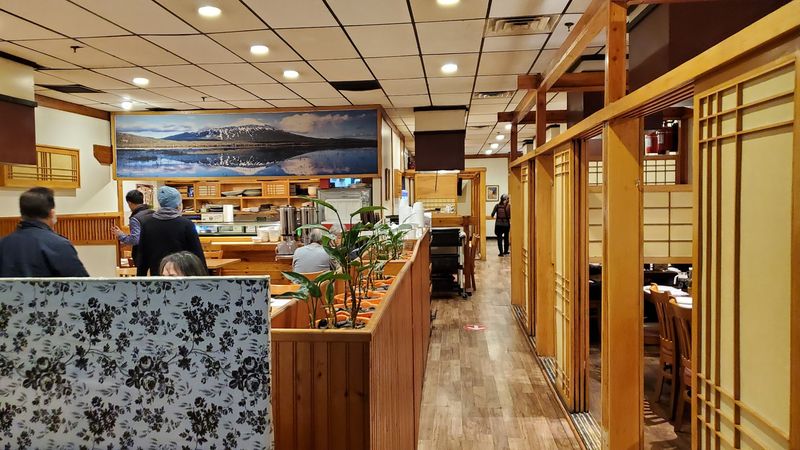
Hadley Road is built for errands, not grand entrances. Kimchihana sits among everyday businesses in a shopping center with parking directly outside, giving diners none of the traffic, garage fees, or train calculations that often accompany a Korean barbecue night in Manhattan.
Inside, the room is comfortable and lived-in rather than polished into anonymity. Tabletop grills do most of the visual work.
As the evening progresses, the dining room fills with the clink of small dishes, the hiss of meat hitting hot metal, and a faint charcoal haze that makes the restaurant feel busier and warmer than the storefront suggests. That casual setting suits the food.
Korean barbecue is at its best when diners can settle in, pass dishes freely, and debate the last short rib without feeling as though the table is being timed. Families and groups fit naturally here, but the wide menu also makes Kimchihana workable for a quieter lunch.
Historically, the restaurant has served both midday and evening crowds seven days a week, with opening around 11:30 a.m.; because independent restaurant schedules and menu prices can change, calling the restaurant at 908-755-0777 before a special trip is the safest move.
Weekend reservations are also sensible for larger parties, particularly if everyone wants a grill table.
The location is convenient from Interstate 287 and Route 22, while the ample lot removes one of the usual friction points of destination dining. Yet convenience is not what keeps Kimchihana interesting.
It is the contrast between the ordinary exterior and the meal unfolding inside: king-size marinated ribs blistering over coals, bubbling stews carried through the room, and a dozen little dishes covering the table. By the time dinner ends, the strip mall no longer seems like an unlikely place to find outstanding Korean barbecue.
It seems like exactly where a restaurant this enduring would hide.