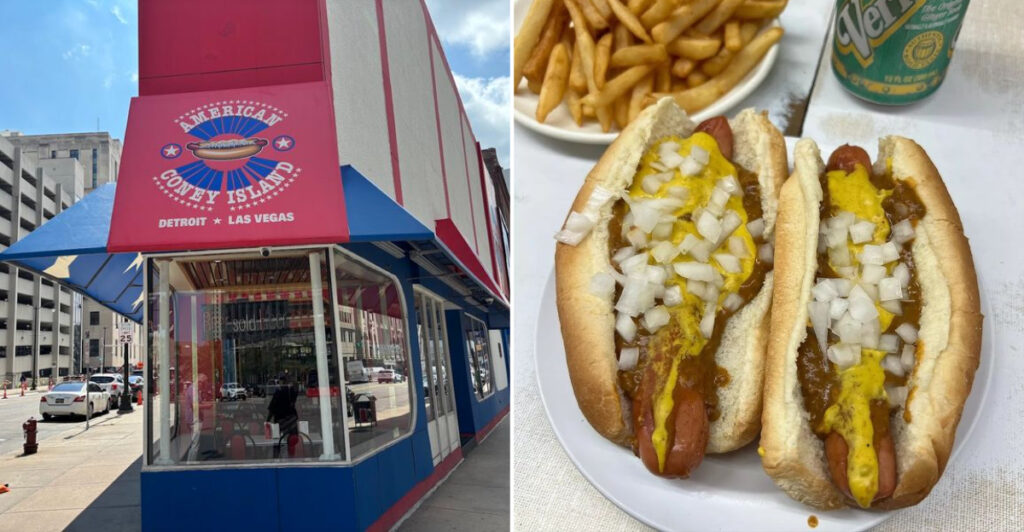
Detroit has plenty of food landmarks, but few are as instantly recognizable as a plate set down at American Coney Island. Right on West Lafayette Boulevard, this long-running downtown counter still builds its signature dogs with the kind of stripped-down precision that makes every topping count.
If you want to understand why the coney remains one of Michigan’s defining bites, this is the place to start. The draw is not trendiness or reinvention – it is the thrill of seeing a classic still handled the old-school way.
Downtown Detroit Starts Right At The Counter
On a busy stretch of West Lafayette Boulevard, American Coney Island announces itself with the kind of confidence only an old downtown institution can carry. The location places it right in the middle of Detroit motion, where office workers, sports fans, night owls, and first-time food pilgrims all seem to cross paths.
That setting matters before a single plate lands, because the restaurant is woven into a block that already feels charged with ritual.
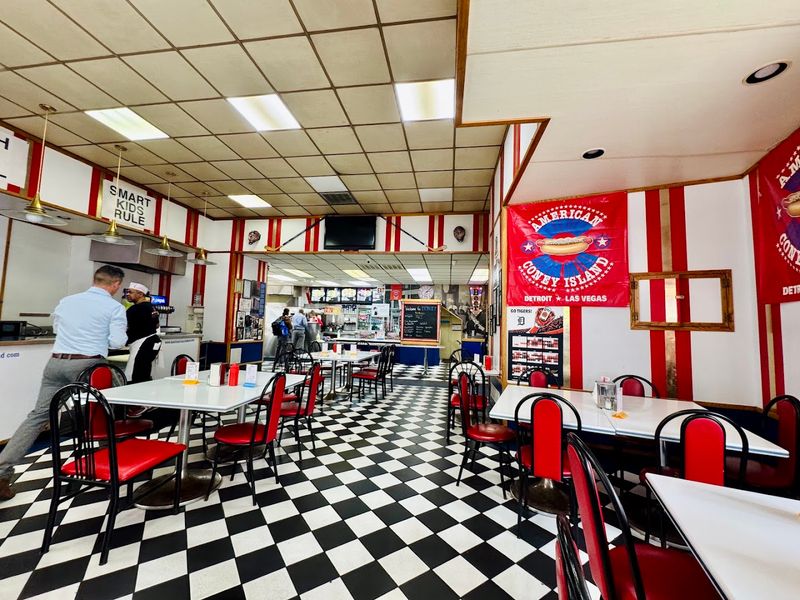
Inside, the room is brighter and more open than many people expect from a place this rooted in tradition. Window seats pull in street life, counter service keeps the energy moving, and tables make it easier for pairs, families, and larger groups to settle in without turning a quick meal into a logistical puzzle.
Instead of nostalgia staged for effect, the space reads as practical, polished, and built to handle a steady stream of hungry people.
The visual appeal comes from simplicity rather than decoration overload. Light bounces off the interior, staff movement gives the room its rhythm, and the whole operation has that fast, downtown efficiency that suits the menu.
Even when there is a line, the layout helps the place avoid the cramped pressure that can make small legendary eateries harder to enjoy.
That mix of accessibility and history is a big part of why American Coney Island stands out. You are not approaching a museum piece behind glass.
You are stepping into an active, functioning Detroit lunch counter where the pace, the seating, and the setting all support the main event without distracting from it.
Before the first bite, the restaurant has already made its case through location, flow, and a room that looks ready for another hundred orders.
The Coney Dog Done The Traditional Way
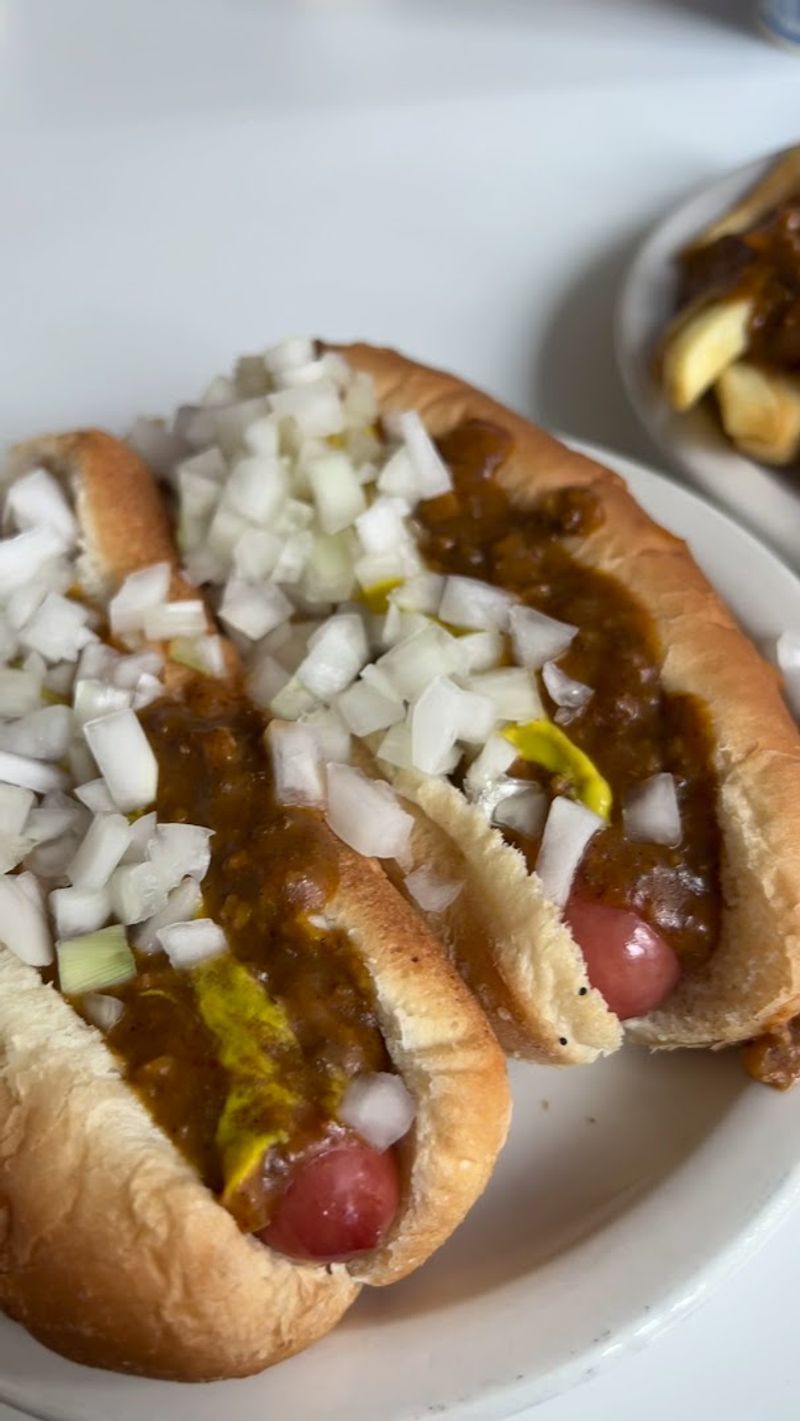
The reason to come is the coney dog, and American Coney Island keeps the formula focused. A beef frankfurter in a soft steamed bun arrives topped with beanless chili, a stripe of yellow mustard, and a scatter of diced white onion.
Nothing about it is oversized or gimmicky, which is exactly why the composition works.
The bun matters more than it gets credit for. It is there to cradle the dog and absorb just enough of the chili without collapsing into mush, while the mustard cuts through the richer elements with a bright, familiar sharpness.
Then the onions step in with crunch and bite, giving the whole thing the kind of contrast that keeps each mouthful lively instead of heavy.
The hot dog itself is central to the experience. A natural-casing style brings that expected snap, creating a clean break against the softer bun and loose-textured topping.
That textural contrast is one of the reasons Detroit coneys remain so satisfying – they are layered with precision, even when they look straightforward at first glance.
The chili is where personality really shows. At American, it reads as assertive and savory, built to support the hot dog rather than drown it.
Because the portions stay controlled, the dog remains balanced enough to eat quickly at the counter, yet flavorful enough to reward a slower, more deliberate approach if you want to pay attention to every component.
Order one if you are sampling, but the style almost invites two. This is classic lunch-counter engineering, compact and messy in the best possible way, with each topping pulling its weight.
Fries, Specials, And The Details That Keep The Menu Moving
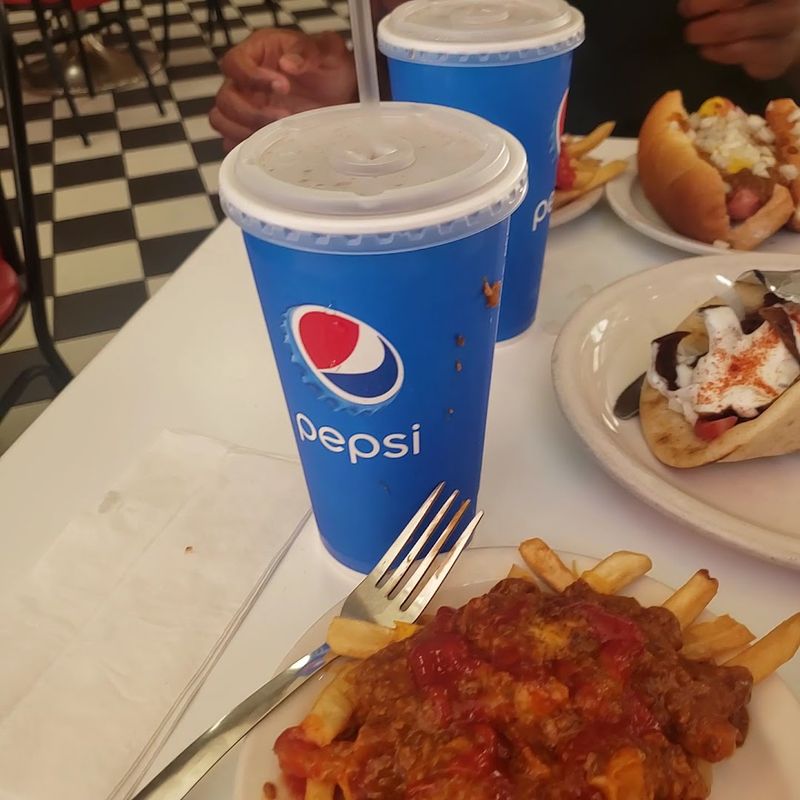
Although the coney is the headline act, the rest of the menu helps explain why American Coney Island functions as more than a one-item stop. Fries show up repeatedly in conversations about the food for a reason: when they are hot, crisp, and salted properly, they turn a quick dog into a full meal without stealing attention.
They are the side dish version of the restaurant’s larger approach – straightforward, dependable, and built for immediate satisfaction.
Chili cheese fries push that idea further by taking the same core flavors and spreading them across a larger, sharable format. The appeal is easy to understand.
You get the crisp edges of the fries, the weight of the chili, and a richer finish that fits the room’s fast, casual energy, especially if the table wants something in the middle while everyone decides whether one coney will be enough.
There are also menu variations that show how small adjustments can reshape the experience without leaving the restaurant’s lane. Options that add more beef shift the meal toward a heartier, lunchier profile, while other basics keep things familiar for diners who want a classic diner stop without overthinking it.
The menu is not broad for show. It stays concise so the kitchen can move quickly and keep its identity intact.
That restraint is part of the charm. American Coney Island does not bury its signature under endless combinations or novelty builds.
It lets a few supporting items do useful work, whether that means adding crunch, turning the meal shareable, or giving regulars a slight variation on the standard order.
In a city that respects efficient comfort food, that tight menu reads less like limitation and more like discipline at the fryer and grill.
Why This Michigan Rivalry Gives The Address Extra Electricity

Part of the electricity around American Coney Island comes from its address. On this stretch of Lafayette, the restaurant occupies one of Detroit’s best-known food faceoffs, and that proximity adds a layer of anticipation before you even reach the door.
The block has become a stage for comparison, loyalty, curiosity, and the kind of spirited debate that only a regional specialty can inspire.
Even so, American Coney Island stands on its own terms. It is not interesting merely because of who is next door.
The restaurant has its own visual identity, its own service rhythm, and its own version of the coney, with a dining room that many find easier for groups and a setup that suits people who want a classic stop without squeezing into a tighter footprint.
That distinction matters because the Detroit coney is not a generic hot dog with local branding attached. Small differences in chili character, room layout, and pacing shape the experience in real ways.
At American, the brighter room and broader seating options can change how the meal unfolds, especially for families, out-of-towners, or anyone trying to sample downtown Detroit without turning lunch into a long wait.
The rivalry also sharpens appreciation for tradition. When two neighboring places are so closely associated with the same iconic dish, every detail gets noticed: the bun, the snap, the onions, the chili’s spice, even how quickly plates land.
That kind of scrutiny tends to preserve standards, and diners benefit from it.
For anyone exploring classic Michigan food culture, this address delivers more than a meal. It offers a front-row seat to one of Detroit’s most enduring culinary arguments, carried out in mustard, onions, chili, and neighborhood pride.
When To Go And How To Order For The Best Experience

American Coney Island works best when approached with a little strategy. Because it sits in such a central downtown location, the crowd can shift with office lunch hours, nearby events, and weekend evening traffic.
That means your experience can change depending on whether you arrive for a quick weekday bite, a pregame stop, or a later-night meal on Friday or Saturday when the place stays open much later.
If the goal is to focus on the food and take in the room without much pressure, a midafternoon visit can be a smart choice. The pace is still lively enough to understand the restaurant’s character, but there is often more breathing room to notice the seating, watch orders move across the counter, and settle in long enough to compare a coney with fries instead of inhaling everything at top speed.
During busier windows, the energy itself becomes part of the appeal.
Ordering is refreshingly simple, and that simplicity is an advantage for first-timers. Start with the standard coney before branching out.
Add fries if you want the full lunch-counter picture, or go with chili cheese fries if the table wants a richer side that can be shared while another round of dogs disappears.
This is also a place where overcomplicating the order misses the point. The appeal lies in seeing how a short menu and fast execution can deliver a meal with almost no wasted motion.
You do not need a long checklist. You need a little appetite, a few napkins, and enough time to enjoy the texture contrast between steamed bun, snappy dog, chili, mustard, and onion.
Get in, order smart, and let the classics do the work.
A Detroit Original That Still Knows Exactly What It Is
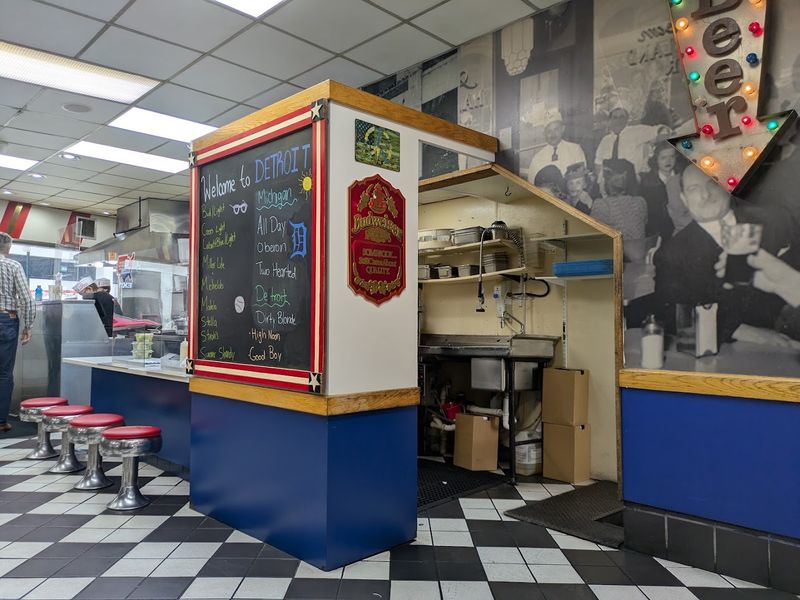
Plenty of old restaurants survive by leaning hard on their backstory. American Coney Island endures because the central idea still performs in real time.
A downtown hot dog counter with a simple menu, fast service, and a distinctive signature item only matters if the meal still arrives with enough precision to justify the reputation, and here that standard remains the point.
There is a useful clarity to the whole operation. The room is built for motion, the food is built for directness, and the experience fits the surrounding city instead of trying to isolate itself from it.
You can read the place as lunch, late snack, quick tradition, or edible Detroit orientation, and it supports each role without needing to reinvent itself for modern attention spans.
That is where its staying power becomes most interesting. American Coney Island is not chasing novelty toppings, oversized portions, or nostalgic theatrics.
It sticks with the familiar architecture of the coney and trusts that careful assembly still matters. In a food culture crowded with mashups and maximalism, that restraint lands as a statement.
The restaurant also captures an important kind of accessibility. You do not need insider knowledge, formal reservations, or a major budget commitment to understand why this style of food belongs to Detroit.
Sit down, order a coney, add fries, and the city starts explaining itself through texture, speed, spice, and the practical elegance of a dish designed to be eaten without ceremony.
That may be the sharpest reason this place continues to draw attention. American Coney Island serves one of Michigan’s defining foods in a form that still reads clear, confident, and unmistakably tied to its block in downtown Detroit.