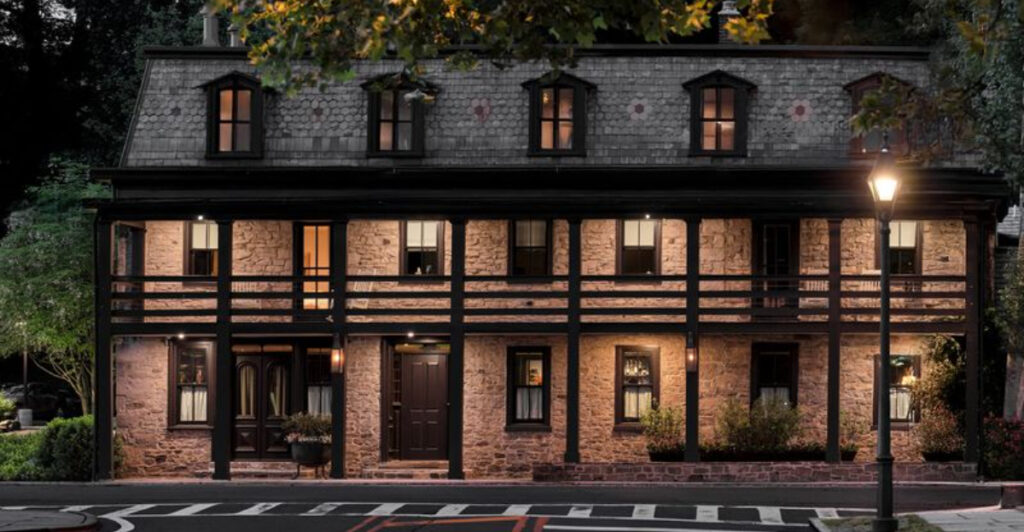
A stone wishing well stands near the entrance, water tumbles beside the garden terrace, and a wood-burning hearth glows inside a tavern that has welcomed guests since long before dinner reservations existed. The Stockton Inn could lean entirely on its history and still attract curious visitors.
Instead, this 300-year-old landmark in the tiny Hunterdon County borough of Stockton has reinvented itself as one of New Jersey’s most exciting places to eat and stay.
Following an extensive restoration, the inn now pairs its original character with a polished seasonal restaurant led by chef Bob Truitt, whose résumé includes some seriously celebrated kitchens.
Diners can settle into a moody historic tavern, gather around the fireplace in an elegant dining room, or enjoy dinner beside the waterfall outside.
Nine thoughtfully designed guest rooms make it possible to linger overnight, turning an impressive meal into a full Delaware River escape without stripping away the quirks that made the property special in the first place.
More Than 300 Years of Welcome
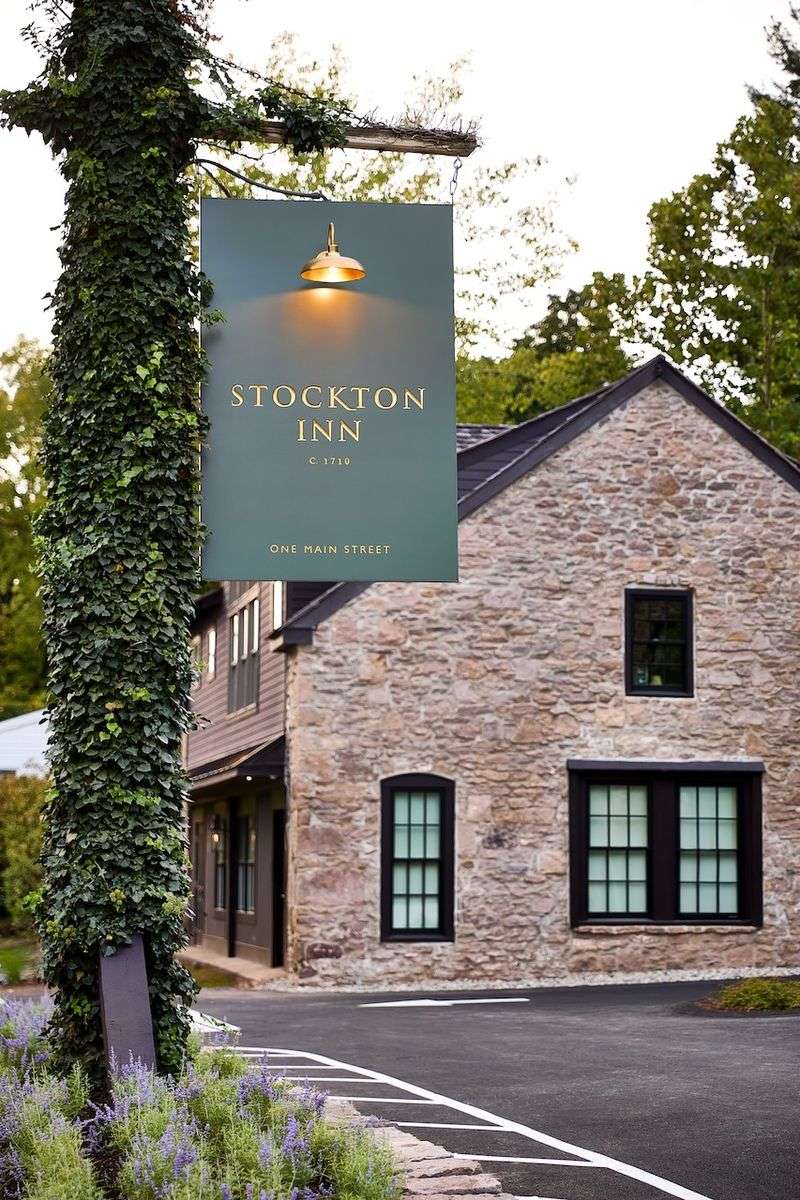
The story begins in 1710, when John Reading acquired the property as private farmland and established a family home there. That date puts the Stockton Inn’s roots more than six decades before the signing of the Declaration of Independence and well before the surrounding community officially became known as Stockton.
Few restaurants in New Jersey can serve dinner in a place connected to that much history. By the 1830s, the property had evolved into a tavern sometimes called the farmer’s bar.
Its position near the Delaware River made it a convenient stop for neighbors, merchants, canal workers, and travelers moving through the region. The opening of the Delaware and Raritan Canal brought more activity to the river corridor, followed later by the railroad.
Long before Stockton became the peaceful weekend destination it is today, the inn was already serving as one of the community’s gathering places. Its guest list grew considerably more glamorous during the 1920s and 1930s.
Under the ownership of Elisabeth Colligan, the inn became a popular retreat for musicians, authors, artists, and Manhattan socialites looking for a country escape. Stories connect the property with figures ranging from F.
Scott Fitzgerald to Jacqueline Kennedy Onassis. Margaret Mitchell, the author of “Gone With the Wind,” is also said to have spent time writing in one of its carriage houses.
Prohibition added another colorful chapter. Hidden areas beneath the tavern were reportedly used as a speakeasy, where applejack continued to flow despite the era’s restrictions.
The old tavern therefore carries more than decorative vintage charm. Its floors, stonework, and hearth belong to a building that has witnessed the growth of a riverside settlement, the arrival of new transportation routes, and countless evenings of perfectly legal and occasionally less-than-legal drinking.
A Restoration Worth the Wait
For eight years, one of Stockton’s most recognizable buildings sat empty. The inn had closed unexpectedly in 2014, leaving local residents to watch as a landmark that had operated in various forms for centuries gradually fell into disrepair.
Given the age and complexity of the property, bringing it back was never going to be a simple matter of fresh paint and new furniture. A local couple purchased the inn in 2022 and began a meticulous renovation that addressed everything from its structural bones to its smallest decorative touches.
The goal was to create a modern boutique hotel and restaurant without sanding away the personality accumulated over three centuries. Original architectural elements were preserved wherever possible, while tired or unusable spaces were carefully rebuilt.
The revived Stockton Inn began welcoming visitors again in stages in 2024. Old beams, stone walls, historic passageways, and the tavern’s centuries-old hearth now sit comfortably beside velvet seating, contemporary lighting, marble bathrooms, and carefully chosen artwork.
The combination feels intentional rather than themed. Nothing about the finished property suggests that someone simply filled an old building with reproduction antiques and called it historic.
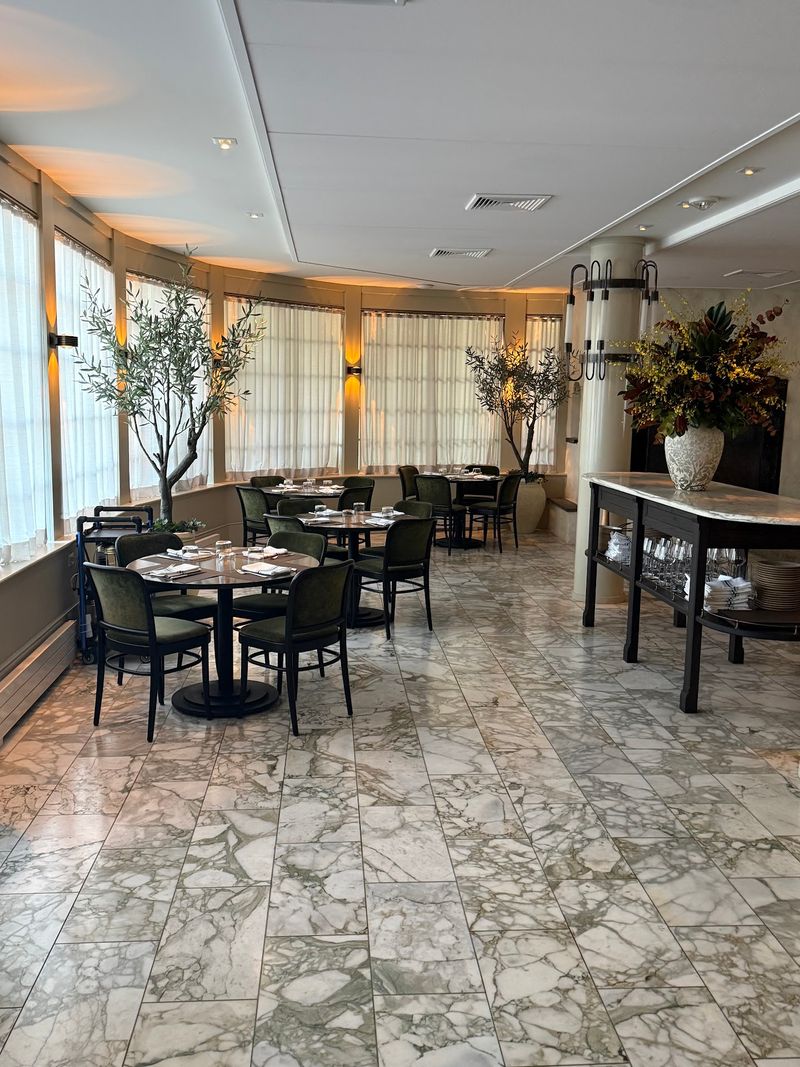
That balance is especially visible in the main dining room. Large windows bring in natural light, while a wood-burning fireplace creates a strong visual connection to the inn’s past.
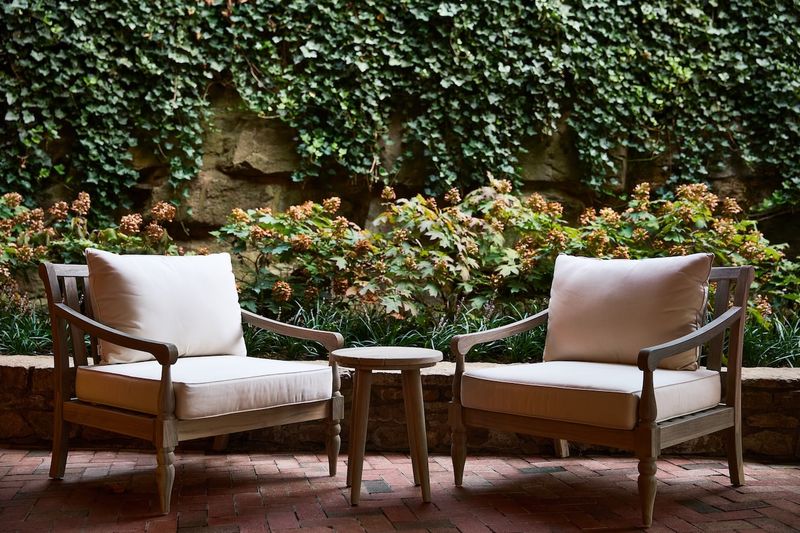
The tavern takes a moodier approach with deep green paneling, leather seating, and a bar built for serious cocktails. Outside, the restored terrace uses the property’s established stonework, greenery, waterfall, and famous wishing well as part of the setting.
The transformation also restored the inn’s place in local life. Residents from Stockton, Lambertville, Frenchtown, and New Hope once again have a reason to gather here, while overnight guests can experience the building as a functioning inn rather than a preserved historical display.
After years of silence, glasses clink in the tavern and the hearth burns again.
Chef Bob Truitt’s Seasonal Signature
Bob Truitt did not arrive in Stockton by taking the usual country-inn route. Before leading the kitchen here, the Bucks County native built a career connected to major restaurant names, including Michael White’s AltaMarea Group and Stephen Starr.
His experience also reaches to elBulli, the famously innovative restaurant in Spain that profoundly influenced modern fine dining. That background shows up in a menu that is technically ambitious without becoming an endurance test.
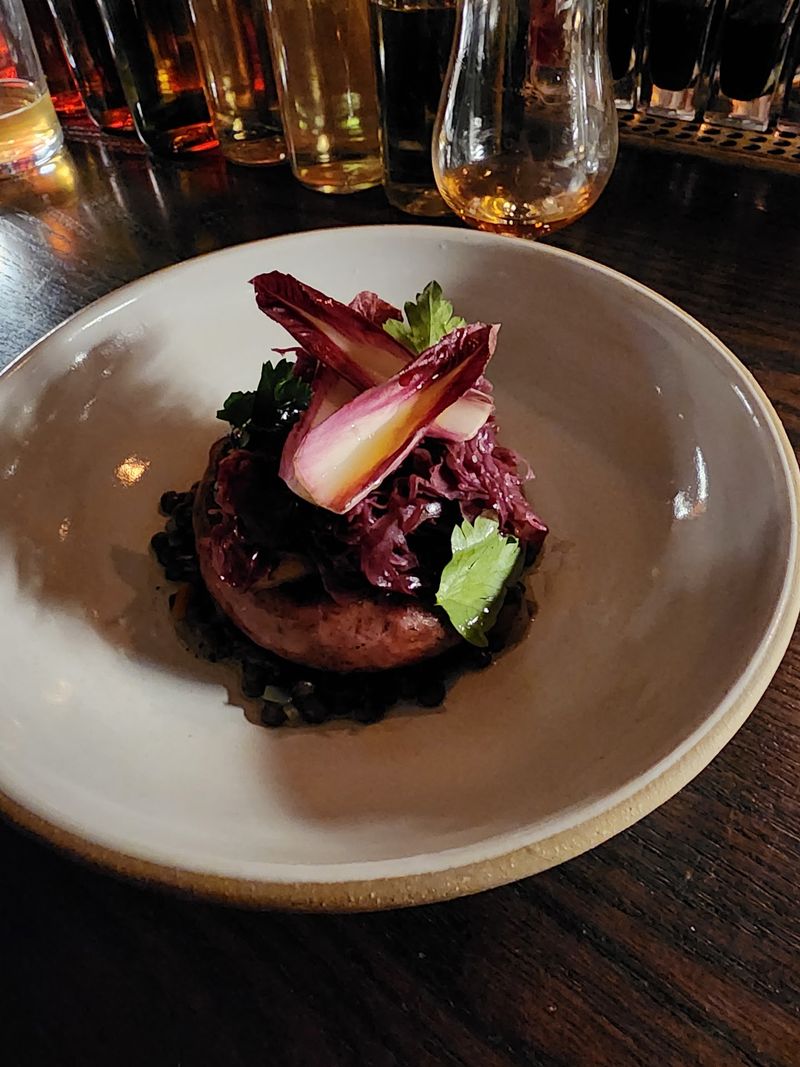
The restaurant serves modern American food with noticeable Italian and European influences, relying heavily on ingredients from New Jersey, Pennsylvania, and the surrounding Delaware River Valley.
Because the selection changes with the seasons, returning a few months later can produce a very different dinner.
House-made pasta is one of the kitchen’s strengths. Depending on the season, the lineup might include ricotta gnocchi paired with sweet corn, chanterelles, chives, and summer truffle, or mafaldine alla Nerano with summer squash, garlic, basil, and Parmigiano.
Lumache cacio e pepe receives extra depth from smoked pecorino fonduta, lemon zest, and toasted black pepper. Lobster agnolotti and jumbo lump crab campanelle push the pasta section firmly into special-occasion territory.
The larger plates are just as considered. A dry-aged strip steak can arrive with bone marrow bordelaise and fries, while seafood preparations may feature poached halibut, ocean trout, or mussels served with market sourdough.
Even the opening bread course gets attention, pairing Stockton Market sourdough with cultured lavender-honey butter and Maldon sea salt. Dessert does not coast on the strength of dinner.
Tiramisu, chocolate budino, and seasonal ice creams keep the finish focused but playful. The bar follows the same philosophy, combining serious technique with drinks that have memorable names and unexpected combinations.
It is refined cooking, certainly, but the menu still understands that dinner should be enjoyable rather than ceremonial.
Four Rooms, Four Different Moods
On one evening, dinner at the Stockton Inn might mean a cocktail beside a centuries-old hearth. On another, it could involve twinkle lights, firepits, and the steady sound of a waterfall.
The restaurant operates with one seasonal menu across four distinctive settings, allowing diners to choose an experience that suits the occasion. The historic tavern is the most relaxed of the main spaces.
Formerly known as the Dog and Deer Tavern, it has deep green walls, leather-clad seating, dark wood, and a fireplace that gives the room genuine old-world character. This is the natural spot for a strong cocktail, steak frites, or a bowl of pasta when the weather turns cold.
The room feels intimate without becoming hushed or overly formal. The main dining room, once called Finch, is brighter and more polished.
Sunlight pours through broad windows during early dinner, while velvet textures and a roaring wood fire soften the contemporary design. It works particularly well for anniversaries and milestone meals, though the service avoids making an ordinary Wednesday dinner feel like a black-tie event.
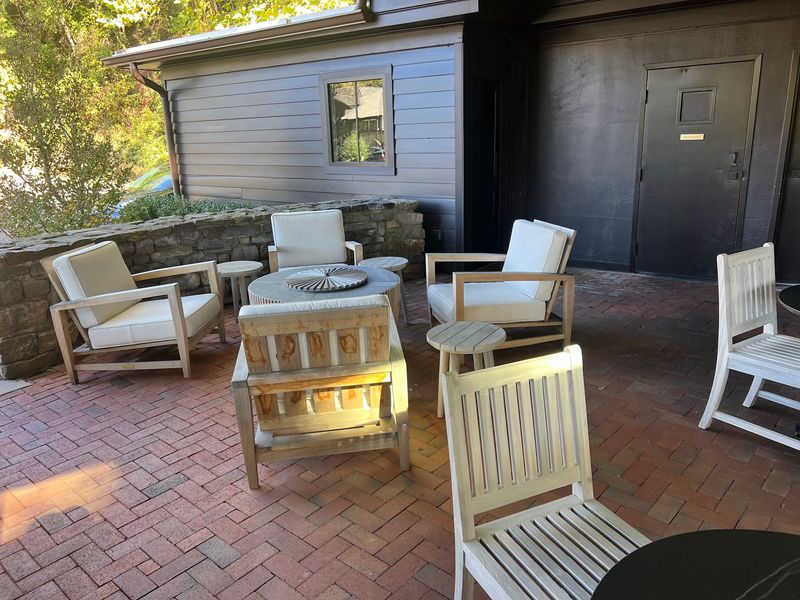
Then there is the all-season terrace, perhaps the inn’s most visually memorable space. During warmer months, tables sit among lush greenery near cascading water and the historic wishing well.
In winter, firepits and overhead lights transform it into a sheltered garden retreat. Rather than closing the outdoor space as soon as temperatures drop, the inn adapts it for year-round use.
The fourth option is a private dining room accommodating up to 14 guests. Hand-painted details, residential-style furnishings, and its own fireplace give small celebrations a sense of occasion without placing them in a generic banquet room.
The restaurant currently serves dinner Wednesday through Sunday beginning at 4:30 p.m. Reservations are sensible, especially for weekend tables or a preferred dining area.
With four spaces offering such different moods, where you sit can shape the evening almost as much as what you order.
The Wishing Well and a Broadway Connection
Near the inn’s entrance sits a feature that has done more than collect loose change and private hopes. The Stockton Inn’s wishing well is closely tied to “There’s a Small Hotel,” the 1936 song written by legendary Broadway partners Richard Rodgers and Lorenz Hart.
The number debuted in the musical “On Your Toes” and went on to become a standard recorded by performers including Frank Sinatra and Ella Fitzgerald. Its lyrics describe an intimate country hotel with a wishing well, and local tradition identifies the Stockton Inn as the place that inspired it.
During the inn’s early-20th-century heyday, that connection would not have seemed far-fetched. The property regularly attracted writers, composers, musicians, and members of the New York social set.
Band leader Paul Whiteman, nicknamed the King of Jazz, lived on a nearby farm and maintained a regular table at the inn. He was an enormously influential figure in popular music and helped launch Bing Crosby’s singing career during the 1920s.
With artists and entertainers gathering here for long weekends, lively dinners, and parties, the Stockton Inn became part restaurant, part retreat, and part informal creative clubhouse. Today, the well remains integrated into the property rather than roped off as a museum piece.
Guests pass it as they enter, and diners on the terrace can sit nearby with the waterfall flowing in the background. That everyday placement makes the history feel unusually accessible.
You do not need to join a tour or peer through glass to experience it. The Broadway connection also reveals why the inn has held such a strong place in local memory.
It was never merely a roadside lodging house that survived because of its age. For generations, it was somewhere people gathered to eat, drink, write, perform, and disappear from city life for a while.
The little hotel from the song has changed considerably, but the romance behind it remains easy to understand.
Stay the Night in Style
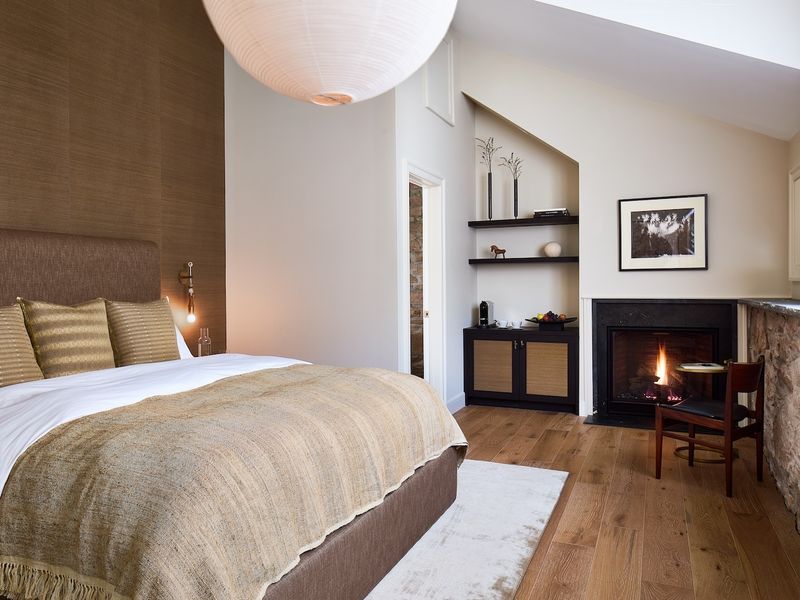
After dessert, overnight guests have the rare luxury of walking a few steps instead of starting a long drive home. The Stockton Inn contains only nine rooms and suites, divided among the original inn and two neighboring carriage houses.
That limited scale keeps the experience personal and makes the property feel more like a private riverside retreat than a conventional hotel. The rooms combine historical details with comforts that travelers in 1710 could not have imagined.
King-size beds are dressed in fine Matouk linens, bathrooms feature marble finishes, and gas fireplaces add warmth without requiring anyone to manage logs at midnight. Individual layouts and decorative choices prevent the accommodations from feeling like nine copies of the same room.
Rooms in the carriage houses offer their own advantages, including high ceilings and, in select accommodations, deep soaking tubs. Larger suites add separate living and dining areas, providing enough space to settle in for more than one evening.
Thoughtful arrival treats, such as freshly made potato chips with house-made onion dip, reflect the same attention to food that defines the restaurant downstairs. The inn’s location helps turn a reservation into a full weekend.
It sits at One Main Street in Stockton, close to the Delaware River and only a short drive from Lambertville and New Hope.
Guests can spend the afternoon browsing galleries and antique shops, walking along the canal towpath, or crossing between New Jersey and Pennsylvania before returning for dinner.
Still, the most appealing part may be the slower rhythm after the meal. There is no check to split quickly before a long ride and no need to rush the final drink.
Dinner can stretch naturally into an evening by the fire, followed by a quiet room in one of New Jersey’s oldest hospitality landmarks. Three centuries after the property first took shape, the Stockton Inn once again gives travelers an excellent reason to stay the night.