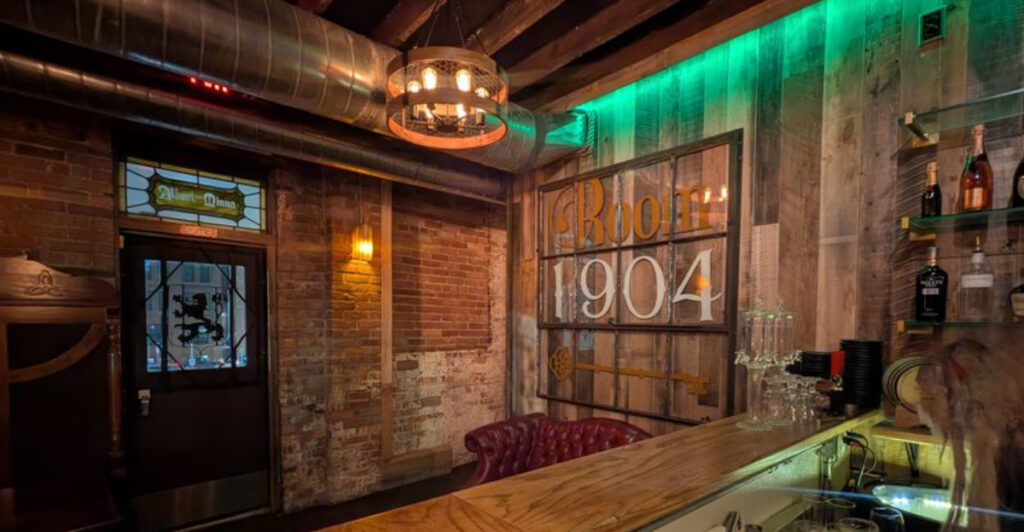
Old-world character feels especially memorable when it is surrounded by a city that keeps changing. In Detroit, Michigan, Jacoby’s German Biergarten brings that contrast to life with hearty comfort food, a long beer list, cozy rooms, and the kind of historic setting that seems built for stories.
The appeal goes beyond lunch or dinner because the place feels tied to Detroit’s past without feeling frozen there. It is warm, distinctive, and full of personality, giving diners a meal that comes with atmosphere built in.
For anyone who likes Michigan restaurants with classic flavors, local history, and real staying power, Jacoby’s deserves a closer look.
Old Detroit Character Packed Into One Small Building
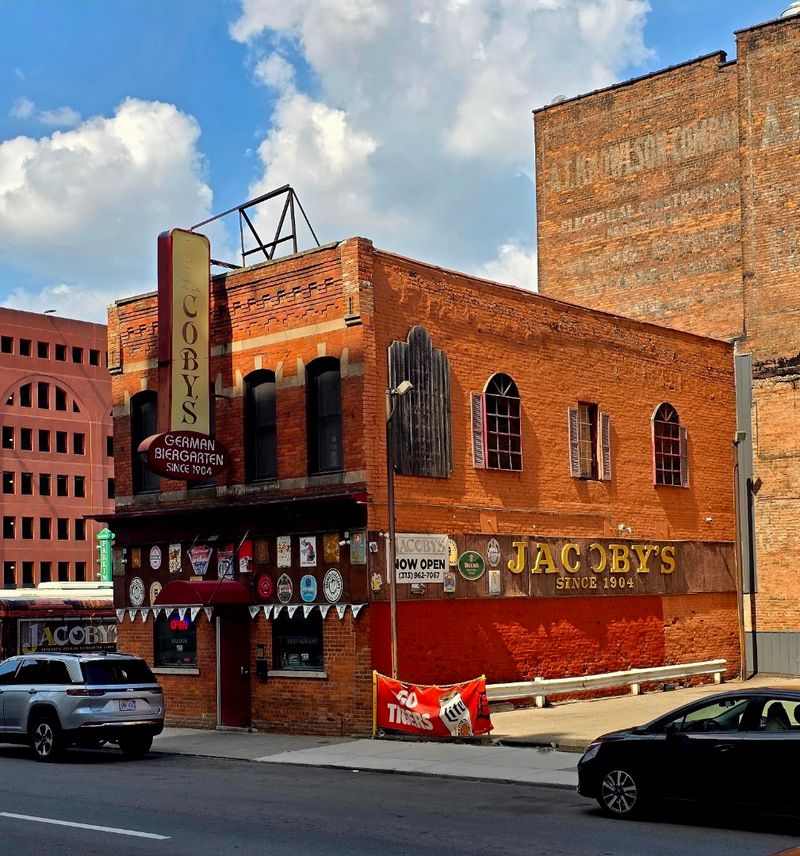
Some restaurants try to create history with clever decor. Jacoby’s does not need to fake it.
The building already carries that older Detroit look, with a narrow footprint, dark wood, and the kind of worn-in charm that only comes from years of use.
That compact layout shapes the whole visit. Seating can fill up fast, especially later in the day, and the close quarters make the room buzz in a way that feels lively rather than polished.
Instead of oversized dining rooms and trendy staging, the space leans into a pub style that suits the neighborhood and the menu.
Small details add to the effect. Low ceilings in parts of the building, old bar character, and a slightly tucked-away entrance all help Jacoby’s stand apart from modern restaurant boxes.
It looks like a place that has watched downtown Detroit change around it, then kept pouring drinks and sending out hot plates anyway.
That visual identity matters because comfort food lands differently in a room with some age on it. A schnitzel, pretzel, or plate of spaetzle makes more sense in a setting that feels rooted and unfussy.
The place does not chase sleek design trends, and that choice works in its favor.
For readers who love restaurant spaces with personality, Jacoby’s offers a strong opening impression before the first bite even hits the table. It is cozy, a little tight when busy, and full of visual texture.
In a downtown area with plenty of newer options, that older building gives the meal a deeper sense of place and helps explain why this restaurant still draws attention after so many years.
A Michigan Dining Landmark With More Than A Passing Story
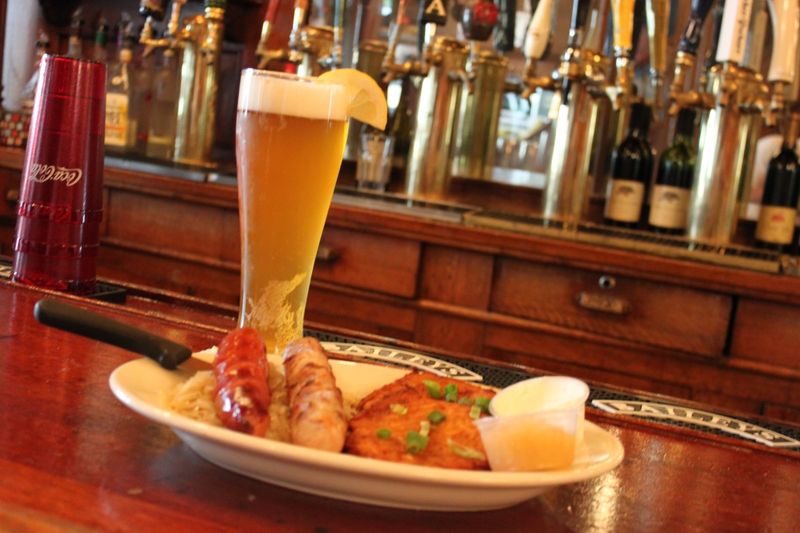
Long-running restaurants do more than feed people. They become part of a city’s rhythm, and Jacoby’s has that kind of role in downtown Detroit.
The restaurant is widely noted for operating since 1904, which gives it a rare kind of staying power in a business where many places vanish quickly.
That date matters, but the bigger story is endurance. Detroit has gone through wave after wave of change, and a place like Jacoby’s helps show that local dining history is not only found in museums or plaques.
Sometimes it is sitting at a wooden bar, ordering a draft beer, and watching a restaurant continue the same basic job across generations.
The German biergarten identity also adds a layer of continuity. Jacoby’s is not pretending to be a generic sports bar or a polished dining room that could exist anywhere.
Its old-world food and beer focus give it a clearer identity, which likely helps explain why it remains recognizable in a crowded city food scene.
Readers should also keep expectations realistic. Historic does not always mean grand or formal.
Here, history appears in a humbler way, through the building, the layout, the long-running bar culture, and a menu that favors hearty, familiar dishes over delicate showpieces. That makes the story easier to connect with.
One useful way to enjoy Jacoby’s is to think of it as a living Detroit institution, not a staged attraction. It is a functioning restaurant first.
The history becomes richer because it is still active, still serving, and still part of ordinary city life. In Michigan, that kind of survival gives Jacoby’s a special place among restaurants that have outlasted changing tastes, changing neighborhoods, and changing times.
Schnitzel, Pretzels, And Other Plates Built For Comfort
Cold weather, a long workday, or a busy downtown outing can all lead to the same craving: food that is warm, filling, and easy to love. Jacoby’s understands that craving well.
The menu centers on hearty German-inspired fare and pub-friendly favorites that match the building’s old-school mood.
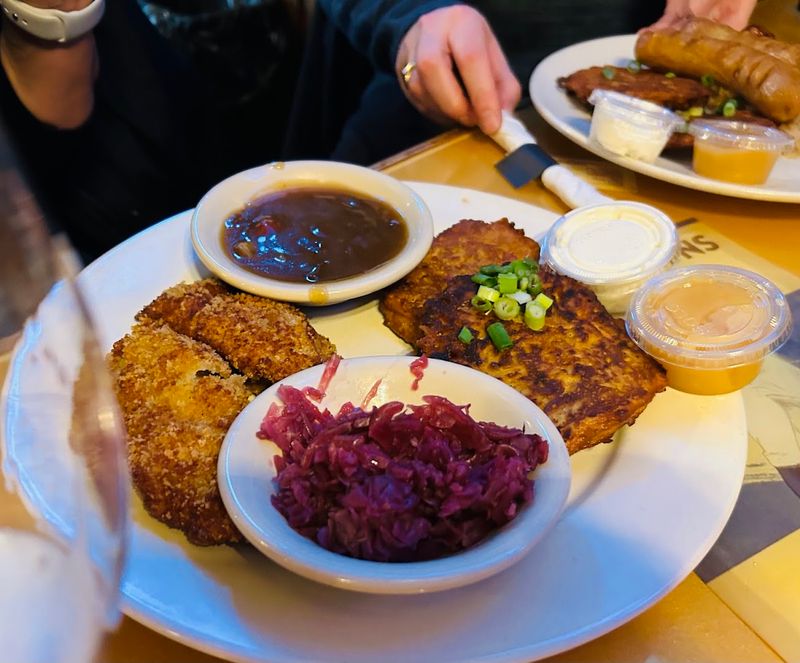
Schnitzel is one of the clearest examples. Crisp breading, rich sauces, and sturdy side dishes make it the kind of meal that arrives with real weight on the plate.
Red cabbage, spaetzle, pretzels, potato pancakes, and sausage help round out the experience, giving diners several ways to build a meal that feels substantial rather than trendy.
That does not mean every dish aims for strict Old World tradition. Jacoby’s appears to serve its own American-German mix, which is useful to know before ordering.
Going in with that expectation helps diners enjoy the restaurant for what it does best: satisfying comfort food in generous portions, served in a pub setting where a little richness makes perfect sense.
A smart plan is to order with the table in mind. Pretzels, fried pickle spears, or another shareable starter can keep everyone happy while drinks arrive, and then each person can settle into a larger entree.
The menu seems especially well suited to groups with different tastes, since one person can lean classic while another chooses something more familiar, like a burger or sandwich.
Jacoby’s food works best when approached as sturdy, warming fare rather than delicate destination cuisine. That is part of the appeal.
In a city full of restaurants trying to reinvent comfort food, this spot stays closer to the basic promise of a historic pub meal: crispy, savory, filling plates that pair well with beer and send people back into Detroit feeling fully fed.
The Beer List Gives The Room Its Pub Pulse
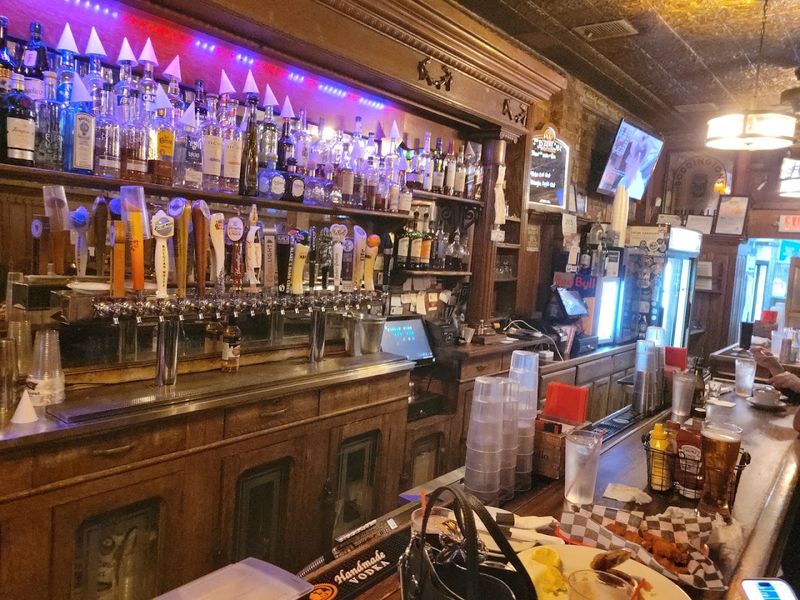
A German biergarten without a serious beer program would miss the point, and Jacoby’s seems to understand that from the start. The bar is a major part of the identity here.
Imported options, draft choices, and a broad list help shape the place as much as the menu does.
That focus changes the rhythm of the room. Some diners come for a full meal, while others might stop in mainly for drinks and a snack.
Because of that, Jacoby’s reads as both restaurant and long-running pub, which gives it more energy than a standard sit-down spot with a few beers added as an afterthought.
The beer selection also supports the food in a practical way. Crisp schnitzel, salty pretzels, sausage, and cabbage all pair well with a cold pour, and the menu makes more sense when viewed through that partnership.
Readers who like matching food and drink can have fun here without needing expert-level beer knowledge. Choosing a classic style and ordering one or two of the more traditional plates is a simple path to a strong experience.
There is also a social side to a place like this. A busy bar naturally creates conversation, movement, and a little waiting when the room fills.
That can slow service at peak times, but it also tells you the place is functioning like an actual neighborhood pub instead of a carefully controlled showroom.
For anyone planning a visit, the best approach is patience and curiosity. Ask for a recommendation if the list seems long, keep the order straightforward if the bar is busy, and settle into the setting.
Jacoby’s beer program is not a side note. It is one of the main reasons the restaurant holds together so well as an old Detroit hangout with German roots and a clear sense of purpose.
An Upstairs Surprise Adds Another Layer To The Experience
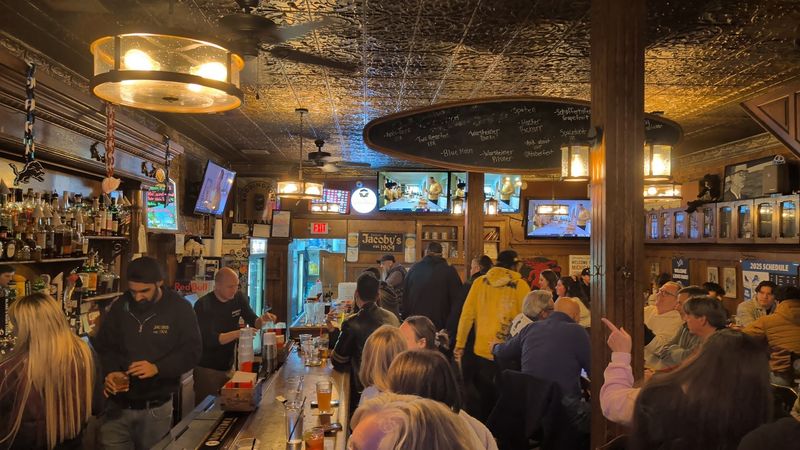
Not every restaurant gives diners a reason to stay curious after the main meal arrives. Jacoby’s does, thanks to an upstairs area that adds a bit of mystery to the visit.
That extra level gives the place more texture than its modest size first suggests.
In a downtown restaurant packed into a compact historic building, vertical space matters. A second area upstairs changes how the property works, turning Jacoby’s from a simple one-room stop into a place with a little discovery built in.
It creates the sense that the building has been adapted over time, with each level carrying its own mood.
That hidden-away quality fits the restaurant’s age and personality. Newer places often show everything at once.
Jacoby’s unfolds in pieces instead. You notice the bar, the tight seating, the old structure, then learn there is more tucked above.
It is a small detail, but it gives the visit movement and keeps the setting from feeling one-note.
For travelers or first-time diners, that means Jacoby’s rewards a slower pace. Rather than rushing through an order and leaving, it makes sense to look around, take in the building, and ask about the full layout if the staff has time.
Spots with history often reveal themselves in stages, and this one appears to do exactly that.
The upstairs feature also helps explain why Jacoby’s stays interesting even for people who already know downtown Detroit well. A historic restaurant needs more than age to remain compelling.
It needs corners, stories, and physical quirks that break up the routine. Here, one of those quirks is simply the chance to realize the building offers more than the first room suggests.
That extra layer gives Jacoby’s a stronger identity and turns an ordinary meal into a more memorable city stop without relying on flashy gimmicks or loud reinvention.
How To Time A Visit Without Fighting The Rush
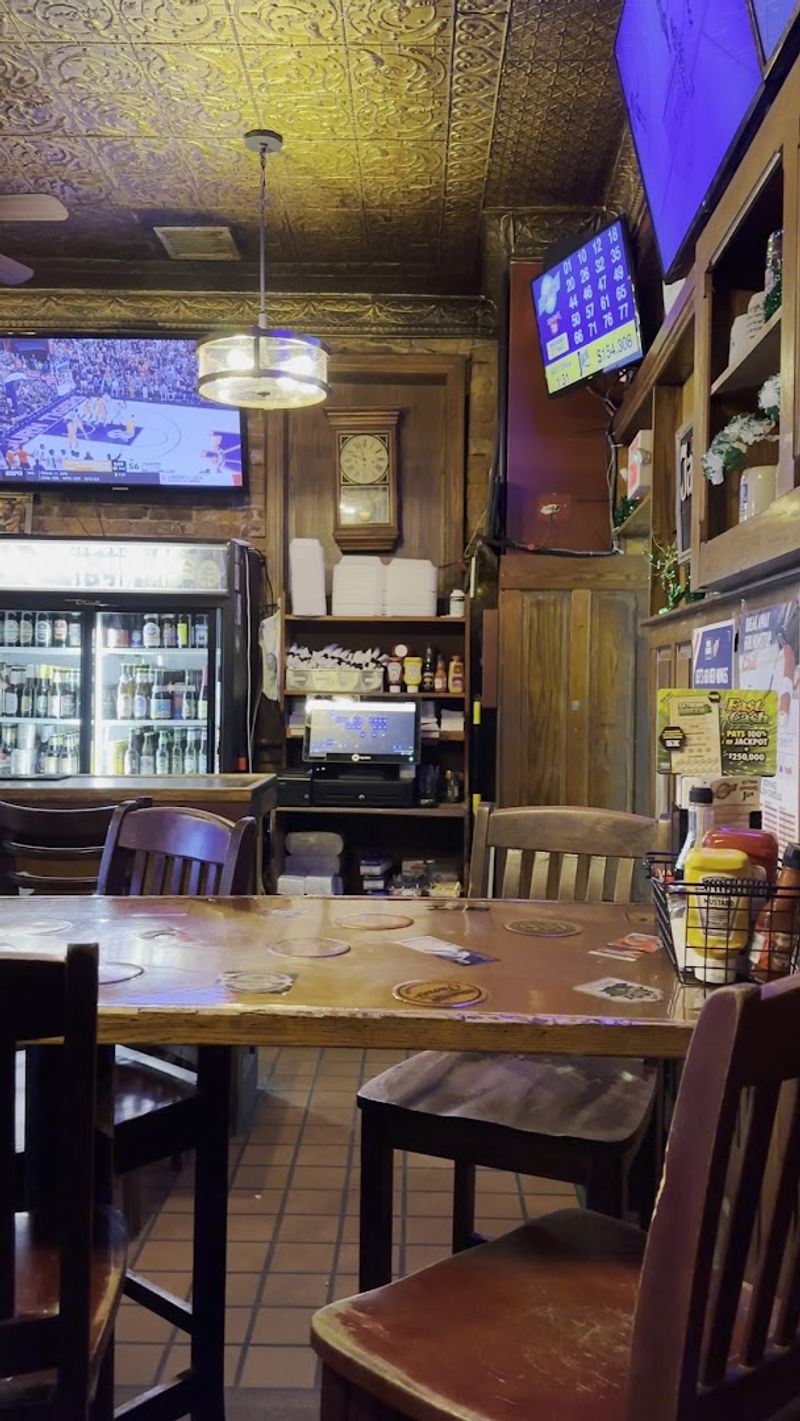
Timing can shape a Jacoby’s visit almost as much as the order itself. The restaurant opens at noon and stays open late every day, which gives it unusual flexibility for downtown dining.
Lunch, afternoon drinks, dinner, and late-night food all fit the schedule.
Because the building is not large, busy periods can change the experience quickly. A quieter midday visit is likely the easiest option for readers who want time to study the menu, notice the building, and enjoy a calmer pace.
Evening hours can bring more energy, but they may also mean tighter seating and slower service while staff juggle a fuller room.
That trade-off is not necessarily bad. It just depends on the goal.
If the point is a relaxed meal with easy conversation, arriving earlier makes sense. If the goal is a livelier bar scene with the pub side of Jacoby’s in full swing, later hours may be more rewarding.
Matching the visit to the mood is the smartest move.
There are also practical details to consider beyond the clock. The historic setup includes stairs and tight spaces, so accessibility may be limited for some diners.
Parking downtown can vary by day and event traffic, so building in extra time helps. Jacoby’s also sits in a central area, which makes it a useful stop before or after other plans in the city.
A good first visit is simple: show up a little before the main rush, order one signature plate and one shareable item, then leave enough room to enjoy the bar program without feeling hurried. That approach lets the restaurant reveal its strengths in the best order.
Jacoby’s works well as both a destination and a convenient downtown stop, but planning ahead can make the difference between a cramped scramble and a satisfying meal in one of Detroit’s most character-filled dining rooms.
Why Jacoby’s Still Matters In Michigan’s Restaurant Landscape
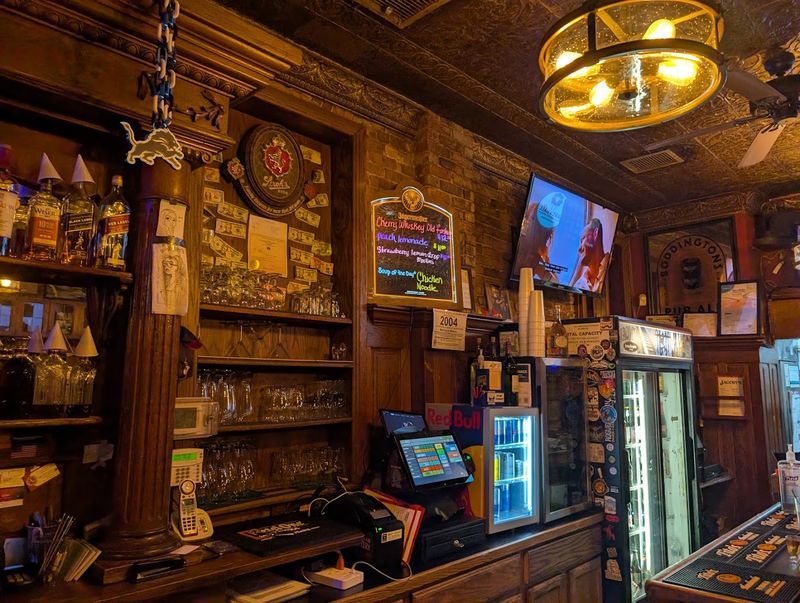
Plenty of restaurants serve comfort food. Fewer can connect that comfort to a real sense of place.
Jacoby’s stands out because it ties together history, downtown location, hearty German-inspired dishes, and a pub culture that still fits modern Detroit without sanding off its rougher edges.
That combination gives the restaurant broader meaning in Michigan dining. It is not only about one good plate of schnitzel or one long beer list.
It is about the value of places that keep their identity over time. In a food scene that often rewards novelty, Jacoby’s shows the strength of staying recognizable.
The setting plays a big role in that. A narrow historic building, older interior details, and a compact room all shape the meal into something more specific than dinner at a generic chain or polished downtown concept.
Add the German biergarten angle, and the place becomes even more distinct within the city.
Food is the anchor that keeps the history from turning into nostalgia alone. Comfort dishes, pub staples, and beer-friendly plates make the experience approachable for many kinds of diners.
Someone who knows German food can find familiar territory, while someone who simply wants a filling meal before a night out can enjoy the same room for different reasons.
Jacoby’s also reflects a useful truth about historic restaurants: survival matters, but continued relevance matters more. A place can be old and still feel stale.
Jacoby’s seems to avoid that trap by staying active as a working downtown spot, not a preserved curiosity. For readers searching for a Michigan restaurant with age, flavor, and a strong physical presence, this address earns attention.
It captures a version of Detroit that is sturdy, social, and proudly unpolished, which makes the meal more than just satisfying. It turns lunch or dinner into contact with a city that still knows how to keep its classic places alive.