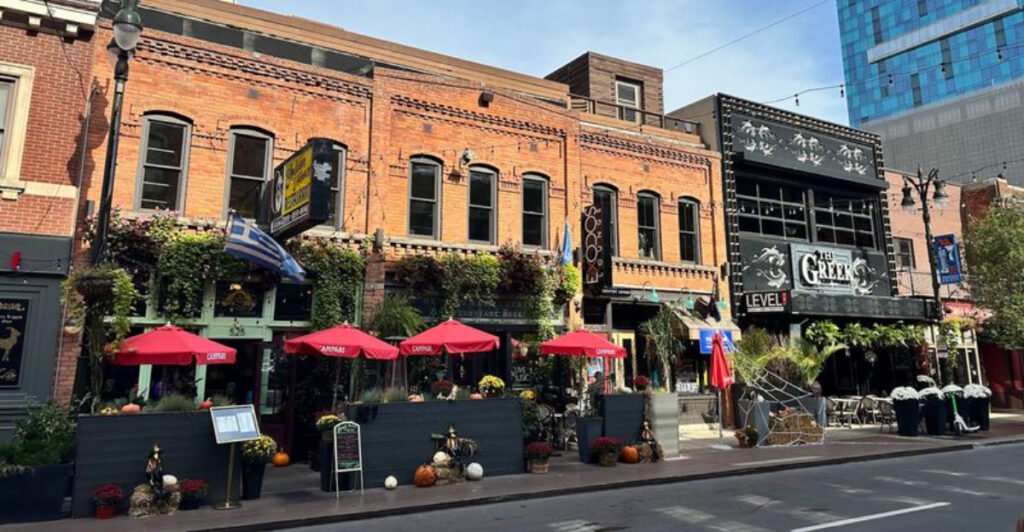
Greektown may be small, but it carries a story much bigger than its footprint. Near downtown Detroit, this lively district blends city energy with generations of Greek heritage, giving visitors streets, signs, restaurants, landmarks, and old neighborhood character that still feel easy to notice on foot.
The appeal is not just food or nightlife, but the way culture has shaped the area’s identity for decades. A walk through Greektown feels fun, familiar, and full of history at the same time.
For anyone looking to understand Detroit through one of its most recognizable neighborhoods, this Michigan district is worth slowing down for.
Monroe Avenue Sets the Scene
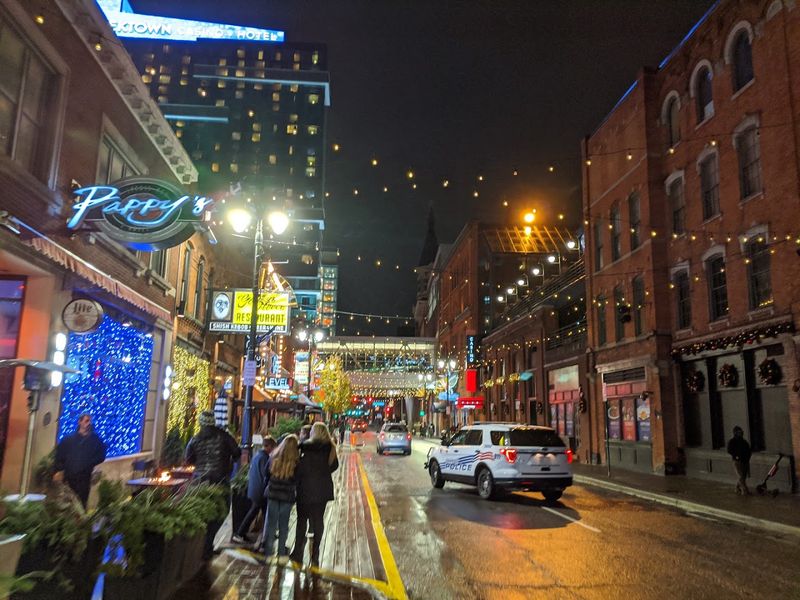
The first thing many notice is how concentrated everything feels. Monroe Avenue pulls the neighborhood together with a stretch of restaurants, storefronts, lighting, and downtown movement that quickly signals you are somewhere with a strong identity.
Buildings sit close to the street, so details are easy to catch without much effort. Bright signs, outdoor seating, and decorative touches give the block a lively look, while the surrounding downtown towers remind you that Greektown has always lived side by side with the larger city.
That setting matters because the neighborhood is not separated from Detroit. Instead, it fits right into the heart of the city, which helps explain why Greektown became both a gathering place and a destination for people coming in from other parts of town.
Walking here works better than rushing through by car. Sidewalk pace lets you notice window displays, hear music spilling out from doorways, and spot how old and new elements share the same few blocks.
Some streets feel polished and fast, but Greektown still shows layers. Commercial energy is obvious, yet the district also carries the look of a place shaped over time, where family businesses, changing crowds, and city growth all left visible marks.
For first-time visitors, Monroe Avenue is the best starting point because it introduces the neighborhood in a simple way. One short walk can reveal its scale, its rhythm, and the basic reason it stands apart from nearby downtown streets.
Come with comfortable shoes and a little patience. Greektown is most interesting when each block is taken slowly, with enough time to look up at building fronts, glance into shops, and watch the street shift as daylight fades and the lights begin to glow.
A Greek Food Tradition That Still Draws Crowds
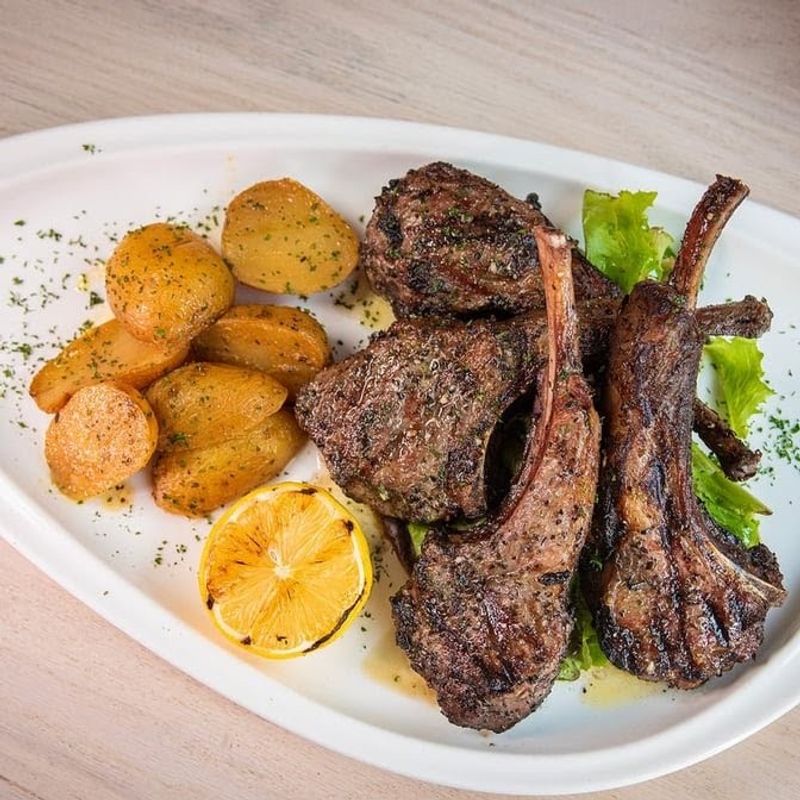
Nothing explains Greektown faster than the food. Plates of grilled meats, warm pita, salads, pastries, and other Greek favorites have long been one of the clearest ways the neighborhood shares its heritage with the wider city.
Meals here are not only about filling up before a game or concert downtown. They connect today’s diners with customs that traveled across the ocean, settled in Detroit, and kept going through family recipes, familiar ingredients, and restaurant traditions that still shape the district.
One of the easiest ways to experience the area is to order a mix instead of sticking to one item. Sharing a table with several dishes gives a fuller picture of flavor, from bright lemon notes and herbs to rich baked desserts and savory roasted meats.
Greektown dining also has a social quality that matches the neighborhood itself. Restaurants often spill energy onto the sidewalk, and even a quick meal can feel tied to the motion of the street rather than hidden away from it.
For families or first-time visitors, lunch can be a smart choice. The pace is often simpler to manage than late evening, and daylight makes it easier to notice architecture and street details before or after sitting down to eat.
Those wanting the full sensory effect may prefer dinner, when lights come on and the district becomes more theatrical. Clinking dishes, passing servers, and packed tables add momentum, turning food into part of a larger neighborhood scene.
Either way, the meals matter because they keep Greek identity visible and everyday. A district can preserve history through buildings and signs, but food lets people taste that history directly, one bite at a time, in the middle of modern Detroit.
Old Roots Beneath the Entertainment Glow
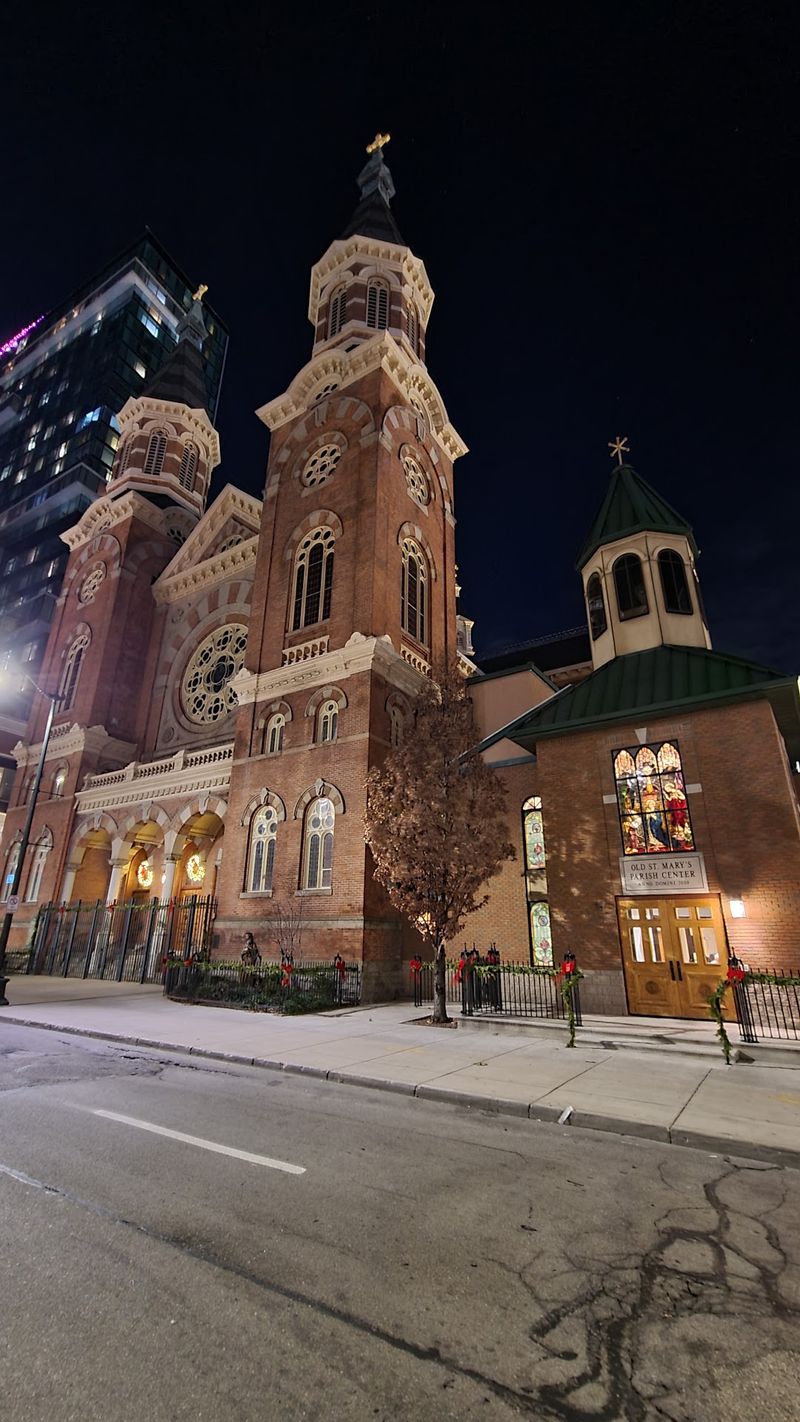
At a glance, Greektown can seem built mostly for nightlife and quick excitement. Spend a little more time there, though, and the deeper story comes into focus, showing a neighborhood shaped by immigration, business, faith, and steady community life.
Greek families helped establish a lasting presence in this part of Detroit, and that heritage still shows in the district name itself. While businesses and building uses have changed over time, the neighborhood remains linked to the people who helped define it.
That long arc is part of what makes Greektown interesting. It is not a museum district frozen in one period, but a working city area where culture has had to adapt while still holding onto visible traditions.
The entertainment side can make the area seem purely modern, yet the older brick facades and compact layout hint at earlier decades. Looking above ground-floor signs often reveals architectural clues that feel quieter than the street, but just as important.
History is easier to understand here when you imagine the neighborhood in layers. One layer is the immigrant story, another is the commercial district it became, and another is the version tied to downtown sports, tourism, and late-night traffic.
That layered identity helps explain why Greektown matters beyond a single meal or evening out. It represents a pattern found in many American cities, where ethnic communities built businesses, created gathering spaces, and left cultural marks that lasted even as the city changed around them.
A good visit includes both movement and pause. Walk the active blocks, then stop long enough to study the older building fronts and consider how many generations helped turn a few downtown streets into one of Detroit’s most recognized neighborhood names.
The People Mover Stop Makes Greektown Easy to Reach
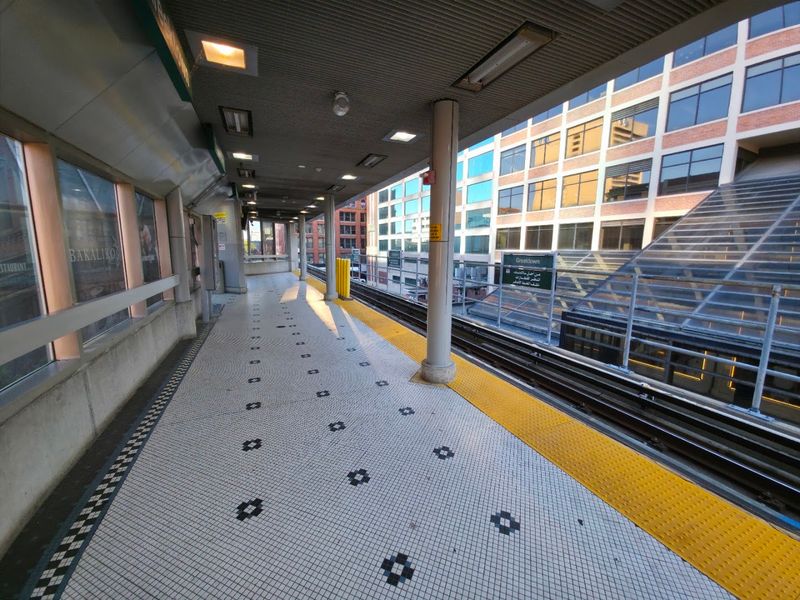
One practical detail changes the whole experience here. Greektown has its own stop on Detroit’s elevated People Mover, which gives the district a built-in connection to downtown and makes arriving part of the city experience instead of just a parking problem.
That transit link does more than move passengers from place to place. It reinforces Greektown’s role as a neighborhood woven into downtown Detroit, close to major attractions but still distinct enough to keep its own cultural identity.
For day trippers, the station can simplify planning. Riding in lets visitors avoid some of the stress that comes with busy event traffic, and it also creates a smoother route for pairing Greektown with other downtown stops.
The elevated view offers a useful perspective before you even step onto the street. From above, the compact layout is easier to understand, and the surrounding city grid shows how tightly Greektown fits into central Detroit.
Once off the train, the district is manageable on foot. That smaller scale is one of its strengths because it allows a flexible visit, whether the goal is a full dinner, a quick dessert stop, or an hour of casual wandering between other plans.
Families, visitors staying downtown, and anyone who prefers straightforward navigation can benefit most from using transit here. Instead of circling blocks looking for parking, the focus can stay on the neighborhood itself and the details that make it stand out.
Timing still matters. If a major game, concert, or weekend evening crowd is expected, give yourself extra time and be ready for a busier platform and sidewalks, since Greektown often becomes part of a bigger downtown flow.
Even so, the station remains one of the district’s smartest features. It makes a heritage neighborhood more accessible, more visible, and easier to enjoy without turning the trip into a complicated city puzzle.
Where Detroit, Michigan Keeps Greek Identity in Public View
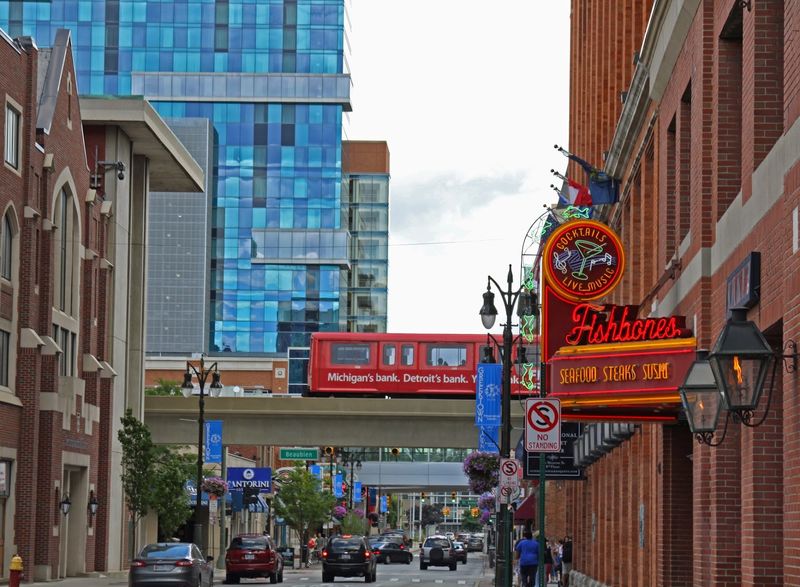
Culture in Greektown is not tucked behind one door. It appears out in public, where signs, business names, decorative touches, and shared street life help keep Greek identity visible in a very direct, everyday way.
That visibility matters because neighborhoods hold onto heritage best when it can be seen by anyone walking through. In Greektown, Greek influence is not limited to special events or private gatherings, but woven into the look and function of the district itself.
Street-level details do a lot of the work. A name over a doorway, a menu posted outside, or a design choice tied to Greek themes can quickly teach visitors what kind of place they are entering, even if they know little about the area beforehand.
Public identity also helps the neighborhood stay legible inside a busy downtown. Without those markers, the district could blur into nearby commercial streets, but the repeated visual cues give Greektown a clear character that holds together block after block.
For younger visitors, this can be an easy lesson in how culture shapes a city. Heritage is not only found in textbooks, formal museums, or old photos.
It can live in active businesses, street design, and the daily routine of people meeting, eating, and moving through a neighborhood.
That is one reason Greektown remains significant even as Detroit continues changing. The area shows how an ethnic community can leave a lasting public signature that survives new development, new crowds, and changing entertainment trends.
Seeing the district in daylight can make these details easier to study. Night adds energy, but daytime reveals signage, building materials, and layout with more clarity, which helps visitors understand the neighborhood beyond its restaurant scene.
Greektown works well as both a cultural stop and an urban lesson. A short walk here shows how a community can claim space, express identity, and keep that identity visible in the center of a major American city.
Best Times to Wander, Eat, and Look Around
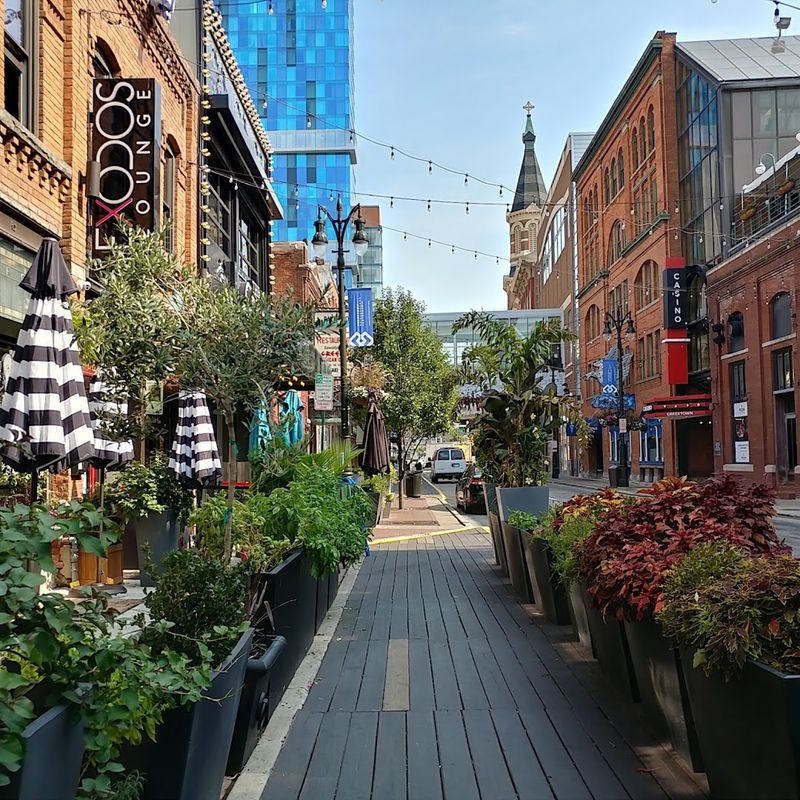
Greektown changes character depending on the hour, so timing shapes the visit more than many people expect. The same block can read as a relaxed place for lunch in the daytime and a louder entertainment corridor after dark.
Morning and early afternoon are useful for travelers who want to look closely at the neighborhood itself. Sidewalks are easier to navigate, building details stand out better, and it is simpler to notice how the district fits into downtown Detroit.
Lunch also works well for families or anyone hoping for a calmer meal. The pace is usually more manageable than peak evening hours, which leaves more room to enjoy the food and the streets without feeling rushed by the crowd around you.
Late afternoon offers a nice middle ground. Light is still strong enough for photos and architecture, but the district starts building energy as restaurants fill and downtown movement increases.
By evening, Greektown leans into its entertainment side. Lights reflect off windows, sidewalks get denser, and the whole neighborhood becomes more active, especially when sports events, concerts, or weekend plans add extra traffic nearby.
That busier period can be exciting if the goal is atmosphere and action. It is a good fit for visitors who want dinner in a lively setting and do not mind waiting a bit longer, moving with bigger crowds, or hearing a steady stream of street noise.
Practical planning can make the experience smoother. Comfortable shoes, a flexible meal time, and awareness of downtown event schedules help far more than complicated strategies, since the district is compact and easy to cover once you arrive.
For many people, the smartest approach is simple: come before the biggest rush, walk the blocks in daylight, then stay long enough to watch the neighborhood switch on for the night. That sequence shows Greektown at two very different, equally useful speeds.
Why Greektown Still Matters to Detroit
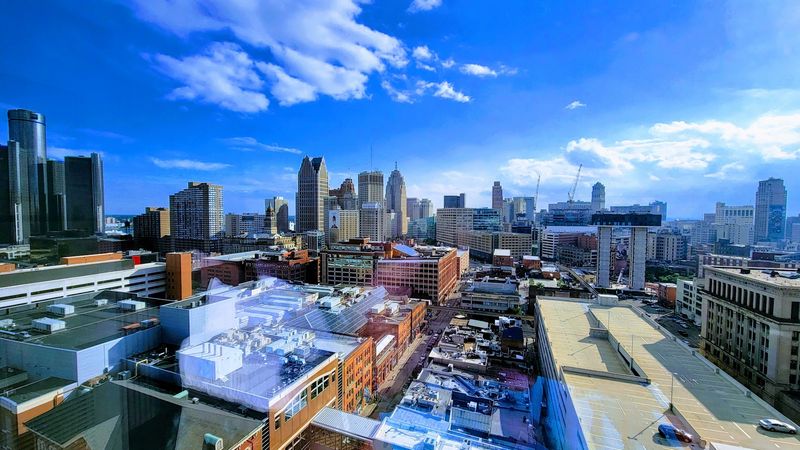
Some neighborhoods stay relevant because they never stop changing, yet they refuse to lose their original identity. Greektown is one of those places, holding onto Greek heritage while continuing to function as a busy district in the center of Detroit.
Its importance goes beyond entertainment. The neighborhood tells a larger city story about immigration, entrepreneurship, public culture, and the way a community can shape a recognizable place that lasts through different eras.
That staying power is not abstract. It shows up in the district name, in the restaurants that keep Greek food central to the experience, and in the simple fact that people still use Greektown as a destination with a clear personality instead of just another downtown block.
Greektown also offers something cities need: contrast. In a modern downtown filled with offices, arenas, traffic patterns, and redevelopment, this neighborhood adds a cultural layer that breaks up the sameness and gives the city a more textured identity.
For locals, that can mean a familiar place to gather before larger downtown plans. For visitors, it often becomes an easy entry point into Detroit because the district is compact, active, and visually clear about what it represents.
The neighborhood is especially meaningful for younger generations who may know Greek heritage only in broad terms. Here, that heritage is not distant or formal.
It is visible in business life, public space, and the ongoing habits of a city district still doing its job.
Greektown matters because it keeps culture in circulation. Rather than preserving identity behind glass, it lets history mix with dinner service, transit stops, street traffic, and the ordinary pace of urban life.
That mix is why the neighborhood stands out. Detroit’s Greektown is not only a place to pass through for a meal or a night out. It remains a living example of how generations can leave a mark strong enough for an entire city to recognize.