Colorado’s wide-open plains hold stories that deserve far more attention than they receive. Among them is Dearfield, the remarkable former Black homesteading colony founded in the early 1900s with the vision of creating opportunity, independence, and a thriving agricultural community.
Although only a handful of weathered buildings remain today, the site stands as a powerful reminder of the determination, resilience, and ambition of the families who called it home. Visiting Dearfield offers a chance to connect with one of Colorado’s most important yet often overlooked chapters of history, where the echoes of an extraordinary community still linger across the prairie.
Where the Plains Swallow the Past
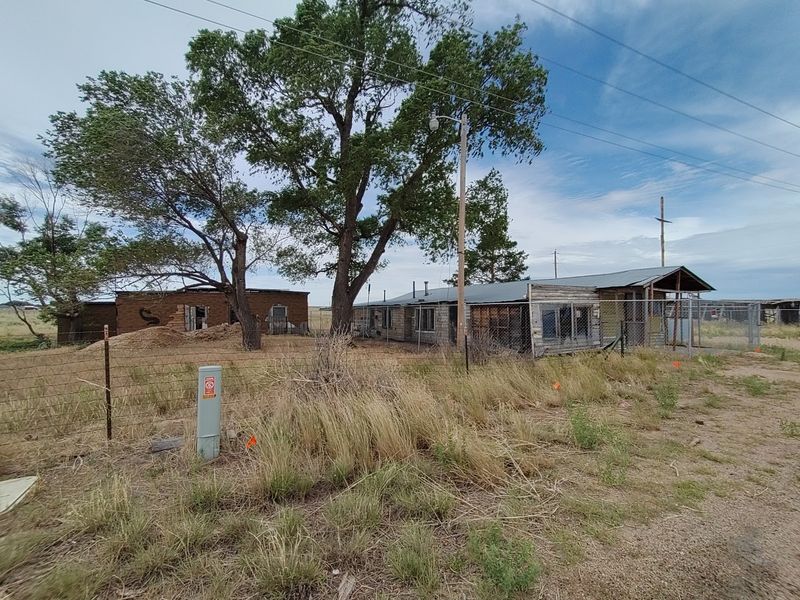
The first surprise at Dearfield is how small it looks against the land around it. The plains stretch so far in every direction that the remaining buildings seem almost tucked into the horizon, as if the earth slowly tried to take them back.
That visual shock matters because Dearfield was once imagined as a place of growth, safety, and opportunity, not silence.
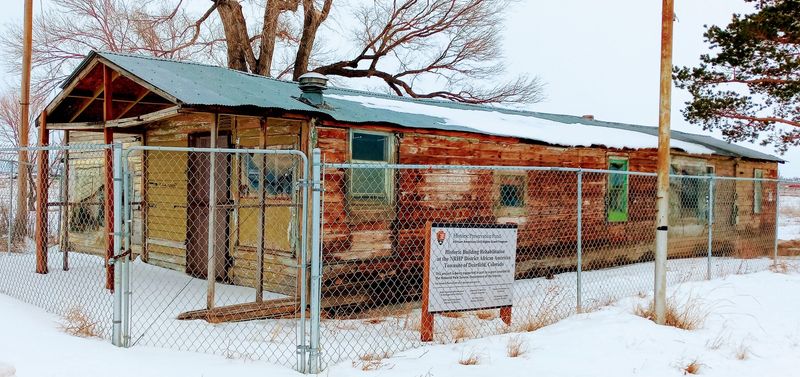
Today, only a few structures still stand near the roadside at 42468 US-34 in Orchard. Travelers often need to slow down and watch carefully, because the turn-ins can be easy to miss.
A place with such a major story now appears in fragments, and that contrast gives the site much of its emotional power.
Instead of busy streets or a preserved main square, there is open space, weather, and distance. Wind becomes part of the visit.
So do the fences, the rough ground, and the plain fact that this landmark is not polished into a tidy museum stop.
That plainness can be disappointing for anyone expecting a dramatic ghost town with lots to explore. Yet the stripped-down setting teaches something useful.
It shows how history is not always protected by grand buildings, and how communities can matter deeply even when only pieces remain.
Standing there, the eye starts filling in what is gone. Homes, farm plots, voices, wagons, children, and work all have to be imagined from a landscape that now offers very few clues.
Dearfield asks for patience rather than instant spectacle. For families, students, or road trippers, that is the best way to begin. Look slowly before reading too much into the ruins.
The land itself explains half the story, because the same wide plains that promised freedom also brought isolation, weather pressure, and the long challenge of survival.
A Bold Dream Built by Black Homesteaders
Dearfield did not begin as a sad ruin. It started as a bold answer to a hard question: where could Black families build security, own land, and shape community on their own terms in the early 1900s?
The colony grew from a vision tied to opportunity, self-determination, and the belief that farming could open a new future on Colorado land.
Historical accounts connect Dearfield closely with Oliver Toussaint Jackson, an important Black leader and entrepreneur in Colorado. He promoted the colony as a place where African Americans could claim homesteads and create a thriving rural town.
That mission gave Dearfield a meaning bigger than a single settlement, because it represented a chance to push back against limits placed on Black life in the United States.
At its height, Dearfield had homes, businesses, and a real social center. Families worked the land, raised crops, and built routines that turned open prairie into community.
Even if the exact numbers changed over time, the broader idea stayed clear: this was not an accident or a random camp, but a planned place with ambition.
That history matters because Black western stories are often left out of classroom lessons. Many students learn about homesteaders in a general way, then never hear how African American settlers also moved west, organized towns, and took enormous risks.
Dearfield helps correct that missing chapter. There is also a practical lesson hidden inside the story. Land ownership, local business, and neighbor support were not abstract goals.
They were tools for survival and dignity. So when looking at Dearfield now, it helps to picture purpose instead of only loss. The ruins make more sense after understanding the original dream.
What stands by the roadside is the remainder of a serious community effort, one built with courage on a tough piece of ground.
Three Buildings, Countless Missing Pages
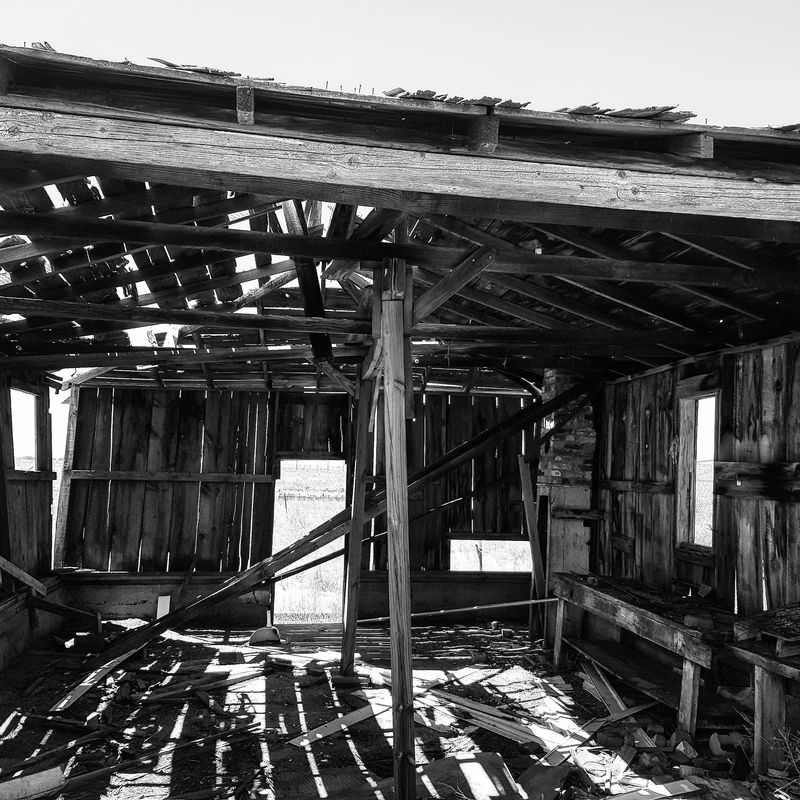
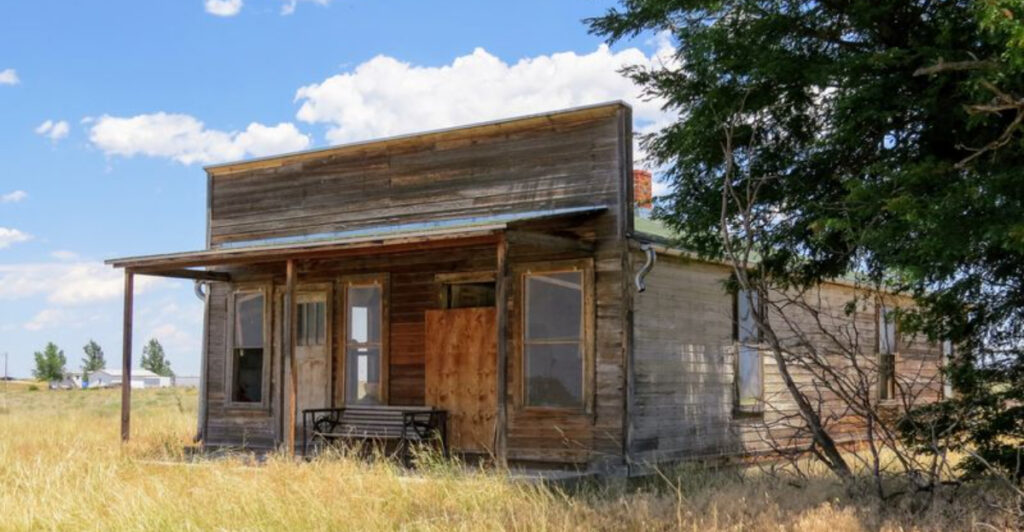
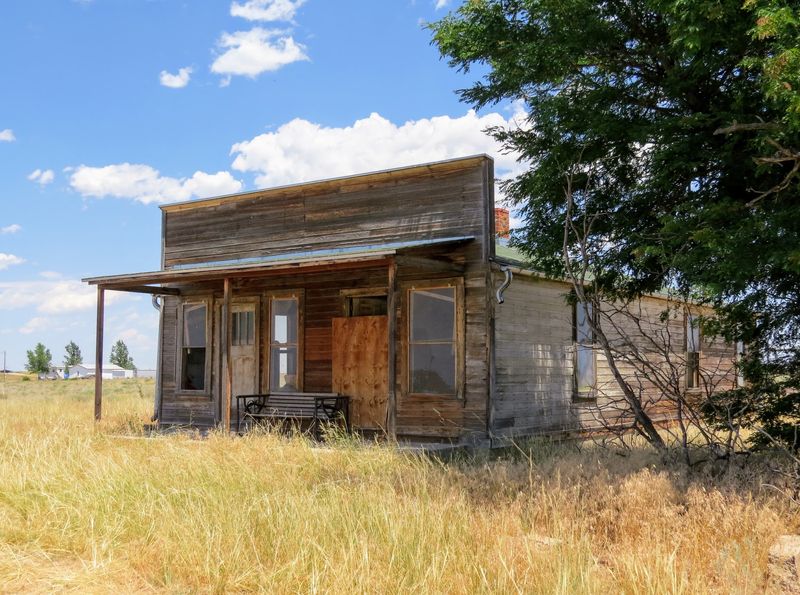
Ruins can be loud in a strange way, and Dearfield proves it. A few surviving buildings carry more questions than answers, because each wall hints at a fuller town that no longer stands.
With so little left, every beam, doorway, and patch of siding takes on extra weight. Only a small number of structures remain visible today, with some fenced for protection. That can make the site seem sparse at first glance.
Still, the condition of those buildings tells an honest story about time, weather, neglect, and the slow work of preservation. Instead of a neatly restored village, Dearfield shows history in a vulnerable state. Wood has sagged.
Rooflines have weakened. Openings, braces, and barriers remind you that saving an old settlement is not simple, cheap, or quick.
One useful way to approach the site is to study details instead of expecting scale. Notice how the buildings sit in the landscape.
Look at how exposure to sun, wind, and dry air shapes every surface. That close attention turns a short stop into a sharper lesson about why preservation matters.
The site also reveals how easy it is for important places to become unreadable without strong interpretation. When structures are crumbling and signs are limited, younger visitors may struggle to understand which building served what purpose or how the town once functioned.
That gap is not just about tourism. It is about historical access. Dearfield therefore works best when paired with a little background reading before arrival. A few facts can help the eye connect the ruins to lived experience.
Once that happens, the buildings stop looking like random leftovers and begin to feel like surviving pages from a book with most of its chapters torn away.
Seen that way, the fenced remains are not empty at all. They are evidence, and evidence deserves careful attention.
Colorado Wind, Drought, and the Hard Math of Survival
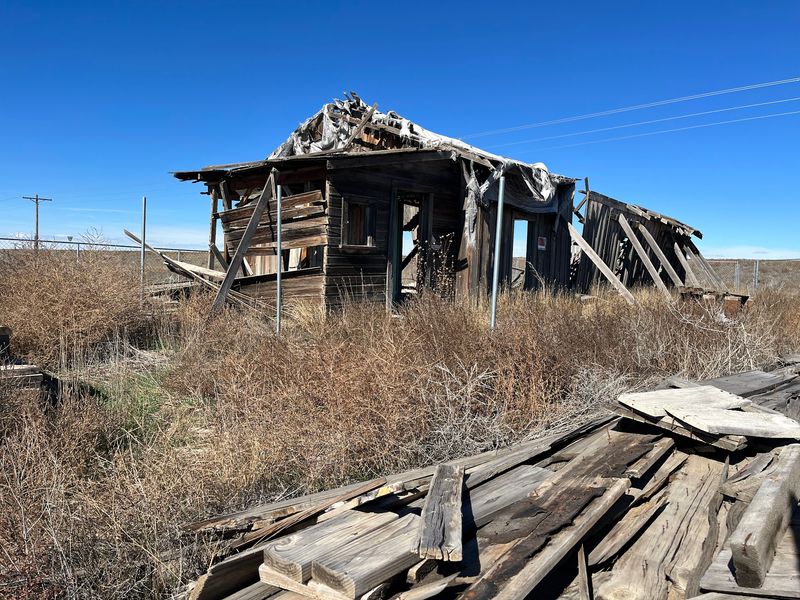
No town on the plains survives on hope alone. Dearfield faced the hard math of farming in a dry, demanding region where weather could change everything.
Rain mattered, crop success mattered, and distance from larger centers mattered too. That is one reason the story carries a haunted quality without needing any ghost tale. The land offered possibility, but it also demanded constant resilience.
In years of good production, a farming colony could grow stronger. In years of drought or economic stress, every weakness became harder to hide.
Dearfield is often linked in public memory with drought, the Great Depression, and Dust Bowl conditions that hit rural communities across the region. Those larger forces did not strike one town alone.
They punished farms across the plains, but isolated settlements had less room for error and fewer safety nets. Understanding that context keeps the story from turning into a simple rise-and-fall legend. The colony did not disappear because its people lacked effort.
Harsh climate, financial pressure, and changing opportunities all shaped its decline. That distinction matters, especially for young readers learning how environment and economics can push even determined communities to the edge.
The setting at Dearfield still helps explain the challenge. Sun beats down with little mercy in warm months, and the openness offers almost no shelter from weather. A quick roadside visit can make that clear in minutes.
For anyone stopping there, bring water, wear sun protection, and plan for a short outdoor experience rather than a long shaded stroll. Practical steps may seem small, but they connect modern visitors to an old truth: daily life on the plains depended on preparation.
Dearfield’s vanished streets make more sense when the environment is taken seriously. The same open country that promised land ownership also forced settlers into a constant negotiation with rain, soil, wind, and time.
The Silence Also Tells a Story
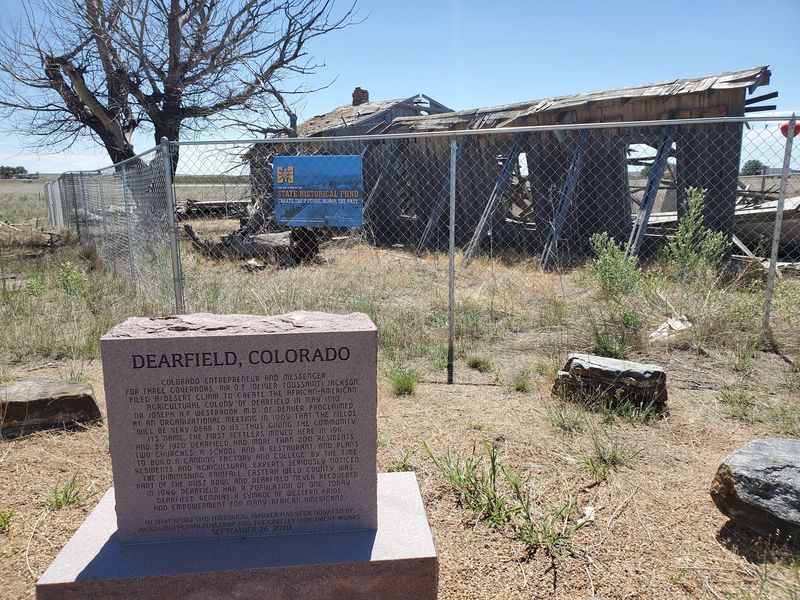
Some historic places impress with crowds, tours, and packed exhibits. Dearfield works the opposite way. Its silence does a lot of the talking, especially because the story it carries is about a Black community that should be better known than it is.
That quiet can feel heavy. For some visitors, the small number of surviving features may seem underwhelming. Yet the lack of a fully developed visitor experience points to a larger national pattern, where Black history sites have too often received less protection, less investment, and less public attention than they deserve.
Dearfield turns that pattern into something visible. The fading buildings are not only remnants of one colony. They also reflect how quickly a major chapter of African American western history can slip out of everyday awareness when preservation arrives late or in pieces.
There is a lesson here for parents and teachers. Young people often imagine history as a set of famous names and major landmarks already saved behind glass.
Dearfield shows that memory can be fragile. If communities do not keep telling certain stories, those stories can nearly vanish from the landscape.
Even the simplest parts of the site, such as a memorial marker or a brief stop by the roadside, can open important conversation. Who gets remembered?
Which towns are restored first? Why do some places become field-trip staples while others sit quietly near a highway?
Those questions give Dearfield real power. The site is not large, but it encourages active thinking instead of passive sightseeing.
It asks visitors to connect a local place in Colorado to bigger ideas about race, land, opportunity, and historical memory in the United States.
That makes the silence meaningful rather than empty. In a landscape with few structures left, the missing parts become part of the message.
Dearfield is not only about what once stood there. It is also about what a country chooses to preserve, and what it nearly forgets.
How to Visit Without Missing the Point
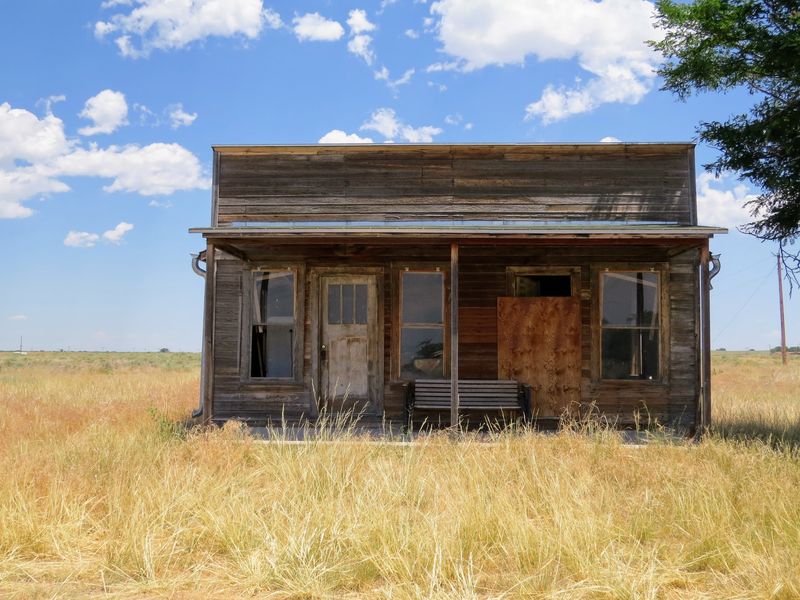
A rushed stop can flatten Dearfield into a quick photo and a shrug. The better approach is slower and more deliberate, because this is a place where context does most of the work. Visiting well means arriving ready to observe, read, and imagine rather than expecting a full-service attraction.
Start by planning the stop in daylight. The turn-ins near the site can be easy to miss, and the area is open, rural, and exposed.
Slowing down on US-34 and watching for markers helps avoid driving past the landmark, which has happened to more than a few travelers.
Once there, treat the ground and structures with care. Some buildings are fenced or stabilized, and those barriers should be respected. Preservation work exists to protect what remains, not to block curiosity.
Bring water, sun protection, and realistic expectations. There is not a large visitor center, and the experience is not built around long indoor browsing. Dearfield is closer to a reflective historical stop than a packed outing with lots of physical exploration.
A smart visit also begins before arrival. Reading a short history of the colony, or watching a credible documentary segment beforehand, can change the whole experience.
Without that background, the site may look too slight. With it, the remaining features become anchors for a much richer story.
Families can make the stop more engaging by asking simple questions on site. Where might homes have stood? What would daily travel and farm work have looked like here? How would weather shape every decision?
Those questions turn Dearfield from a pass-through landmark into an active learning stop. It is not a place for flashy entertainment.
It is a place for attention. The more thoughtfully it is visited, the more it gives back, especially to anyone willing to see beyond the small number of visible structures.
Why Dearfield Still Matters on the American Landscape
Not every landmark survives in grand shape, and Dearfield is a strong reminder of that truth. Its importance comes less from what still stands and more from what the place represents on the American landscape.
Here, a Black homesteading colony once claimed space, built community, and tried to secure a future through land and labor.
That story deserves attention far beyond northeastern Colorado. Dearfield helps widen the picture of the West, which is too often told through narrow myths that leave out African American builders, farmers, organizers, and dreamers.
A quiet site on the plains can challenge a whole set of assumptions about who shaped the region. The landmark also matters because preservation is still part of the story. Restoration efforts and historical recognition suggest that Dearfield is not only a chapter about disappearance.
It is also a chapter about recovery, stewardship, and the effort to keep a threatened legacy visible for future generations. There is something useful in that unfinished condition. Visitors do not receive a neat ending.
Instead, they see a place caught between loss and rescue, between erosion and care. That tension makes the site feel current rather than frozen in the past.
For students, Dearfield can sharpen discussions about migration, race, farming, environmental hardship, and how communities build power. For travelers, it offers a rare stop where a few surviving structures open into a much larger national history.
For Colorado, it remains one of the clearest physical reminders that Black western life was real, ambitious, and rooted in place.
Dearfield vanished in many ways, but it was never meaningless. The plains did not erase its importance. They simply made the work of remembering more urgent.
That is why the site stands out, even in its fragile state. Dearfield asks visitors to look past the missing town and see the lasting claim it made: Black history belongs fully in the story of the American West.
Share this story