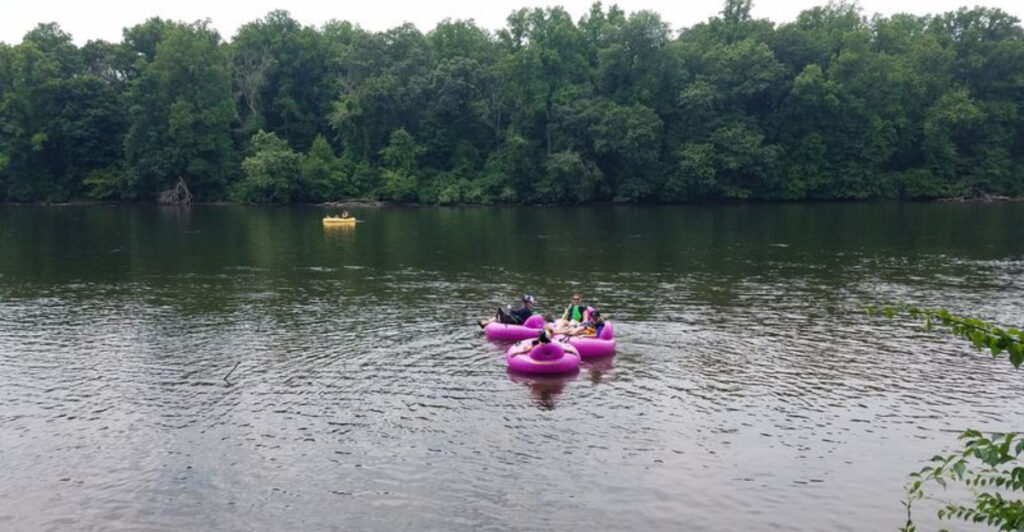
Your lunch vendor arrives by boat, your seat is an inflatable tube, and the Delaware River handles most of the transportation. That is a pretty strong setup for a summer afternoon.
Just south of Frenchtown, Big Bear Gear sends floaters on a five-mile trip past wooded islands, rocky cliffs, and a few gentle rapids that add some bounce without turning the day into a white-knuckle expedition. The current sets the pace, which can range from leisurely to surprisingly brisk depending on recent rain and river conditions.
You simply settle into your tube, keep your water shoes pointed downstream, and watch the Hunterdon County scenery slide by. It feels wonderfully removed from New Jersey traffic, packed shore towns, and overplanned weekends, yet the launch is easy to reach from much of the state.
For families, couples, and groups of friends, this is summer recreation stripped down to its best parts: cool water, fresh air, and nowhere else you need to be.
Meet Big Bear Gear River Tubing in Frenchtown
First, a useful bit of local geography: Big Bear Gear’s tubing operation is in Kingwood Township, even though navigation apps and local shorthand may identify the area as Frenchtown.
The tubing center sits at the Cooley Tract of the Delaware and Raritan Canal State Park along Route 29, about 1.8 miles south of Frenchtown and roughly 0.9 miles below the Kingwood boat launch.
Look for the yellow Big Bear Gear flags between mile markers 32.5 and 33. Do not accidentally drive to the company’s retail store in Lambertville, which is about 15 miles farther south.
Big Bear Gear even warns visitors against relying on Apple Maps for this particular trip because it may lead them to the store instead of the river center. Once you find the right place, the logistics are refreshingly simple.
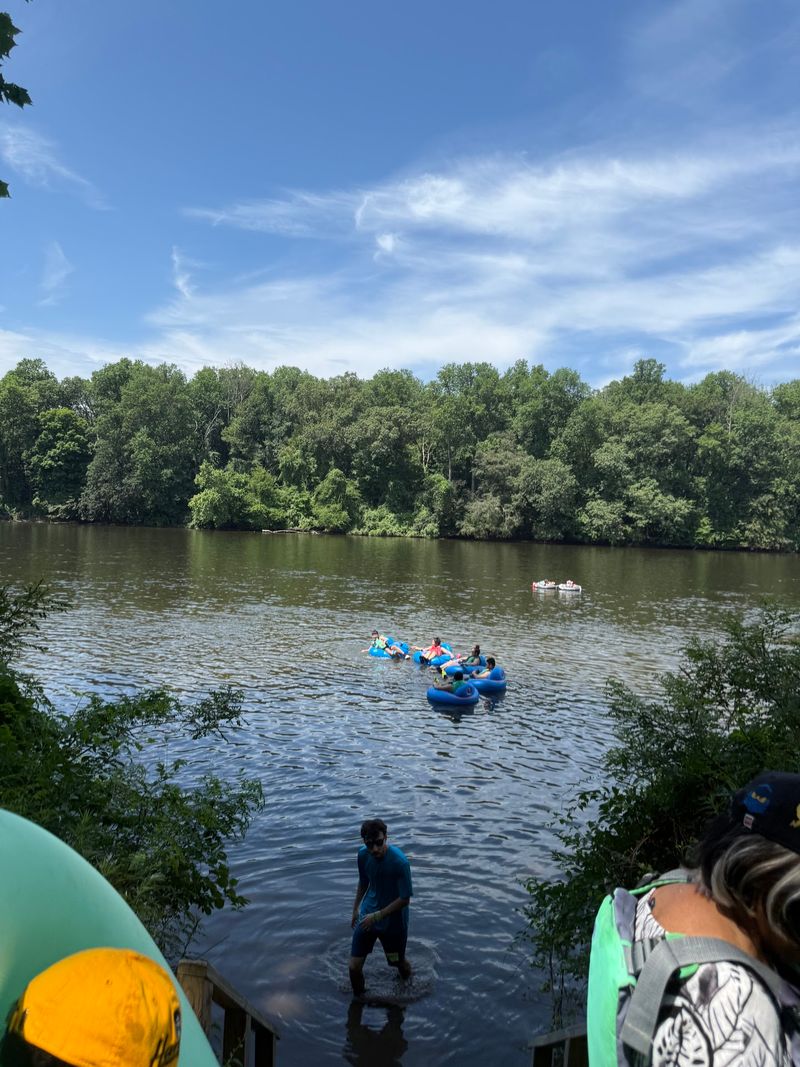
Check in, complete the required waiver, collect a Coast Guard-approved personal flotation device, and listen to the safety briefing. A shuttle then carries guests about half a mile to the launch, where waterfront staff distribute the tubes and help everyone enter from a path and set of stairs.
Big Bear Gear is the state-licensed tubing operator on this portion of the Delaware, so the trip has more structure than a do-it-yourself float. Staff members manage the launch and downstream exit, while a return shuttle brings everyone back to the parking area.
There are cabanas for changing into dry clothes afterward, a small but deeply appreciated detail once you have spent a few hours sitting at river level. The center generally operates seven days a week from Memorial Day through Labor Day.
Advance reservations are strongly recommended, especially on summer weekends; walk-ins may face a long wait, can receive only standard tubes, or may be turned away when the operation reaches capacity. The tubing center is also cashless, so bring a credit or debit card.
What to Expect From the Three-Hour Delaware River Float
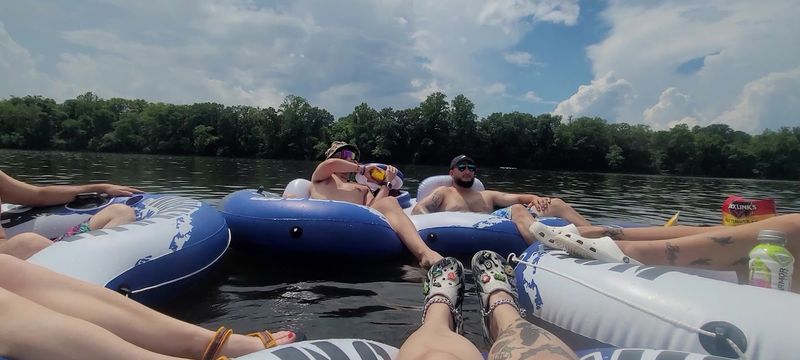
The first few minutes are mostly about learning that a tube has its own opinions. You may rotate toward Pennsylvania, drift sideways, or briefly face the friend floating behind you.
Once everyone stops fighting the current, the trip finds its rhythm. The full route covers approximately five miles, beginning along the New Jersey side of Marshall Island and Treasure Island.
After Treasure Island, the distinctive cliffs around Devil’s Tea Table appear on the New Jersey bank, and the river widens. The route continues past Wall’s Island and Prahl’s Island before opening again for the final stretch toward Point Pleasant, Pennsylvania.
Although three hours is a reasonable expectation, it is not a guaranteed runtime. Water level, current speed, wind, and time spent lingering can shorten the trip to around 90 minutes or stretch it beyond three hours.
Reservations are listed for up to four hours, but each rental covers one downstream journey rather than unlimited floating time. Most of the ride is easygoing, with a few Class I rapids along the way.
That is the mildest rapid classification, so expect ripples, splashes, and a little extra speed rather than churning whitewater. The current can still separate a group or nudge a tube toward the bank, which is why paying attention remains important even when the river looks calm.
The ending requires particular focus. The takeout is on the left, along the New Jersey shore, shortly before the old bridge piers visible in the river across from Point Pleasant.
The exit stairs cannot be seen clearly from far upstream. Start moving left before reaching them, following the instructions given during the safety talk, because waiting until the staircase comes into view may leave too little time to cross the current.
Staff members help guests out of the water, gather the equipment, and load everyone onto the shuttle back to the tubing center. On weekdays, all tubes must be off the river by 3 p.m.; on weekends, the cutoff is 6 p.m.
Choosing the Right Tube and Rental Gear
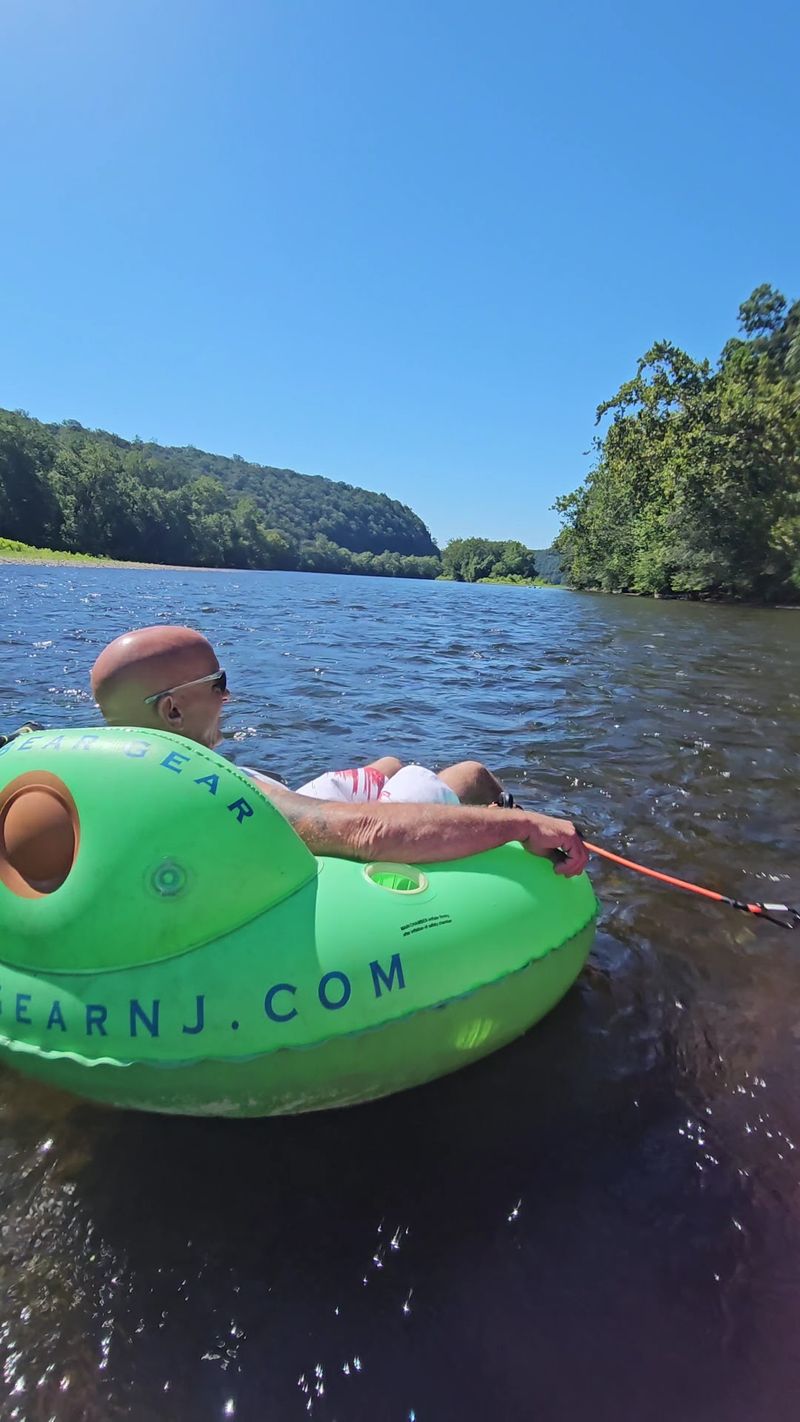
A hole in the middle may be the classic inner-tube design, but it is not automatically the right choice for every floater. Big Bear Gear offers commercial-grade open-bottom and closed-bottom models, and that one decision can noticeably change the ride.
The standard open-bottom tube has a backrest, two handles, a cup holder, and a 275-pound capacity. Its 44-inch inflated outer diameter provides plenty of room while allowing your lower body to stay in the water.
On a hot July afternoon, that constant contact with the Delaware feels terrific. It also means you will feel more of the river beneath you, including shallow rocks and changes in water temperature.
A closed-bottom tube places a barrier between you and the riverbed, making it a sensible option for younger children, cautious first-timers, or anyone who would rather sit on the tube than partly in it. Age rules differ by style: children must be at least 8 to use an open-bottom tube and at least 6 to ride in a closed-bottom version.
Kids under 12 must remain tethered to an adult’s tube. Your rental includes the tube, shuttle transportation, and a personal flotation device, which must stay on for the entire journey.
Only Big Bear Gear’s rental tubes are allowed on its organized trips, so leave the inflatable flamingo and bargain-store inner tube at home. Groups can add a cooler float, but they must use the outfitter’s cooler float even if they bring their own cooler.
A paddle is another practical extra. Tubing is supposed to be low-effort, yet a paddle makes it easier to move away from a bank, reconnect with friends, or angle toward the exit.
Connecting straps can help a group stay together, although a giant raft of linked tubes can be awkward to steer. The best arrangement is usually a few small clusters rather than one floating family reunion that spans half the Delaware.
Reserve the preferred tube and accessories online; walk-in guests are limited to whatever standard tubes remain available.
The River Hot Dog Man Makes Lunch Part of the Adventure
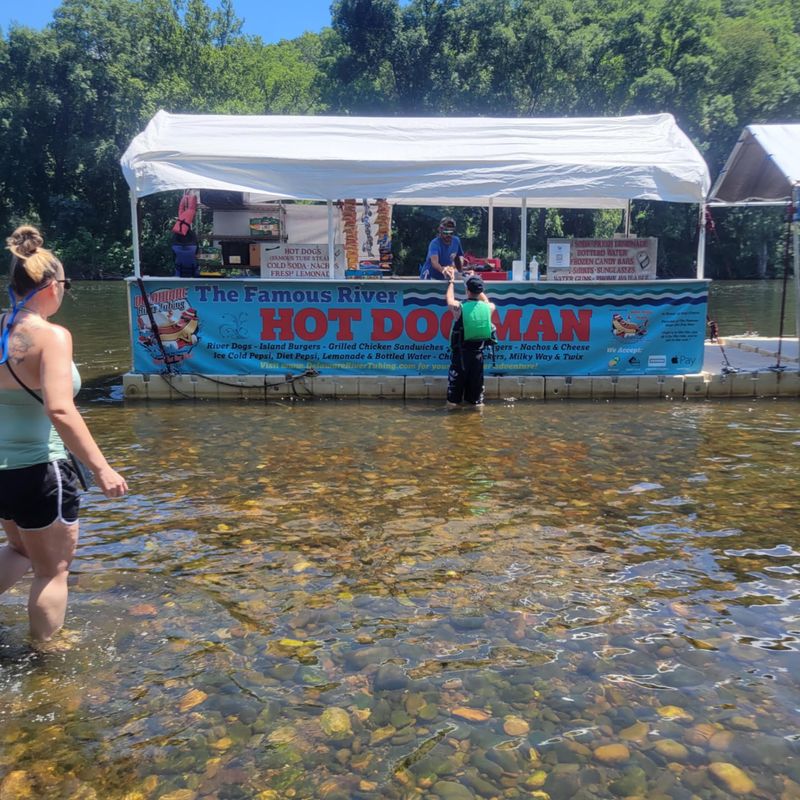
Partway through the float, the day takes a wonderfully New Jersey turn: hot dogs can enter the picture without anyone leaving the river. The River Hot Dog Man has long been a quirky Delaware River fixture, serving food from a boat or island setup to hungry people arriving by tube, kayak, canoe, and raft.
There is something objectively funny about placing a lunch order while seated in an inflatable ring, but after an hour or two in the sun, it also feels like excellent planning.
Hot dogs are the signature order, with cheeseburgers, chicken sandwiches, veggie burgers, nachos, cold drinks, chips, and candy among the items associated with the operation.
Service, stopping arrangements, menu choices, and payment options can change with the season and river conditions, however, so treat the floating lunch counter as a possible bonus rather than your only source of food. Big Bear Gear itself sells drinks and light snacks at the tubing center but recommends bringing a meal if you expect to want something more substantial.
A small soft-sided cooler works better than a bulky hard cooler and is easier to secure on a rented cooler float. Pack sandwiches, fruit, pretzels, granola bars, or other foods that survive heat and splashing without becoming a soggy science project.
Put anything vulnerable in zip-top bags, then place those inside the cooler or a proper dry bag. Bring more drinking water than you think you need.
Sitting in a river disguises how much sun and heat you are absorbing, and three hours is a long time to ration one little bottle. Alcohol is strictly prohibited on Big Bear Gear trips.
Bags and coolers may be inspected, and anyone carrying alcohol can have the trip canceled without a refund. The rule keeps the river safer and leaves plenty of room in the cooler for the essentials: water, lunch, and perhaps a celebratory candy bar that tastes oddly sophisticated when served five miles from the nearest dining room.
What to Bring for a Comfortable Day on the Water
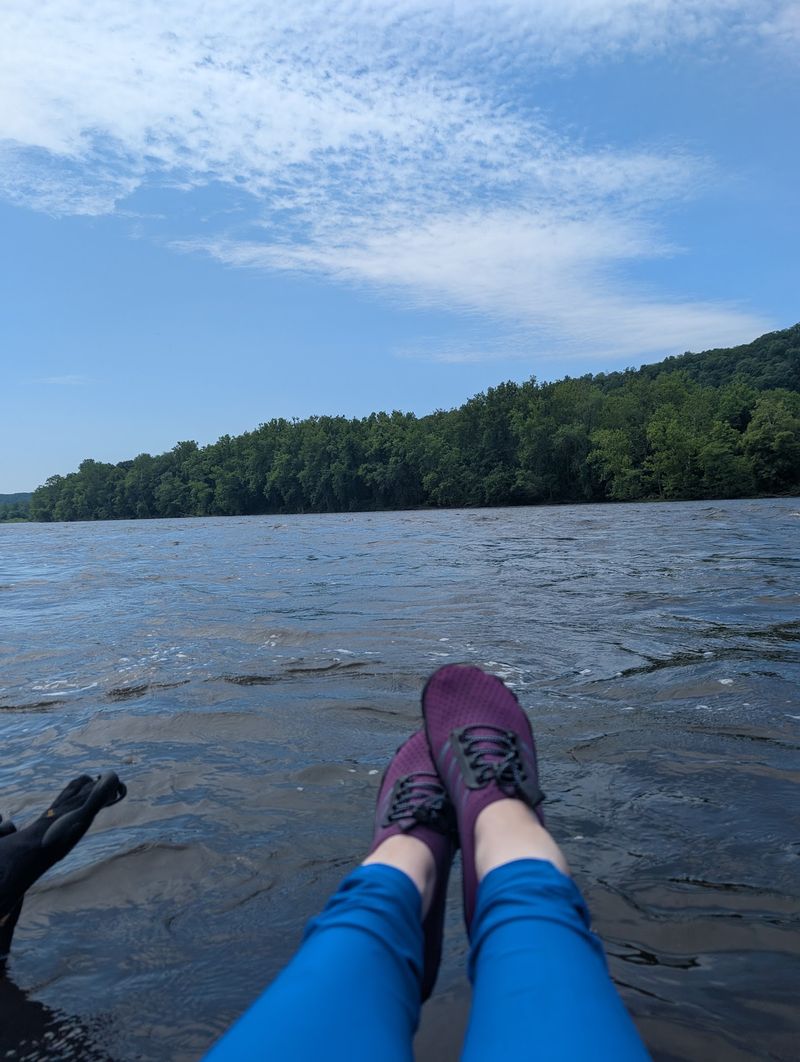
The item most likely to save your afternoon is not sunscreen or a cold drink. It is a pair of shoes that stays attached to your feet.
Big Bear Gear requires closed-toe water shoes or secure sandals; bare feet and flip-flops are not accepted. The launch and takeout can involve wet stairs, stones, mud, and uneven ground, all of which are much less amusing when tackled barefoot.
Dress in a swimsuit or quick-drying clothing, and avoid heavy cotton garments that remain waterlogged for hours. A lightweight sun shirt can be more comfortable than repeatedly roasting bare shoulders.
Apply broad-spectrum sunscreen before check-in and bring enough to reapply during the trip. Sunglasses should have a retainer strap unless you want to donate them to the Delaware.
A brimmed hat is useful, though it should also fit securely enough to survive a breeze or unexpected spin. Keep your phone, car key, identification, and any medication in a genuinely submersible dry bag, not merely a tote described as water-resistant.
Clip the bag securely to your PFD or tube. A waterproof phone case with a lanyard adds another layer of protection, but valuables are safest in a locker or locked vehicle when they are not essential.
Big Bear Gear requires a parking permit and operates a mandatory key-check system, which removes one expensive object from the list of things you could drop in the river. Pack insect repellent, drinking water, snacks, and a whistle that can be used to attract attention in an emergency.
Leave a towel, dry outfit, and spare shoes in the car or a locker for the return. It is also smart to bring a small plastic bag for wet clothes and another for your trash.
Anything taken onto the river should come back with you. Finally, complete the waiver before arriving.
Every adult needs one, while a parent or legal guardian must sign for each minor. Finishing that paperwork at home means less time standing at check-in in your water shoes and more time using them for their intended purpose.
Helpful Safety Tips Before You Start Floating
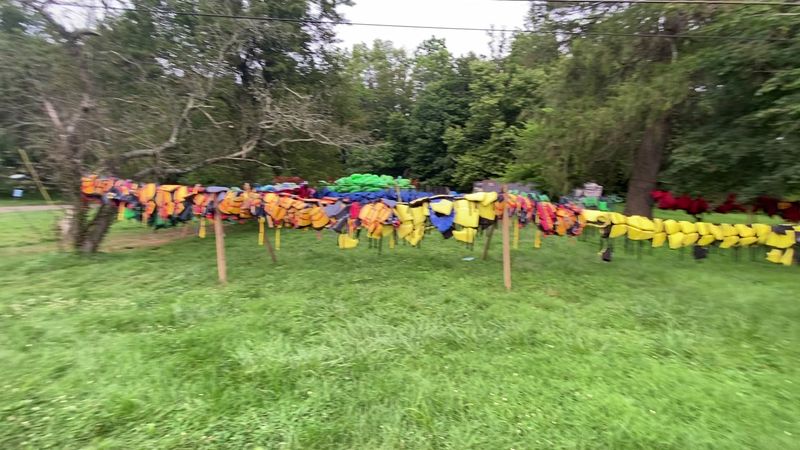
Calm water is still moving water, and the Delaware deserves more respect than its lazy-river appearance sometimes receives. A properly fitted, Coast Guard-approved personal flotation device must be worn at all times—not draped over the tube, used as a pillow, or loosened because the afternoon feels uneventful.
Listen closely during the pre-trip briefing, particularly when staff explain the takeout point and river hazards. Conditions can shift after heavy rain, increasing the current, carrying debris downstream, or prompting the operator to raise minimum ages and restrict children from launching.
Weather closures are inconvenient, but they are made for good reason. Check the forecast for Kingwood Township before leaving home and expect plans to change if thunderstorms or unsafe water levels develop.
On the river, keep a comfortable distance from downed trees, branches, bridge structures, docks, and strainers—obstacles that allow water through while trapping a person or tube. Do not tie yourself to your tube, wrap connecting ropes around your body, or attempt to stand in a strong current.
If you unexpectedly enter the water, float on your back with your feet pointed downstream and avoid trying to stand until you reach calm, shallow water. Groups should stay within sight of one another without building an unwieldy chain across the channel.
Children younger than 12 must be tethered to an adult’s tube, and all minors need active adult supervision; the standard ratio requires at least one adult for every six minors. Pets are not permitted, and neither are alcohol or illegal drugs.
Keep watch for boats and give them room, since the Delaware is a shared waterway rather than a closed attraction. Most importantly, begin working toward the left bank well before the final exit near the old bridge piers.
Missing the takeout is not a charming extension of the trip. With the PFD fastened, valuables secured, and attention occasionally lifted from the scenery, the river remains what it should be: cool, playful, and pleasantly uneventful in all the right ways.
National Park Service