
Eighteen inches above the high-water mark is not where most people would build a communications hub capable of reaching the other side of the planet. Yet that is exactly where AT&T planted one in 1929, on 175 soggy acres at Good Luck Point in Berkeley Township.
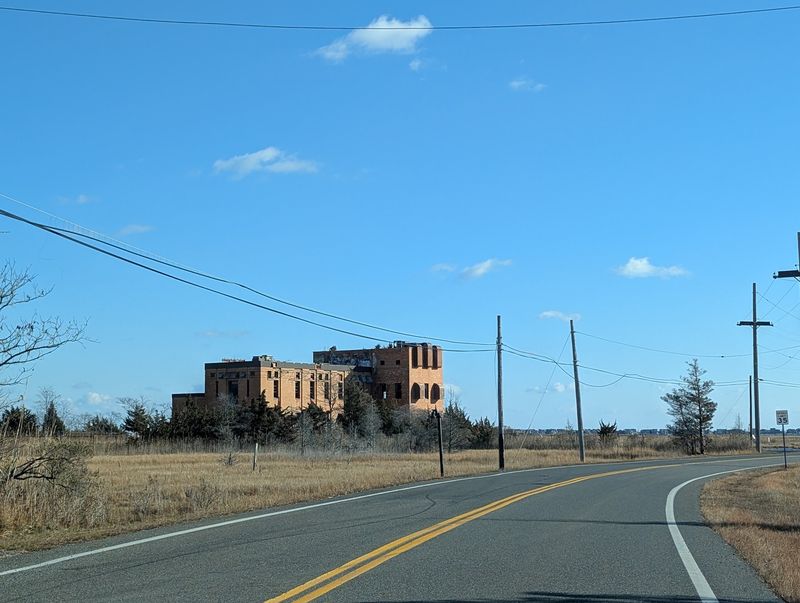
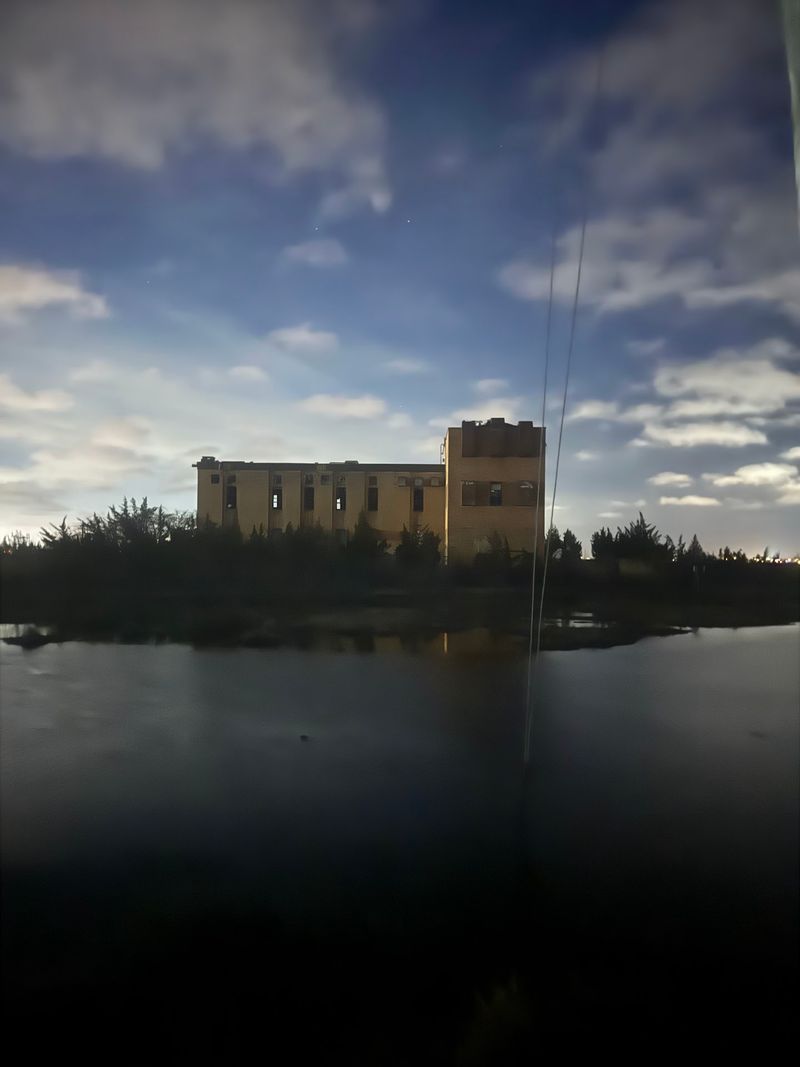
Today, the old concrete building sits alone beside an Ocean County marsh, stripped of its equipment and surrounded by the Edwin B. Forsythe National Wildlife Refuge.
It looks more like the setting for a Jersey Shore ghost story than a former gateway to Europe, South America, and the South Pacific. During its working life, however, the Ocean Gate transmitting station handled calls from ships, supported overseas communications, and carried Voice of America programming during World War II.
Its call sign, WOO, became familiar to radio operators far beyond New Jersey. The station has been silent since 1999, but its remarkable reach remains one of the state’s least-known wartime stories.
A Radio Giant Rose Above the Marshes of Ocean County
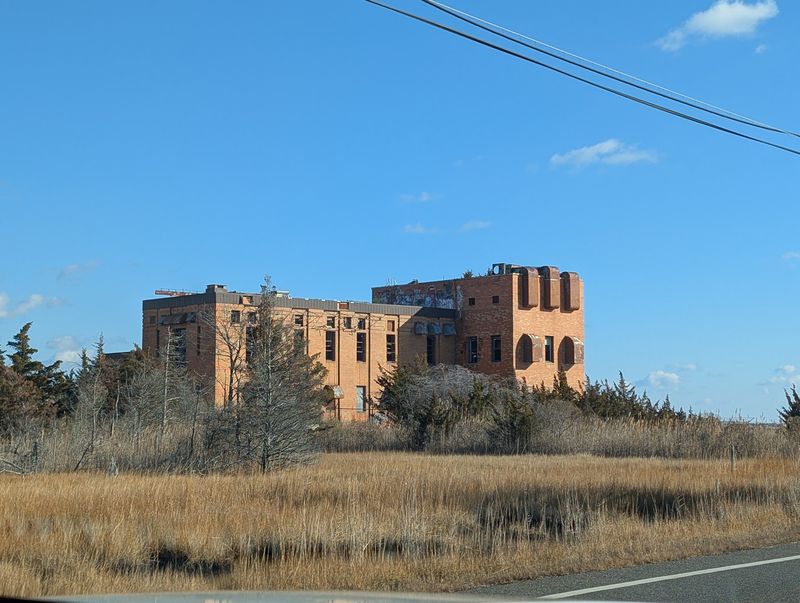
AT&T purchased the Good Luck Point property in 1929, choosing a salt marsh at the mouth of the Toms River for an ambitious new shortwave station. The location sat roughly 50 miles south of New York City and offered an open path toward the Atlantic.
It also presented a fairly obvious engineering problem: much of the site was only about 18 inches above the high-water mark. Beneath roughly three feet of soft ground, workers encountered a layer of hardpan that reportedly required dynamite during excavation.
Deep drainage pipes had to be installed around the main structure to protect it from the marsh. The resulting reinforced building was more practical than pretty, but it was built to support serious machinery.
Heavy generators and transformers occupied the lower level, with thick cork pads beneath them to soften their vibrations. Transmitters and line-switching equipment were placed upstairs, away from the dampest part of the property.
Outside, two curtain antennas rose about 70 feet above the marsh. The original transmitter produced approximately 15 kilowatts, considerable power for a station commissioned in 1930.
Although the facility stood in Berkeley Township, it took the name Ocean Gate from the neighboring borough. Locals eventually became accustomed to its sprawling antenna field, sometimes nicknamed the telephone pole farm.
Hundreds of poles, crossbeams, wires, and towers turned the flat wetlands into an industrial grid visible from across Barnegat Bay. It must have looked wonderfully strange: part shipyard, part oversized clothesline, and part science-fiction set.
Yet every piece served a purpose. This was not a broadcast studio with announcers speaking into microphones.
Ocean Gate was the muscle at the far end of the system, converting voices and messages arriving over landlines into radio signals powerful enough to leave New Jersey behind.
Station WOO Connected New Jersey to the World

Long before anyone could pull out a satellite phone at sea, a call home from an ocean liner required a chain of operators, receivers, transmitters, and carefully selected radio frequencies. WOO supplied the transmitting end of that chain.
Its principal job was high-frequency communication with vessels in the Atlantic and with land stations overseas. A companion receiving facility operated first at Forked River and later at Manahawkin, farther down the Ocean County coast.
Keeping reception and transmission at separate sites reduced interference from WOO’s powerful outgoing signals. A ship sent a radio message to the receiving station, operators connected it with the telephone network, and Ocean Gate transmitted the reply.
By modern standards, the process sounds delightfully elaborate. At the time, it was cutting-edge service that allowed passengers and crews far offshore to speak with people on land.
WOO also maintained links with international destinations in Europe, the Caribbean, and South America. Plans for the mature antenna field identified paths toward places including London, Paris, Frankfurt, Bermuda, San Juan, Panama, Buenos Aires, and Rio de Janeiro.
The station was even listed in 1958 as authorized to correspond with aircraft, making it one of only 19 American coast stations with that designation. Those connections depended on more than brute power.
Operators had to account for distance, time of day, atmospheric conditions, and the behavior of the ionosphere. Shortwave signals could travel far beyond the horizon by refracting through the upper atmosphere and returning to Earth, but the best frequency for a route could change as daylight shifted.
WOO’s technicians selected transmitters and antennas accordingly. Behind the controls, an ordinary conversation from a ship became a carefully aimed electronic journey.
The station gave Ocean County a role in global communication decades before international contact became cheap, instant, and small enough to fit in a pocket.
The Wartime Mission That Brought Voice of America Overseas
In May 1942, Ocean Gate began a daily four-hour service aimed at Australia and the South Pacific. The United States had entered World War II only months earlier, and overseas radio was no longer merely a commercial convenience.
It had become part of the fight over information. Voice of America programming was created to counter Axis-controlled broadcasts with news from the United States.
Its early programs were produced under the federal government’s wartime information operation, while existing commercial shortwave facilities supplied much of the transmission power. WOO was one of the stations pressed into that urgent network.
From the New Jersey marsh, it relayed programs toward Europe, South America, and the South Pacific. Some transmissions were intended for people listening directly on shortwave sets.
Others were picked up by stations in places such as England and North Africa, then rebroadcast for regional audiences. During roughly two years of documented VOA work, Ocean Gate used at least 10 shortwave channels and several associated call signs.
WOJ and WOK carried the early South Pacific service. WOK was also heard transmitting Spanish-language programming on 10,555 kilohertz, while WOO4 carried French programming on 8,760 kilohertz.
WDL broadcast a daily three-hour block of multilingual news on 9,750 kilohertz. Reports from Australia and New Zealand described the New Jersey signals as strong, an impressive result for transmissions likely operating at about 20 kilowatts.
The last known VOA relay from Ocean Gate was logged in January 1944 under the call sign WDI on 5,052 kilohertz. That relatively brief assignment should not be confused with the station’s much longer maritime career, but it gave WOO an extraordinary place in wartime history.
For listeners separated from the United States by an ocean and, in many cases, enemy censorship, news arriving from a marsh near Barnegat Bay carried considerably more weight than the humble setting suggested.
Powerful Shortwave Signals Crossed Oceans From Good Luck Point
Picture the antenna field at its peak and forget the tidy rows of utility poles found along a suburban street. By the mid-1950s, Ocean Gate had 29 rhombic antennas spread across the marsh, along with several antennas of other designs.
A rhombic antenna used long wires arranged in a horizontal diamond, supported above the ground by poles and insulators. Some of the diamonds at Good Luck Point stretched more than 700 feet.
Their shape was not decorative. Rhombics were highly directional, allowing operators to push a signal toward a particular overseas destination instead of spraying energy equally in every direction.
Earlier curtain antennas had performed the station’s wartime work, but the later rhombic field gave WOO a striking silhouette that Shore residents and boaters remembered for decades. Signals traveled by bouncing, or more precisely refracting, between the ionosphere and Earth.
That ability let shortwave radio leap past the curve of the planet, carrying speech thousands of miles without a chain of towers along the way. It also demanded constant judgment.
A frequency that worked beautifully in daylight might fade after dark. Solar activity, season, destination, and atmospheric noise could all affect reception.
Ocean Gate’s operators paired the right transmitter with the right antenna and route, aiming calls toward ships or distant stations. The facility eventually held multiple transmitters rated at about 10 kilowatts, with evidence that a 50-kilowatt unit may also have operated there.
WOO’s separate receiver site at Manahawkin listened for incoming traffic while the Good Luck Point plant handled the outgoing side. A cable network connected the facilities to the broader telephone system, including a route north toward an AT&T microwave station in Asbury Park.
The equipment changed over the decades, but the basic achievement remained wonderfully physical. Voices entered a concrete building in Ocean County, surged through cabinets of electronics, raced along wires suspended over salt grass, and disappeared into the sky.
Satellites and Storms Brought the Historic Station to an End
The technology that made WOO remarkable eventually made it unnecessary. More undersea telephone cables improved dependable connections between North America and Europe, while communications satellites offered routes that did not depend on shortwave conditions.
Ships gained newer options, and the grand antenna field at Good Luck Point began to resemble a machine from another age. In 1999, federal regulators authorized AT&T to discontinue its high-seas radiotelephone service at Ocean Gate and companion stations in Florida and California.
The New Jersey facility was originally expected to close on February 28, but the date was postponed. Its final shutdown came on November 9, ending nearly 70 years of international and maritime service.
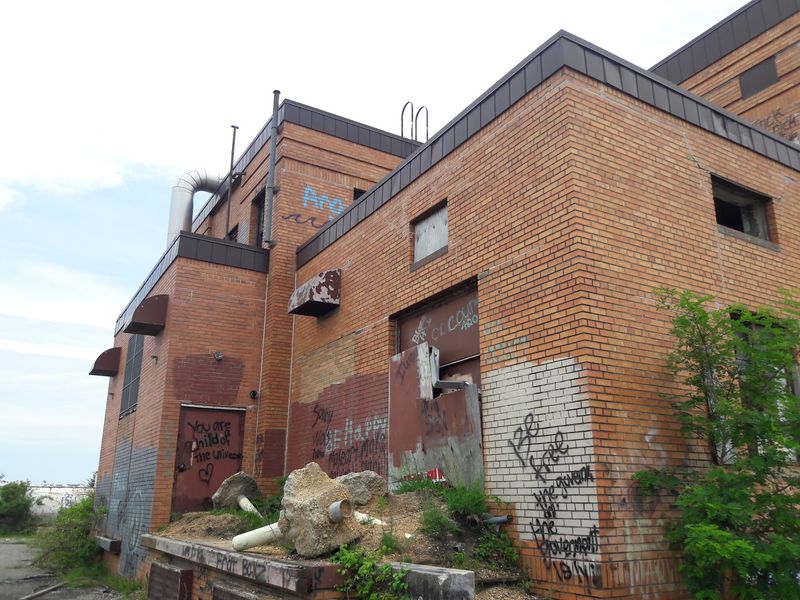
The transmitters went quiet, the building was emptied, and the wires that had linked the antenna poles were dismantled. The abandoned structure did not fare gently.
Vandals entered, weather worked through neglected surfaces, and the marsh continued doing what marshes do. Then Superstorm Sandy struck the New Jersey coast in October 2012.
The storm surge swept across portions of the surrounding refuge, scattering debris and hazardous material over miles of shoreline, forest, and wetlands. The transmitter building’s basement reportedly filled with eight to 10 feet of water.
By then, the Good Luck Point property had been divided between public owners. The former antenna field became part of the Edwin B.
Forsythe National Wildlife Refuge, while Berkeley Township retained the concrete communications building. Officials later described the structure as an attractive nuisance, which is municipal language for a place that tempts curious people despite being unsafe.
Suggestions for observation space, preservation, remediation, and demolition have surfaced over the years, but none can restore the bustling station that once operated there. Its demise was not caused by one dramatic failure.
WOO simply outlived the communications system it had helped build, then faced the vandals, salt water, and storms that arrive once people stop maintaining a building beside Barnegat Bay.
Nature Is Reclaiming the Site Where History Was Broadcast
Ospreys were among the last regular users of Ocean Gate’s enormous antenna field. By the 2010s, the abandoned poles no longer directed calls toward ships or foreign capitals, but their height made them appealing nest sites.
The arrangement was useful for the birds and hazardous at the same time. Many poles were deteriorating, while leftover wires and cables posed an entanglement risk.
Bird surveys identified approximately 115 species using the Good Luck Point marsh, a migration and wintering area along the Atlantic Flyway. Federal wildlife officials therefore planned a careful cleanup rather than leaving the industrial remains to collapse wherever they pleased.
In 2017, a $1.7 million project supported by Hurricane Sandy recovery funding began removing nearly 500 transmission poles from 232 acres of coastal marsh within the refuge. Roughly 340 of those poles stood at Good Luck Point; another array remained around the former receiving site at Manahawkin Bay.
Contractors worked during winter, when firmer ground reduced damage from heavy activity, and the job had to stop by April 1 for osprey nesting season. Eighteen selected poles remained upright so they could support safer nesting platforms.
The rest were cut down and sent for appropriate disposal along with cables, antennas, metal structures, and concrete components. It was an oddly fitting handover.
For most of the 20th century, human voices traveled outward from this patch of marsh. Now the dominant sounds are wind, water, and birds moving along the coast.
The old transmitter building still marks the technological chapter, though it is closed, deteriorated, and no place for casual exploration. Around it, the straight lines of the antenna complex have largely disappeared into tidal wetlands.
Salt grass has reclaimed the footprint of a system once pointed toward Buenos Aires, London, and the open Atlantic, while ospreys occupy the few surviving towers of New Jersey’s vanished voice to the world.