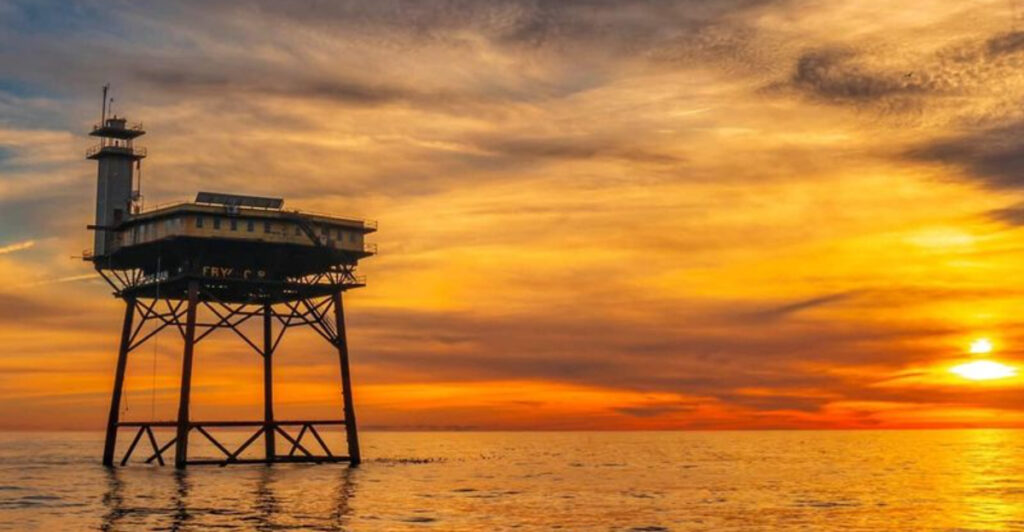
Far off the coast of North Carolina, Frying Pan Shoals is home to one of the most unusual places you can stay the night. A historic tower stands over the Atlantic about 32 miles from land, giving visitors a rare chance to sleep surrounded by open water.
It matters because it protects a piece of coastal history while letting people see the ocean in a whole new way. If you have ever wondered what it feels like to wake up in a tower at sea, this place is hard to forget.
1. A tower hotel far beyond the beach
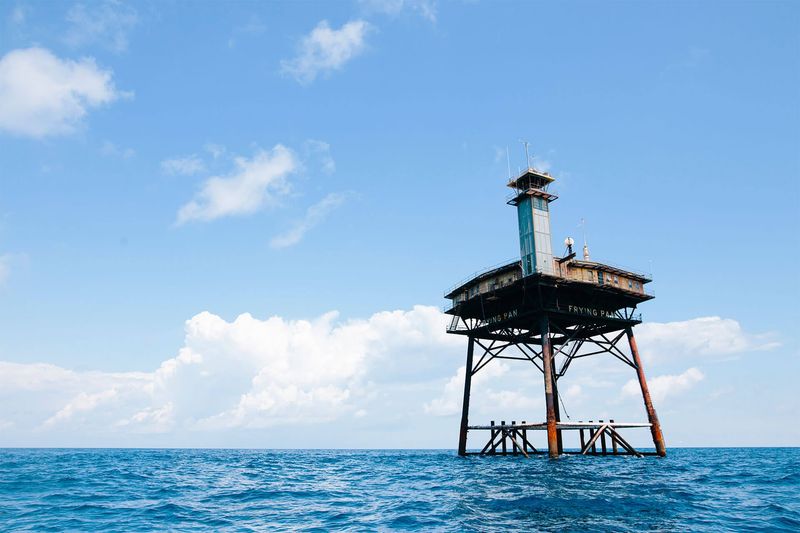
Most hotels give you a parking lot view.
Frying Pan Tower gives you water in every direction, which is exactly why people remember it so clearly.
Sitting about 32 miles off the North Carolina coast near Cape Fear, the tower feels wonderfully removed from everyday noise and traffic.
Even before you arrive, the distance changes the mood of the trip.
You are not checking into a normal room by the beach.
You are heading to a former light station built above Frying Pan Shoals, an area long known for shallow water, rough seas, and an important place in maritime history.
That offshore setting is a big part of the appeal.
Guests get sunrises, sunsets, and nighttime skies with very little artificial light around them.
On calm days, the ocean can look smooth and bright.
When weather shifts, the tower shows how powerful the Atlantic really is.
Anyone interested in unusual travel spots will likely find this place exciting.
It is part adventure, part history lesson, and part quiet retreat.
Because it is so far from shore, planning matters more than it would for a regular weekend stay.
Packing carefully, listening to staff instructions, and staying flexible with weather are all smart moves.
For travelers who want a story they will tell for years, sleeping here is not just about a bed.
It is about being in a rare place that almost feels like another world, while still belonging to North Carolina’s coast.
2. Built to guide ships through dangerous shoals
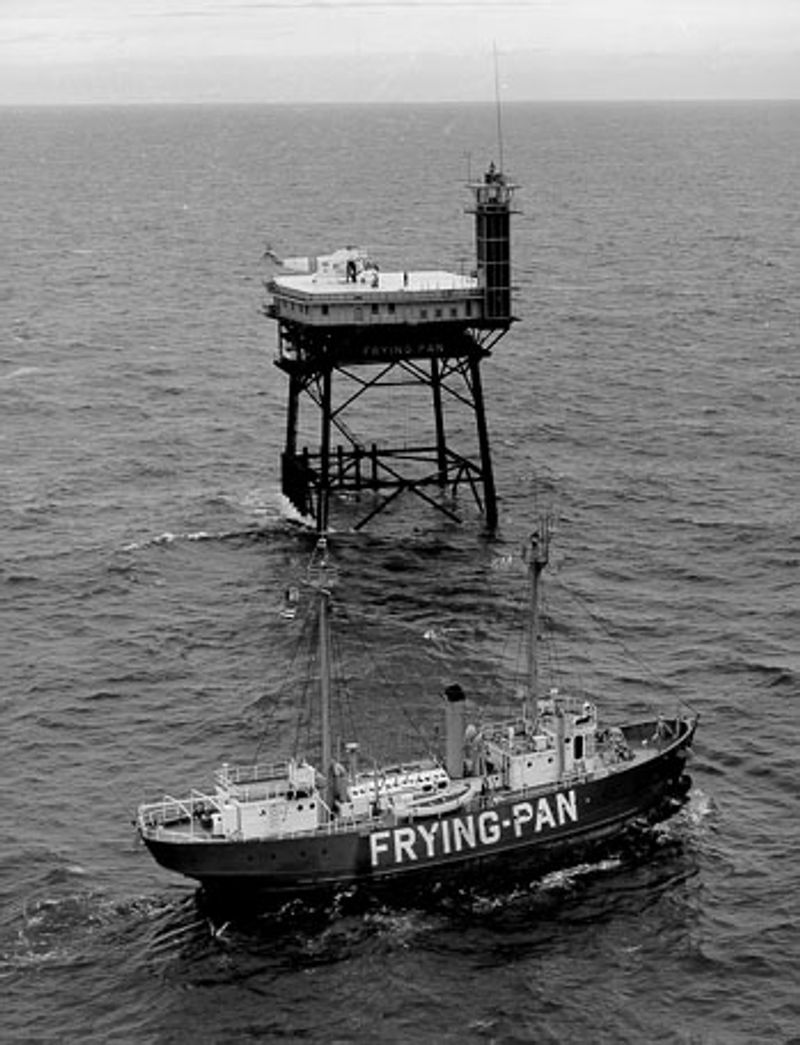
Long before it became a place where guests could sleep, Frying Pan Tower had a serious job.
It was built to help guide ships near Frying Pan Shoals, a wide and tricky area off Cape Fear that has challenged sailors for generations.
The shoals are shallow and stretch far into the ocean, which made navigation dangerous.
The structure served as a Coast Guard light station, replacing older methods used to warn passing vessels.
Raised high above the water on sturdy steel legs, the tower could support lights, equipment, and crew members who worked offshore.
Life there was not easy, but the station played a useful role in keeping marine traffic safer.
That history gives the tower much of its character today.
Visitors are not staying in a made-up attraction designed to look old.
They are stepping into a real piece of coastal infrastructure with a practical past.
You can feel that difference in the metal walkways, working spaces, and simple layout.
Learning a little background before visiting makes the experience even better.
Knowing why the tower stands where it does helps guests understand the value of the site.
Frying Pan Shoals was more than a name on a map.
It was a place where warning lights and skilled crews mattered.
For families, students, and history fans, the tower offers an easy way to connect with North Carolina’s maritime story.
It turns a night away into something bigger than lodging.
It becomes a closer look at how people once lived and worked at sea.
3. Sleeping overnight is the real thrill
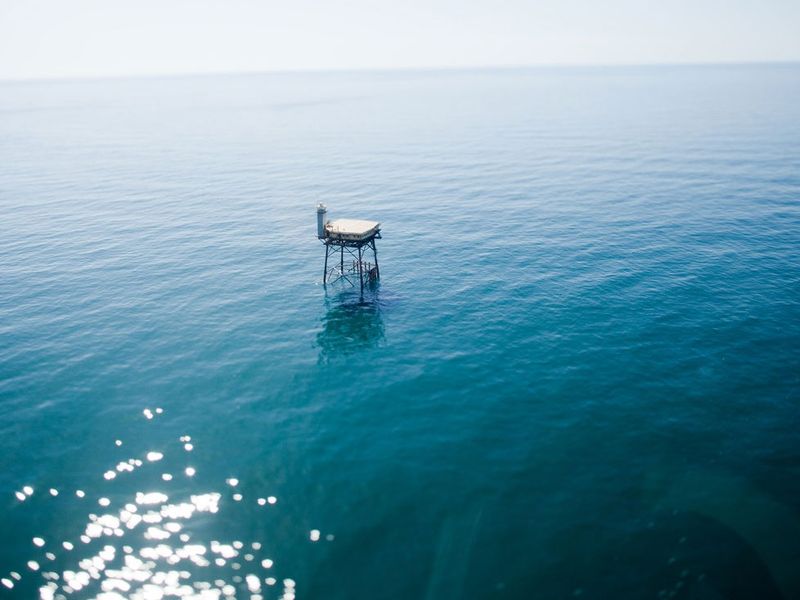
Here is the part that grabs people right away: you can actually sleep in the tower.
That simple fact turns Frying Pan Shoals from an interesting landmark into a true bucket-list stay.
Instead of looking at it from a boat or reading about it online, guests spend the night surrounded by open ocean.
The overnight experience is special because it mixes comfort with adventure.
You are not camping in a random spot, yet you are far beyond what most people think of as a normal hotel trip.
Expect a setting that feels historic, practical, and memorable rather than fancy in a polished resort way.
For many visitors, the best moments are the quiet ones.
Morning light over the Atlantic, wind moving past the structure, and the sound of water below can make the stay feel calm and dramatic at the same time.
At night, the darkness offshore often makes the stars stand out more clearly than they do on land.
It helps to arrive with the right expectations.
A tower in the ocean will not behave like a chain hotel with endless conveniences.
Guests should be ready for simple routines, shared spaces, and conditions shaped by weather and distance.
That is part of the charm, not a flaw.
If you enjoy unusual places with a story behind them, an overnight stay here offers something hard to match.
Sleeping at Frying Pan Shoals means taking part in the tower’s next chapter while experiencing one of North Carolina’s most striking coastal settings firsthand.
4. Reaching the tower takes planning and patience
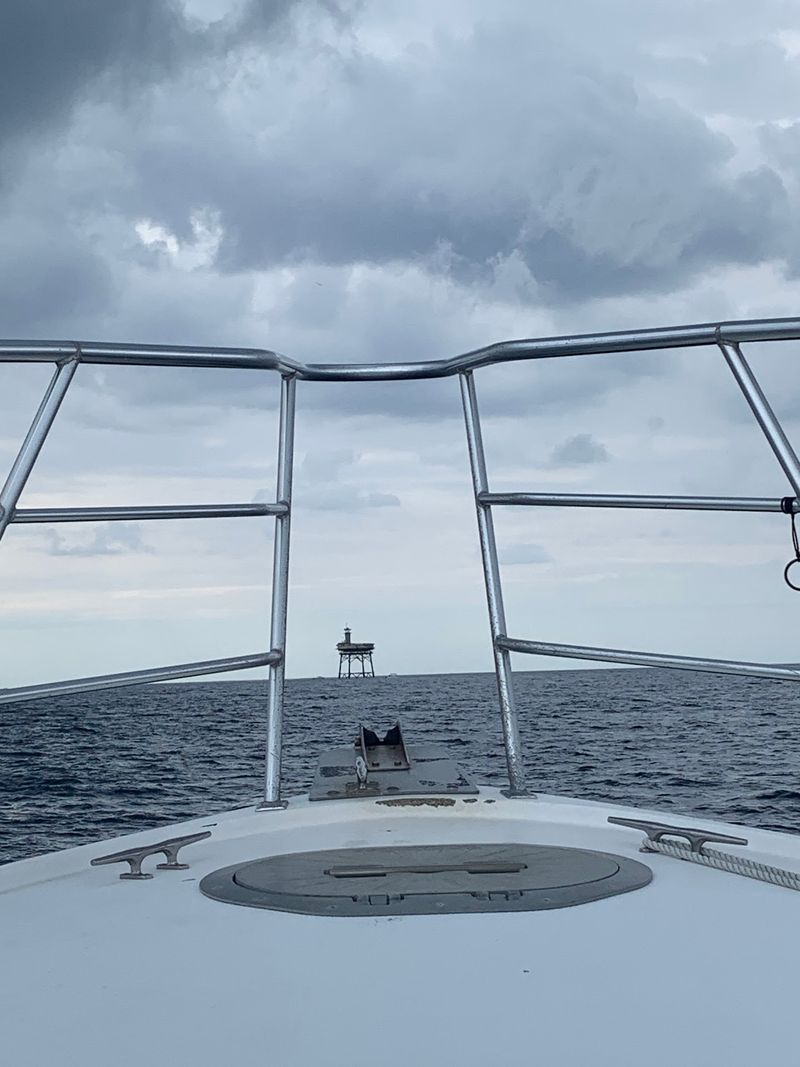
Getting to Frying Pan Tower is not as easy as driving up and checking in, and that is part of what makes the trip feel big.
Because the tower stands about 32 miles offshore near Cape Fear, travel depends on sea conditions, weather, and careful coordination.
Visitors should expect the journey itself to be a major part of the experience.
Before making plans, it is smart to read official booking details and prepare for changes.
Offshore trips can shift if waves, wind, or storms create unsafe conditions.
Being flexible matters a lot more here than it does for a normal hotel reservation on land.
Packing wisely can make the stay smoother.
Comfortable clothes, non-slip shoes, needed medicine, sun protection, and a small bag of personal essentials are practical choices.
Since you are heading far into the Atlantic, it is also wise to follow every safety instruction given by the team managing the site.
Some travelers may feel nervous about the distance from shore, especially on the first trip out.
That feeling is understandable.
A little preparation helps, and so does remembering that the tower has long been a place where people worked, lived, and cared for the structure in changing sea conditions.
The travel process is not an inconvenience to rush through.
It is part of the story you are signing up for.
By the time the tower rises ahead of you over the water, the trip already feels different from ordinary tourism, and that sense of arrival is one of the best parts.
5. Ocean views, fishing, and life all around
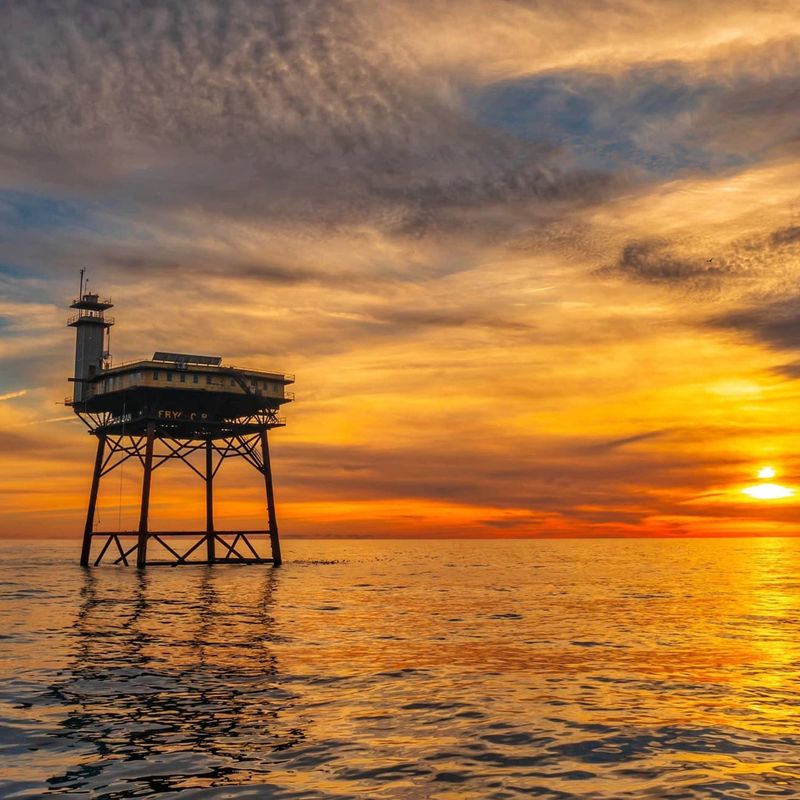
Some places ask you to look at one main attraction.
At Frying Pan Shoals, the attraction keeps changing by the hour.
Water color, wind, clouds, birds, and sea life all help shape the visit, so even simple time on the deck can feel interesting.
The area has a strong reputation for fishing, and people familiar with the shoals often speak highly of it.
Clear water and active marine life add to the appeal.
Guests may also enjoy watching seabirds, scanning the horizon, or simply noticing how different the ocean looks in bright sun, haze, or late evening light.
Because the tower stands above the Atlantic, views stretch far in every direction.
There is no boardwalk, no line of shops, and no beach crowd below.
That open setting can feel exciting for some people and peaceful for others.
Either way, it creates a stronger sense of being part of the sea rather than just visiting nearby.
Bringing a camera, binoculars, or a journal can make the experience richer.
Many travelers enjoy recording weather changes, marine sightings, or the way the sky looks at dawn.
Small details become memorable when you are so far from land.
Visitors should also respect the environment around the tower.
The ocean is beautiful, but it is not a theme park.
Following site rules, staying aware of conditions, and treating the setting with care helps protect both guests and the marine world that makes Frying Pan Shoals such a remarkable place to experience.
6. Storms, weather, and the wild side of the Atlantic
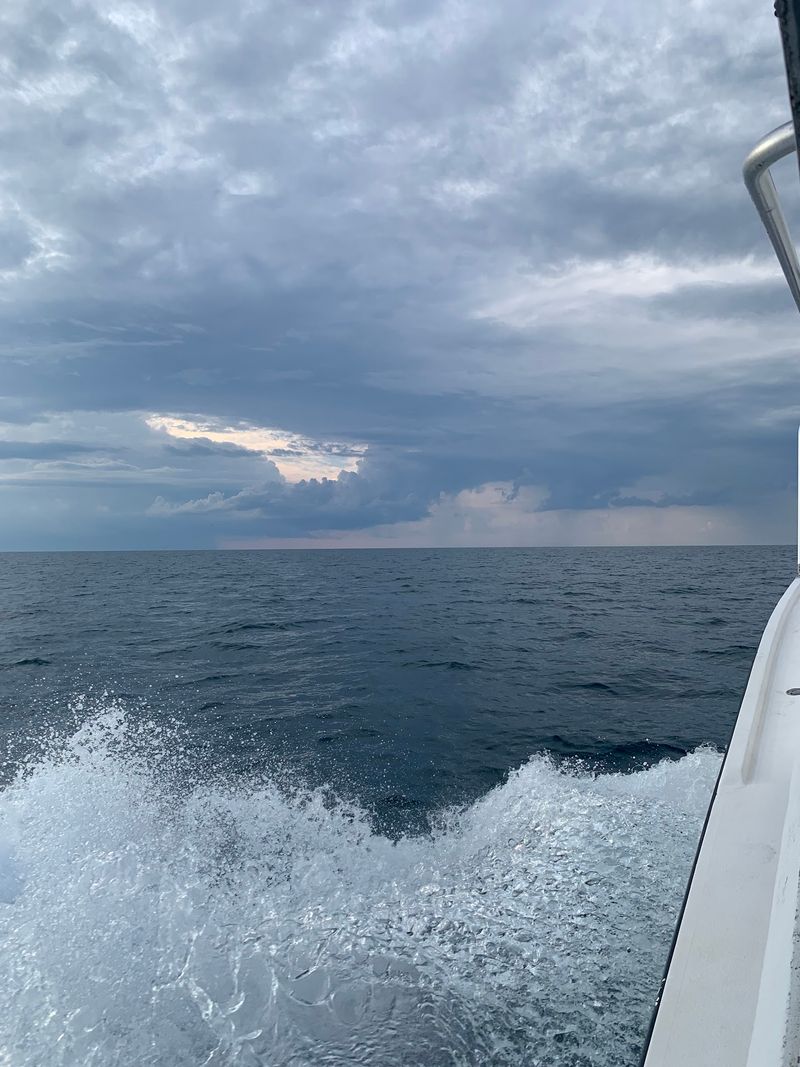
On a calm day, the tower looks peaceful.
When weather turns, Frying Pan Shoals reminds everyone that it stands in a serious stretch of ocean.
That contrast is one reason the site feels so memorable.
It lets visitors see both the beauty and the force of the Atlantic near Cape Fear.
The area is known for changing conditions, and offshore weather can be very different from what is happening on land.
Wind speed, waves, and storms matter a great deal when a structure sits far from shore.
For that reason, weather is not just background information here.
It shapes travel, safety, and the overall rhythm of a visit.
Guests should pay close attention to guidance from the people operating the tower.
If plans change because of rough seas or forecasts, that is a sign of good judgment, not poor service.
Flexible expectations are part of responsible travel in a location like this.
At the same time, the weather adds something dramatic to the experience.
Clouds moving across a huge sky, fast-changing light, and the sound of wind against the tower can make the place feel alive.
Even people who do not usually think about forecasts may leave with a new respect for ocean conditions.
For young travelers especially, the tower can be a powerful lesson in nature and safety.
It shows how people adapt to the sea instead of controlling it completely.
That real-world reminder gives Frying Pan Shoals an edge that ordinary coastal stays simply do not have.
7. Saving the tower keeps coastal history alive
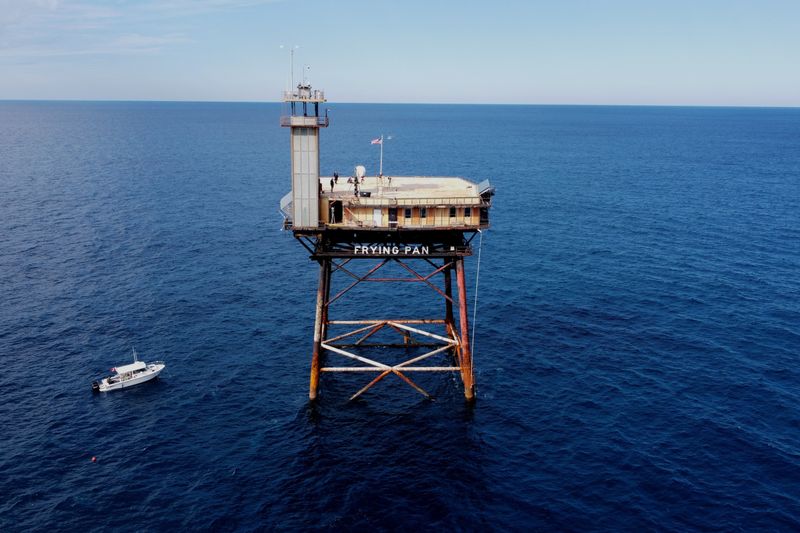
One of the best parts of staying at Frying Pan Shoals is knowing the visit supports something bigger than a one-night adventure.
The tower is a historic structure, and keeping a place like this standing in the ocean takes time, money, and steady care.
Preservation is not just a nice idea here.
It is the reason people can still experience the tower today.
Reviews from visitors often mention the site’s history and the value of helping restore it.
That support matters because salt, wind, and storms are tough on any offshore building.
Maintenance work can be demanding, and each repair helps protect a rare piece of North Carolina’s maritime story.
For travelers, that adds a meaningful layer to the trip.
You are not only booking a stay in an unusual place.
You are also helping keep alive a landmark connected to navigation, coastal safety, and life at sea.
Many modern attractions can be copied.
A real light station tower above Frying Pan Shoals cannot.
If you plan to visit, take time to learn about the restoration effort and follow the rules that help protect the site.
Treating spaces carefully, respecting equipment, and supporting official programs are simple ways to help.
Even sharing the story with friends can bring more attention to preservation.
Years from now, the most important part of Frying Pan Tower may be what it teaches.
History is easier to understand when you can walk through it, sleep inside it, and watch the ocean from its decks.
Saving this tower keeps that chance open for future visitors.