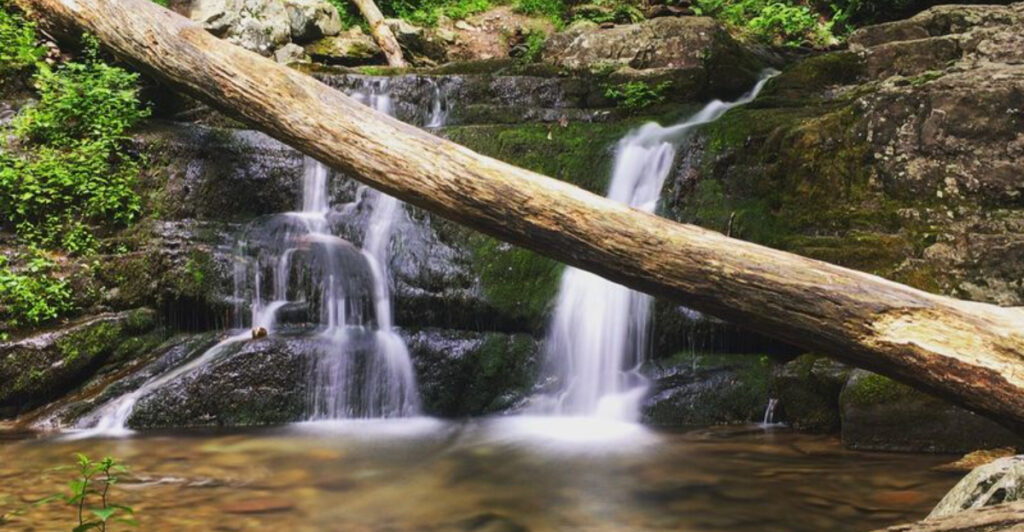
A thin ribbon of water slips through a wall of rhododendron in Sussex County, almost invisible until the forest suddenly opens around it. Elsewhere, a river drops beside an old stone bridge, a cascade hides minutes from Manhattan, and a rocky stream turns an ordinary park walk into something that feels distinctly un-New Jersey.
That is the fun of chasing waterfalls here: the best discoveries rarely announce themselves with flashing signs. Some sit beside quiet back roads, while others demand a real hike over roots, ridges, and wet stone.
A few roar reliably; several save their best performance for spring or the morning after heavy rain. Together, they reveal a wilder side of the state than crowded highways and beach traffic suggest.
Bring shoes with decent grip, download your trail map before leaving home, and resist the urge to trust every shortcut your phone proposes. These 12 waterfalls are worth finding the proper way.
1. Buttermilk Falls
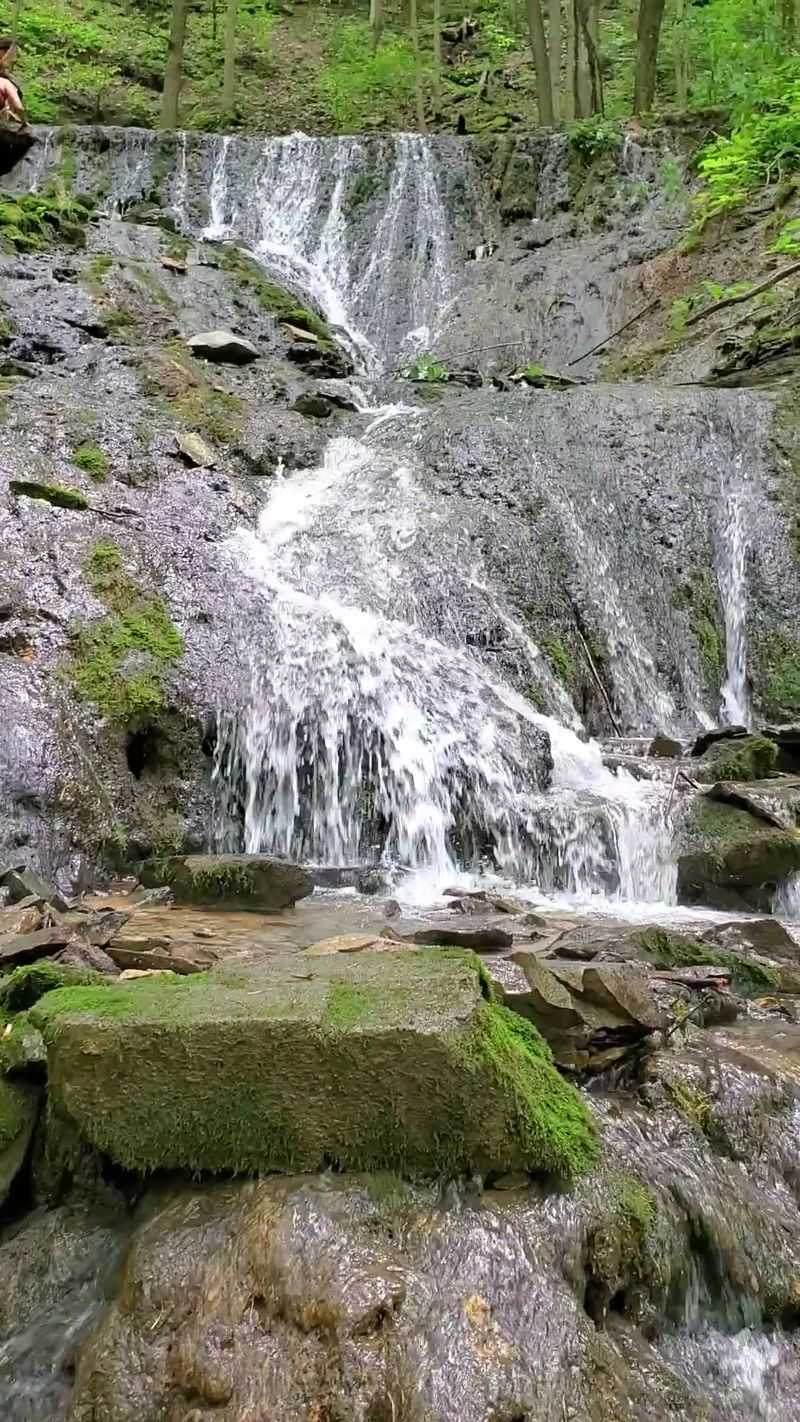
You hear the rush before the trees reveal what is widely regarded as New Jersey’s tallest waterfall. Near Layton in the Delaware Water Gap National Recreation Area, Buttermilk Falls tumbles more than 75 feet down a steep, stair-stepped rock face, breaking into white ribbons on the way.
Mossy ledges and dense woodland frame the drop, making the whole scene look surprisingly remote—even though the base is only steps from the parking area. A wooden staircase climbs beside the falls and leads to viewing platforms where you can watch the water change character from level to level.
Continue beyond the top and you are no longer taking an easy sightseeing stroll. The blue-blazed Buttermilk Falls Trail rises sharply toward the Appalachian Trail, delivering a serious climb almost immediately.
Casual visitors can simply enjoy the platforms and head back down; hikers looking for more can turn the stop into a longer adventure. Spring, snowmelt season, and the days following steady rain bring the strongest flow.
In dry stretches, the broad cascade can become considerably thinner. Mountain Road is narrow, rough in places, and subject to seasonal closures, so check conditions before driving in.
Arrive early on a pleasant weekend, when the small parking area can fill faster than you might expect.
2. Silver Spray Falls
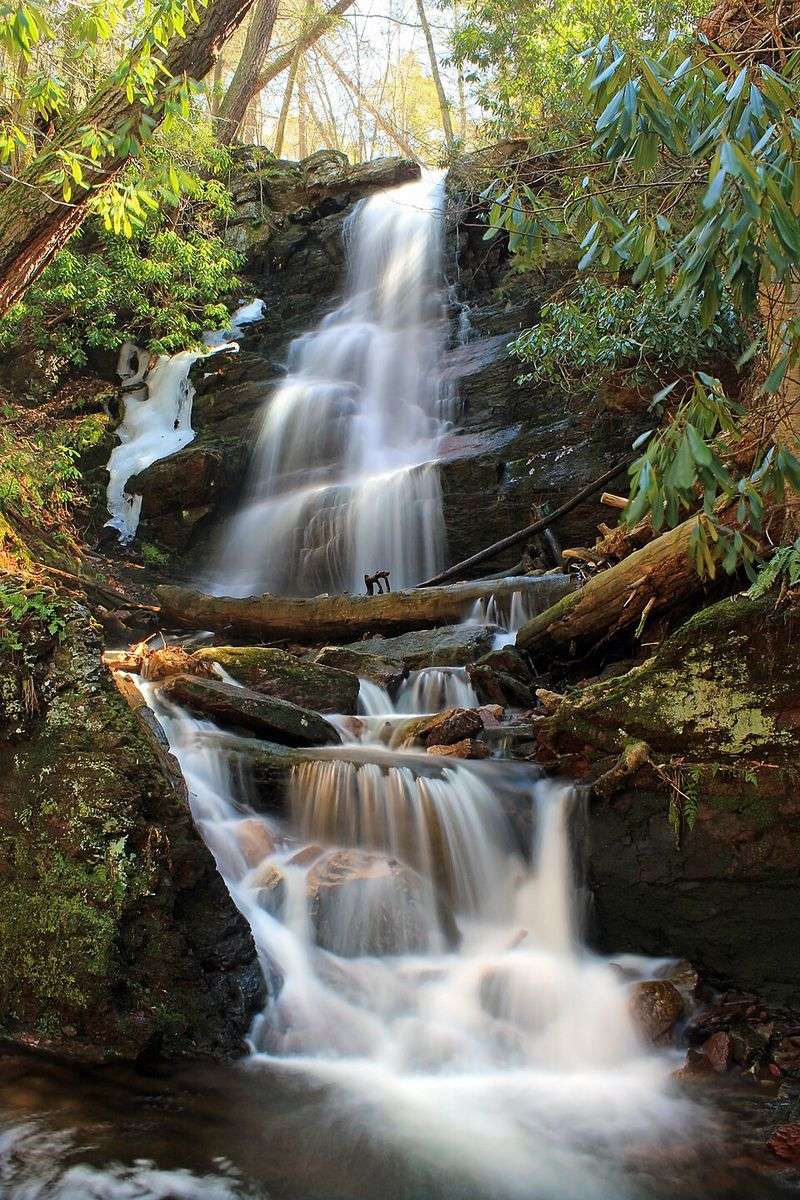
Finding this slender cascade feels like being let in on a North Jersey secret. Silver Spray Falls, sometimes called Hidden Falls, sits in the Delaware Water Gap woods not far from its much more famous neighbor, Buttermilk Falls.
There is no grand entrance or busy observation deck. Instead, a short woodland approach leads through tangled rhododendron to a narrow stream spilling over a tall, dark rock face.
The water separates into delicate strands as it drops, creating the misty flicker that gives the falls its name. Its secluded setting is the real prize.
Fallen branches, slick stones, and thick vegetation keep the scene looking more natural than manicured, and the sound of the cascade remains muted until you are nearly upon it.
Treat the approach as a genuine forest walk rather than a roadside attraction: the route is not always obvious, footing may be muddy, and navigation is easier with a downloaded map.
The falls are near Mountain Road between Walpack Cemetery and Haneys Mill, with visitors commonly using the Buttermilk Falls parking area as their starting point. Road closures and winter conditions can change how the area is reached.
Go after recent rain for the most photogenic flow, but expect wetter rocks and trails at the same time. Silver Spray is not enormous or thunderous.
It is memorable because it feels discovered rather than presented.
3. Hemlock Falls
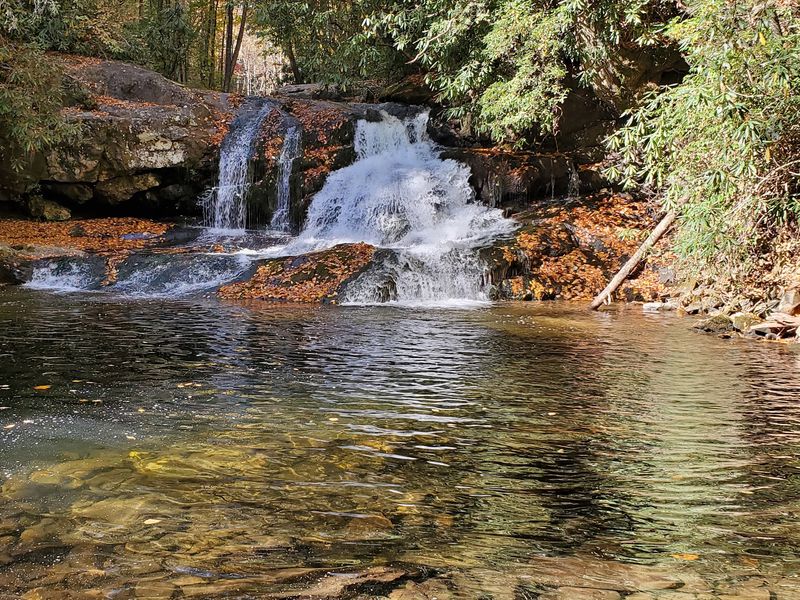
Twenty-five feet of water and dark volcanic rock are hiding inside one of Essex County’s busiest recreation areas. Hemlock Falls sits in South Mountain Reservation, close enough to suburban streets that its wooded setting can feel like an elaborate trick.
Water slides over a broad ledge into a rocky basin, with tall trees and stone outcrops muffling the outside world. The falls look especially dramatic after rain, when the main drop widens and smaller rivulets appear across the cliff.
In a deep winter freeze, the same wall can turn into a layered curtain of ice. Several routes reach the waterfall, so the outing can be adjusted to your mood.
A shorter approach works well when the falls are the main event, while the Lenape and Hemlock Falls trails can be combined into a longer loop through the reservation. Watch the trail markers closely around intersections; this popular park has enough crisscrossing paths to send an inattentive hiker in an unintended direction.
Tulip Springs is a useful starting area for longer walks, while other trailheads provide quicker access. Weekends bring runners, families, and plenty of dogs, so weekday mornings offer the quietest experience.
Do not scramble onto the wet ledges for a better photograph. The safer view from below already captures the dark cliff, tumbling water, and dense canopy—the combination that makes this suburban waterfall feel much farther from South Orange than it really is.
4. Greenbrook Falls
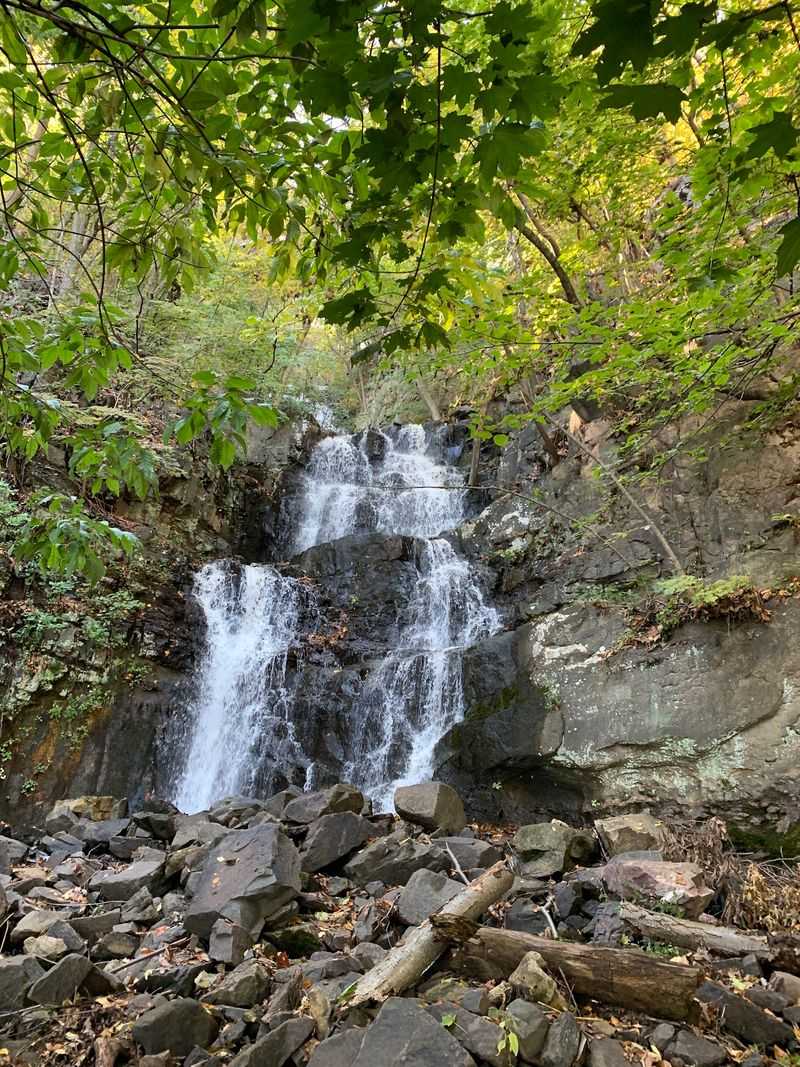
The Hudson River appears through the trees, Manhattan sits only miles away, and water pours down the ancient cliffs of the Palisades. That combination makes Greenbrook Falls one of the state’s most unusual waterfall experiences.
Rather than dropping neatly into a single pool, Green Brook descends the steep slope through a long sequence of cascades, rocky chutes, and smaller falls. The surrounding forest is equally impressive.
Mature trees tower above fern-covered ground, and the preserve’s limited access keeps the trails quieter than many nearby parks. There is an important catch: Greenbrook Sanctuary is a protected nature preserve, not a public park with unrestricted admission.
Membership is required, and visitors must remain on marked paths. That rule is not administrative fussiness; the sanctuary protects sensitive plants, wildlife habitat, and more than 160 acres along the Palisades.
Once inside, give yourself time to explore beyond the falls. Overlooks reveal wide Hudson views, while the shaded trails produce an almost primeval mood within sight of one of the country’s most densely populated regions.
The cascade usually has water, but recent rainfall adds force and brings the smaller drops to life. Good footwear matters because the Palisades terrain can be steep and damp.
This is a place for patient walking, bird calls, and careful observation—not rock hopping or off-trail shortcuts.
5. Chikahoki Falls
Norvin Green State Forest does not hand out easy rewards. The trails are rocky, the climbs are real, and the network can become confusing if you arrive without a map.
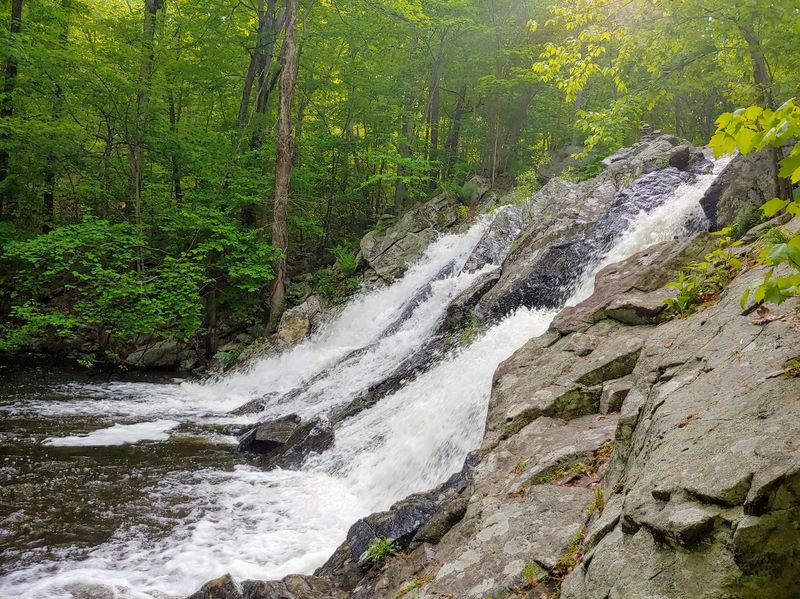
Then Chikahoki Falls appears between the boulders, and every awkward step suddenly earns its keep. Often shortened locally to “Chik Falls,” this roughly 20-foot cascade drops along Posts Brook in a rugged pocket of Passaic County forest.
Its personality changes dramatically with the weather. After substantial rain, white water charges over the ledges and fills the ravine with noise.
During a dry summer spell, the same waterfall may shrink to a polite trickle. Plan around recent conditions if the cascade is your main reason for hiking.
Chikahoki can be included in several routes through Norvin Green, including longer loops that also visit Otter Hole Falls and the sweeping viewpoint at Wyanokie High Point.
That full combination delivers one of North Jersey’s best hiking days, but it is not a casual walk: expect repeated elevation changes, uneven rock, and mileage that can stretch past seven miles depending on the route.
Shorter options are possible with careful planning. Download a current trail map before entering, since blazes and intersections matter here.
Sturdy shoes beat clean sneakers, particularly after the very rain that makes the waterfall spectacular. Stay off wet rock near the drop and enjoy the view from solid ground.
6. Otter Hole Falls
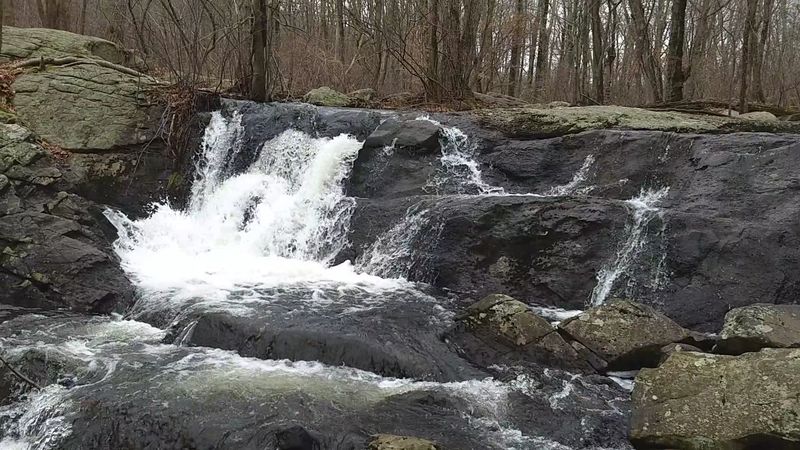
A waterfall this close to the road should not feel so wild. Otter Hole Falls sits near a trailhead in Norvin Green State Forest, where Posts Brook squeezes through rock and drops in two compact tiers.
The cascade is around 15 feet tall, but its rocky enclosure makes it feel bigger, especially when the brook is running high. Water churns through the narrow channel, flashes white over the ledges, and settles briefly before continuing deeper into the forest.
Because the falls can be reached without committing to Norvin Green’s longest routes, they are a smart choice for visitors who want a quick natural payoff. Do not confuse “quick” with completely effortless.
Roots, damp stone, and uneven terrain still call for proper footwear, and the rocks beside the rushing water can be treacherously slick. More ambitious hikers can use Otter Hole as the opening chapter of a longer loop toward Chikahoki Falls, Carris Hill, or Wyanokie High Point.
That is where the landscape turns strenuous, with rocky ascents and trail junctions that reward careful navigation. The falls perform best after rain or during spring runoff, while prolonged summer dryness can soften the show considerably.
Parking near the trailhead is limited enough to make an early start worthwhile on weekends. Come for the easy-to-reach cascade, then decide whether your legs are interested in the rest of Norvin Green’s challenge.
7. Apshawa Falls
Rusting water-tank ruins, a broad reservoir view, and a waterfall all fit into one hike at Apshawa Preserve. The West Milford landscape keeps changing as the trail crosses streams, climbs through rocky woods, and follows Apshawa Brook toward the falls.
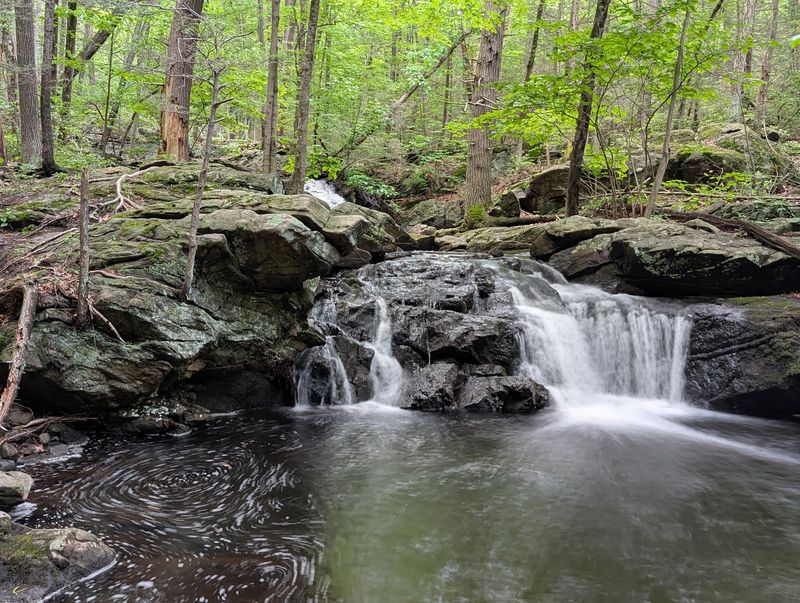
The cascade slides over broad slabs rather than making one clean vertical plunge, forming a lively staircase of white water when the brook is full. Spring is the surest season for that version.
After a dry spell, the water can become much quieter, so checking recent rainfall is worth the minute it takes. The direct waterfall route is about 3.2 miles round trip and includes roots, rocks, and a seasonal stream crossing.
Hikers with more time can choose a roughly 5.3-mile circuit that adds Butler Reservoir, a dam, and additional ruins. The longer option gives the preserve its full narrative: old infrastructure gradually being swallowed by a forest that now feels thoroughly removed from its industrial past.
Trail colors intersect in several places, making a downloaded map more useful than instinct. Expect a few steep sections, particularly if you build the falls into the complete loop.
The parking lot is not enormous, and the preserve has become less secret among local hikers, so mornings are your friend. Bring water, wear shoes that can handle mud, and give the wet rocks beside the cascade plenty of respect.
The view is better when you are standing upright.
8. Hacklebarney Falls
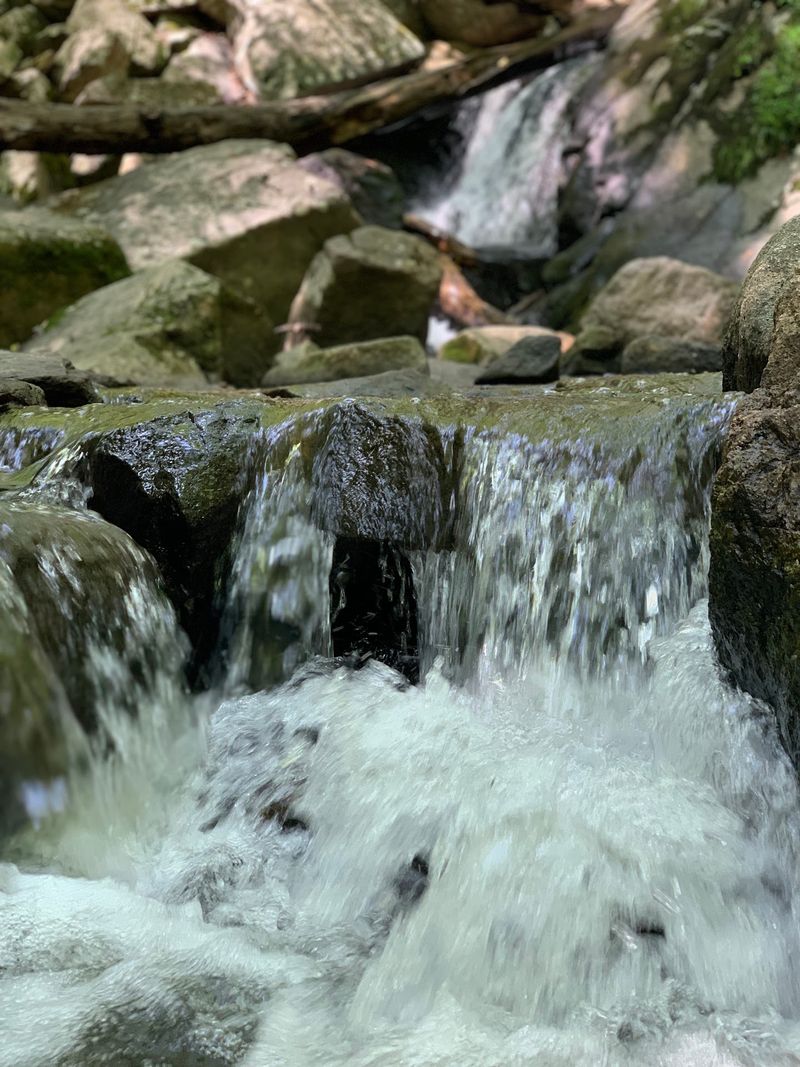
Here, the waterfall is not one dramatic drop demanding all the attention. The Black River and its tributaries tumble through Hacklebarney State Park in a succession of cascades, pools, rapids, and smaller falls, each framed by giant boulders and hemlock-shaded slopes.
That abundance makes the Long Valley park ideal for wandering rather than racing toward a single viewpoint. Follow the trails down into the ravine, where the temperature cools, the sound of moving water builds, and moss coats nearly every surface that stays still long enough.
The Waterfall Trail provides a short connection near one of the prettiest drops, while the Riverside and Main trails can turn the visit into a satisfying loop. Official trails total fewer than five miles, so it is possible to see much of the park without sacrificing the entire day.
Do not underestimate the descent, however. Stone steps and riverside rocks become slippery after rain, exactly when the cascades are at their best.
Autumn brings strong color and heavy weekend traffic; early spring supplies fuller water with fewer crowds. Picnic tables scattered through the woods make this an easy place to linger, though food should be packed securely and all trash carried out.
Parking is available inside the park, but popular fall weekends can test its capacity. Think of Hacklebarney as a whole ravine performance, not one curtain-drop moment. The water keeps producing encores around every bend.
9. Boonton Falls
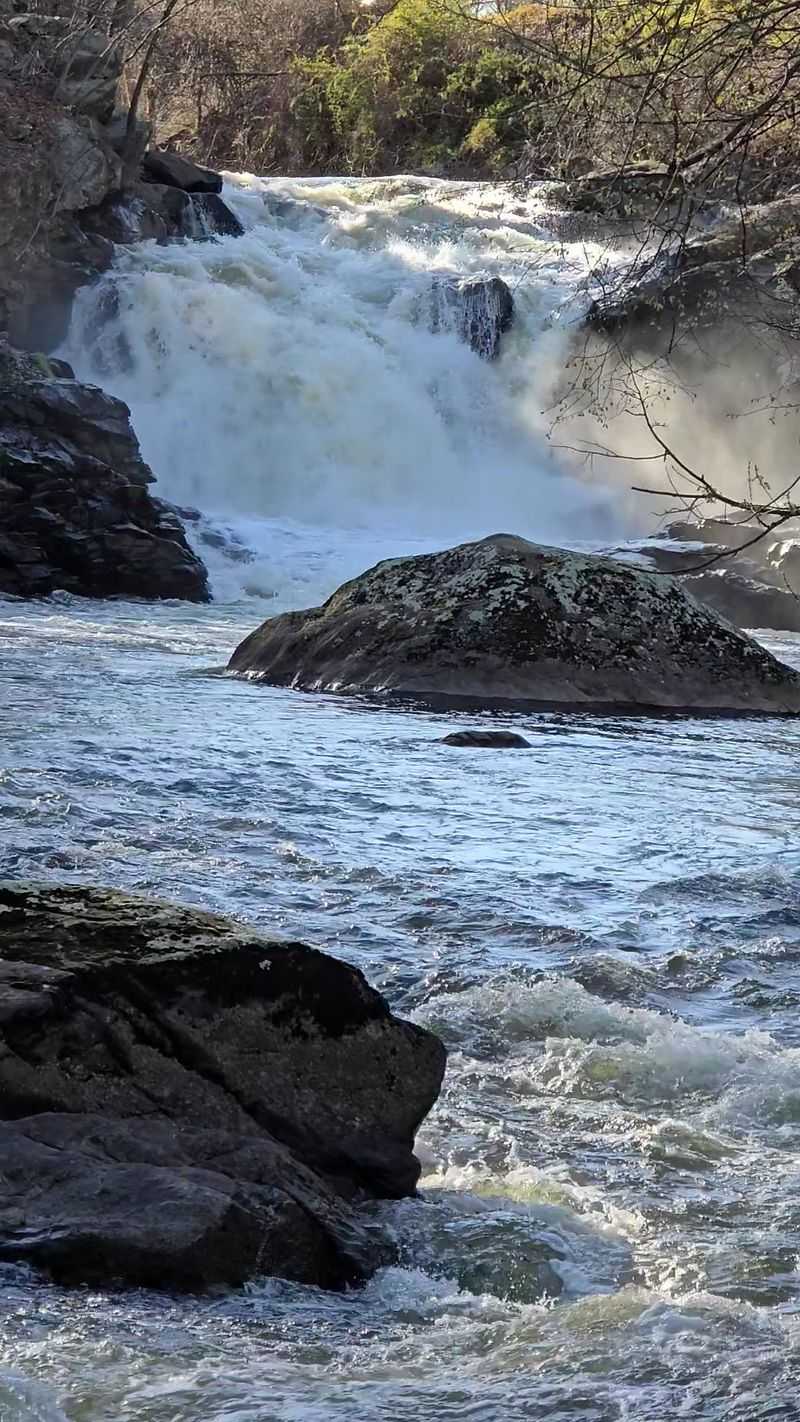
Downtown Boonton supplies the soundtrack here. The Rockaway River gathers speed beneath a historic stone bridge, crashes over Boonton Falls, and races into a narrow gorge once tied closely to the town’s industrial life.
It is a more muscular scene than the delicate forest cascades elsewhere on this list. A large drainage area keeps the falls looking powerful even when smaller seasonal waterfalls around North Jersey are fading, and high water turns the gorge into a loud, foaming channel.
Grace Lord Park provides the main access. From Essex Avenue, a short walk leads toward views from either side of the river, with the bridge helping visitors cross between perspectives.
Erosion and neighboring private property limit where you can safely wander, so respect barriers rather than hunting for an unofficial angle near the gorge. There is no dedicated waterfall parking lot, but street parking is usually available along Essex Avenue; read posted restrictions before leaving the car.
The setting makes this an easy outing to pair with a walk through Boonton’s compact downtown, turning a quick waterfall stop into a relaxed half day without requiring hiking gear or a packed lunch. Rainy periods bring the most drama, although the falls remain more dependable than many on this list.
Stay well back from the water when the river is swollen. Boonton Falls may be convenient, but that accessibility should never be mistaken for a tame river.
10. Ramapo Falls
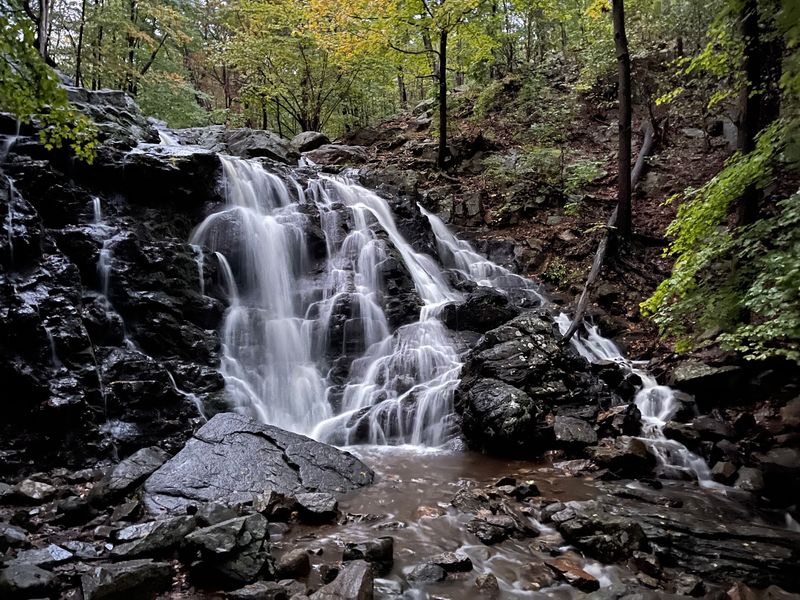
Pine needles soften the trail, Scarlet Oak Pond appears between the trees, and then a small cascade begins whispering over the rocks. Ramapo Falls is not a towering showpiece.
Its appeal comes from the way it fits into a varied hike through Ramapo Valley County Reservation in Mahwah. The seasonal waterfall slides down a slanted rock face in several shallow steps, looking its liveliest after rain and during spring runoff.
In a dry summer, expectations should be adjusted accordingly; this is one secret that occasionally takes the day off. Reaching it can be folded into a loop that also passes the pond and climbs toward viewpoints over the surrounding hills.
The reservation offers multiple route combinations, from shorter family-friendly walks to longer, steeper circuits, but the web of intersecting trails makes a current map essential.
The main parking area at 610 Ramapo Valley Road is large, yet it can still fill on a sunny weekend because the reservation is one of Bergen County’s most popular hiking spots.
An early start avoids both parking stress and the busiest trail traffic. Wear shoes with traction, especially after rain, when mud and wet rock arrive along with the better waterfall flow.
This is a place to appreciate scale rather than chase spectacle: a quiet cascade, a reflective pond, and wooded hills packed remarkably close to Route 202.
11. Laurel Falls
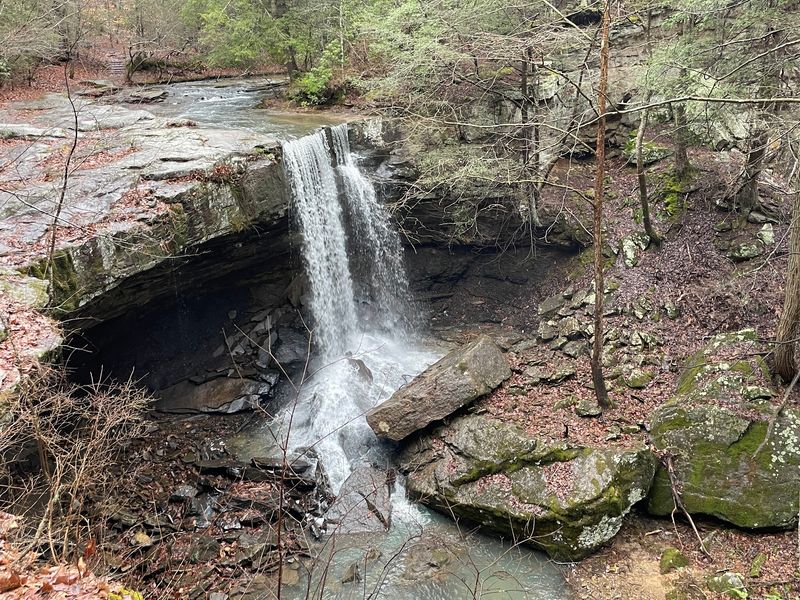
Roadside waterfalls usually feel like consolation prizes. Laurel Falls does not.
Just off Old Mine Road in Worthington State Forest, runoff from Sunfish Pond tumbles down the Kittatinny slope through a shady cleft filled with rock and mountain laurel. The cascade is composed of several small drops rather than one huge plunge, giving it a layered look when the stream is moving well.
Spring and the days after sustained rain are the right moments to visit. By late summer, the flow may become thin enough to make the rocks the main attraction.
The short approach suits travelers who want waterfall scenery without a long hike, but there is room to make the day more ambitious. Nearby trails climb toward Sunfish Pond and the Appalachian Trail, trading quick access for rocky elevation and broader Delaware Water Gap views.
If you continue uphill, prepare for a genuine Kittatinny hike rather than an extension of the easy waterfall stop. Old Mine Road is narrow, isolated, and vulnerable to weather-related or seasonal closures, so confirm the route before driving out and download directions while you still have reliable service.
Pull off only where parking is permitted; soft shoulders and blind bends are poor places to improvise. Around the falls, mountain laurel blooms can add color in late spring, but wet stone remains slick in every season.
12. Tillman Ravine Falls
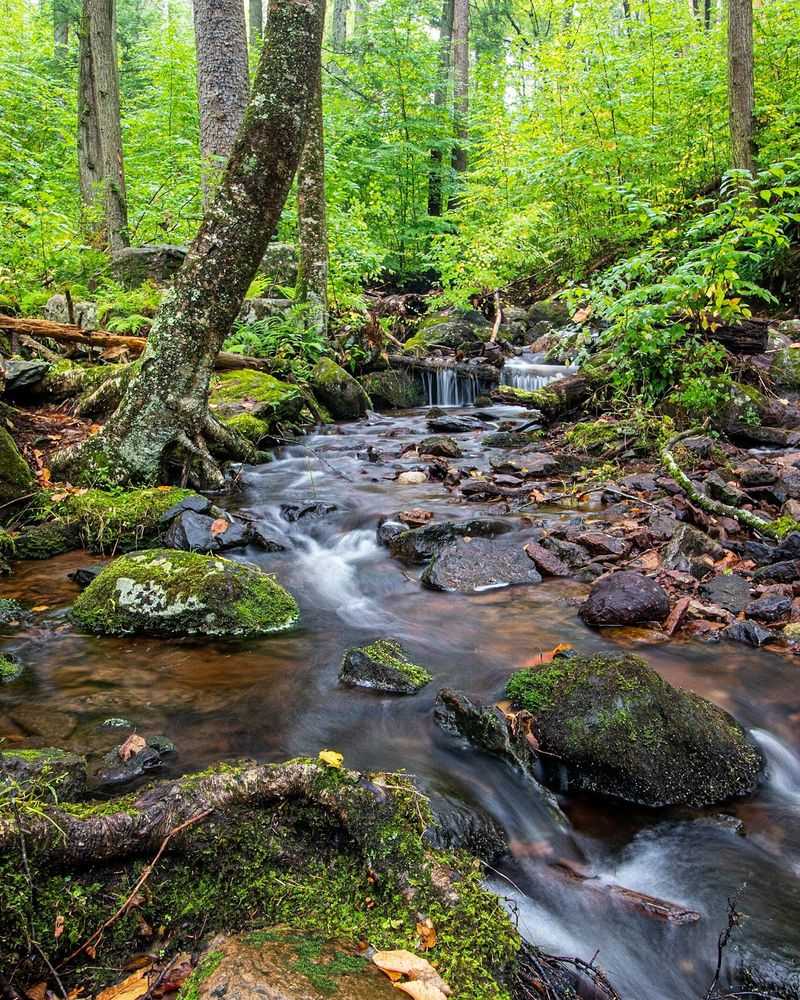
Tillman Ravine does not save all its water for one grand finale. Tillman Brook twists through a narrow gorge of red shale and sandstone, repeatedly slipping over ledges, curling around boulders, and gathering in dark little pools beneath tall hemlocks.
The result is a chain of cascades—often collectively described as Tillman Ravine Falls—that keeps changing as you move along the trail. It feels intimate rather than monumental.
Rhododendron crowds the banks, ferns cover the ground, and the ravine stays cool enough to make a warm afternoon noticeably more comfortable. A roughly 1.5-mile loop explores the natural area, with roots, rocks, wooden crossings, and a moderate climb out of the ravine.
It is manageable for many walkers, but damp footing means this is no place for smooth-soled shoes. Begin from one of the designated parking areas along Tillman Road and follow the marked route; cutting down the banks damages fragile vegetation and puts hikers on unstable ground.
Spring delivers the fullest cascades, while autumn layers copper leaves over the red rock. Combine the loop with nearby Buttermilk Falls or Silver Spray Falls for an excellent Sussex County waterfall day, but leave enough time to enjoy Tillman slowly.
Its best moments are the small ones: water squeezing through a stone chute, light catching a shallow pool, and the sudden quiet after the brook bends away.