Michigan’s forest history feels a lot more powerful when the giants are still standing around you. At Hartwick Pines State Park, the Old Growth Forest Trail protects one of the rare places where towering pines survived after much of the state’s original forest was lost during the logging boom of the 1800s.
Walking here is not just a peaceful hike through the woods, but a chance to step into a landscape that hints at what Michigan once looked like on a much larger scale. The trees bring beauty, shade, history, and a quiet sense of scale that can catch visitors by surprise.
For anyone who wants a Michigan trail with meaning beyond the scenery, this old-growth walk is hard to forget.
Where the Trees Still Tower
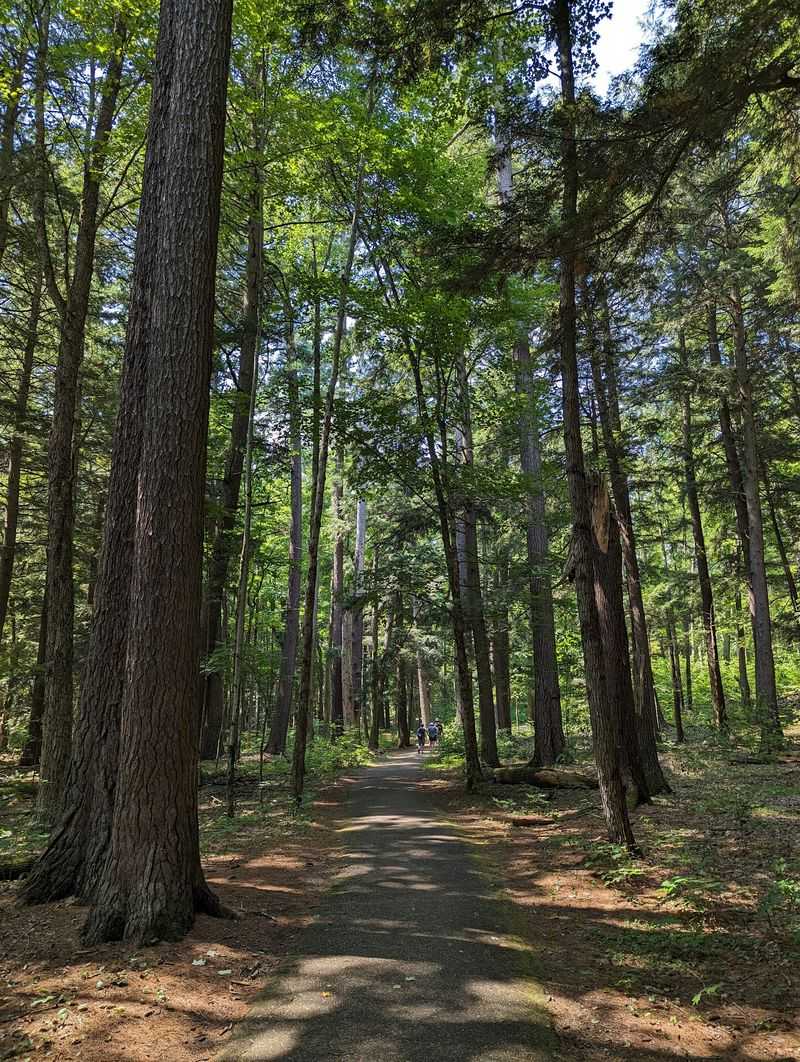
Some trails feel small right away. Old Growth Forest Trail does the opposite, because the trees quickly take over the scene with trunks so wide and tall that the path seems tucked underneath them.
Walking here gives a clear picture of scale that photos often miss. A person standing near one of these pines looks tiny, and that simple contrast helps explain why this forest matters so much in Michigan.
The shade is one of the first practical perks. On a warm day, the canopy softens the sun and makes the walk easier for families, older visitors, and anyone who wants a short outing without feeling baked by open sky.
Look up for a moment and the tops seem almost stitched together. Needles, leaves, and high branches form a roof that changes the light below, turning ordinary daylight into a cooler green glow.
Down at ground level, the mood shifts again. Ferns, low plants, fallen logs, and patches of moss create texture that keeps the trail from feeling flat, even when the route itself is manageable.
That visual richness is part of the draw, but the age of the forest is the deeper story. Much of Michigan lost its giant pines during the heavy logging era, so seeing mature trees still standing in one place feels unusual in a way that is easy to understand even without expert knowledge.
Instead of racing through, slow the pace and compare bark patterns, trunk widths, and the way the sunlight lands in different spots. Old Growth Forest Trail works best when it is treated less like a workout and more like a living snapshot of an earlier Michigan landscape.
The Forest That Escaped the Saw
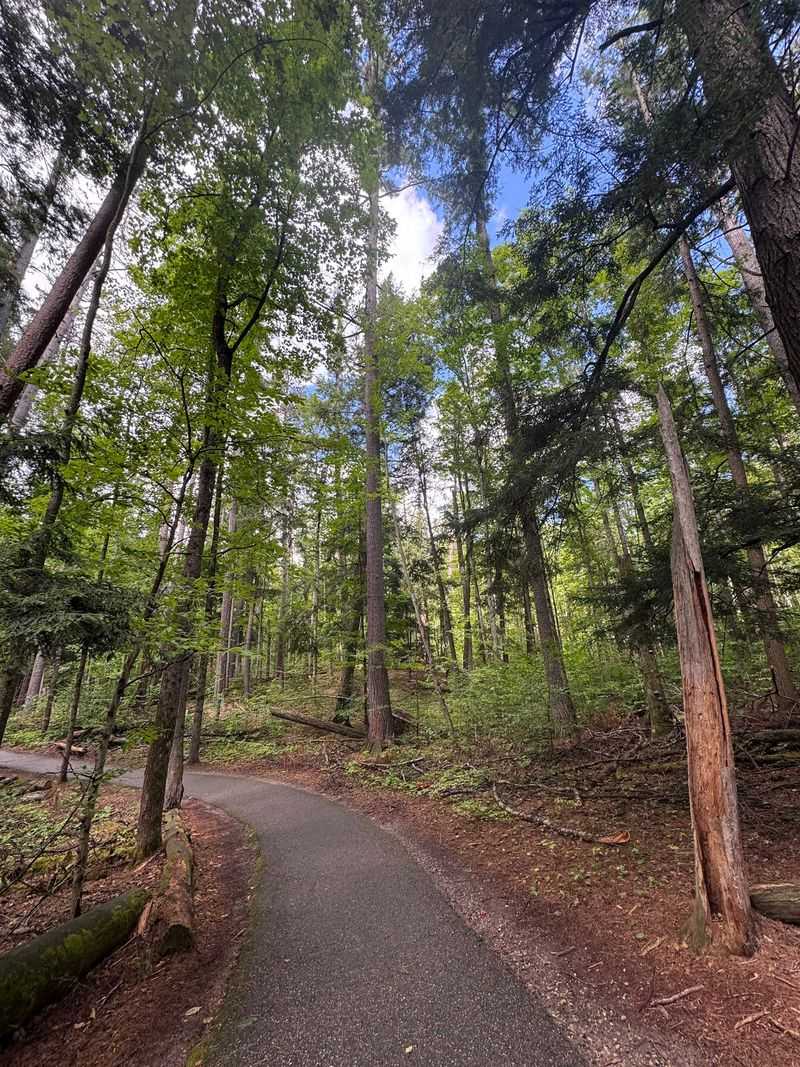
There is a quiet shock built into this trail. In a state shaped by logging, a surviving stand of giant trees can seem almost unlikely, like a chapter of history that somehow stayed on the page when most others were torn out.
During the late 1800s and early 1900s, logging transformed huge parts of Michigan. White pine was especially valuable, and forests that once looked endless were cut at a fast pace to feed mills, build towns, and supply a growing country.
Old Growth Forest Trail matters because it lets that history become visible instead of abstract. Rather than reading about vanished timber in a book, visitors can stand among trees that show the size, spacing, and character of the woods that once covered broad parts of the region.
That change in understanding is powerful for kids and adults alike. Big numbers and dates can feel distant, but one look at a towering trunk makes the past seem much more real.
Hartwick Pines is also tied to the broader story of how Michigan began protecting important natural spaces after so much land had already been altered. Preservation here is not just about scenery.
It is about saving an example of what was nearly erased.
Practical tip helps here too: before starting, take a minute to read any posted trail or interpretive information. A little context makes the walk richer, because each large pine stops being just a tree and becomes evidence of a larger state story.
By the end of the trail, the survival of this forest does not feel accidental in a casual way. It feels precious, limited, and instructive, which is exactly why the short walk carries more weight than its distance might suggest.
Northern Michigan in One Short Walk
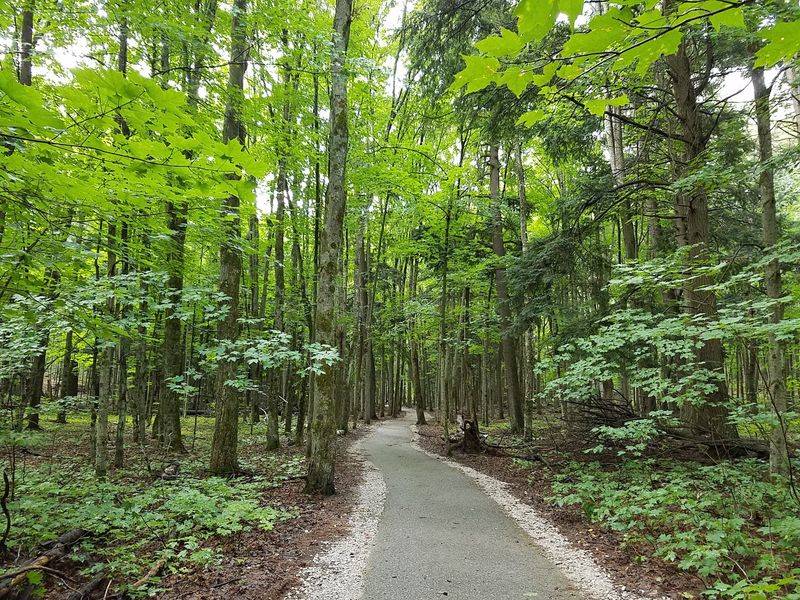
Not every memorable forest hike has to be long. Old Growth Forest Trail packs a lot into a relatively short route, which is one reason it works so well for travelers who want a strong experience without setting aside half a day.
The trail is known for being approachable, and that changes who can enjoy it. Families with younger kids, casual walkers, and anyone easing into outdoor trips can get a close look at rare old growth without tackling a rugged backcountry trek.
That ease does not make the walk dull. The appeal comes from how quickly the scenery delivers something substantial, with giant trunks, deep shade, and the kind of quiet that makes footsteps and birdsong seem sharper.
Because the route is manageable, it also invites better observation. Instead of focusing on distance, people can spend time noticing bark ridges, broken snags, root systems, and the way fallen wood becomes part of the living forest again.
For Northern Michigan trips, that is a smart trade. A short trail that actually shows something rare can be more rewarding than a longer one with less visual impact.
Timing matters a lot here. Early morning often brings cooler air and slanting light through the canopy, while later afternoon can add warm tones that make the trunks stand out in photos.
Midday still works, especially on hot days, since the shade takes the edge off summer sun.
Wear comfortable walking shoes and bring bug spray when the season calls for it. Then leave extra space in the schedule, because even a modest trail like this tends to slow people down in the best way, with frequent stops simply to look up.
More Than Pines on the Path
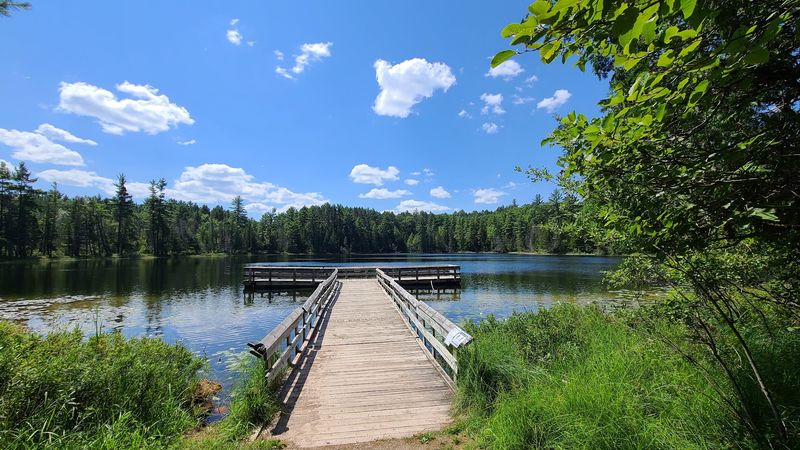
At first glance, the giant pines steal the show. Stay alert a little longer, though, and the trail starts revealing a fuller forest community with hardwoods, understory plants, fallen timber, and small details that make the walk more layered than a simple tree parade.
That variety matters because old forests are not only about height. They are also about structure, with living trees of different ages, standing dead wood, broken limbs, soft ground cover, and changing pockets of light that help many forms of life share the same space.
Kids often notice the best details here. A twisted root, a log wearing moss, or a patch of filtered sun can turn the trail into a scavenger hunt without needing signs, apps, or much planning.
Adults can get more from the walk by slowing their eyes down. Instead of staring only at the tallest trunks, look for differences in bark color, branch shapes, and the open spacing between older trees compared with tighter younger woods seen elsewhere.
Even the sounds are part of the lesson. Wind moving through high needles is different from leaves rustling lower down, and bird calls seem to bounce differently in a mature forest with broad vertical space.
Photographers have an interesting challenge here. The trees are so tall that single snapshots may flatten the scene, so it helps to include a person, part of the trail, or the forest floor to show scale and depth.
Small observations add up fast on Old Growth Forest Trail. By the time the walk ends, the rare giant pines remain the headline, but the supporting cast of plants, textures, and natural clutter gives the place its real richness and keeps the scene from feeling one-note.
A Living History Lesson Under the Canopy
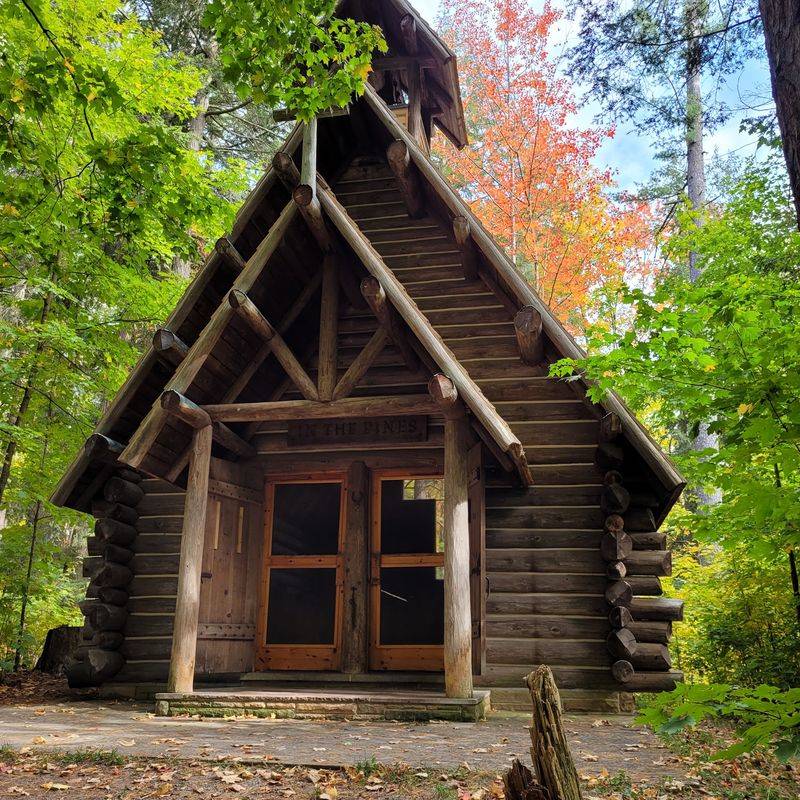
History class usually happens indoors. Here, the lesson stands upright in bark and branches, and that makes Old Growth Forest Trail one of the easiest places in Michigan to connect natural beauty with the story of how the state was built.
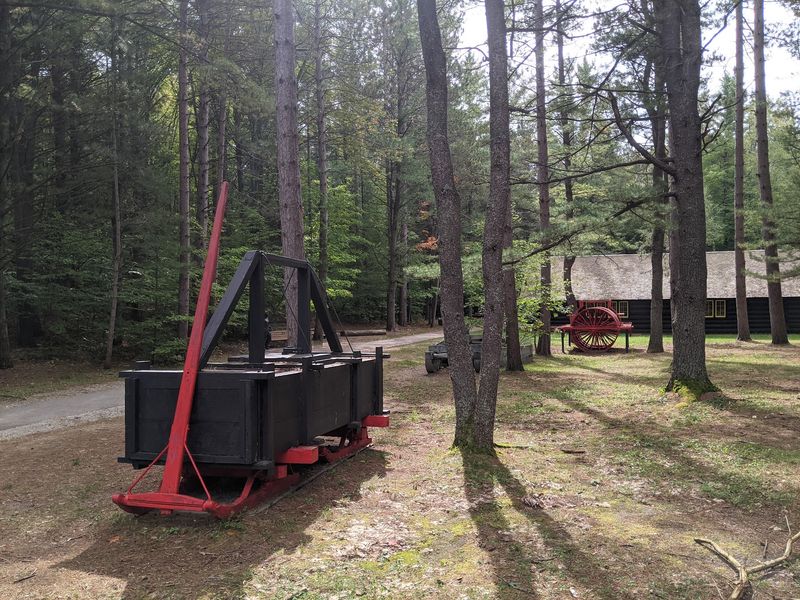
The logging era changed nearly everything across the region. Rail lines, camps, sawmills, and booming lumber demand pushed into forests that had once seemed unlimited, and the results shaped towns, jobs, roads, and the landscape people know today.
Seeing surviving old growth gives that history a needed counterpoint. Instead of focusing only on what was cut, the trail shows what existed before the clearances, offering a more complete picture of Michigan’s timber past.
That is especially useful for younger visitors. A child may not remember every date from the lumber era, but standing near an enormous old pine makes it easier to grasp how much was lost and why preservation became such an important goal.
The setting also encourages a different kind of attention. Quiet woods tend to slow conversation, which leaves room for questions about age, forest change, wildlife habitat, and the long time it takes for an ecosystem like this to develop.
If the visit includes a broader stop in Hartwick Pines State Park, pairing the trail with interpretive material can deepen the experience. Even a few minutes of background before or after the walk can help connect the living forest to the larger logging story of northern Michigan.
Old Growth Forest Trail succeeds because it does not preach. It simply places visitors in front of evidence that is hard to ignore, and the giant trunks do the teaching with a kind of calm authority that no textbook page can match.
Best Time to Catch the Trail at Its Best
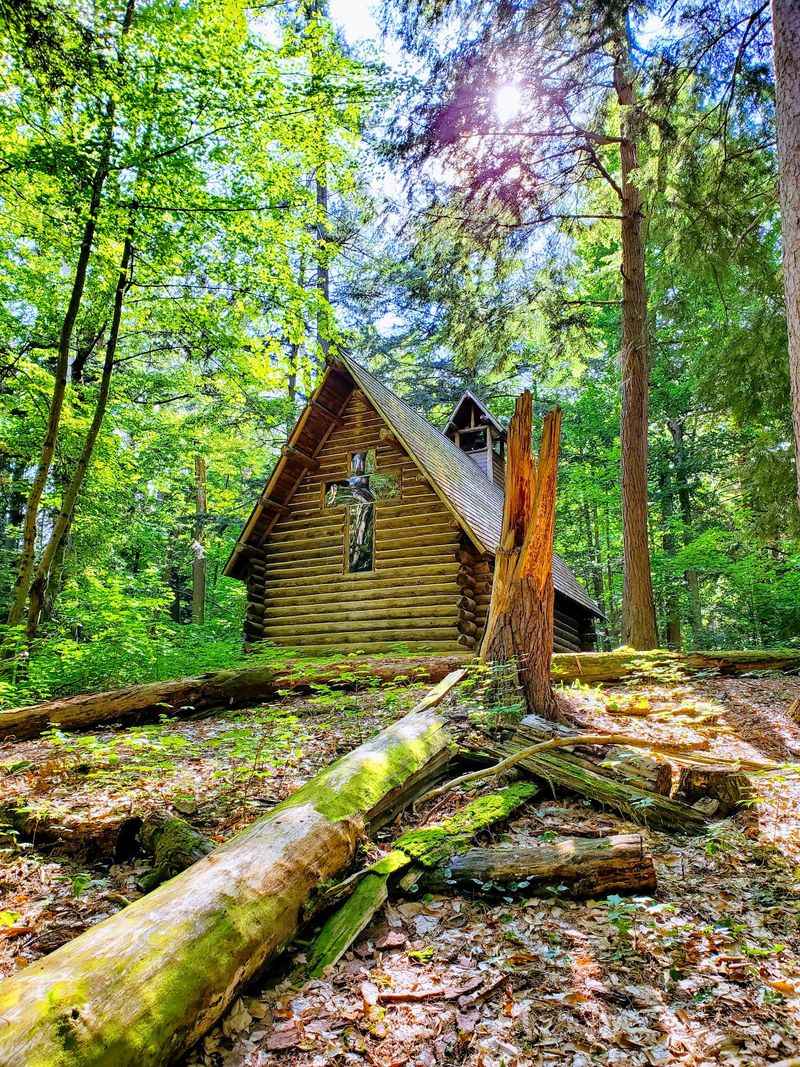
Timing can change the whole mood of this trail. The same path can feel cool and hushed in the morning, bright and leafy at midday, or softly golden later in the day when sunlight slips sideways through the trunks.
Summer is an easy choice for thick green canopy and deep shade. It is also when bug spray earns its place in the daypack, since wooded northern Michigan trails can come with plenty of mosquitoes, especially after rain or in humid stretches.
Fall brings a different personality. The air is often crisper, the colors around the old growth can sharpen, and the walk feels especially comfortable for people who prefer cooler hiking weather and fewer peak summer annoyances.
Spring has its own appeal too, though conditions can vary. Fresh growth on the forest floor and active birds make the trail lively, but visitors should be ready for damp spots, shifting temperatures, and changing trail conditions depending on the season.
Winter can be beautiful in the park, yet anyone planning a cold weather visit should check current conditions and available facilities before heading out. A short trail is still easier when footwear matches the surface and expectations match the season.
As for time of day, early hours often provide the quietest atmosphere and the nicest light for photos. Later in the day can still be excellent, especially for travelers fitting the stop between other northern Michigan plans.
Bring water, wear shoes with good grip, and allow more time than the mileage suggests. Old Growth Forest Trail is the kind of place where progress slows naturally, not because the route is difficult, but because the trees keep asking for one more pause and one more look upward.
Why This Rare Forest Still Hits So Hard
Some places impress with big overlooks or dramatic cliffs. Old Growth Forest Trail works in a quieter way, building its impact through scale, age, and the simple fact that so much like it once disappeared across Michigan.
That combination gives the walk unusual weight. It is peaceful, yes, but it is also a reminder that landscapes are not guaranteed to last unless someone chooses to protect them.
The giant trees do not need much explanation to make that point. Their size tells a story about time, patience, and survival, while the surrounding forest shows how a mature ecosystem carries complexity that younger woods are still growing toward.
For travelers, the trail stands out because it offers more than scenery in a small package. It is educational without being stiff, accessible without being bland, and photogenic without depending on flashy features.
It also fits many kinds of trips. Families can treat it as an easy nature outing, road trippers can use it as a meaningful stop near Grayling, and longtime Michigan residents can see a rare piece of their state’s natural past still standing where it belongs.
Practical value adds to the appeal. The walk does not demand extreme fitness, expensive gear, or complicated planning, which means the barrier to seeing something special is refreshingly low compared with many well-known outdoor destinations.
In the end, the trail’s strongest quality may be its honesty. Old Growth Forest Trail does not rely on spectacle or hype.
It simply presents a rare surviving forest, lets the trees speak for themselves, and sends people back out with a clearer picture of what Michigan once held in abundance.
Share this story