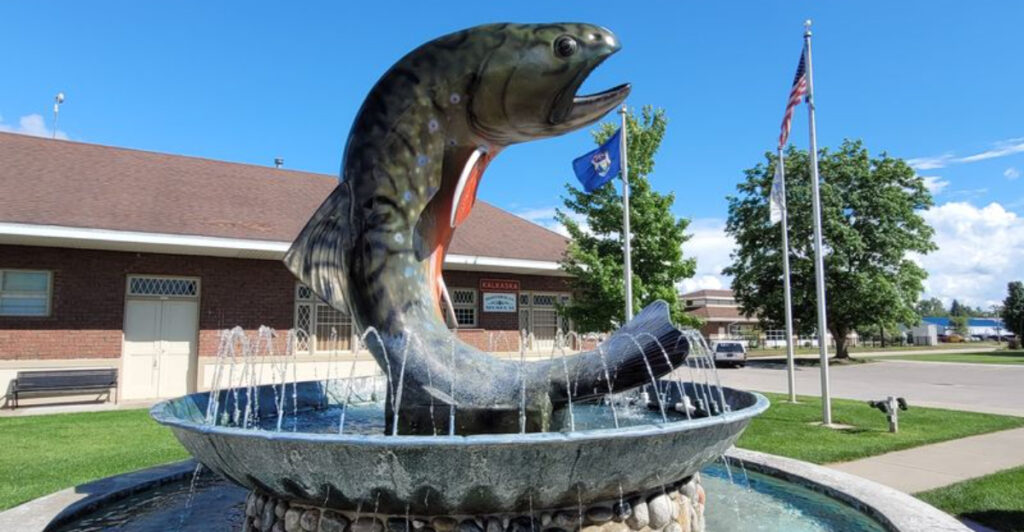
Roadside landmarks get more interesting when they reveal something real about the town around them. In Kalkaska, Michigan, the National Trout Memorial may start with the fun of seeing a giant fish downtown, but it quickly points to the community’s deep connection to fishing, local identity, and small-town pride.
The oversized trout gives visitors an easy photo stop, yet it also helps tell the story of a place that has built part of its character around the water and the catch. That mix of humor, history, and hometown personality is what makes the landmark stick in people’s minds.
For anyone who enjoys Michigan stops with a little surprise and a clear sense of place, this Kalkaska icon is worth noticing.
The trout that refuses to blend in
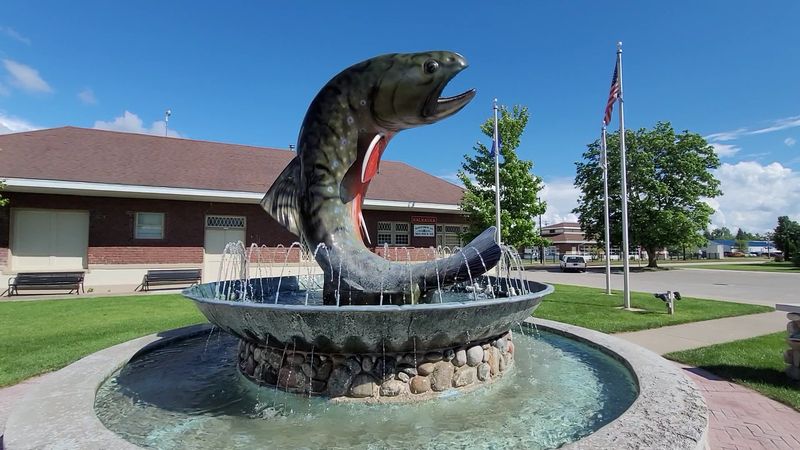
Nothing about the National Trout Memorial tries to stay quiet. Set right along South Cedar Street in Kalkaska, the oversized fish instantly grabs attention with its scale, shape, and bright painted surface.
Drivers on U.S. 131 can spot it without much effort, which helps explain why it has become such a dependable stop for road trippers moving through northern Michigan.
The size is the first joke and the first surprise. A trout is usually pictured in a stream, held in two hands, or printed on a bait shop sign.
Here, it rises as a full public monument, turning a familiar outdoor symbol into something playful, civic, and impossible to ignore.
That visual boldness matters because roadside landmarks have to do their work quickly. In a few seconds, the memorial tells newcomers that Kalkaska is proud of its trout connection and comfortable showing a little personality.
The fish is not tucked away in a park where only locals would know to look. It is planted where the town can introduce itself at once.
There is also a nice balance between humor and purpose. The sculpture is fun enough for family photos, but it does not read like a random novelty dropped beside the road.
Its placement, maintenance, and long-running local recognition give it the weight of a true town symbol.
For travelers, that means a stop here offers more than a quick laugh. The memorial works as a visual welcome sign, a snapshot backdrop, and a clue to the culture of Kalkaska.
Before anyone steps into a museum or festival, the giant trout has already explained the town in one bold image.
Sunlight, spray, and colors that do the heavy lifting
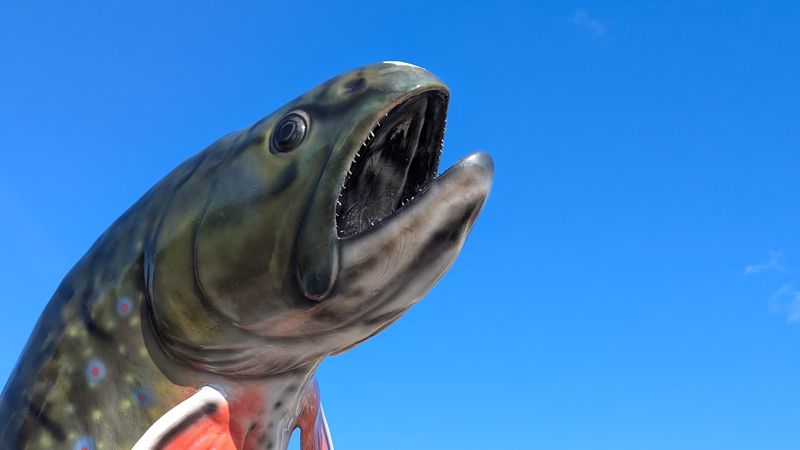
Some landmarks depend on complicated design, but this one wins with simple showmanship. The National Trout Memorial uses color, scale, and seasonal water effects to turn a fish sculpture into something lively.
When the sun hits the painted body at the right angle, the surface stands out sharply against the street and surrounding buildings.
That color is a major reason the memorial photographs so well. Instead of fading into gray stone or dark metal, the trout reads clearly from a distance.
Bright tones make it easier for families, road trippers, and festival crowds to notice it fast, even if they only planned to pass through town.
Warmer months add another layer. Low jets of water around the fish give the space movement and help the monument feel less static than a standard statue on a pedestal.
The fountain element also matches the trout theme in an obvious but effective way. A fish belongs with water, and that small detail ties the whole display together.
Kids are likely to notice the splash first, while adults may be drawn to the humor of seeing a giant trout presented with such care. Either way, the result is the same.
The memorial becomes a place where people pause instead of glancing once and continuing down the road.
Lighting can change the experience more than expected. Midday brightness makes the paint pop, while softer late-day light can bring out contour and shape.
If the fountain is running, reflections and droplets add extra energy to photos without requiring any special camera trick.
For a public monument, that is smart design. It creates interest using a few direct ingredients rather than a lot of complexity.
Big fish, bold color, moving water, clear visibility. The formula is simple, but it works remarkably well in the center of Kalkaska.
A small town symbol with a serious local job
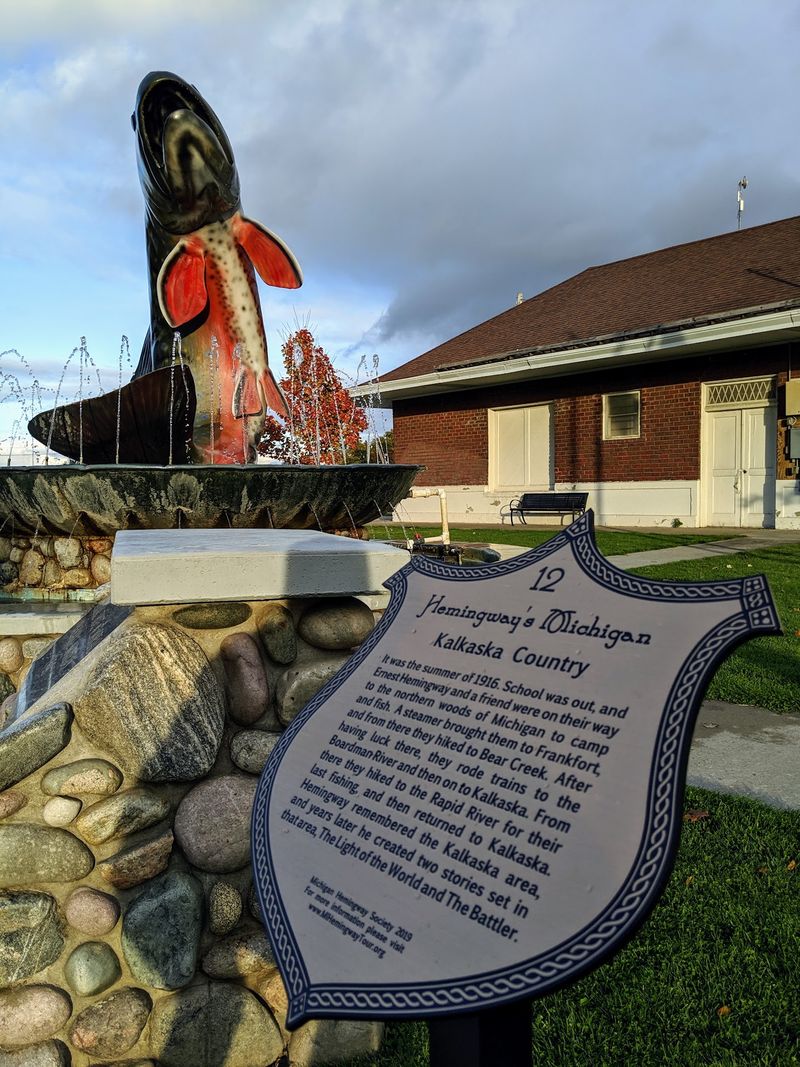
Plenty of towns have statues, but not every statue becomes shorthand for the place itself. In Kalkaska, the National Trout Memorial does exactly that.
The fish serves as a public symbol, a meeting point, and a quick lesson in what matters locally, all without needing a long plaque to explain itself.
Fishing identity runs deep across northern Michigan, and trout carries strong meaning in that regional picture. By giving trout a central place in town, Kalkaska turns an outdoor tradition into a visible civic statement.
The monument suggests that local culture is tied not only to buildings and roads, but also to rivers, recreation, and the habits of the surrounding landscape.
That is why the memorial feels bigger than a novelty stop. It has a job to do.
It marks downtown with a theme that is easy to understand, and it gives residents a landmark that can anchor events, directions, and everyday town pride.
There is also an interesting difference between a memorial like this and a standard sign. A sign delivers information, then disappears from memory.
A giant trout creates a reaction first, then lets the meaning sink in. Humor opens the door, but identity is what lasts.
Its location near other downtown features strengthens that role. Instead of standing in isolation, the sculpture fits into a broader town center setting, making it part of how Kalkaska presents itself to both locals and first-time arrivals.
That connection helps the monument feel woven into daily life rather than staged only for tourists.
For anyone trying to understand why a giant fish matters, the answer is simple. It turns local heritage into a public image that people can see in seconds.
In a small town, that kind of symbol does important work, and the National Trout Memorial handles it with confidence.
Where Michigan festival energy meets a fish monument
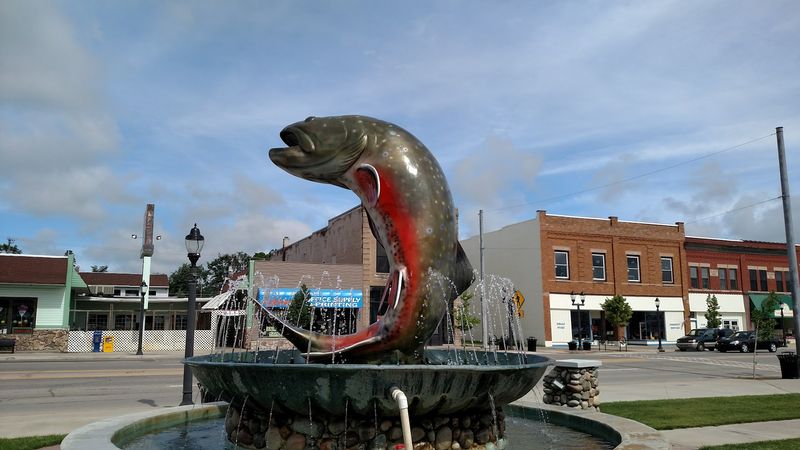
A giant trout standing in Kalkaska makes even more sense once festival season enters the picture. The town is closely linked with trout-themed community traditions, and the memorial acts like a visual centerpiece for that identity.
During busier times of year, the statue feels less like a standalone attraction and more like part of a larger town rhythm.
That connection gives the monument extra life. A sculpture can be amusing on an ordinary weekday, but near a festival setting it starts to represent continuity.
Generations have grown up seeing the fish, meeting near it, or folding it into annual routines connected to town events.
The result is a landmark with both public and personal meaning. For one traveler, it may be a funny photo stop on a northbound drive.
For a longtime resident or returning family, it can signal summer, gatherings, parades, music, fair activity, and the familiar pattern of coming back to Kalkaska year after year.
Even without a major event taking place, that local energy is easy to imagine around the memorial. It sits in a town where civic celebration and outdoor identity overlap neatly.
Trout is not being used as random decoration. It points toward a broader story about how Kalkaska brands itself and how the community expresses that pride in public spaces.
There is a practical side to this, too. Landmarks tied to festivals become easier to remember, which helps strengthen a town’s image beyond its borders.
One oversized fish can do a surprising amount of promotional work simply by being distinctive, visible, and linked to a recurring local tradition.
That is part of the memorial’s staying power. It belongs to everyday downtown life, but it also rises to the occasion when the town gets busier.
A roadside stop becomes a civic stage prop, and the trout ends up carrying more cultural weight than its playful look first suggests.
Best angles for photos without overthinking it
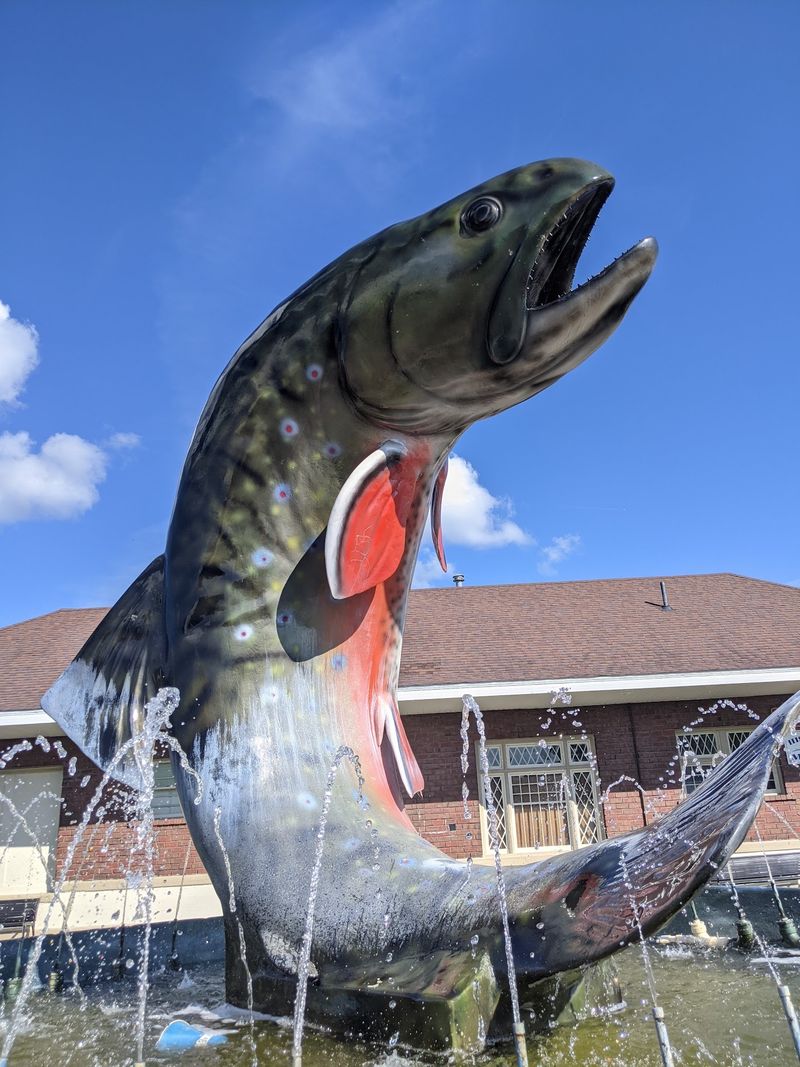
Roadside attractions work best when they are easy to enjoy, and the National Trout Memorial understands that assignment. No long hike, no complicated entry, no special gear.
A quick stop can still produce a memorable photo, especially because the fish is large enough to play with scale in a fun way.
Start with the obvious wide shot. Step back far enough to capture the full trout and part of the surrounding street scene.
That framing tells the real story, which is not only that the sculpture is big, but that it sits right in town where daily life moves around it.
Next, try a lower camera angle. Looking slightly upward can make the trout appear even larger, which adds a little humor without changing the subject.
If the fountain is running, waiting for a moment when the spray lines up around the base can make the picture look more active.
People photos are where the memorial really shines. One person standing beside the statue gives instant scale, while a family picture turns the stop into a proper road trip marker.
Bright daylight often works well here because the paint colors become sharper and the outline of the fish stays clean.
For anyone who prefers a quieter image, visiting when traffic and foot activity are lighter may help. That can make it easier to photograph the sculpture by itself, with fewer distractions around the frame.
Still, a little surrounding context is useful because it shows the memorial as part of Kalkaska rather than a random object cropped from its setting.
The best part is how low-pressure the whole stop feels. A few minutes can be enough for several different shots, from silly family poses to straightforward travel photos.
The trout does most of the work on its own. All a visitor really needs to bring is a camera and a small sense of humor.
An easy stop on South Cedar Street
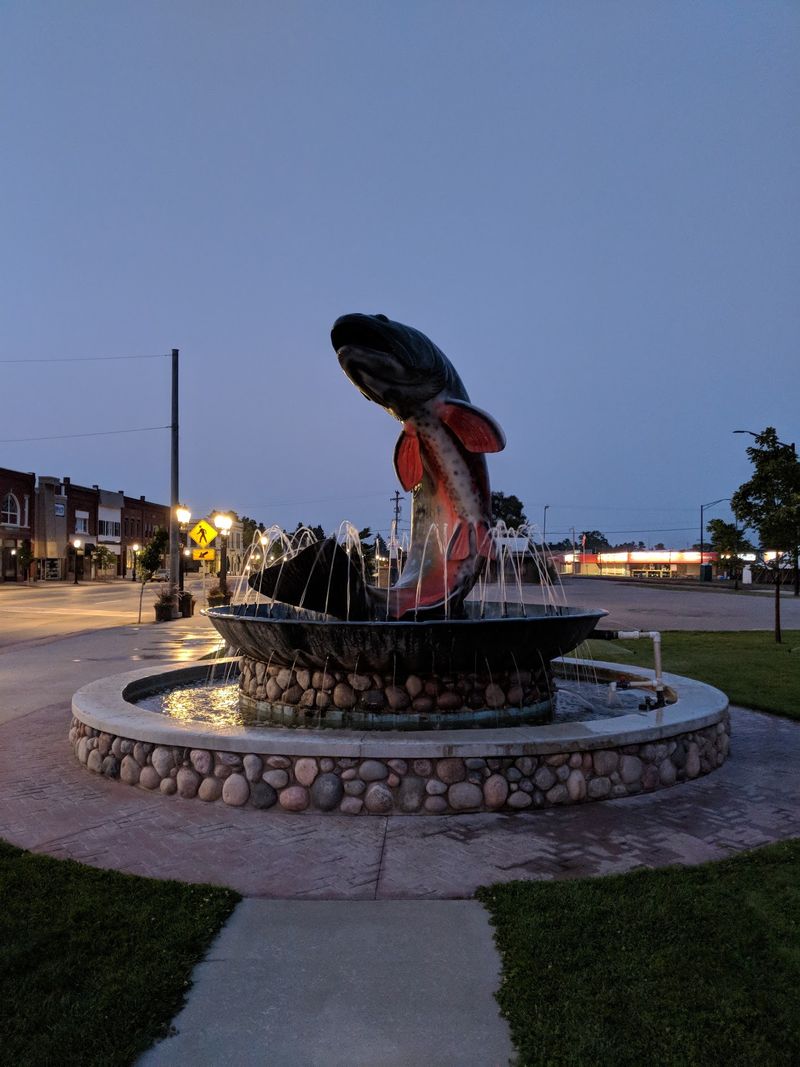
Not every attraction needs a half-day plan, and that is one of the strengths here. The National Trout Memorial is easy to reach on South Cedar Street, easy to notice from the main route, and easy to fit into a longer drive through northern Michigan.
That kind of convenience gives it broad appeal across age groups and travel styles.
Families can stop without turning the visit into a logistical project. Road trippers can stretch their legs, snap a few pictures, and move on.
Anyone exploring Kalkaska at a slower pace can use the memorial as a starting point for seeing more of the downtown area nearby.
Free parking adds to that simplicity. When a roadside landmark asks for almost no planning, more people are likely to pull over instead of saving the stop for another time.
The memorial benefits from that low barrier. It offers a clear payoff in just a few minutes, which is exactly what many highway travelers want.
Its setting also helps shape expectations in a good way. This is not a giant amusement complex or a fenced-off attraction requiring a schedule.
It is a town landmark, meant to be seen, enjoyed, and folded naturally into the flow of a day. That makes it approachable for first-time visitors who may not know much about Kalkaska before arriving.
Nearby features, including the local historical museum area, can make the stop feel slightly fuller for anyone who wants more context. Even so, the trout does not depend on extras to justify a visit.
It can function as a fast visual stop or a small piece of a broader downtown walk.
Practicality rarely gets top billing in travel stories, yet it matters. The National Trout Memorial succeeds partly because it respects people’s time.
In a world full of attractions that demand planning, tickets, and patience, this one offers instant access, a strong visual reward, and a very clear sense of place.
Why the giant fish stays with Kalkaska
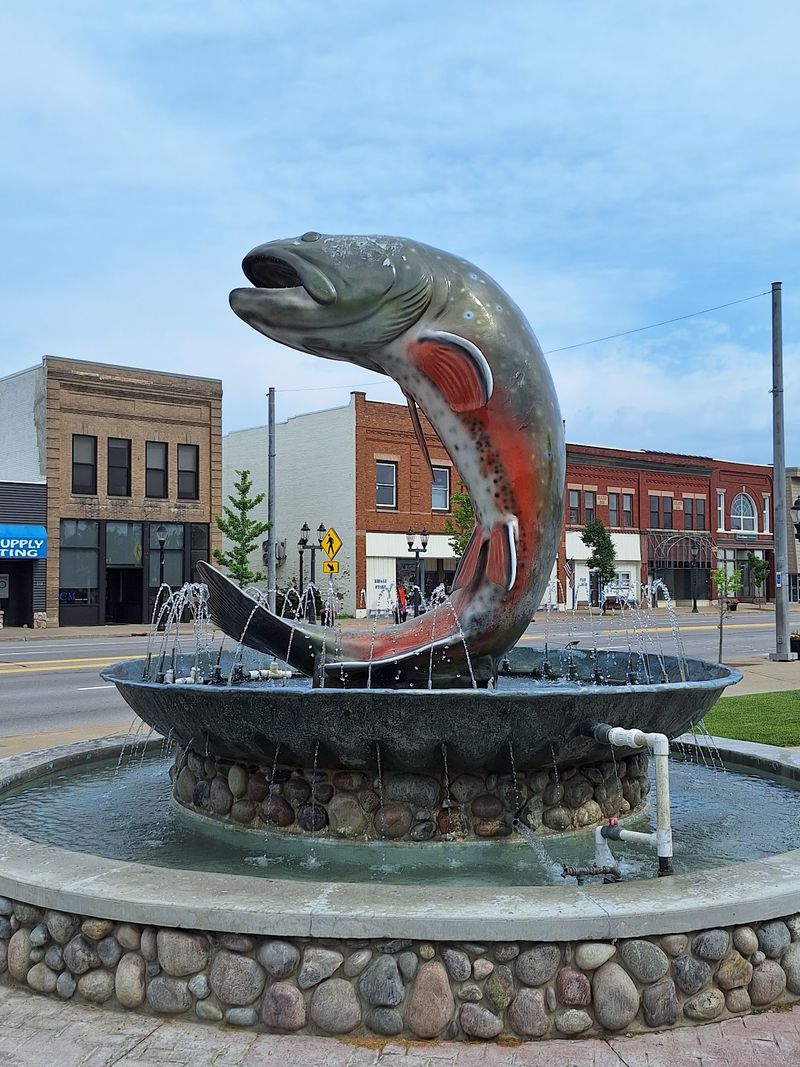
Some roadside attractions are only odd. The National Trout Memorial manages to be odd, useful, and deeply tied to its location all at once.
That combination is why the story behind the giant fish turns out to be bigger than expected. It is not only about size.
It is about how a town turns one oversized object into a lasting public image.
The memorial succeeds because it communicates quickly and clearly. In a single glance, it says trout matter here, humor is welcome here, and Kalkaska is comfortable being memorable.
Plenty of places struggle to express local identity without sounding generic. This trout avoids that problem by being specific, visible, and impossible to confuse with anywhere else.
There is also a refreshing lack of polish-heavy pretense. The sculpture does not need a dramatic setting on a mountain or lake overlook to work.
It stands in town, near the road, doing its job with confidence. That plainspoken placement is part of the charm because it keeps the memorial connected to everyday life.
Children may see a giant fish and laugh. Adults may notice the civic symbolism, the regional fishing connection, or the value of a landmark that gives a town instant character.
Both reactions are valid, and the memorial is strong enough to hold them together.
That layered appeal is rare. A place can be silly without being shallow, and local pride can be bold without becoming stiff.
Kalkaska’s trout lands in that sweet spot. It welcomes quick photos, but it also rewards a second look by revealing how carefully a small community can shape its own image.
In the end, the fish matters because it is doing more than decorating a corner. It announces Kalkaska, carries a piece of town identity, and turns a passing roadside moment into a story with local roots. For such a playful monument, that is serious staying power.
Share this story