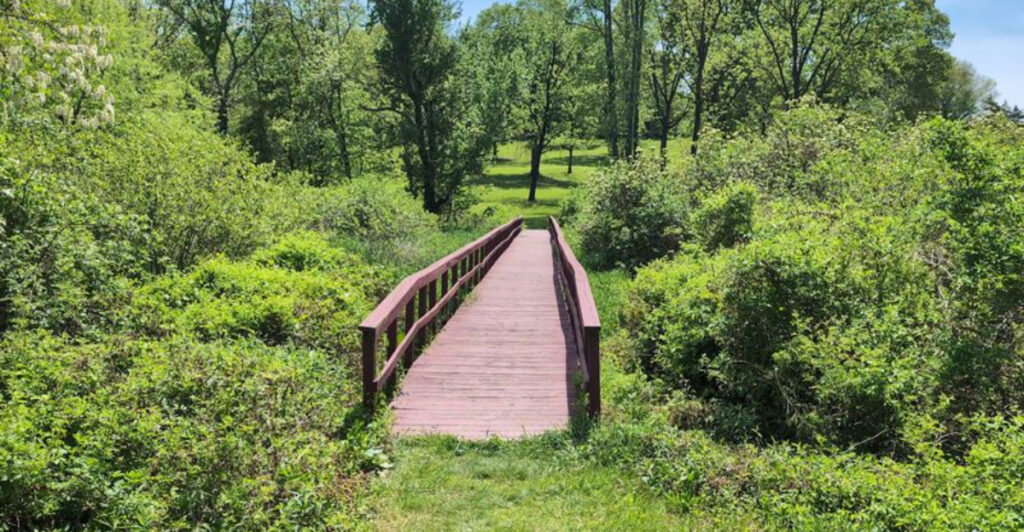
A boardwalk slips over a salt marsh near the Parkway. An obelisk rises above the state’s highest ridge.
Farther south, cedar water the color of strong tea curls past abandoned cranberry bogs and villages once powered by iron furnaces. These scenes sound as though they belong to three different states, yet they are all waiting inside New Jersey’s park system.
The Garden State packs beaches, mountains, hardwood ravines, historic estates, and wonderfully strange Pine Barrens terrain into a remarkably small map. Better still, you do not need expedition-level gear to enjoy most of it.
Many of these places work equally well for a serious hike, a family picnic, or an unhurried hour beside the water. A few are famous, while others remain unfamiliar even to people who have lived here for years.
Load the cooler, bring shoes that can handle a little mud, and meet 13 parks that deserve a much bigger place in your weekend plans.
1. Cheesequake State Park
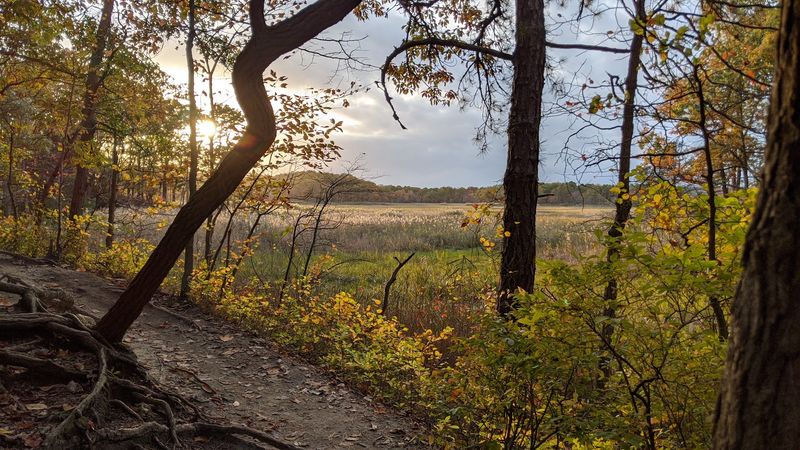
Salt marsh, cedar swamp, pine barrens, and northern hardwood forest rarely share the same address. At Cheesequake, they practically bump elbows.
The park sits near Matawan and Old Bridge, squeezed between New Jersey’s more urban north and its flatter, sandier south. That transitional location creates an unusual mix of landscapes—and makes a walk here feel much more varied than the mileage suggests.
Start on one of the marked hiking trails, where wooden walkways cross damp lowlands before the route climbs into oak forest. The short trails are manageable for families, but roots, steps, and wet patches keep them from feeling like laps around a neighborhood park.
Birders should make time for the marshes and Steamboat Landing area, where ospreys and other water-loving species provide the entertainment. Hooks Creek Lake supplies the warm-weather fun.
Swimming is allowed in the designated area when lifeguards are on duty, and the surrounding picnic grounds make it easy to turn a quick dip into an all-day outing. Fishing, camping, kayaking, and seasonal nature programs add more reasons to stay.
Its location just off the Garden State Parkway is both the park’s secret weapon and its occasional headache. Arrive early on pleasant weekends because the most convenient parking areas can fill.
Bring insect repellent in summer, expect a little mud after rain, and pack out whatever you bring in.
2. High Point State Park
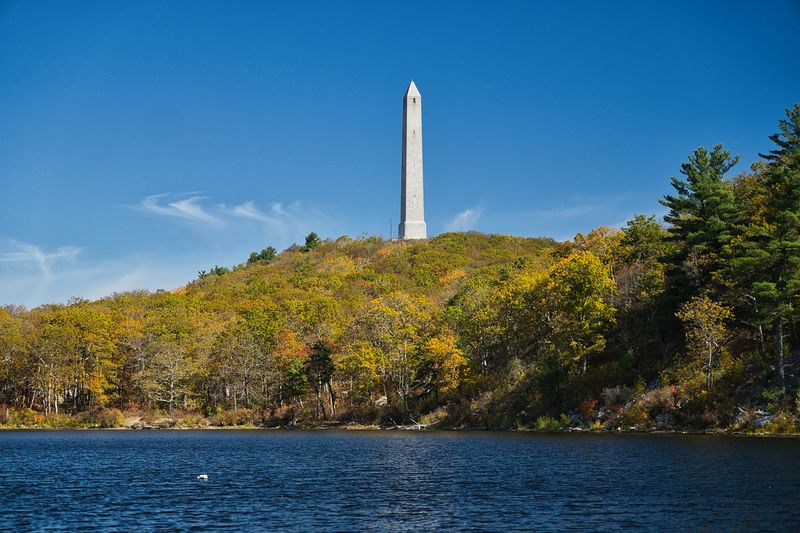
At 1,803 feet above sea level, New Jersey suddenly develops a dramatic streak. High Point Monument stands over the Kittatinny Ridge like a giant exclamation mark, with long views across farmland, forests, and the neighboring hills of New York and Pennsylvania.
On a crisp day, the summit can make the rest of the state feel very far away. Driving to the monument delivers the view with minimal effort, but hikers have better ways to earn it.
Trails cross rocky ridges, quiet woods, and stretches of the Appalachian Trail. The Monument Trail is a rewarding choice for visitors who want a proper hike without committing the entire day.
Fall brings the loudest colors and the largest crowds, so an early arrival pays off when the leaves reach their peak. Lake Marcia offers a completely different side of the park.
Its designated swimming area operates seasonally when lifeguards are present, and picnic tables nearby make it a fine base for families. Campers can choose from developed sites and more rustic options elsewhere in the park, while winter visitors trade hiking boots for cross-country skis or snowshoes when conditions cooperate.
The summit is often cooler and windier than the parking lot below, even in otherwise mild weather. Carry a layer, plenty of water, and a downloaded trail map.
Cell service can be inconsistent, but that may be one of High Point’s better features.
3. Ringwood State Park
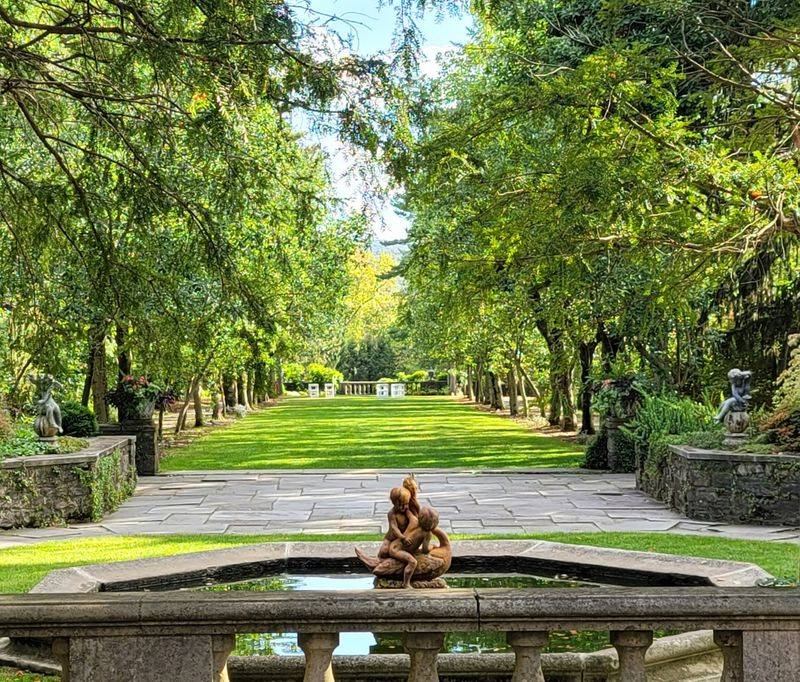
Formal gardens and muddy mountain-bike trails make unexpectedly good neighbors in Ringwood. One side of the park offers clipped hedges, stone terraces, and the Tudor-style Skylands Manor; another sends riders and hikers over the rocky folds of the Ramapo Mountains.
In between sit historic Ringwood Manor and spring-fed Shepherd Lake, giving visitors several very different outings within one park. For an easygoing morning, wander through the New Jersey Botanical Garden at Skylands.
Seasonal flowers, tree-lined paths, ponds, and carefully planned garden rooms reward slow exploration, and general garden admission is free. History-minded visitors can shift to Ringwood Manor, where the region’s ironmaking past is tied to the American Revolution and generations of prominent owners.
Tour schedules vary, so check ahead if seeing the interiors matters to you. Shepherd Lake is the better starting point when the plan involves paddling, fishing, or trails.
Ringwood’s rugged network is especially popular with mountain bikers, and the rocks make even moderate routes feel energetic. Hikers should pay close attention to trail markers because junctions multiply quickly.
The park’s three main areas are not arranged like exhibits in a compact museum; driving between them may be necessary. Confirm which entrance serves your first stop before leaving home, particularly on weekends when gate and road access can change.
Pack sturdy shoes even for a garden visit—the best detours at Ringwood have a habit of leading into the woods.
4. Washington Crossing State Park
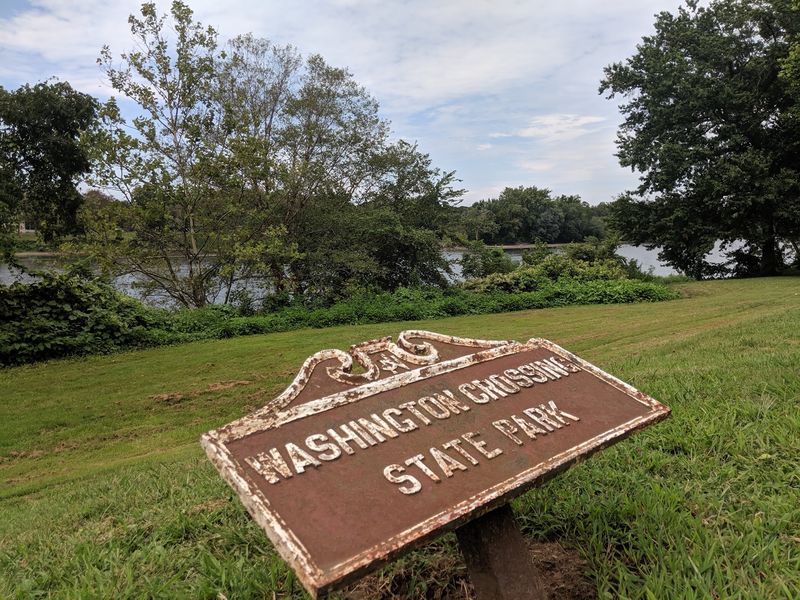
Christmas night in 1776 was cold, dangerous, and considerably less picturesque than the calm Delaware River appears today. Washington Crossing State Park preserves the New Jersey side of the daring military operation that preceded the Battle of Trenton, but the experience is not limited to plaques and memorized dates.
Open lawns, wooded trails, and river views give the history room to breathe. Begin around the Johnson Ferry House, a farmhouse connected to the crossing and the people who lived beside this important transportation route.
Interpretive programs and building access follow specific schedules, so check the calendar rather than assuming every historic space will be open. Even without a tour, walking near the river helps put the scale of the operation into perspective.
The park also contains miles of trails through oak-hardwood forest, young woodland, and meadow habitat. The Nature Center is especially worthwhile for families, with exhibits and programs focused on local plants and wildlife.
Nearby paths lead to observation areas where patient visitors may spot deer and birds. Picnicking is easy thanks to the broad grassy sections, and there is enough space for children to move without turning the afternoon into crowd control.
Located in Titusville, about eight miles north of Trenton, the park works well as a half-day trip. Pair the historic core with a short hike, and bring binoculars if the river is busy with birdlife.
Major anniversary events can draw crowds, making ordinary weekdays wonderfully quiet by comparison.
5. Wharton State Forest
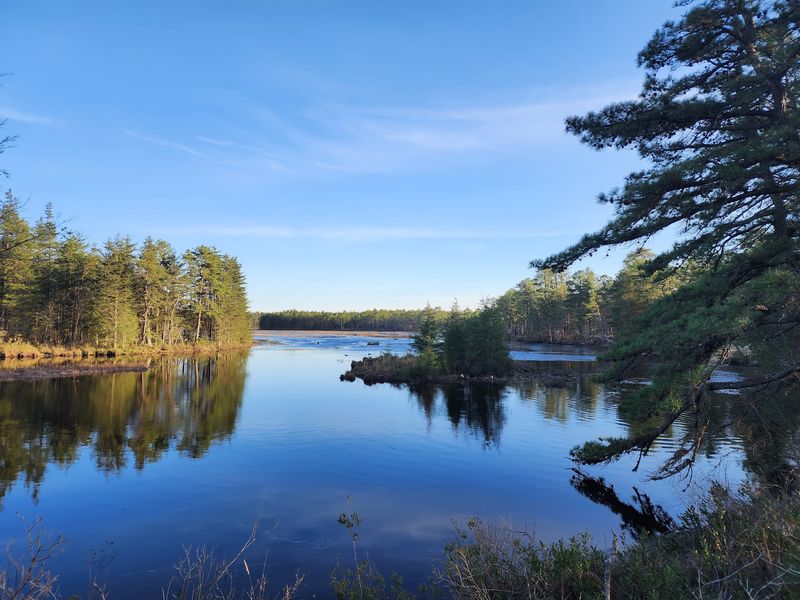
Cedar water is supposed to look like that. Tannins released by Pine Barrens vegetation stain the rivers amber-brown, creating dark reflections beneath pitch pines and white cedars.
Wharton State Forest protects more than 124,000 acres of this singular landscape, making it the largest tract in New Jersey’s state park system and one of the few places where the state can feel genuinely remote. Batsto Village is the most approachable introduction.
The preserved ironmaking community includes workers’ buildings, a general store, sawmill, mansion, and visitor center gathered beside Batsto Lake. From there, walking trails enter the surrounding forest without demanding a backcountry commitment.
The flat terrain can be deceptive, however; sandy footing and limited shade still require water and sensible shoes. Atsion Recreation Area is the summer base, with a lake, picnic facilities, seasonal lifeguarded swimming, and camping.
Paddling is another Wharton classic, though river obstructions and water levels can affect routes. Check current conditions before launching and never assume an old trip plan is still passable.
Drivers should resist the temptation to treat every sandy forest road as an invitation. Use the official vehicle map, stay on authorized roads, and know what your car can handle.
Fuel, food, and reliable cell reception are not guaranteed once you head deep into the forest. Wharton rewards preparation with starry campsites, rustling pines, and the rare New Jersey pleasure of hearing almost nothing made by people.
6. Double Trouble State Park
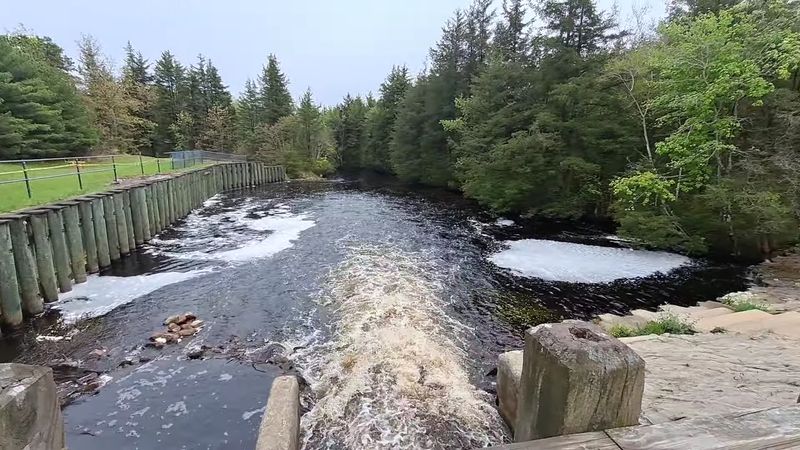
The name came from industry, not mischief. Local tradition connects “Double Trouble” to problems at a sawmill, and the memorable phrase later followed a cranberry operation that flourished here.
Today, the preserved company village and geometric bogs give this Bayville park an appealingly odd character: part outdoor museum, part wetland walk, part Pine Barrens time capsule. Old houses, a schoolhouse, cranberry sorting facilities, and other work buildings remain in the historic district.
Guided programs provide the fullest picture of how the village operated, but a self-guided walk still reveals the close relationship between the settlement, its water-control system, and the surrounding land. The former bogs look especially striking in autumn, when red vegetation and dark cedar water sharpen the view.
More than eight miles of marked trails follow mostly flat sand roads around the village, reservoirs, and bogs. Cedar Creek appears repeatedly, sometimes sliding quietly beneath the trees and sometimes opening into broad, reflective stretches.
Canoeing and kayaking are permitted, although paddlers should check water and access conditions before setting out. There is no grand summit or developed swimming beach here.
The pleasure comes from details: rusty equipment, weathered boards, cedar shadows, and the straight lines of human engineering slowly blending back into the landscape. Parking near the village makes a short visit simple, while longer trail combinations can occupy several hours.
Wear shoes that tolerate sand and damp ground, and bring bug spray once the weather turns warm.
7. Jenny Jump State Forest
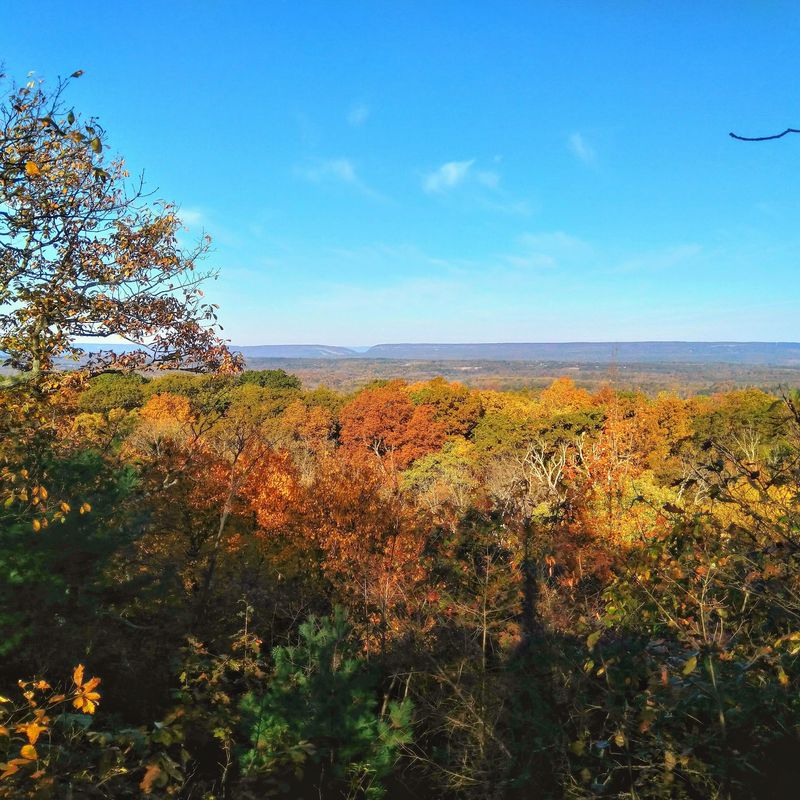
Glaciers left their calling cards all over Jenny Jump: hulking boulders, exposed rock, and rolling terrain that rises above the farms of Warren County.
The climb does not reach High Point’s elevation, but the views toward the Kittatinny Mountains, Great Meadows, and surrounding valleys are broad enough to make the forest feel considerably taller than it is.
Several trails explore the ridge, and the narrow climbs can be rocky underfoot. The Summit Trail and connections around the forest lead through hardwoods to scattered viewpoints rather than one enormous observation platform.
That setup encourages wandering, especially in October when color spreads across the valley below. After rain, wet leaves and stone demand patience.
Jenny Jump has another attraction once daylight fades. The United Astronomy Clubs of New Jersey operates an observatory within the forest and hosts public programs on scheduled evenings.
On a clear night, the relatively dark Warren County sky provides a fine reason to stay later than the average hiker. Check the program calendar in advance; this is not a drop-in attraction operating every evening.
Camping extends the trip, with shelters as well as tent and trailer sites available by reservation. The facilities are more woodsy than resort-like, which suits the setting perfectly.
Bring drinking water for the trail, download the map, and keep food secured—this is black bear country. The forest is peaceful, but it is not a manicured stroll, and that edge is exactly why it belongs on the list.
8. Allaire State Park
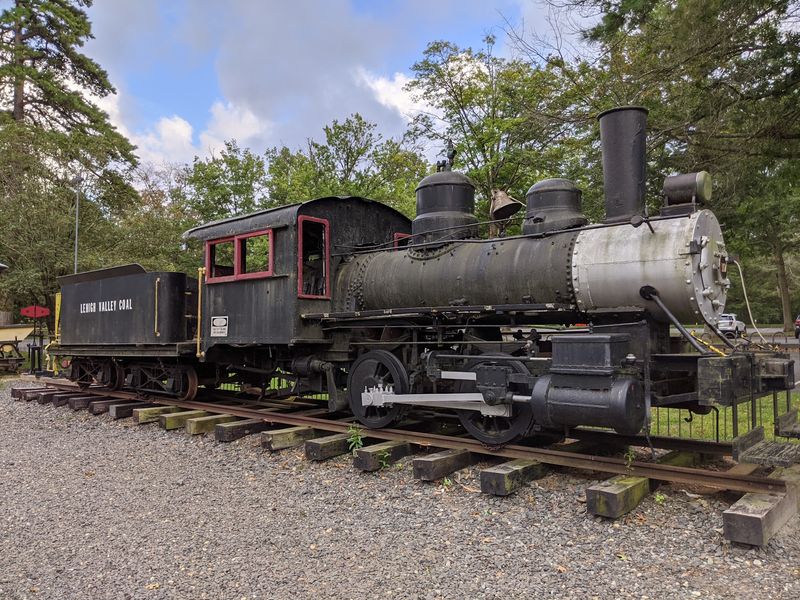
A steam whistle is not the usual soundtrack for a state-park hike. At Allaire, the Pine Creek Railroad carries passengers on a narrow-gauge line near a restored 19th-century ironmaking community, giving the park an engaging mix of machinery, social history, and woodland.
It is an easy crowd-pleaser when one person wants trails and another would rather inspect old buildings. Historic Allaire Village grew around the Howell Works, an industrial community that produced iron goods and supported workers with homes, shops, and services.
Costumed programs, demonstrations, markets, and seasonal events animate the village on selected dates. The grounds can be explored at a relaxed pace, but special events and train rides may require separate tickets or advance planning.
Beyond the historic district, trails cross woods and follow portions of the Manasquan River. The floodplain supports an impressive variety of plant life, while the wider multi-use network draws hikers, mountain bikers, and horseback riders.
Choose your route carefully because some trails are busier and rougher than the gentle village paths suggest. The park sits in Wall Township, close enough to the Shore to combine with other plans but substantial enough for its own day.
Weekends with festivals or flea markets bring heavier traffic, so arrive early if an event is the main attraction. For a quieter visit, choose an ordinary morning, walk through the village, then slip into the woods after the school groups and train passengers have headed home.
9. Belleplain State Forest
Spring migration can turn Belleplain into a living field guide. Warblers move through the canopy, woodpeckers work the trunks, and patient birders scan the forest edges with the concentration of detectives.
The appeal continues after the binoculars come down: this South Jersey forest contains an unusually broad collection of habitats, from Atlantic white cedar swamp to oak-hickory woods and salt marsh. Lake Nummy anchors the developed recreation area.
Its sandy beach hosts seasonal swimming when lifeguards are on duty, while picnic facilities and nearby campsites make the lake an easy headquarters for a warm-weather weekend. Kayaks and canoes suit the water better than anything loud or hurried.
More than 40 miles of trails and forest roads offer room for hiking, biking, and horseback riding. The East Creek Trail is a useful way to sample the woods, though Belleplain is less about dramatic overlooks than subtle changes in water, vegetation, and light.
Flat does not always mean dry; waterproof footwear can save the day after rain. The Civilian Conservation Corps shaped much of the forest beginning in the 1930s, and traces of its work remain part of Belleplain’s character.
Camping choices range from tent and trailer sites to shelters and cabins, with reservations strongly recommended for popular summer weekends. The forest is also notably dark after sunset, making stargazing a satisfying bonus.
Bring insect repellent, a paper or downloaded map, and enough supplies to avoid unnecessary trips out.
10. Bass River State Forest
New Jersey’s first state forest knows how to deliver an old-fashioned lake day. Lake Absegami sits at the center of the developed area, edged by pines, picnic tables, and a beach that feels far removed from the Shore traffic to the east.
Swimming is seasonal and allowed only when lifeguards are on duty, so verify the schedule before loading the car with towels. The forest’s real personality appears beyond the beach.
Short trails explore the Absegami Natural Area, where Atlantic white cedars and wetland habitat create cool, shadowed scenery.
Longer outings connect with the pink-blazed BATONA Trail, the 53-mile route linking Bass River with Wharton and Brendan T. Byrne state forests. Day hikers can sample a manageable piece without volunteering for the whole trek.
History is scattered under the trees as well. Civilian Conservation Corps crews developed parts of Bass River during the 1930s, and an interpretive trail passes remnants of their camp.
Farther into the forest, the landscape grows sandier and less developed, including unusual Pine Plains where harsh conditions have produced low, scrubby trees. Camping is a major draw, with tent and trailer sites, shelters, lean-tos, and cabins offering several comfort levels.
Summer weekends fill quickly, and day-use fees apply during the main season. Arrive early, particularly when beach weather is obvious.
After the swimmers leave, stay for the softer evening light on the lake and the pine scent that settles over the campground.
11. Parvin State Park
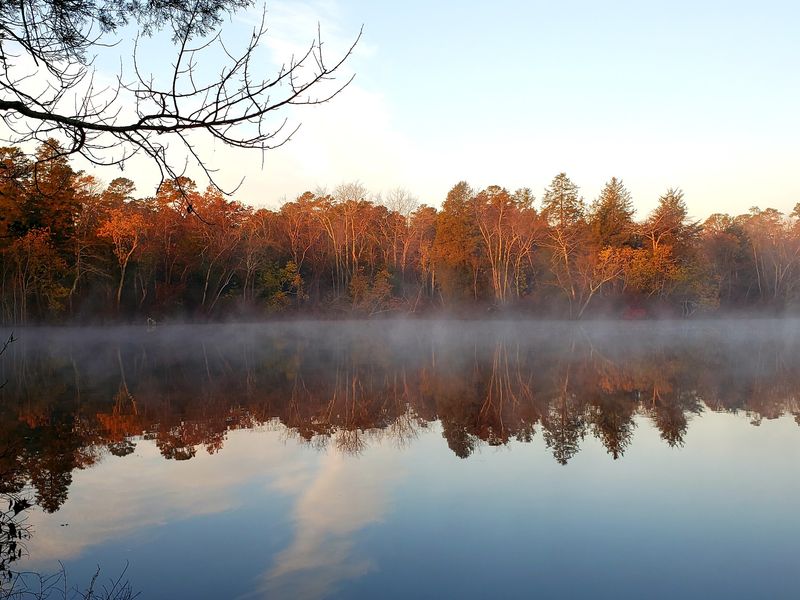
Parvin Lake is the sort of place that encourages an unplanned second lap. The trail stays close enough to the water for frequent views, then ducks into hardwood and pine forest before returning to the shoreline.
In fall, the lake catches the reds and golds overhead; in spring, flowering plants and migrating birds provide a quieter show. The park occupies a fascinating ecological position near the edge of the Pine Barrens, producing a mix of wetlands, swamp hardwoods, pine forest, and open water.
Parvin Lake, Thundergust Lake, and Muddy Run give paddlers and anglers several places to linger. Boating rules and seasonal conditions vary by area, so check posted information before launching.
Hikers can combine the Parvin Lake Trail with other marked routes for a longer outing, while families may prefer the picnic grounds and shorter waterside walks. The terrain is generally approachable, though roots, wet sections, and mosquitoes prevent it from becoming too polite.
Swimming has historically been a seasonal activity in a designated area; confirm the current lifeguard schedule before promising anyone a beach day. Parvin’s past is more complicated than its peaceful scenery suggests.
The land has connections to Native American habitation, early industry, the Civilian Conservation Corps, and wartime uses. Campgrounds and cabins allow visitors to stretch the trip overnight, with reservations sensible during peak season.
Located near Pittsgrove in Salem County, the park rarely receives the attention lavished on North Jersey’s mountain destinations—and that is part of its appeal.
12. Island Beach State Park
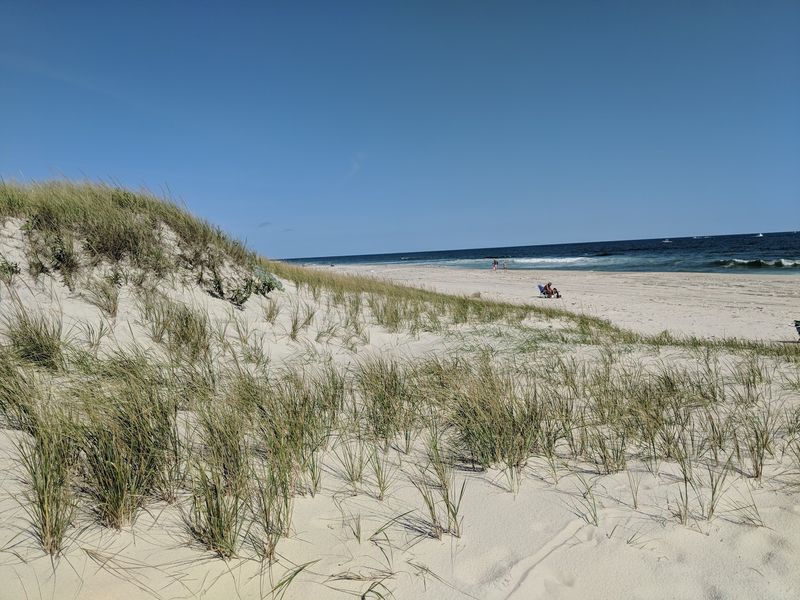
Keep driving south after Seaside Park’s houses and boardwalk energy begin to thin. The road eventually enters a 10-mile ribbon of dunes, maritime forest, tidal marsh, and open Atlantic shoreline that shows what much of New Jersey’s barrier coast looked like before dense development.
Island Beach is not deserted, particularly on a hot Saturday, but it still feels wonderfully untamed. Most summer visitors head directly to the lifeguarded swimming areas, which have nearby parking, bathhouse facilities, and concessions.
Swimming is restricted to designated zones when guards are present; elsewhere, powerful surf and changing conditions deserve respect. Surfers use approved areas south of the swimming beaches, while anglers arrive for some of the state’s best-known surf fishing.
The park becomes even more interesting away from the towels and umbrellas. Short trails cross dunes and thickets of bayberry, cedar, and holly, leading toward Barnegat Bay or elevated views over the coastal vegetation.
Ospreys are common overhead, and foxes occasionally appear along the road with the confidence of longtime residents. Keep wildlife wild by giving it space and never offering food.
Summer capacity closures are common, so early arrival is the smartest strategy. Fees apply in season, and rules govern everything from beach driving permits to shade structures.
Check conditions before leaving home, pack more water than you think you need, and remain until late afternoon if possible—the beach grows calmer as day-trippers retreat north.
13. Hacklebarney State Park
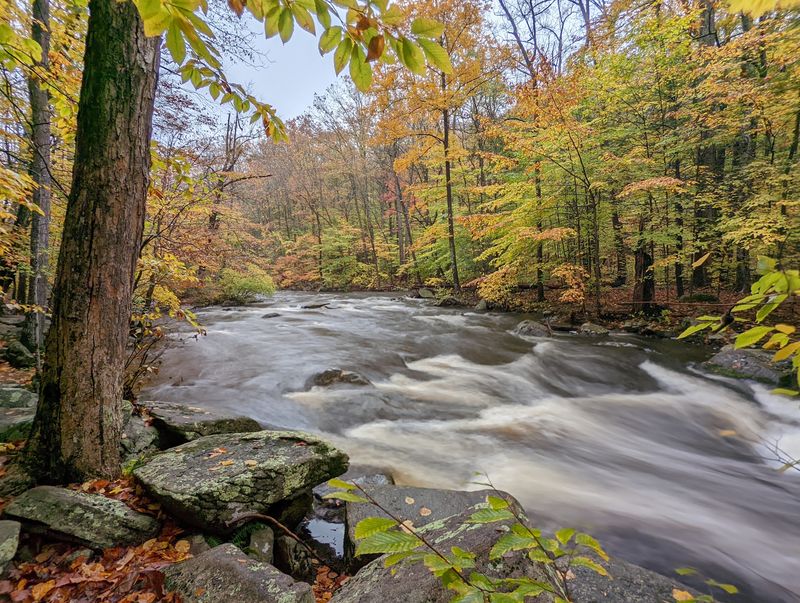
Water does most of the talking at Hacklebarney. The Black River pushes around dark boulders in a hemlock-lined ravine while Trout and Rinehart brooks tumble downhill to meet it.
The constant rush and splash make this Morris County park feel cooler, wilder, and farther from nearby suburbs than the map suggests. The main trail system descends from the picnic area toward the river, using stone steps, woodland paths, and old park roads.
Several loops can be combined, but distance alone does not describe the effort. Rocks become slick, roots cross the trail, and every descent eventually sends you back uphill.
Take your time near the water and keep children close around steep or wet sections. Autumn is understandably popular, when hardwood color frames the dark evergreens and moving water.
Spring brings strong stream flow, while summer shade offers relief on hot days. Anglers also know the Black River for trout, with state licenses and regulations applying.
Hacklebarney has no swimming beach, campground, or elaborate visitor complex. Come for a hike, a picnic, and the satisfying feeling of having found one of North Jersey’s best ravines.
Parking is limited and can reach capacity on peak fall weekends, making an early start more than a friendly suggestion. Carry out all trash, wear shoes with dependable traction, and skip the temptation to climb onto wet boulders for a photograph.
The river already provides the show; there is no need to become part of it.