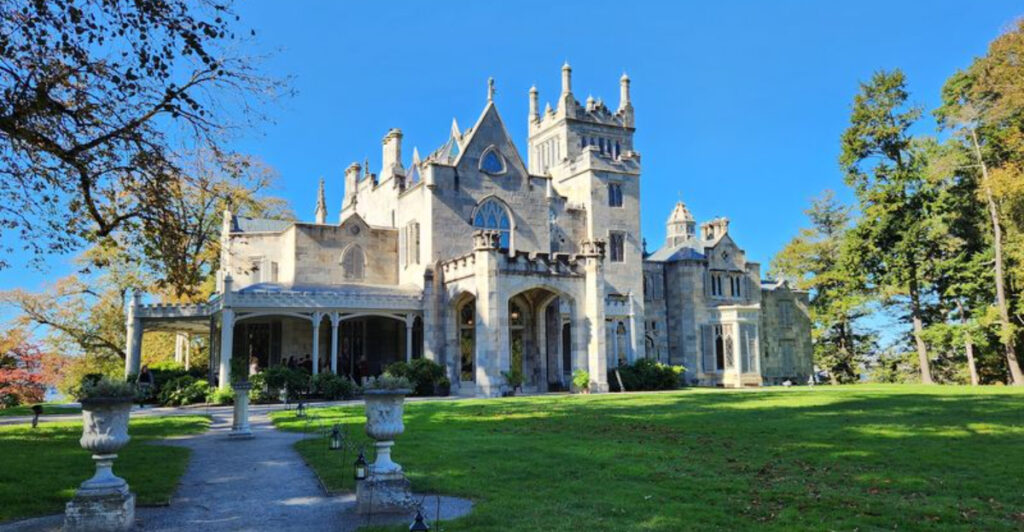
A castle-like mansion stands beside the Hudson River, less than 30 miles from the heart of New York City. Lyndhurst Mansion is easy to reach, yet many travelers pass through Tarrytown without knowing what waits behind its gates.
The estate mixes dramatic architecture, fascinating family stories, peaceful gardens, and sweeping river views. Here is why this hidden treasure deserves a place on your next day-trip plan.
1. A Gothic Castle Beside the Hudson
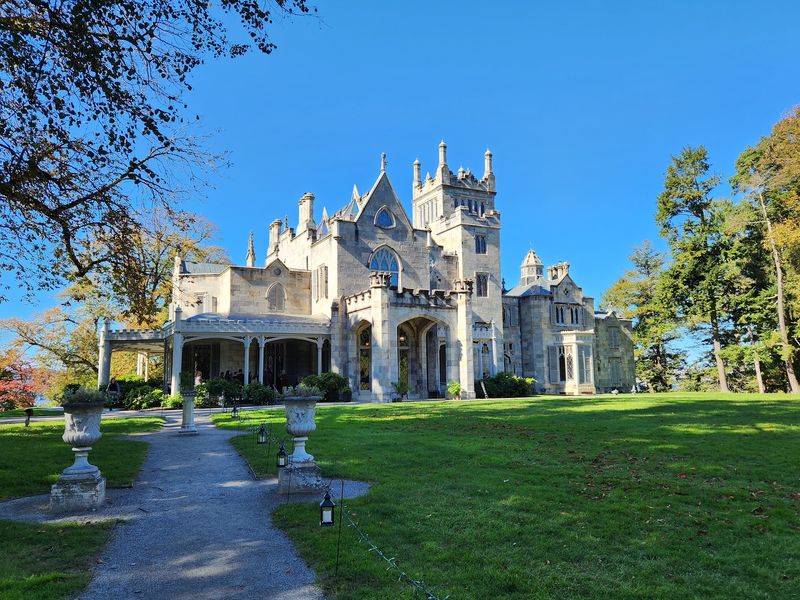
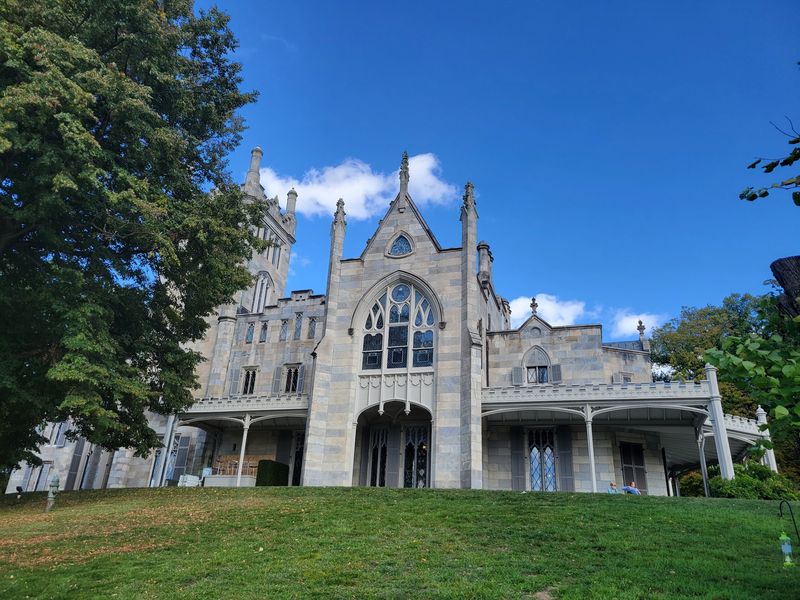
At first glance, Lyndhurst looks more like a storybook castle than a country home near New York City.
Tall towers, pointed arches, narrow windows, and carved details give the mansion a bold outline against the sky.
Its design invites visitors to slow down and study every corner.
Architect Alexander Jackson Davis created the original house for William Paulding Jr., a former mayor of New York City, in 1838.
Davis used the Gothic Revival style, which borrowed ideas from medieval European churches and castles.
Later owner George Merritt hired him to enlarge the residence, nearly doubling its size and adding rooms for comfortable family life.
The outside is best viewed from several places across the lawn.
Walk toward the mansion slowly, then turn back after passing it to notice how the towers change shape from different angles.
Morning light often brings out the texture of the stone, while late afternoon can create deep shadows around the arches.
Photography is especially rewarding here, but visitors should check current rules before using tripods or professional equipment.
A phone camera with a wide setting can capture the entire front, while a closer view reveals windows, roof decorations, and stonework.
Wear supportive shoes because the estate includes slopes and uneven ground.
Saving time to circle the building is worthwhile, since no single viewpoint tells the whole architectural story.
Few historic homes in the Hudson Valley create such a strong sense of mystery before guests even step through the door.
2. Rooms That Still Feel Lived In
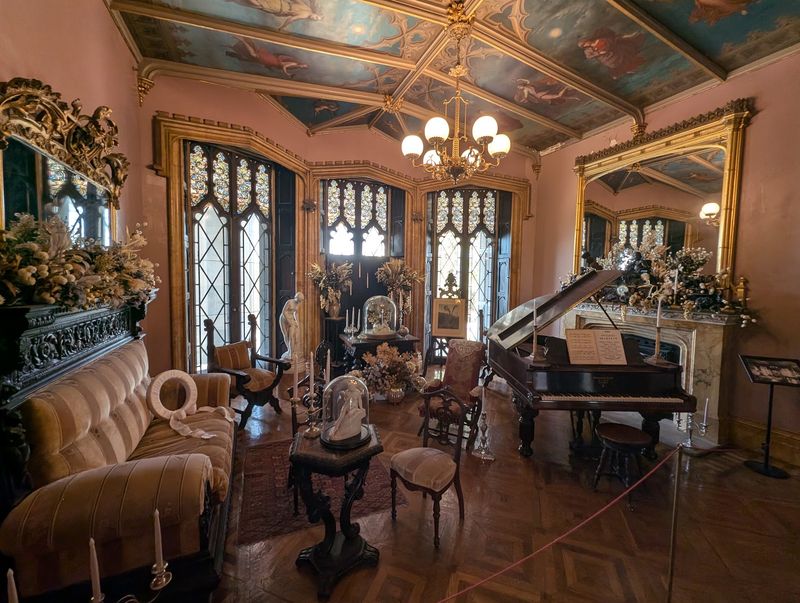
Crossing the doorway feels like entering a carefully preserved family album.
Lyndhurst contains furniture, paintings, decorative objects, and personal belongings connected with the people who lived there.
Instead of empty rooms filled with unrelated antiques, many spaces show how wealthy households worked, rested, entertained guests, and displayed treasured possessions.
Visitors may encounter richly carved wood, patterned walls, stained glass, chandeliers, porcelain, and specially made furnishings.
Details can be easy to miss when a room first appears grand, so look beyond the largest objects.
A clock, lamp, chair, or small painted panel may reveal as much craftsmanship as an entire ceiling.
House tours explain the purpose of major rooms and connect their decoration to different owners.
Guides and interpreters are often praised for making complicated history understandable, and asking questions can uncover stories not included in a basic introduction.
Some tour choices may visit different floors or spaces, so read the current descriptions before buying tickets.
Plan to arrive early enough for check-in and leave large bags behind if visitor rules request it.
Indoor photography policies can change during exhibitions or seasonal programs, making the official website the best source before arrival.
Families can keep younger visitors involved by asking them to find pointed arches, animals, flowers, or repeating patterns inside the rooms.
Adults may enjoy comparing handmade details with objects used at home today.
Moving patiently matters because Lyndhurst rewards close looking.
Its interiors are not simply fancy backgrounds; they preserve evidence about art, technology, taste, work, and daily life across generations.
3. Three Families Shaped Its Story
Behind Lyndhurst’s dramatic walls is a story shaped by ambition, business, wealth, and generosity.
William Paulding Jr. commissioned the first version of the house, then called Knoll, during the 1830s.
His unusual country residence helped introduce bold Gothic Revival design to American domestic architecture.
Merchant George Merritt purchased the property in the 1860s and asked architect Alexander Jackson Davis to return.
The expansion provided more bedrooms, a larger dining room, and the scale expected of a full-time estate.
Merritt named it Lyndenhurst after the linden trees planted on the grounds, while the spelling later became Lyndhurst.
Railroad financier Jay Gould bought the estate in 1880, bringing it into the famous Gilded Age.
After his death in 1892, his daughter Helen Gould cared for the property and became known for charitable work.
Her sister Anna later inherited Lyndhurst and left it to the National Trust for Historic Preservation after her death in 1961.
Knowing these names makes a tour easier to follow, but visitors do not need to memorize dates.
Think of the house as a timeline: Paulding began the experiment, Merritt expanded it, and the Gould family preserved a remarkable collection.
Listen for ways each owner changed the building or used the land.
Displays, tours, and special exhibitions may focus on different chapters, giving repeat visitors fresh material.
History fans can also pair the visit with other Tarrytown landmarks, although Lyndhurst deserves several hours of its own.
The human stories turn an impressive building into a place filled with choices, personalities, and changing ideas.
4. Sixty-Seven Acres Made for Wandering
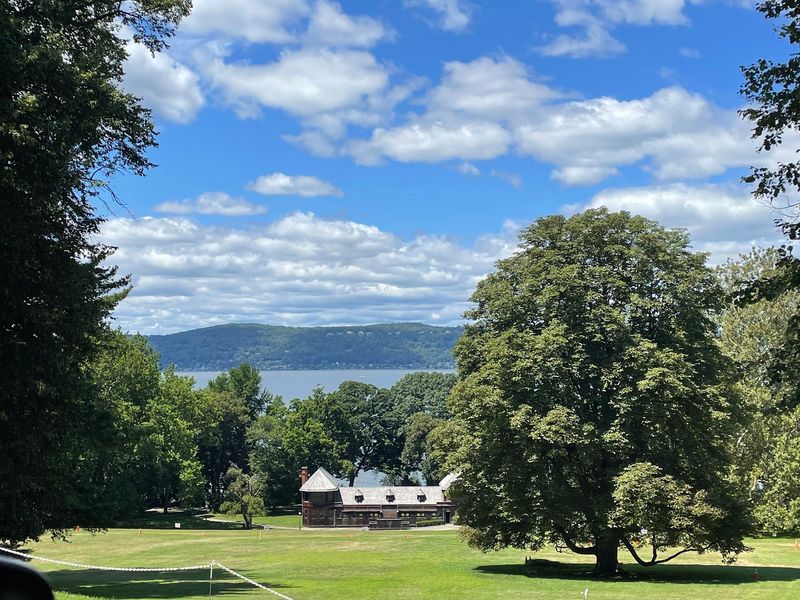
The mansion may command attention, but the surrounding 67-acre estate gives visitors room to breathe.
Rolling lawns, old trees, quiet paths, and historic outbuildings create a peaceful break from nearby highways and busy towns.
Many guests spend as much time outdoors as they do inside the house.
A relaxed walk reveals changing views of the mansion, including angles hidden from the main approach.
Benches offer places to rest beneath mature trees, and open lawns make the property feel much larger than expected.
Seasonal color adds variety, from spring blossoms and summer greenery to copper, red, and gold leaves in autumn.
Pick up or download a current estate map before setting out because not every path leads directly back to the visitor area.
Comfortable walking shoes, water, sunscreen, and insect protection can make warmer days easier.
Anyone with limited mobility should contact Lyndhurst in advance for information about surfaces, distances, parking, and accessible routes.
Weather can change quickly near the river, so carrying a light layer is sensible even on a pleasant morning.
Visitors should remain on marked routes, respect closed structures, and avoid climbing on historic features.
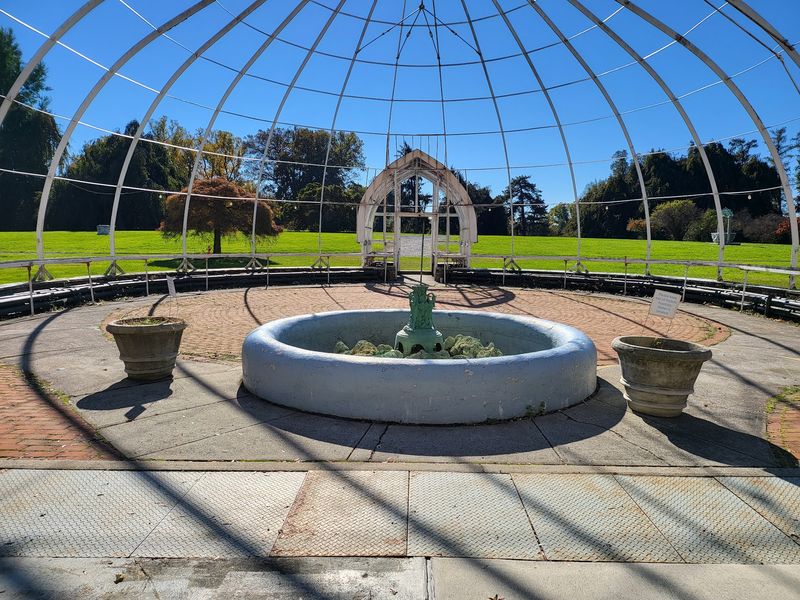
The greenhouse area, for example, consists largely of surviving foundations rather than a fully restored glasshouse, so expectations should match present conditions.
Arriving near opening time often brings cooler air and fewer people on the grounds.
Allow at least an extra hour beyond a mansion tour, and more if photography or a slow picnic-style pace appeals.
Wandering here turns a house visit into a complete Hudson Valley escape.
5. Roses, River Views, and Quiet Corners
Some of Lyndhurst’s sweetest moments happen far from the grand front door.
When the rose garden is blooming, the air can carry a rich floral scent across the paths.
Beds filled with color, nearby shade, and a small fountain create a softer mood than the mansion’s sharp towers and dark stone.
Flower timing depends on weather, so contact the estate or check its updates if roses are the main reason for visiting.
Early summer often offers strong displays, but exact conditions vary each year.
Coming soon after opening may mean gentler light, cooler temperatures, and fewer people around the garden.
The estate also provides broad views toward the Hudson River and the Governor Mario M.
Cuomo Bridge, commonly remembered as the Tappan Zee Bridge.
Different overlooks frame the water through trees or across open lawns.
Sunset-like afternoon light can be beautiful, although guests must observe closing hours and leave enough time to return to their vehicles.
Bring binoculars if river traffic and birds sound interesting, but avoid stepping into planted beds for a photograph.
Garden visitors can help protect the setting by leaving flowers untouched and carrying out any waste.
A small notebook is useful for sketching architectural lines, recording plant colors, or writing observations with children.
Couples may find the benches peaceful, while families can turn the walk into a quiet search for petals, fountains, boats, and unusual leaves.
These calm corners explain why Lyndhurst feels like more than a museum.
Nature, design, and river scenery share the spotlight, giving every visitor a chance to discover a favorite view.
6. A Bowling Alley With an Unexpected Past
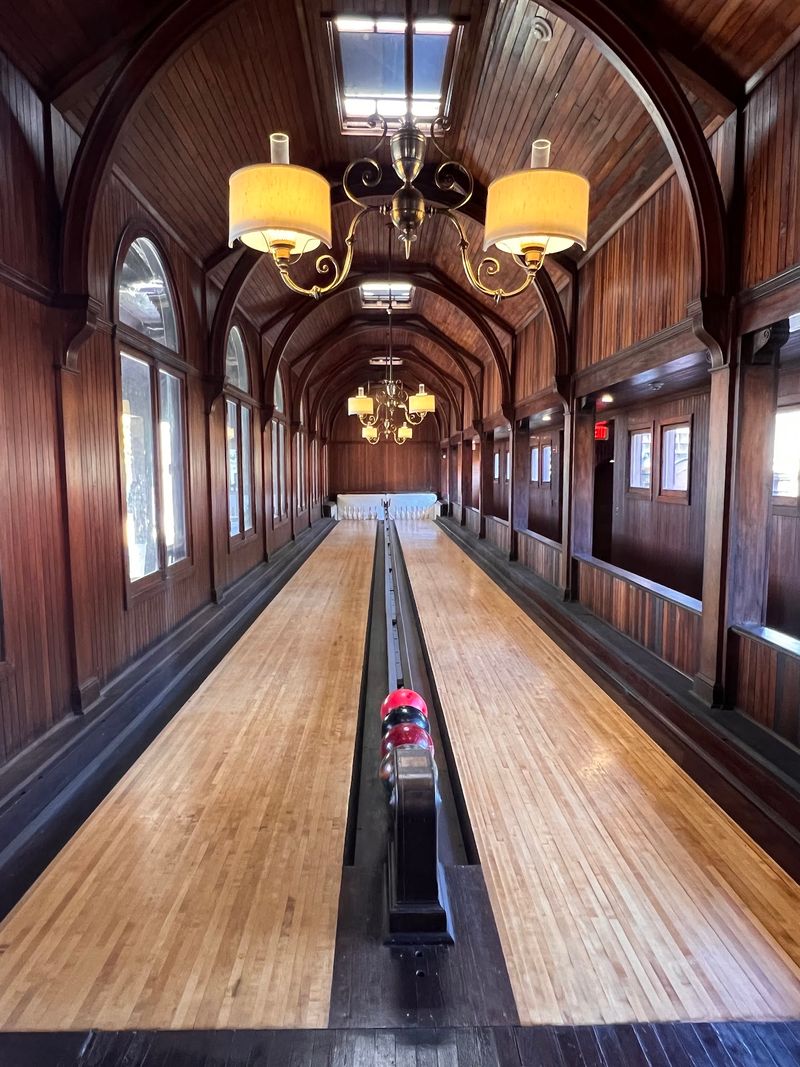
Finding a private bowling alley on a nineteenth-century estate is the kind of surprise people remember.
Set downhill from the main mansion, Lyndhurst’s bowling alley adds a playful chapter to a property known for formal rooms and serious architecture.
Its presence shows that recreation also mattered in life on the estate.
Helen Gould established the building during her years at Lyndhurst and connected it with wider community use.
That history fits her reputation as a philanthropist who supported public causes.
When the structure is open, an interpreter may explain its construction, equipment, and social importance in far greater detail than a quick glance can provide.
Availability can depend on the season, staffing, restoration work, or a special event.
Ask at check-in whether the bowling alley is accessible that day, then use the estate map to find the route.
The downhill walk means visitors should save energy for the return climb and choose shoes with dependable grip.
Inside, look at the long wooden lanes and imagine bowling before electronic scoring, automatic pinsetters, and glowing screens.
Children may enjoy comparing the historic game with a modern bowling center, while adults can consider what private leisure revealed about Gilded Age wealth.
Treat barriers and equipment carefully because even sturdy-looking pieces may be fragile historic material.
If the building is closed, viewing its exterior still adds context to the grounds.
Pairing this stop with the garden and river overlooks creates a varied walking loop.
The bowling alley proves that Lyndhurst holds quirky discoveries beyond its famous facade, rewarding anyone willing to explore farther.
7. Tours and Events That Change With the Seasons
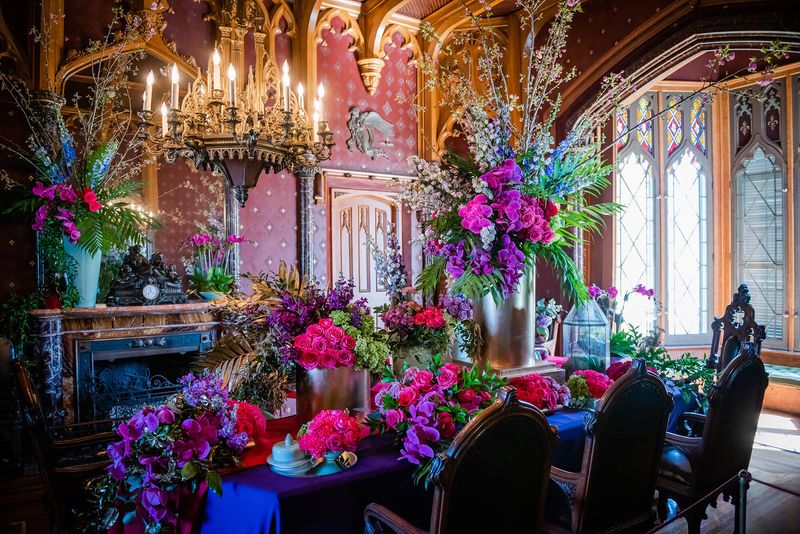
No two visits to Lyndhurst have to feel alike.
Standard mansion tours reveal the house and its owners, while seasonal programs may add flowers, holiday decorations, craft markets, exhibitions, or Gothic-themed activities.
Event days can transform both the interiors and lawns without hiding the estate’s historic character.
Spring flower programs bring imaginative arrangements into the mansion, and craft festivals place artisan work against a striking architectural backdrop.
Autumn often highlights colorful foliage and Gothic atmosphere.
Holiday tours may fill rooms with decorated trees, wreaths, lights, and elegant displays that suit the original furnishings.
Popular dates can sell out or draw larger crowds, making advance reservations a smart choice.
Compare tour types carefully, since admission to an event may not include every house experience or building.
Confirm parking directions, arrival time, photography rules, cancellation terms, and accessibility details on Lyndhurst’s official website before traveling.
The estate is located at 635 South Broadway in Tarrytown and is generally open on selected seasonal schedules rather than every day throughout the year.
Published hours can change, and the property may close during winter periods, private functions, severe weather, or preservation work.
Calling 914-631-4481 can settle questions that are not answered online.
Visitors arriving from New York City should also plan transportation between the Tarrytown train station and the estate, since walking conditions may not suit everyone.
Give yourself enough time for parking, ticket check-in, a tour, and an outdoor stroll.
Thoughtful planning keeps the day relaxed and helps reveal why Lyndhurst earns such enthusiastic reviews from architecture fans, gardeners, families, photographers, and curious day-trippers.
Share this story