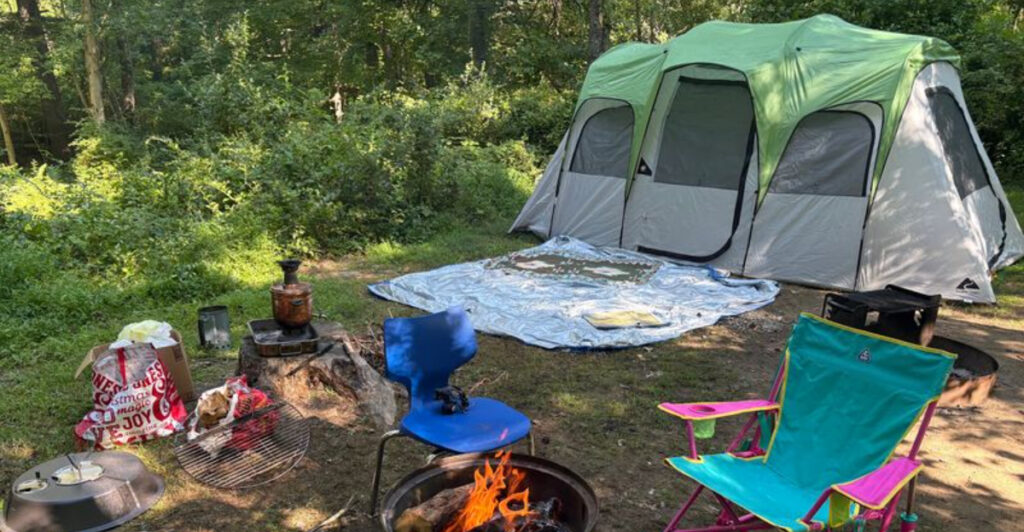
A Friday afternoon escape in New Jersey can go from “we should get out of town” to a tent under tall pines before dinner—if you know where to look.
The state packs an absurd amount of camping variety into a relatively small map: Delaware River sites with mountain trails out the door, Pine Barrens campgrounds wrapped around tea-colored lakes, beach camping within reach of the Atlantic, and private spots where hot showers, cabins, or even a heated pool take some of the roughness out of roughing it.
The trick with a spontaneous weekend is choosing a place that gives you plenty to do without requiring a military-grade itinerary. These 15 campgrounds fit that bill.
Some are best for hikers, some for families, some for paddlers, and a few make camping easy for people who still want Wi-Fi and a real mattress nearby. Pack light, check availability, and point the car somewhere greener.
1. Allaire State Park
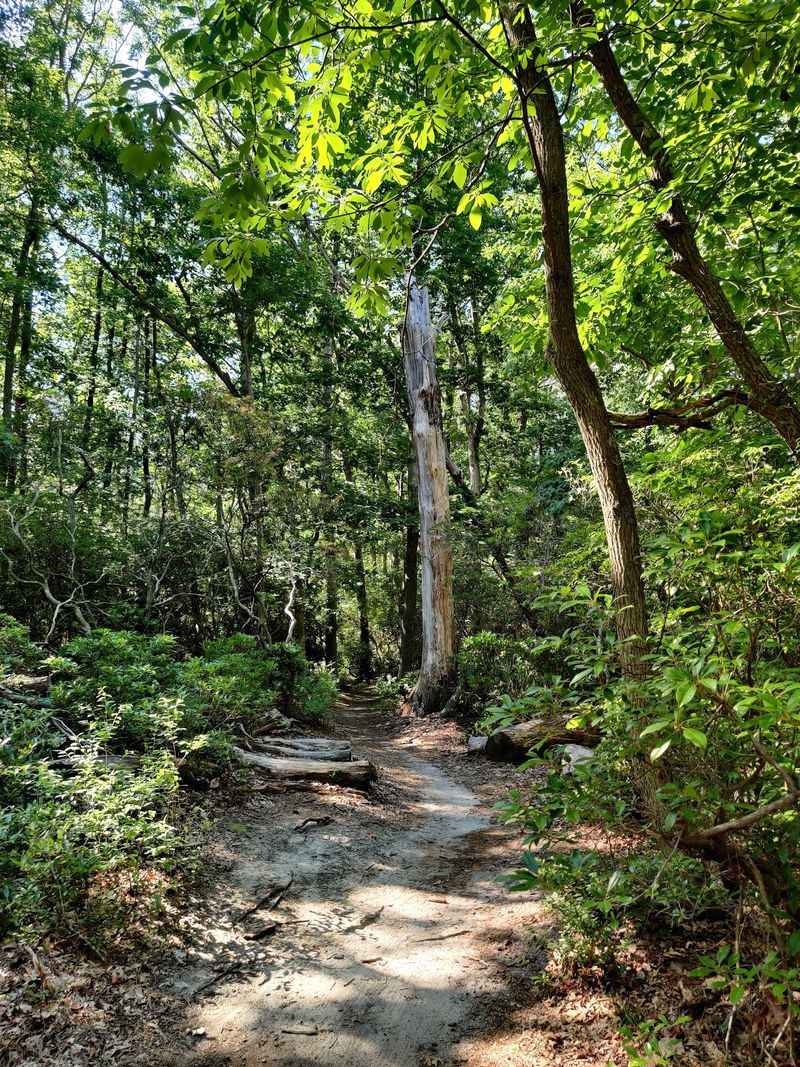
A narrow-gauge train, a 19th-century iron-making village, wooded trails, and a campground would normally make Allaire one of the easiest “we have no plans this weekend” picks in central New Jersey. The park’s biggest advantage is that camping is only part of the outing.
You can spend the day walking through Historic Allaire Village, catch the Pine Creek Railroad when it is operating, then disappear onto the park’s trails before heading back toward camp.
The family camping area is designed for tents and trailers, with fire rings, picnic tables, and nearby restroom and shower facilities, while cabin-like shelters add a little more protection from the weather.
There is one catch worth knowing before you load the cooler: the family campsites are currently temporarily closed while a new bathroom and shower facility is being built. Group camping remains open, so Allaire is more of a “keep this on your radar” choice for most spontaneous family trips right now than a book-tonight option.
Once the regular campground reopens, its Wall Township location and unusual mix of history, railroading, and woods should put it right back near the top of the easy-weekend list. For a flexible escape near the Shore corridor, the location is particularly hard to beat.
2. Belleplain State Forest
Lake Nummy is the kind of centerpiece that saves a last-minute trip from turning into a weekend of asking, “So…what do we do now?”
The lake was created by Civilian Conservation Corps workers in the 1930s, and today it anchors a forest getaway where swimming in season, paddling, fishing, hiking, and plain old sitting near the water can fill a day without much planning.
Belleplain has 169 tent and trailer sites, so it feels more like a full-fledged camping destination than a tiny collection of pads in the woods.
Flush toilets, showers, and laundry facilities are within walking distance of the campsites, and water and electric hookups are available in the CCC campground area.
That combination makes Belleplain particularly useful for mixed groups: the friend who loves sleeping under canvas can be happy, and the friend who considers a shower non-negotiable does not have to suffer.
The forest sits in Cape May County, but the scenery is pure Pinelands rather than beach-town New Jersey—flat sandy trails, pine woods, wetlands, and that dark, reflective water that looks especially good around sunset. Campsites are open year-round, which also gives Belleplain more flexibility than many seasonal options.
If summer weekends are your target, check swimming status and campsite availability before leaving home.
3. Turkey Swamp Park Family Campground
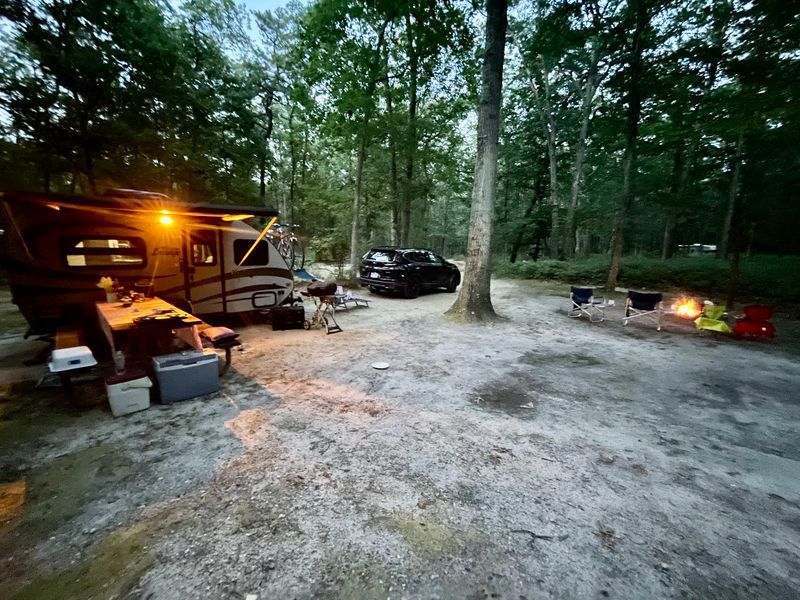
You do not have to drive to the far corners of the state to make a weekend feel properly outdoorsy. Turkey Swamp Park in Freehold spreads across more than 2,200 acres, and its family campground gives central Jersey campers an easy way to trade traffic noise for woods without committing half the day to getting there.
The family campground accommodates tents, travel trailers, and motor homes, and it operates from April 1 through November 15. That long season is handy for spontaneous spring and fall trips, when the idea of camping often strikes only after someone notices the forecast looks unusually good.
Once you are set up, the rest of the park does most of the entertaining for you. Trails run through forest and wetlands, while the 17-acre lake is a natural focus for paddling and fishing; seasonal kayak, canoe, and paddleboat rentals make it possible to get on the water without hauling your own boat.
The park’s name actually comes from the area’s old “Turkey” label and its swampy, sphagnum-bog landscape. This is not the place you pick because you want rugged backcountry isolation; you pick it because camping feels pleasantly uncomplicated.
Reservations can be made online, by phone, or at the campground office, which is useful when you are trying to piece together a weekend on short notice.
4. Mahlon Dickerson Campgrounds
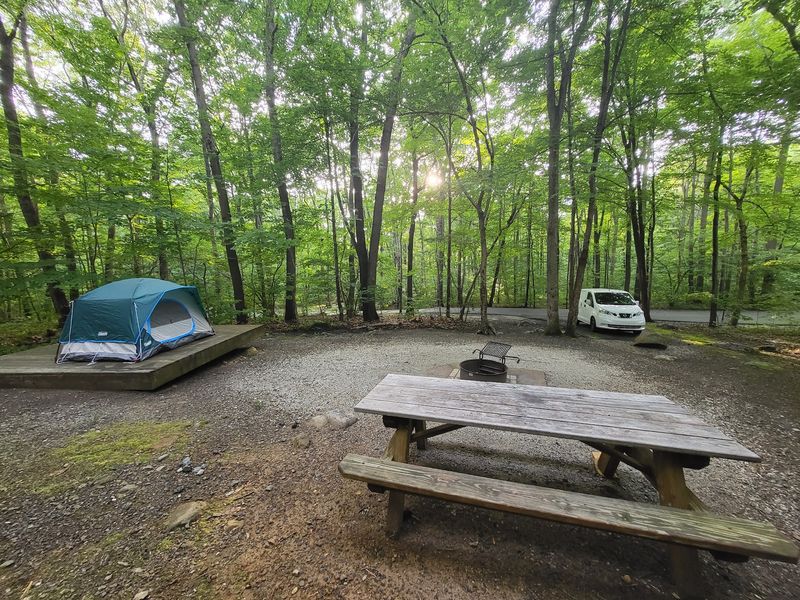
If your ideal campsite has trees overhead but your RV would also appreciate a proper electric hookup, Mahlon Dickerson Reservation makes a convincing compromise. The campground sits inside a 3,590-plus-acre Morris County preserve in Jefferson Township, with separate options for RVs, tents, and Adirondack shelters.
Eighteen paved RV sites offer electric service and seasonal water, while the tent area keeps things simpler with raised platforms, picnic tables, and fire rings. The four Adirondack shelter sites are the clever middle ground: you still feel like you are camping, but a lean-to gives you a fighting chance if the weather changes overnight.
What makes this especially good for a short trip is how little gear improvisation is required. Registered RV campers have access to restrooms, showers, a dump station, and on-site firewood, while tent campers have nearby water access in season and basic facilities.
Then there is the preserve itself, where roughly 27 miles of multi-use trails mean you can park once and spend the weekend exploring, including a hike toward Headley Overlook. The campground runs seasonally from April through November, and reservations are accepted in advance.
One practical note for late arrivals: the RV area does not have exterior lighting, so “we’ll get there sometime after dinner” is a less charming plan than it sounds. Aim to arrive before dusk, set up, and let the woods take over from there.
5. Worthington State Forest
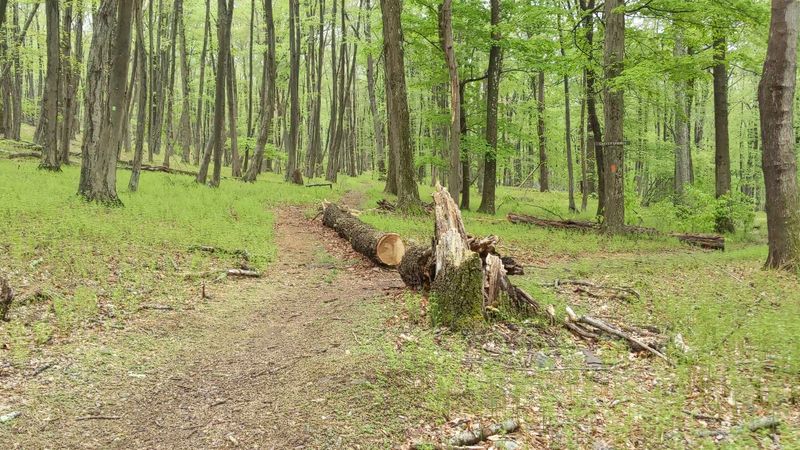
Few New Jersey campsites deliver a better morning reveal than unzipping the tent beside the Delaware River and seeing the Kittatinny Ridge rising nearby.
Worthington’s campground stretches along roughly two miles of river frontage, with 78 tent and trailer sites that put campers in one of the state’s best combinations of water and mountain scenery.
The first block of sites is tent-only, while others can accommodate tents, travel trailers, and motorhomes. Each site has a picnic table and fire ring, and the campground provides drinking water, modern toilets, and showers—enough comfort to keep a quick weekend from turning into an equipment test.
The real reason to come, though, is what sits just beyond the campground. This is prime Delaware Water Gap country, with access to serious hiking, river paddling, and fishing.
Ambitious hikers can make a day of the steep trails around the Kittatinny Ridge; everyone else can keep things gentler along the river and still feel like they escaped far beyond New Jersey. Pets are not permitted in the campground, an important detail if the dog normally comes on every road trip.
The forest also warns campers that its remote setting can lead to occasional power outages that affect bathrooms, showers, and water service. Pack a little redundancy, then enjoy one of the state’s most scenic places to sleep outdoors.
6. Cheesequake State Park
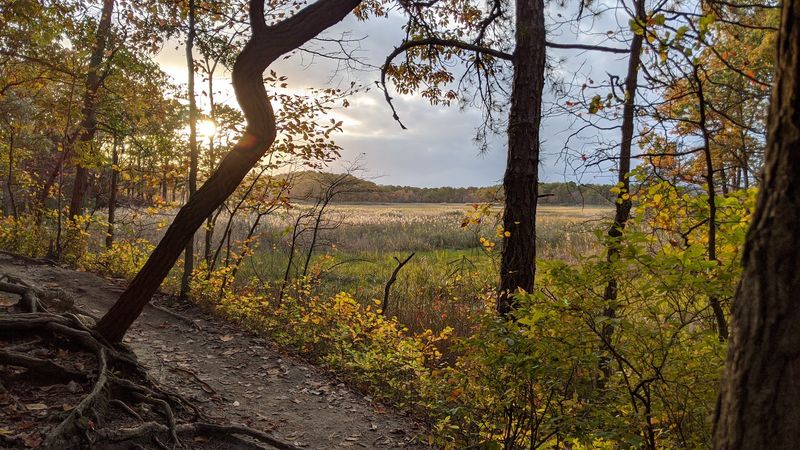
The funny thing about Cheesequake is how quickly it changes character as you walk. One stretch feels like northern hardwood forest, another slips into Pine Barrens vegetation, and marshes and Atlantic white cedar add still more texture.
That ecological mash-up is one reason this Middlesex County park works so well for a short camping trip: you can get a surprising amount of nature without driving deep into South Jersey or up to the mountains. The campground has 50 tent and trailer sites with fire rings and picnic tables, plus nearby flush toilets and showers.
It is open from April 1 through October 31, and some sites are designated pet-friendly for an additional fee. Daytime is easy to fill.
Five marked trails range from roughly 1.5 to 3.5 miles, with options for walking, hiking, and mountain biking, while Hooks Creek Lake adds a seasonal swimming option when lifeguards are on duty. The nature center is another useful stop, especially with kids or on a slower morning.
RV and trailer campers should pay attention to one unusually specific restriction: vehicles entering the camping area face an 11-foot height limit. For everyone else, Cheesequake’s appeal is its location.
It gives densely populated central New Jersey a campground that still feels leafy, varied, and weekend-worthy without requiring an epic drive.
7. Voorhees State Park
After dark, this small Hunterdon County park has a trick most campgrounds cannot match: you can spend the evening looking through a 26-inch Newtonian reflector telescope instead of staring into the same campfire for the fourth straight hour.
The observatory operated by the New Jersey Astronomical Association gives Voorhees a personality all its own, with public astronomy programs offered throughout the year.
By day, the park has nine miles of trails spread across 11 multi-use routes, including the Vista Trail overlooking Spruce Run Reservoir and the Solar System Trail, which starts near the observatory and leads toward a view of Round Valley Reservoir.
The campground itself is manageable rather than sprawling, with 30 family tent-and-trailer sites.
Each comes with a picnic table, fire ring with grill, and space for two vehicles, while modern restrooms and showers sit in the center of the campground. Family camping runs from April 1 through October 31.
Pets and alcohol are prohibited in the campground, and there is no on-site sanitary dump station; RV campers use the facility at nearby Spruce Run Recreation Area.
Voorhees is especially good for a weekend when you want an actual plan without making one: hike in the afternoon, eat at camp, then see whether the sky is clear enough for stars.
Just check the astronomy program schedule separately, since observatory access is not simply an anytime campground amenity.
8. Wharton State Forest
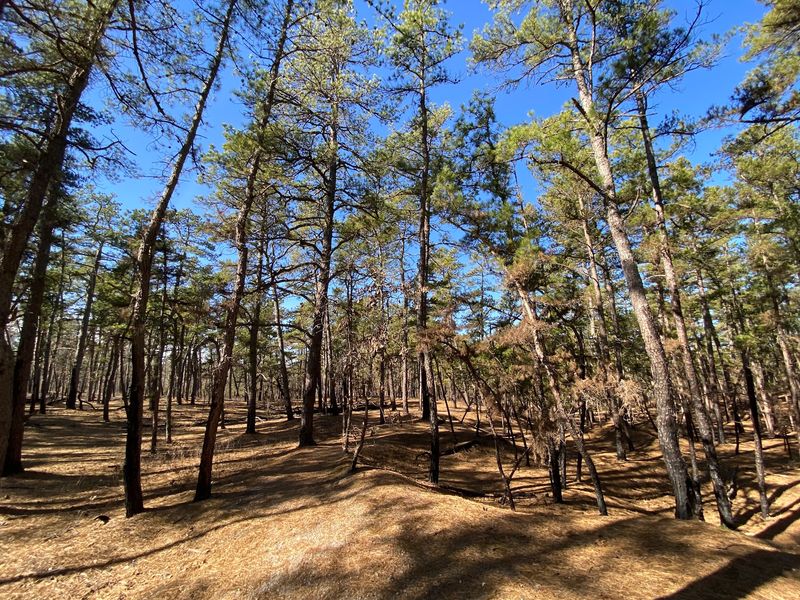
This is the choice for people who want the Pine Barrens to feel bigger than a backdrop. Wharton is the largest single tract in New Jersey’s state park system, spreading across more than 124,000 acres and giving a spontaneous weekend enough room to become whatever you want it to be.
For the easiest version, aim for the Atsion camping area. It has 50 tent-and-trailer sites with picnic tables, fire rings, potable water, flush toilets, and showers, and the campground is open year-round.
From there, you can swim at Atsion Recreation Area when lifeguards are on duty, hike through pine and oak woods, or connect with longer routes that follow the Mullica River.
If you want something more rustic, Wharton also has campgrounds such as Godfrey Bridge and several wilderness-style options scattered deeper into the forest.
The other reason to choose Wharton is Batsto Village, where historic buildings turn a camping weekend into something more than woods plus marshmallows. Paddlers can make even more of the forest by getting onto the Mullica River and its tributaries.
One practical warning: this is not a place to improvise vehicle routes on random sand roads. Wharton manages motor-vehicle access carefully, so stick to designated roads and current maps.
Pick the camping style that matches your gear, reserve first, and let the Pinelands supply the rest of the itinerary.
9. Stokes State Forest
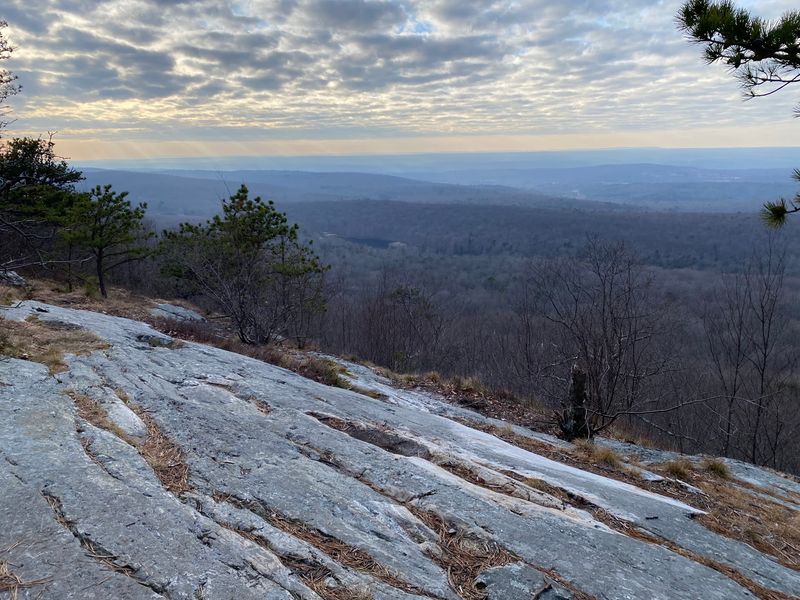
Wake up early here and you can be standing on Sunrise Mountain before the rest of the group has finished arguing about coffee. Stokes State Forest is built for campers who want their weekend to revolve around trails, not campground activities.
More than 63 miles of marked routes cross the forest, connecting rocky ridges, streams, the Appalachian Trail, Tillman Ravine, Stepping Stones Falls, and viewpoints along Sunrise Mountain.
The ravine is a standout: cool hemlock woods, rushing water, ferns, rock walls, and small waterfalls make it feel dramatically different from the sunnier ridges nearby.
Camping comes in several forms, including 90 tent-and-trailer sites and the popular Lake Ocquittunk area, which mixes tent, trailer, and platform sites. Some camping areas operate year-round, and selected family sites are pet-friendly.
This is northern New Jersey, so the experience feels more mountain-oriented than many campgrounds farther south; nights can also feel noticeably cooler, especially once summer starts fading. Anglers have another reason to come, since Big Flatbrook and its tributaries are stocked for trout.
Do not arrive expecting a swimming lake, though—swimming is not permitted in Stokes’ lakes. That hardly leaves you short on things to do.
For hikers, photographers, anglers, and anyone who thinks the best campsite amenity is a great trail five minutes away, Stokes is an easy yes.
10. Stephens State Park Campground
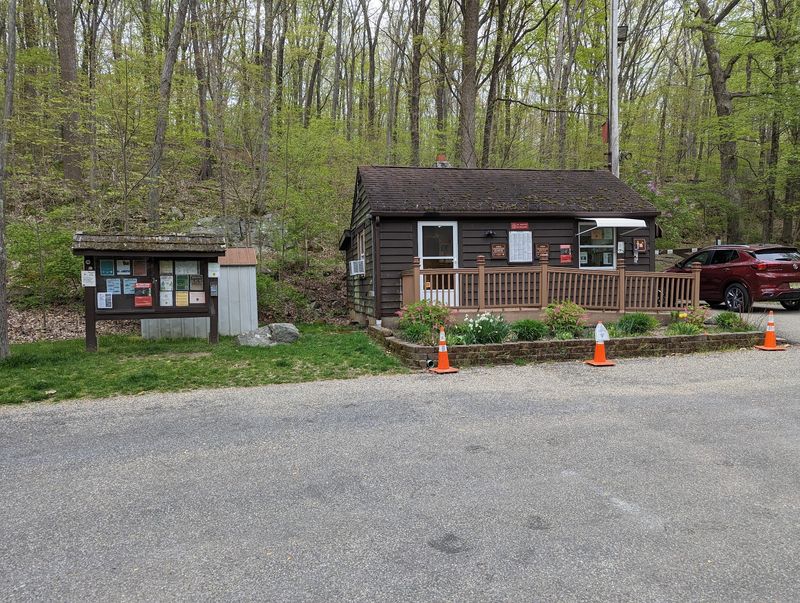
The Musconetcong River does most of the talking at Stephens State Park, tumbling around boulders and giving the campground area a distinctly North Jersey soundtrack. This is a smart pick for a weekend that needs to be outdoorsy without becoming complicated.
The park has 39 tent and small-trailer sites, each with a fire ring and picnic table, and flush toilets and showers are within walking distance. Camping runs from April 1 through October 31.
Once the tent is up, six miles of marked trails give hikers and mountain bikers enough room to roam without forcing anyone into an all-day expedition. Fishing is another major draw; the Musconetcong is trout-stocked, so bringing a rod can turn a quiet morning into the main event.
History sits surprisingly close, too. Less than a mile east along Waterloo Road, Saxton Falls preserves remains of one of the old Morris Canal locks and part of the former towpath—a good detour if your group likes its woods with a little industrial history.
There is one thing not to plan around: swimming is prohibited at Stephens State Park. Think river views, fishing, hiking, picnics, and a campfire instead.
With no park entrance fee and a campground scale that feels approachable, Stephens suits campers who want to decide on Friday that sleeping outside sounds better than another weekend at home.
11. High Point State Park
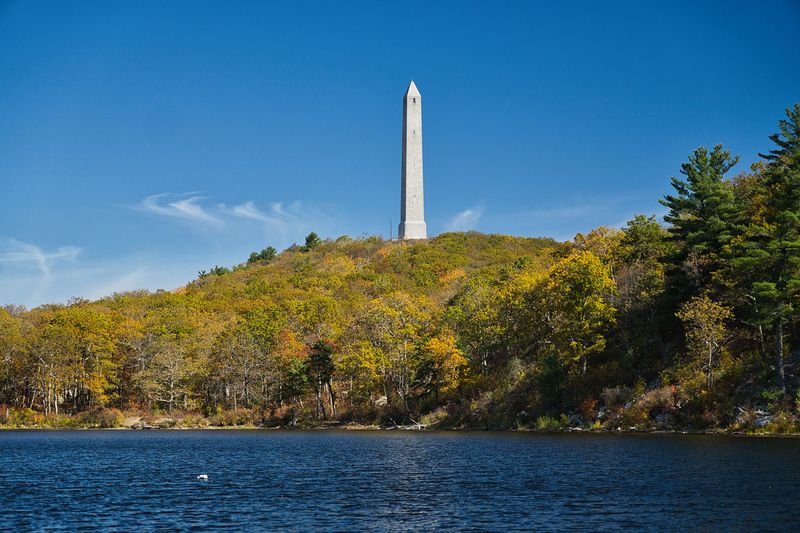
New Jersey’s highest point is an obvious bragging-rights stop, but the better reason to camp here is lower down beside Sawmill Lake. Fifty family campsites line the lake, each with a picnic table and fire ring, and most are suited to tents; some can also handle small trailers.
The campground is open from April 1 through October 31, and the state allows same-day one-night reservations until 2 p.m., with campers directed to contact the park office after that time. That detail alone makes High Point unusually relevant to the spontaneous-weekend mission.
Once you arrive, the park gives you far more than a place to sleep. Eighteen miles of the Appalachian Trail cross the property along the Kittatinny Ridge, while shorter routes lead through woods and toward expansive viewpoints.
The High Point Monument, standing near the state’s highest elevation, is the classic destination and pays off with long views across the surrounding landscape. In summer, swimming adds another option when the designated area is open and lifeguards are on duty; in cooler weather, the ridgeline and foliage become the show.
Many campsites allow pets, but check the site designation when booking. Advanced campsite reservations normally carry a two-night minimum, so same-day availability is where the one-night escape gets interesting.
If a free Saturday suddenly appears on your calendar, High Point is one of the first northern New Jersey campgrounds worth checking.
12. Camp Gateway – Sandy Hook
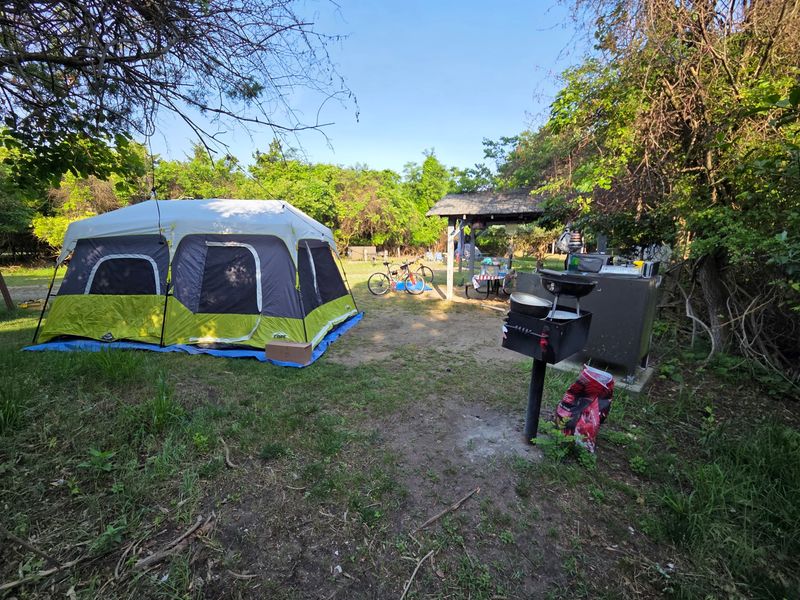
Sleeping in a tent with ocean air moving through the campground is already unusual for New Jersey; doing it on Sandy Hook, with beaches, dunes, military history, and New York Harbor all nearby, makes this one of the strangest and best camping contrasts in the state.
Camp Gateway operates seasonally at Sandy Hook, with the 2026 season running from May through September.
This is tent camping only—RVs are not accommodated—and sites are sized for small groups, with larger group options available separately. The setup is relatively simple, so bring your own tent, sleeping gear, insect repellent, and the expectation that this feels more like a national recreation area campground than a private resort.
The payoff is location. During the day, you can head for the ocean, explore the historic Fort Hancock area, visit Sandy Hook’s other attractions, or take in the views around the harbor.
Summer beach parking fees apply, so review the current access instructions when booking. Pets, alcohol, charcoal grills, and glass containers are not permitted at tent sites, and summer campers should also be prepared for insects—including abundant tawny field cockroaches during part of the season.
That last detail is not glamorous, but the chance to camp on a narrow barrier peninsula with the Atlantic close by is memorable enough to justify packing extra bug spray.
13. Bass River State Forest
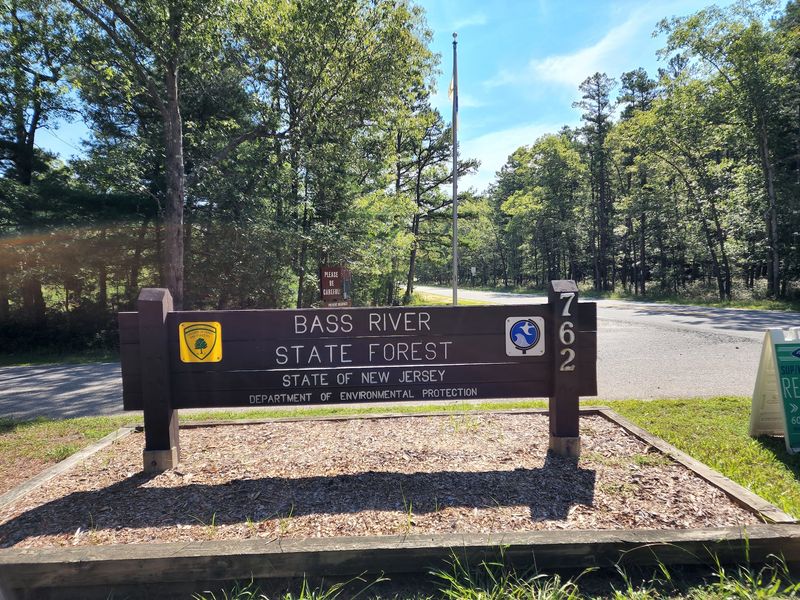
There is something pleasantly old-school about building a weekend around Lake Absegami.
The 67-acre lake was created by Civilian Conservation Corps workers, and the forest around it still carries plenty of that early public-lands character: pine roads, simple trails, cabins, camp structures, and picnic areas designed to make getting outside feel straightforward.
Bass River has 176 tent-and-trailer sites, all with fire rings and picnic tables, plus nearby flush toilets and showers. There are no hookups at the standard sites, but the campground stays open year-round, and the south-shore sites include a large pet-friendly section.
If sleeping directly under canvas sounds less appealing, the forest also has lean-tos, shelters, and seasonal cabins around Lake Absegami.
The easy half-mile Absegami Trail is a good first walk, while longer outings can connect with the 53-mile BATONA Trail, which begins its journey through the Pinelands here before continuing north through other state forests.
Swimming is available only when lifeguards are on duty, so check the current schedule rather than assuming the beach will be open. Bass River works especially well for people who want a classic Pine Barrens weekend without going fully primitive.
You can hike, paddle, fish, swim in season, cook over the fire, and still get a shower before crawling into the sleeping bag.
14. Camp Taylor Campground
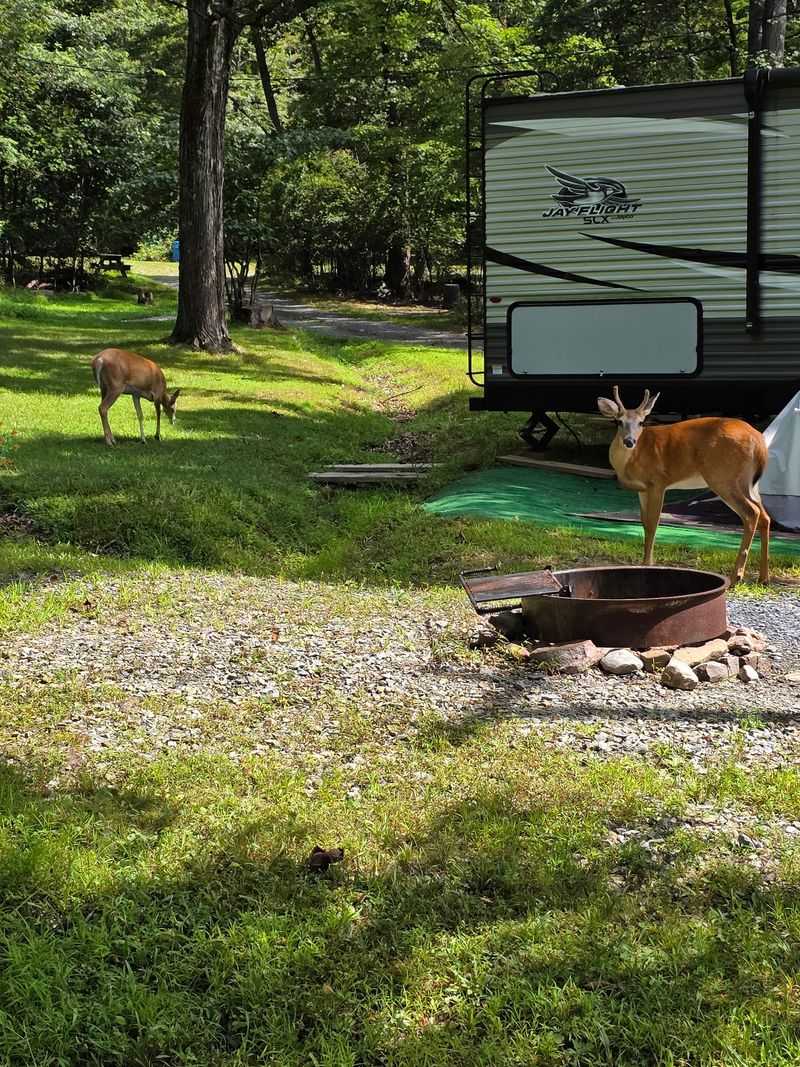
You may hear the wolves before you see anything remotely wolf-like. Camp Taylor’s most distinctive neighbor is the Lakota Wolf Preserve, located on the campground property, and the sound of howling can give an ordinary campfire a considerably less ordinary soundtrack.
The family-run campground has been operating since 1964 and covers about 400 wooded acres near the Delaware Water Gap, with roughly 120 sites.
Choices range from primitive tent camping to water-and-electric hookups and cabins, so this works equally well for the committed tent camper and the person who agreed to come only after hearing the words “hot shower.”
Amenities include flush toilets, showers, a camp store, a dump station, a playground, a recreation field, and a two-acre lake for swimming and non-motorized paddling.
The bigger draw is how directly the campground connects you to the landscape. Hiking access reaches toward Worthington State Forest, the Delaware Water Gap area, and the Appalachian Trail, which means you can turn up without a complicated driving plan once camp is set.
Wolf Preserve visits require their own reservations, so do not assume you can simply wander into a tour. Camp Taylor is open from late April into late October for the 2026 season, and outside firewood is prohibited, so buy what you need there instead of hauling a bundle from home.
15. The Great Divide Campground
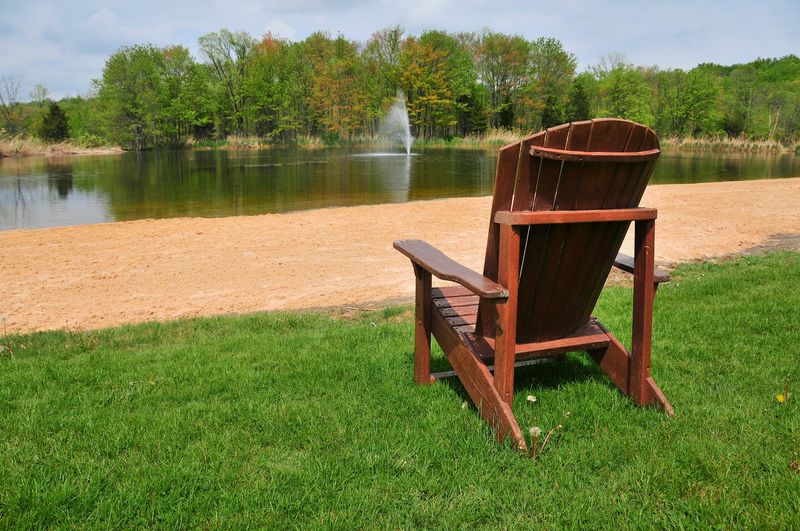
Not every spontaneous camping weekend needs to involve proving how little comfort you can survive with. The Great Divide in rural Sussex County takes the opposite approach: get outside, sleep among the trees, but keep the hot shower, swimming pool, camp store, and entertainment schedule.
The campground has about 250 sites in wooded and open settings, with options ranging from primitive camping to sites with water, electric, sewer, and cable hookups. Cabin trailers add an even softer landing for anyone who likes the idea of camping more than the mechanics of setting up a tent.
What makes the place stand apart is the social side. The Great Divide regularly builds its season around family activities and live music, with a pavilion and barn used for campground entertainment.
A heated pool, playground, game room, and golf-cart culture give the property more of a camping-community feel than the quiet state-forest experience. That means you should choose it for the right reason: this is a strong fit for families and groups who want things happening around them, not campers chasing total silence.
Practical touches help on short-notice trips, too. Restrooms have free hot showers, there is a laundromat and camp store, and staff can deliver ice and firewood to your site.
When Friday arrives and nobody packed perfectly, those conveniences suddenly feel very smart.